Inspiration
Financial institutions process thousands of transactions every day, making it difficult for analysts to identify genuinely suspicious activity among normal transactions. We were inspired by the idea of building a system that does more than simply flag transactions—it should explain why something is risky and help an analyst decide what to do next.
What We Built
RiskGuard AI is an explainable risk and fraud intelligence platform that analyzes transaction activity alongside customer profiles, KYC information, account details, and behavioral signals.
The platform provides:
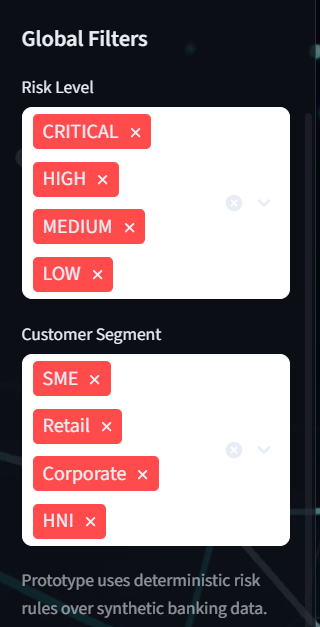
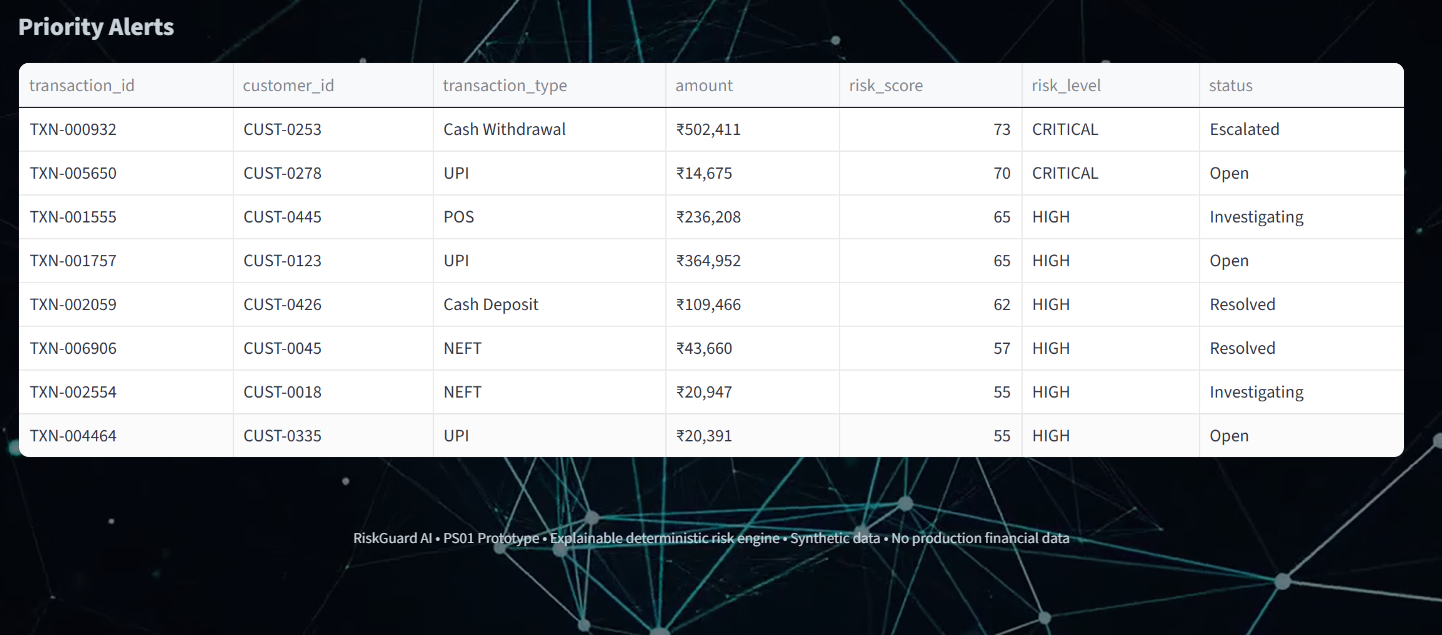
- Risk scoring and classification for transactions
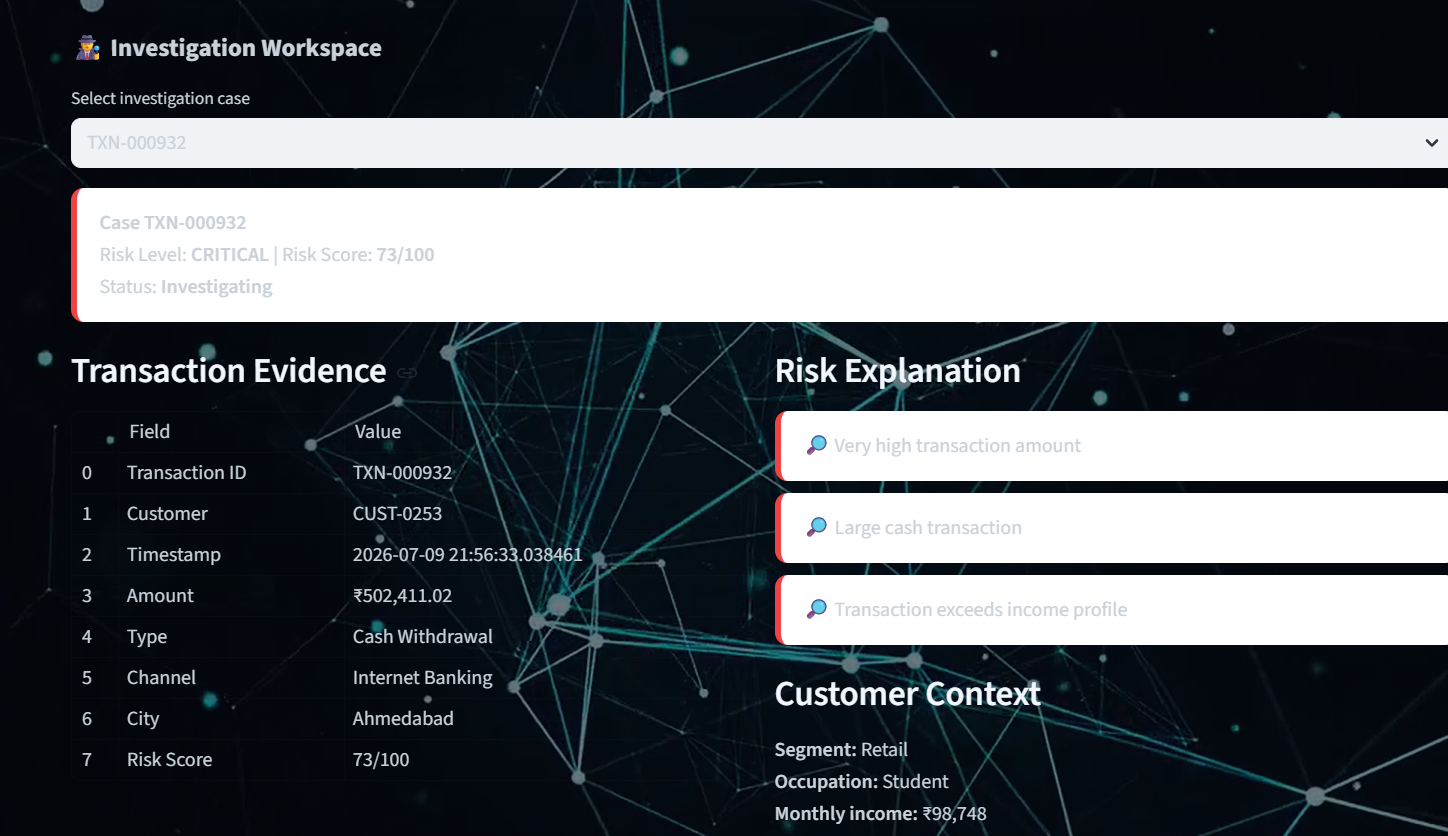
- Explainable risk factors behind every alert
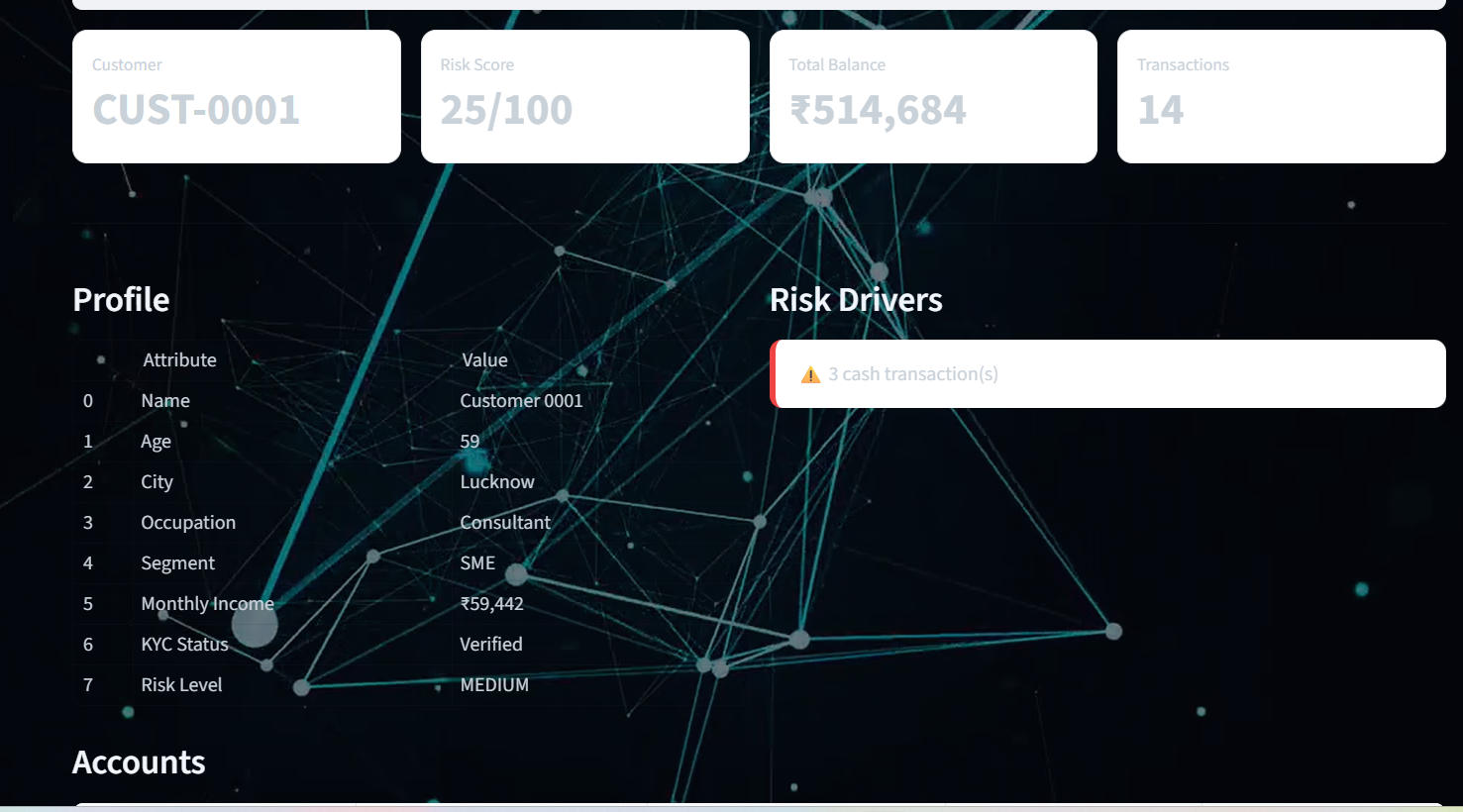
- Customer 360° profiles and transaction history
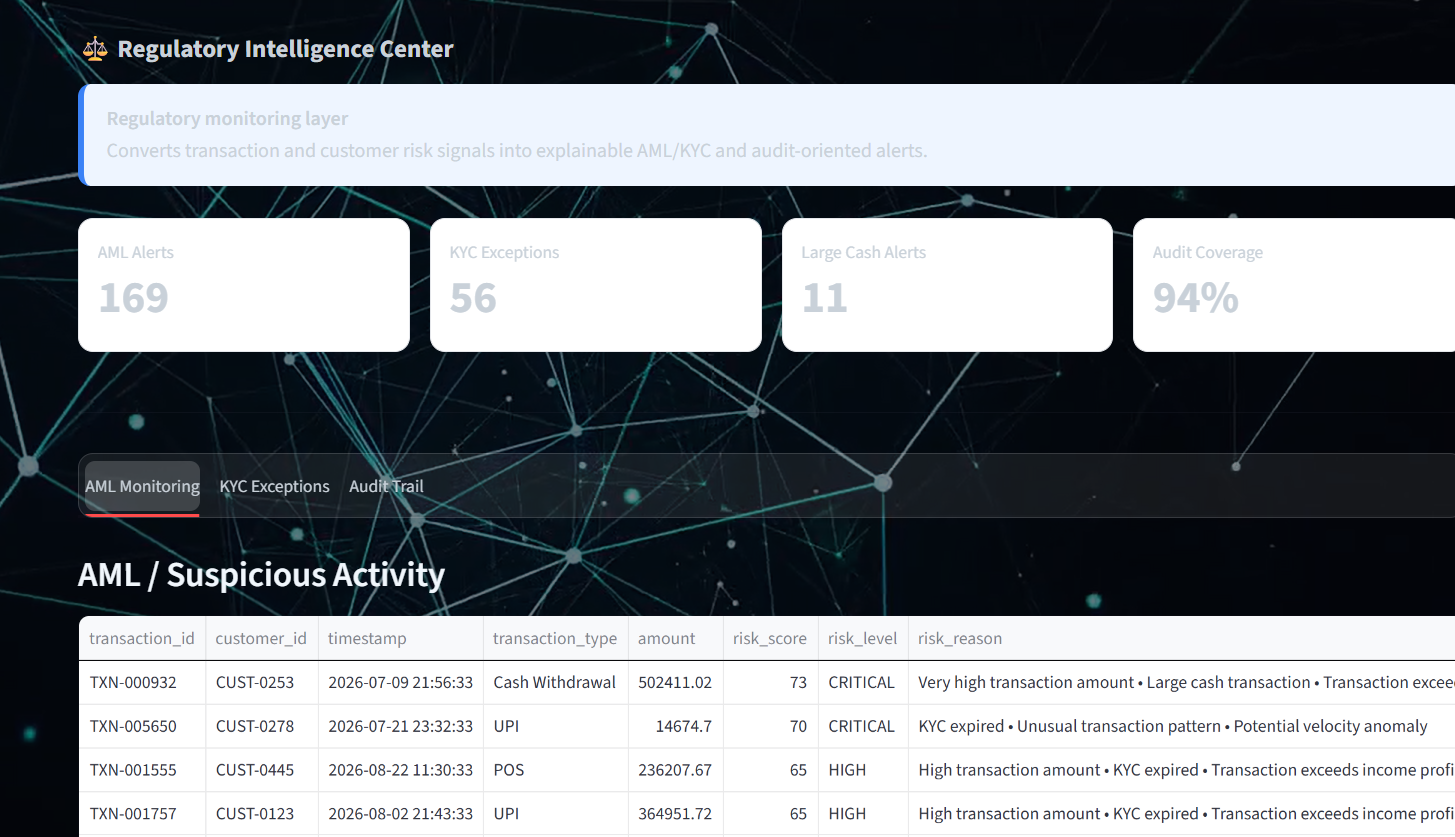
- AML and KYC monitoring
- Large-cash and suspicious-activity detection
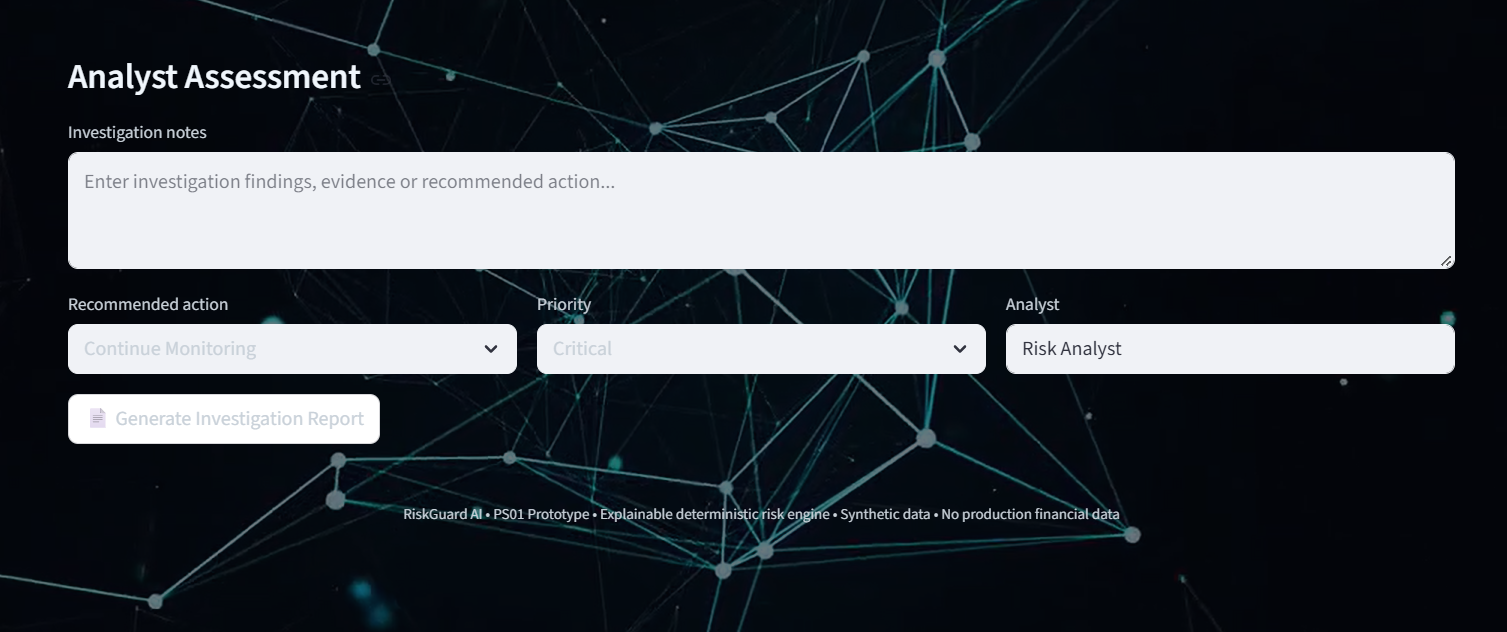
- Investigation workspace with evidence and recommended actions
- Audit and regulatory monitoring
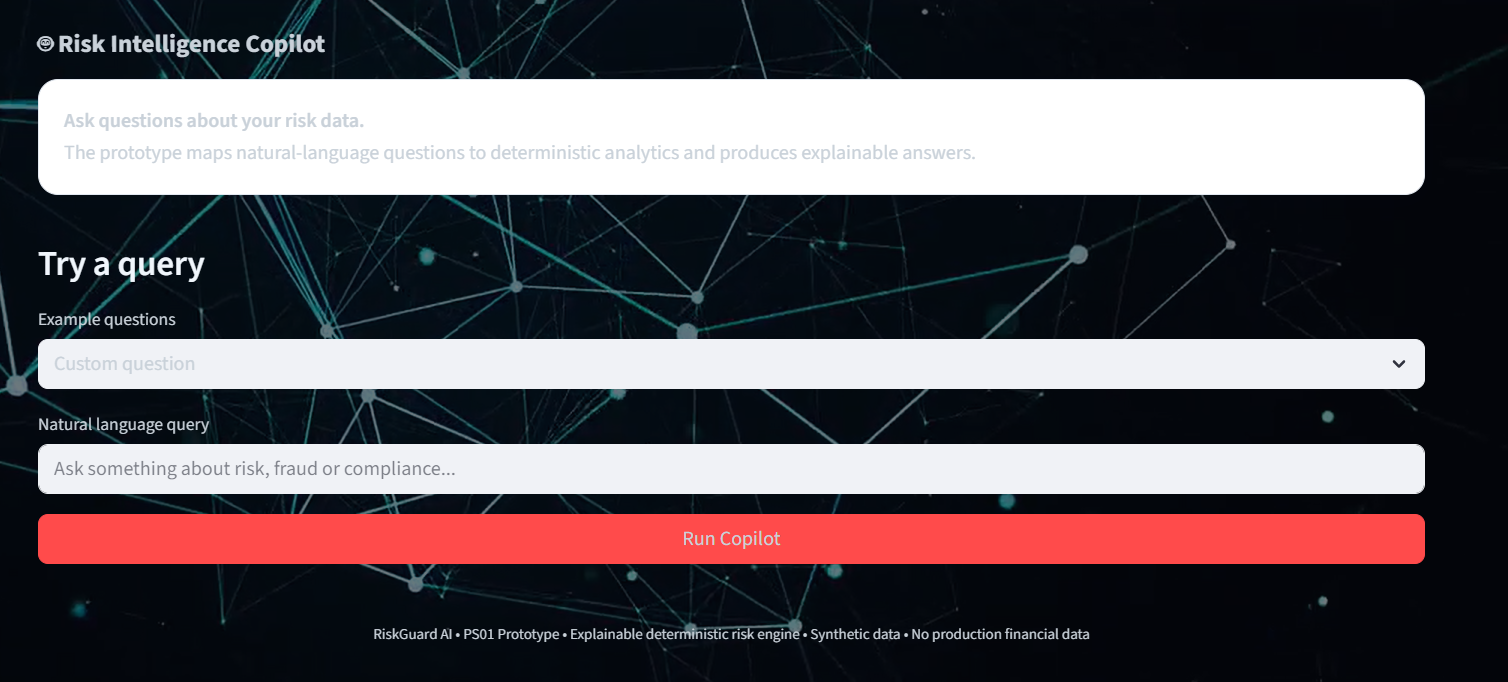
- A rule-based Risk Copilot for querying risk intelligence
The goal is to turn the workflow from transaction → alert → explanation → investigation → compliance into one connected experience.
How We Built It
We built the project as an interactive Streamlit application using Python. Synthetic banking data was generated to simulate customers, accounts, transactions, KYC statuses, cities, channels, and counterparties.
Instead of training a heavy machine-learning model, we implemented a deterministic and explainable risk engine. Transactions receive risk points based on factors such as unusually large amounts, cash activity, KYC status, income mismatch, transaction velocity, and behavioral signals.
The resulting score is converted into risk levels such as Low, Medium, High, and Critical, while the individual signals are preserved so analysts can understand exactly why an alert was generated.
We then connected this engine to dashboards, customer profiles, investigation tools, regulatory views, and the Risk Copilot to create a complete prototype rather than just a fraud detector.
What We Learned
The biggest lesson was that detecting risk is only one part of the problem. In financial workflows, explainability, context, investigation, and auditability are equally important.
We also learned how to design an end-to-end risk intelligence workflow, work with synthetic financial datasets, build interactive dashboards, and translate complex risk signals into information that a human analyst can actually use.
Challenges
One of our biggest challenges was creating realistic risk behavior without relying on a large trained ML model or real financial data. We had to design meaningful risk signals while keeping the system deterministic and explainable.
Another challenge was connecting detection with the rest of the workflow. Instead of stopping at a risk score, we designed the prototype so an analyst can move from an alert to customer context, evidence, investigation notes, recommended actions, and regulatory information.
The final result is a lightweight, explainable prototype demonstrating how fraud detection can become a complete risk intelligence and investigation workflow.

Log in or sign up for Devpost to join the conversation.