-
-
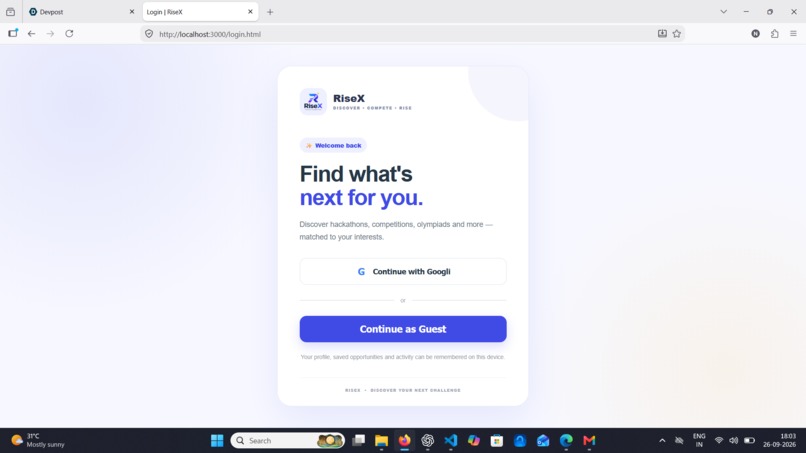
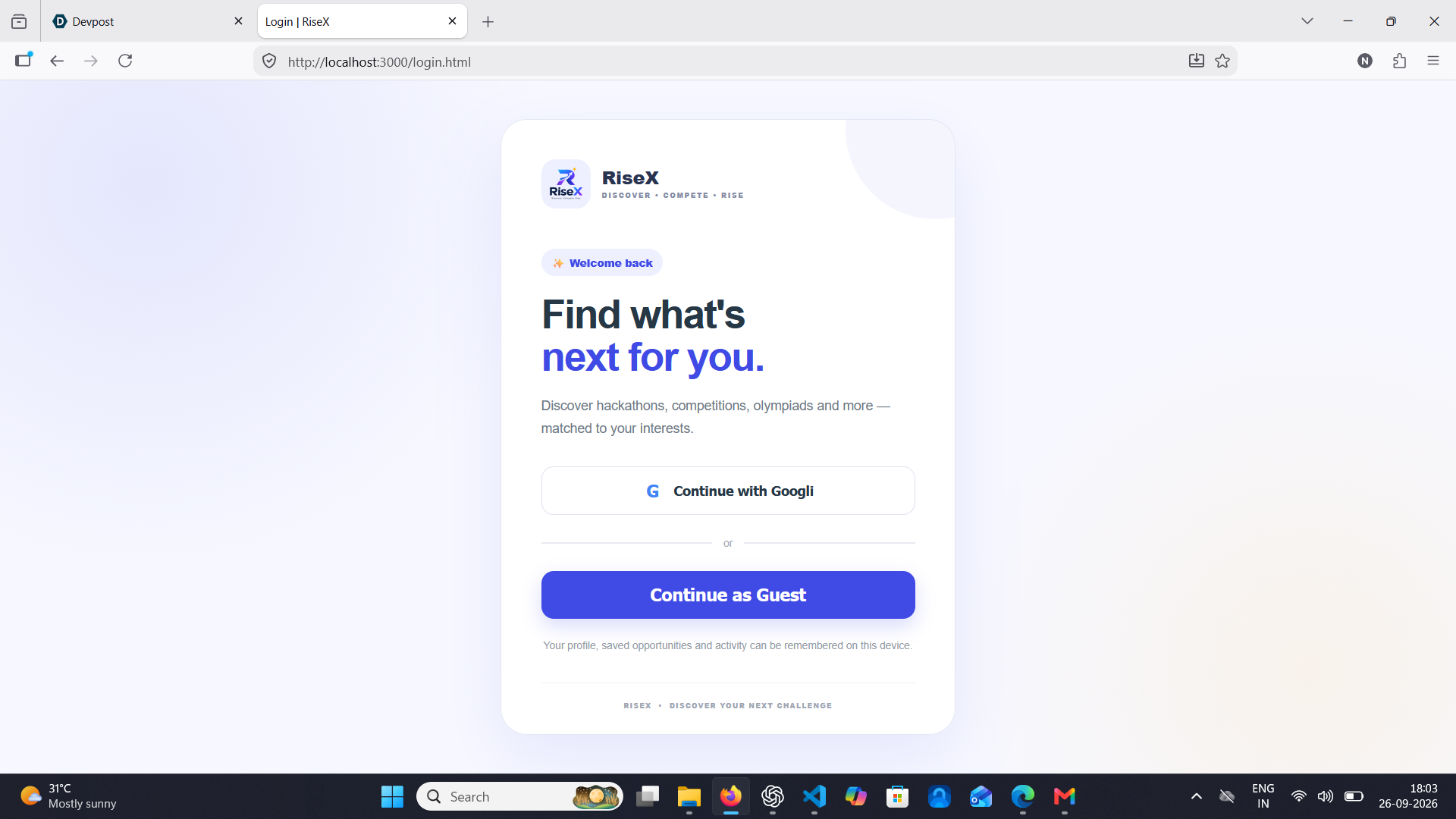
Log In
-
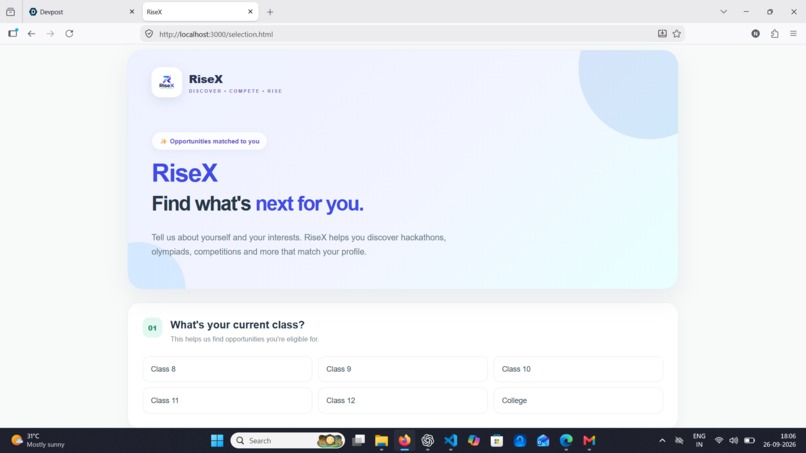
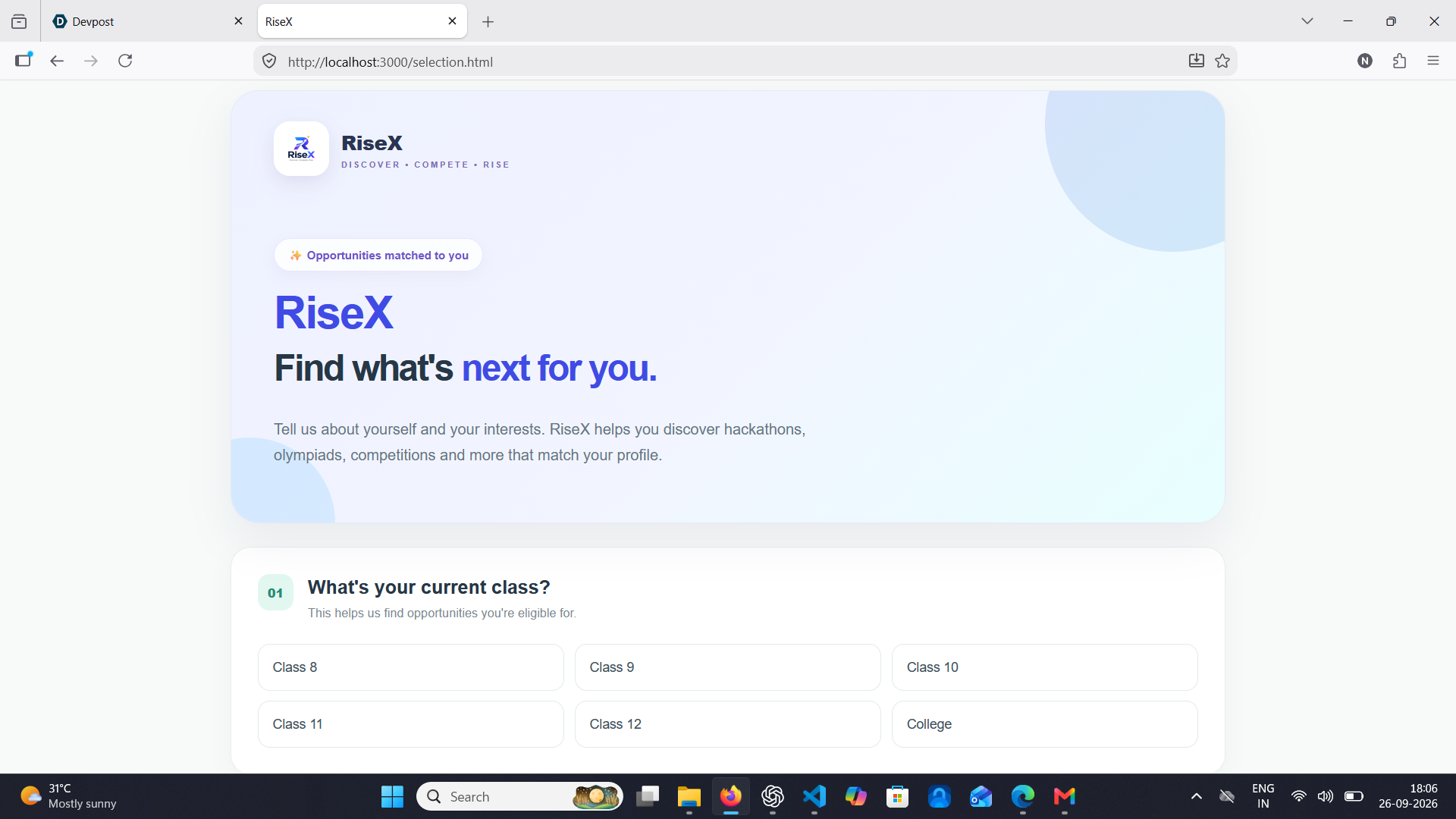
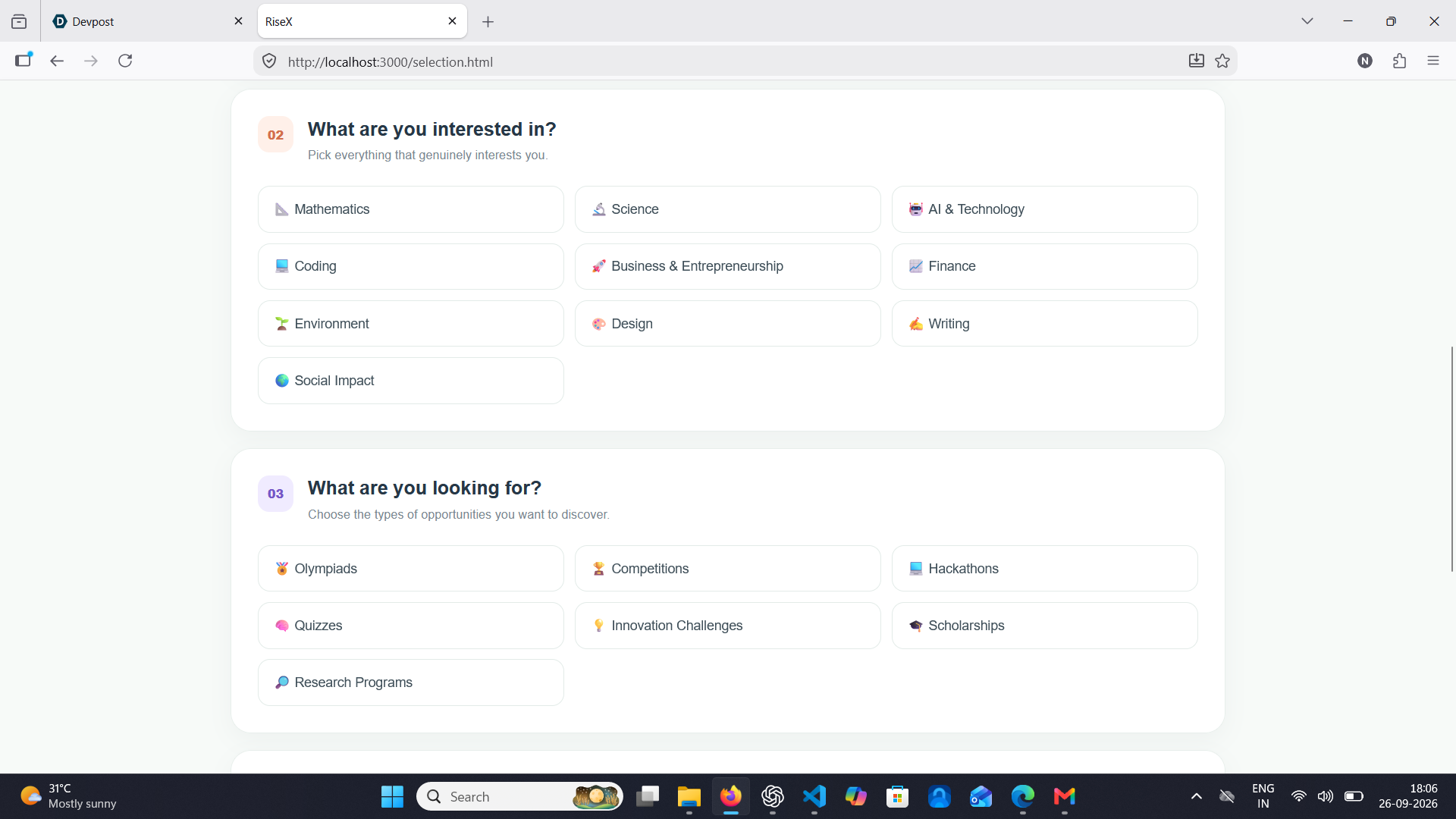
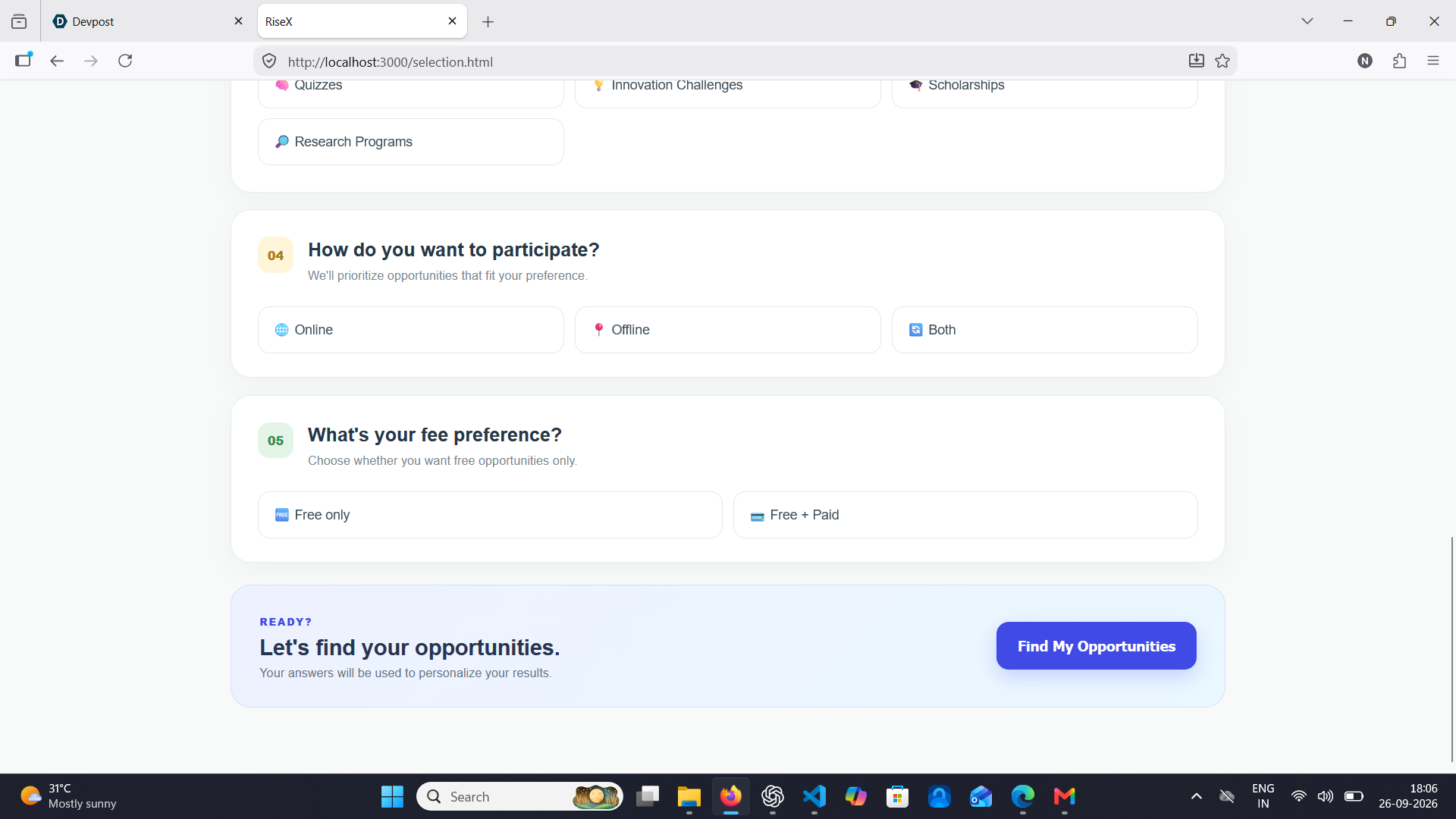
Selection/Choices page
-
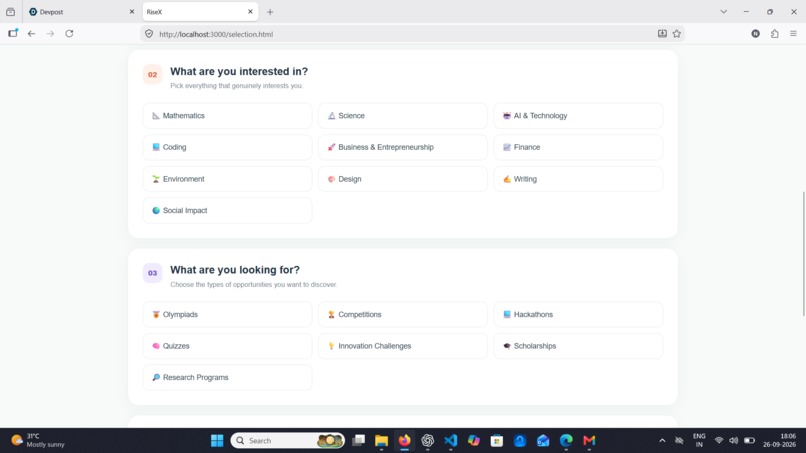
Options/Choices
-
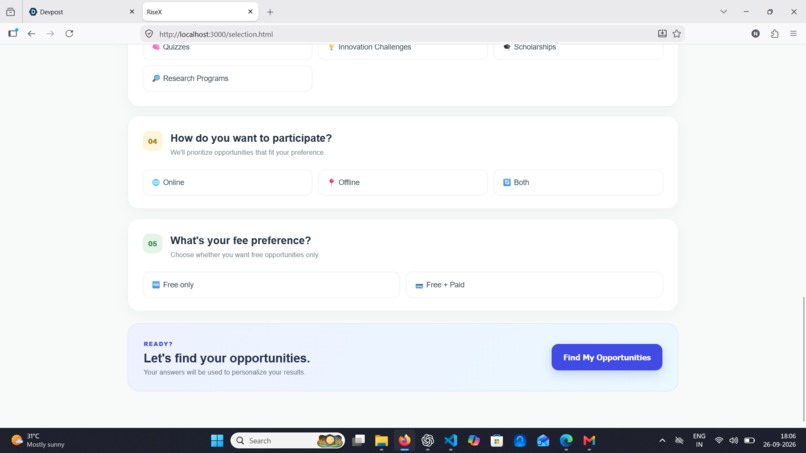
Finding Your Opportunity
-
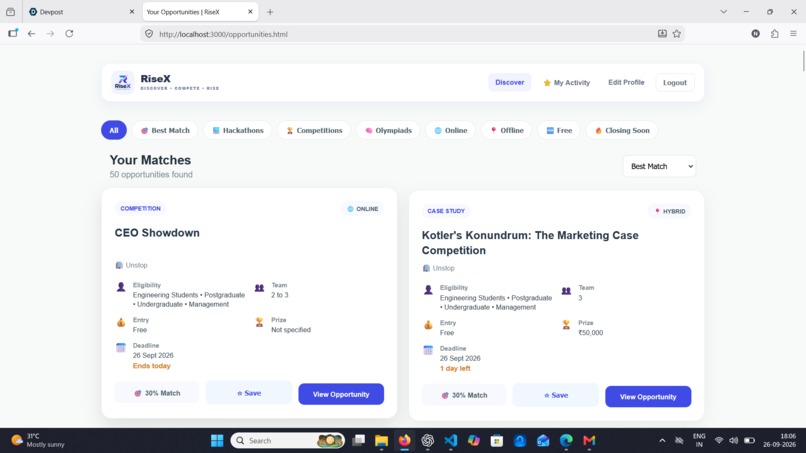
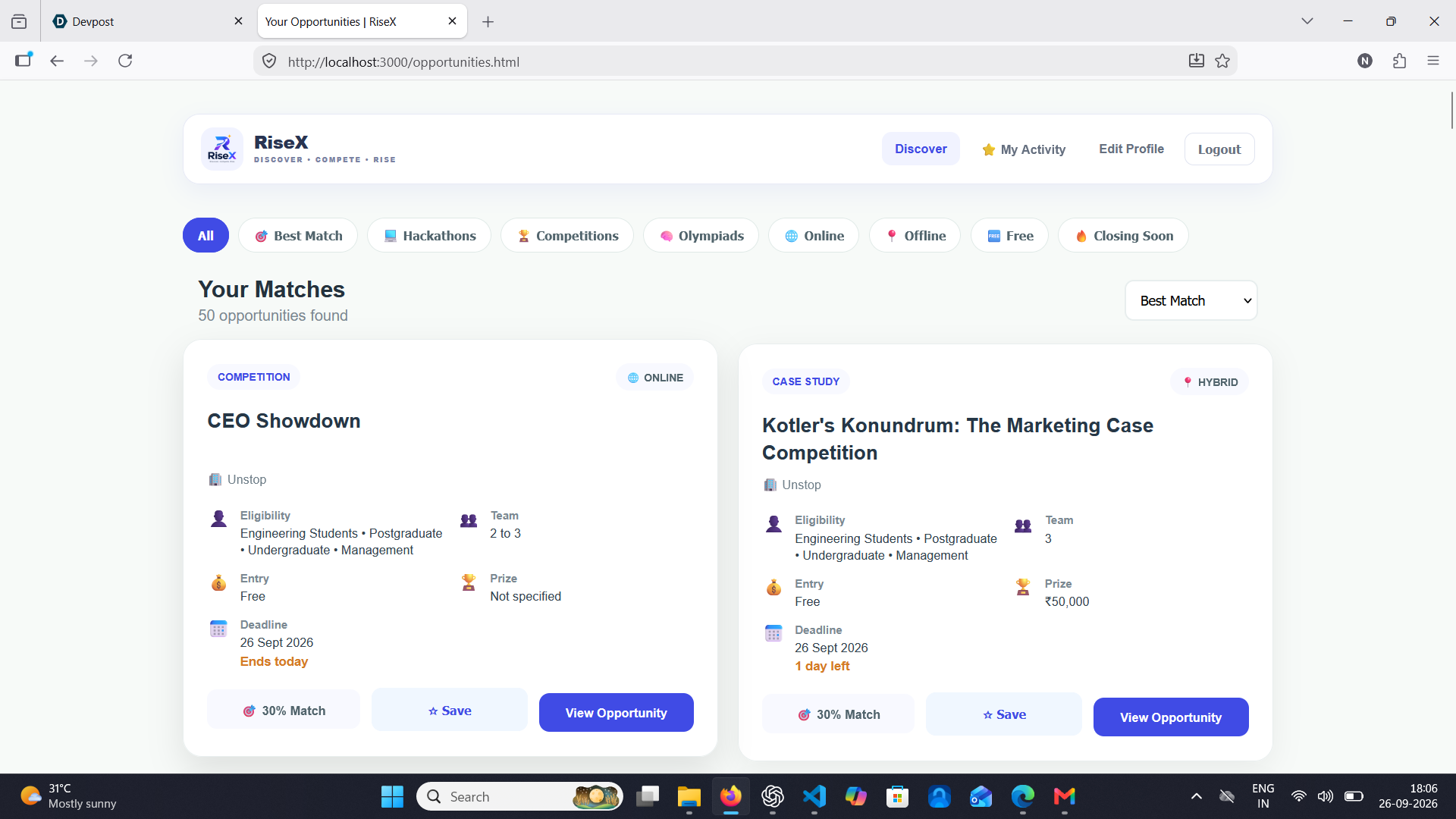
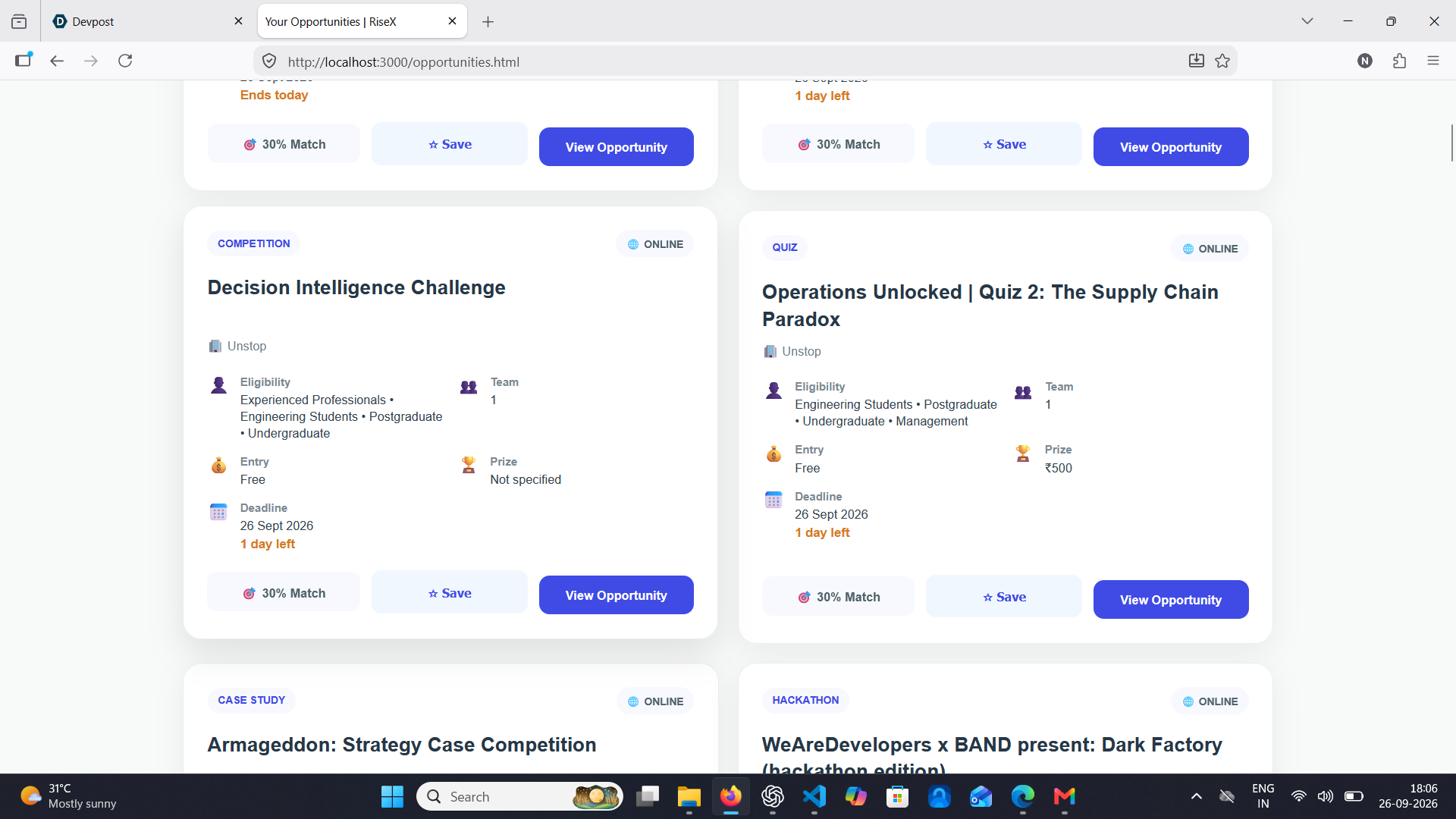
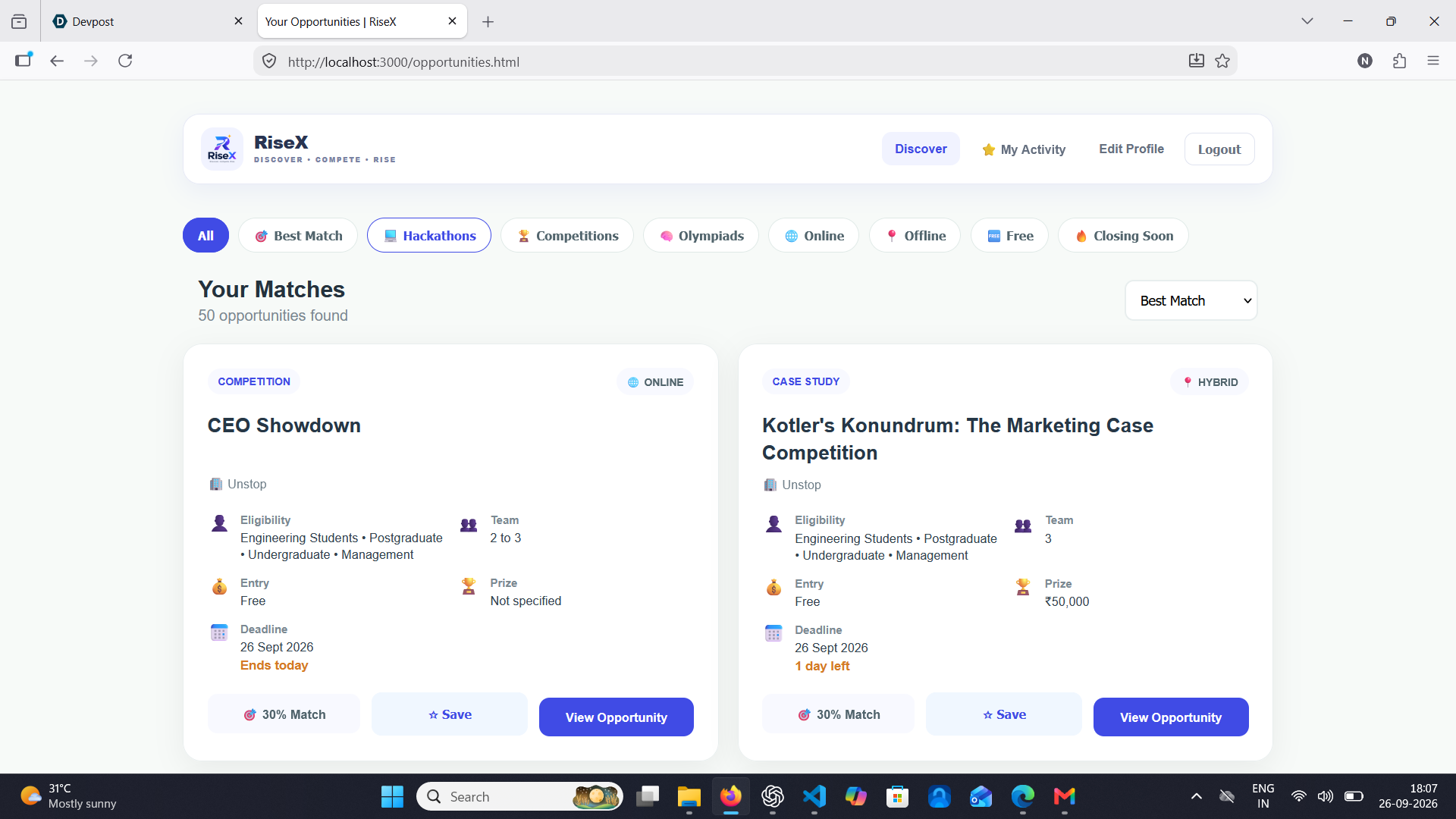
Oppourtinity page or Matches Page
-
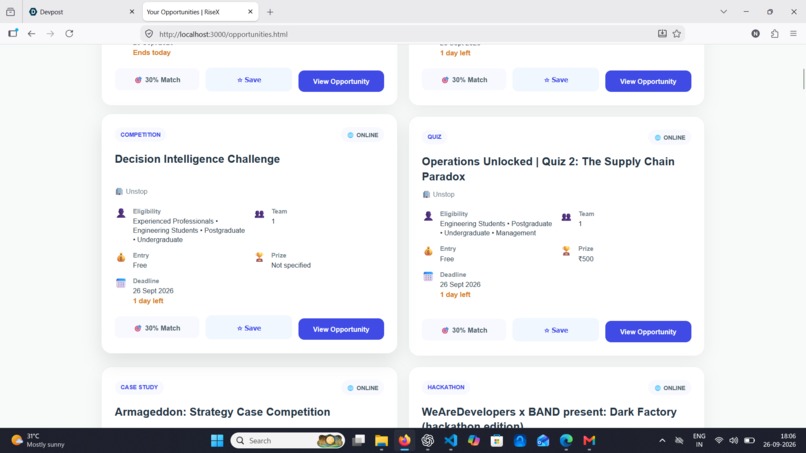
Matches/Oppourtinities
-
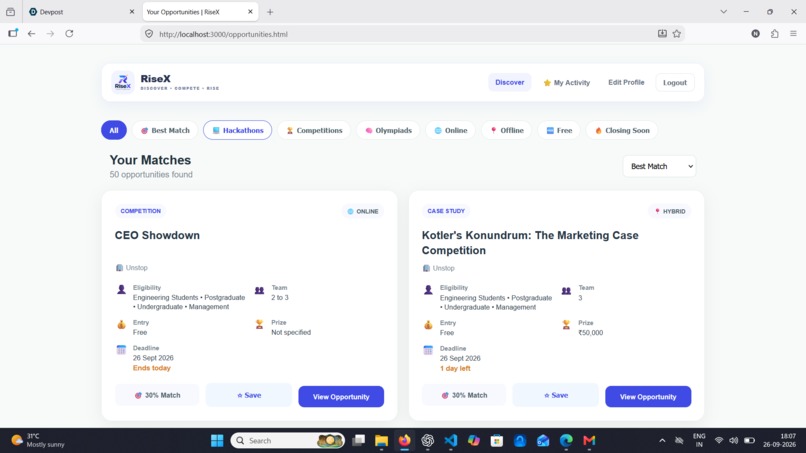
Hovering On Hackathon
-
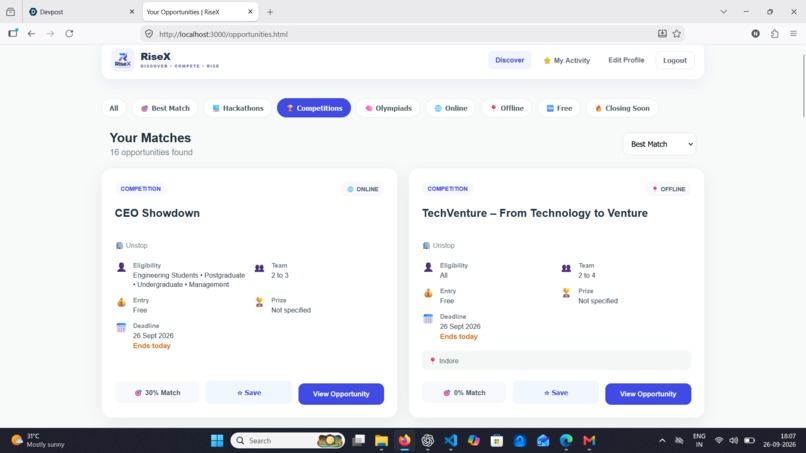
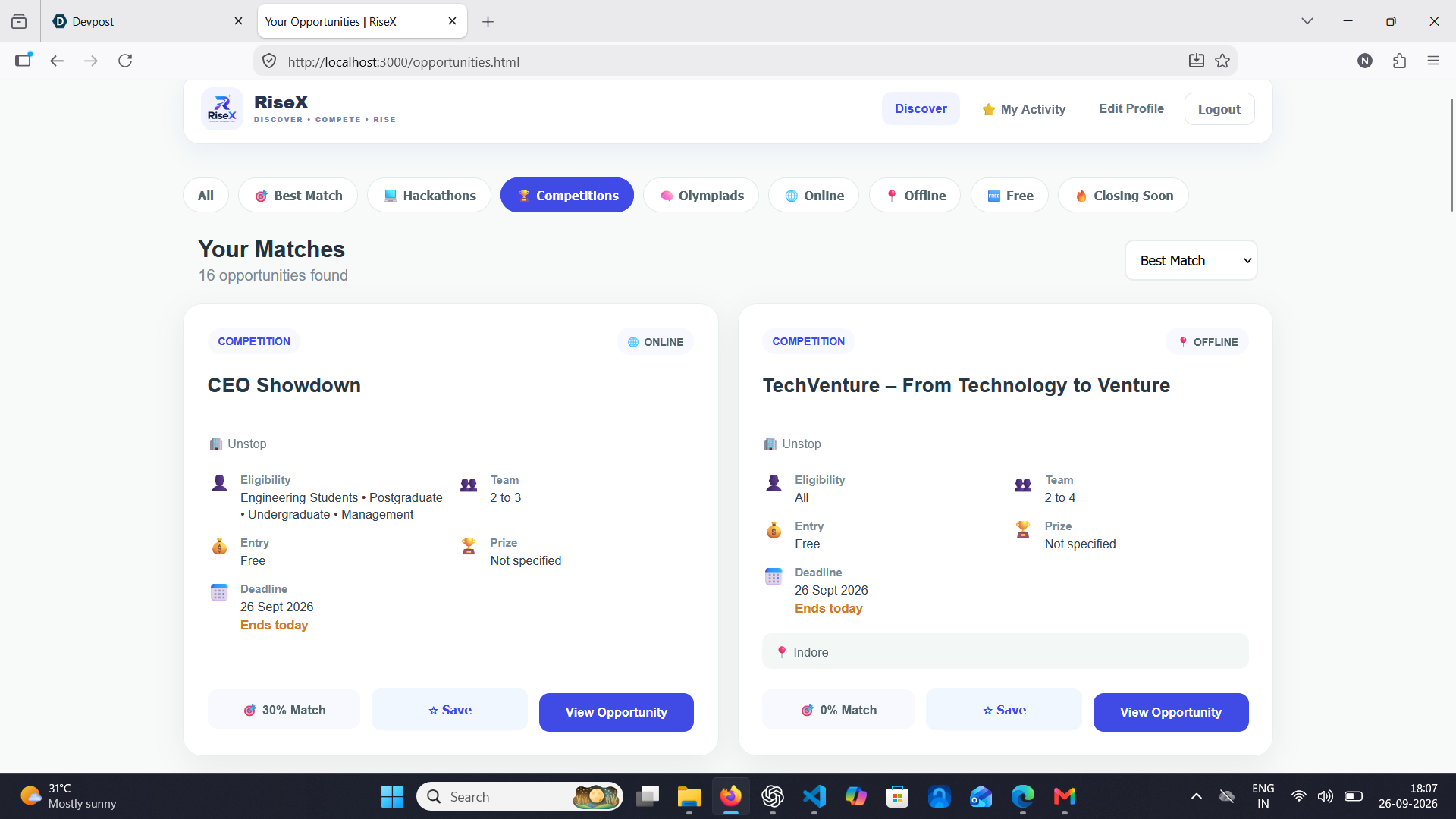
Selecting Competions
-
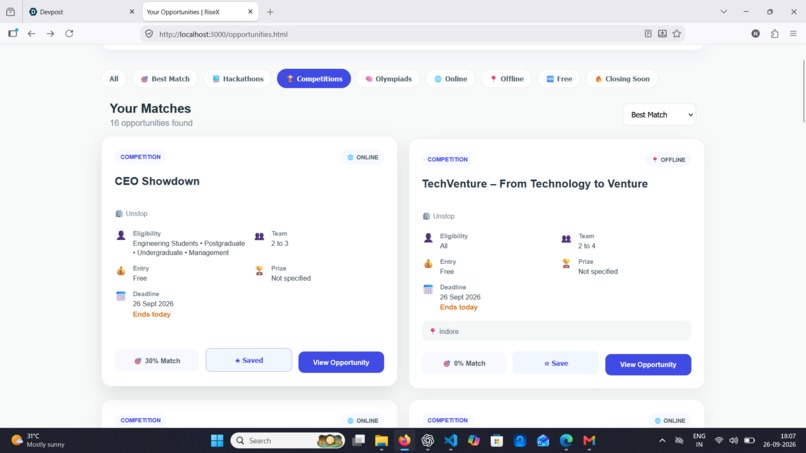
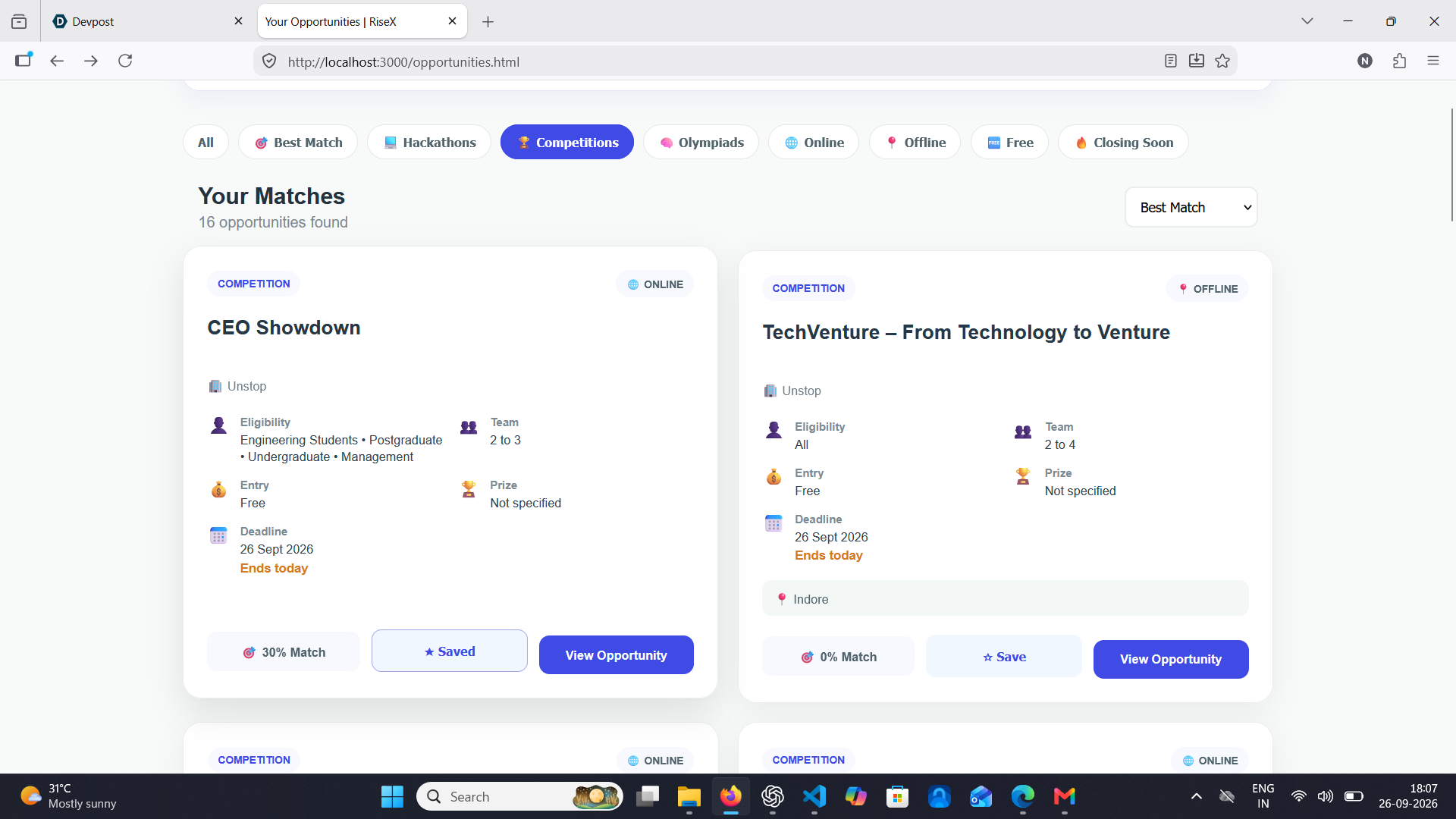
Saving a competion and viewing another
-
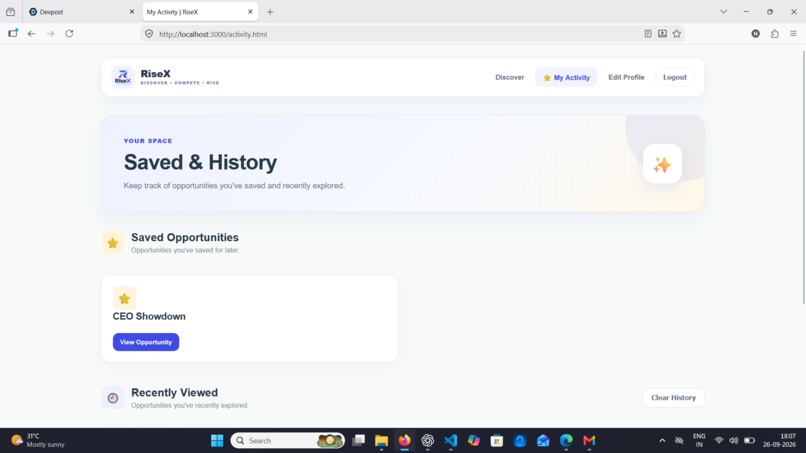
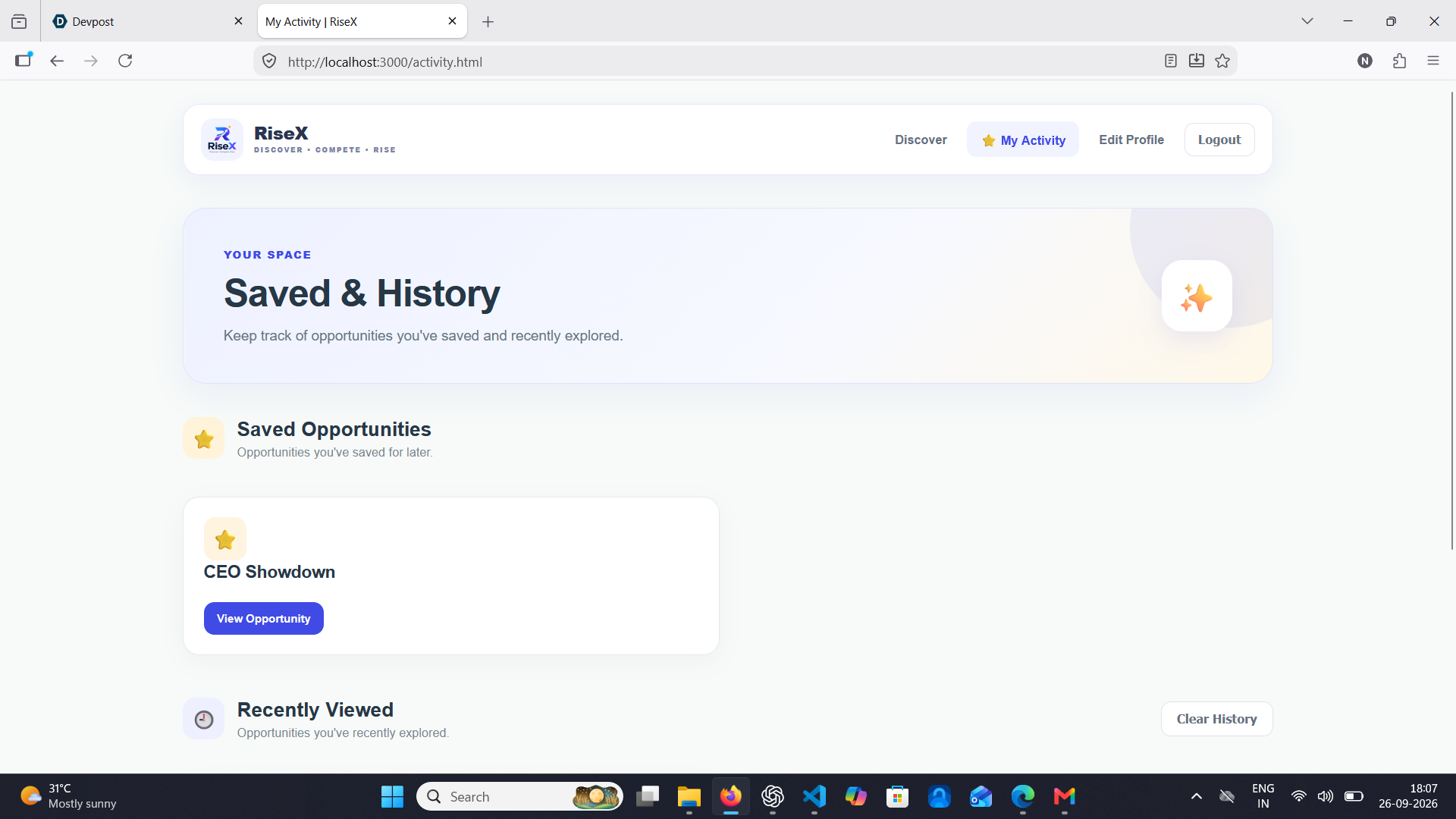
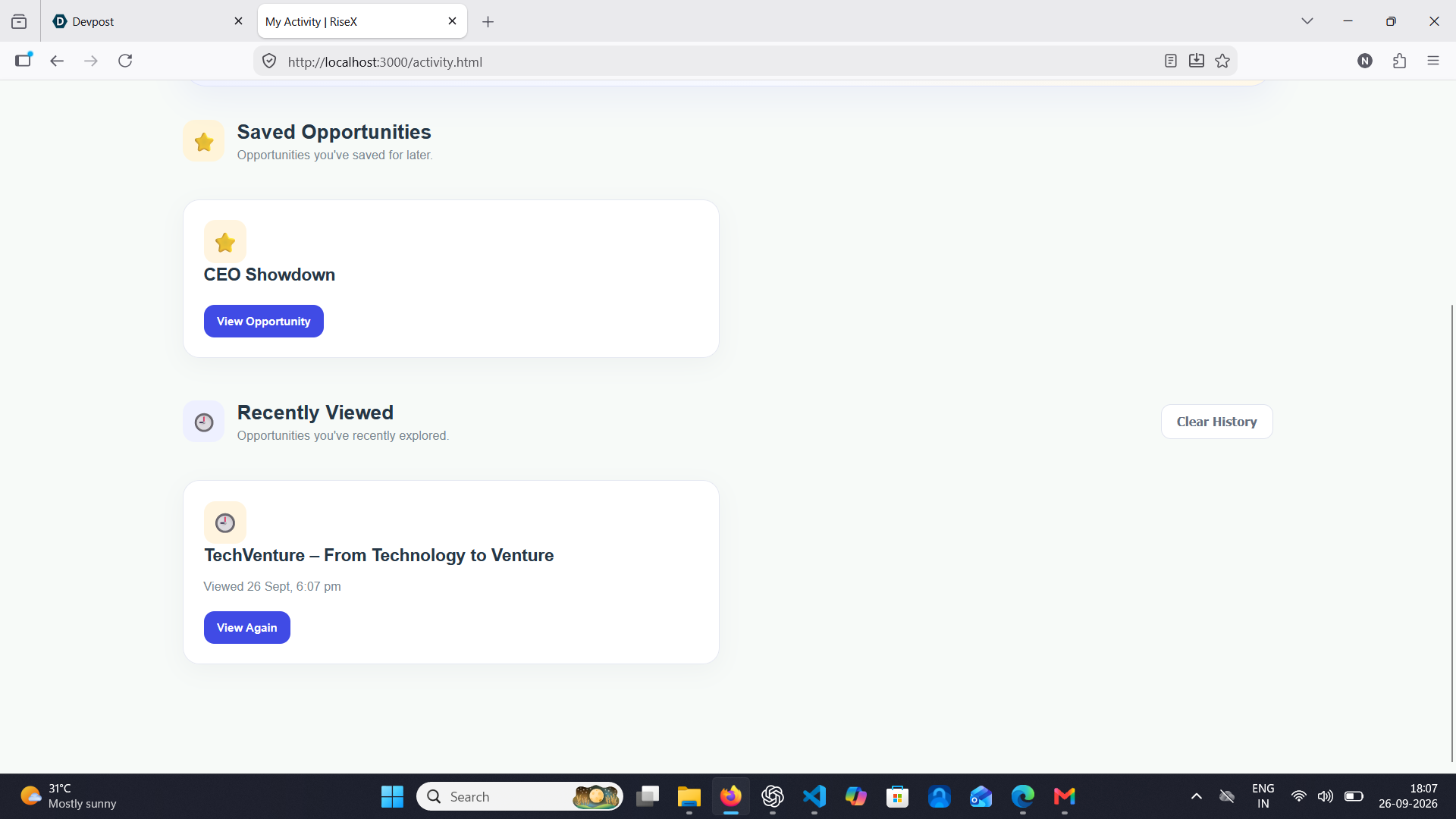
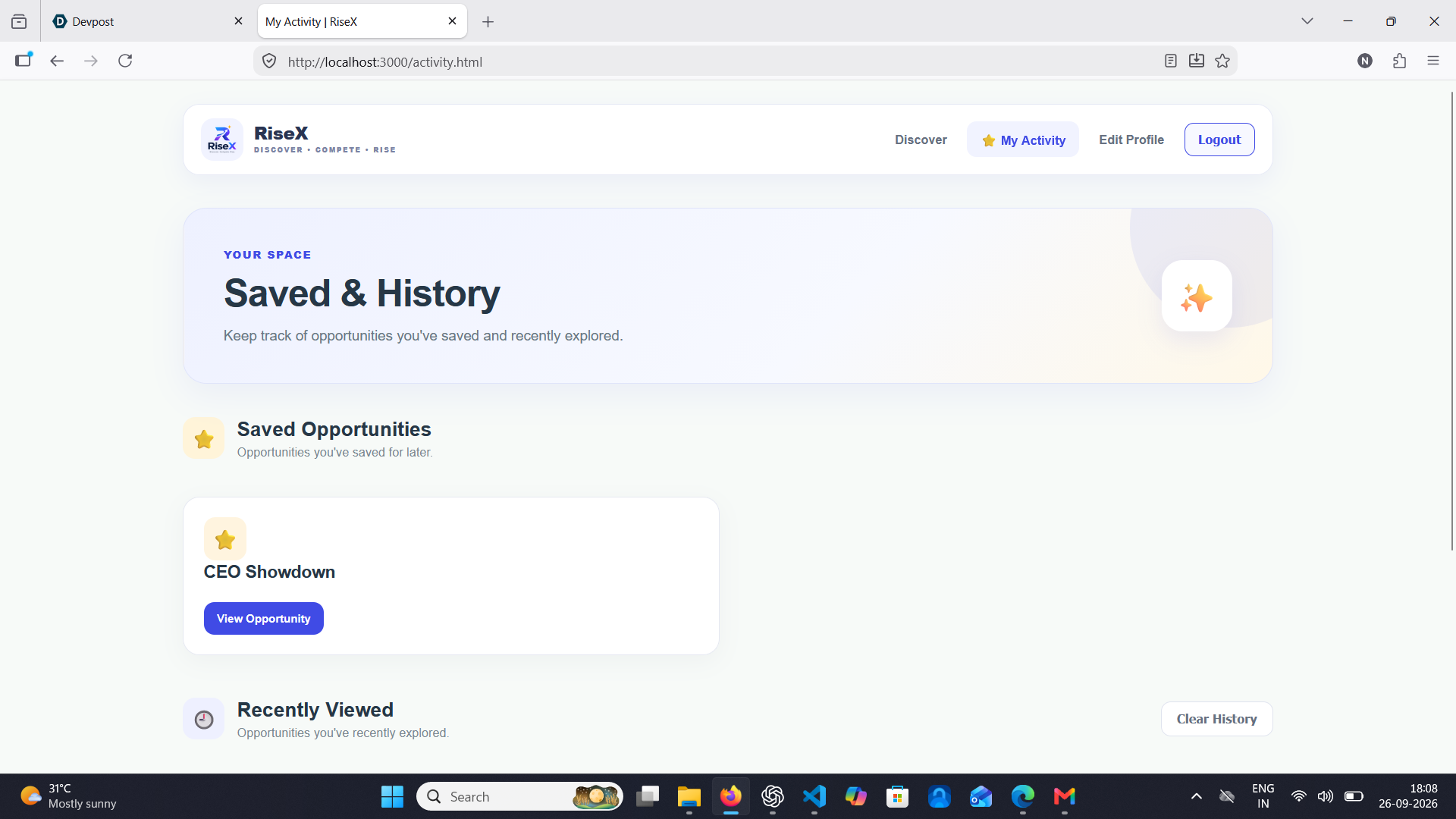
Checking My Activity (saved)
-
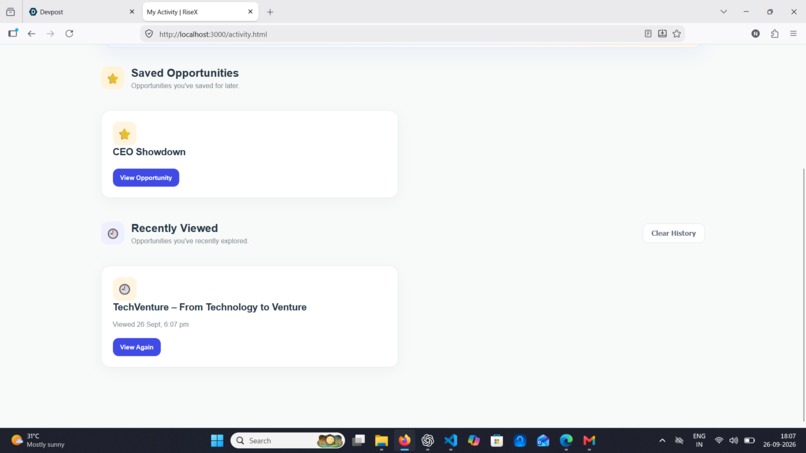
Checking History
-
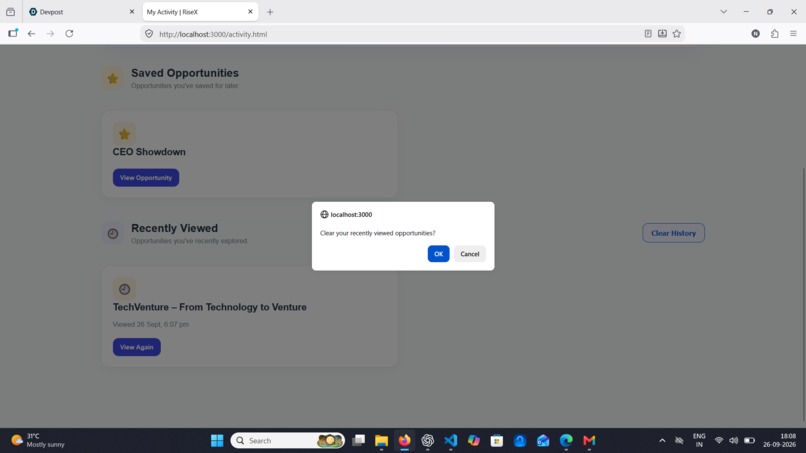
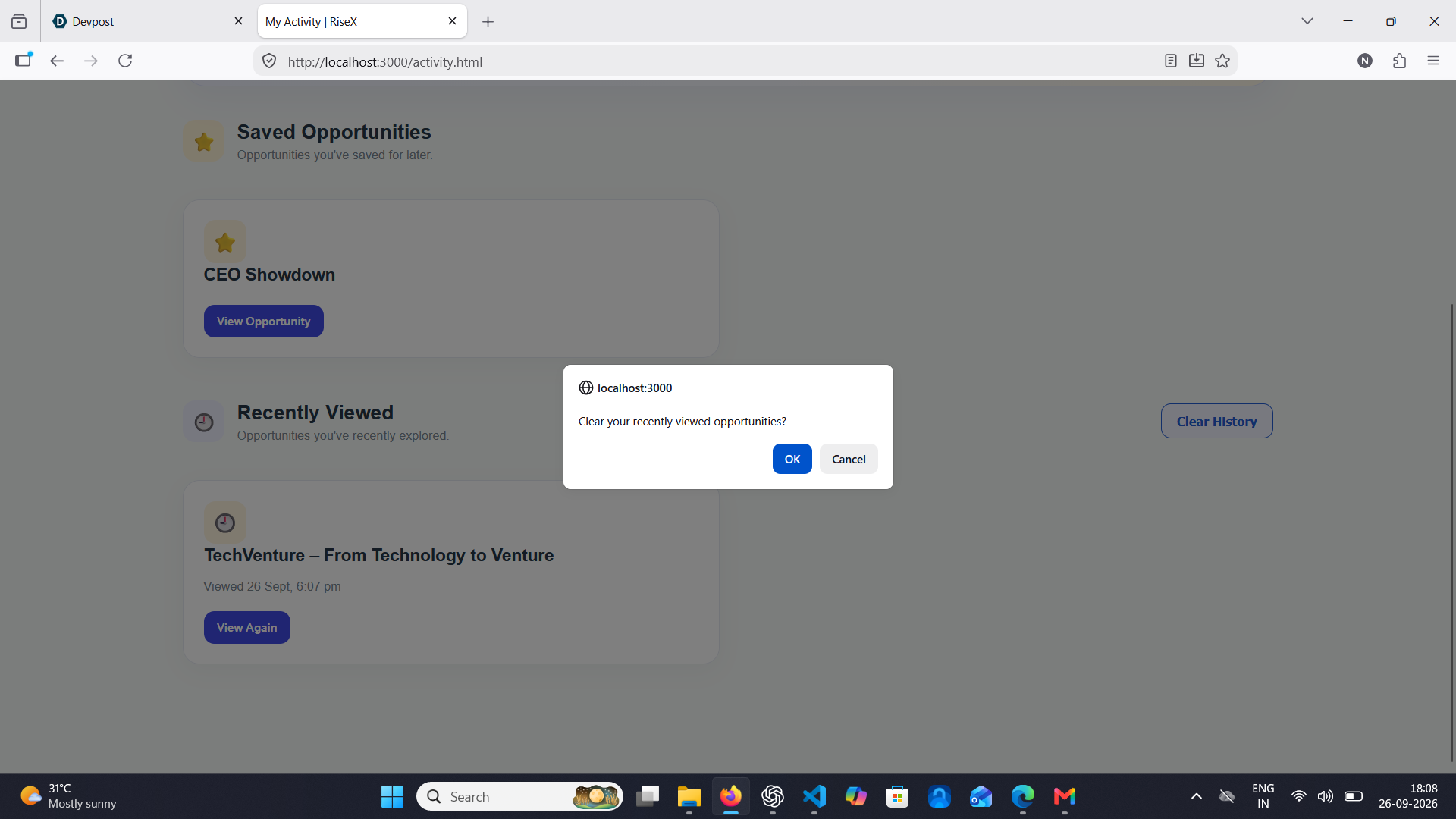
Deleting History
-
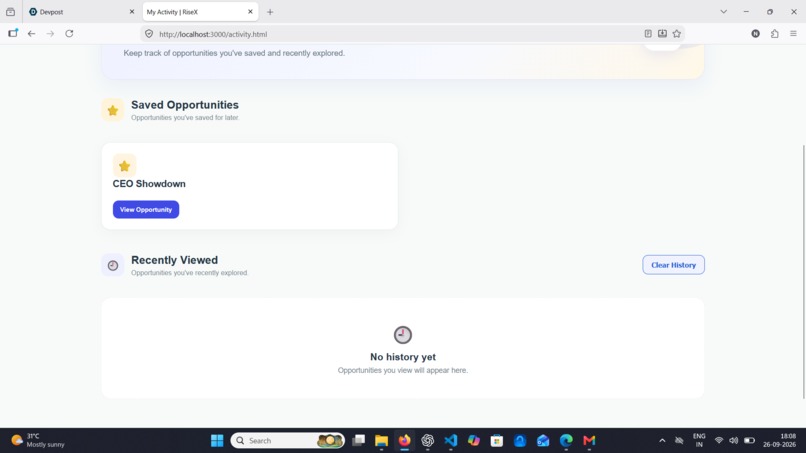
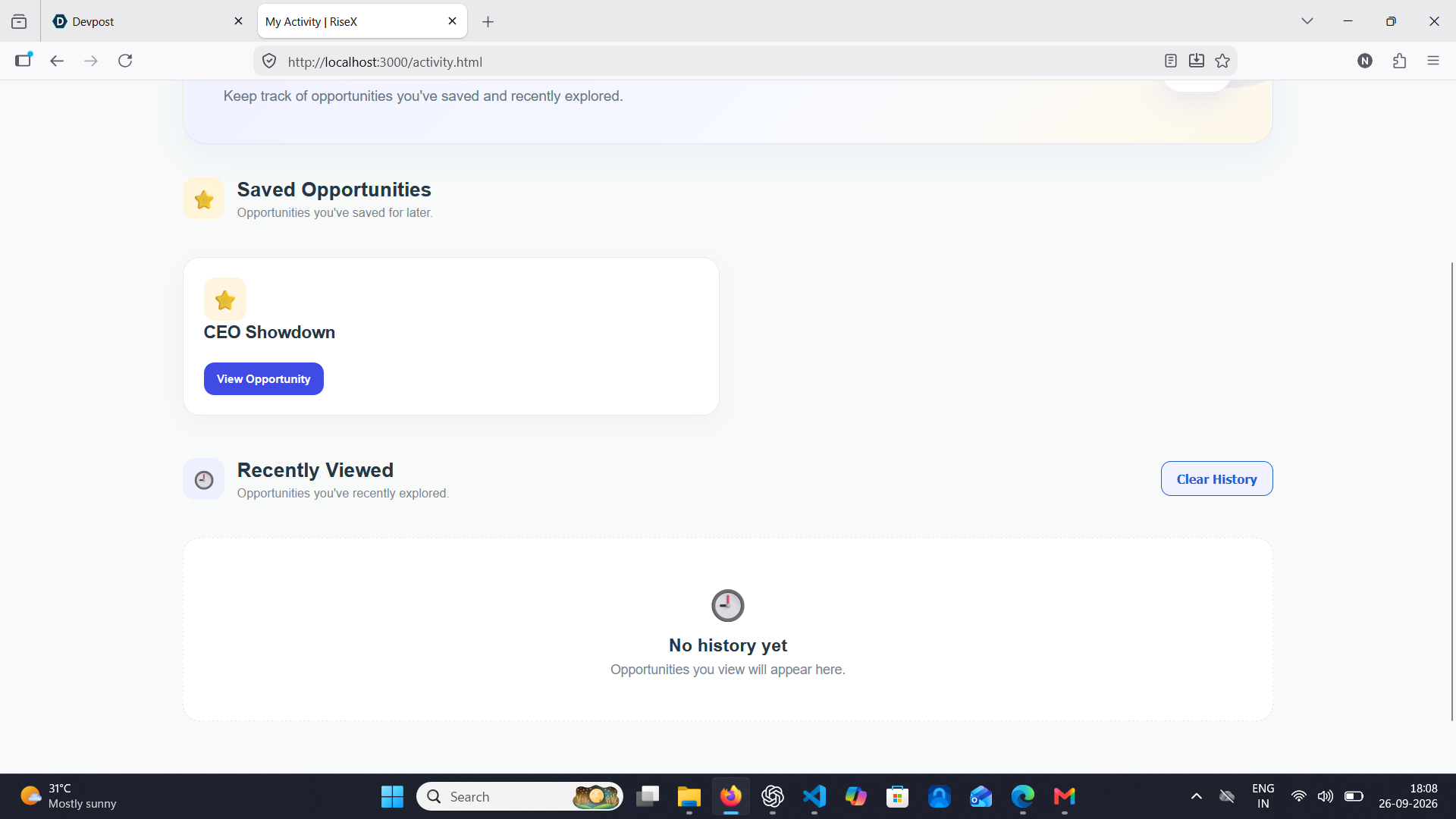
History Deleted
-
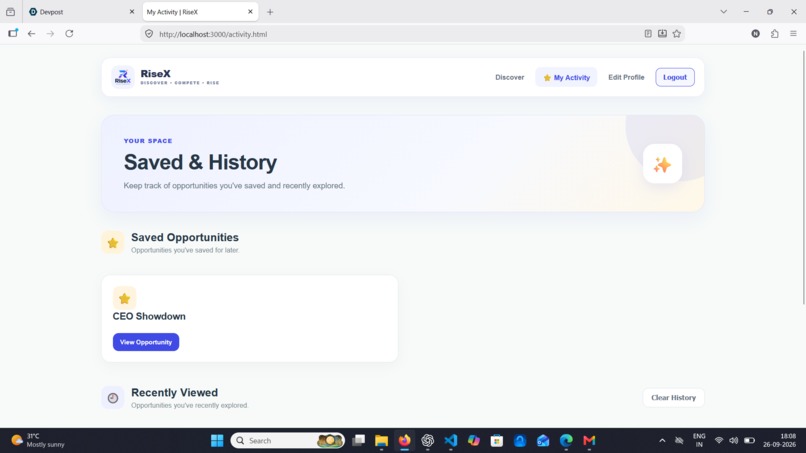
LogOut
Inspiration
Finding the right hackathons, competitions, olyampiads, and challenges can be surprisingly difficult for students. Opportunities are often scattered across different websites, and students may spend more time searching than actually participating.
We wanted to build something that makes this process simpler: a platform that helps students discover opportunities based on their class, interests, participation preferences, and fee preferences.
That idea became RiseX — a personalized responsive discovery platform for students looking for their next challenge.
What We Built
RiseX collects opportunities and presents them in one place, with personalized matching based on the user's profile.
Users can select:
- Their current class
- Their interests, such as AI, coding, mathematics, business, finance, and more
- The types of challenges they want
- Online, offline, or both
- Free-only or free + paid opportunities
The platform then displays matching opportunities with useful information such as eligibility, team format, entry fee, prize, deadline, mode, and a personalized match percentage.
We also added filtering, sorting, saved opportunities, and recently viewed opportunities so users can manage the opportunities they find interesting.
How We Built It
RiseX was built using HTML, CSS, and JavaScript, with a Node.js + Express +(Some back-end).
The back-end connects to the Brabble API to retrieve opportunity data while keeping the API key protected through environment variables.
The front-end was designed with a responsive, colorful interface focused on making opportunity discovery simple and easy to navigate.
We also used OpenAI for some debugging in the project.
What We Learned
While building RiseX, we learned how different parts of a real web application work together — from front-end design and JavaScript interactions to APIs, back-end routes, environment variables, filtering, and data handling.
We also learned that building a useful product isn't just about making something that works. The information needs to be presented clearly, the user experience needs to make sense, and small details such as filtering, deadlines, saved items, and responsive design can make a big difference.
Challenges We Faced
One of our biggest challenges was working with external opportunity data and making sure it could be fetched and displayed correctly in the application.
We also had to debug issues with API responses, data formatting, filtering, and front-end and back-end communication. Designing the interface was another challenge because we wanted RiseX to feel approachable and modern rather than like a simple list of links. A lot of issues arose while building RiseX responsive.
Through these challenges, we gradually turned the initial idea into a working platform.
What's Next
RiseX is currently focused on helping students discover competitions and challenges more easily. In the future, we would like to expand the number and variety of opportunities, improve personalization, add stronger recommendation systems, make it easier for students to track their participation and progress, add better login system and many more ...
Our goal is simple:
Spend less time searching. Spend more time participating.
Built With
- brabble-api
- css
- express.js
- html
- javascript
- node.js
- rest-api


Log in or sign up for Devpost to join the conversation.