-
-
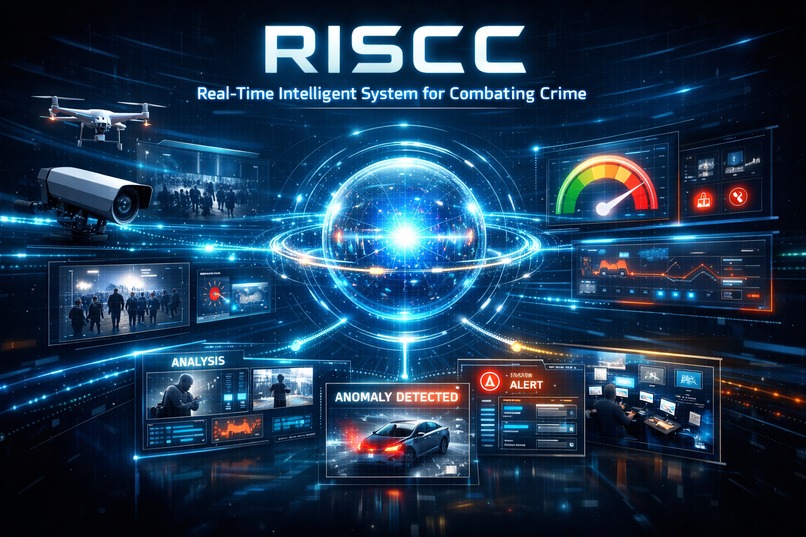
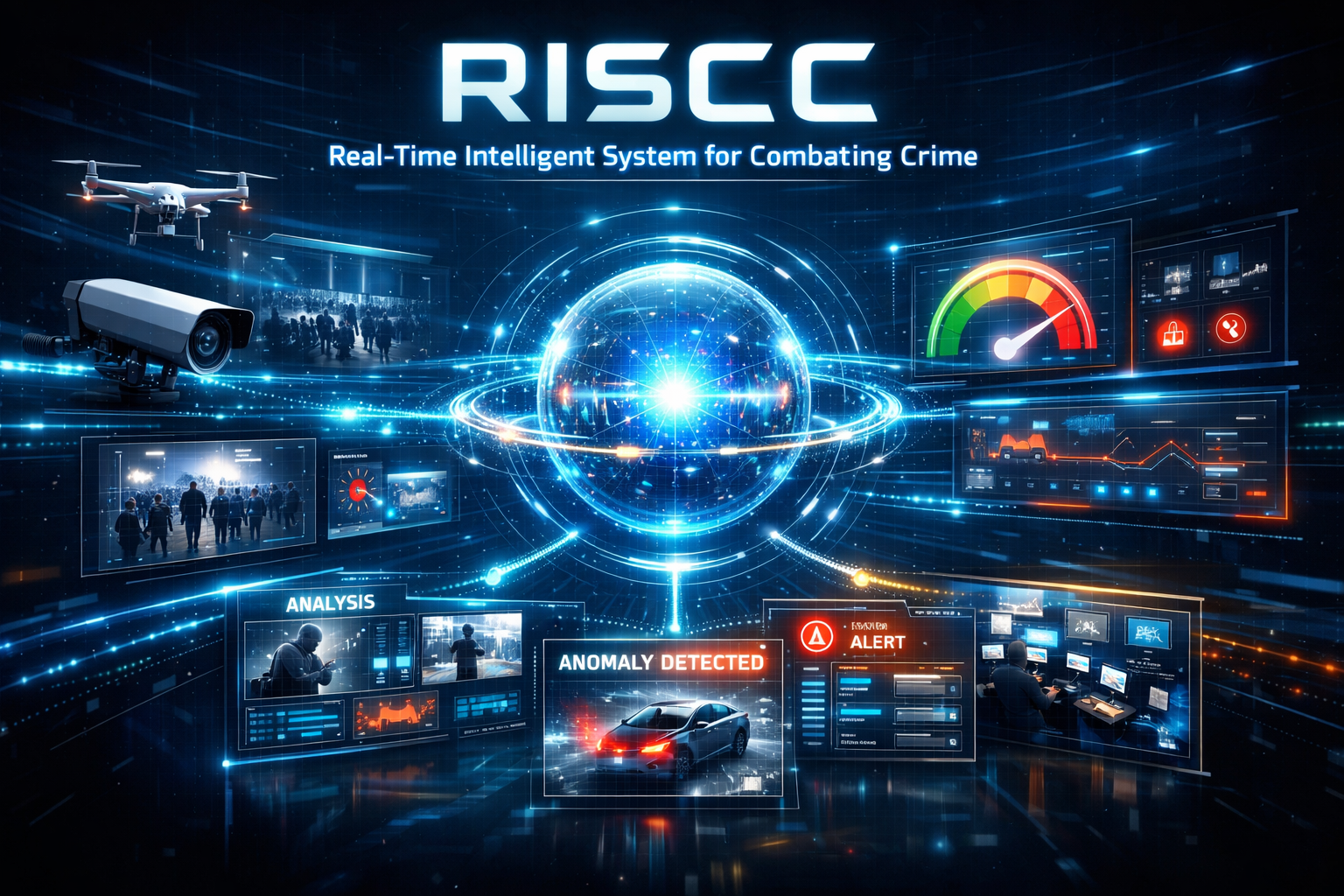
RISCC – Real-time Intelligent System for Combating Crime
Inspiration
We were inspired by a painful pattern: in many major public incidents; attacks, stampedes, road disasters incidents where cameras were present, footage existed, and suspicious behavior was sometimes visible before the event. The failure wasn’t visibility; it was interpretation. Traditional surveillance records reality but doesn’t understand it. We asked a simple question: What if cameras could reason, not just watch? RISCC was born from the belief that the gap between observation and understanding is where preventable tragedies still hide.
What it does
RISCC (Real-time Intelligent System for Combating Crime) is an AI-powered behavioral intelligence platform. Instead of only detecting objects, it analyzes how people and environments behave over time.
It identifies signals like:
- Unusual movement patterns
- Panic flow in crowds
- Concealment gestures
- Erratic driving
- Sudden behavioral shifts
Using multimodal reasoning, RISCC evaluates context — location type, crowd density, motion dynamics, and object interactions — to estimate risk before escalation. The system produces a real-time risk score:
[ Risk = f(Behavior, Context, Motion, Environment) ]
This allows authorities to move from reaction to prevention.
How we built it
RISCC combines computer vision, behavioral modeling, and multimodal AI reasoning.
Architecture layers:
- Input Layer – Live CCTV and archived incident footage
- Perception Layer – Human detection, pose estimation, object tracking
- Behavior Layer – Pattern recognition for abnormal or pre-incident signals
- Reasoning Layer (Gemini) – Context understanding and multimodal fusion
- Prediction Engine – Risk scoring and escalation modeling
- Decision Layer – Real-time alerts and operator dashboard
Gemini’s multimodal capabilities allow RISCC to merge visual signals with scene context and temporal behavior trends, enabling low-latency decision support.
Challenges we ran into
1. Behavior is subtle. Unlike object detection, suspicious behavior is not binary. We had to focus on patterns over time rather than single frames.
2. Context changes meaning. Running in an airport ≠ running in a stadium exit. Teaching the system to reason about environments was complex.
3. Balancing speed and intelligence. Real-time systems must respond in seconds, but deeper reasoning takes computation. We optimized for low-latency inference without losing predictive depth.
4. Ethical responsibility. Designing a system that predicts risk required careful thinking about bias, fairness, and human oversight.
Accomplishments that we're proud of
- Moving beyond object detection into behavioral intelligence
- Creating a pipeline that goes from video → reasoning → prediction in seconds
- Demonstrating that AI can assist prevention, not just investigation
- Designing a system that augments human operators instead of replacing them
RISCC represents a shift from “camera as recorder” to “camera as decision-support sensor.”
What we learned
- Most critical warning signs are temporal, not visual snapshots
- Context is as important as detection
- AI is most powerful when paired with human judgment
- Prevention technology must be designed with ethical guardrails from the start
We learned that intelligence in surveillance is not about more cameras — it’s about better interpretation.
What's next for RISCC – Real-time Intelligent System for Combating Crime
Next, we aim to:
- Expand training datasets across different environments
- Improve predictive modeling for crowd dynamics
- Build explainable AI features so operators understand why a risk score was generated
- Develop edge deployment for faster processing
- Collaborate with safety agencies for real-world pilots
Our goal is to make RISCC a system that helps society shift from seeing incidents to preventing them.
Tagline: See the threat. Know the risk. Stop the crime.
Built With
- computervision
- fastapi
- firebase
- google-cloud
- javascript
- kafka
- ml
- mongodb
- node.js
- python
- sql
- yolo


Log in or sign up for Devpost to join the conversation.