-
-
-
-
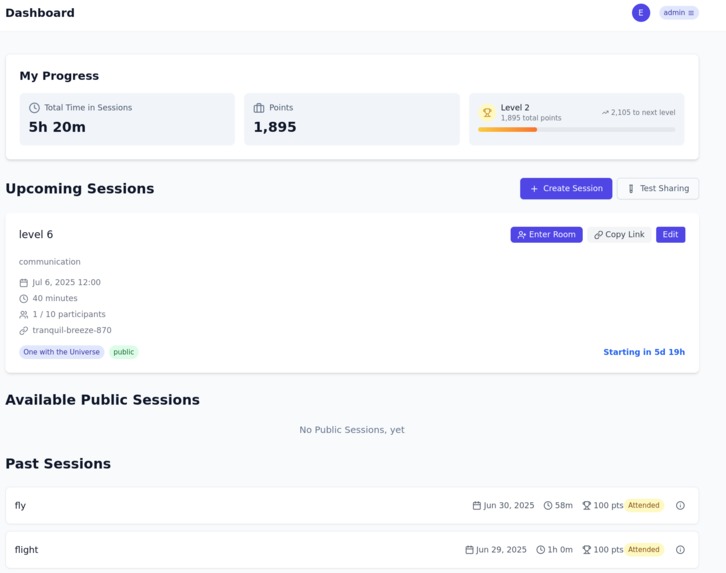
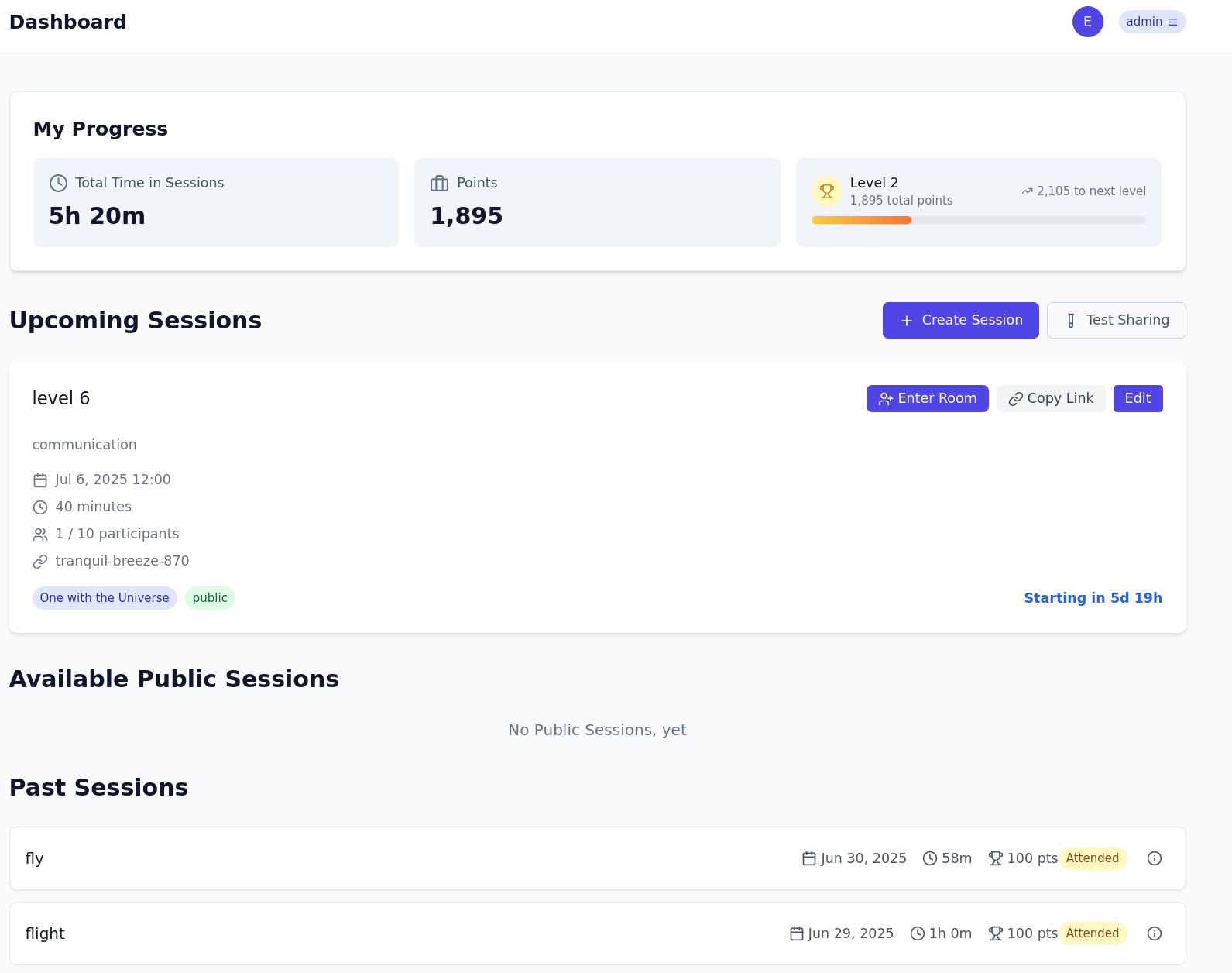
Dashboard
-
-
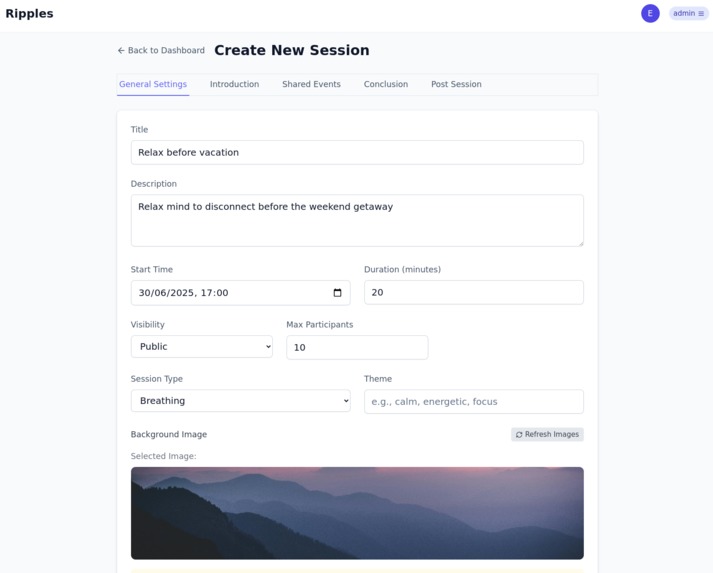
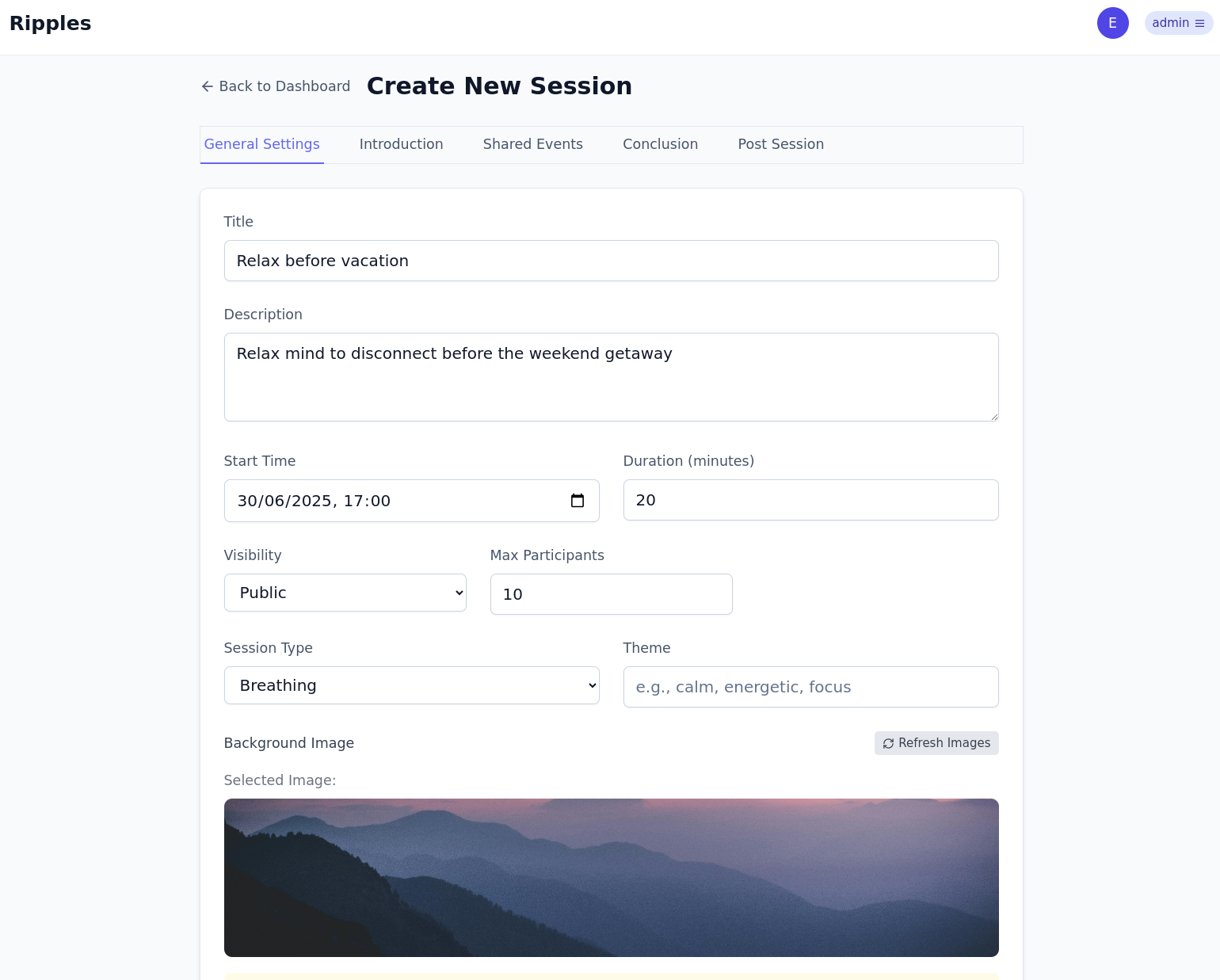
Create new session
-
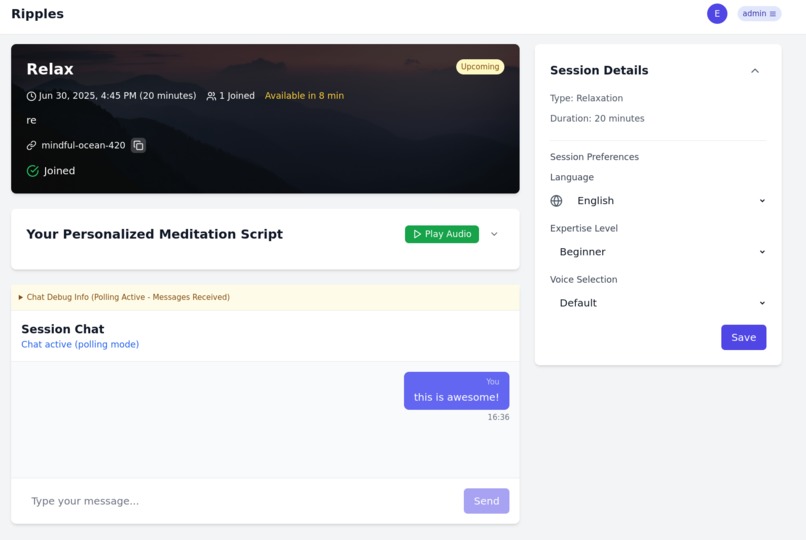
post session sharing
-
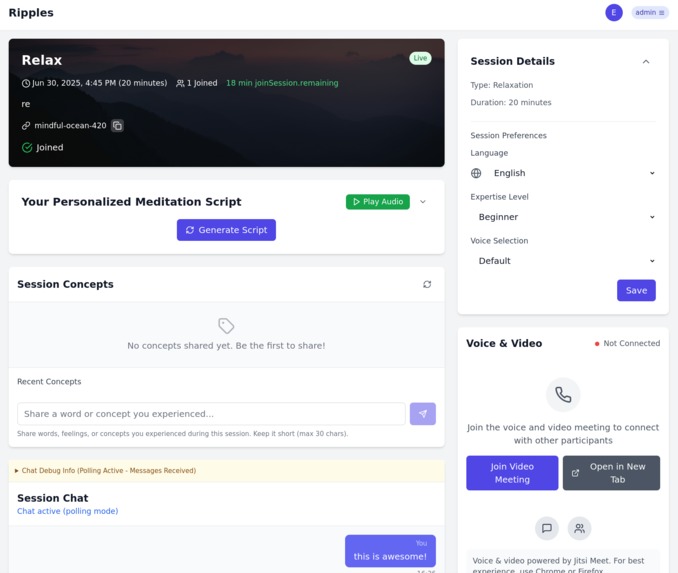
post-session video meeting
Inspiration
I created Ripples after hitting a wall in my own pursuit of self-improvement. I was using all the usual tools—meditation apps, habit trackers, productivity hacks—but none of them felt built for the future we’re heading into. The noise was getting louder, not quieter. The more I optimized my output, the more disconnected I felt from myself.
At the same time, I saw the world around me leaning harder into automation, outsourcing decisions to algorithms, and letting AI define how we work and live. That raised a bigger question: If we’re upgrading everything else, why aren’t we upgrading the way we think, feel, and connect?
So I built Ripples—not just to calm the mind, but to evolve it. A tool that combines neuroscience, real-time biofeedback, and AI to help us become more focused, more empathetic, and more human. Not a productivity hack—but a personal upgrade. Nothing else out there was doing that.
Ripples isn’t about escaping the future. It’s about becoming the kind of humans who can shape it.
How we built it
Ripples was built on Bolt.new to accelerate early development. I rapidly prototyped the core experience, then refined it through real user sessions—tracking feedback, behaviors, and outcomes. I dedicated focused time working alongside AI to fine-tune the personalization engine, voice profiles, and reward loops. Every iteration brought it closer to what users actually needed: something deeply personal, adaptive, and grounded in real-time response.
Challenges we ran into
One of the biggest challenges was achieving a balance between personalization and simplicity. Users wanted an experience that felt tailored to their mental state, but not one that required constant input or tuning. Building a real-time feedback loop that adjusted based on subtle cues—without overwhelming the user—took several iterations and a lot of trial and error.
Another challenge was integrating real-time biofeedback in a way that felt meaningful, not gimmicky. We had to ensure that the data we used (e.g., HRV, breathing patterns, interaction rhythms) actually informed the audio experience in a way that supported the user’s mental state. That meant diving deep into both the science and the UX. Unfortunately, in the end we had to postpone integration of biofeedback devices because the web version was more popular than a dedicated app.
Finally, there’s the challenge of trust. Mindfulness is intimate, and building something that users feel safe using—especially when AI is involved—meant taking a privacy-first approach and being transparent about how data is used (and not used).
Accomplishments That We're Proud Of
We’re proud that Ripples isn’t just another meditation app—it’s a new category. We successfully combined personalized AI-generated audio, and gamified engagement in a seamless experience that adapts to each user’s inner state.
Another major win was validating our concept early through actual user sessions. Seeing people experience an emotional shift—sometimes in minutes—and then come back asking for more was the signal we needed that Ripples was working.
We also built a lean but powerful personalization engine in record time, thanks to using Bolt.new for fast iteration. And we’ve created a foundation for a real data moat based on anonymized emotional response patterns—something no other mindfulness platform is doing at this level.
What We Learned
We learned that the future of wellness isn’t just about content—it’s about response. Users don’t want another generic meditation tool, they want something that adapts with them, and the ability to share their experience with others.
We also learned that AI can be a powerful partner in creating mindfulness—not by replacing human insight, but by enhancing it. Some of the most compelling features came from co-designing alongside AI and letting it offer variations that a human alone might not have considered.
What's Next for Ripples
Next, we're launching a closed beta with early adopters to gather deeper usage data and test our habit loops in real-world conditions. We’ll be measuring emotional uplift, return frequency, and referral behavior to refine our AI models further.
We're also redesigning support for biofeedback inputs, allowing for even smarter, passive personalization. A creator mode is in development, allowing mindfulness coaches to design and distribute their own sessions via the platform.
Looking ahead, we see Ripples evolving into a full mental performance system—something people use not just to manage stress, but to enhance creativity, collaboration, and emotional intelligence in their daily lives.
Features
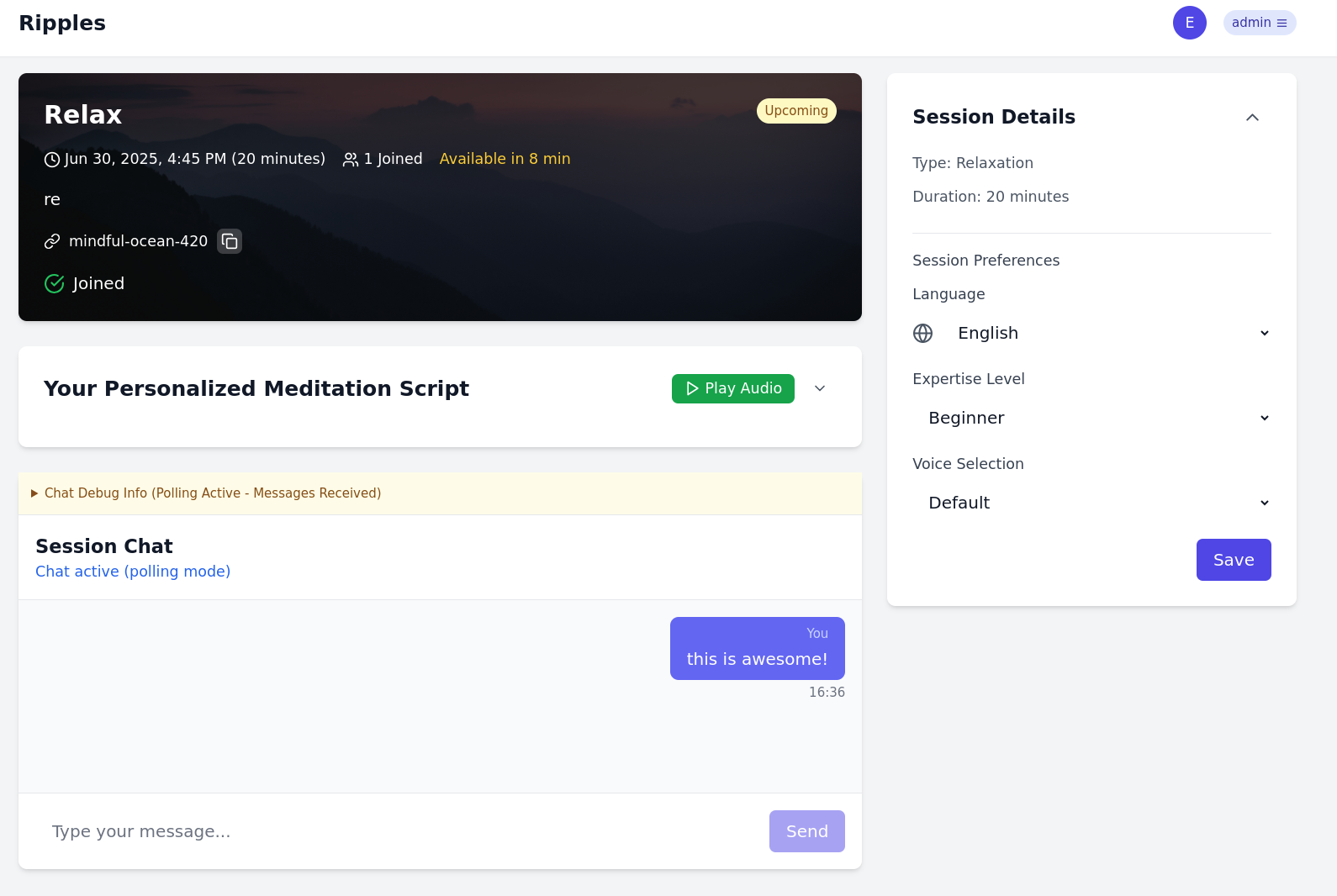
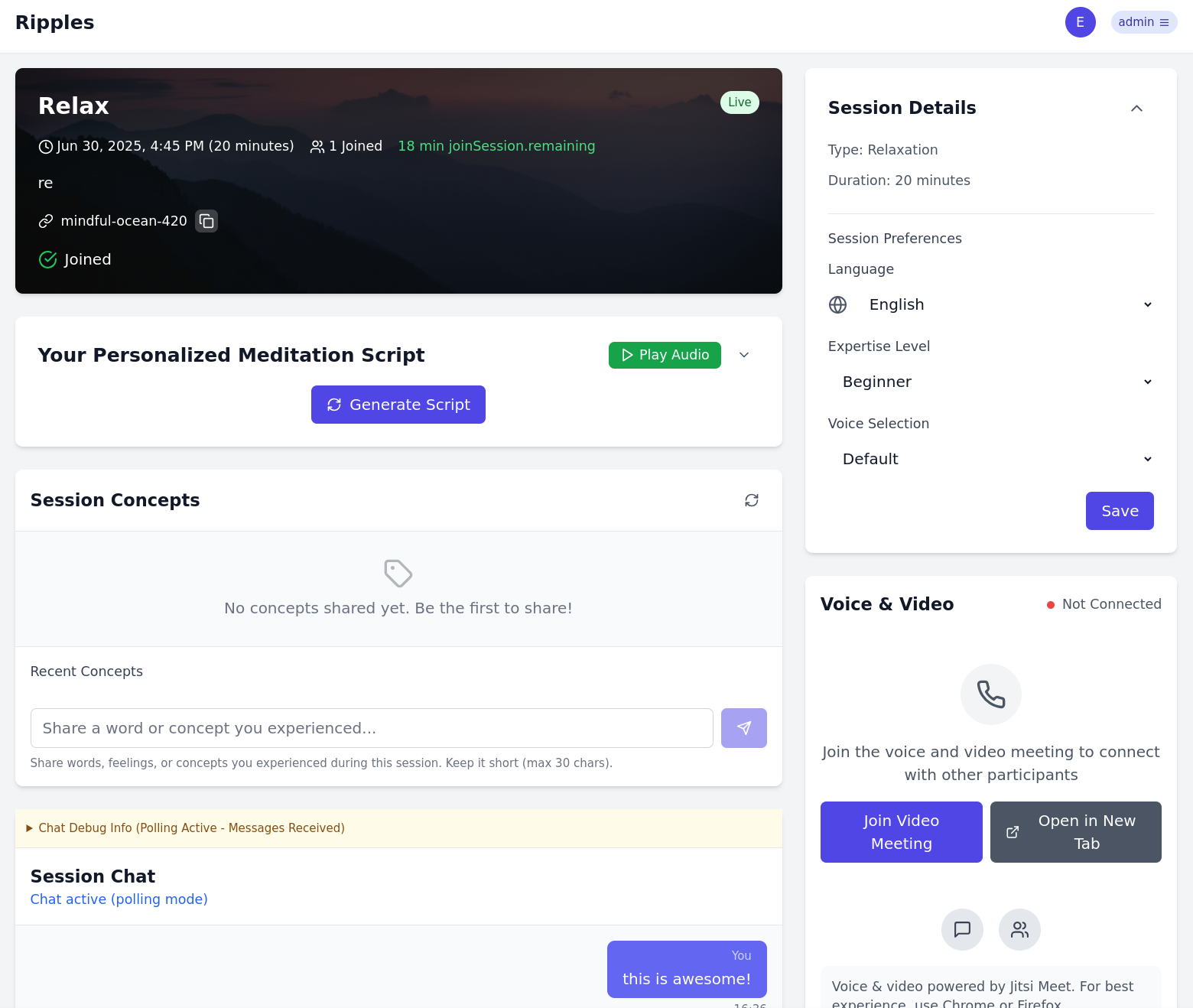
- AI meditation script generation
- Customizable voice selection for audio script
- Individual/Group meditation sessions
- Synchronized meditation events for powerful synchronicities
- Real time post-meditation sharing
- Word clouds to quickly find shared events and concepts
- Web-based for universal accessibility
- Upcoming app version to support biofeedback devices
- Real time feedback about state of mind
- Dynamic meditation script adaptation based on state of mind
- Ability to collect state of mind data points anonymously to get a real time global state of mind picture
- Set private and public sessions for thousands of participants
- Video sharing using Jitsi API
- Support for binaural beats and background music
- Dynamic and contextual volume adjustment of ambiance music
- Unique session links to make sessions available for non-members
- Support for multiple language, both for UI and for script generation (meditate in your own language)
- Customized script generation based on experience level and current state of mind
Built With
- bolt.new
- elevenlabs
- jitsi
- next
- node.js
- sql
- supabase
- typescript


Log in or sign up for Devpost to join the conversation.