-
-
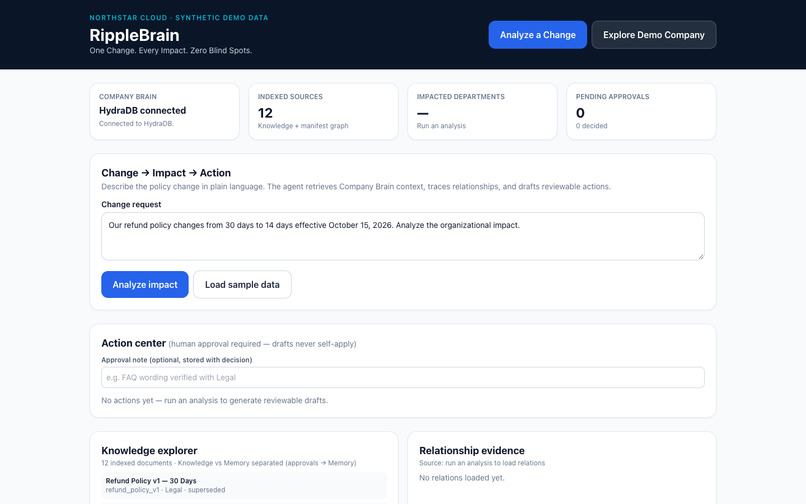
Dashboard
-
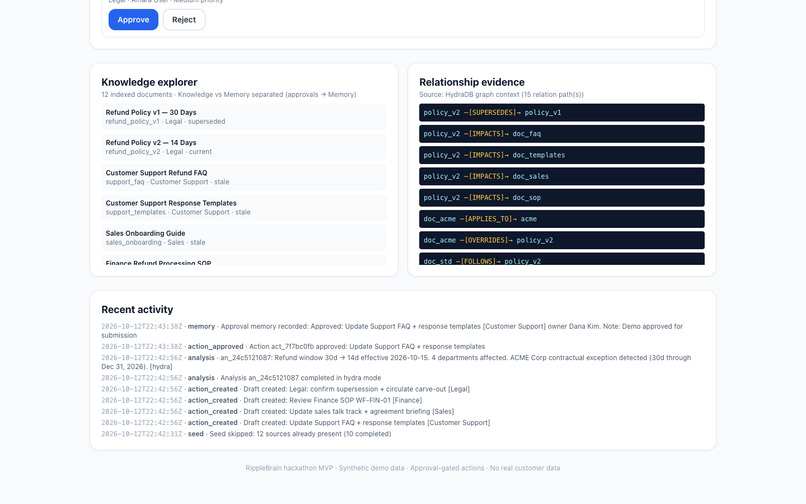
Knowledge
-
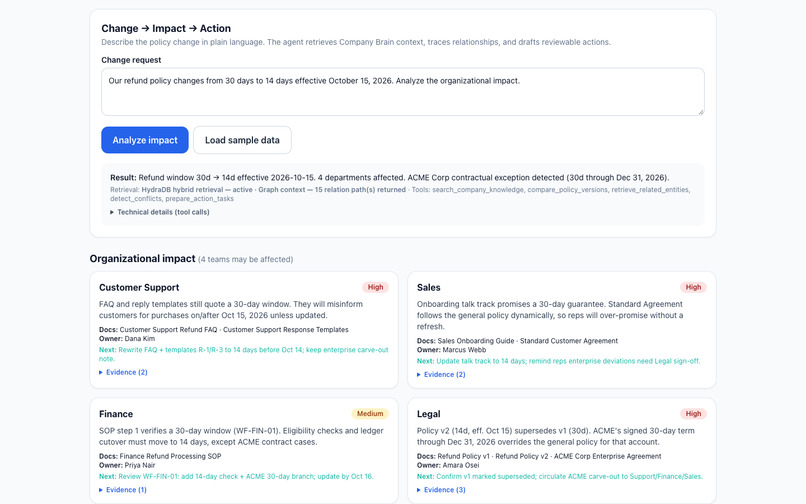
Impact
-
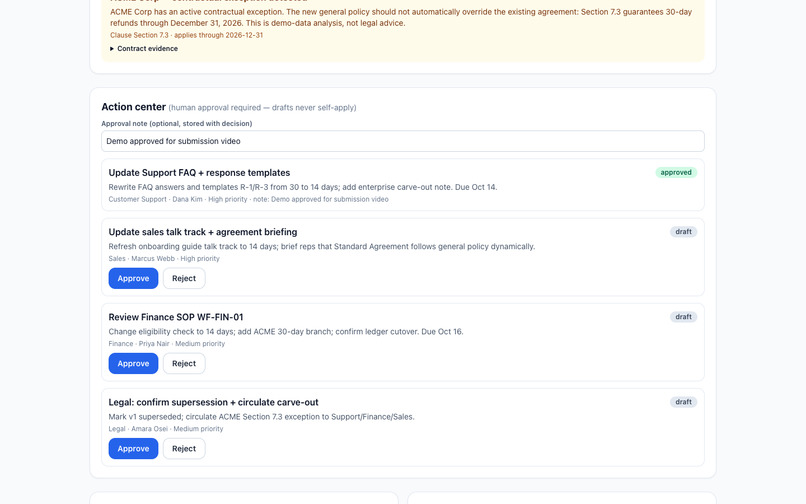
Actions (After)
-
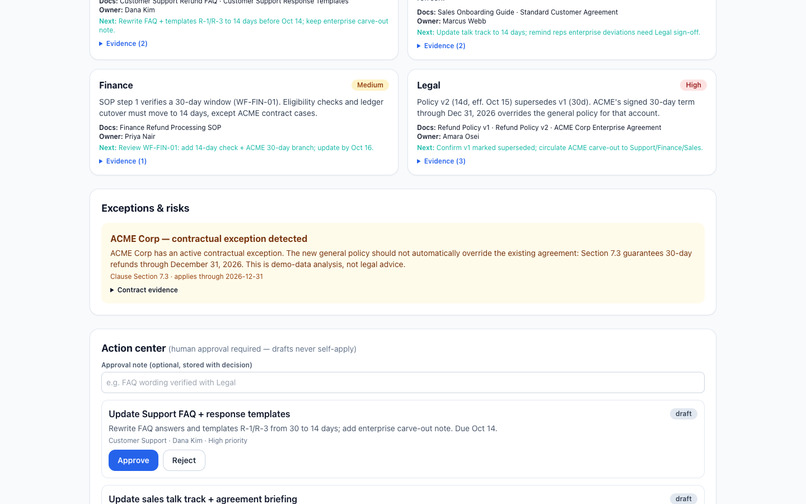
Exception
-
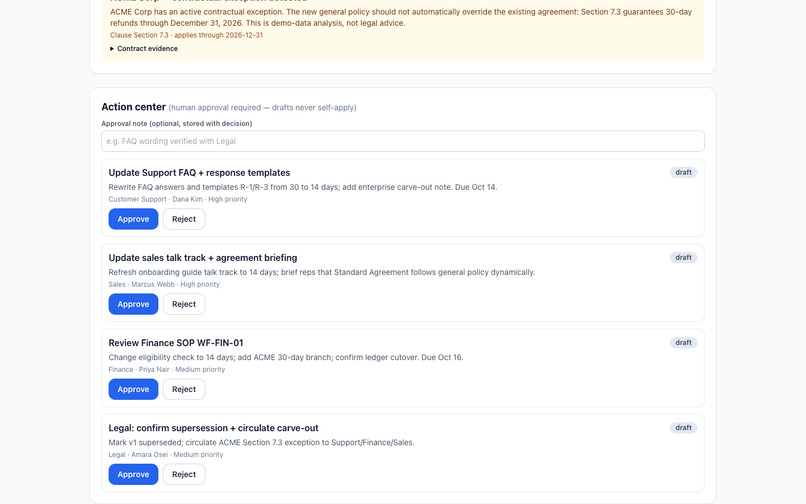
Actions (Before)
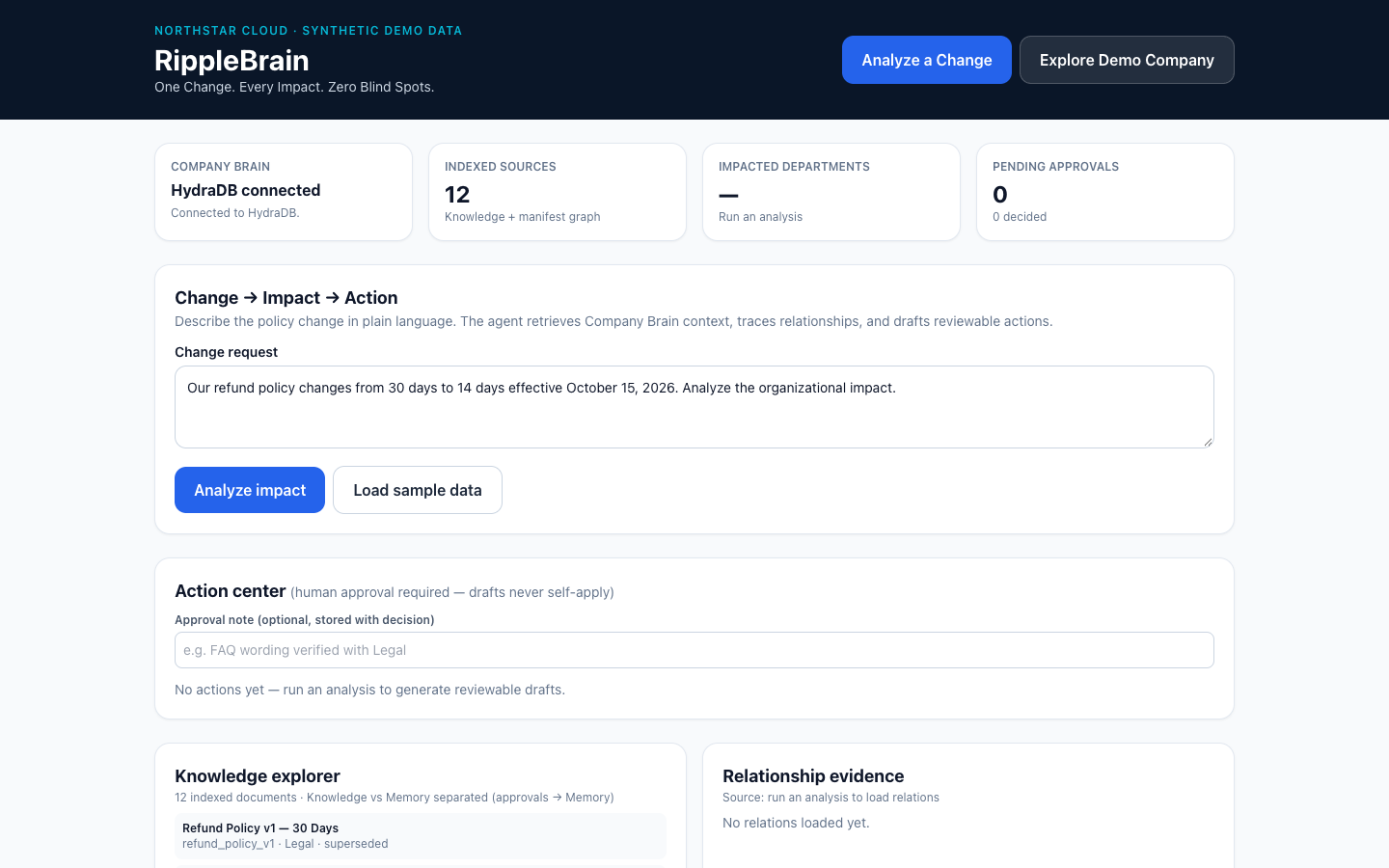
RippleBrain — One Change. Every Impact. Zero Blind Spots.
An Enterprise AI Agent That Turns Organizational Changes Into Action.
Inspiration
A single policy change can affect an entire company.
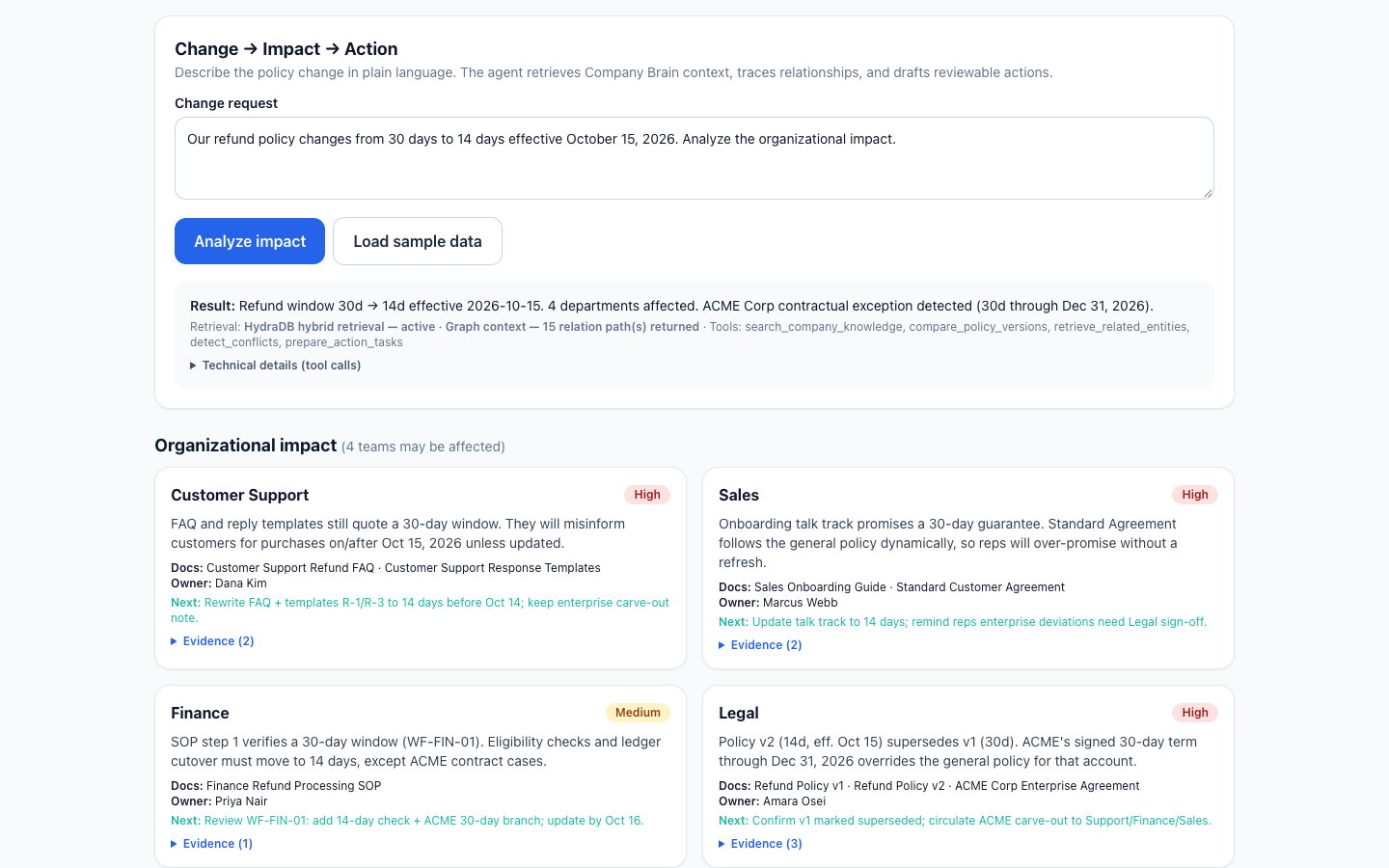
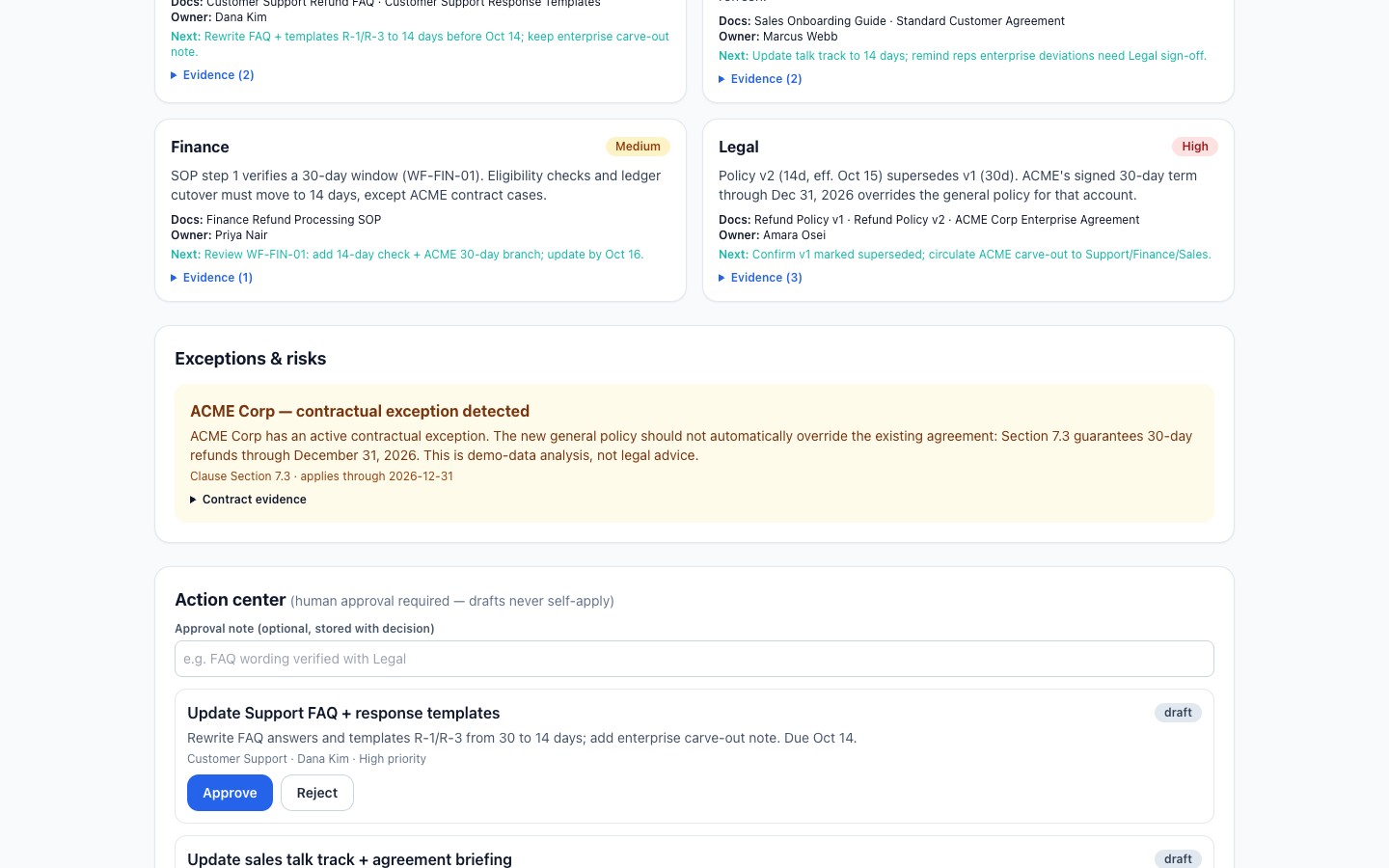
Imagine changing a refund policy from 30 to 14 days. Customer Support still uses outdated FAQs, Sales shares old terms, and Finance follows previous procedures. Meanwhile, an existing customer contract guarantees 30-day refunds.
The problem isn't making a decision. It's understanding and managing its ripple effects.
Traditional RAG helps companies find information. RippleBrain helps them understand what needs to change—and what to do next.
What It Does
RippleBrain connects company knowledge to identify the organizational impact of policy, contract, and process changes.
When a policy changes, RippleBrain:
- Connects knowledge across documents, contracts, policies, and departments.
- Analyzes impact to identify affected teams, workflows, and responsibilities.
- Detects conflicts such as outdated procedures and contractual exceptions.
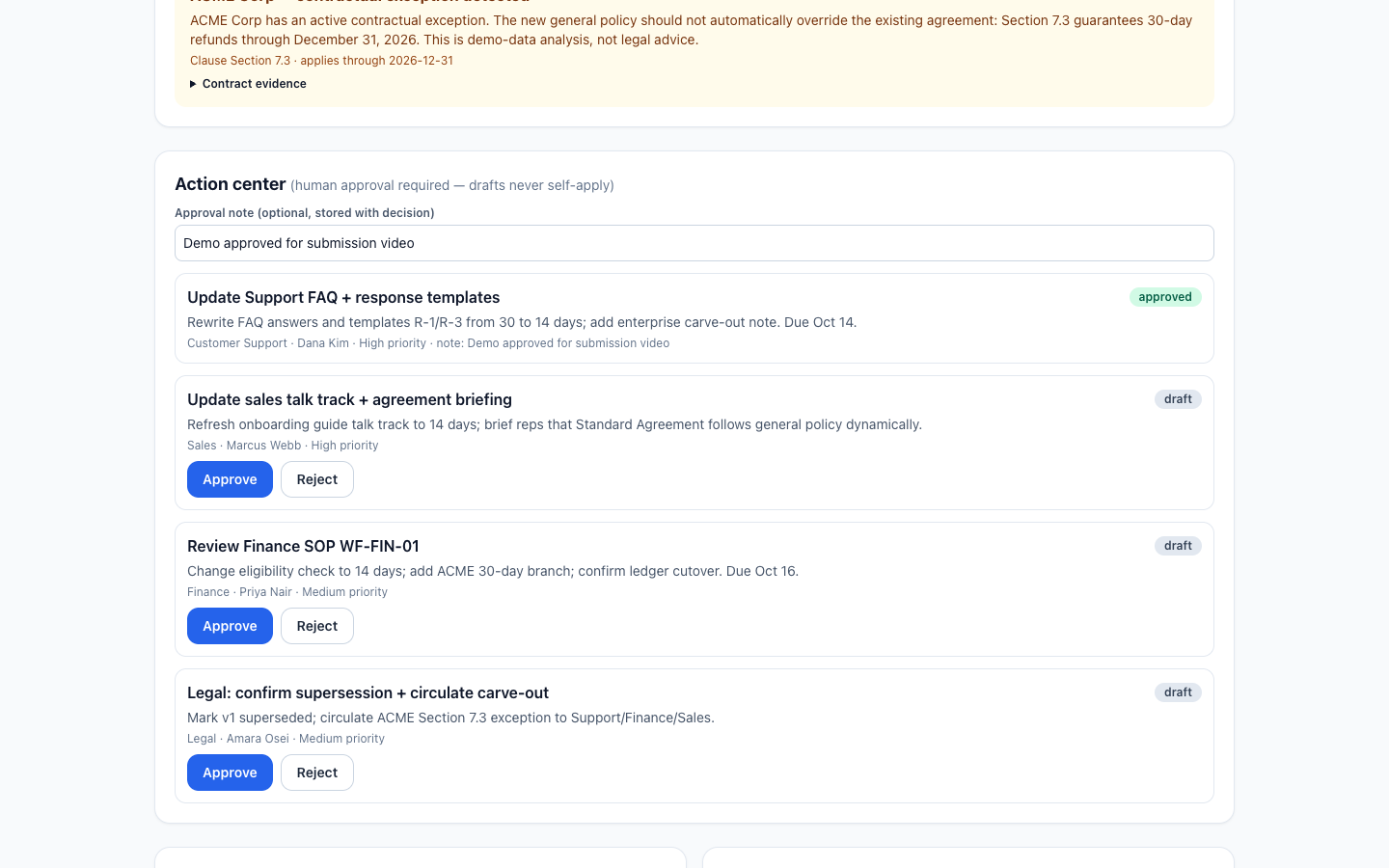
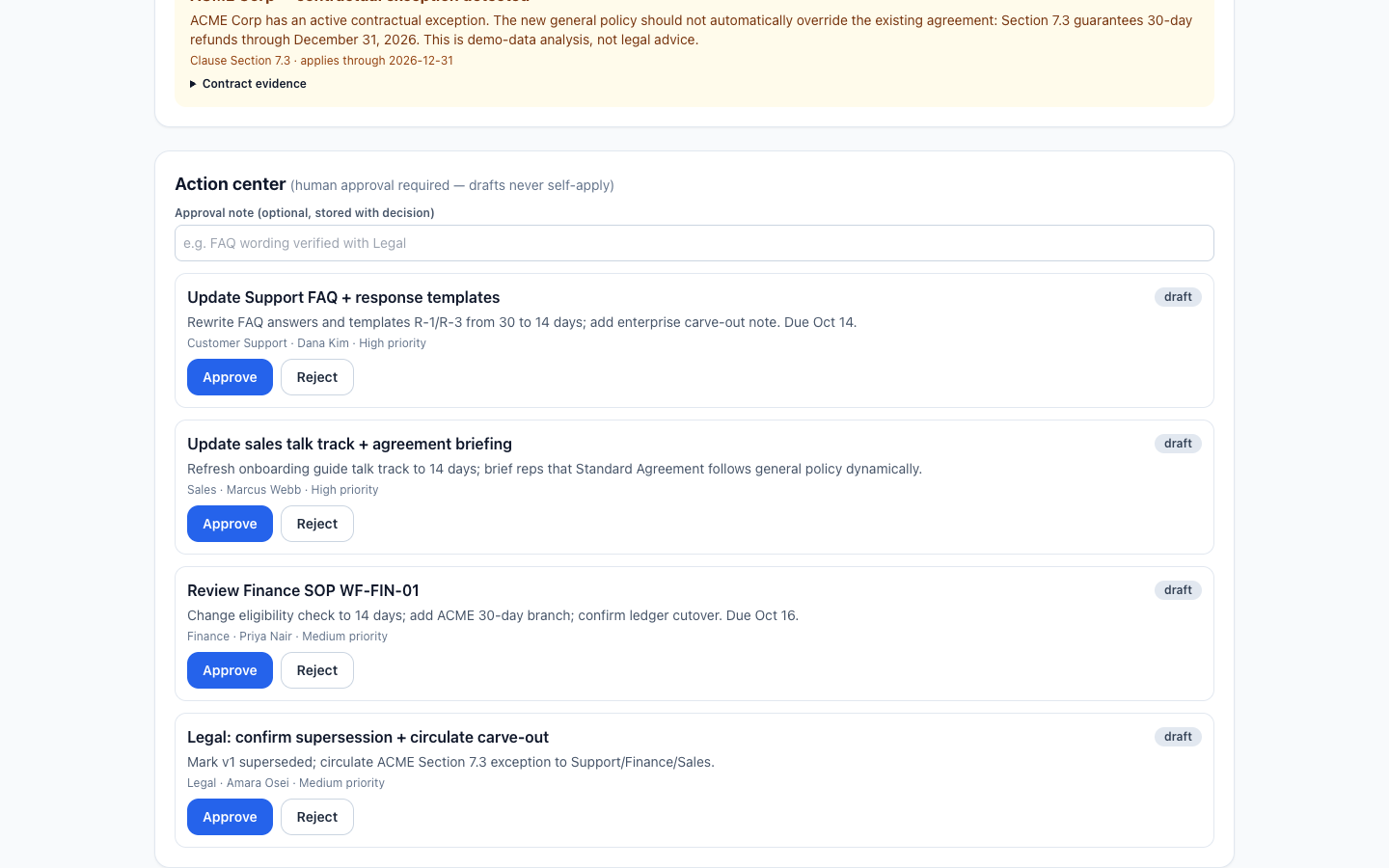
- Takes action by generating evidence-backed tasks for human approval.
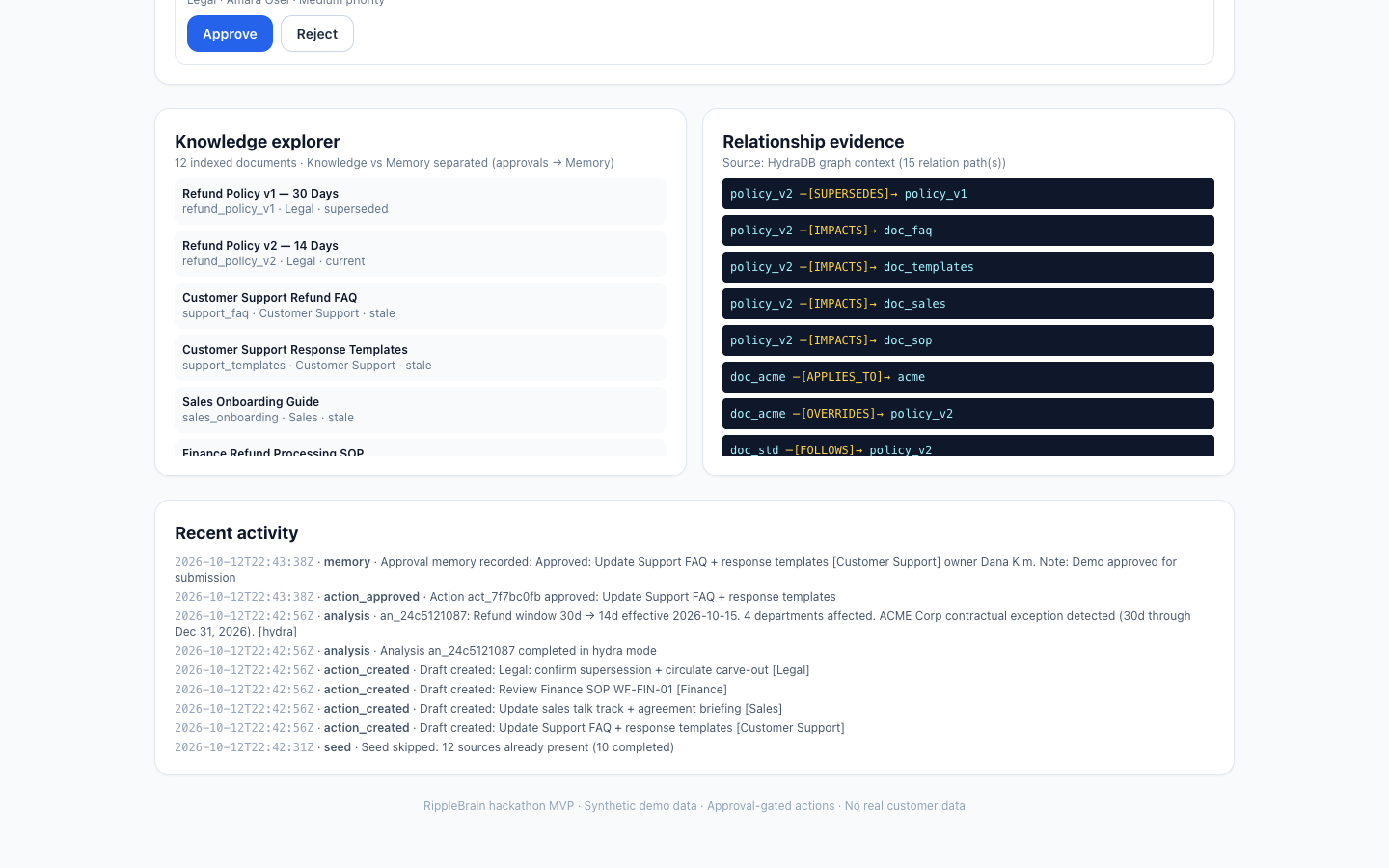
- Preserves context by recording approved decisions for future reference.
One change → Every impact → Coordinated action.
How I Built It
RippleBrain combines four core components:
- HydraDB: Live hybrid retrieval across company documents, verified knowledge graph relationships, and persistent decision memory.
- Digo App-Starter: Authentication, organization workspaces, and role-based access control, providing the foundation for an enterprise SaaS application.
- RippleBrain Analysis Engine: Tool-driven impact analysis, conflict detection, and automated task generation with human approval.
- Enterprise Dashboard: A Next.js interface for exploring evidence, reviewing organizational impacts, and coordinating actions.
The application connects organizational knowledge to actionable workflows while keeping people in control of important decisions.
Key achievement: Successfully integrated HydraDB's Knowledge, Graph, and Memory capabilities into an end-to-end workflow that turns company knowledge into coordinated actions.
Graph relationships were verified through live retrieval, while full graph indexing remains in progress.
Challenges
- Connecting fragmented company knowledge across departments.
- Distinguishing outdated policies from valid contractual exceptions.
- Balancing agent autonomy with human oversight.
- Building a useful end-to-end workflow within hackathon constraints.
What I Learned
Enterprise AI needs more than accurate retrieval. It must understand relationships, historical context, and the consequences of decisions.
This project explored how graph-based knowledge, persistent memory, and human-in-the-loop agents can support more reliable organizational workflows.
What's Next
- Integrate Slack, Jira, Notion, and enterprise document systems.
- Automatically detect changes and monitor downstream impacts.
- Add role-based permissions, audit trails, and evaluation metrics.
- Expand beyond policies into contracts, compliance, HR, and operations.
RippleBrain: Because one change should never create a hundred blind spots.
Built With
- agentic-ai
- generative-ai
- graphrag
- hydradb
- knowledge-graph
- llm
- python
- rag


Log in or sign up for Devpost to join the conversation.