-
-
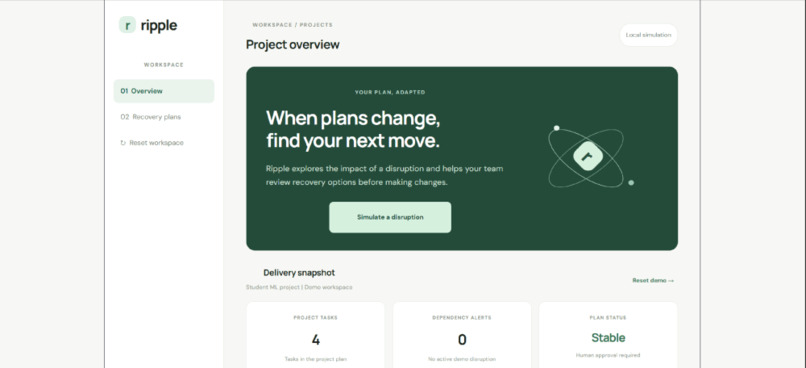
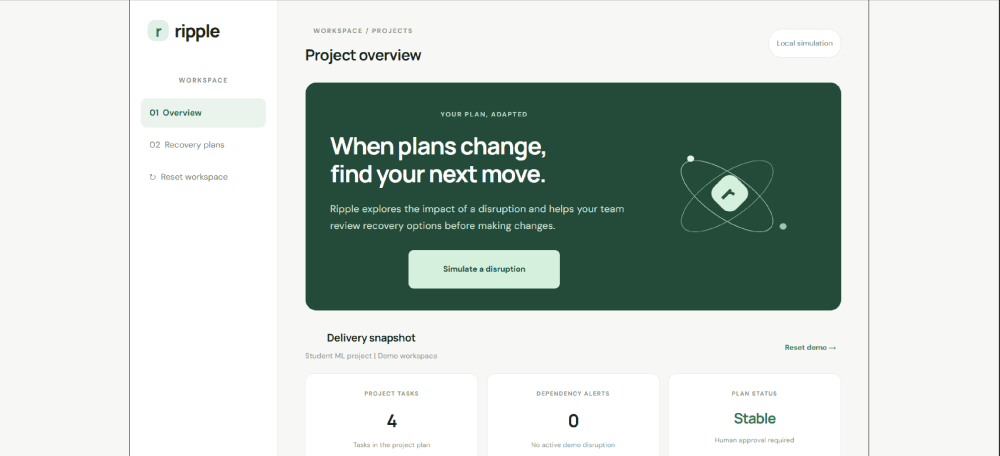
Ripple dashboard
-
-
-
-
Ripple — Project Recovery Assistant
Inspiration
Projects may end up being delayed if the tasks are delayed, the deadlines change, or if the recovery plans bring about new risks. It is necessary for teams to have a clear method of comparing recovery strategies, of identifying cases where deadlines have been violated, and of making informed decisions before agreeing to a revised plan.
Ripple was developed with the aim of making project recovery more transparent, better organised, and easier to assess.
What it does
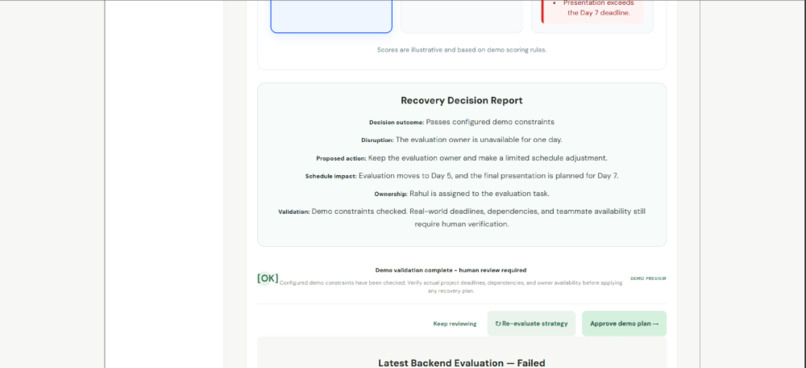
Ripple is an assistant designed for project recovery that compares different recovery strategies and assesses them based on scheduling rules.
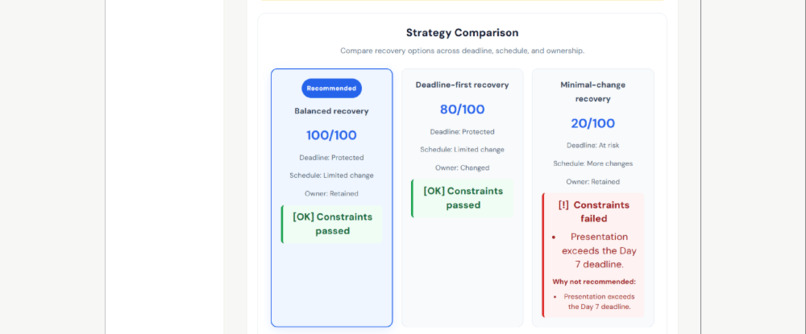
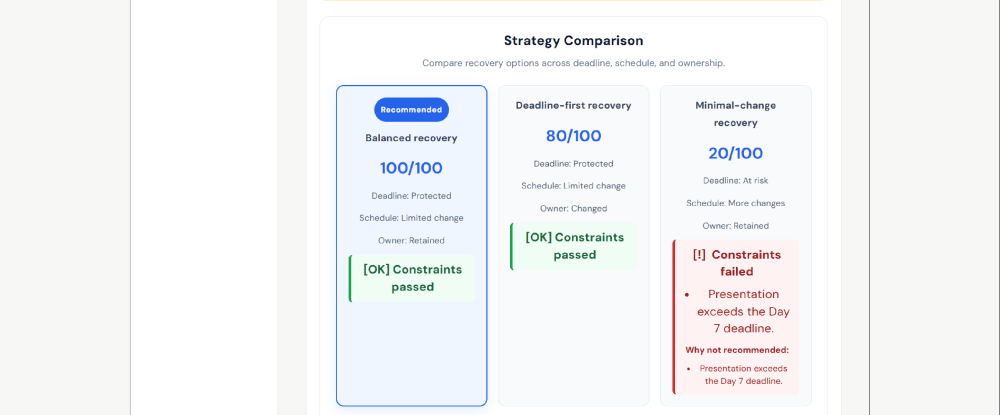
Key features include: – When comparing recovery strategies, look at balanced recovery, deadline-first recovery, and minimal-change recovery.
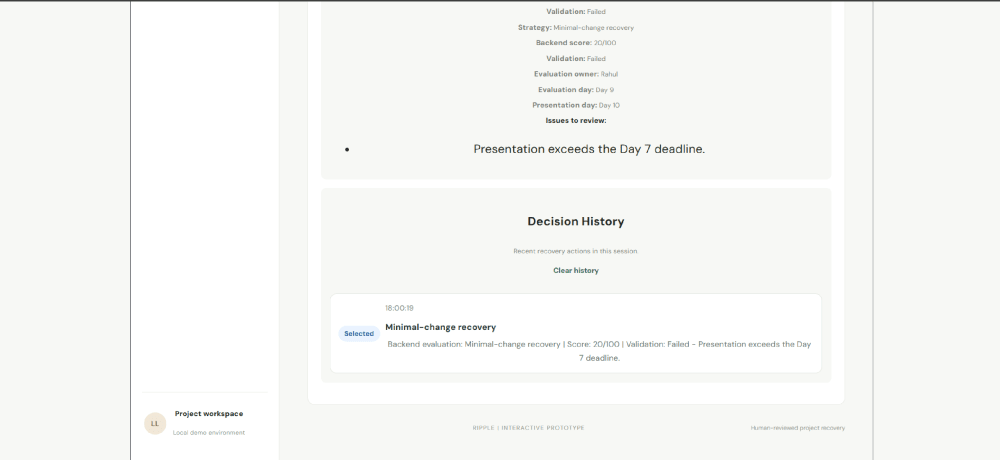
- Rule-based evaluation: Give example scores and verify that the suggested plan breaches the project's deadline rules.
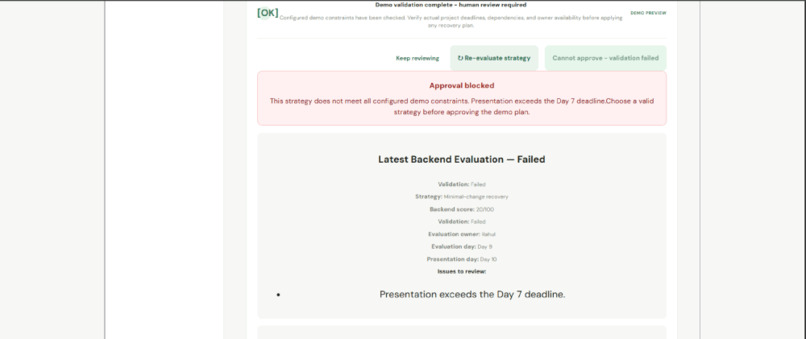
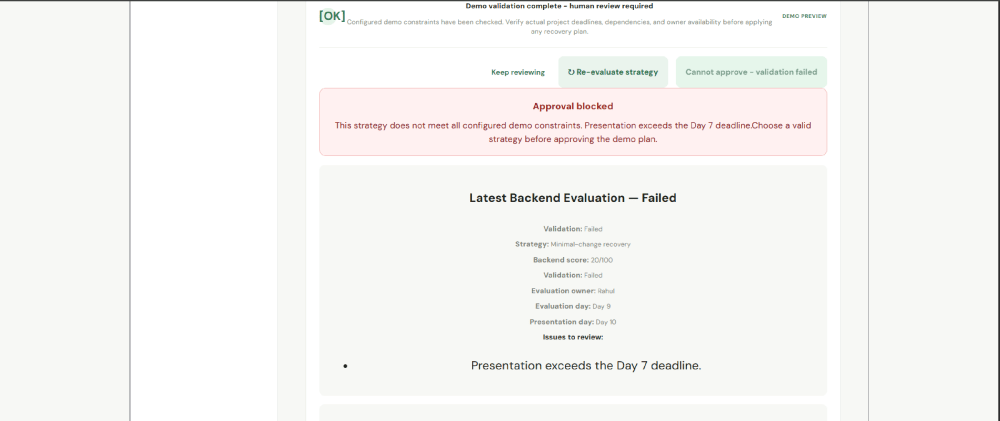
- Validation and detection of issues: Spot problems like a presentation that is scheduled after Day 7 or an evaluation that is scheduled too late.
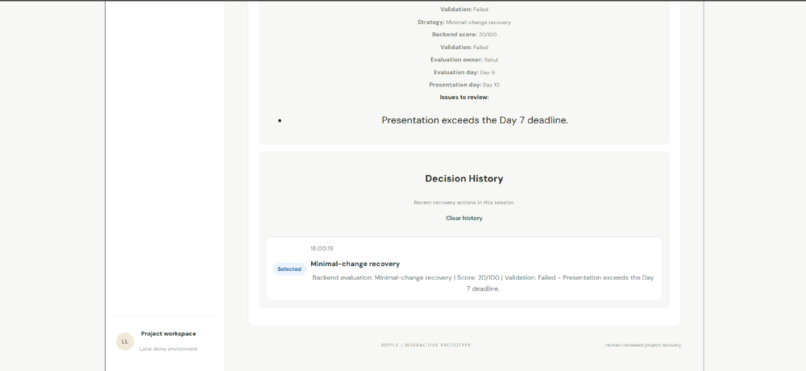
- Decision history: Look at the results of the earlier evaluations.
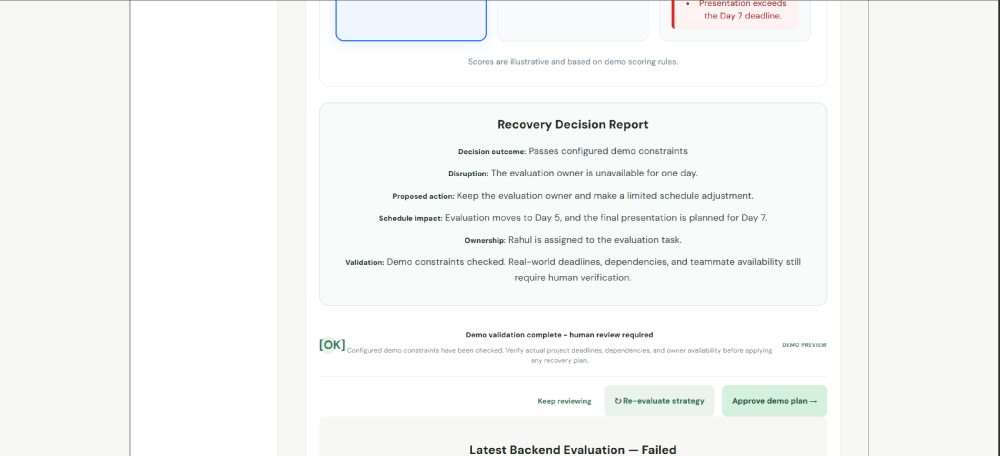
- Decision reporting: You can copy the decision summary or download the report to review it.
- Decisions that are reviewed by humans: this helps teams to evaluate the various recovery options while ensuring that the final approval remains with the people who are responsible for the project.
How we built it
The frontend of Ripple is built using React, TypeScript and Vite, while the backend makes use of Node.js and Express. The backend includes an MCP (Model Context Protocol) server which has an evaluate_recovery_strategy tool. This tool takes as its inputs a strategy, an evaluation day, a presentation day and an owner, and then outputs a structured evaluation containing a score, a validation status and any issues that have been detected.
We put the frontend and backend into operation and tested MCP initialization, tool discovery, and tool execution using the live backend.
This prototype makes use of rule-based scoring and data from illustrative projects. The results are meant to aid human review and not to replace project managers or to ensure actual outcomes in the real world.
Challenges and learning
A major challenge was making sure that the frontend showed the actual evaluation from the backend rather than one that was out of date or inconsistent. To achieve this, we enhanced the way the system handled responses and tested the live MCP endpoint to check that the expected evaluation was produced when recovery details were submitted.
As a result of this project we gained the knowledge needed to connect a web interface to a backend decision tool, make the tool's capabilities available via MCP, check the scheduling constraints and clearly communicate the evaluation results.
What's next
The next steps involve strengthening the recovery workflow, improving the testing and documentation, and investigating how Ripple can be presented as part of an Alexa+ compatible experience. Although the present version is a working web and MCP prototype, a full Alexa+ integration has not yet been set up.

Log in or sign up for Devpost to join the conversation.