-
-
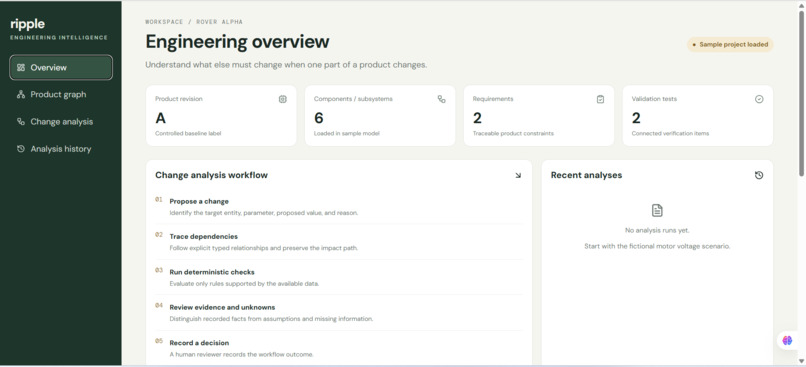
Dashboard
-
-
-
-
RIPPLE - Engineering Change Impact Agent
See the full impact before you change.
The Problem
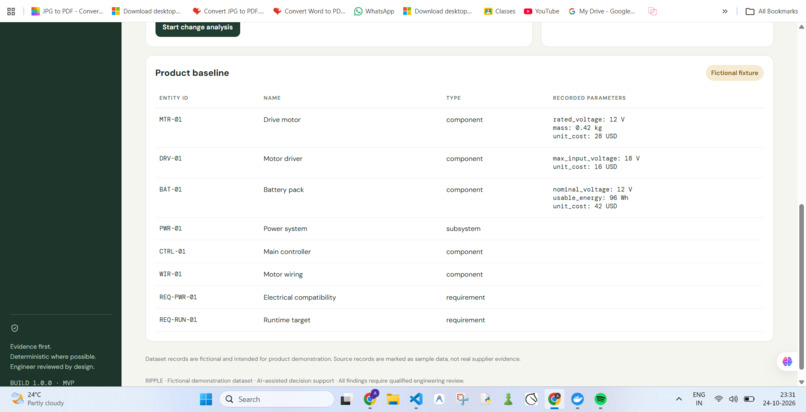
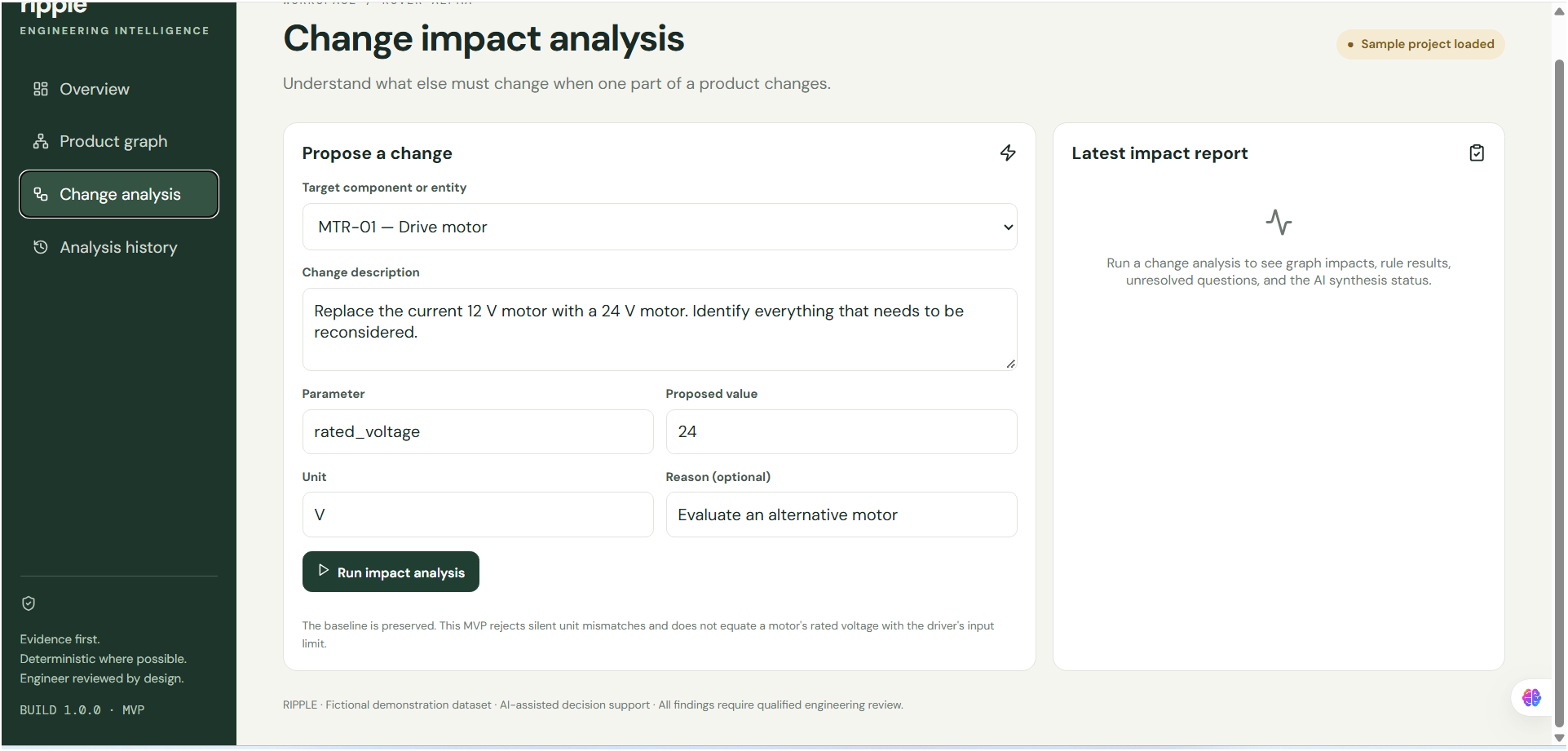
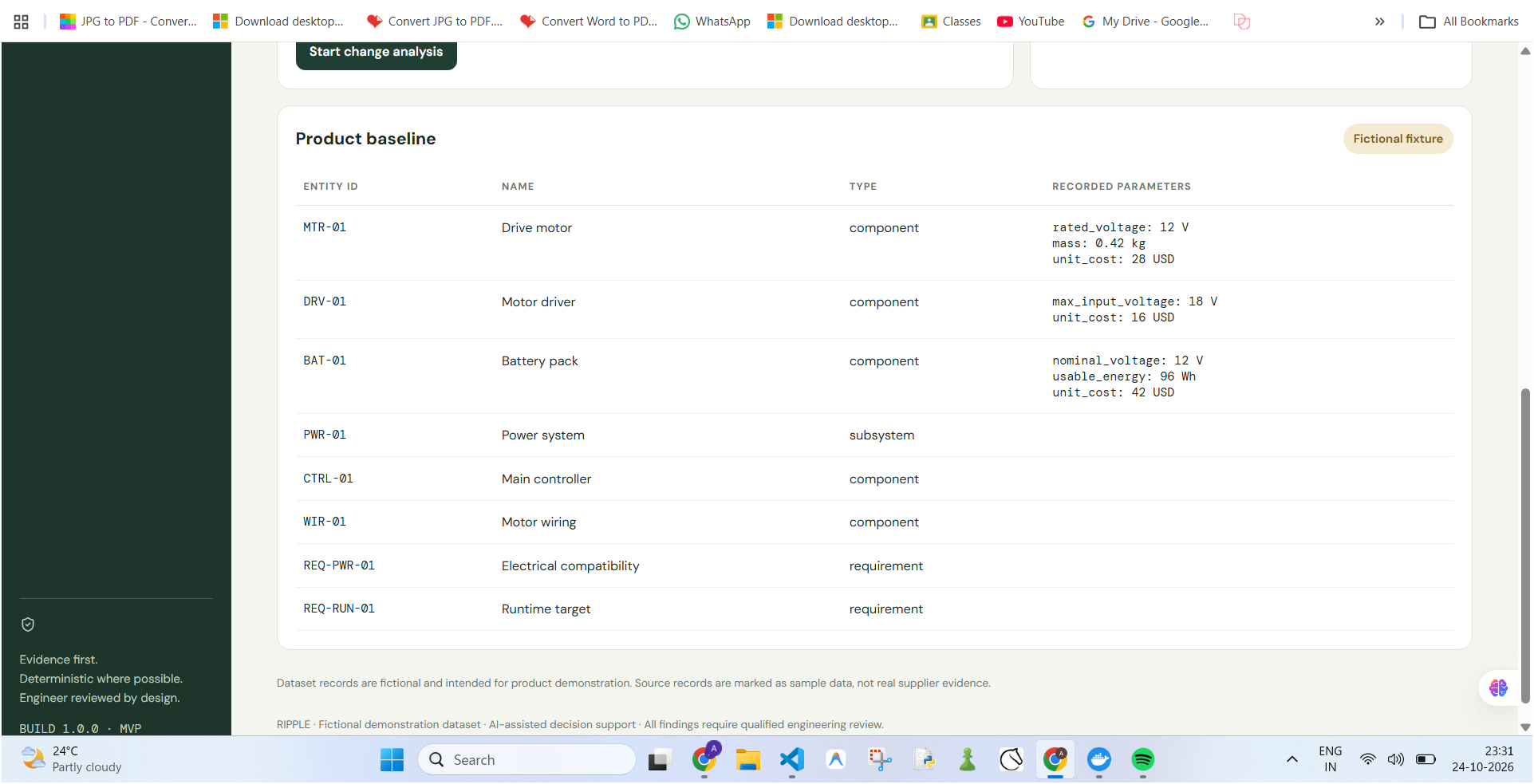
In engineering, changing one component can trigger a chain of consequences across connected systems. Replacing a 12 V motor with a 24 V alternative, for example, may require reviewing the motor driver, power supply, wiring, product requirements, and validation tests.
These dependencies are often scattered across engineering records, making it difficult to identify every potential impact before approving a change.
Our Solution
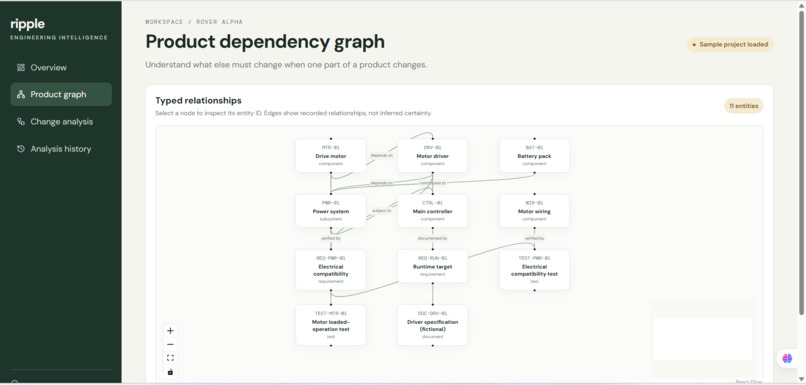
RIPPLE is an evidence-first Engineering Change Impact Agent that helps engineers understand what else must be reconsidered when a product component changes.
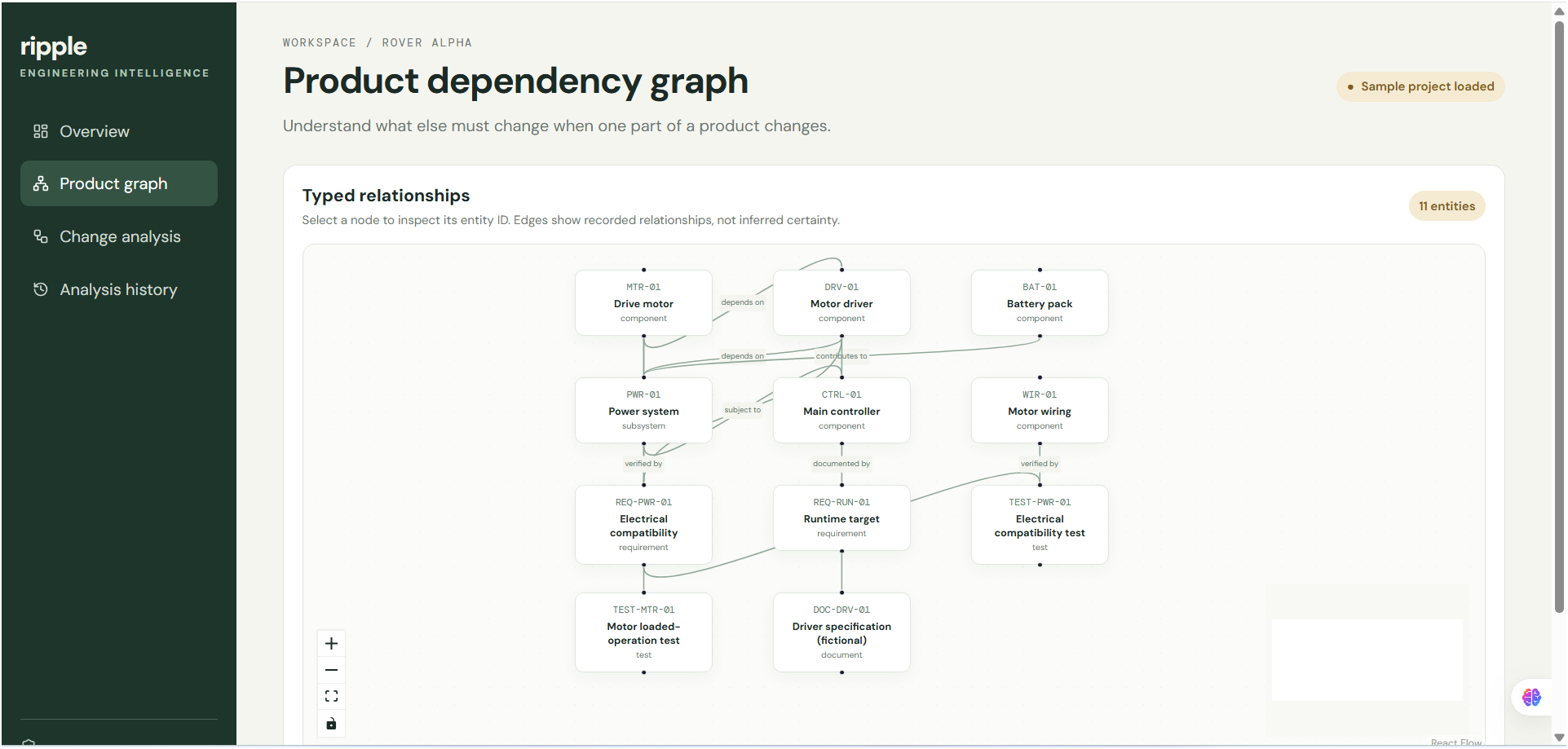
It combines an interactive product dependency graph, deterministic engineering checks, and an AI-assisted reasoning layer to:
Trace direct and indirect dependencies.
Identify potentially affected components, requirements, and tests.
Evaluate supported engineering constraints.
Highlight risks, missing information, and unresolved questions.
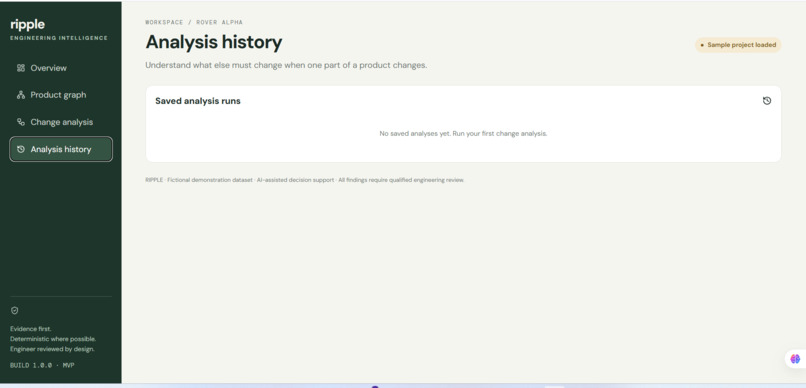
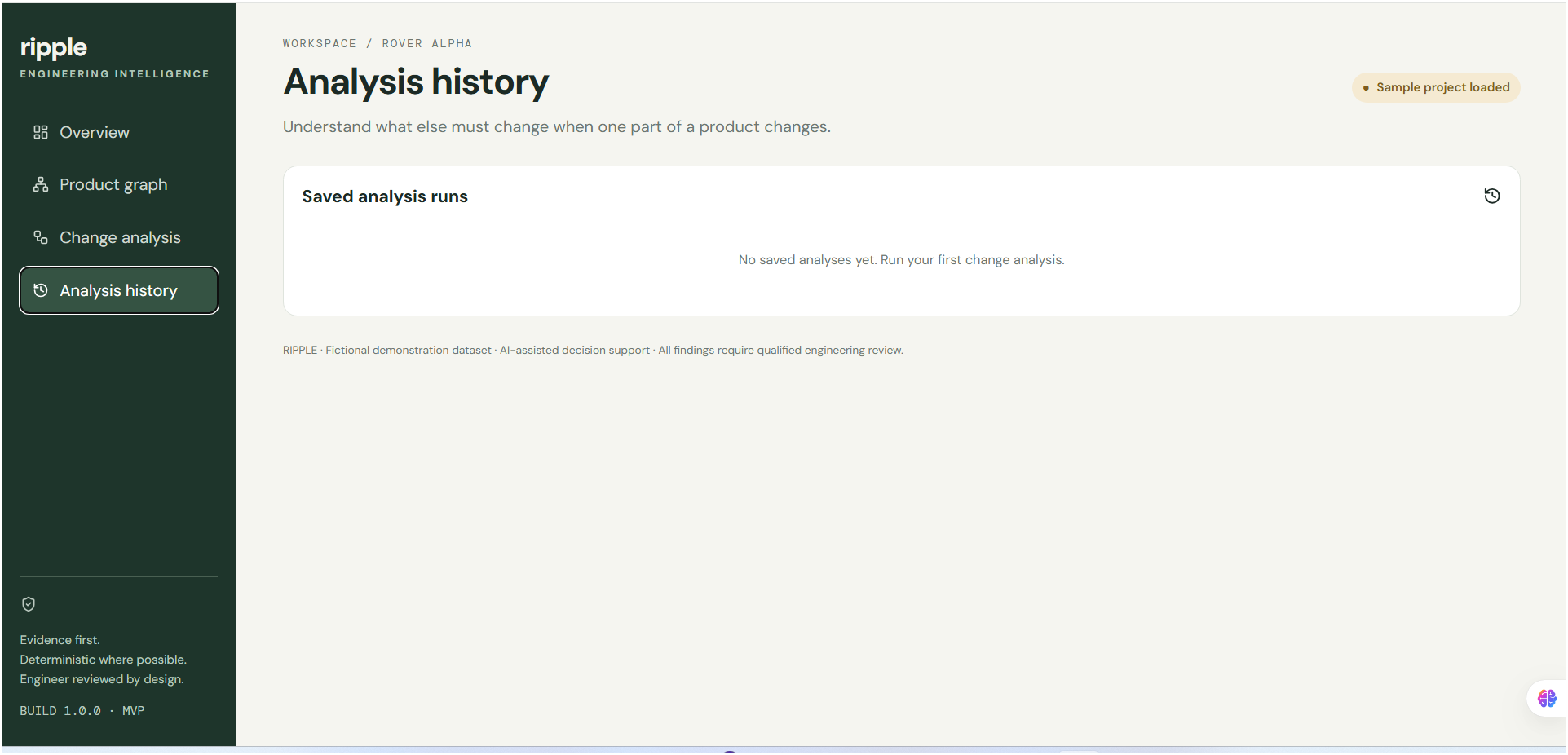
Maintain analysis history and human review decisions.
How It Works
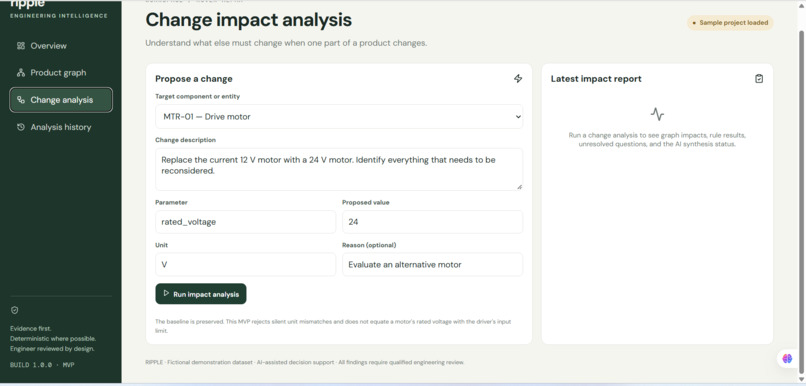
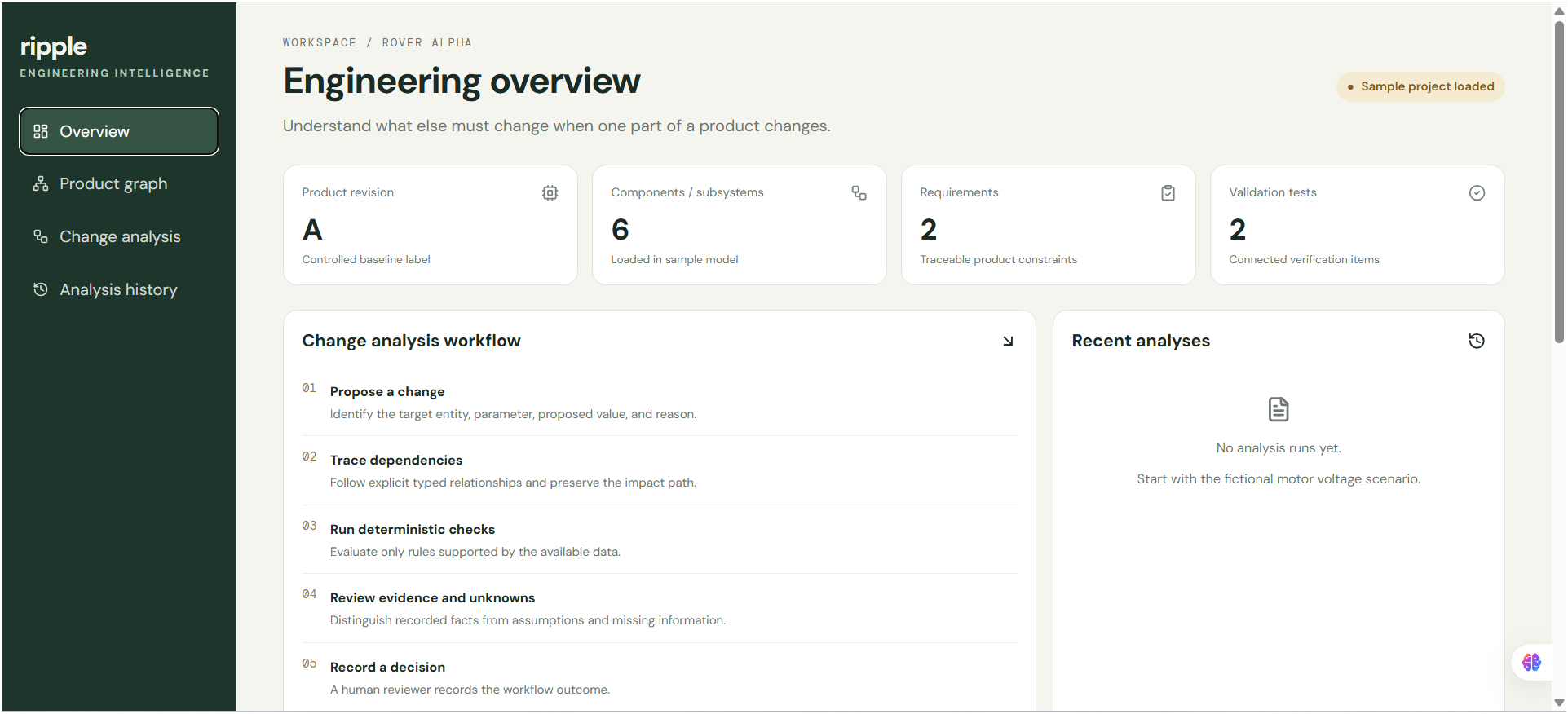
Engineers propose a change by selecting a component, parameter, and new value. RIPPLE traces the connected product structure, runs supported engineering checks, and generates an impact report containing evidence, findings, and uncertainties. A human reviewer can then record the decision.
Our Demonstration
Using a fictional Rover Alpha product, we demonstrate upgrading a drive motor from 12 V to 24 V. RIPPLE identifies downstream areas requiring investigation, including electrical compatibility, power-system dependencies, wiring, and validation tests.
It deliberately distinguishes a verified violation from an unknown condition rather than inventing engineering conclusions.
Technology
Frontend: Next.js, React, TypeScript, React Flow Backend: Python, FastAPI Infrastructure: Docker and Docker Compose AI direction: Nebius model-serving integration with the NVIDIA open-model ecosystem.
Challenges and Learning
Our biggest challenge was distinguishing a connected dependency from a genuinely affected component. We learned that engineering AI must be grounded in structured evidence, deterministic checks, transparent uncertainty, and human oversight.
What's Next?
We aim to expand RIPPLE with engineering-document ingestion, richer constraint libraries, deeper Nebius and NVIDIA model integration, and connections to Product Lifecycle Management systems.
RIPPLE - Because every engineering change creates a ripple effect.
Built With
- ai-agents
- artificial-intelligence
- data-visualization
- docker
- engineering
- fastapi
- graph-analysis
- knowledge-graphs
- machine-learning
- next.js
- python
- react
- typescript

Log in or sign up for Devpost to join the conversation.