Ripple
Inspiration
Nonprofits create incredible impact every day, but communicating that impact is often much harder than creating it.
Most organizations can report what they accomplished, such as how many volunteers participated or how many families they served. However, those numbers rarely tell the full story. What lasting change did those efforts create? How can organizations communicate that impact to donors, grant providers, and stakeholders in a meaningful and evidence-based way?
I created Ripple to bridge that gap. My goal was to build an AI-powered platform that transforms nonprofit reports into evidence-backed impact analyses, helping organizations better understand, measure, and communicate the difference they make.
What it does
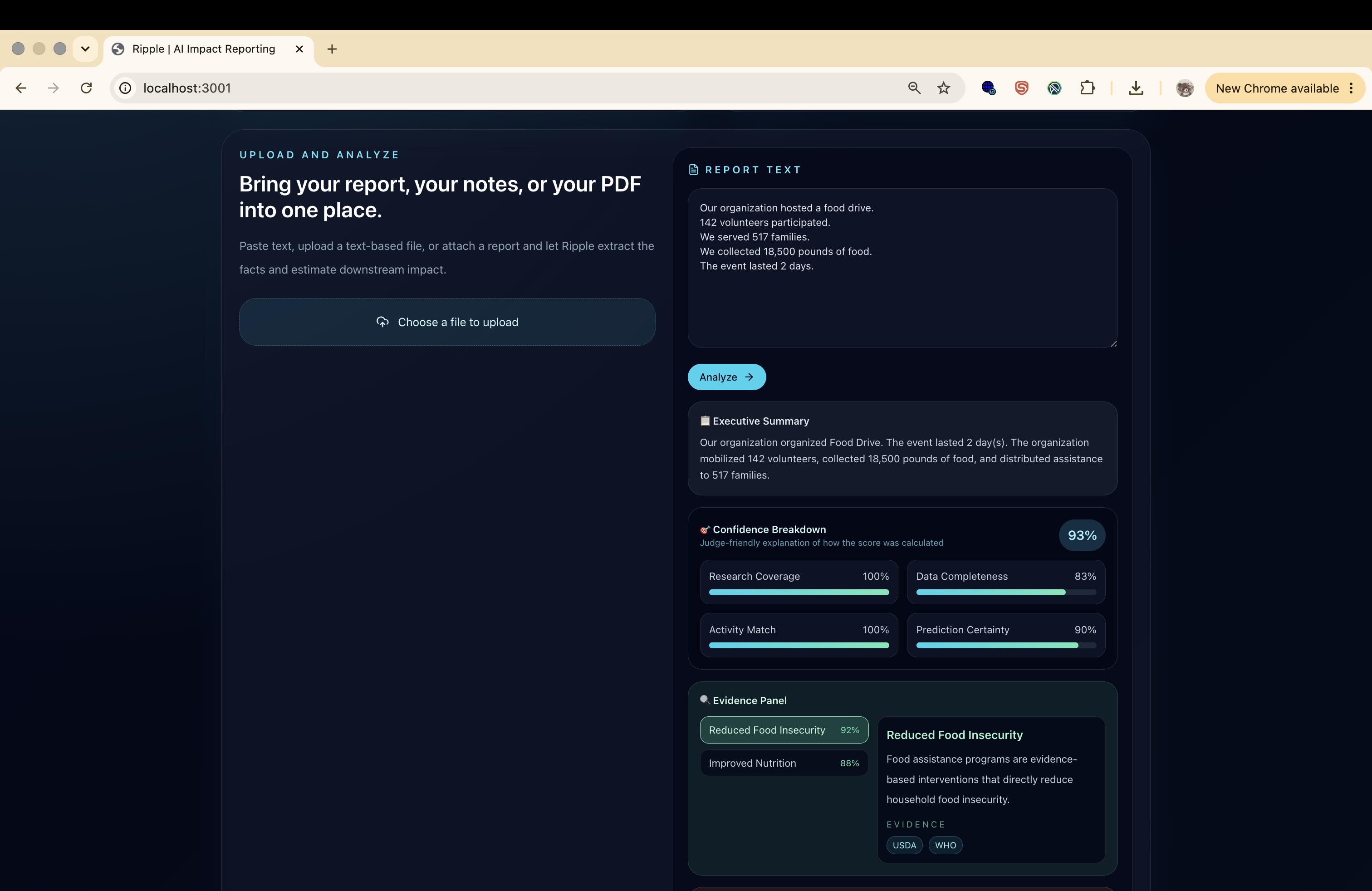
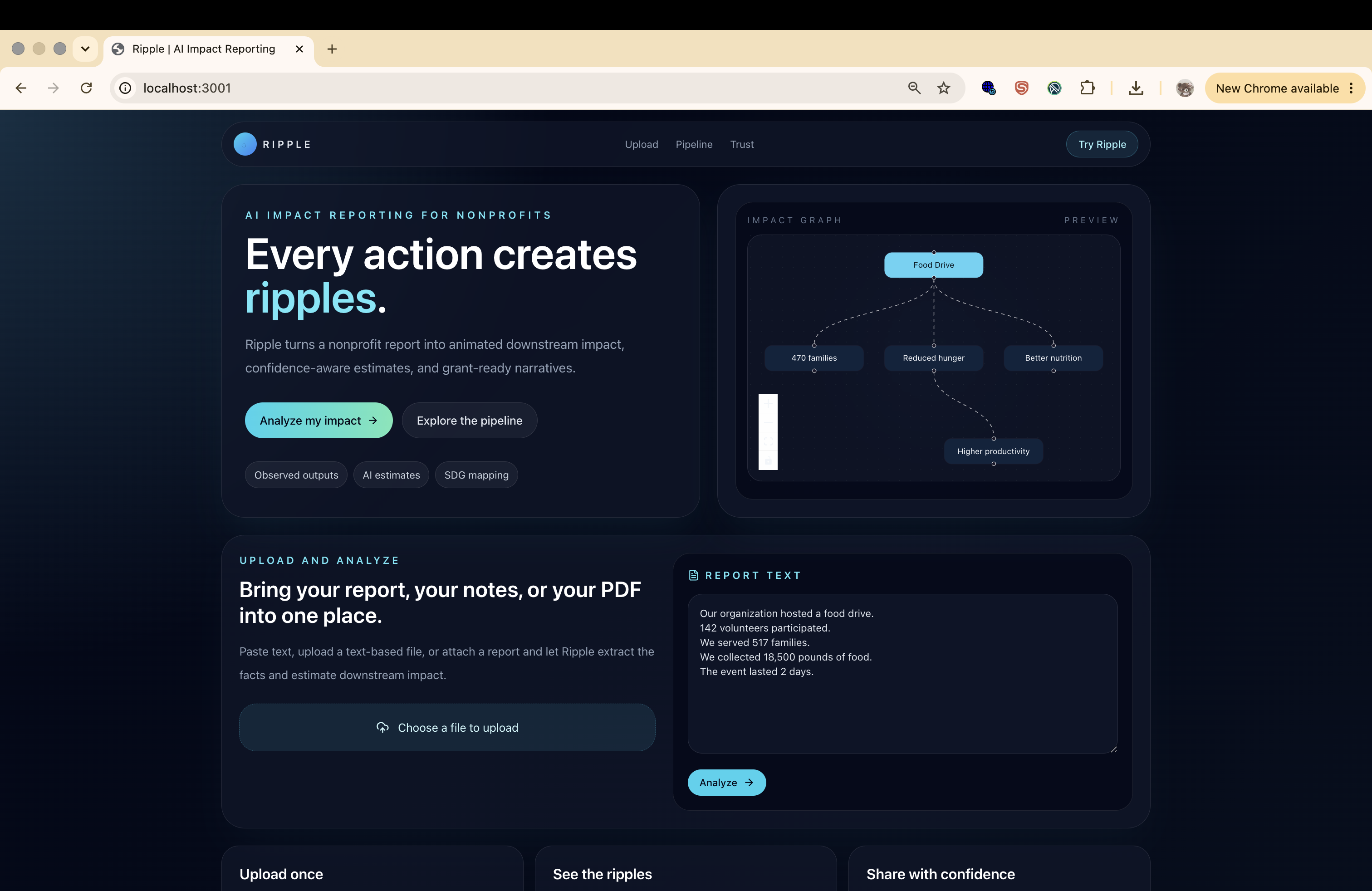
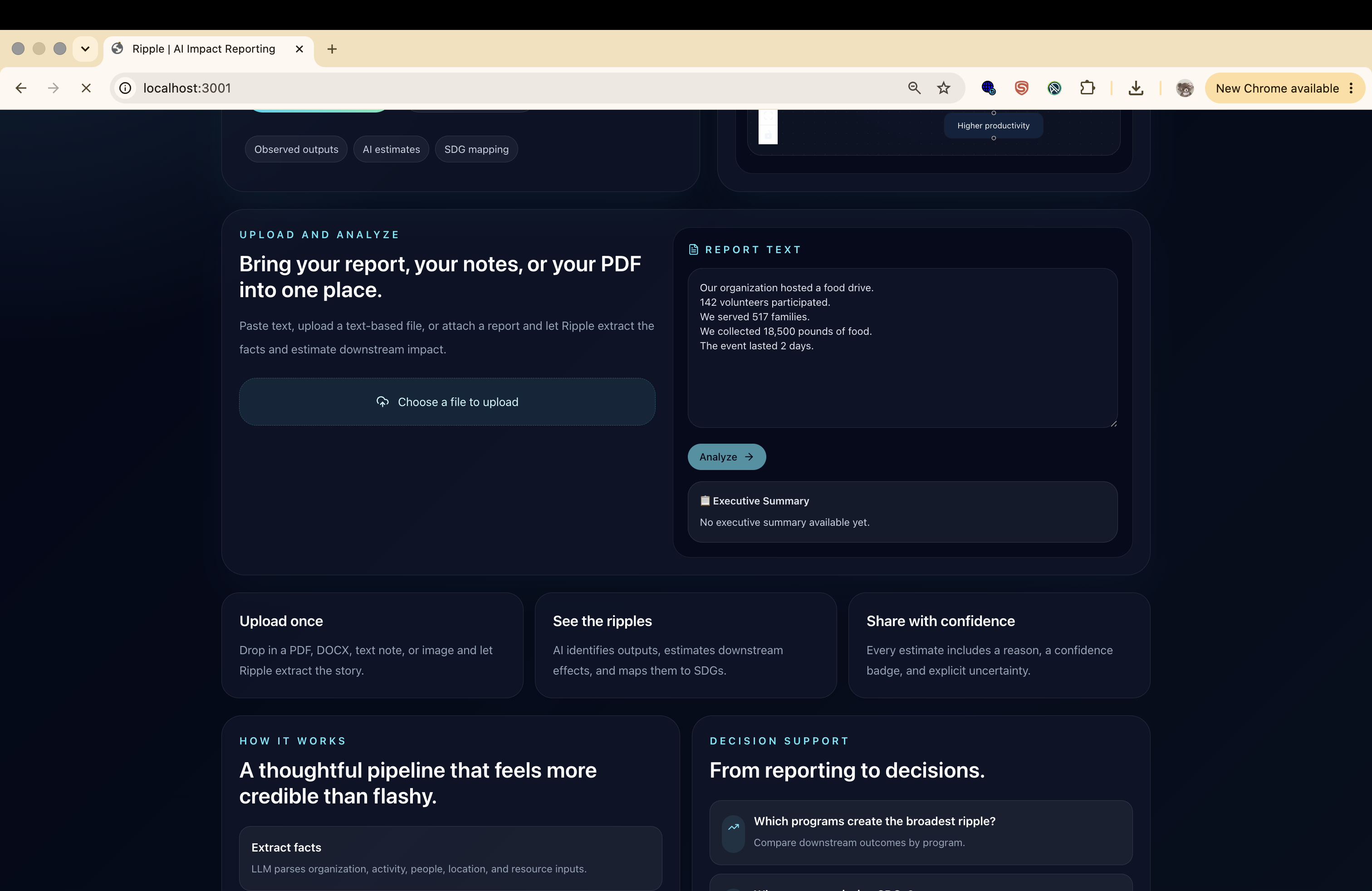
Ripple allows nonprofits to upload an impact report or paste its contents directly into the application.
The platform automatically extracts structured information including:
- Volunteers
- Beneficiaries
- Program type
- Partnerships
- Resources distributed
- Community concerns
Rather than stopping at data extraction, Ripple retrieves relevant research from trusted public sources before generating evidence-supported downstream impact estimates.
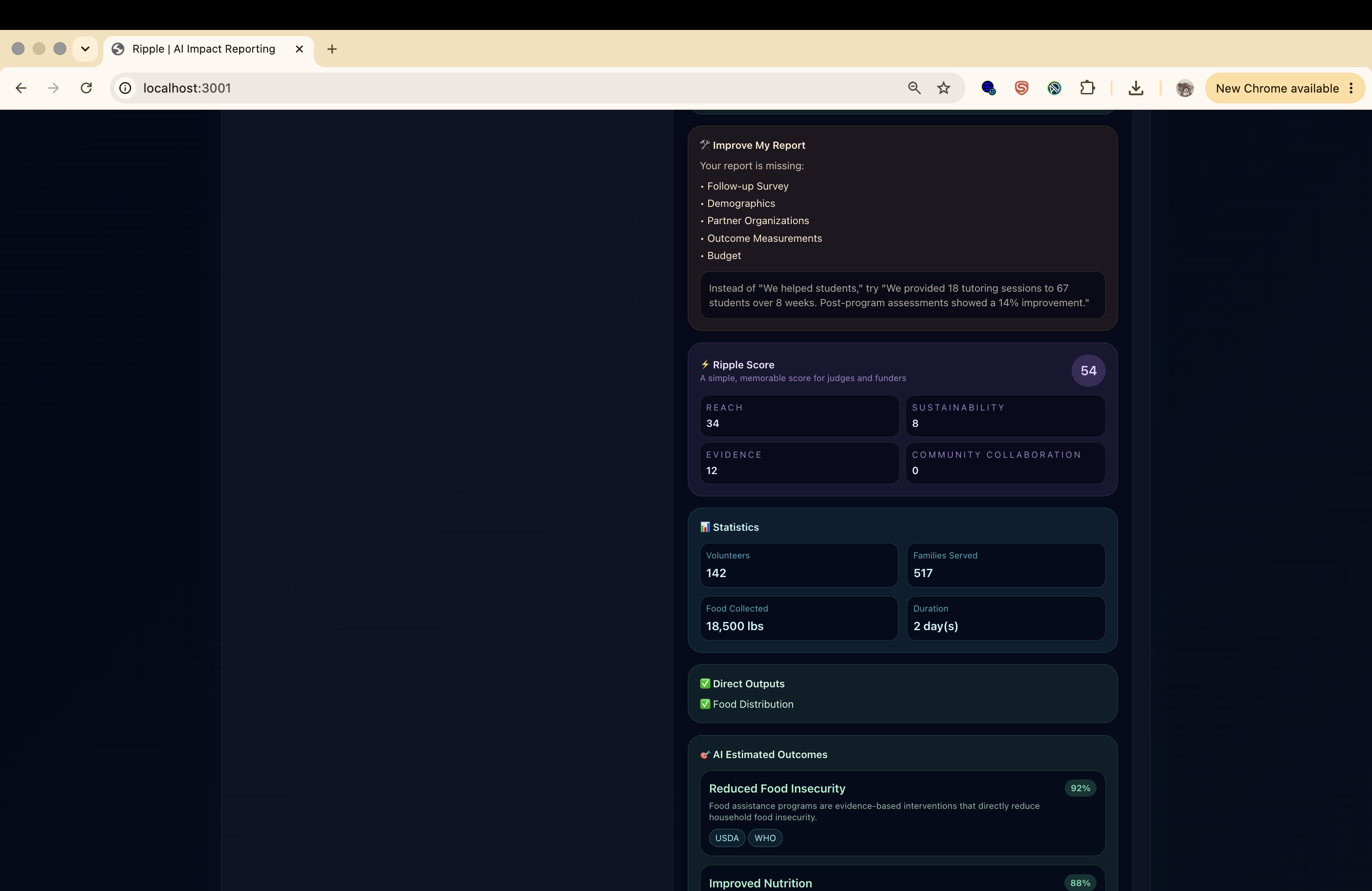
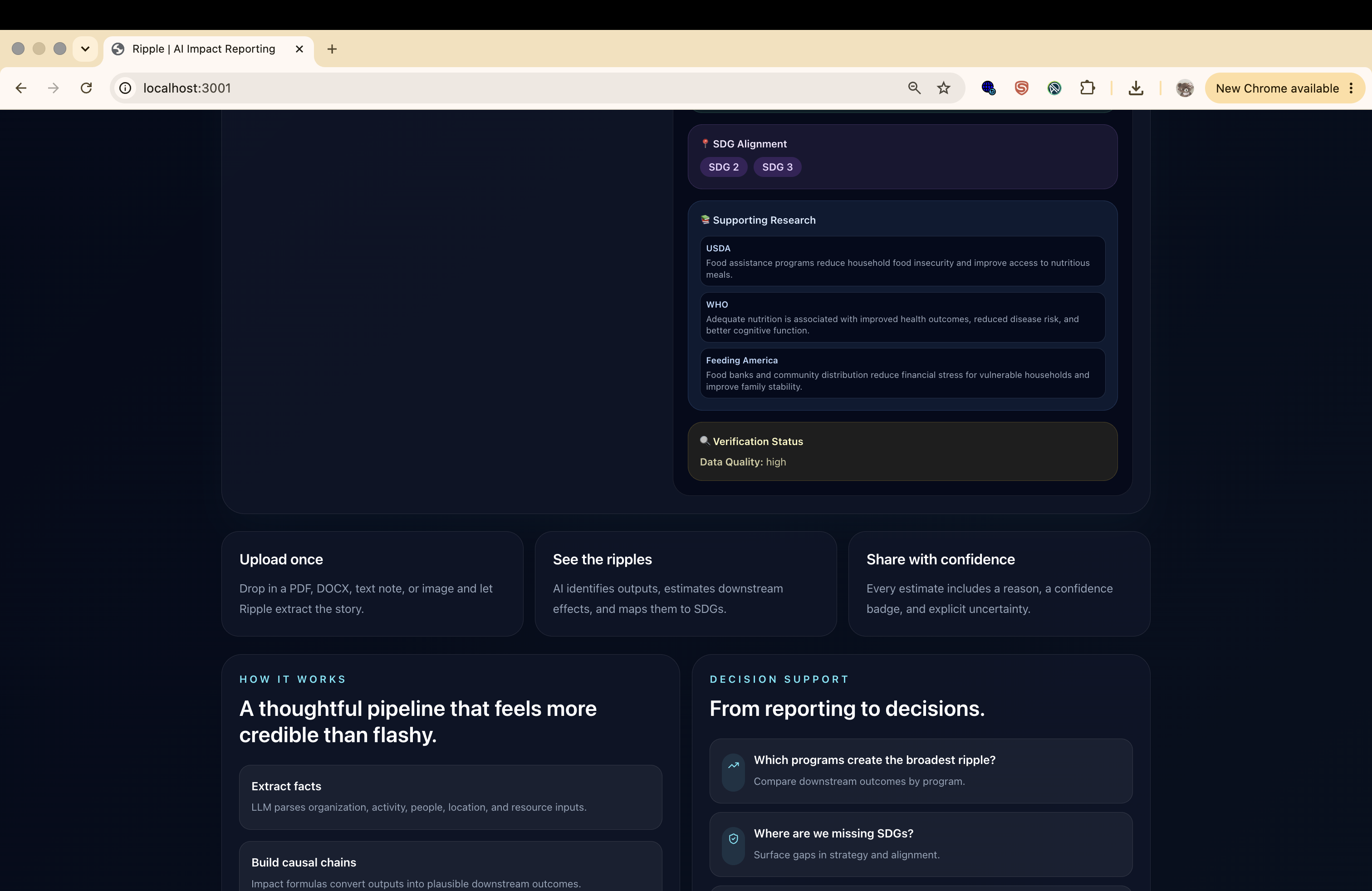
The results are presented through an intuitive dashboard featuring:
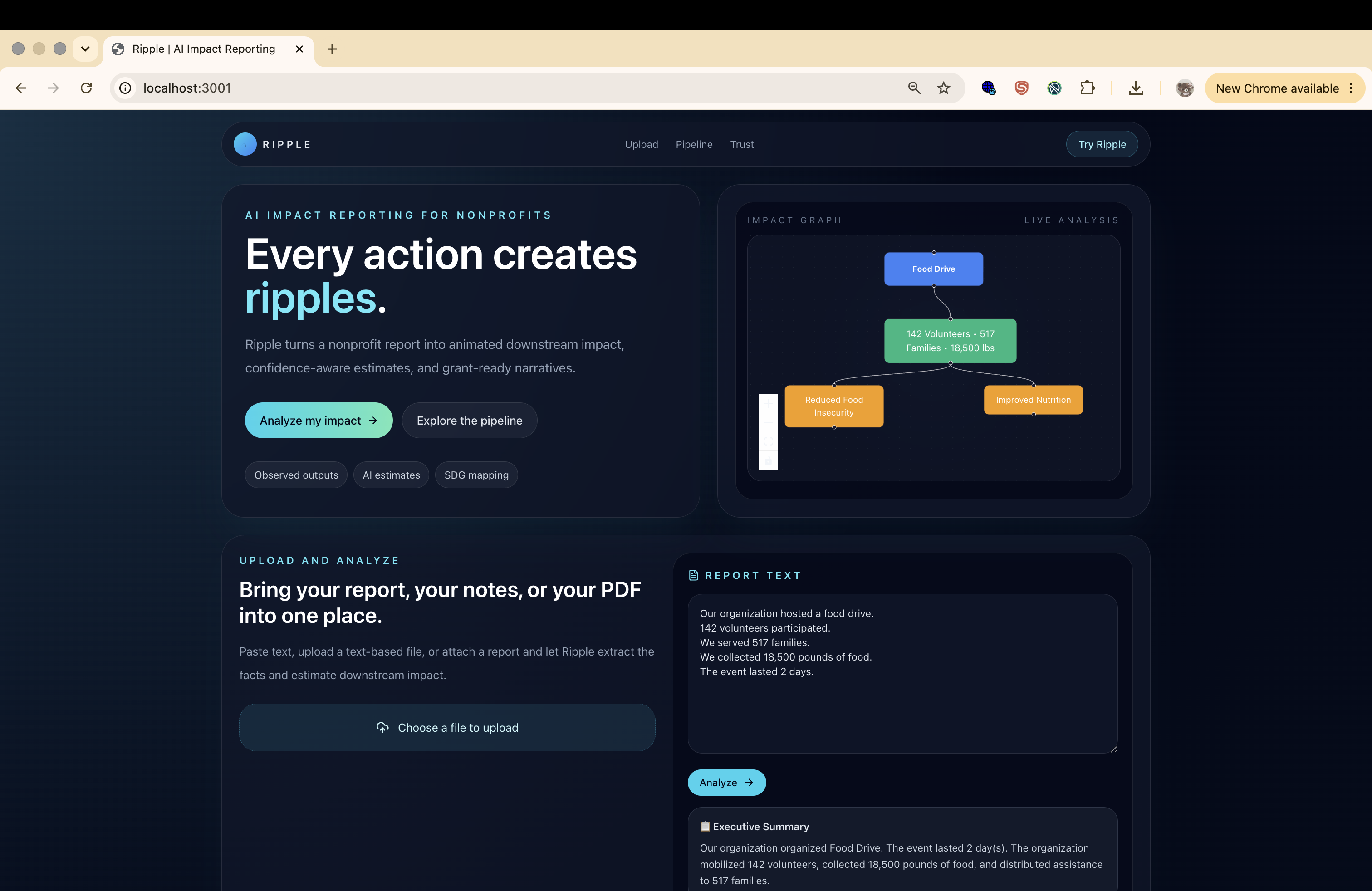
- 🌊 Interactive Ripple Graph
- 📊 Executive Summary
- 📈 Key Metrics Dashboard
- 📚 Evidence Explorer
- 🎯 Sustainable Development Goal (SDG) Mapping
- 📄 Downloadable Impact Reports
- 🔍 Transparent Confidence Scores
This allows nonprofits to better communicate their work while understanding the broader effects their programs may have on their communities.
How I built it
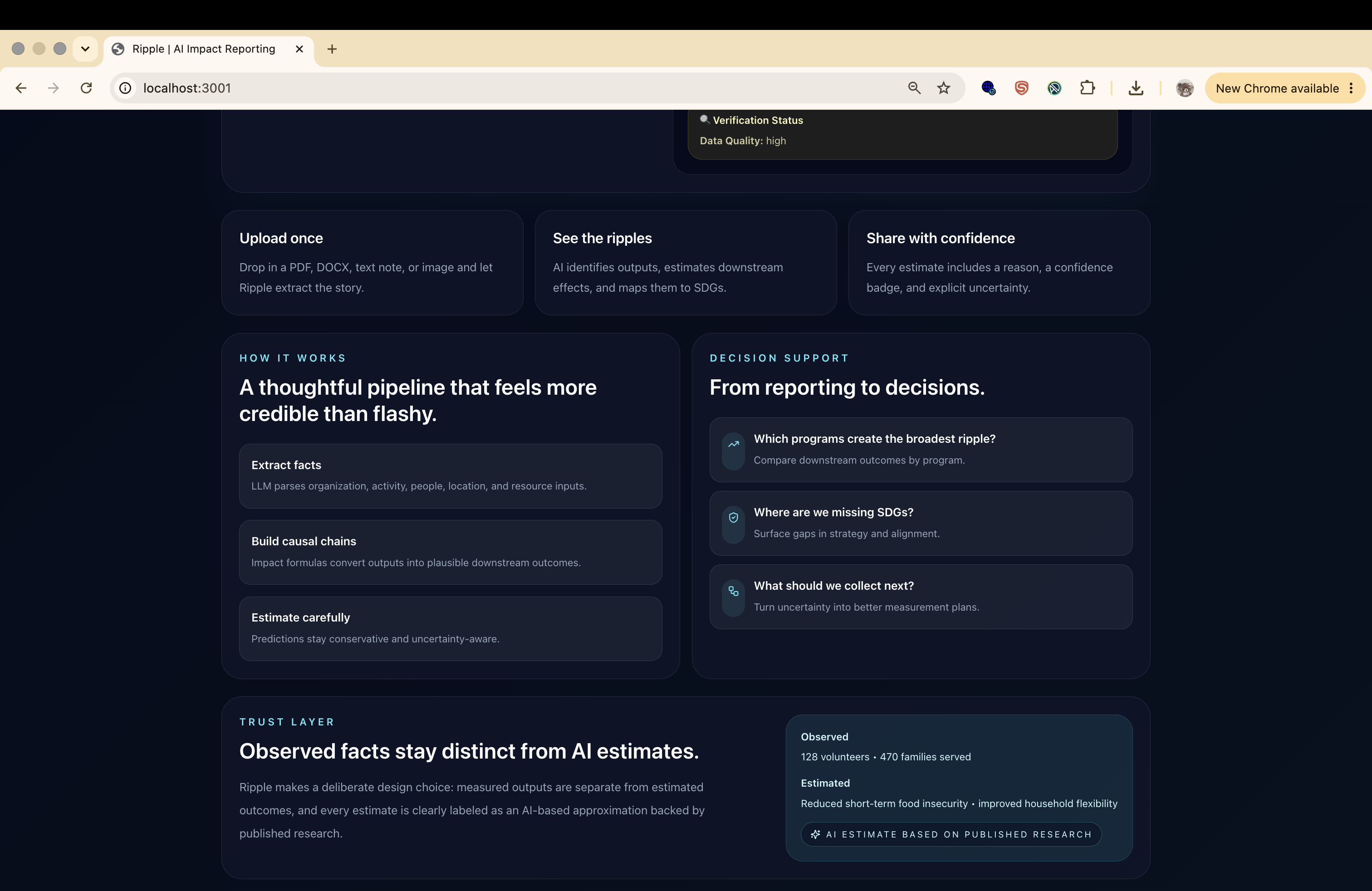
Rather than building a simple AI chatbot, I designed Ripple as a multi-stage AI pipeline.
Fact Extraction Ripple extracts structured information from nonprofit reports using natural language processing.
Research Retrieval The platform identifies the program type and retrieves relevant evidence from trusted public research.
Impact Analysis Using both the extracted information and supporting evidence, the AI generates evidence-backed downstream impact estimates while communicating confidence levels for every prediction.
Visualization The results are presented through an interactive Ripple Graph, analytics dashboard, and downloadable reports.
Built With
- React
- TypeScript
- Tailwind CSS
- Python
- OpenAI API
- React Flow
- AI / Natural Language Processing (NLP)
Challenges I ran into
One of the biggest challenges was ensuring that the AI remained trustworthy.
Large language models are incredibly powerful, but they can also confidently generate inaccurate information. I didn't want Ripple to simply produce convincing-sounding impact statements without evidence.
To address this, I designed the application to retrieve supporting research before generating impact estimates. Every prediction includes transparent confidence scores so users understand how conclusions were reached.
Another challenge was handling the wide variety of nonprofit reports. Every organization documents its work differently, so building a pipeline capable of consistently extracting meaningful information required multiple iterations and careful prompt engineering.
Accomplishments that I'm proud of
- ✅ Built an end-to-end AI impact analysis platform as a solo developer.
- ✅ Designed an interactive Ripple Graph to visualize downstream community impact.
- ✅ Combined AI with evidence retrieval instead of relying solely on language model outputs.
- ✅ Created a modern dashboard that transforms reports into actionable insights.
- ✅ Developed a working prototype capable of analyzing real nonprofit reports in seconds.
What I learned
This project taught me that building effective AI systems involves much more than integrating a language model.
I learned how structured data extraction, evidence retrieval, explainable AI, visualization, and thoughtful user experience all work together to create a trustworthy product.
Most importantly, I learned that AI is most valuable when it helps people make better decisions rather than simply generating information.
What's next for Ripple
This prototype is only the beginning.
Future improvements include:
- Expanding the research database across more nonprofit sectors.
- Long-term impact tracking across multiple reports.
- Grant recommendation assistance.
- Collaboration recommendations between nonprofits.
- Richer analytics and benchmarking.
- Enhanced evidence retrieval and confidence analysis.
My long-term vision is for Ripple to become an intelligent impact measurement platform that helps nonprofits spend less time proving their impact and more time creating it.
Built With
- artificial-intelligence
- chart.js
- css3
- git
- github
- html5
- javascript
- large-language-models
- openai-api
- python
- react
- react-flow
- tailwind-css
- typescript
- vite


Log in or sign up for Devpost to join the conversation.