-
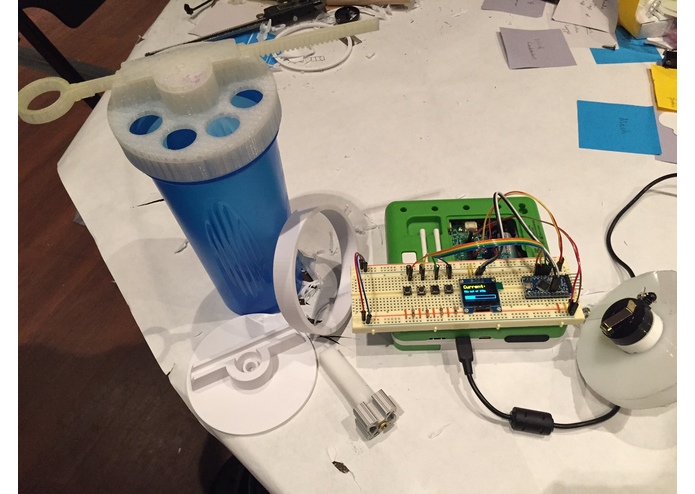
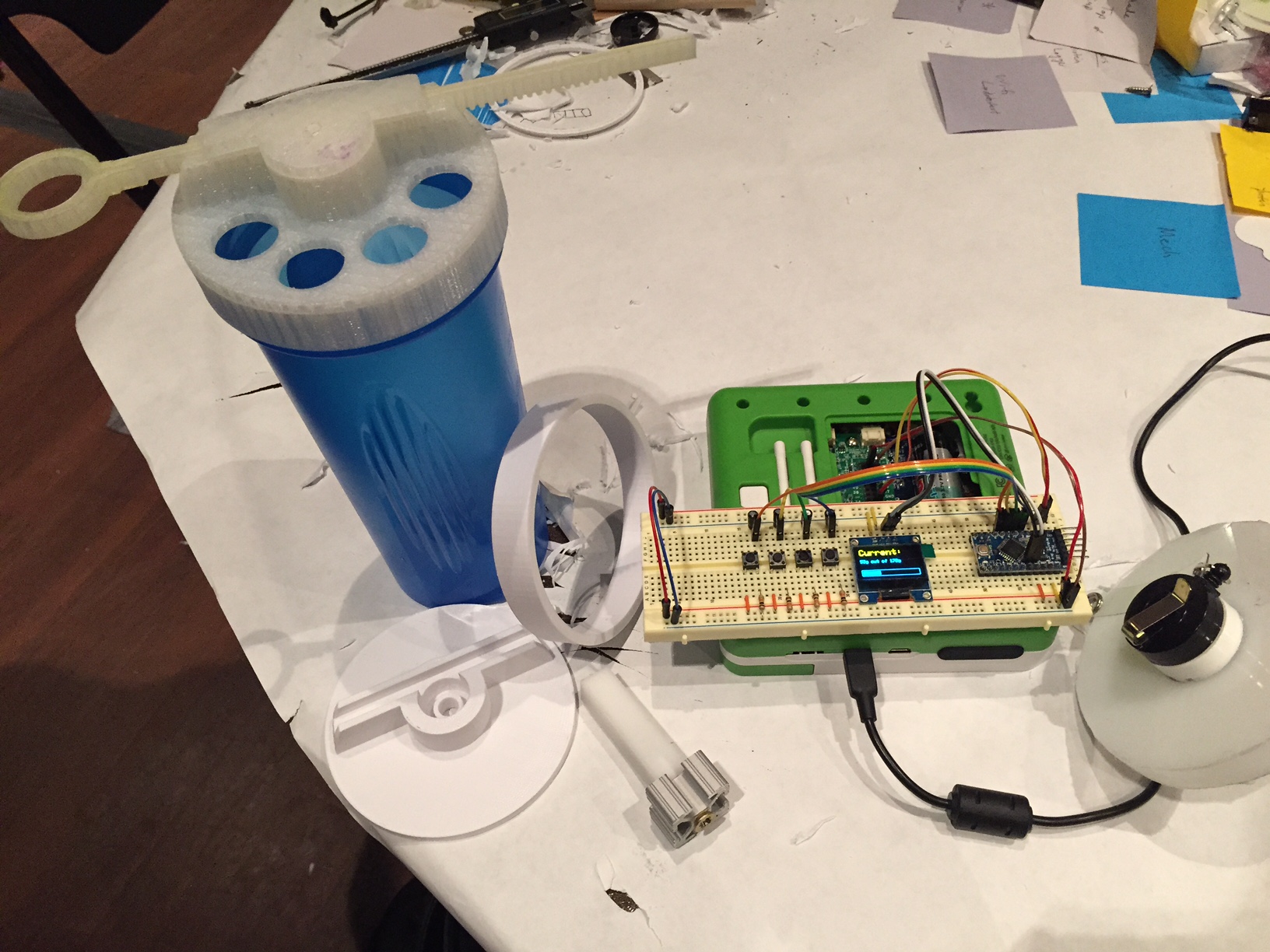
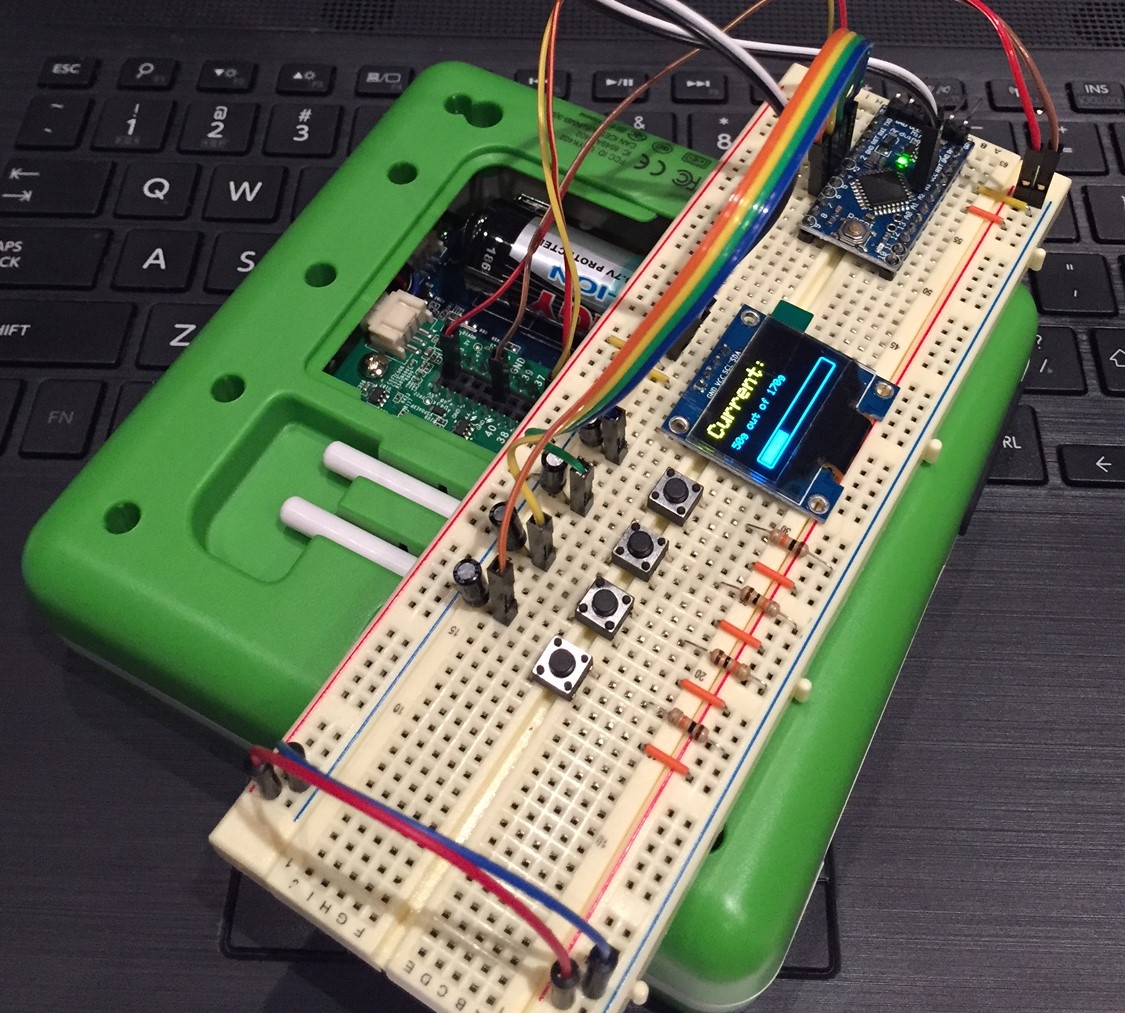
Everything together! (see next picture)
-
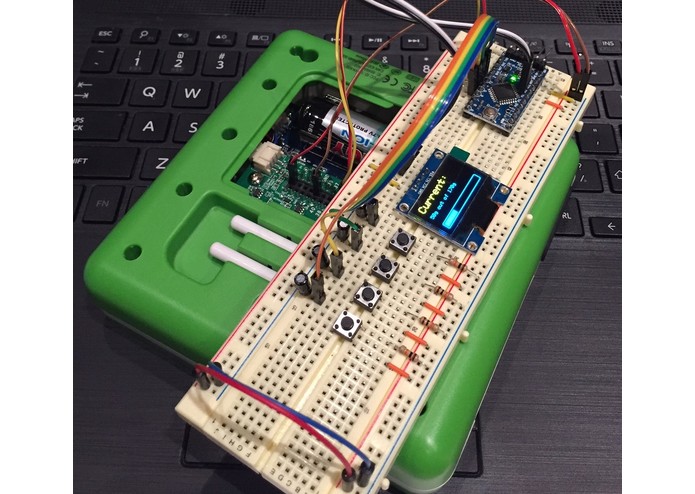
Kinoma and arduino based wifi protein logger
-
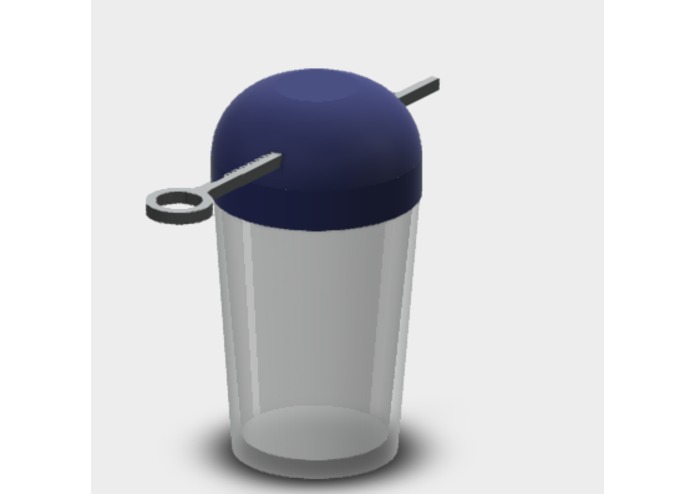
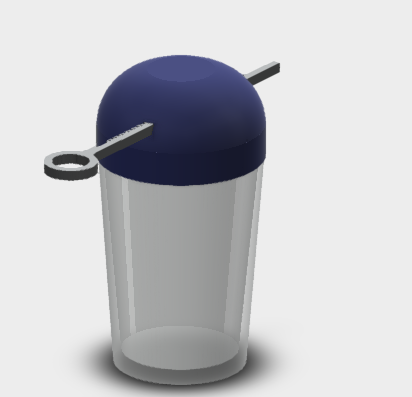
CAD
-
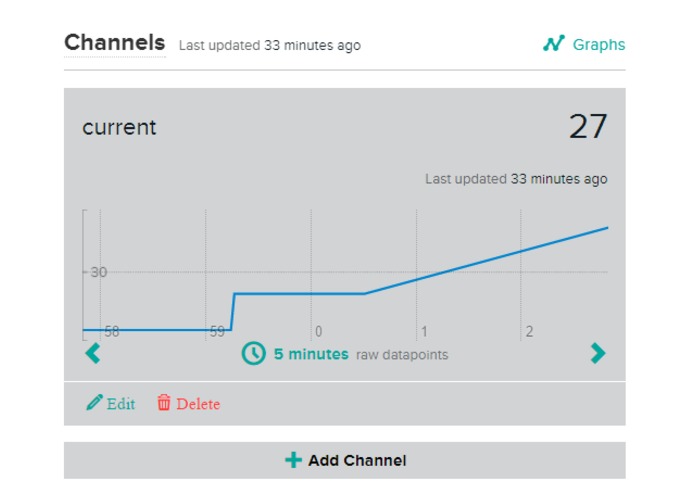
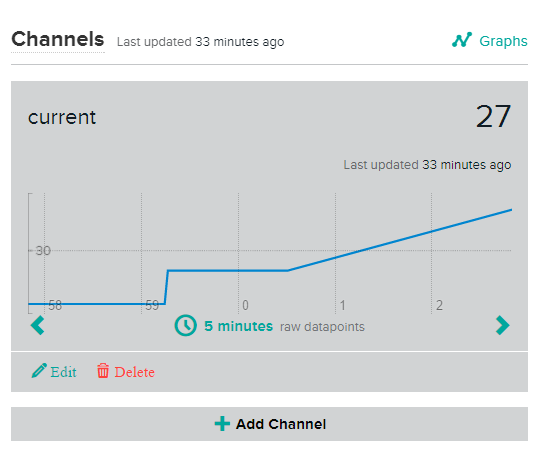
Wi-fi Protein consumption logging via Xively
Inspiration
Many athletes and workout enthusiasts carefully log their protein intake, and they very often drink protein shakes. Our good friend Curtis Shoyer (MIT 2016) suggested we make a rip cord protein bottle since the normal blender bottles are silly and they rattle when empty. So we decided to combine wifi protein intake logging with a ripcord cap design to make an integrated solution to anyone's protein intake/measurement requirements.
What it does
The built in rip-cord on in the cap allows the user to test out their built-up muscle on the protein shake! Rather than shaking it, the ripping motion turns a blade to mix it into a frothy and proteinated beverage. There is also a screen that comes with it so you can log how much protein you have consumed throughout the day. The display shows you a running count of how much you have consumed within the day. This is connected to the Kinoma, which logs this data to a website so you can track over longer periods of time!
How I built it
We broke the project into to two manageable parts: electronics and fabrication design. Two members worked on the LCD display, protein logging program/circuit for arduino, and the Kinoma for the majority of the time. The other members were in charge of creating a full CAD version of the overall design of the bottle, and also fabrication. This split the project evenly up between all the members.
Challenges I ran into
Electronics: It is very difficult to integrate the electronics into the cap with our resources. We did make a working protein logger with wifi and datalogging functionality, however this component currently is not integrated with the cap. MIT wifi prevents the proper wifi function of the small Kinoma Element, so for the proof of concept we ended up using the much larger Kinoma Create.
Fabrication and Design: The design of the CAD files was relatively easy thanks to Fusion 360's intuitive interface. Also, we used grabCAD to work on some of our harder parts. The most challenging aspect of the night was trying to make replacement parts when we were incapable of 3D printing them. We relied heavily on 3D printing of our parts, so when they couldn't be done we had to make ones on the spot due to lack of time (3D printing takes a lot of time).
Accomplishments that I'm proud of
We were very proud to get the entire product finished. There were several moments along the night where we thought it would not work out, but the team pressed on and we were able to turn in something that was capable of doing its job.
What I learned
Electronics: Java-script and Xively's data logging interface. Also Arduino's hardware and serial interface capabilities. Also Kinoma's IDE functionalities and wifi-communication between prototyping electronics and the web.
Fabrication and Design: We learned the 3D printing can be a great tool, but under a time constraint, it might be better to design some of your product away from this time consuming process.
What's next for RippedCord
There is much in store for the RippedCord! We are hoping to assimilate both modules we made into one piece. The top of the bottle will contain the LCD screen and WiFi module all in one small board. This will make it more modular, so that it is the cap that is the novel part of the product. Also we will add a smaller bottle insert inside the bigger bottle, so water and protein powder remain separated until the water container is removed and the protein in the bigger bottle can be blended.
Built With
- adafruit
- arduino
- discrete-electornic-parts
- javascript
- kinoma
- xively

Log in or sign up for Devpost to join the conversation.