-
-
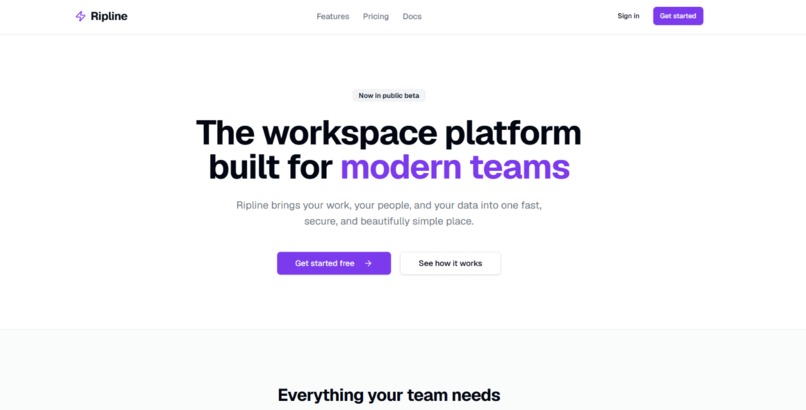
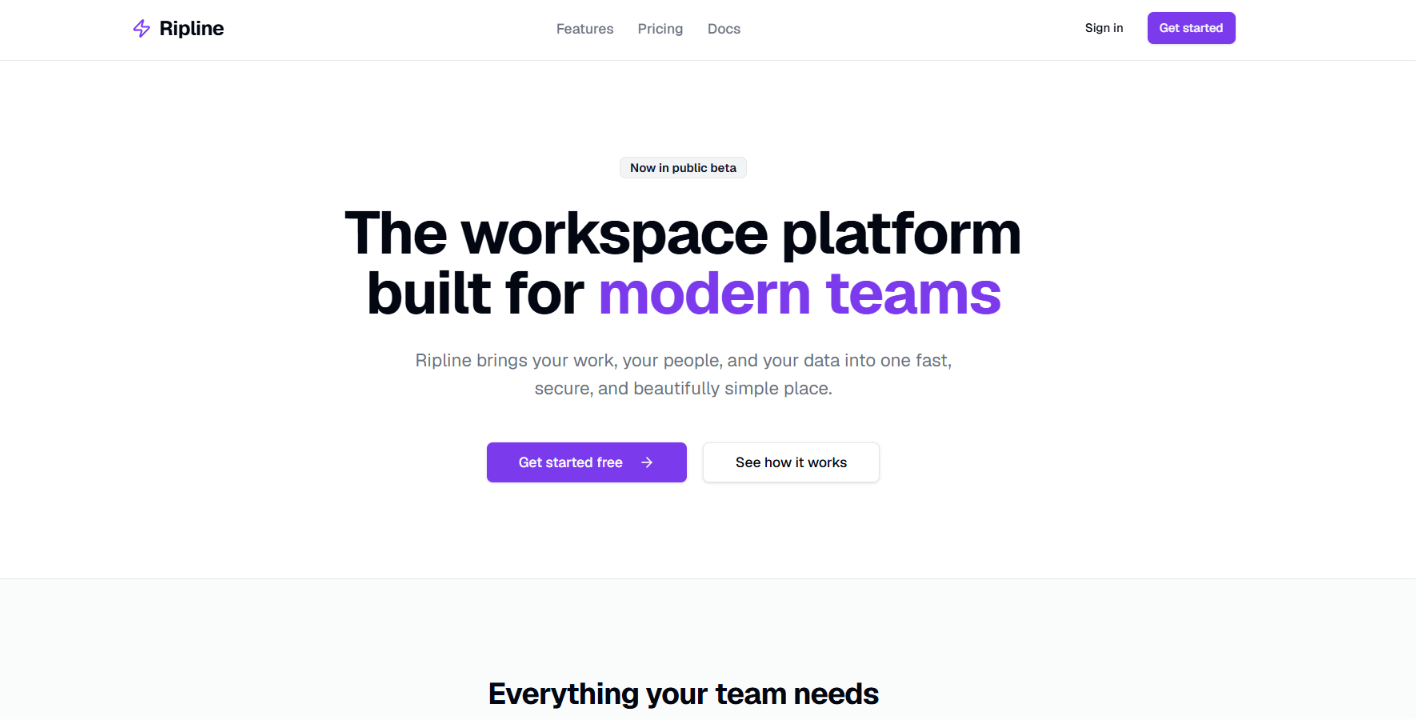
Homepage
-
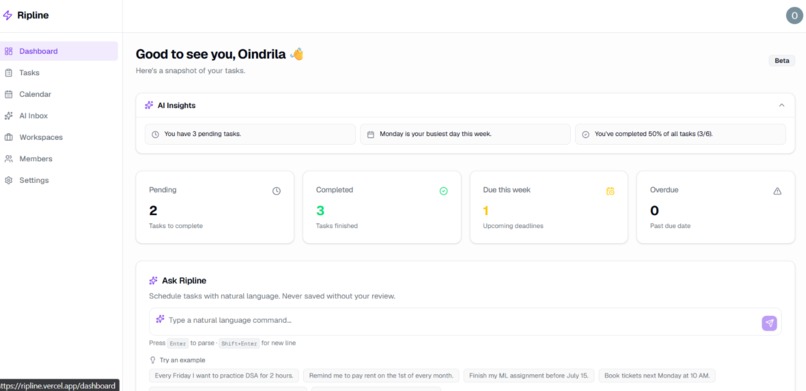
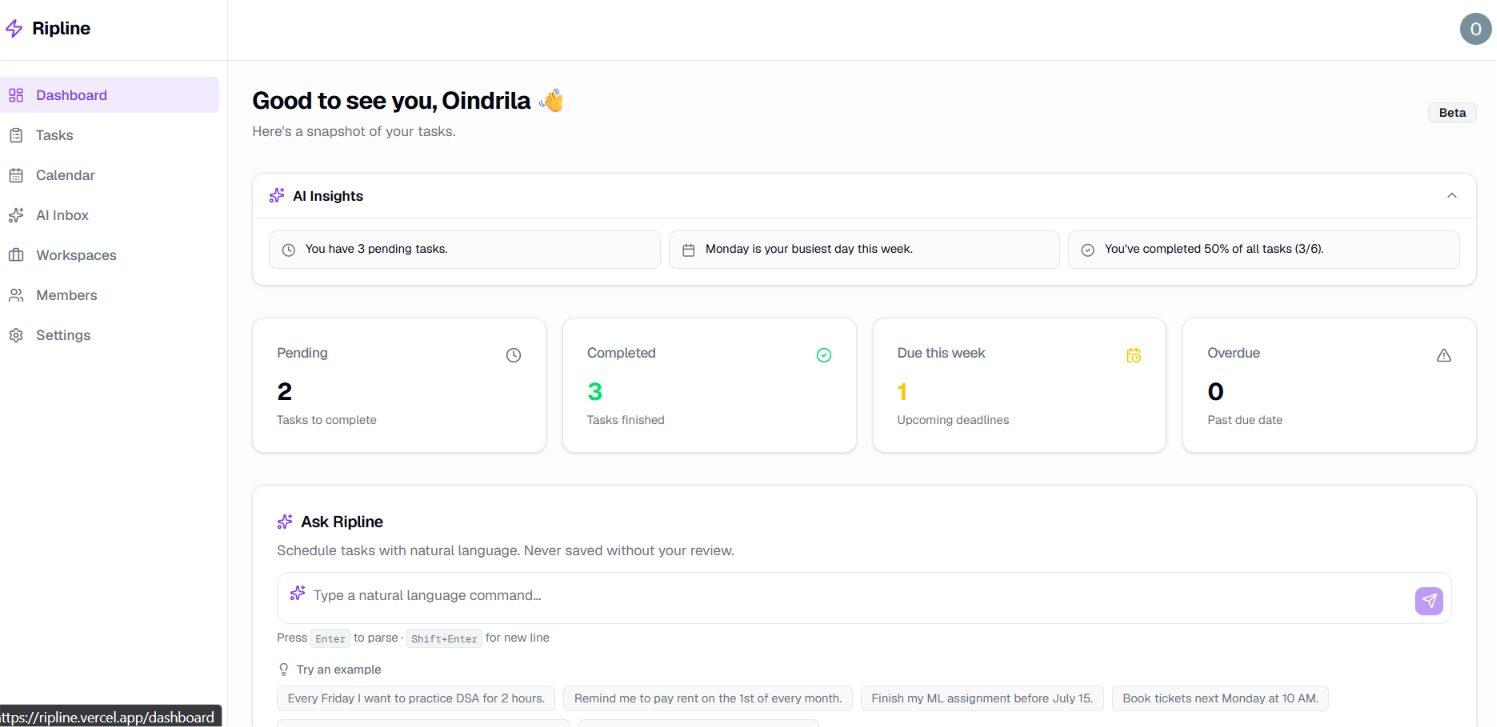
Light Mode Dashboard
-
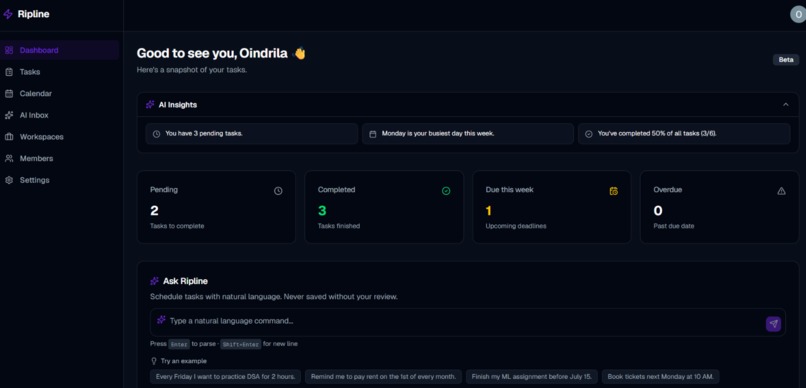
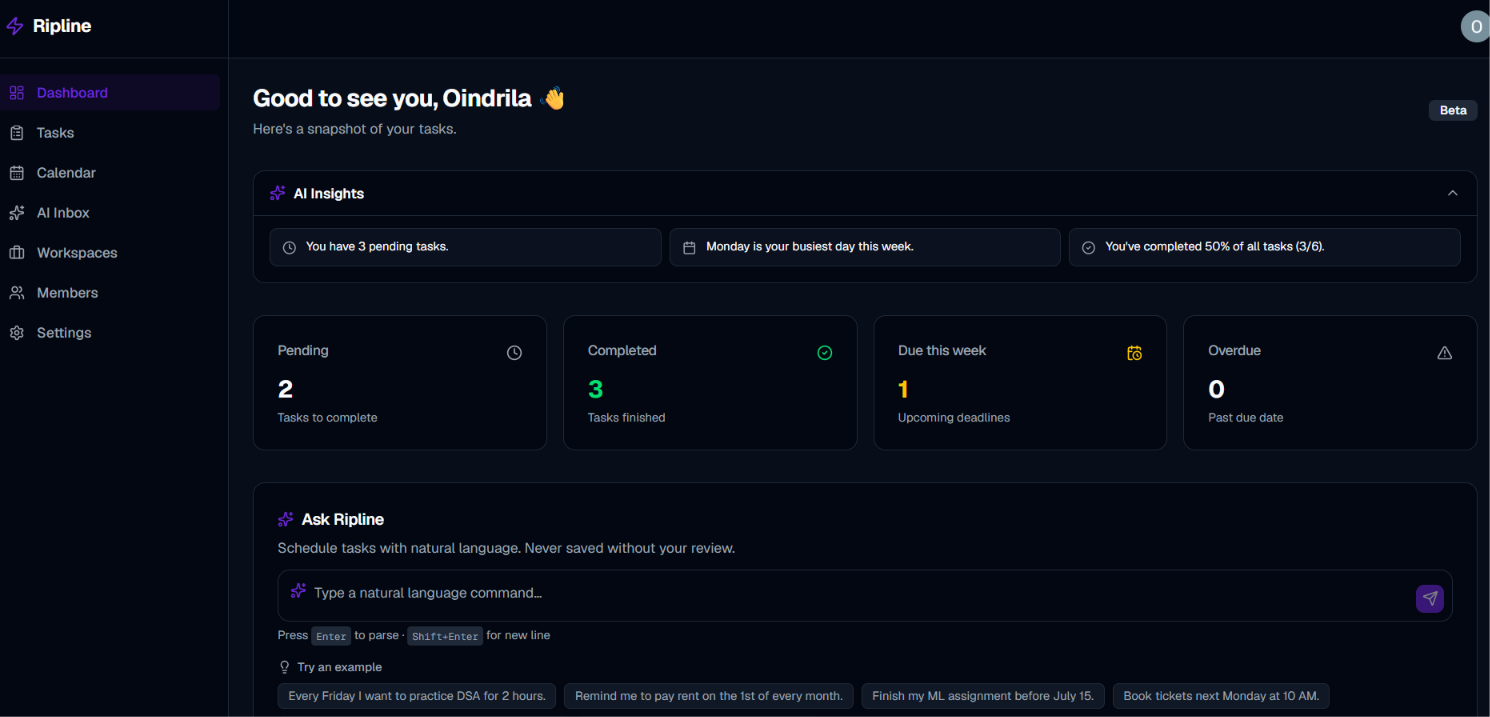
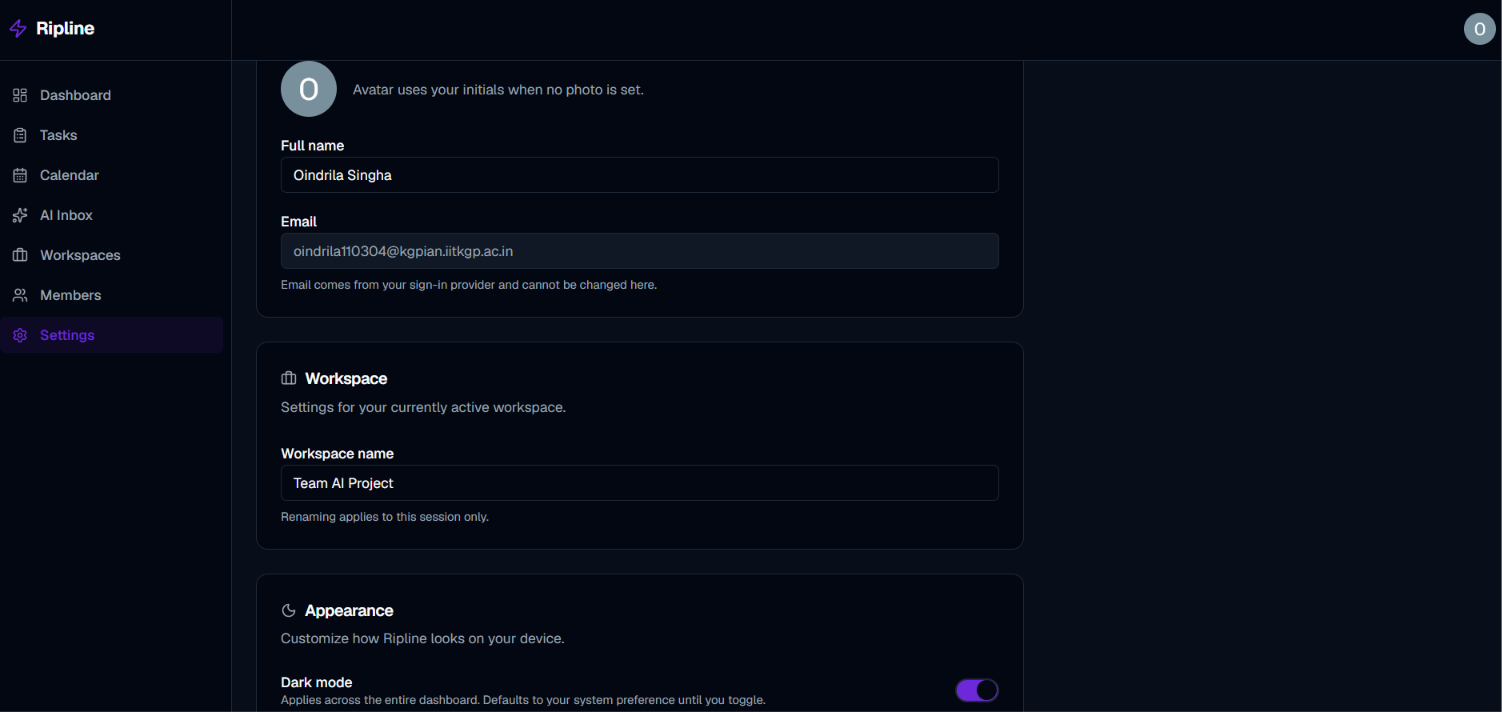
Dark Mode Dashboard
-
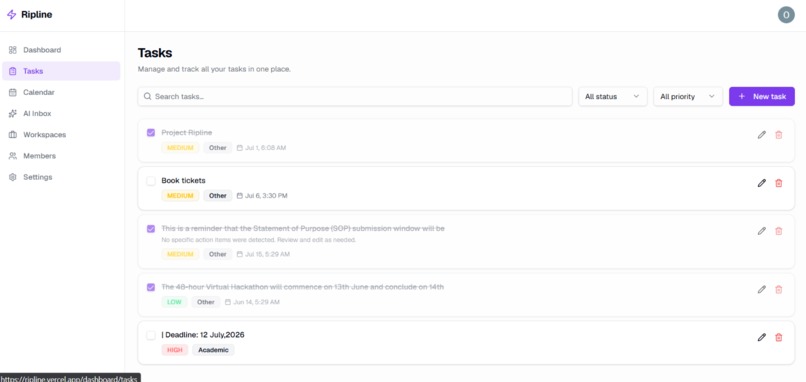
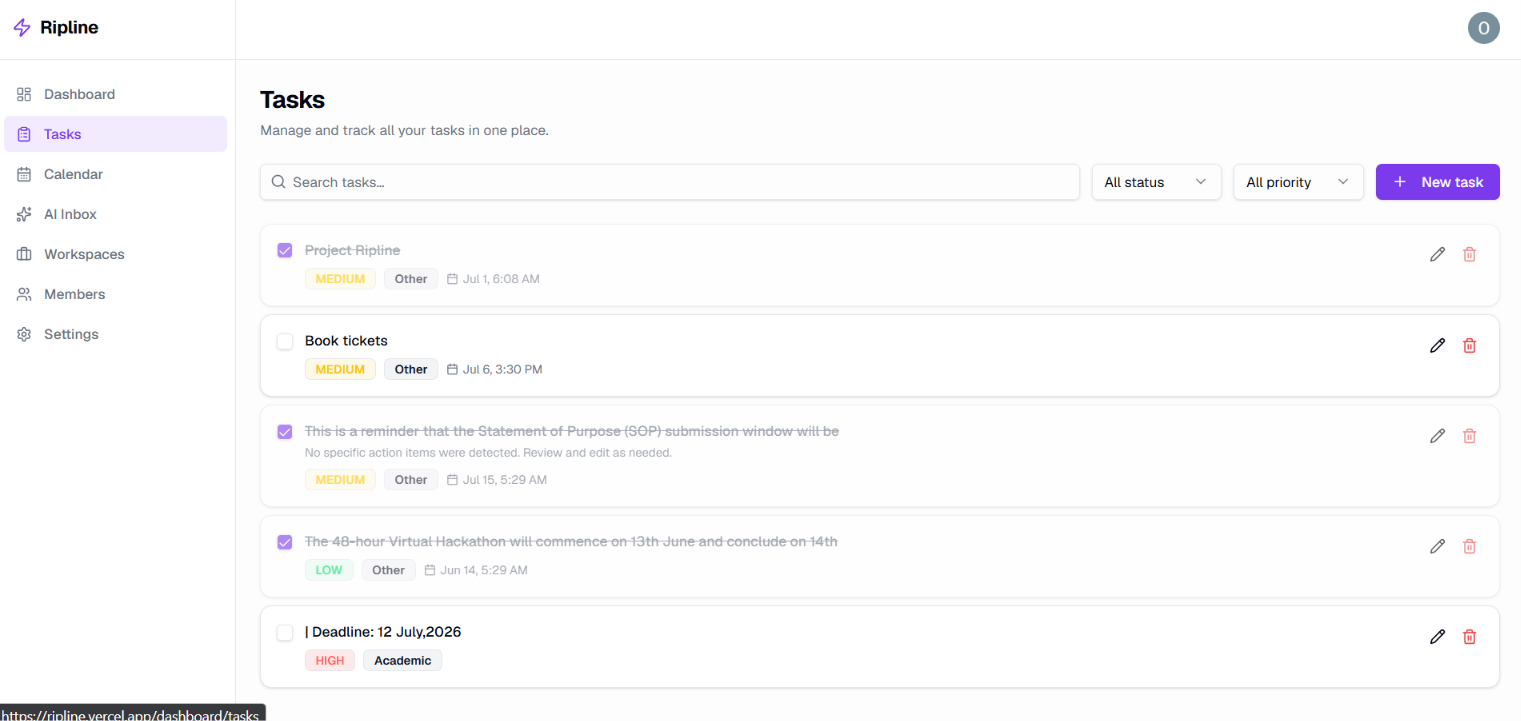
Task Page
-
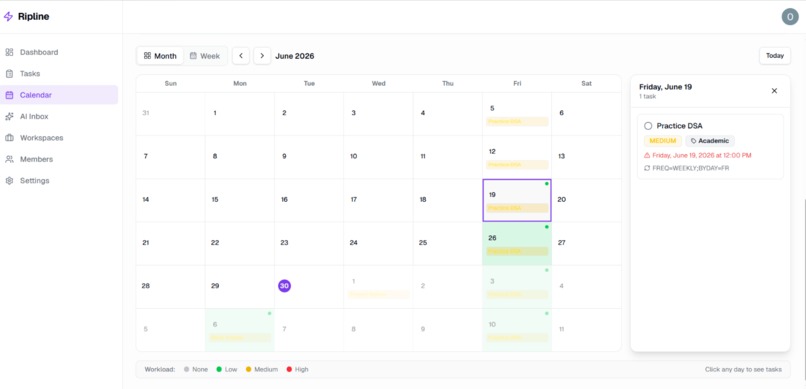
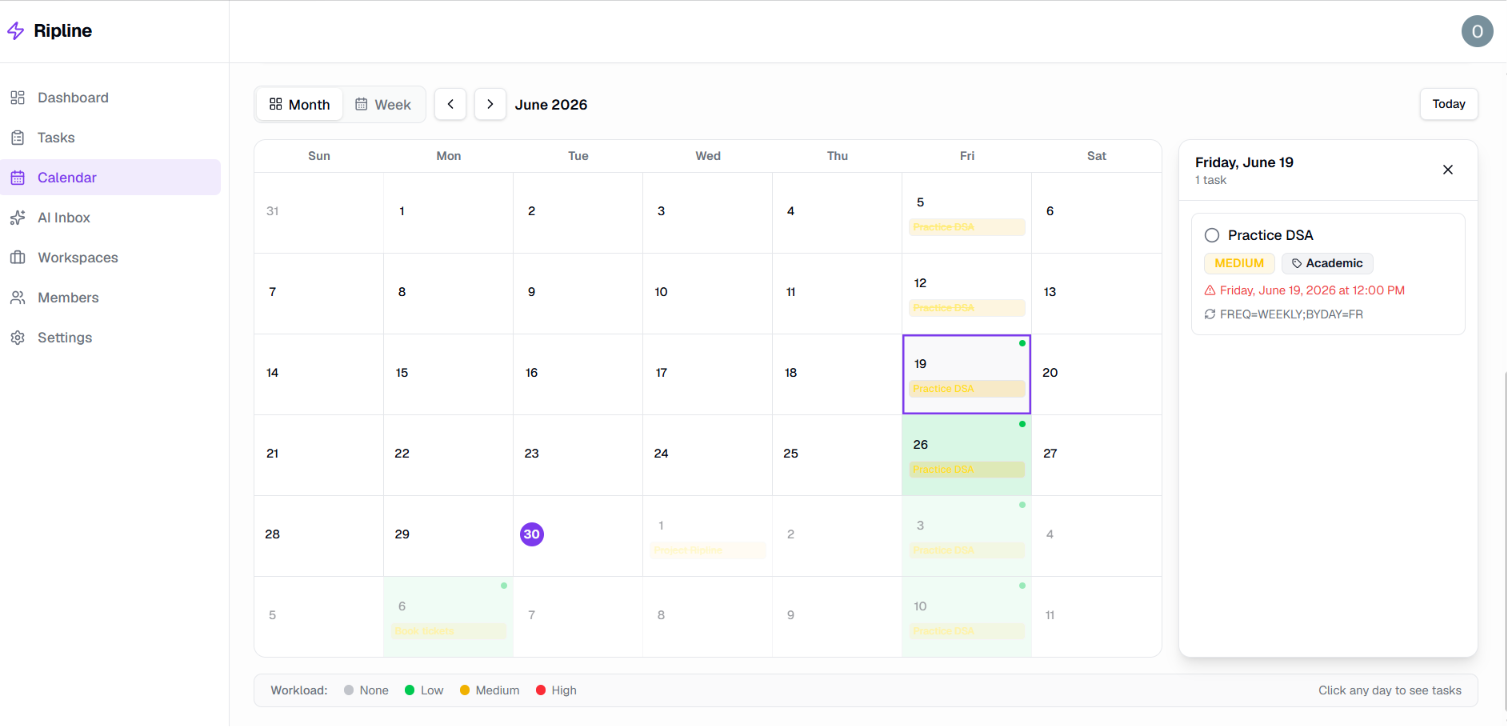
Calender
-
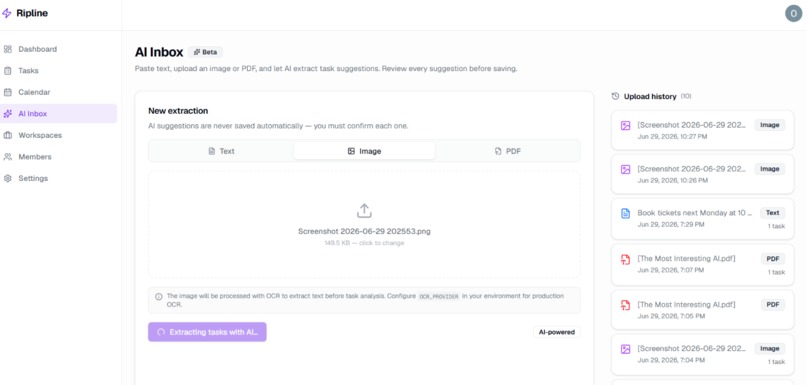
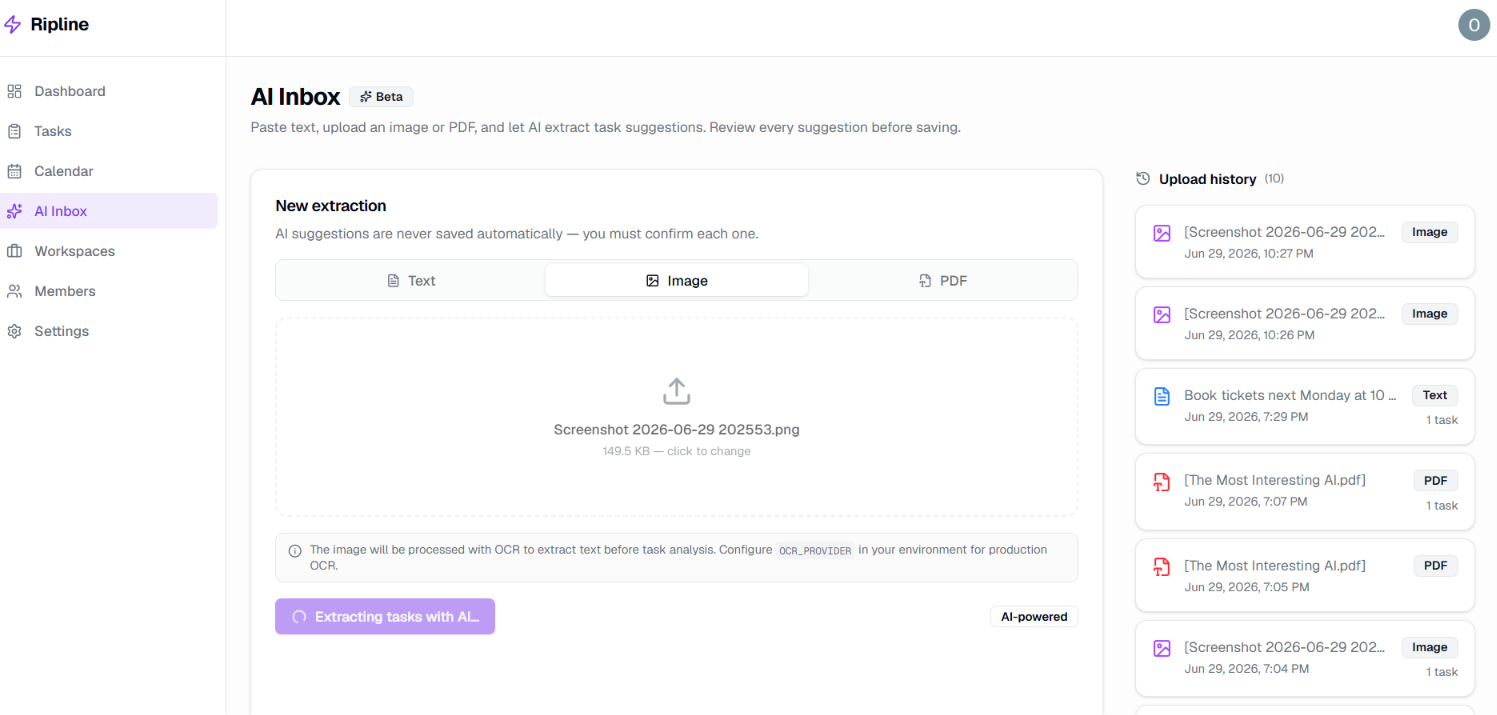
AI Inbox - Showing upload of image input
-
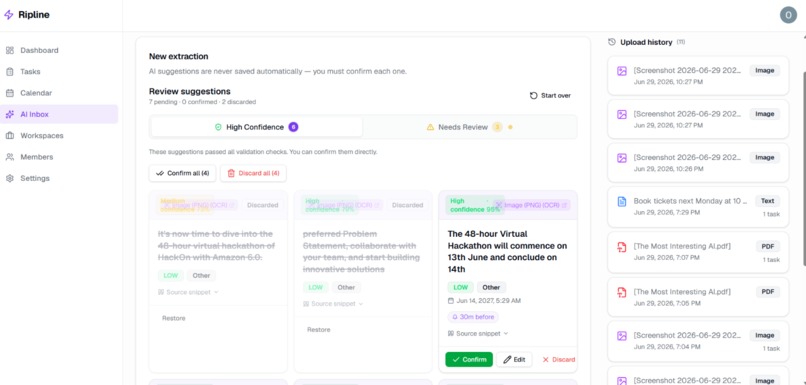
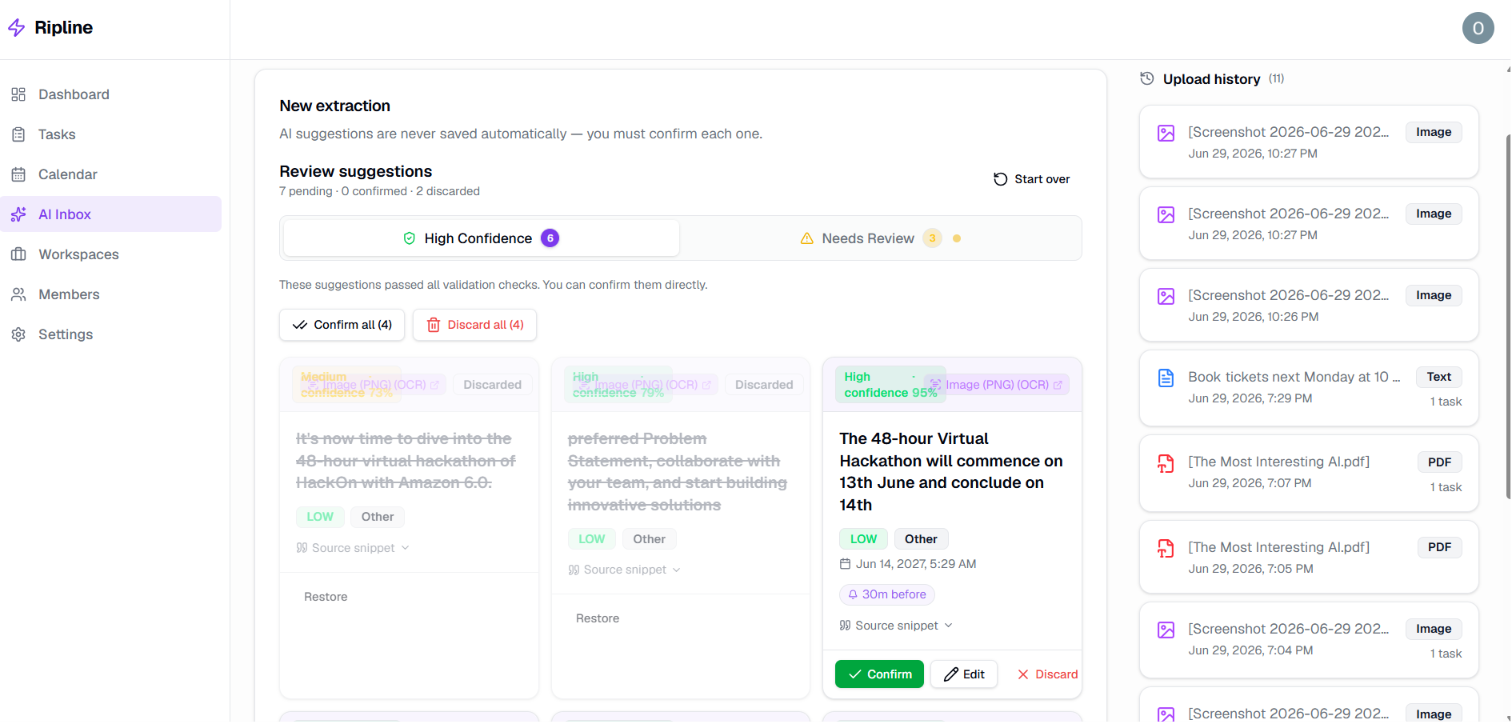
AI Inbox - Showing after extraction from inputs
-
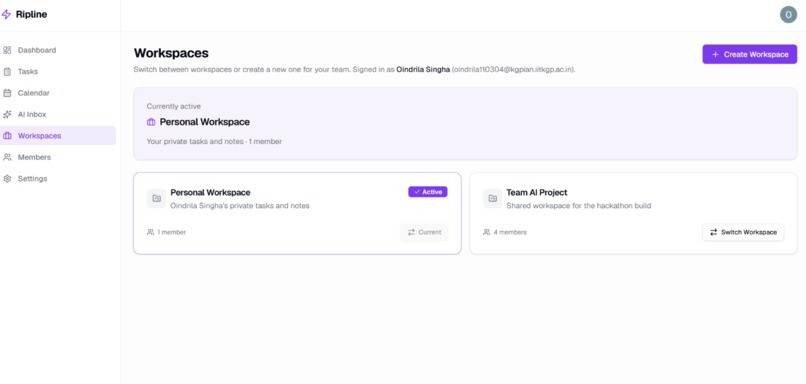
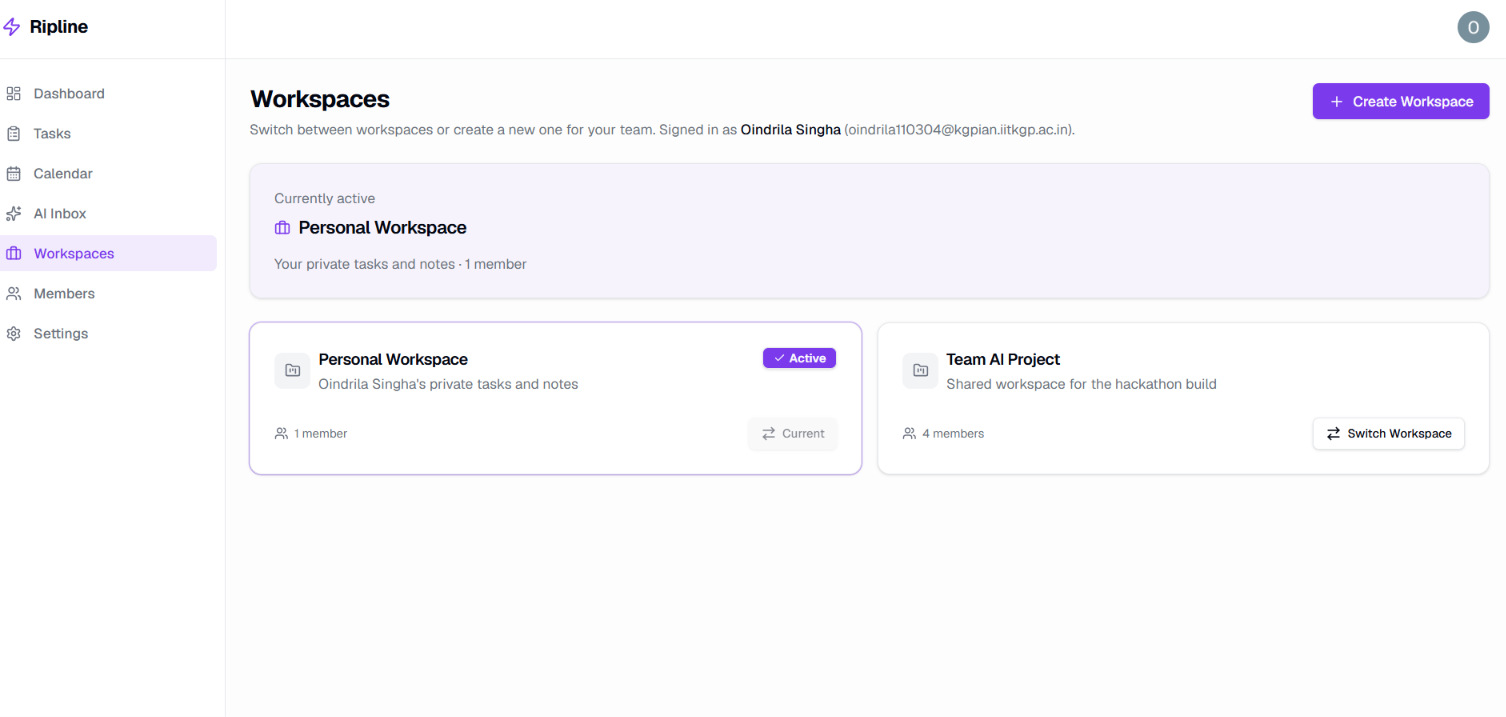
Workspaces
-
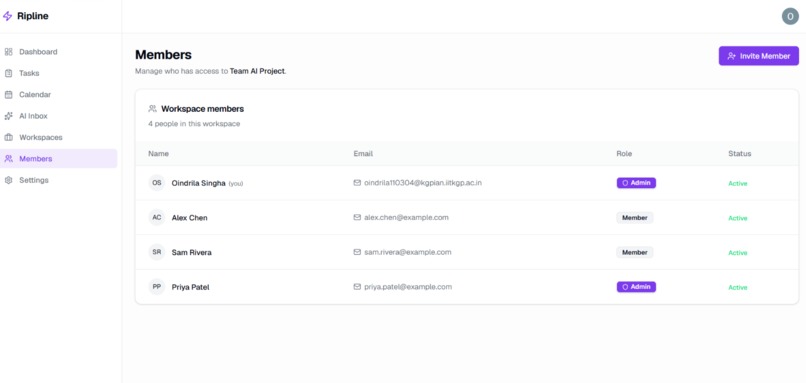
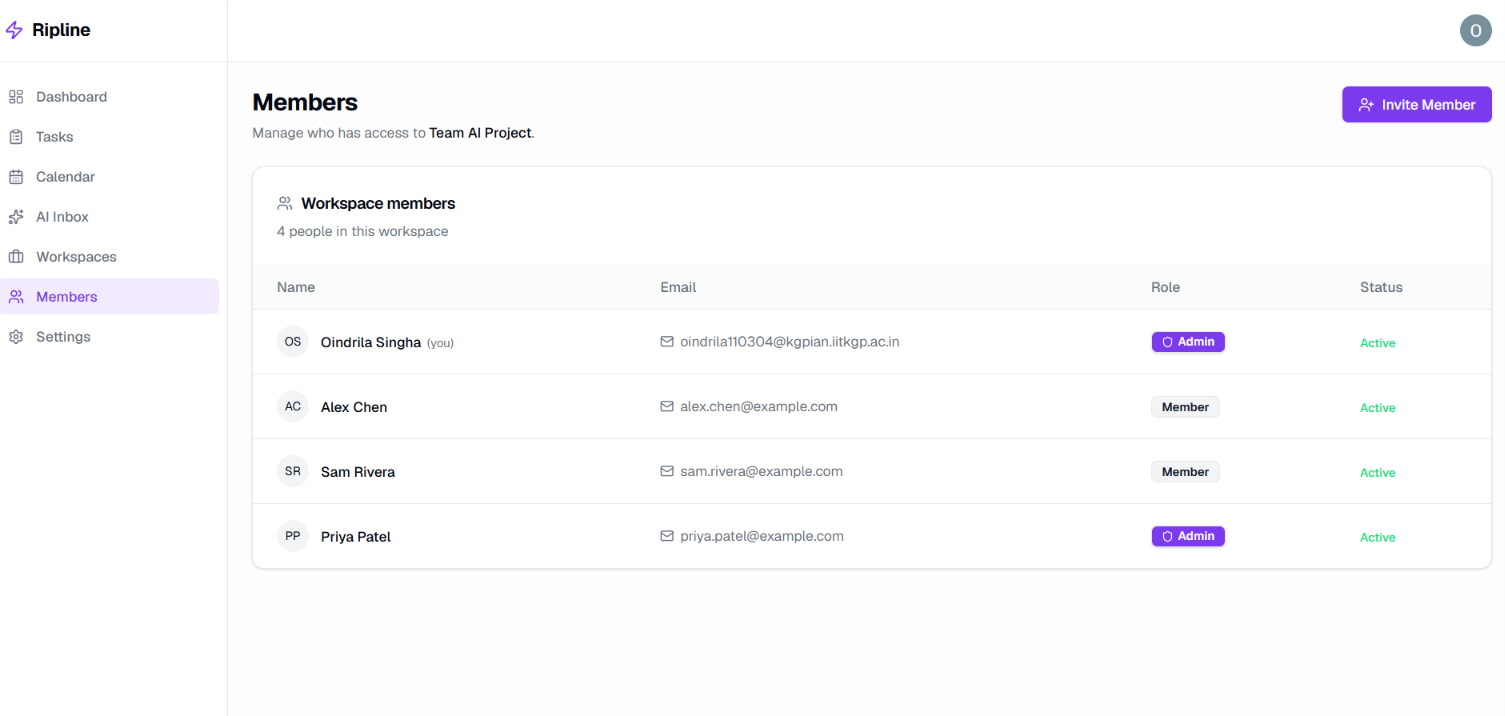
Members Page
-
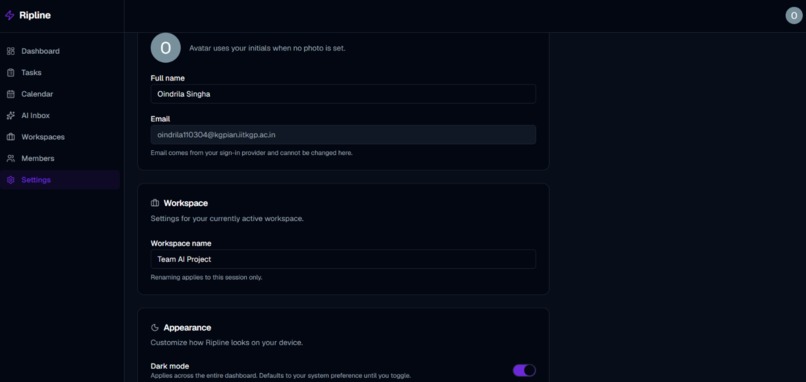
Settings Page
Inspiration
As a student, I regularly encounter critical deadlines—from college assignments and exam schedules to internship tasks and company project updates—spread across chats, PDFs, and emails. Because this information is fragmented and unstructured, it often gets lost, leading to missed or delayed submissions. Even I often hear friends say: "I saw the deadline somewhere… but I can’t find it now.” Existing task managers assume users will manually enter everything. But in reality, users rarely do that. We wanted to build something that behaves more like an intelligent layer on top of communication tools, rather than another app users have to maintain. Ripline is inspired by the idea of an “AI Operating Layer for Personal Productivity”—where information is automatically captured, interpreted, and acted upon.
What it does
Ripline turns unstructured information (PDFs, screenshots, messages, and pasted text) into structured tasks, deadlines, and reminders using AI. It automatically extracts important dates, organizes them into a dashboard, and helps users track college, internship, and work deadlines in one place. It also has a shared workspace to work across different teams.
How we built it
Ripline is built as a full-stack AI system using: •Next.js 16 (App Router) for the frontend and API layer •Prisma + PostgreSQL (Amazon Aurora) for structured storage •Auth.js v5 for secure OAuth authentication (Google + GitHub) •AWS Textract for OCR-based extraction from PDFs and images •OpenAI (gpt-4o-mini) for structured task extraction •A fallback heuristic engine to ensure reliability even without AI APIs The core system is built around a multi-stage AI pipeline: •Ingestion Layer – Users upload or paste unstructured content •OCR Layer – Extract text from images/PDFs (AWS Textract or fallback OCR) •LLM Extraction Layer – Convert raw text into structured TaskSuggestion objects •Validation Layer – Strict schema validation using Zod with fallback repair •Human-in-the-loop Review – Users approve or edit extracted tasks before saving This ensures that AI never silently makes mistakes—users remain in control.
Challenges we ran into
•Extracting accurate deadlines from messy, unstructured text •Handling inconsistent AI outputs and improving reliability •Building a stable recurring task system with correct calendar behavior •Managing time zone consistency across database and UI •Designing fallback systems when OCR or LLM services fail
Accomplishments that we're proud of
•Fully working AI pipeline (OCR → LLM → validation → tasks) •Recurring task system with per-occurrence tracking •AI Inbox that processes PDFs, images, and text •Calendar view with workload insights •Robust fallback system (mock OCR + heuristic extraction) •Clean full-stack architecture with Next.js + Aurora PostgreSQL
What we learned
•AI is most powerful when combined with strong system design, not just prompts •Real-world data is messy, so fallback logic is essential •Designing time-based systems is harder than expected •Human-in-the-loop validation improves trust in AI systems •Good UX is as important as backend intelligence
What's next for RIPLINE
•WhatsApp / Slack integration for direct message extraction •Gmail + Outlook integration for automatic deadline detection •Mobile app with push notifications •Smarter AI prioritization (urgency + workload balancing) •Team collaboration features (shared deadlines, group projects) •Voice input for quick task capture •Deeper calendar integrations (Google Calendar two-way sync)
Built With
- amazon-web-services
- aurora
- auth.js
- aws-textract
- inbox
- nextjs16
- openai
- postgresql
- prismav7
- shadcn
- sql
- tailwindcssv4
- typescript
- vercel
- zod

Log in or sign up for Devpost to join the conversation.