-
-
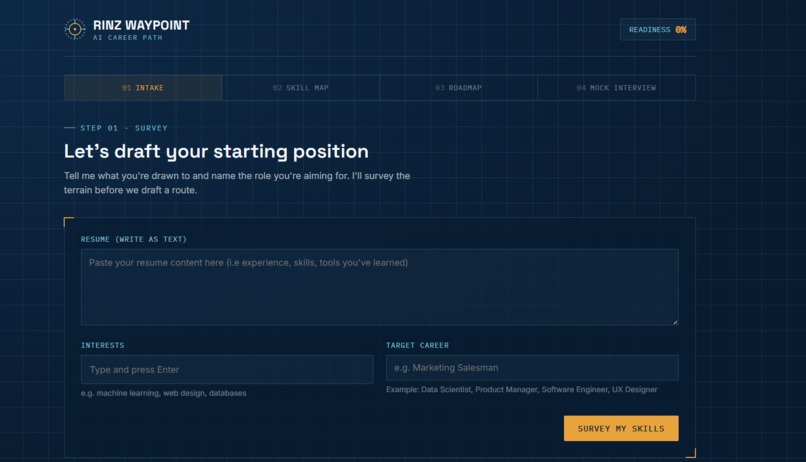
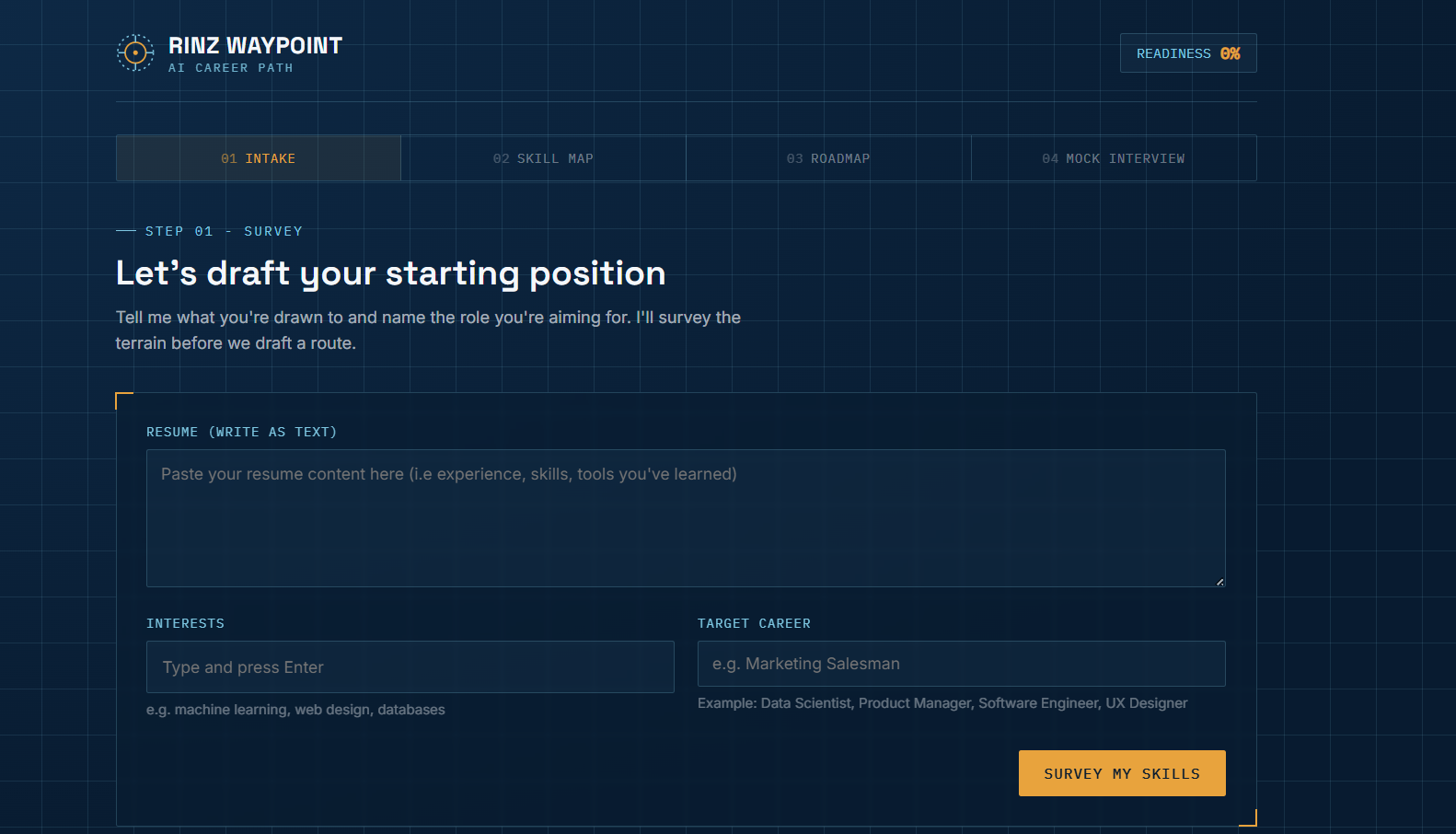
Intake page
-
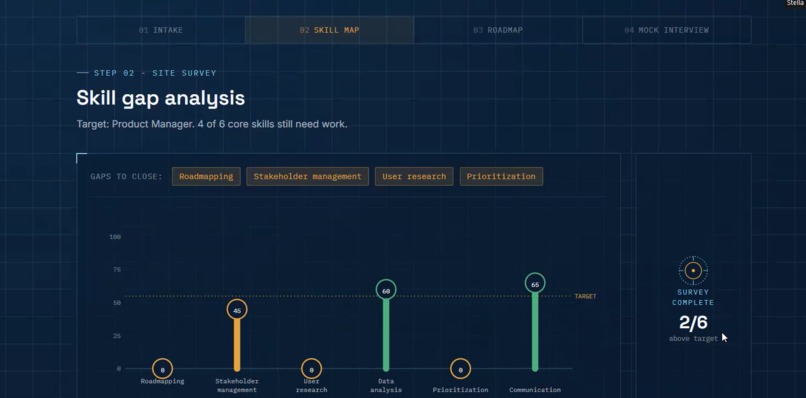
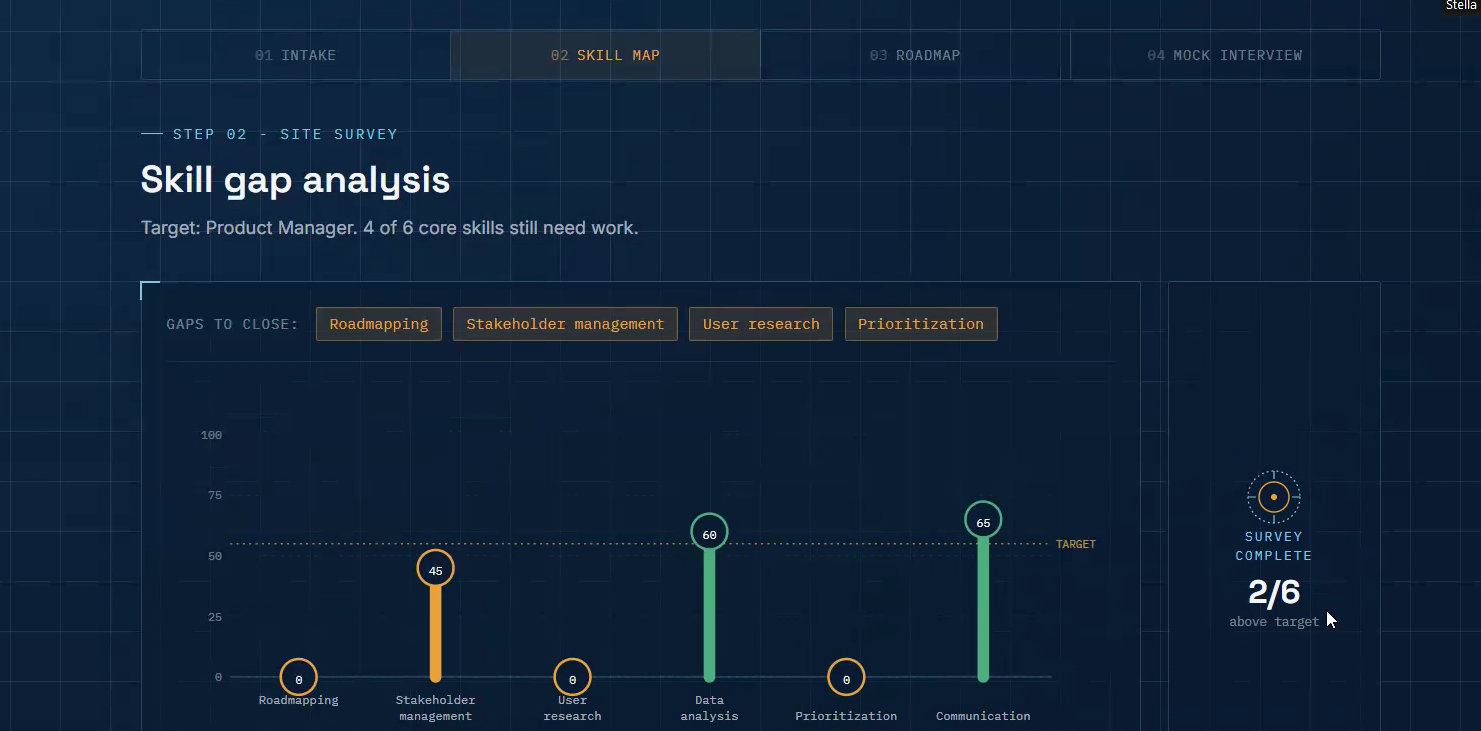
Skill page
-
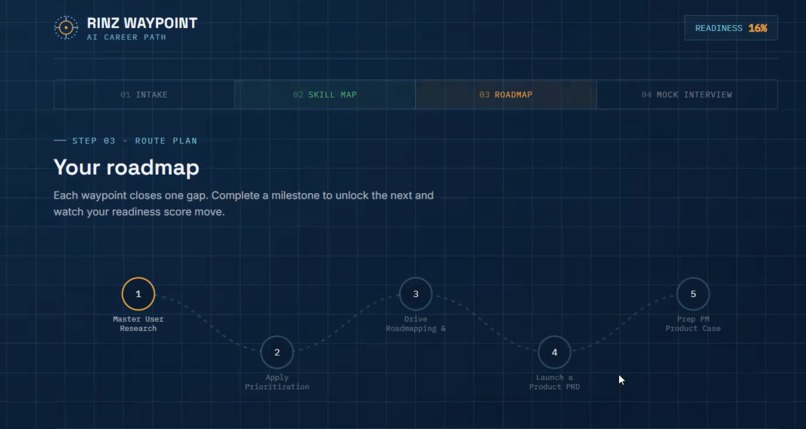
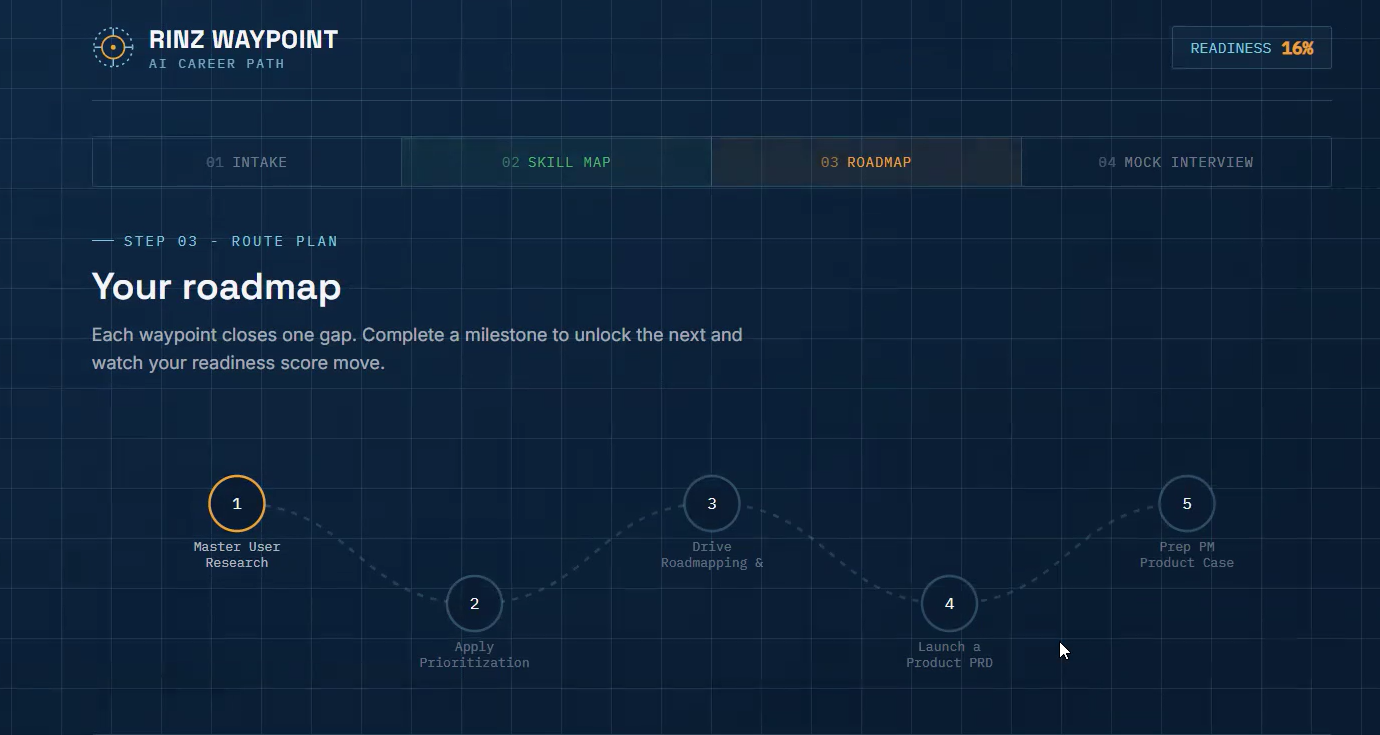
Roadmap page
-
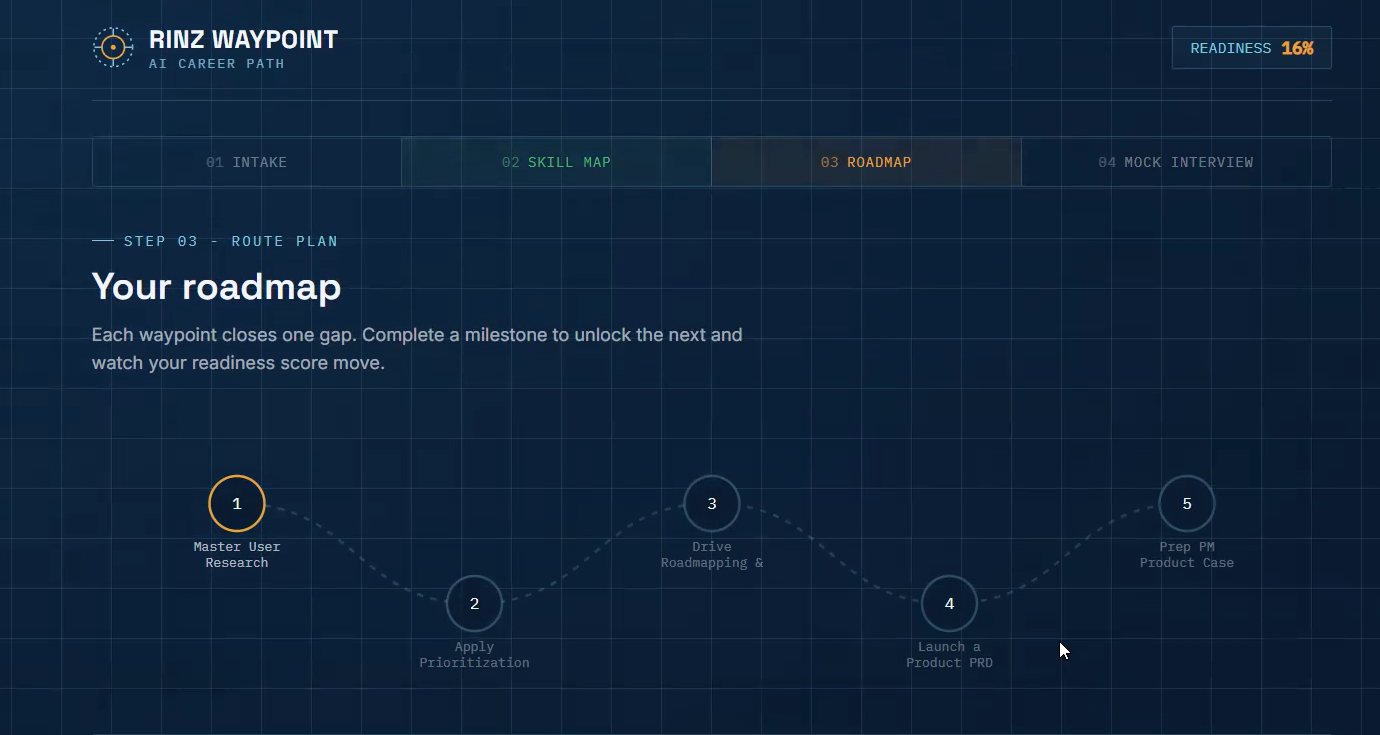
Interview page
Inspiration
I kept noticing the same gap in career advice: it's all "learn Python" or "network more" which are direction with no route. Nobody checks if you actually did the work, and nobody adjusts the plan as you improve. I wanted to build something that behaves less like a quiz and more like an actual agent: it looks at where you are, plans a path, checks your work, and re-plans as you go. The name RINZ came from thinking about the project like a survey team charting unfamiliar terrain, survey the land, draft a route, mark each waypoint.
What it does
RINZ Waypoint takes a resume and a target career, then runs a full reasoning loop instead of a one-shot answer. It scores your real skill proficiency against the specific skills your target role needs, builds a sequenced roadmap that closes your biggest gaps first, evaluates real project submissions you give it (pass/fail with specific feedback, not just checkboxes), runs a mock interview calibrated to your role, and generates a fresh weekly plan based on your actual progress so far. A live readiness score ties all of it together into one connected loop.
How we built it
The frontend is vanilla HTML/CSS/JS with hand-rolled SVG for the skill chart and roadmap visuals with no framework, just direct DOM work so I could keep the "survey/blueprint" visual language tight. The backend is Node.js and Express, with five endpoints that each call the Claude API and return structured JSON: skill analysis, roadmap generation, project evaluation, interview scoring, and weekly planning. I also built a Netlify Functions version so the whole thing can deploy as one static site plus serverless API, without needing a separate always-on server.
Challenges we ran into
Getting the AI to give calibrated scores was harder than expected as early prompts scored almost every skill as "strong," which made the roadmap pointless. I had to explicitly push the model toward honest, evidence-based scoring in the system prompt. Deployment was its own lesson: I initially built a standard Express server, then discovered Netlify can't run a persistent server at all so I had to restructure the backend into serverless functions and fix a hardcoded localhost API URL that only worked on my own machine.
Accomplishments that we're proud of
Getting the four screens to actually feel like one connected system instead of four separate features — the readiness score moving in real time as skills improve, roadmap nodes unlock and interview answers get scored, all off the same shared state. I'm also proud of the visual identity: the amber/blueprint survey theme with the stem chart and waypoint path gives the whole thing a distinct feel instead of looking like a generic dashboard template.
What we learned
Building solo forced me to think hard about scope as I had to resist adding more career paths, more question banks, more polish, and focus on making the core reasoning loop (reason → plan → act → adapt) actually solid end to end. I also learned a lot about the practical gap between "runs on my machine" and "runs once deployed," especially around serverless architecture and environment variables.
What's next for Rinz
Persisting user progress across sessions instead of in-memory state, supporting resume upload PDF instead of paste-only, expanding the career/skill library well beyond the current few target roles and adding a lightweight "accountability" mode where a cohort of learners can see each other's readiness progress.
Built With
- css
- express.js
- html
- javascript
- netlify

Log in or sign up for Devpost to join the conversation.