-
-
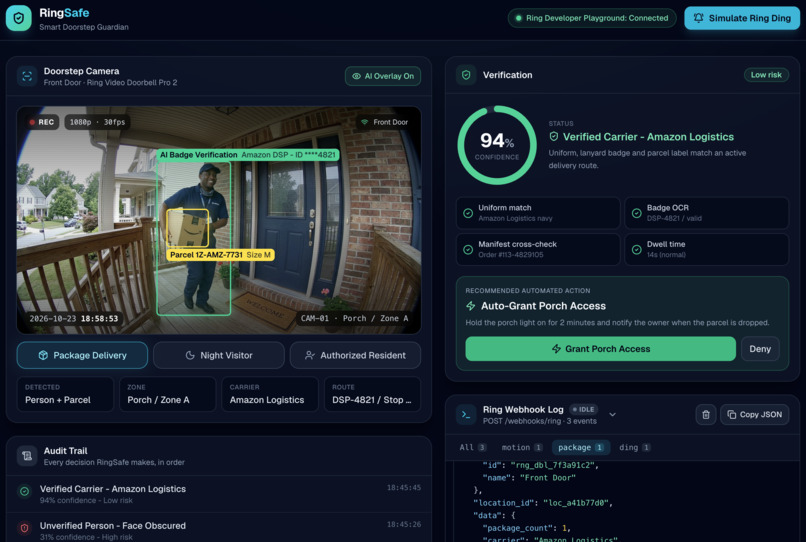
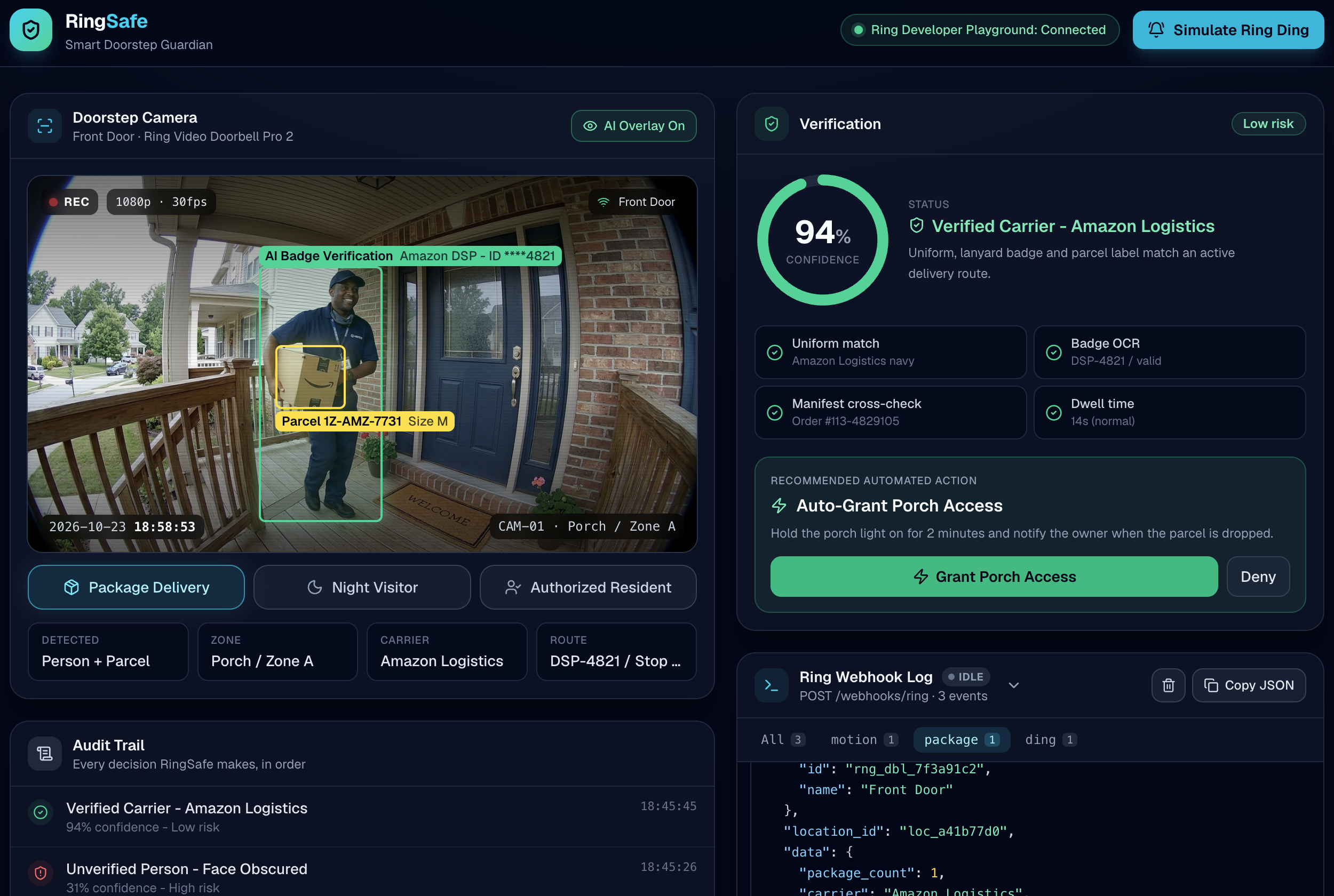
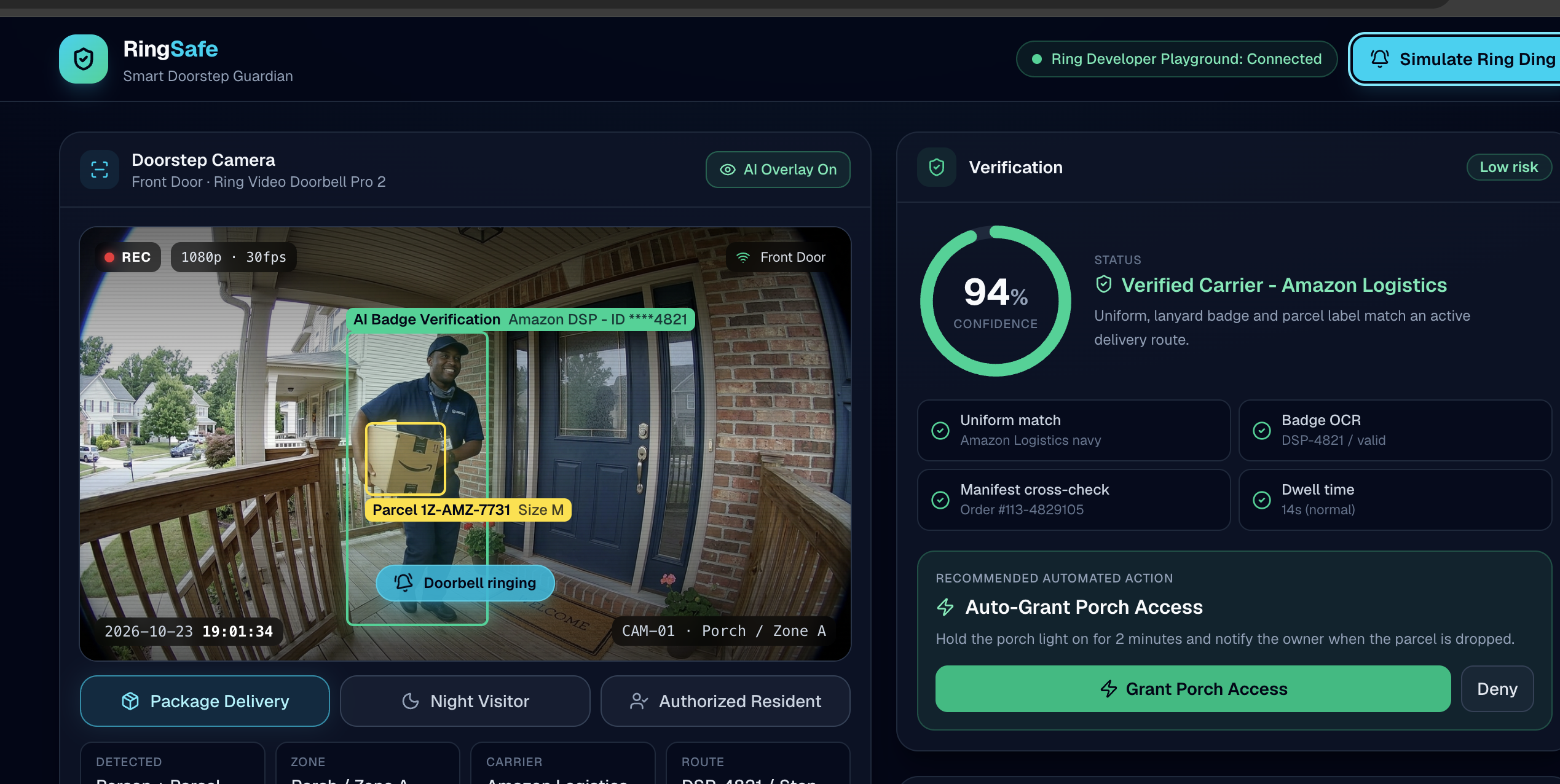
Full application view
-
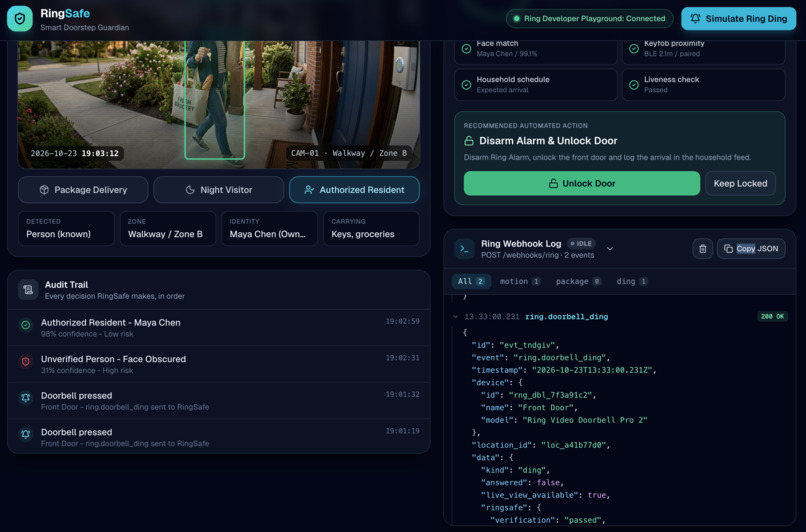
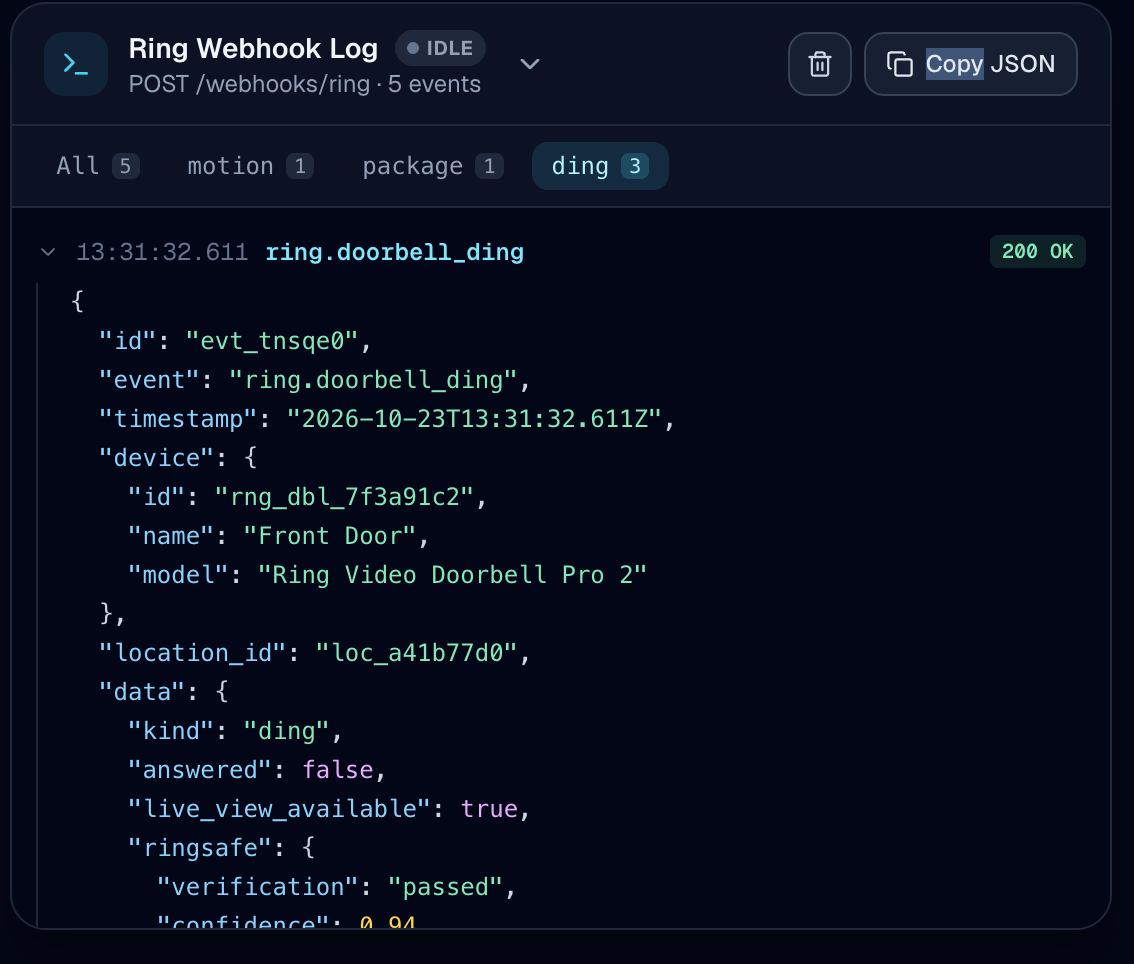
webhook with verification pass
-
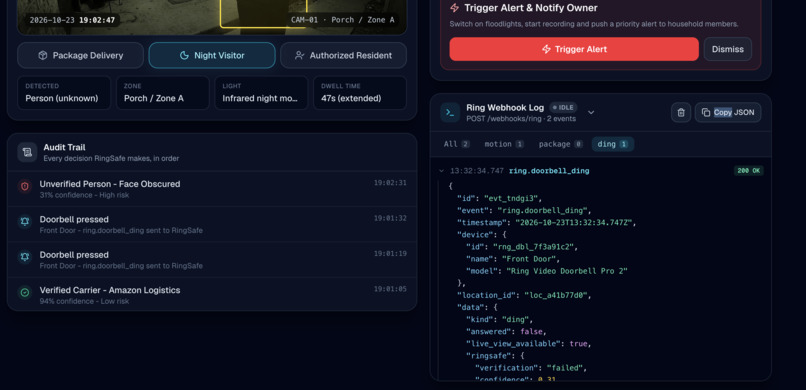
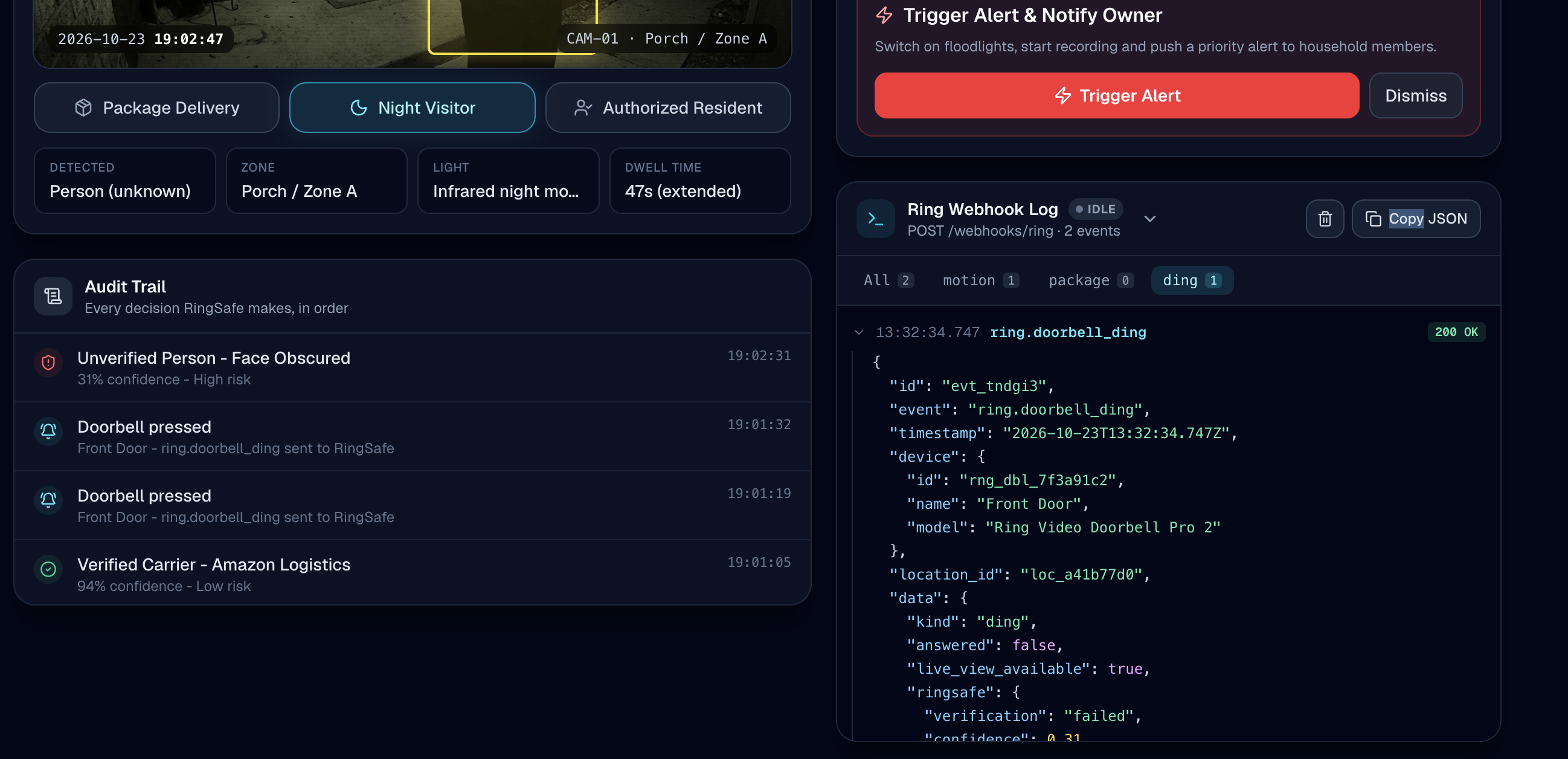
webhook with verification failed
-
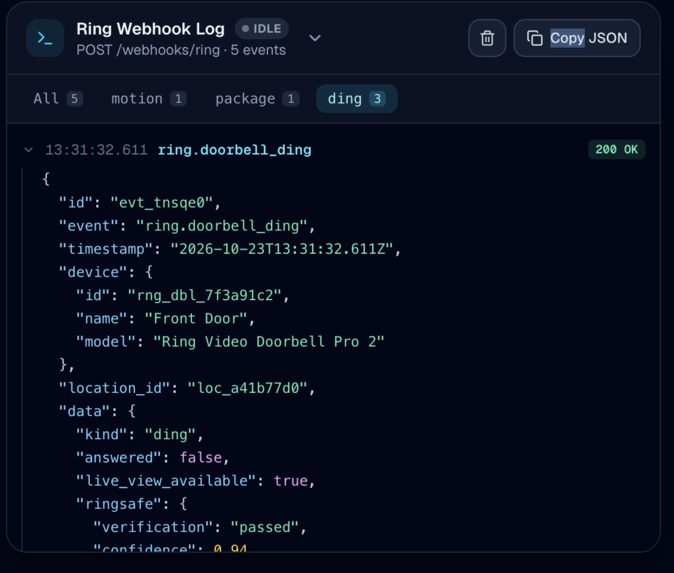
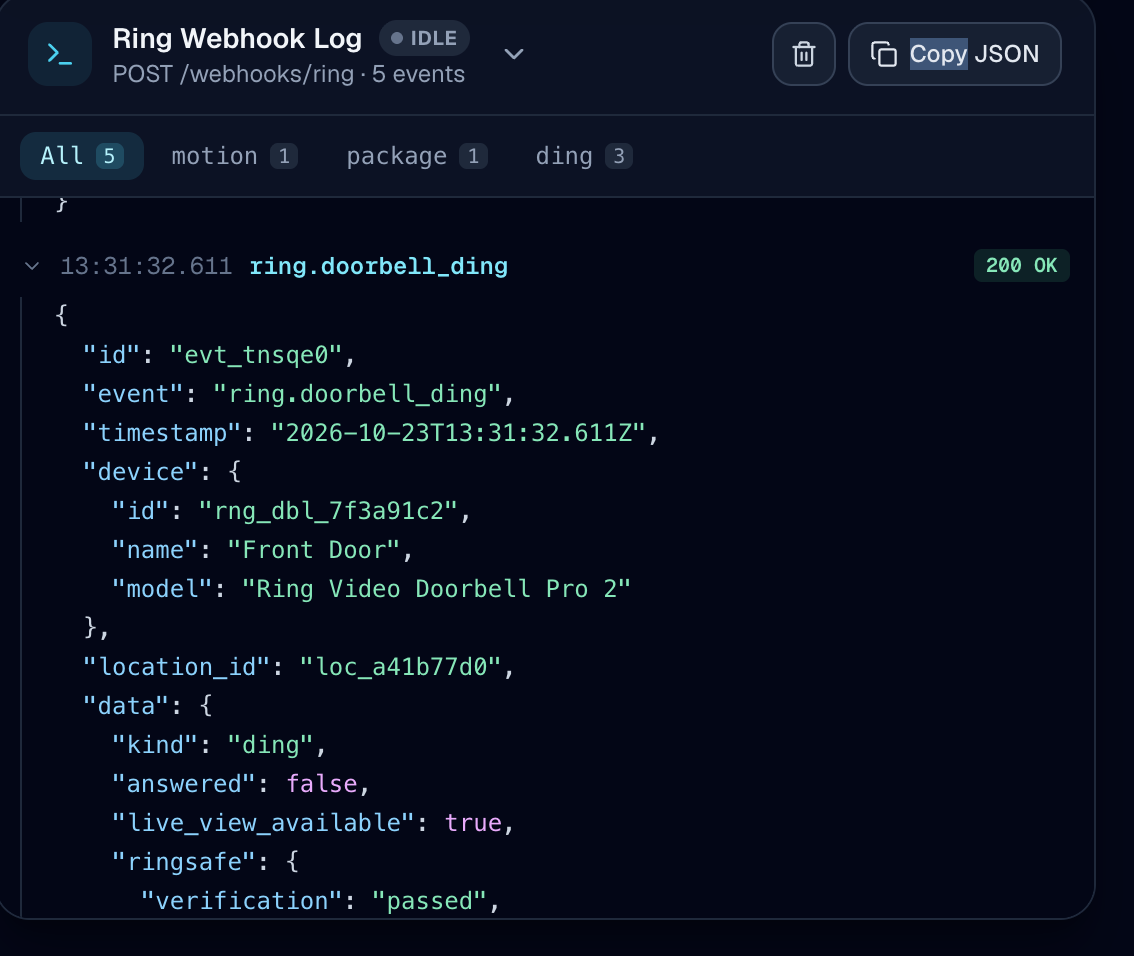
webhook with bell dings payload
-
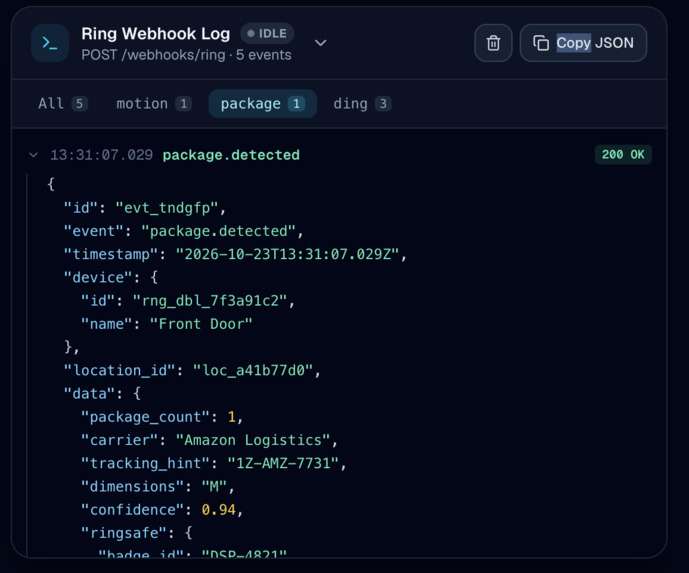
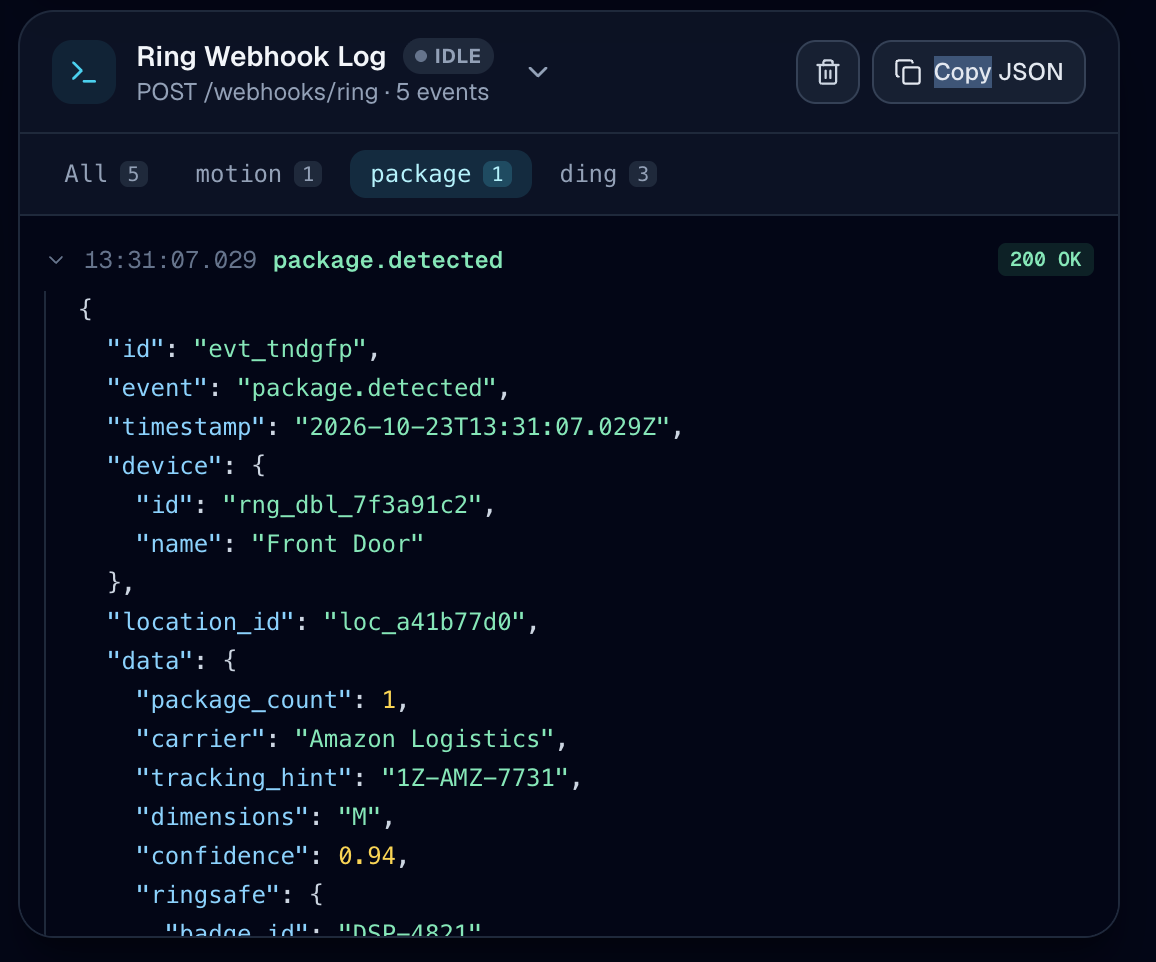
webhook with package payload
-
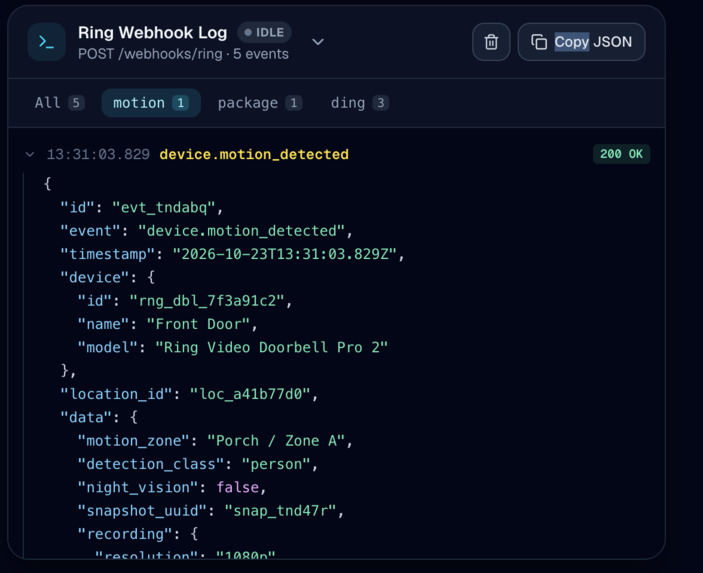
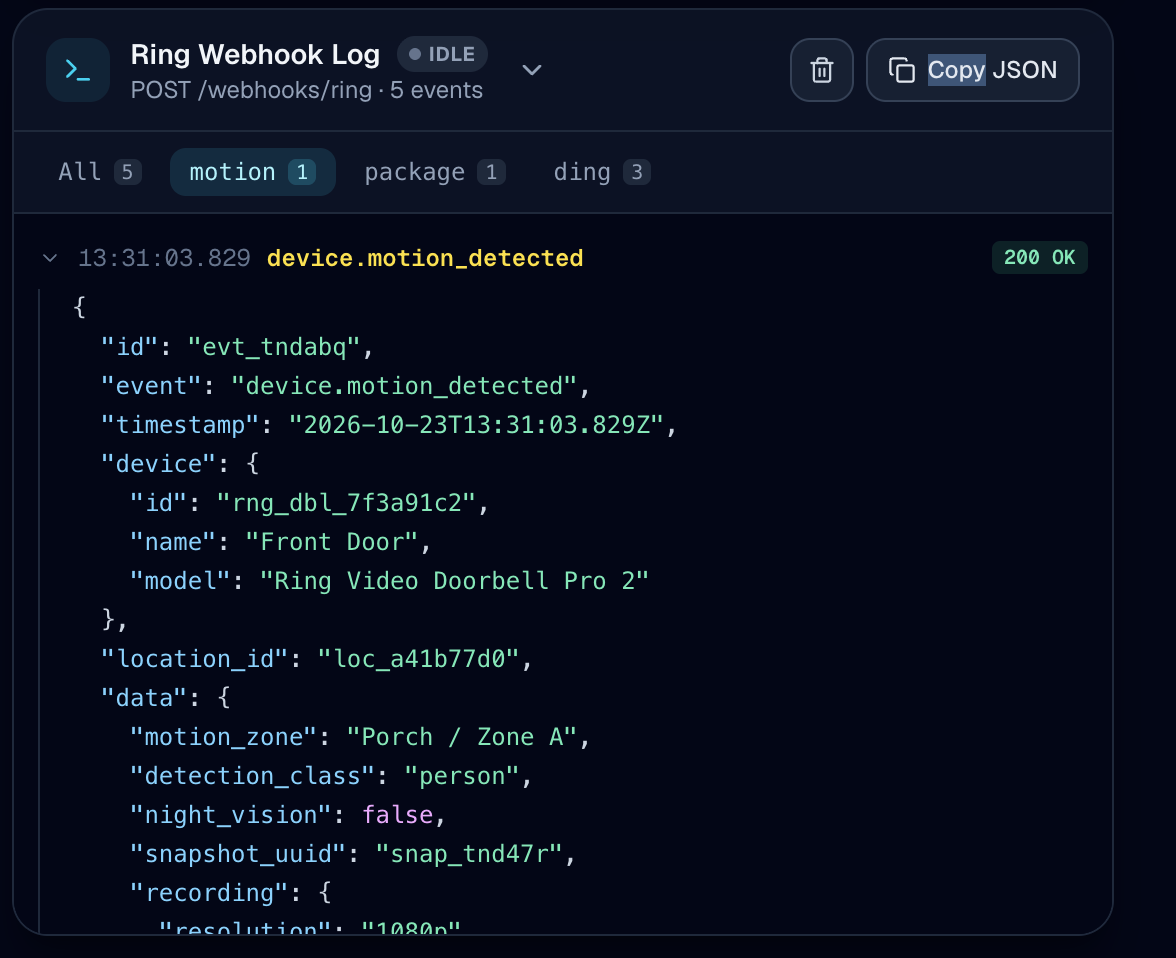
webhook with motion payload
-
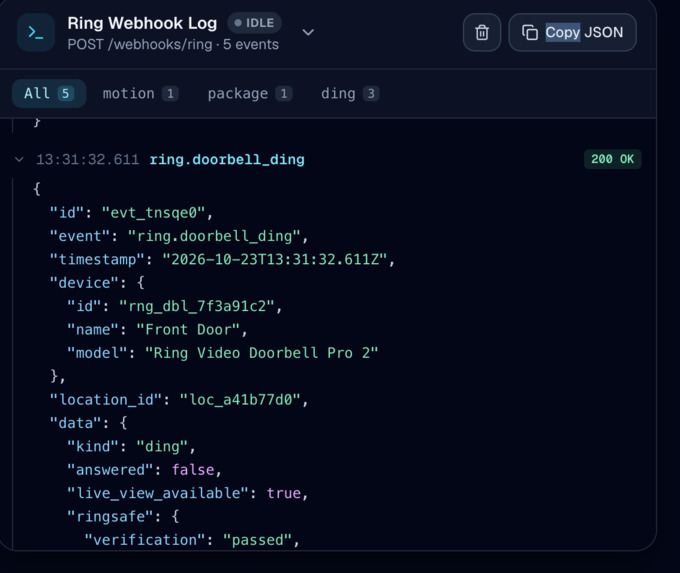
webhook with all payloads, motion, package and dings
-
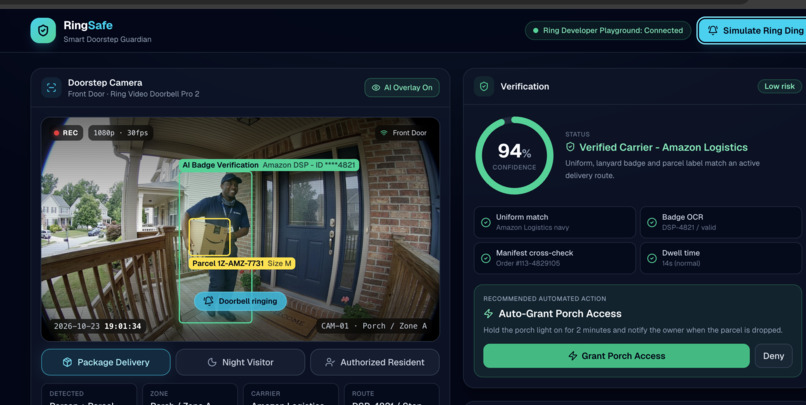
Doorbell rings
-
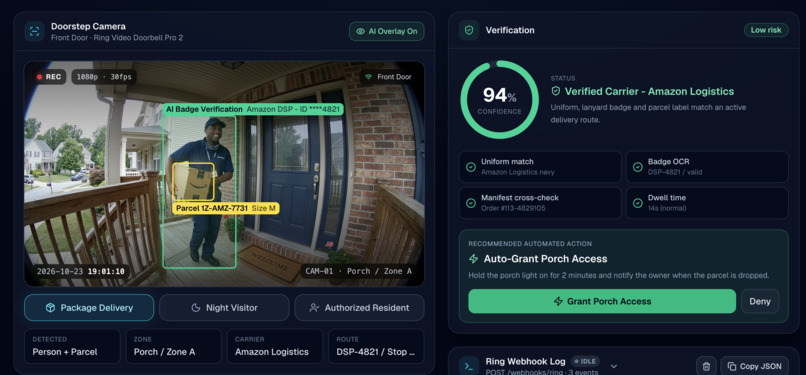
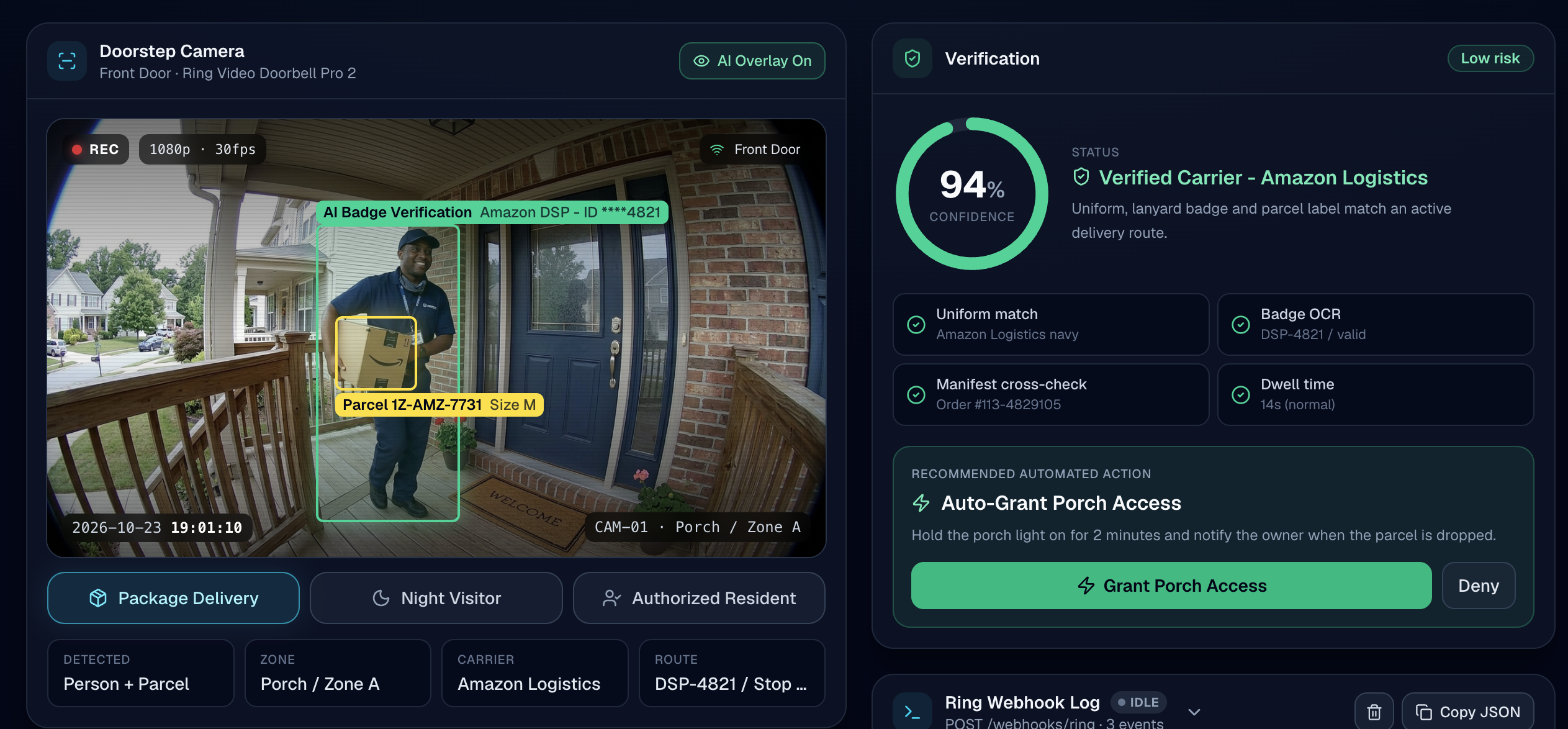
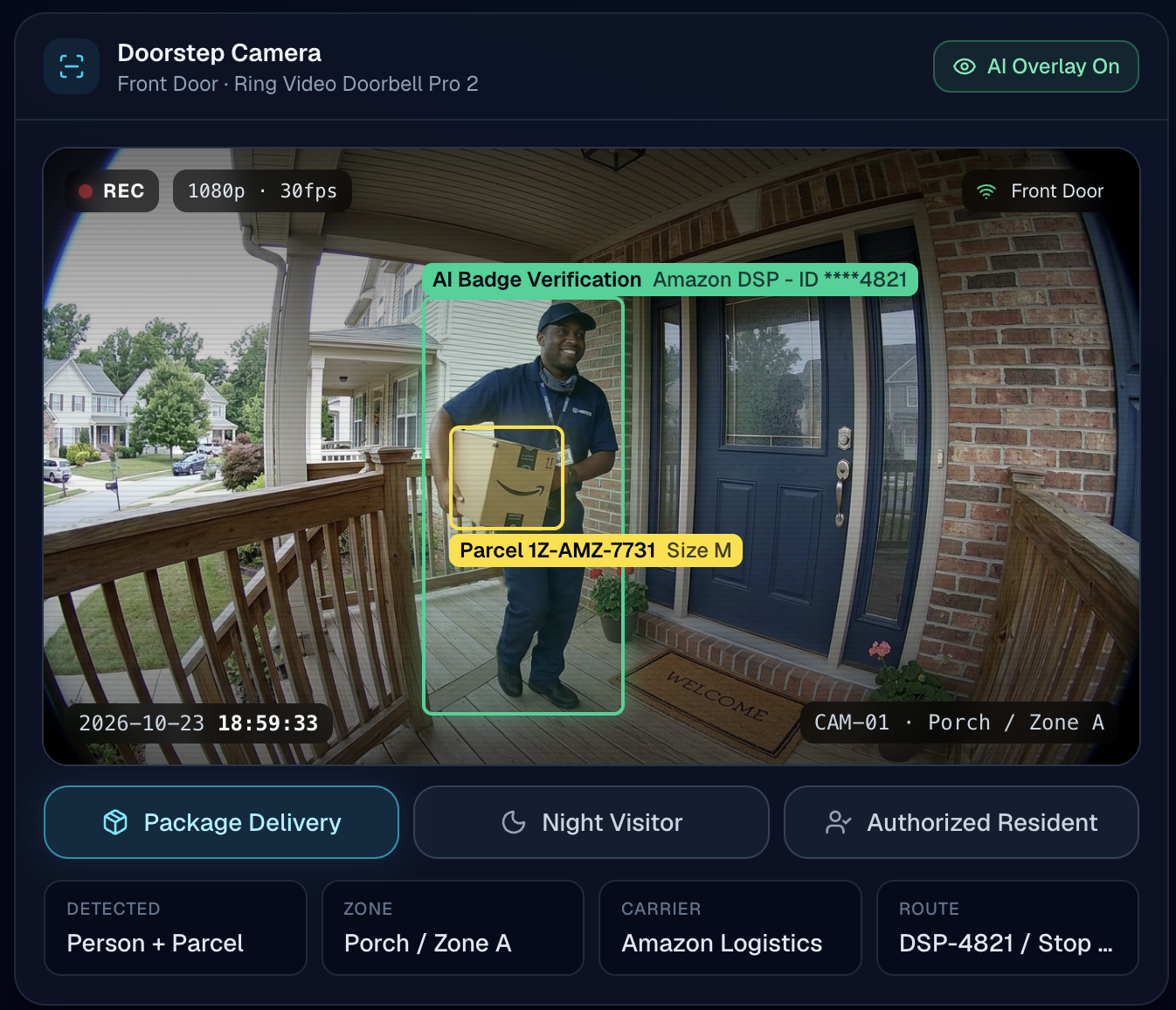
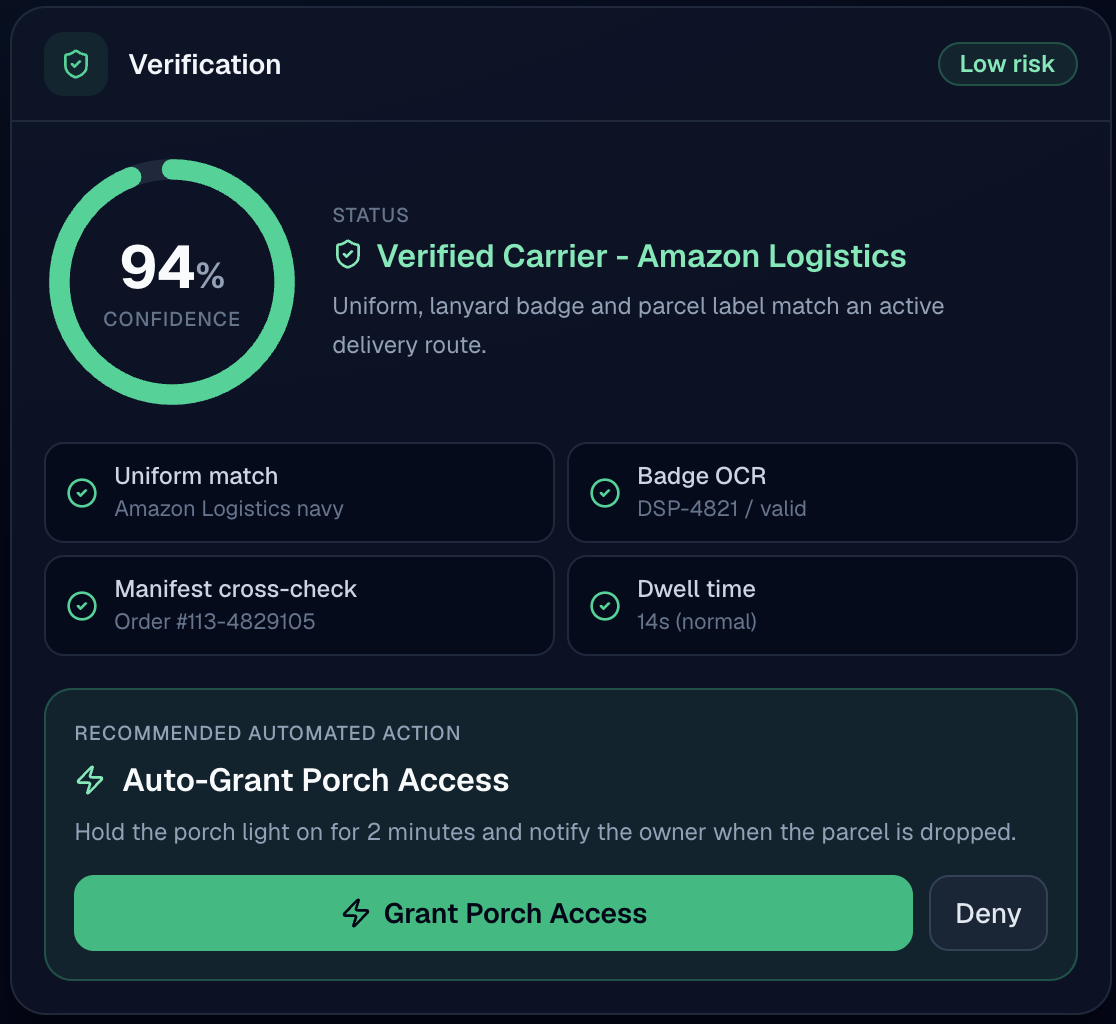
Package delivery with good confidence score
-
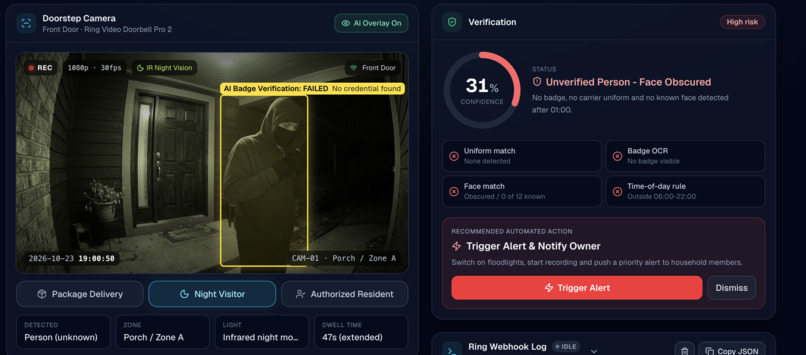
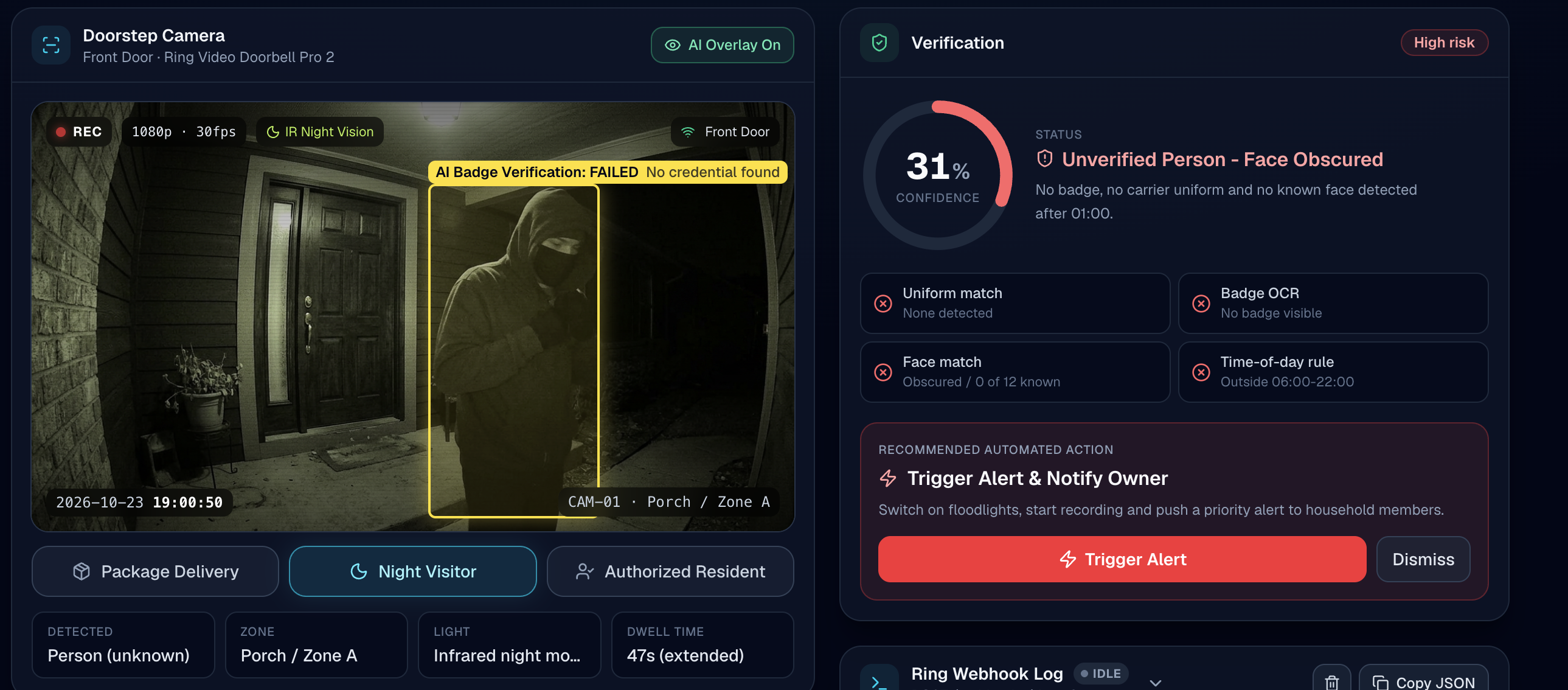
Package delivery with negative confidence score
-
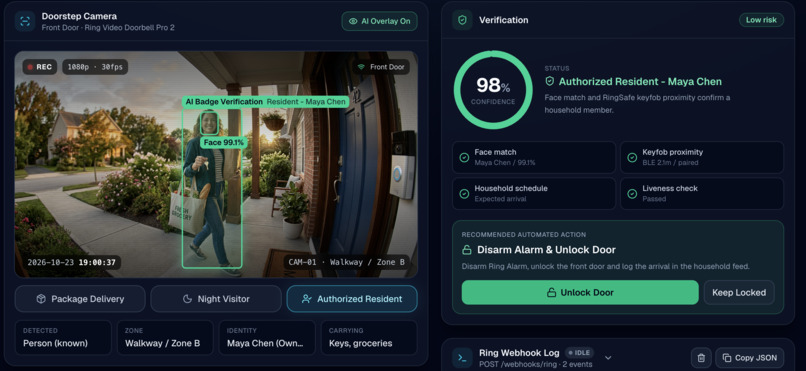
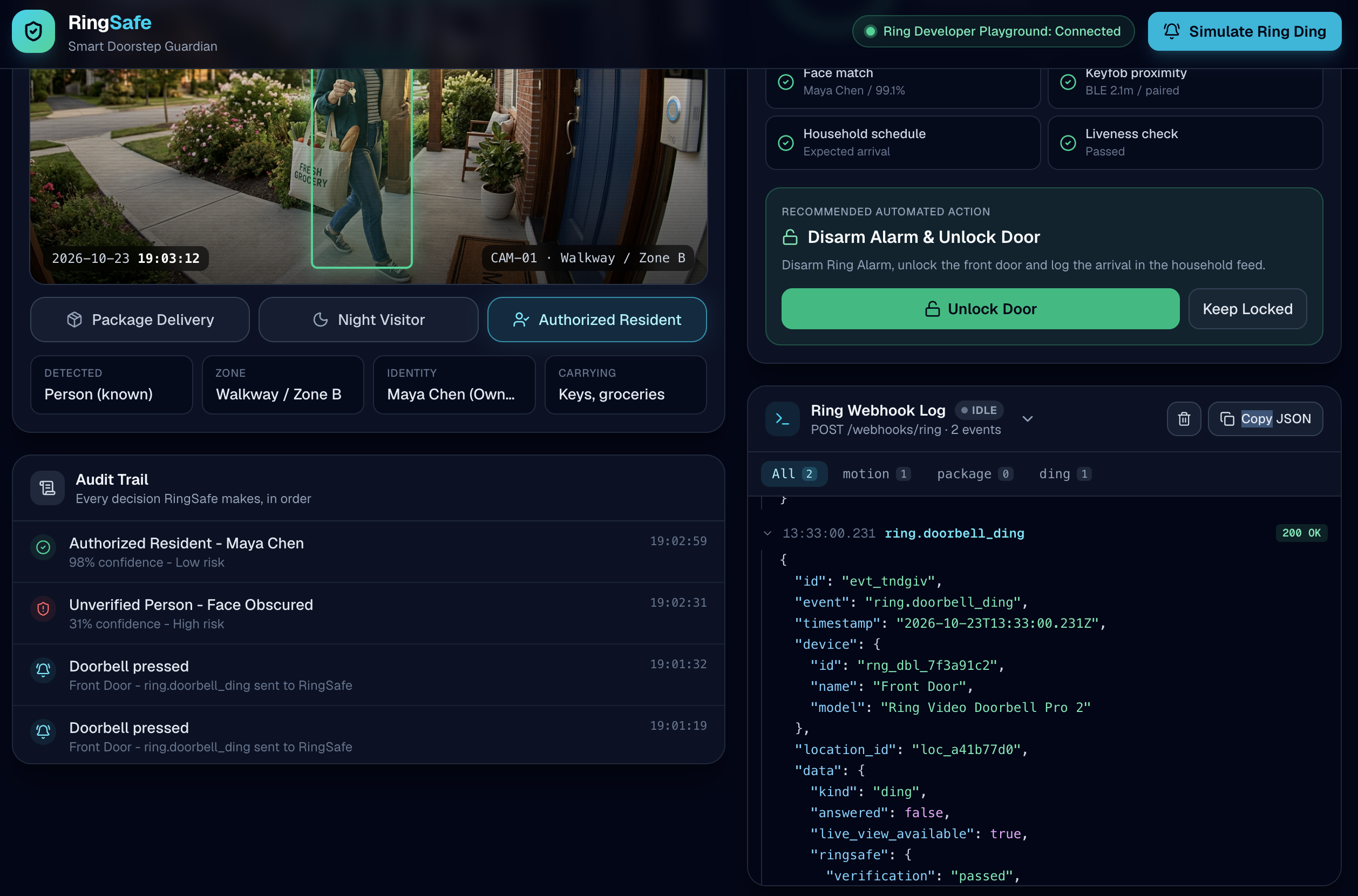
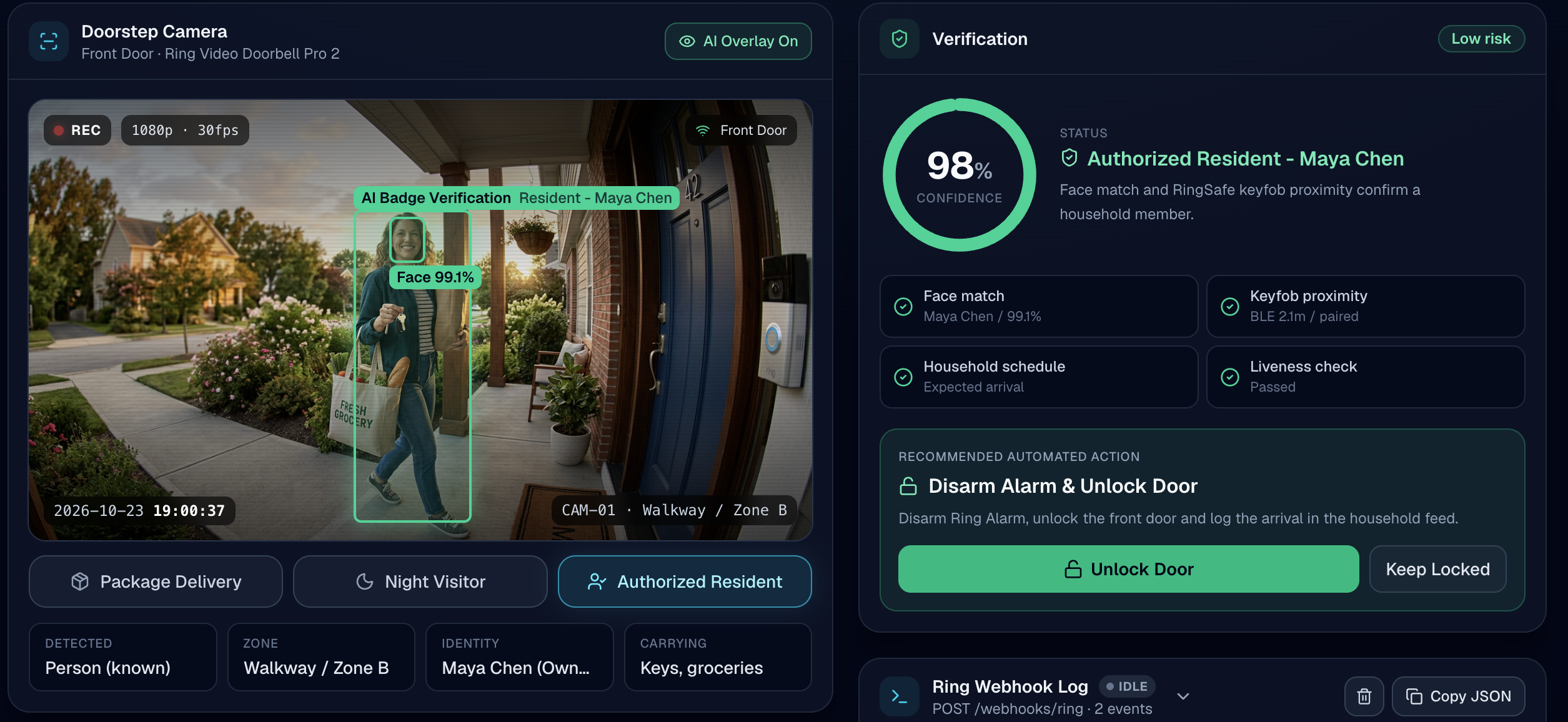
Authorised person
-
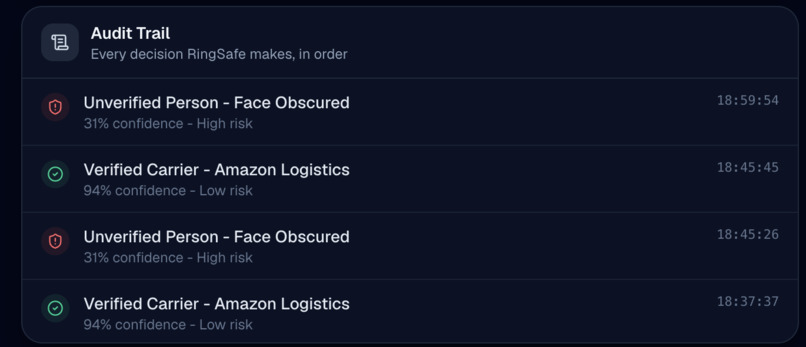
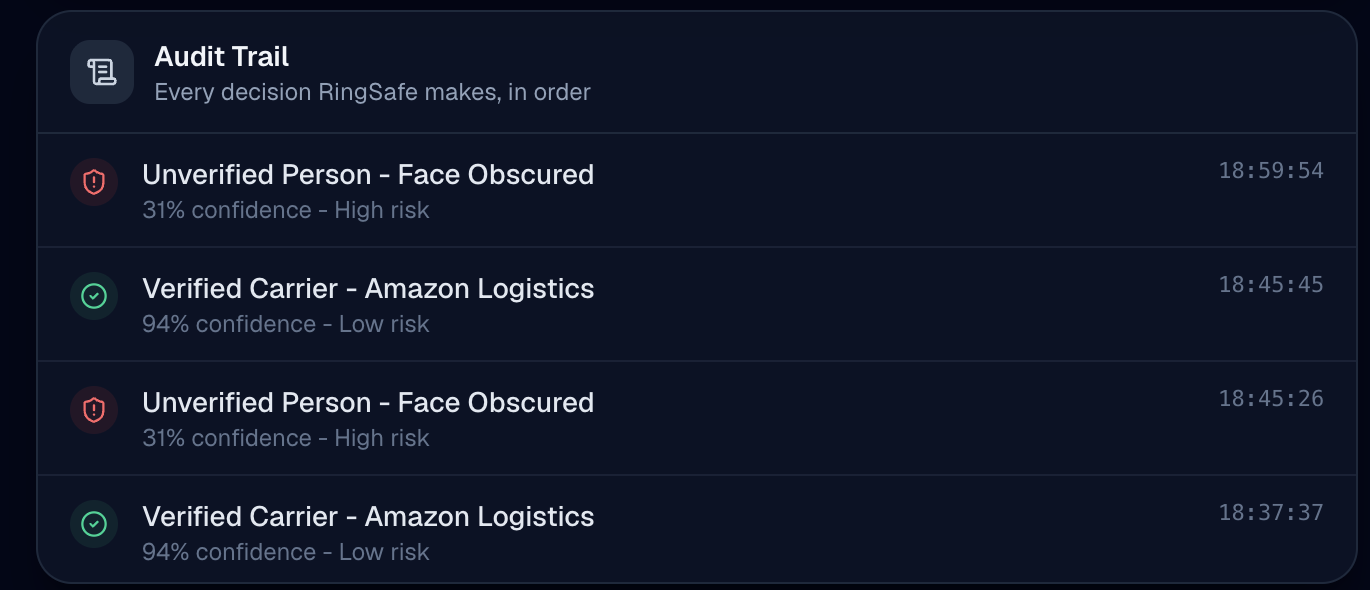
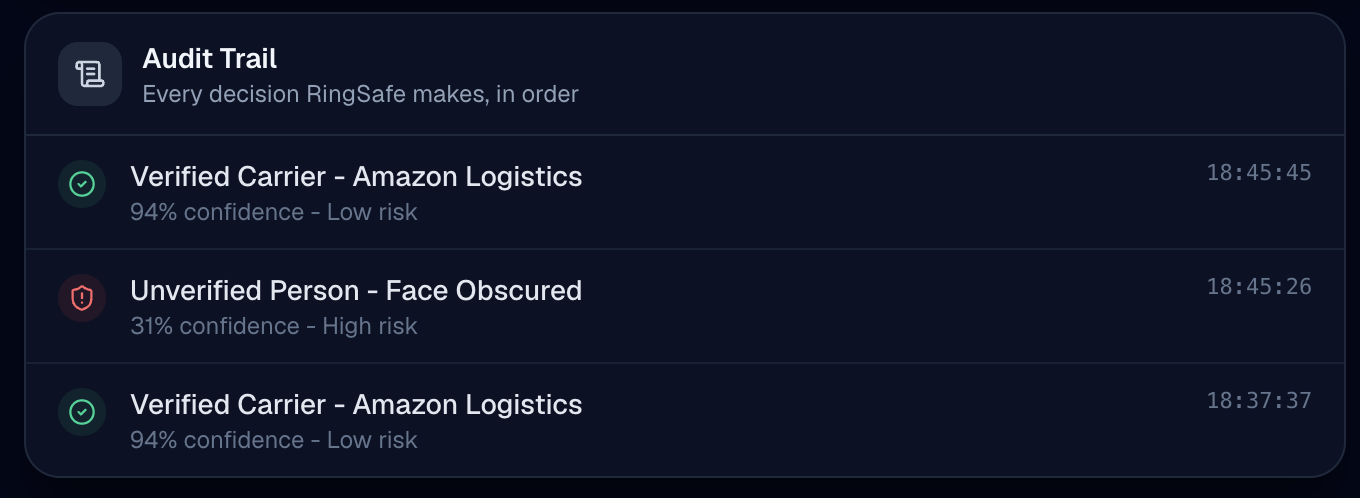
Audit trails for visitors
-
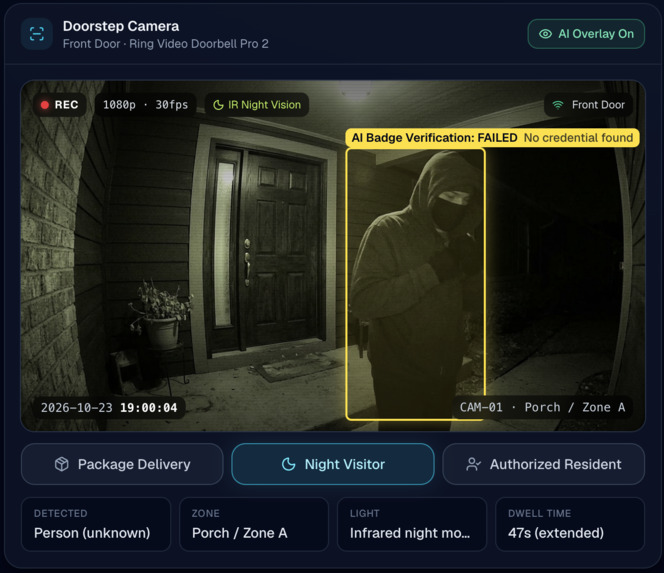
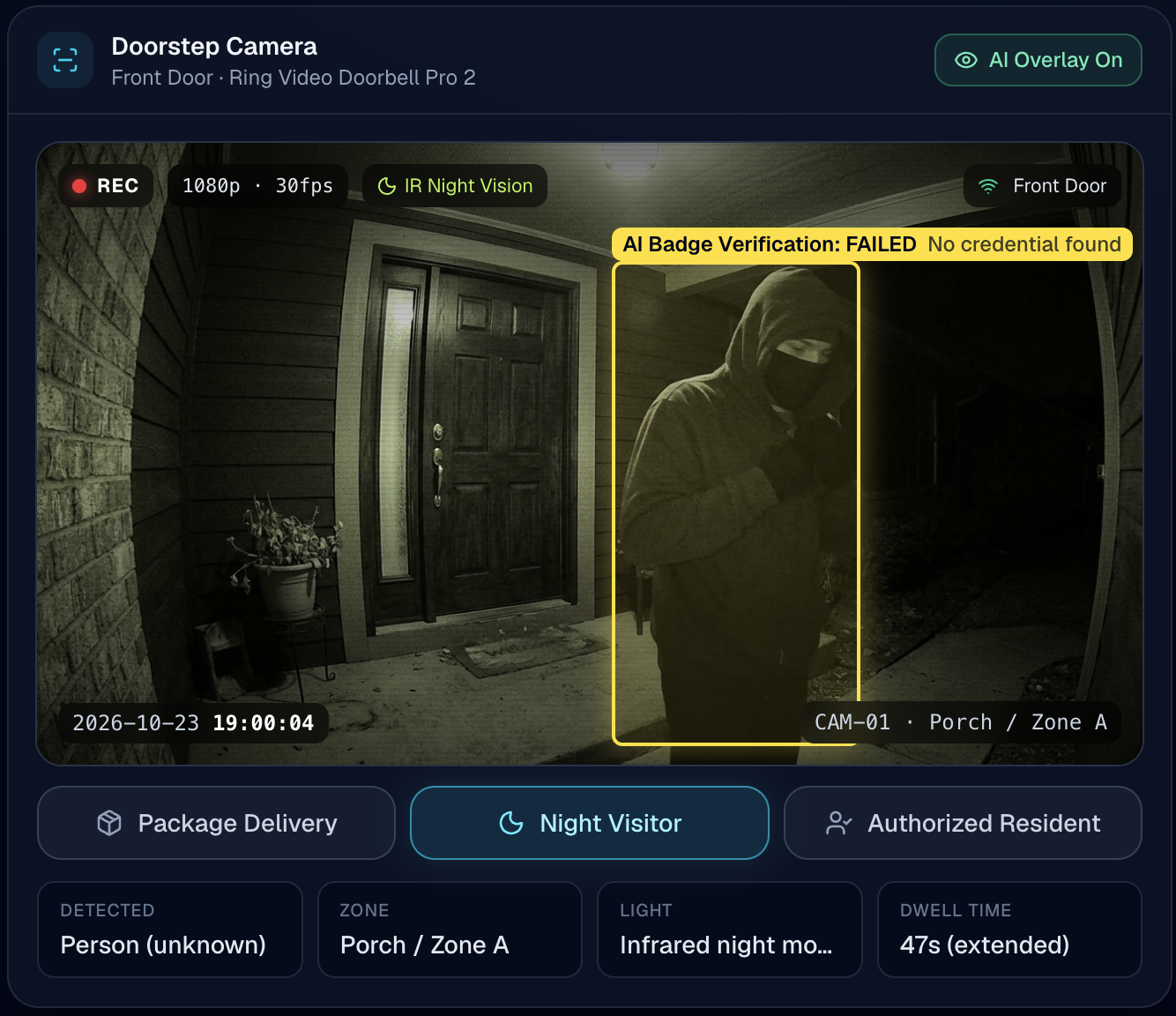
Night view with unauthorised person
-
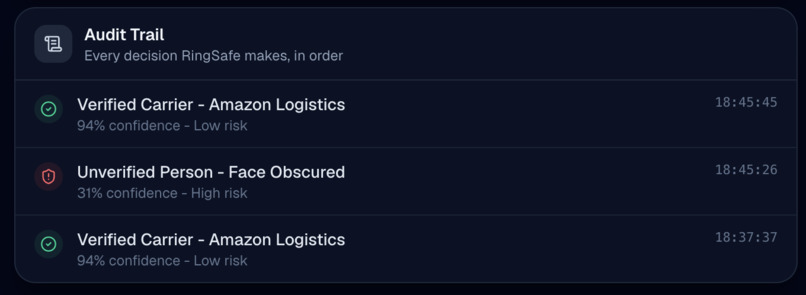
Audit trail for respective visitors
-
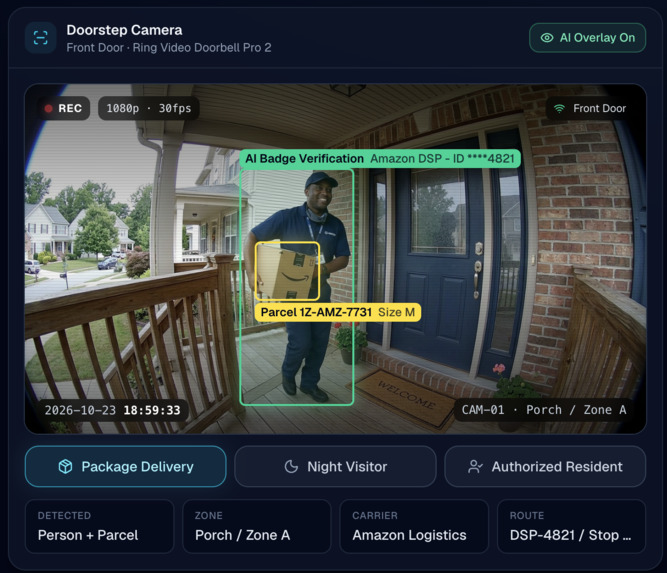
Simulation of type of visitors
-
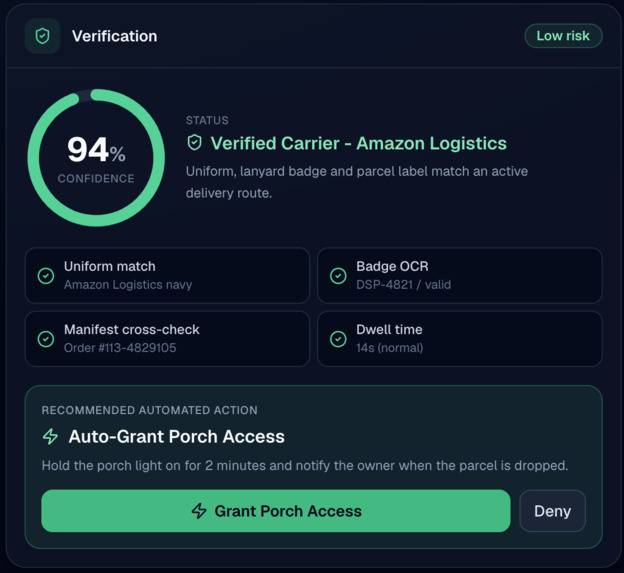
confidence score simulation
Inspiration
Over 260 million packages were stolen from porches last year, yet millions of smart camera owners suffer from alert fatigue. Every passing car, swaying branch, or wandering pet triggers a push notification, conditioning users to ignore alerts until after a package is already gone.
We built RingSafe Guardian to transform the Ring Video Doorbell from a passive notification feed into an active, intelligent doorstep gatekeeper. Rather than bombarding homeowners with raw motion pings, RingSafe verifies who is at the door, assesses threat levels in real time, and triggers automated, context-aware smart home actions.
What it does
RingSafe Guardian is a real-time smart doorstep security dashboard built on the Amazon Ring Developer ecosystem. It intercepts Ring event streams and runs an automated verification engine:
Live Doorbell Simulator: Emulates a 1080p Ring Video Doorbell feed across multiple critical scenarios: authorized carrier package drop-offs, unknown nighttime visitors, and recognized household residents.
Intelligent Event Correlation: Ingests Ring webhook events (device.motion_detected, doorbell.ding, and package.detected) and pairs them with contextual visual analysis.
Carrier & Visitor Verification: Automatically recognizes delivery uniforms, badges, and package dimensions to assign an instant trust status (Verified Carrier - Amazon Logistics, Trusted Resident, or Unverified Visitor).
Automated Action Engine: Couples a real-time risk score (0–100%) with automated safety protocols, such as auto-unlocking a secure delivery drop-box, triggering an 85dB deterrent chime, or flashing exterior floodlights.
Developer Audit Terminal: Features an interactive log drawer that renders raw Ring API JSON payloads in real time, allowing developers and integrators to inspect event headers, device IDs, and payload structures.
How we built it
Frontend Architecture: Built with React 18 and Next.js, utilizing Tailwind CSS and shadcn/ui primitives for a dark-mode security console inspired by Amazon Ring’s design system.
Development Acceleration: Rapidly scaffolded and iterated using v0 by Vercel to generate responsive layout components, interactive event triggers, and state-driven video overlays.
Event Pipeline: Engineered a client-side mock event bus that replicates the Amazon Ring Developer Playground specification, dispatching standardized JSON-RPC and webhook payloads matching real Ring hardware signatures.
Deployment & Hosting: Deployed to Vercel's Global Edge Network for sub-100ms latency, zero cold starts, and zero hosting costs.
Challenges we ran into
Simulating Asynchronous IoT Events: Replicating real-time hardware events without a physical Ring device connected to a live breadboard required designing a custom state dispatcher that accurately simulates network latency, sensor warm-up, and event debouncing.
Correlating Media with Discrete Payloads: Ring webhooks deliver lightweight metadata payloads, but computer vision verification requires high-resolution snapshot correlation. We had to architect a state manager that immediately synchronizes incoming motion timestamps with simulated video frames.
CORS and Local Tunneling in Sandbox Testing: Bypassing browser security constraints when simulating external webhook dispatches locally led us to build an in-app event player that replicates playground behavior natively in the browser.
Accomplishments that we're proud of
Sub-Second Verification Pipeline: Created an intuitive UI that visualizes threat analysis, bounding boxes, and verification badges instantly without UI stutter.
Full Spec Conformance: Accurately implemented standard Ring Developer API schemas so the dashboard can transition from sandbox simulation to production Ring hardware with minimal endpoint reconfiguration.
Actionable Security vs. Noise: Replaced vague "Motion Detected" notifications with high-context status updates that offer one-click automations.
Zero-Cost, Production-Ready Ship: Designed, coded, tested, and deployed a working application within 24 hours under a zero-dollar budget.
What we learned
The Power of Event-Driven Smart Home APIs: Diving into the Ring Developer API highlighted how modular event structures enable developers to build custom intelligence layers on top of standard hardware.
Designing for High-Stakes Urgency: Building a security interface required balancing detailed forensic data (JSON logs, confidence scores) with clean, glanceable visual cards that a user can understand in less than three seconds.
What's next for Ringsafe Guardian
Live Ring Appstore Integration: Transition from sandbox webhooks to direct OAuth integration with production Ring Video Doorbells and Floodlight Cams via the Ring API.
Edge ML Processing: Move badge verification and carrier detection on-device using lightweight TensorFlow Lite models to run directly on smart home hub hardware.
Alexa+ Voice Coordination: Build an Alexa+ MCP tool extension so users can ask: "Alexa, who delivered the package at the front door?" and receive a spoken verification summary on Echo Show devices.
Built With
- amazon-ring-partner-api
- browserlocalstorage
- css3
- github
- html5
- javascript
- lucid-react
- nextjs
- react
- shadcn/ui
- tailwindcss
- typescript
- unsplashcdn
- v0byvercel
- webhook-standards


Log in or sign up for Devpost to join the conversation.