Inspiration
Falling-block puzzles are one of the most loved genres in games, but in VR they usually end up as a flat board floating in front of you, played with a controller. We wanted to answer one question: what would this kind of puzzle feel like if it were designed for your eyes and hands first?
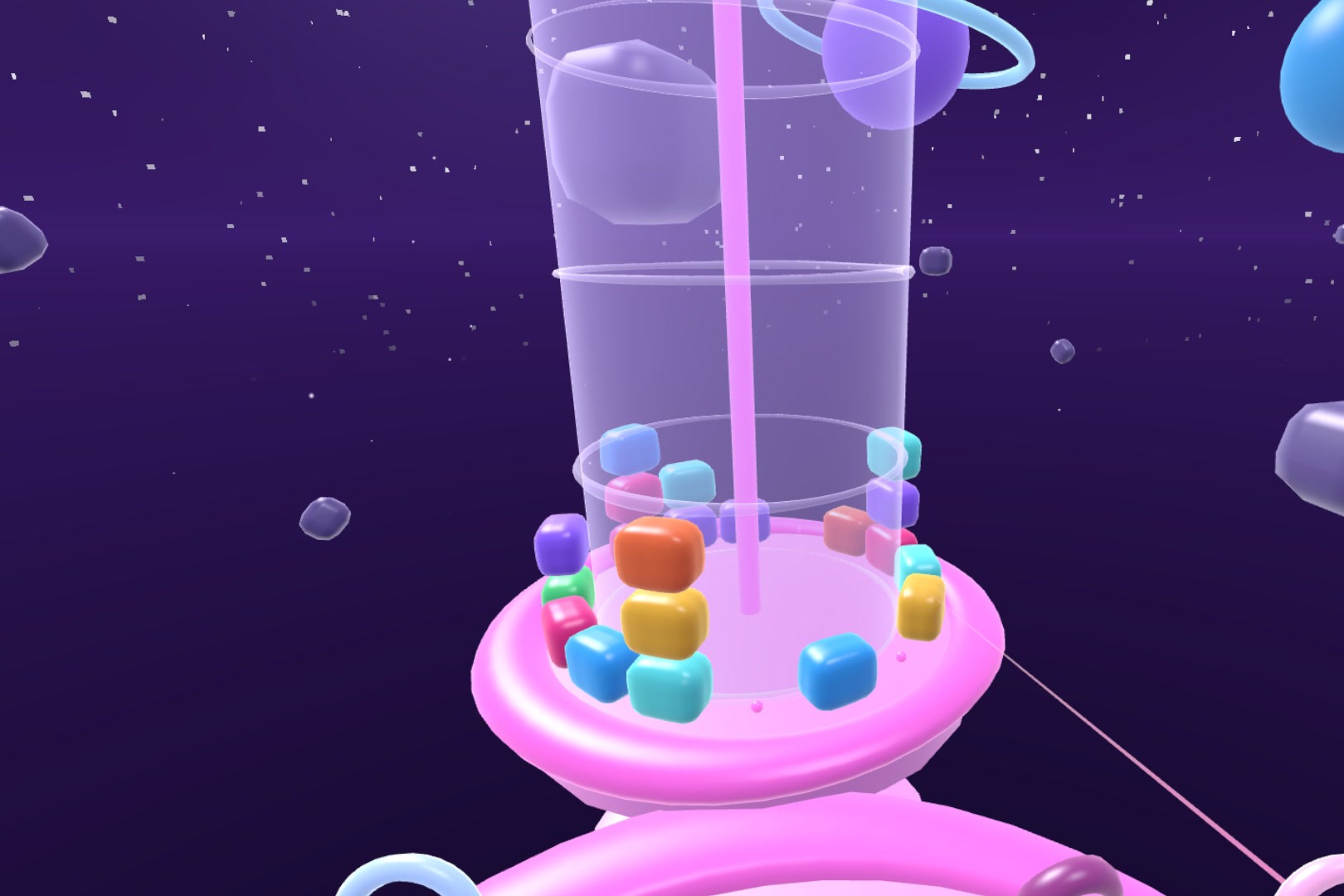
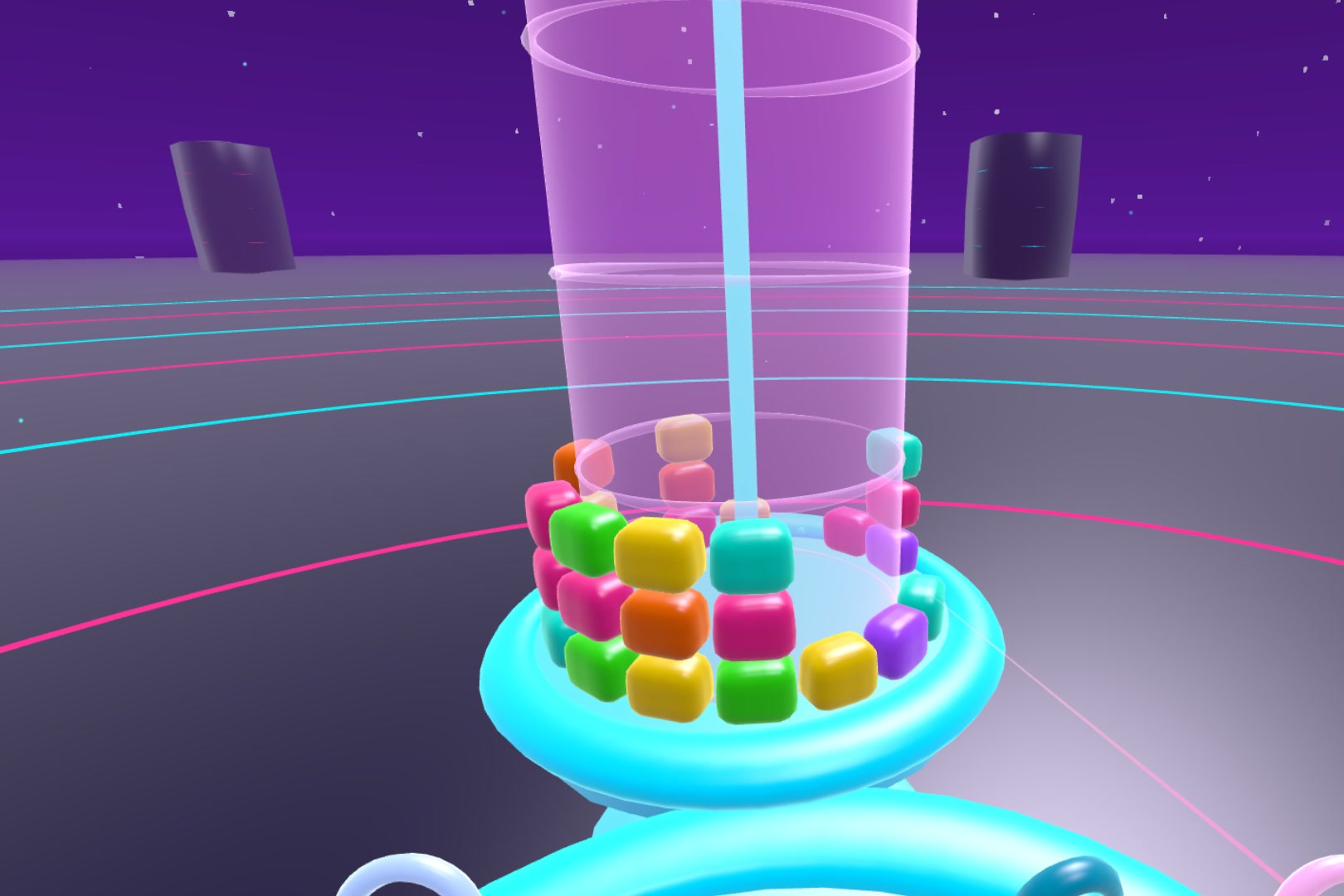
Two ideas clicked. First, wrap the board around a cylinder, so the playfield has real depth and you "move" a piece by spinning the world under it. Second, replace the drop spawn with a cannon you aim by looking. You look where you want the block, pinch, and it flies there. It is the most natural input we could think of, and it needs no controller at all.
What it does
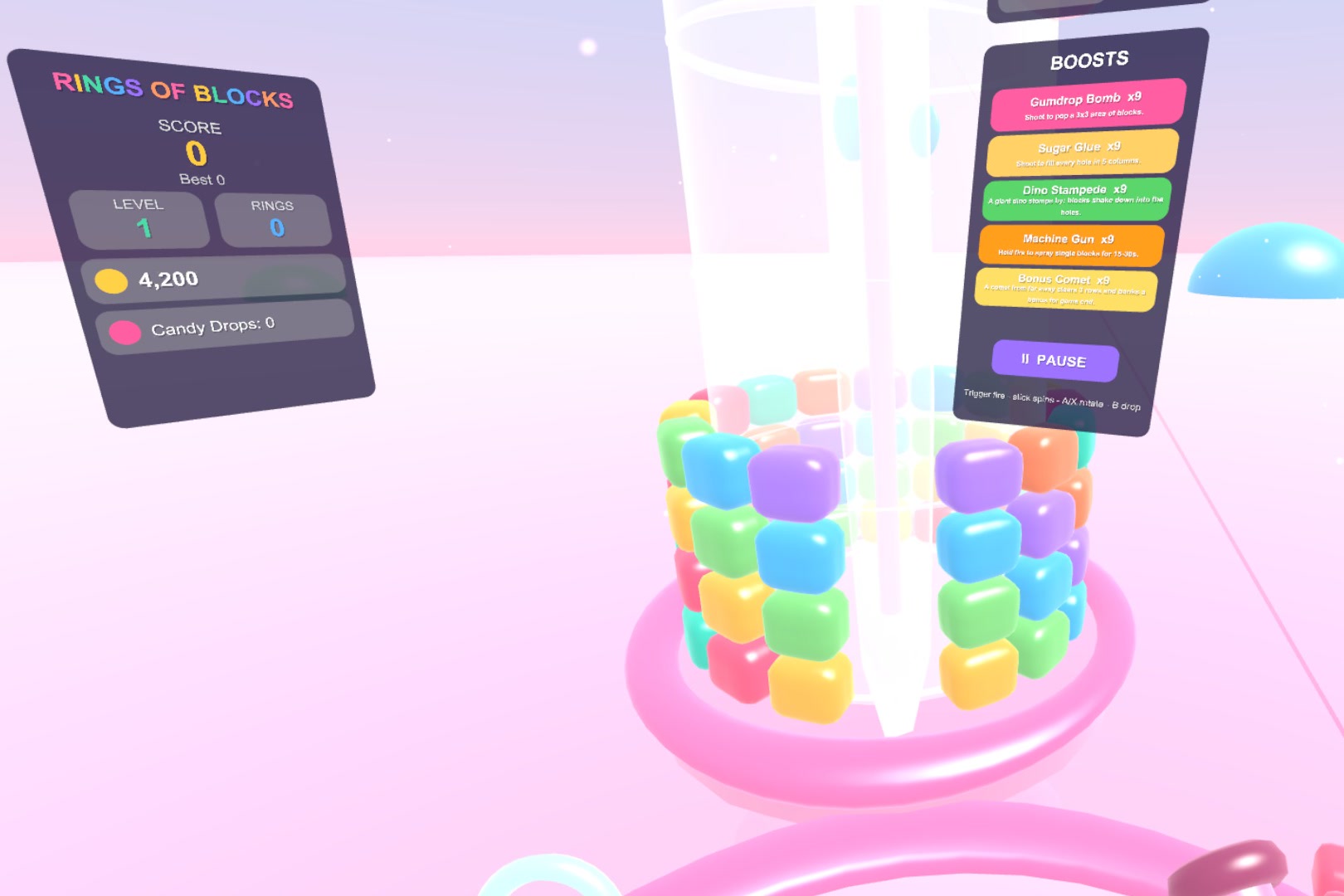
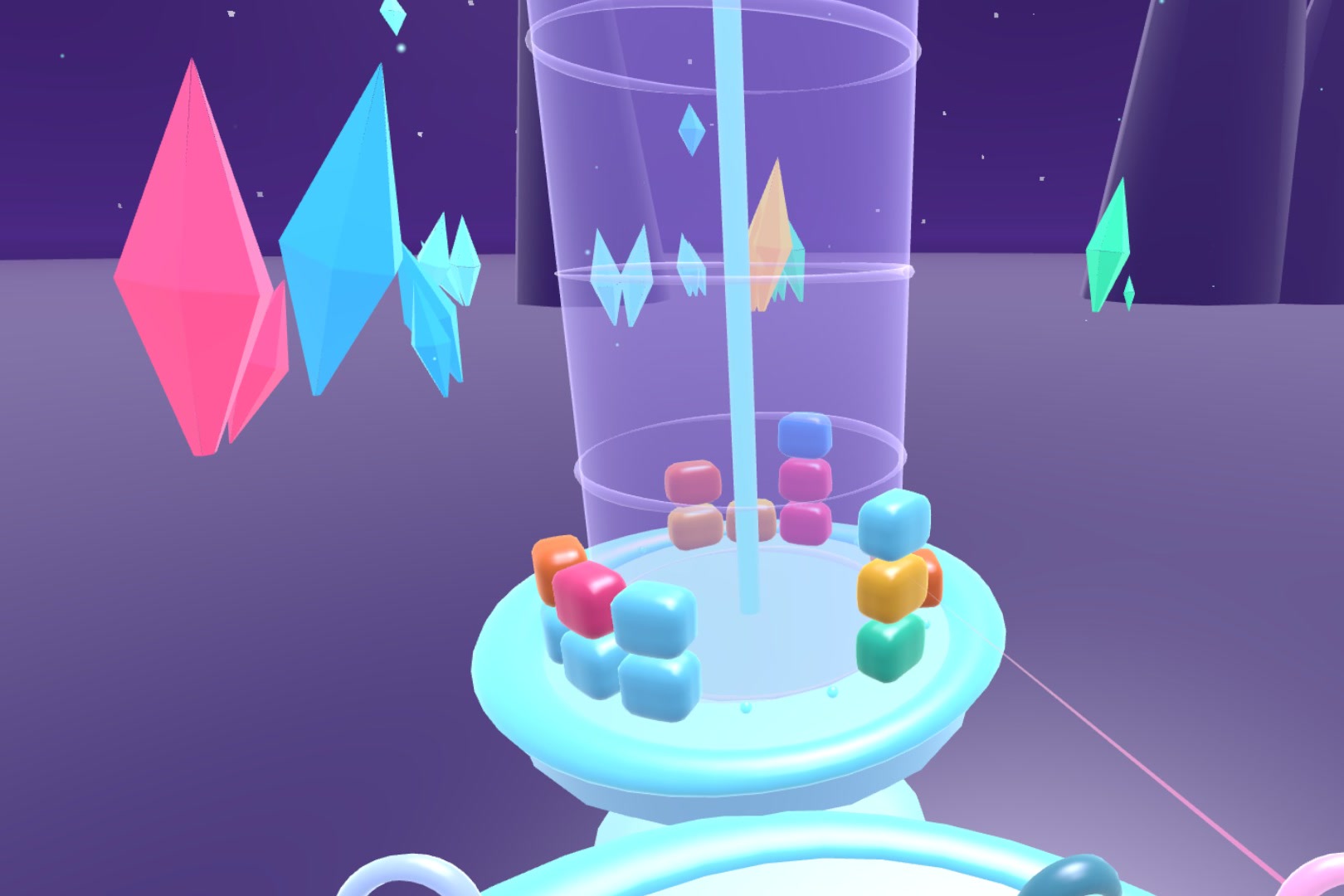
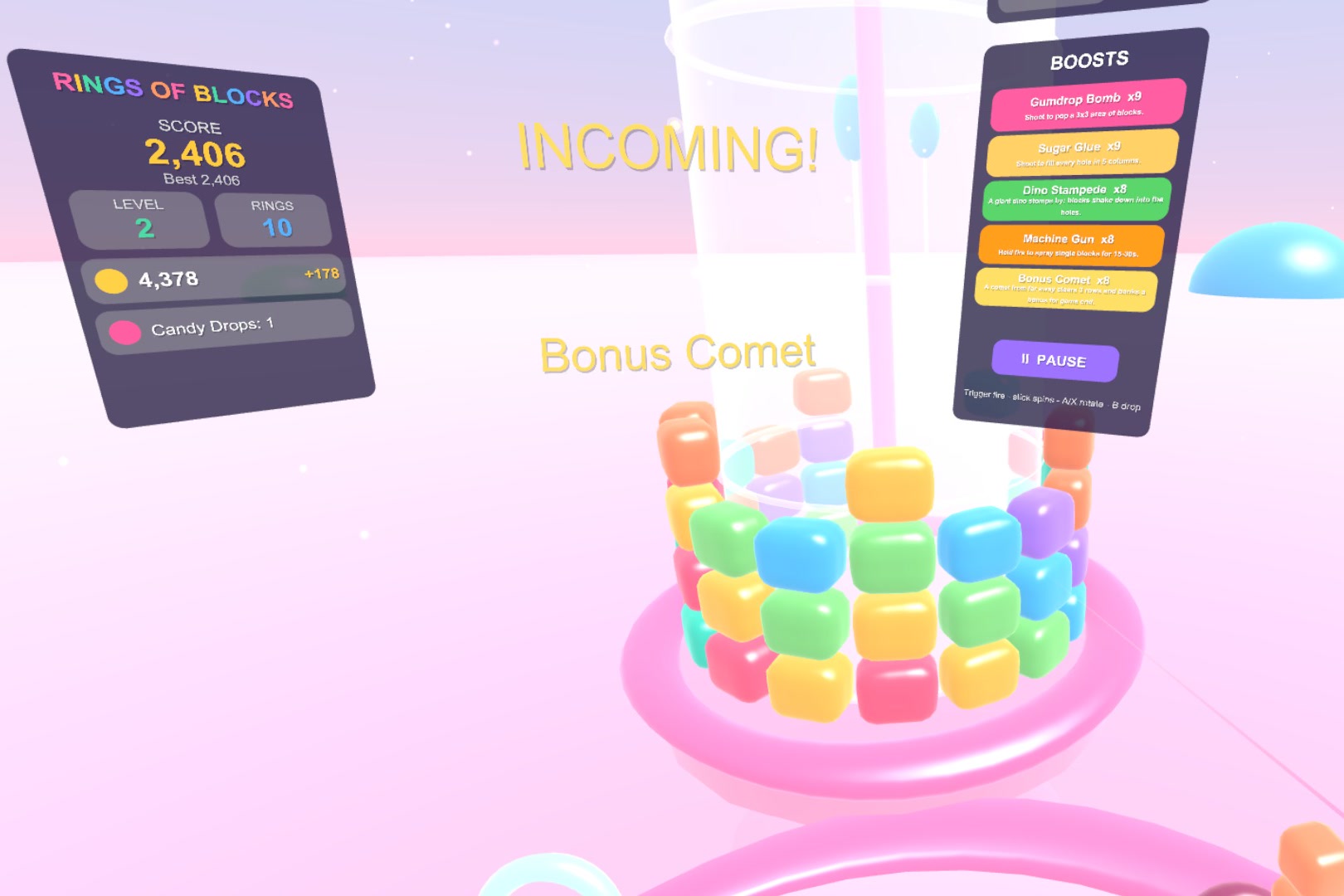
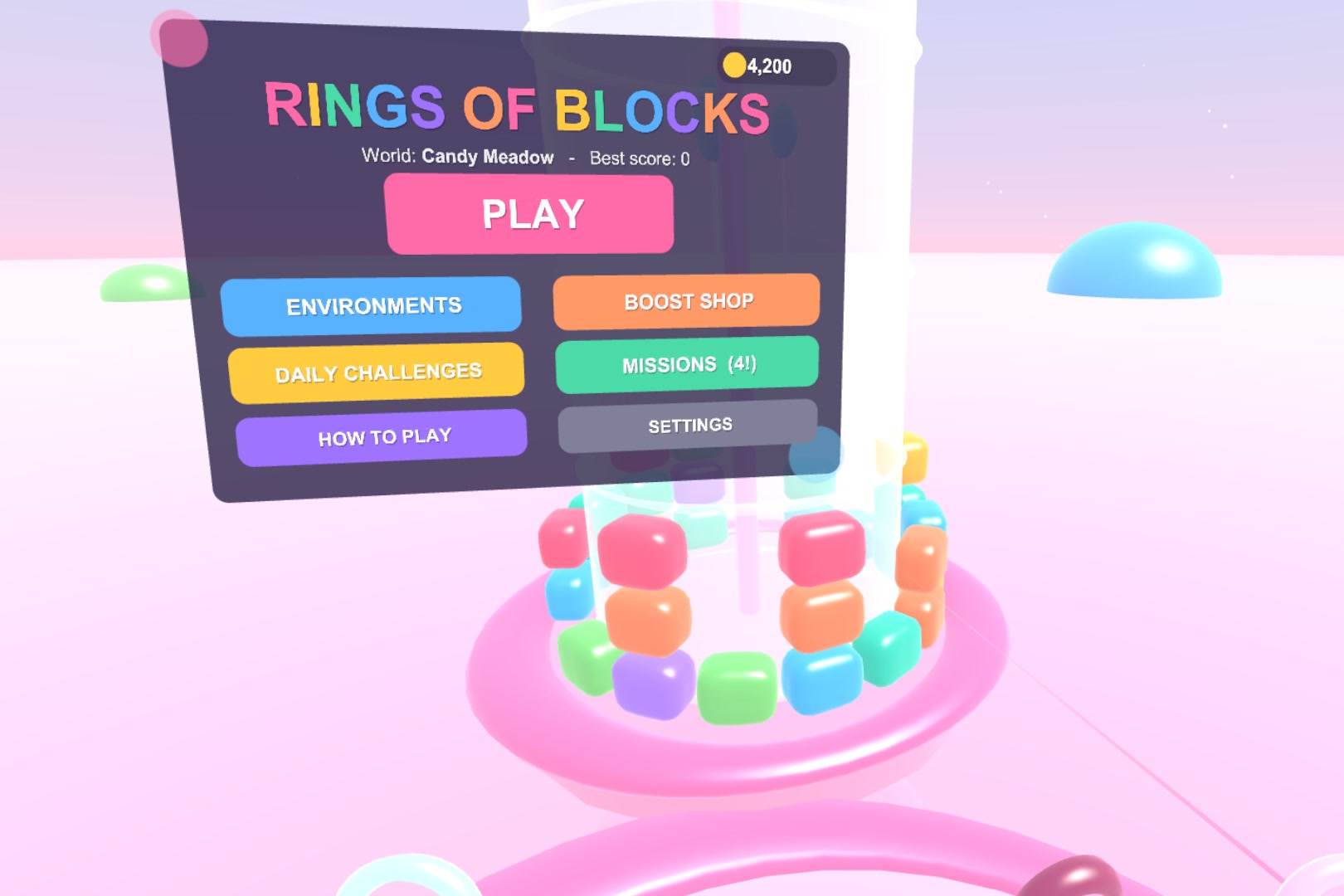
Rings of Blocks is a chill, jelly-styled block puzzle for Meta Quest.
- Aim with your eyes, fire with a pinch. On Quest Pro, eye tracking aims the cannon and a thumb–index pinch fires. On other headsets you point with your hand.
- Spin the cylinder by pinching with your other hand and dragging sideways. Rotate the piece with a thumb–middle pinch, and hard drop with a quick downward flick.
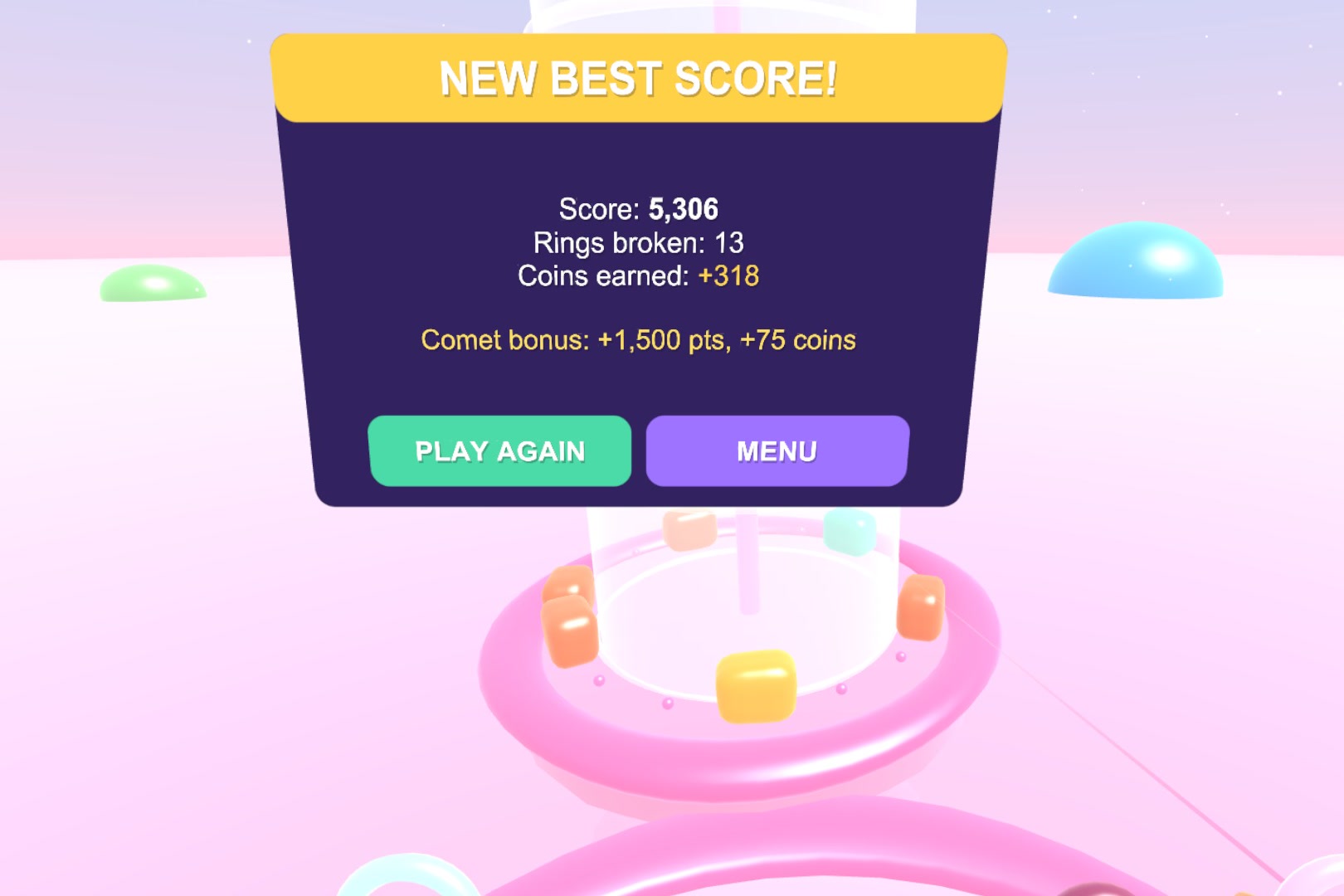
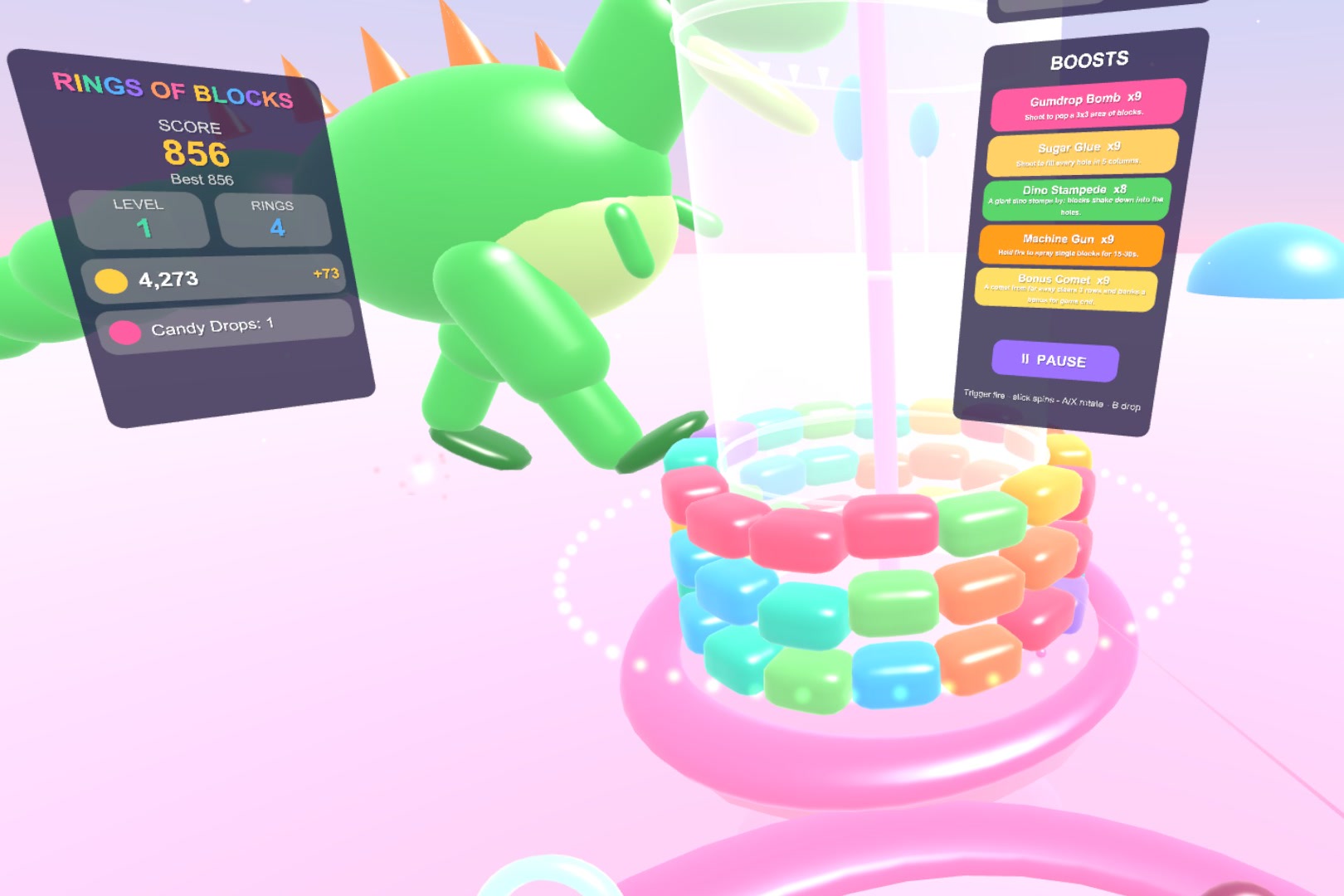
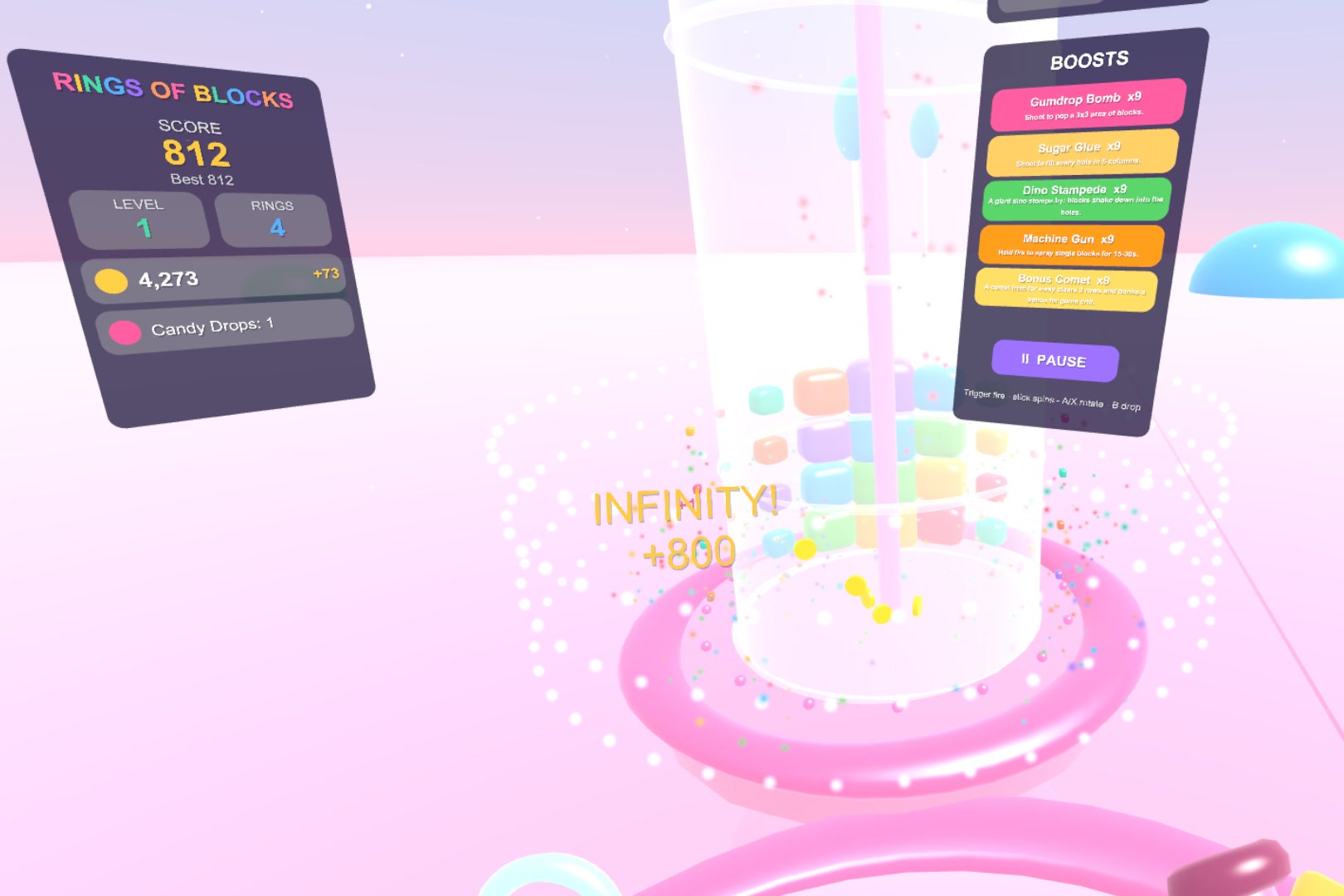
- Complete a ring all the way around the cylinder to break it for points and coins. Clearing several rings at once and chaining combos pays more.
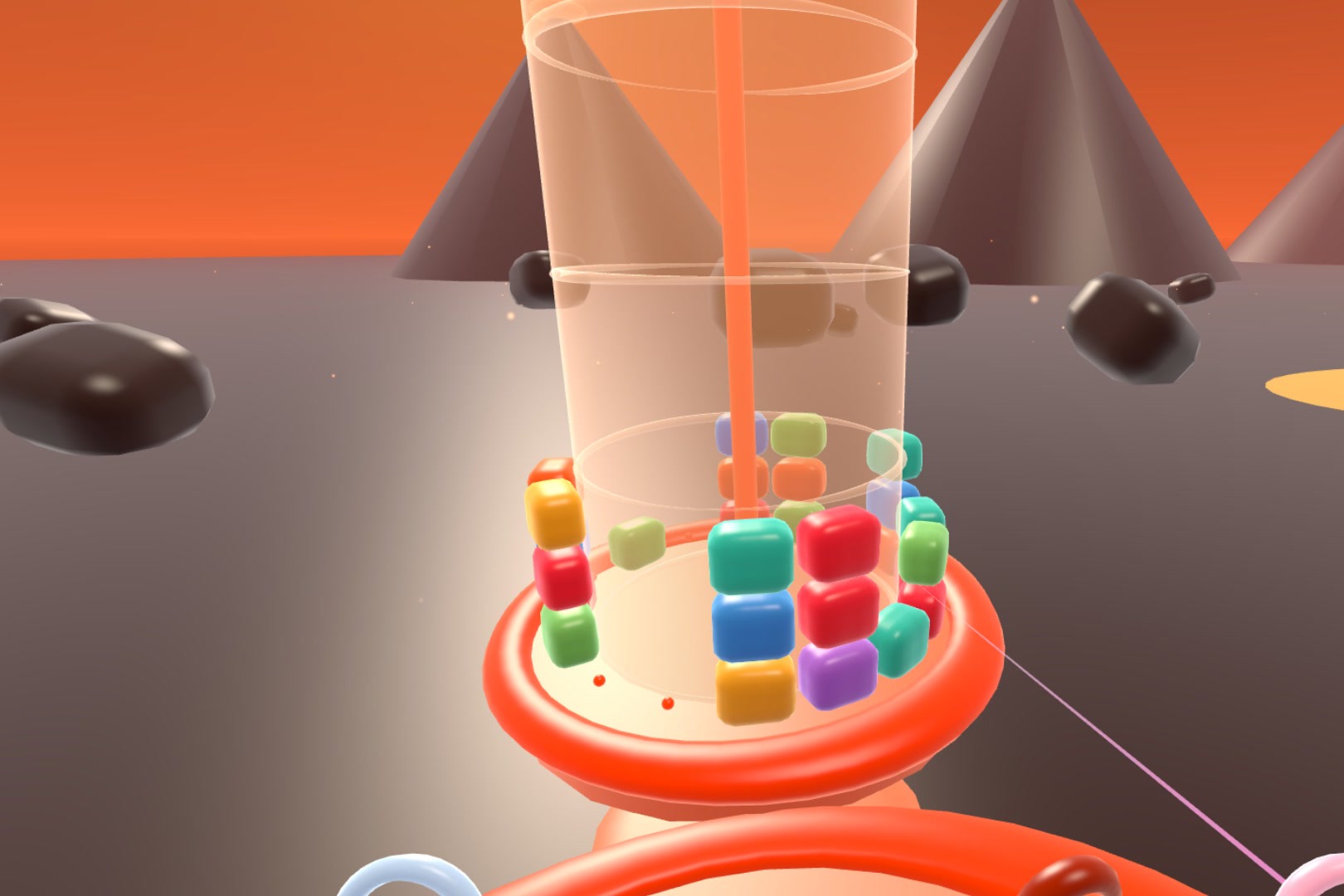
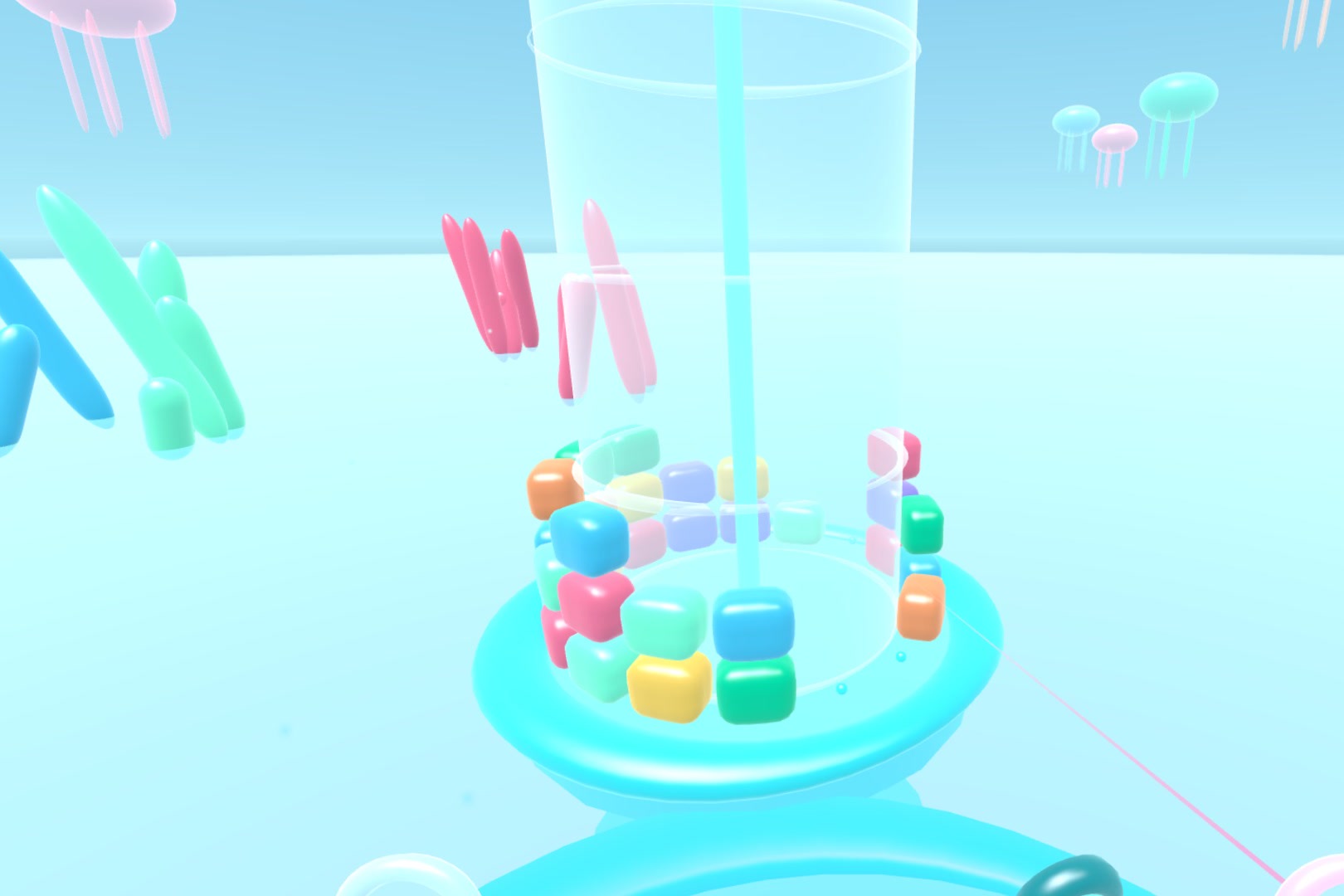
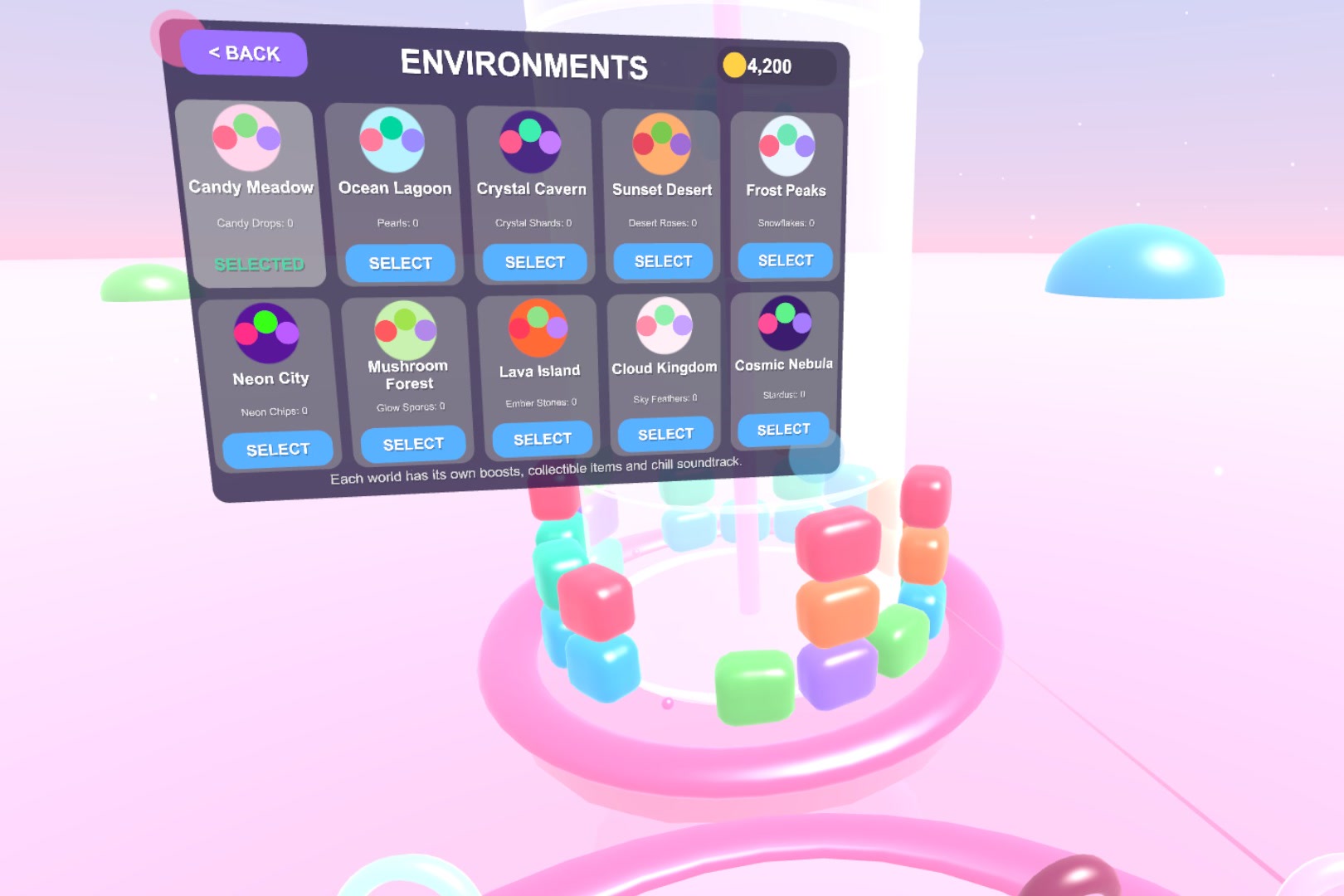
- 10 hand-crafted worlds (Candy Meadow, ocean, crystal caves, desert, frost, neon city, mushroom forest, lava, clouds and cosmos), each with its own palette, sky, collectible and lo-fi soundtrack.
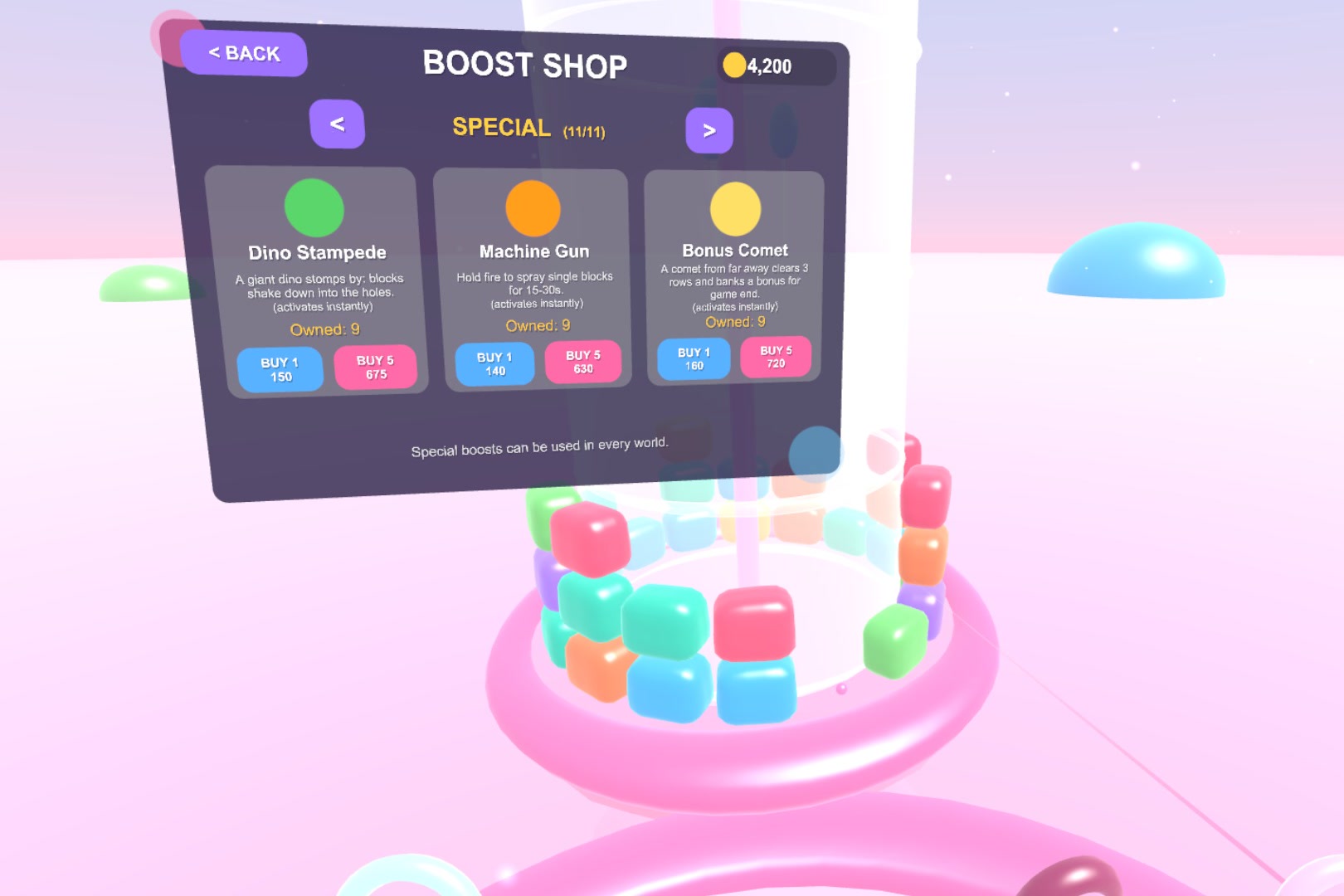
- 23 boosts, two per world plus three specials that work everywhere:
- Dino Stampede: a giant jelly dinosaur stomps past and the quake shakes every block down into the holes below.
- Machine Gun: hold the pinch to spray single blocks for 15–30 seconds.
- Bonus Comet: a comet streaks in from the horizon, clears the bottom rows and banks a bonus that is paid out at the end of the game.
- Progression: coins, unlockable worlds, a boost shop, 4 seeded daily challenges with a bonus chest, and 25 long-term missions.
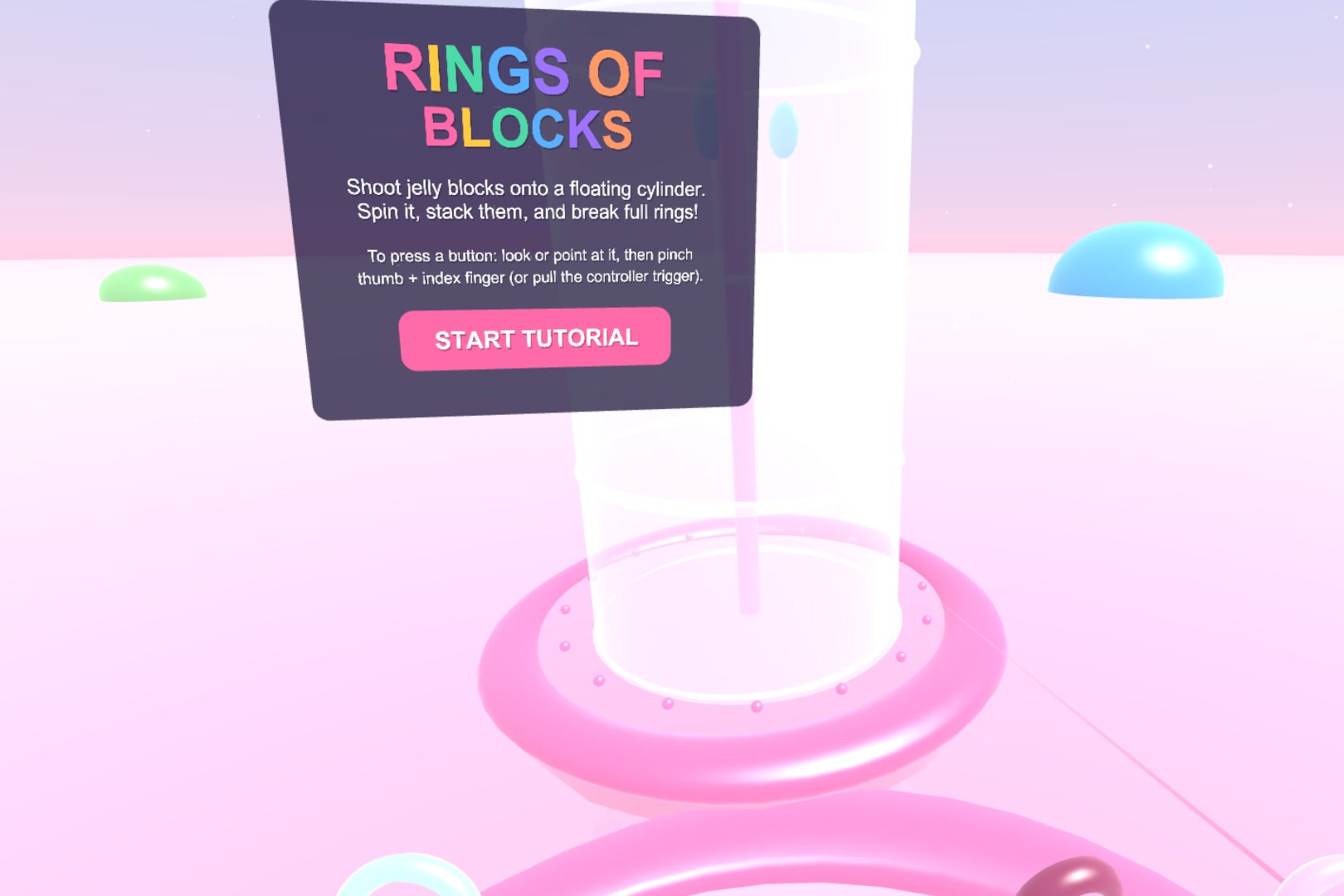
- An interactive tutorial that waits for you to actually perform each gesture, so anyone can pick it up in a couple of minutes.
- It also works with Touch controllers, and there are left-handed and "no eye aiming" options.
The game is built for short, satisfying sessions. It cold-starts straight into the world, pauses cleanly, and a full round takes just a few minutes.
How we built it
- Unity 6 + URP + OpenXR, with the Meta Quest feature group, XR Hands for joint-level hand tracking and the eye gaze interaction profile for Quest Pro.
- Everything is generated in code. There are no imported art, music or sound assets.
- Meshes (rounded jelly cubes, tori, gems, stars, the dinosaur) come from a small procedural
MeshFactory. - A custom Jelly shader (HLSL, single-pass instanced stereo) fakes subsurface scattering, adds glossy highlights and a fresnel rim, and gives every object a gentle "breathing" wobble.
- Each world's sky, fog, lighting and props are assembled at runtime by an
EnvironmentBuilder. - A tiny offline synthesizer renders a seamless lo-fi loop for every world (electric piano chords, pads, bass, swung boom-bap drums, a bell melody and vinyl crackle) and every sound effect, from pure math on a worker thread.
- Meshes (rounded jelly cubes, tori, gems, stars, the dinosaur) come from a small procedural
- Input goes through a single
VRInputlayer. It turns eye gaze, hand pinches and flicks, controllers, mouse/keyboard and phone touch into the same game actions (aim, fire, spin, rotate, drop). That made it easy to test without a headset. - Gameplay runs a state machine (aim → fly → fall → lock → resolve) over a 16 × 14 grid wrapped around a cylinder. Every column is tracked relative to the cylinder's rotation, so spinning the world is how the piece moves left and right.
- An automated playtest mode drives the menus and a full game in development builds and saves screenshots, so regressions show up fast.
Challenges we ran into
- Mapping a flat-board puzzle onto a cylinder. The falling piece stays in front of you while the board turns under it. Collision, wall kicks, the ghost preview and aiming all had to work in two coordinate spaces: the front-facing "slot" and the board column.
- Making eye aiming feel precise. Raw gaze jitters. We smooth it, cast it against an analytic cylinder (no physics colliders), snap it to columns and show a ghost of where the block will land, so you always know what a pinch will do.
- Reliable pinches. Detecting pinches with hysteresis (separate thresholds for closing and opening) stopped double-fires and dropped pinches. A flick has to be fast, mostly vertical and short to count as a drop, so spinning never triggers it by accident.
- Comfort. Big moments like the Dino Stampede shake the world and use haptics, but never move the camera in the headset.
- Performance on standalone hardware with dynamic jelly materials, particles and procedural audio, while holding 90 Hz.
Accomplishments that we're proud of
- A complete game loop that is fully playable with hands alone, from the first tutorial step to the shop, settings and daily challenges.
- Zero imported assets. Every pixel and every note comes from our own code, and it still looks and sounds like a cohesive, cozy world.
- Ten distinct worlds and a set of over-the-top boosts that make the classic genre feel new in VR.
- A tutorial that actually teaches the gestures, instead of a wall of text.
What we learned
- Eyes plus a pinch is a remarkably fast and low-effort way to aim. Players understand "look where you want it" right away.
- In VR, feedback is everything. A squash-and-stretch wobble, a little haptic tick and a pop sound make each action feel good.
- Good hand input is mostly about thresholds and timing. Smoothing, hysteresis and generous intent detection matter more than raw accuracy.
- Building the world procedurally kept iteration fast. A new world is mostly data: a palette, a sky, props and a music style.
What's next for Rings of Blocks
- Mixed reality mode: place the cylinder on your real table using passthrough.
- Social play: asynchronous leaderboards for the daily challenges, and a two-player mode where friends share one cylinder.
- More worlds, boosts and seasonal events.
- Tuning for a seated, glasses-style experience, and a store launch on Meta Horizon.
