-
Rings Chat Powered by Rings Network
-
-
-
-
-
-
-
-
-
-
-
-






Rings Chat
Inspiration
The 29-year-old cryptographer Alexey Pertsev, a core developer of Tornado cash, was arrested in Amsterdam on August 12, 2022, which brings humanity to the first fork on the road in the 21st century: a HARD FORK.
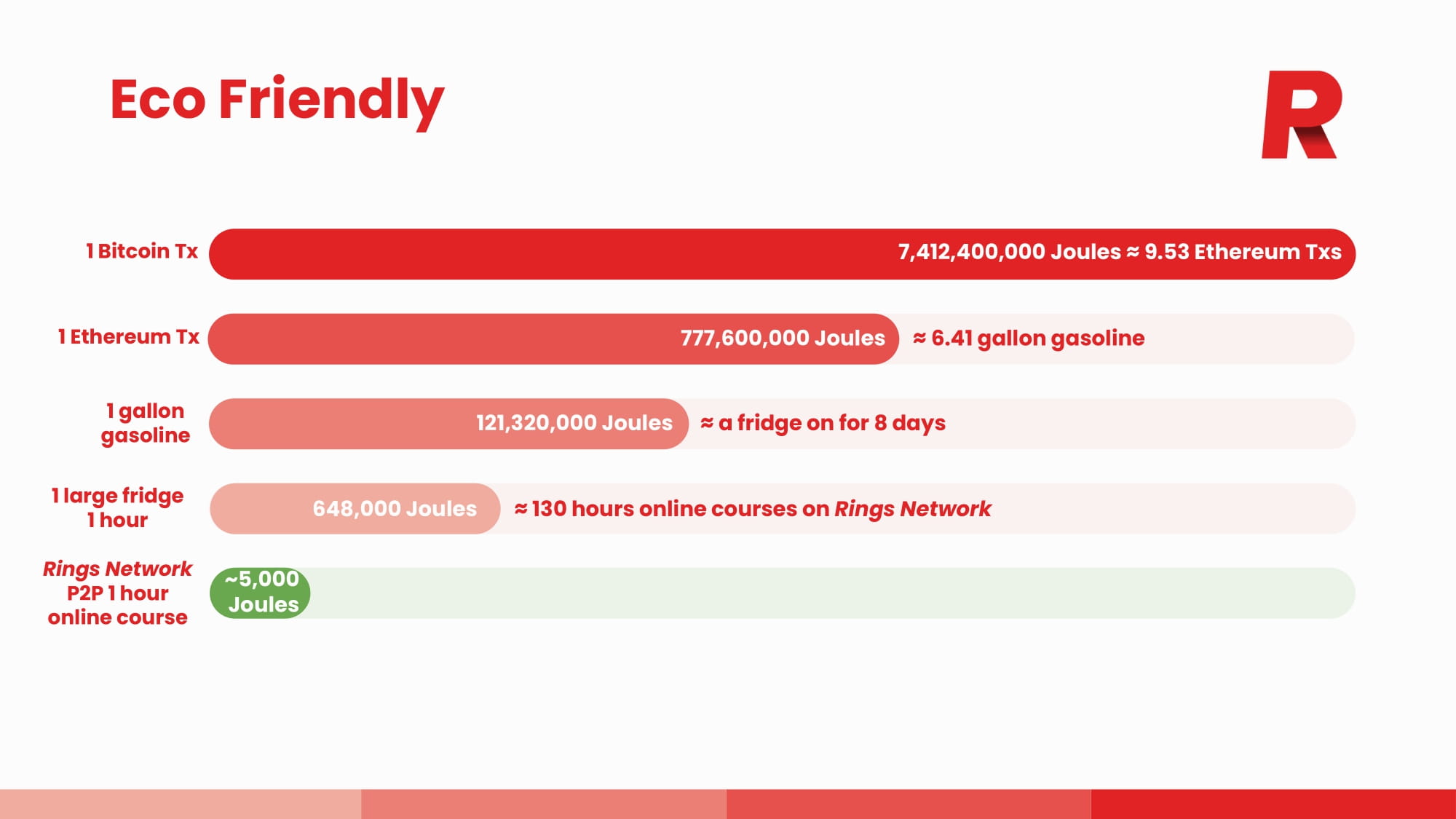
Tornado Cash that Pertsev works with is a decentralized privacy protocol on Ethereum for anonymous transactions. It was added to the US OFAC sanctions list a few days ago for protecting users’ privacy of on-chain transactions. Tornado Cash is like the No Trace option on your browser, which erases the trace by depositing Ethereum into the Tornado.cash smart contract and then withdrawing it using a different address. No one else can link the deposit address to the withdrawal address whenever you withdraw.
When the OFAC is sanctioning Tornado Cash, the conservative batch in crypto reacts accordingly. Discord shut down the Tornado community, and RPC services such as Infura stopped serving Tornado. DeFi (decentralized finance) projects such as Circles, AAVE, and Uniswap froze their assets to block users for administrative orders or self-censored reasons. Github, the code hosting company acquired by Microsoft, deleted all Tornado-related code repositories; it even stopped all developers’ accounts who had interacted with the Tornado Cash repositories — The irony lies in that Microsoft itself put Tornado Cash’s code in the Human Civilization Code Vault in the Arctic in 2020.
We can’t blame the Uniswap team for banning Tornado Cash, as they have received administrative orders, and they have to protect their team members.
Throughout, we also find a glimmer of light in the gloom — the smart contract deployed to Ethereum by Tornado Cash is untouched, or rather, it can barely be affected.
Every time centralization invades, only decentralization endures.
Smart contracts and blockchains are currently very limited in what they can do, and developers cannot provide web front ends, API services, and blockchain node services without centralized services. We are just getting started on the journey to decentralization.
Web3 shows us a new chapter of the Internet, where people expect a fairer, more democratic, and freer Internet in the face of politics, geopolitics, nationalism, and economic sanctions that hinder communication. Technology that can easily invade the privacy of bad people can easily invade the privacy of anyone. Cyber privacy is now a basic human right.
Satoshi invented the Bitcoin network to solve a social problem rather than a techno one. We hope to carry on his spirit and to let the tornado of decentralized technology blow into every corner of the Internet.
So we are starting a new decentralization revolution, building a new generation of decentralized peer-to-peer networks based on cryptographic systems and decentralizing and reforming the existing centralized parts.
What Rings Network does
Let’s briefly go through what will happen when you use most of dapps.
- The user enters a URL in a browser to access it (DNS resolution)
- Network request reaches the server to return web content (server hosting)
- The user operates the wallet to send transactions (node service)
- Service nodes interact with each other for data (API interface service)
- Global network acceleration service (CDN)
- Data exchange in each of the above steps of the process (data transfer)
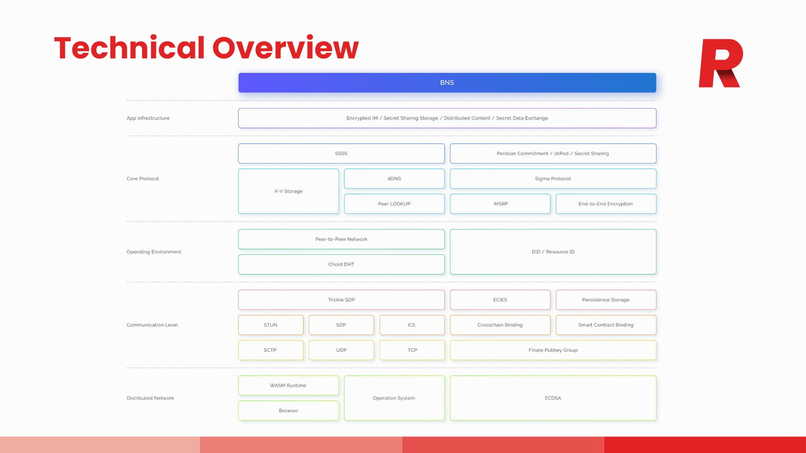
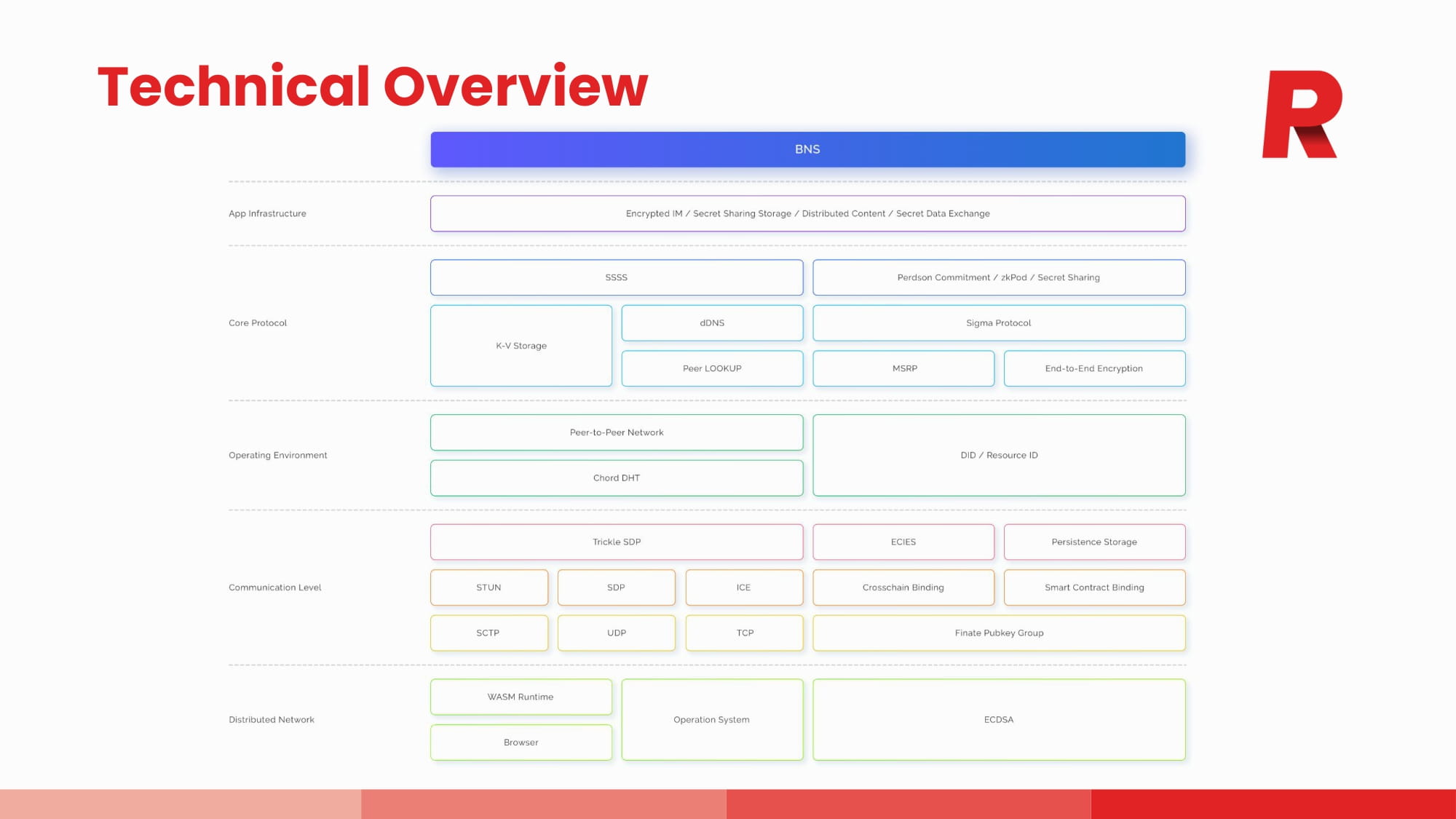
To decentralize and reform the six centralized services in the above process, the solution is almost unique: build a new generation of P2P data transfer networks based on cryptographic algorithms that support decentralized storage and computation layers, and compile them in the form of WebAssembly so that they can achieve the same effect when running on the user’s browser and server without additional software. It also combines blockchain technology to resolve on-chain domain names, integrate node RPC services and package HTTP packets to achieve forwarding and proxy functions.
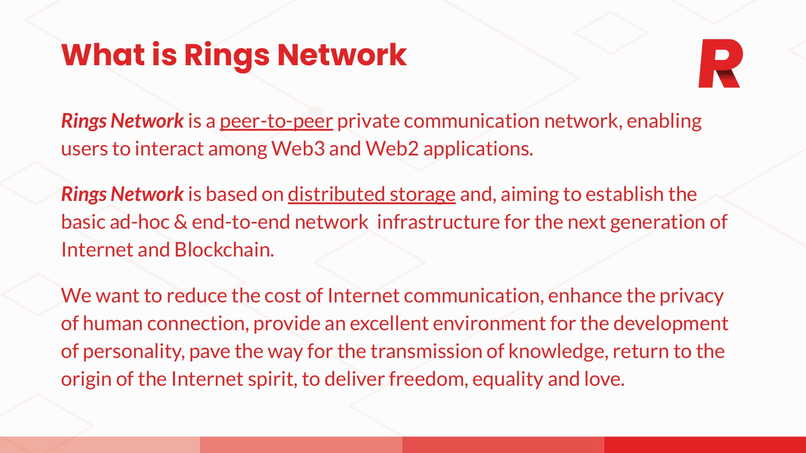
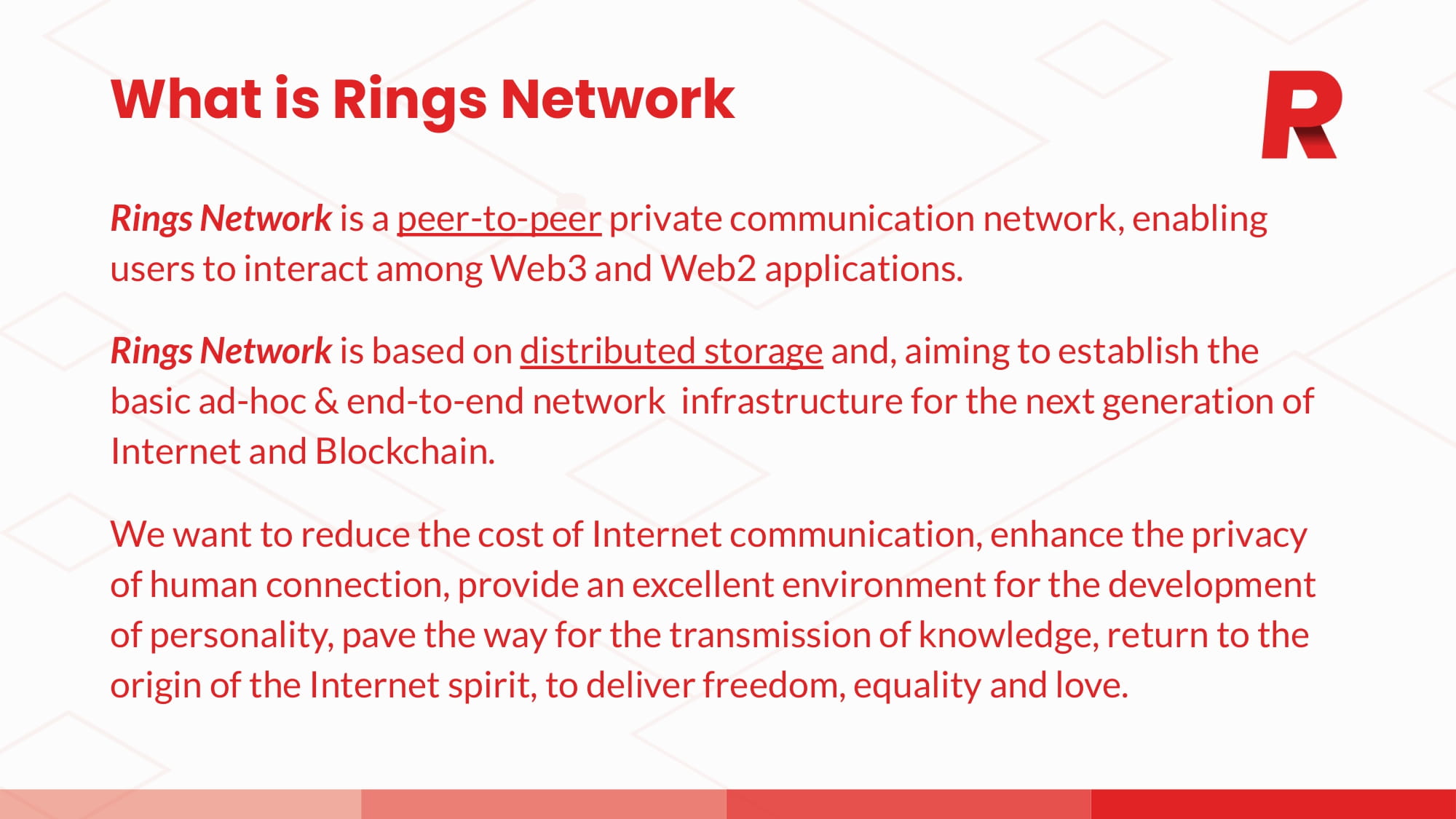
We are building Rings Network as a pure p2p network/storage/privacy layer.
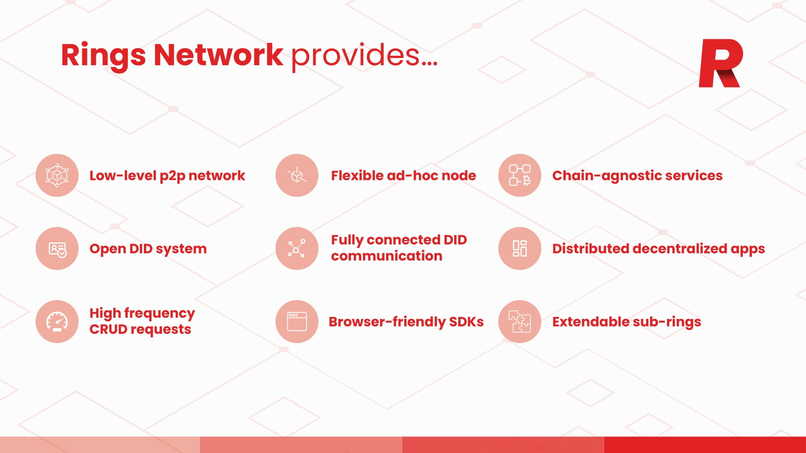
Currently, Rings Network has implemented the following features:
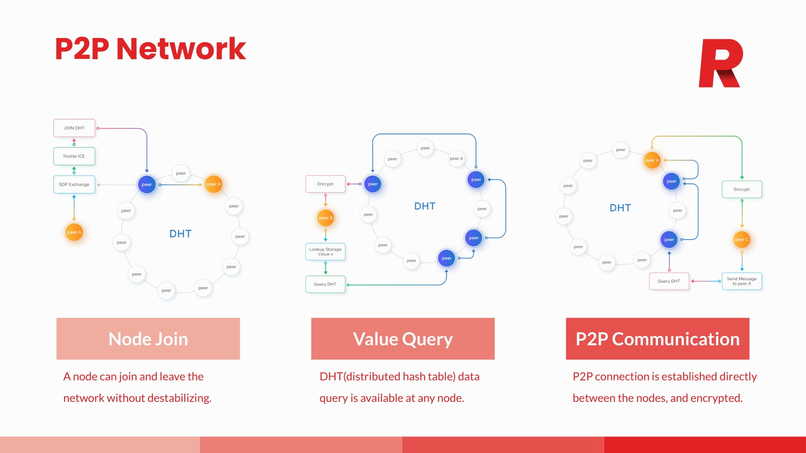
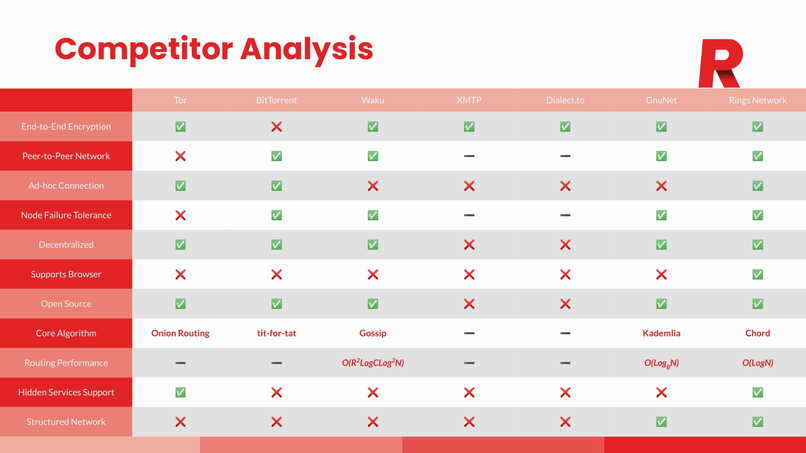
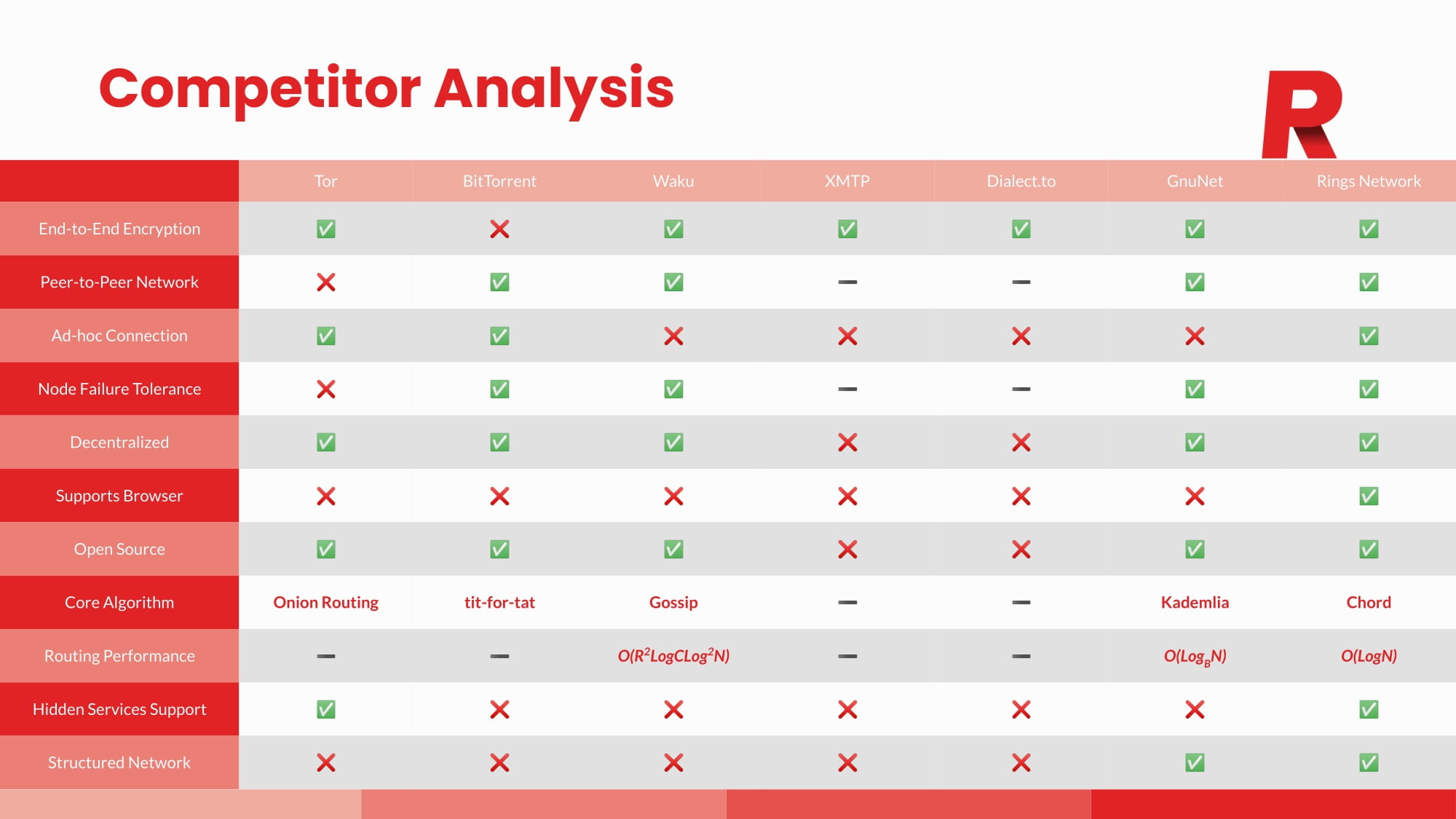
- Chord-based P2P network
- WebRTC-based communication protocol
- Full node service that runs independently on server and browser pages
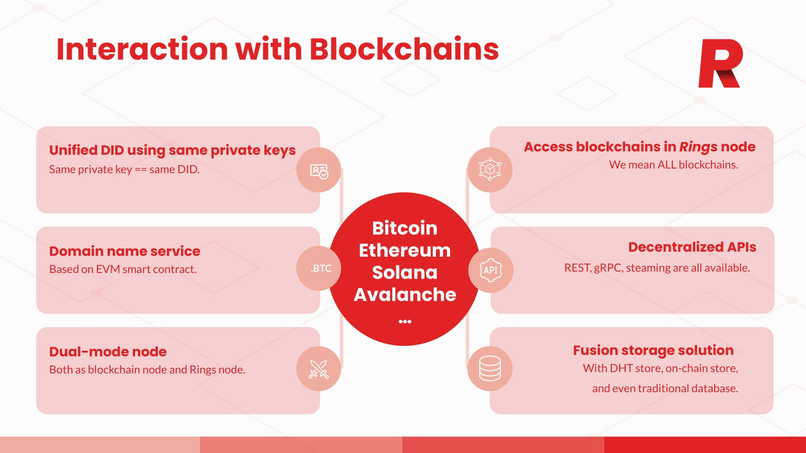
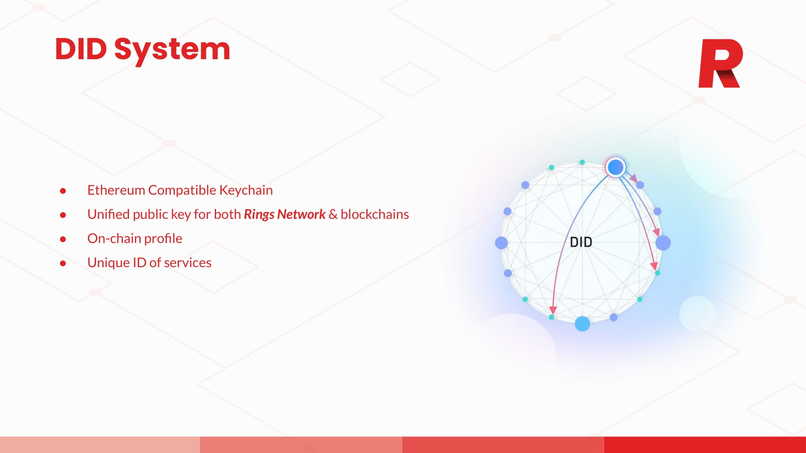
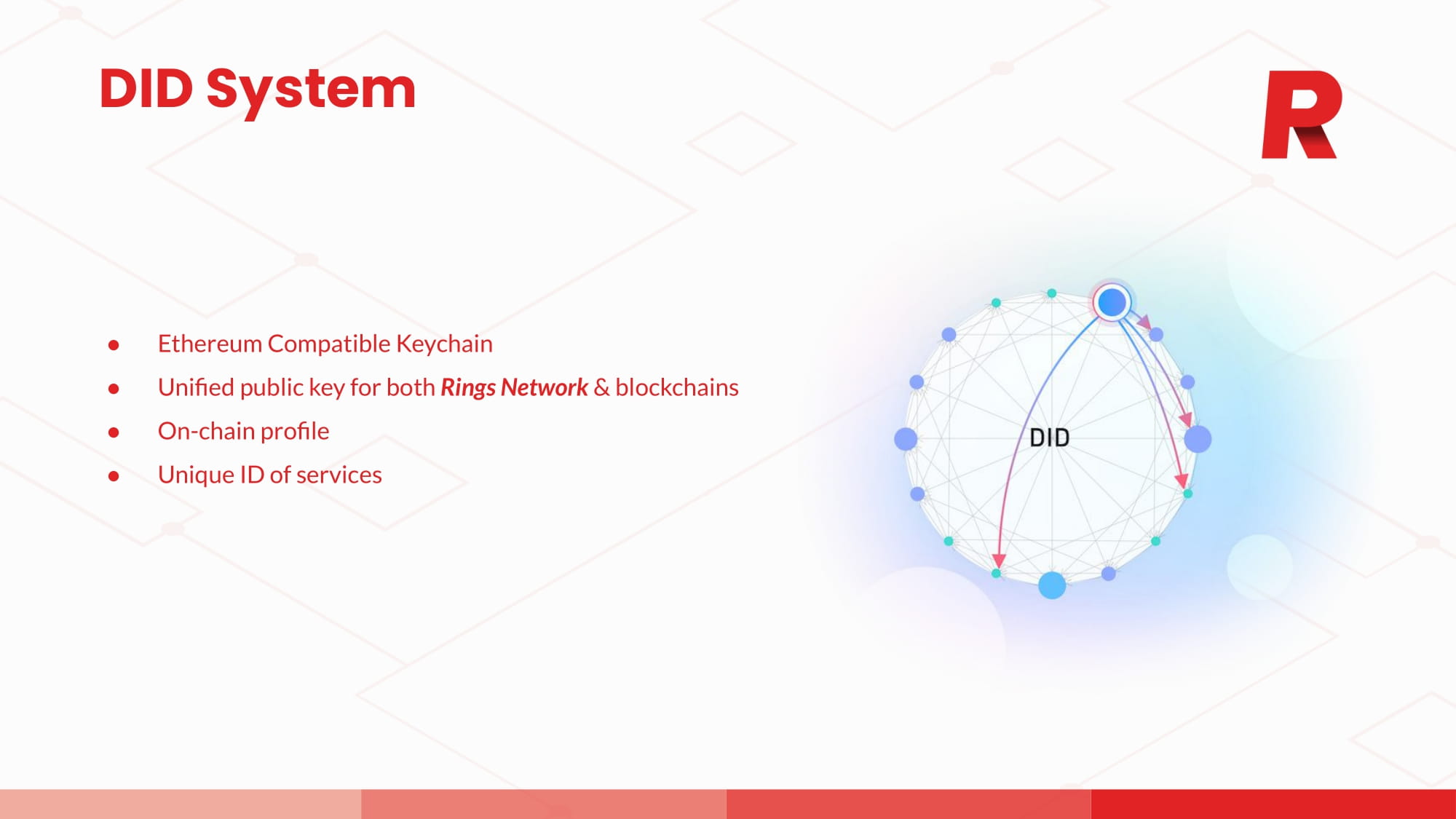
- DID nodes supporting Secp256k1 (Ethereum/BSC/Matic, etc.) and Ed25519 (Solana/Aptos, etc.) wallets
.BTCcross-chain unified DID system- Rings Chat (IM Demo) based on Rings Network
Our Goals
- Create a global P2P privacy network
- Build a decentralized DNS and CDN system
- Interface with inherent blockchain systems
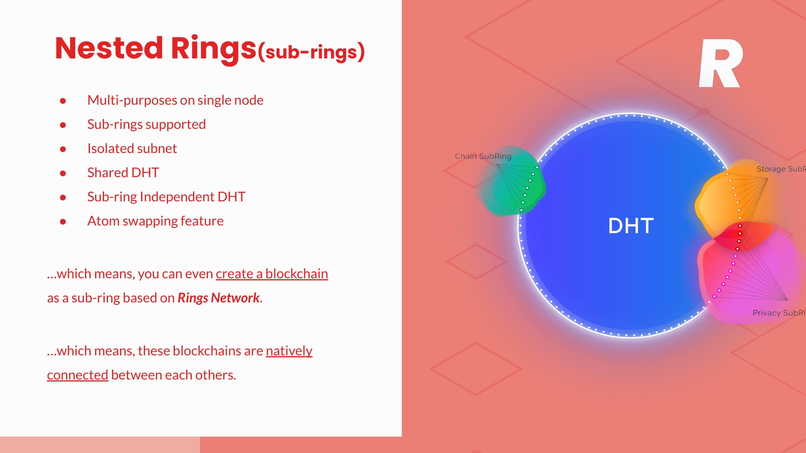
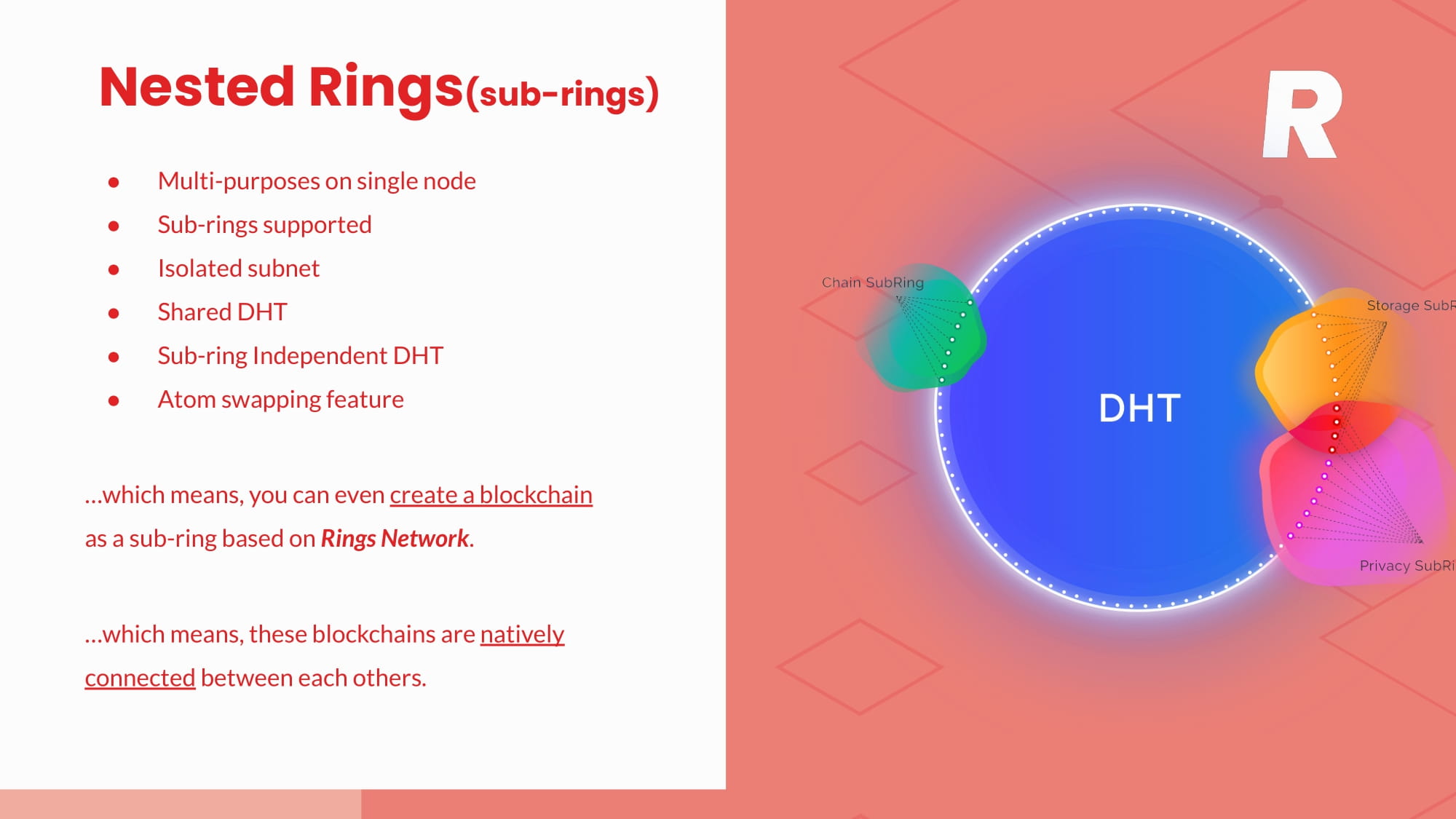
- Make it possible to build a new blockchain system based on Rings Network
- Provide cyber security for every web3 user
What is Rings Chat
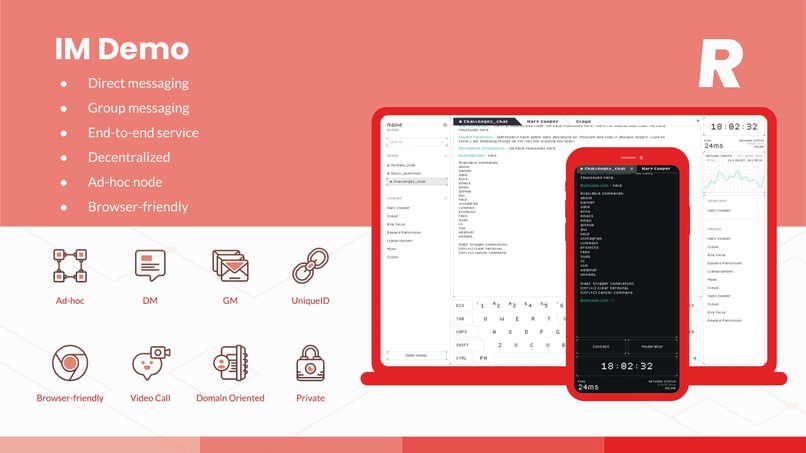
Rings Chat is the first product based on Rings Network. It shows the possibility of p2p network communication and blockchain ID integrations.
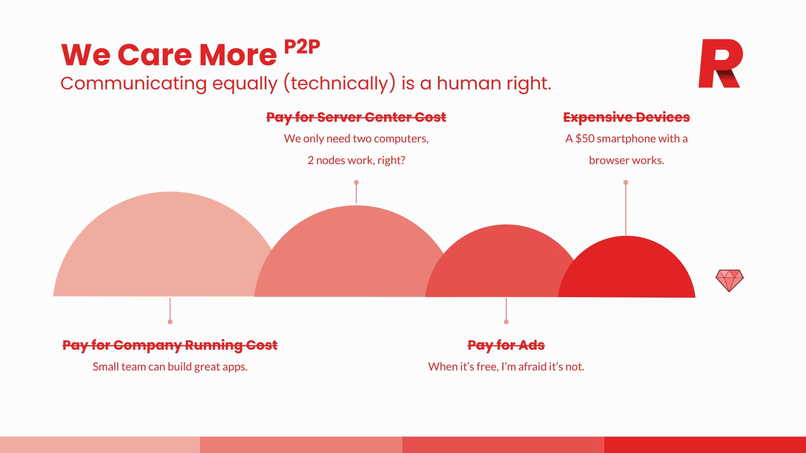
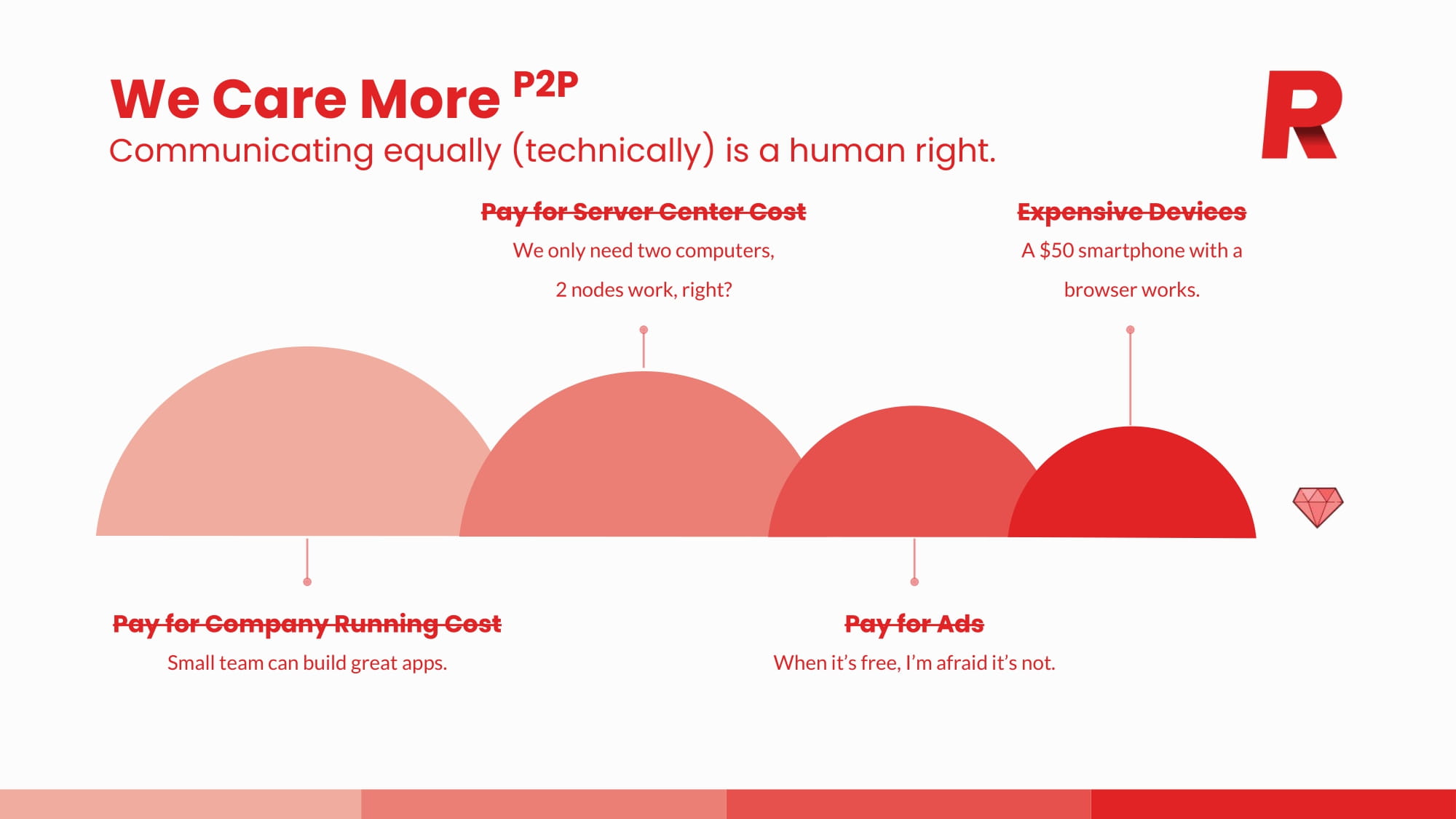
You can chat with others via wallet addresses as well as ENS domain or any other on-chain domain name. The whole network could run on a server or in a browser. The full node code is designed to be built into a WebAssembly bin, which means you don't need to download software, and a smartphone's webpage can be a node.
All data transfers are p2p with sdp connections, which makes it possible to establish or connect with a decentralized file/API service WITHOUT a gateway.
We'd like to hear feedback or ideas from you, to build a full decentralized network together.
Stag hunt
When a group of hunters is hunting in the forest, working together is the only possible way to hunt a large stag so that everyone has a decent share. If one of them refuses to collaborate and turns to hunt a rabbit, the stag will flee, so everyone will starve.
That is to say, if you give in for the sake of small profits, you may hit the hare but at the expense of the future of mankind. Therefore, we call on all web3 project owners, builders, and users to collaborate on the stag hunt, to get a bigger harvest, and to bind a freer, more dignified, and entitled soul.


Log in or sign up for Devpost to join the conversation.