-
-
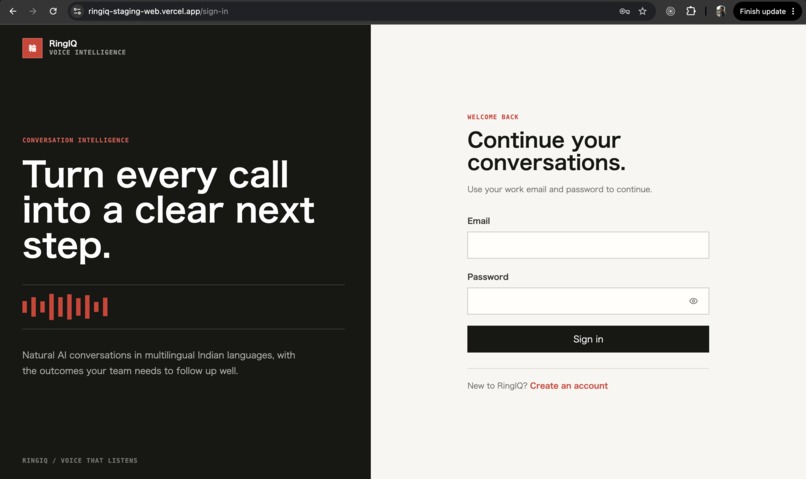
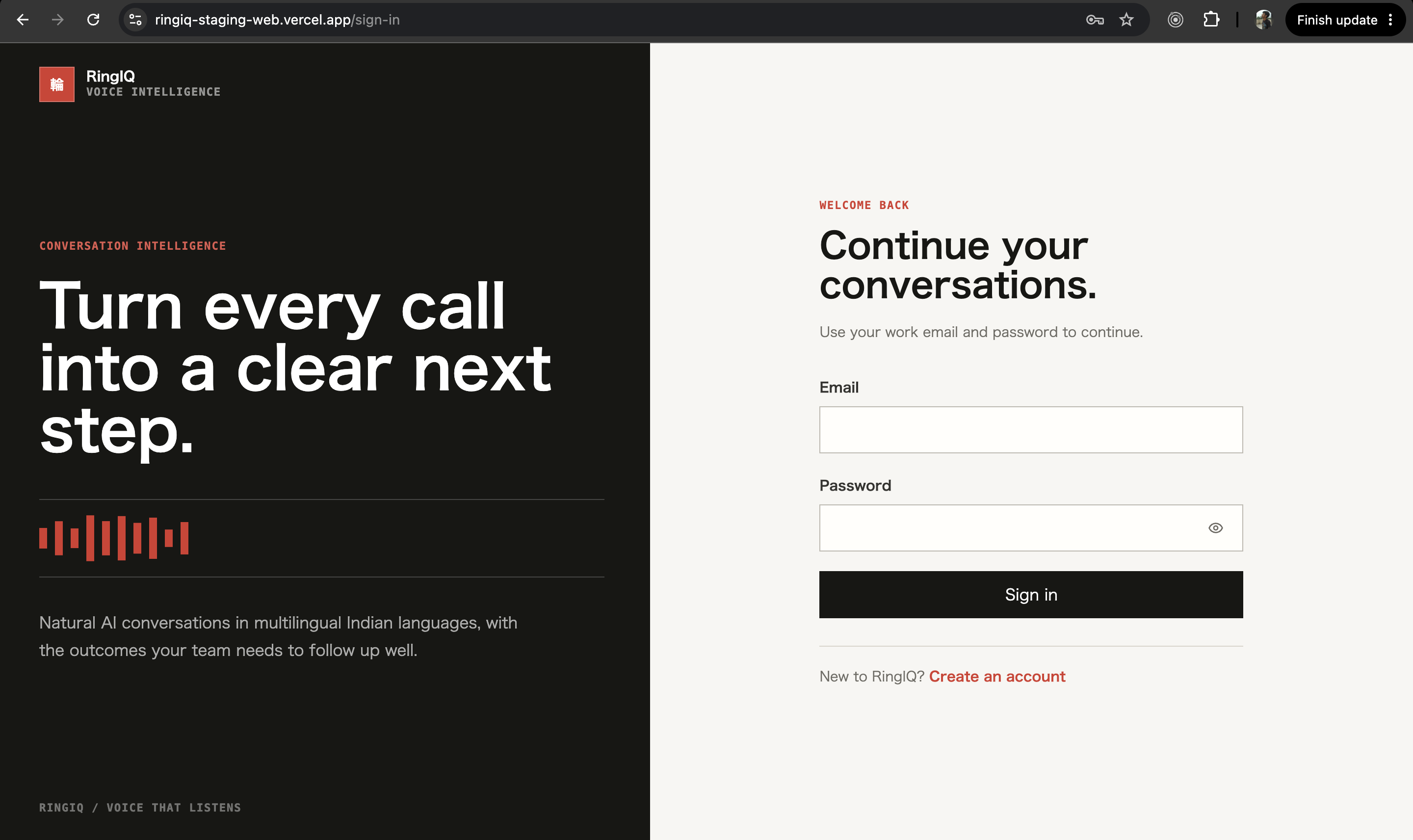
Tenant Login and signup page
-
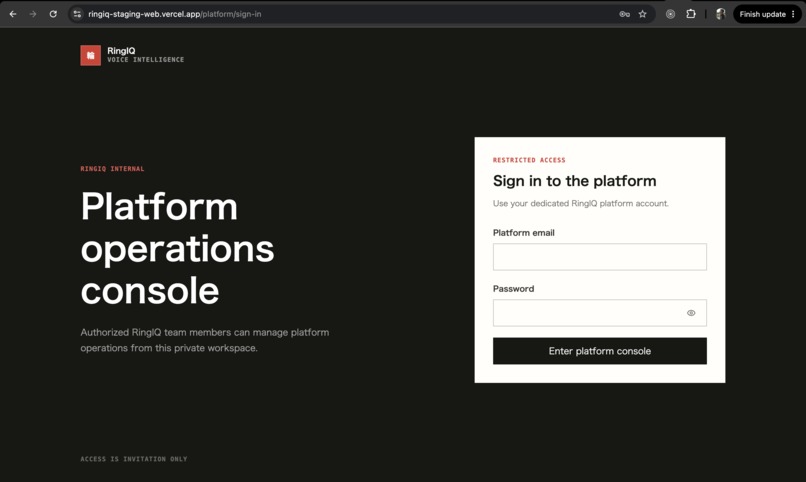
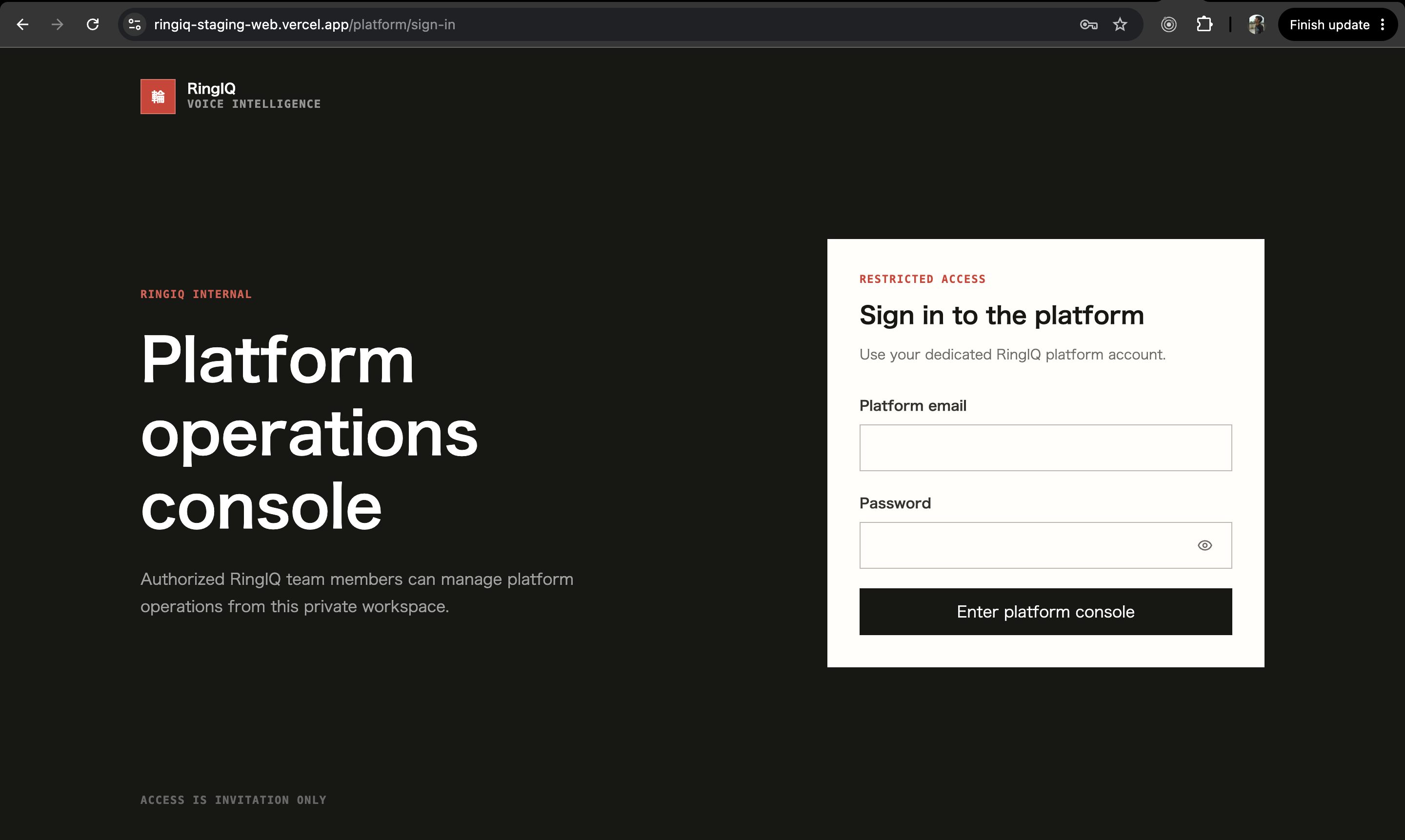
Platform users console
-
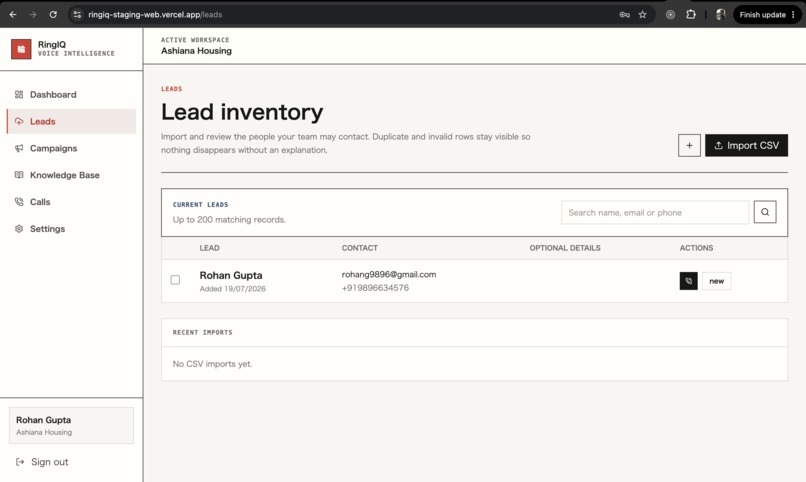
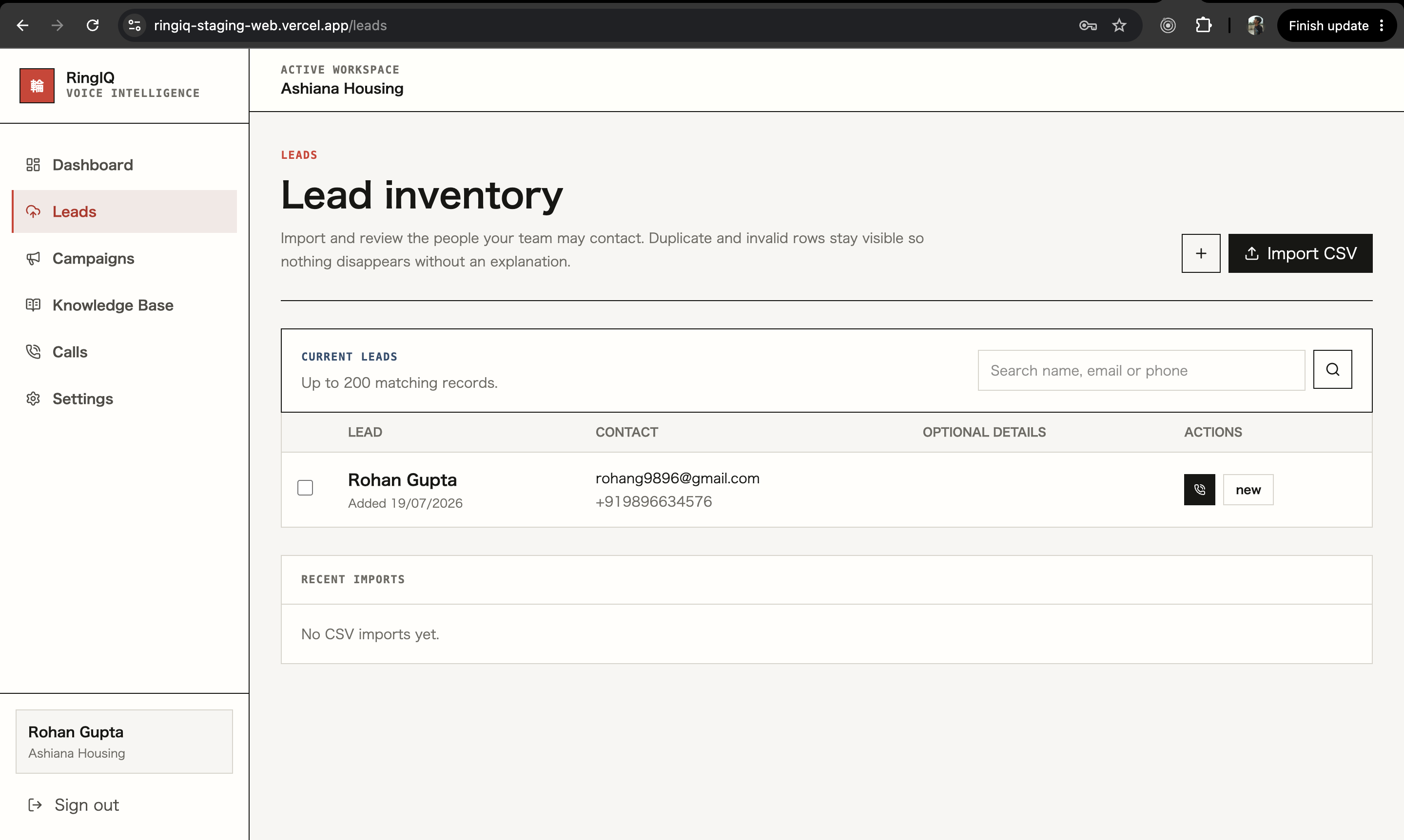
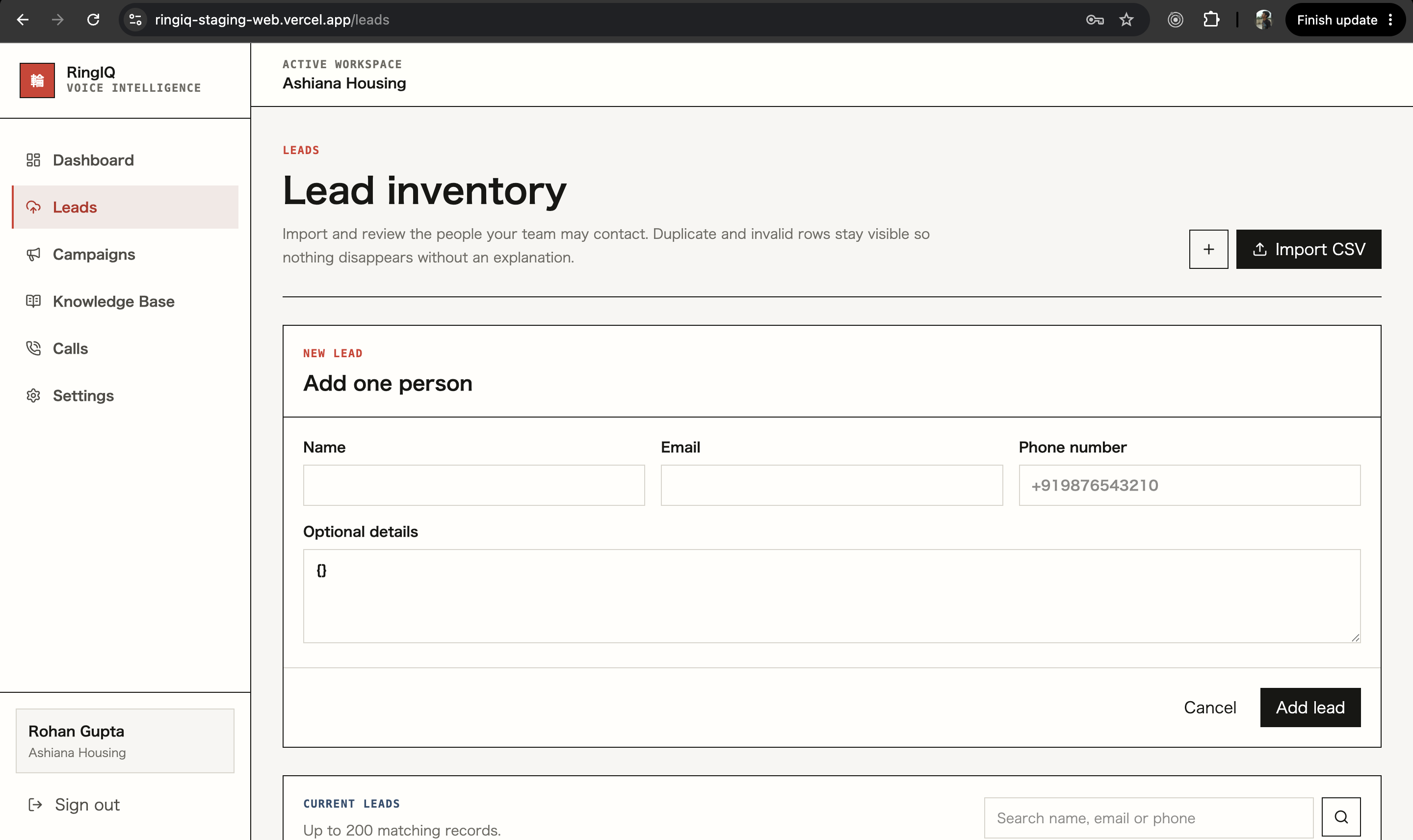
Lead management page
-
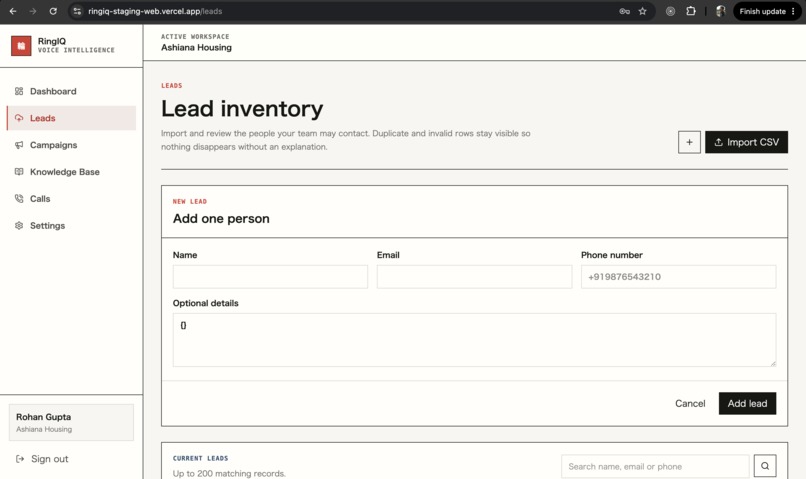
Leads import feature
-
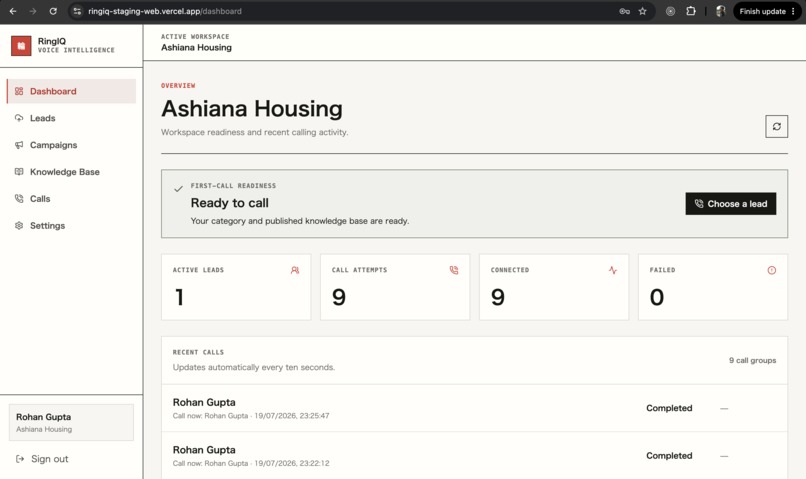
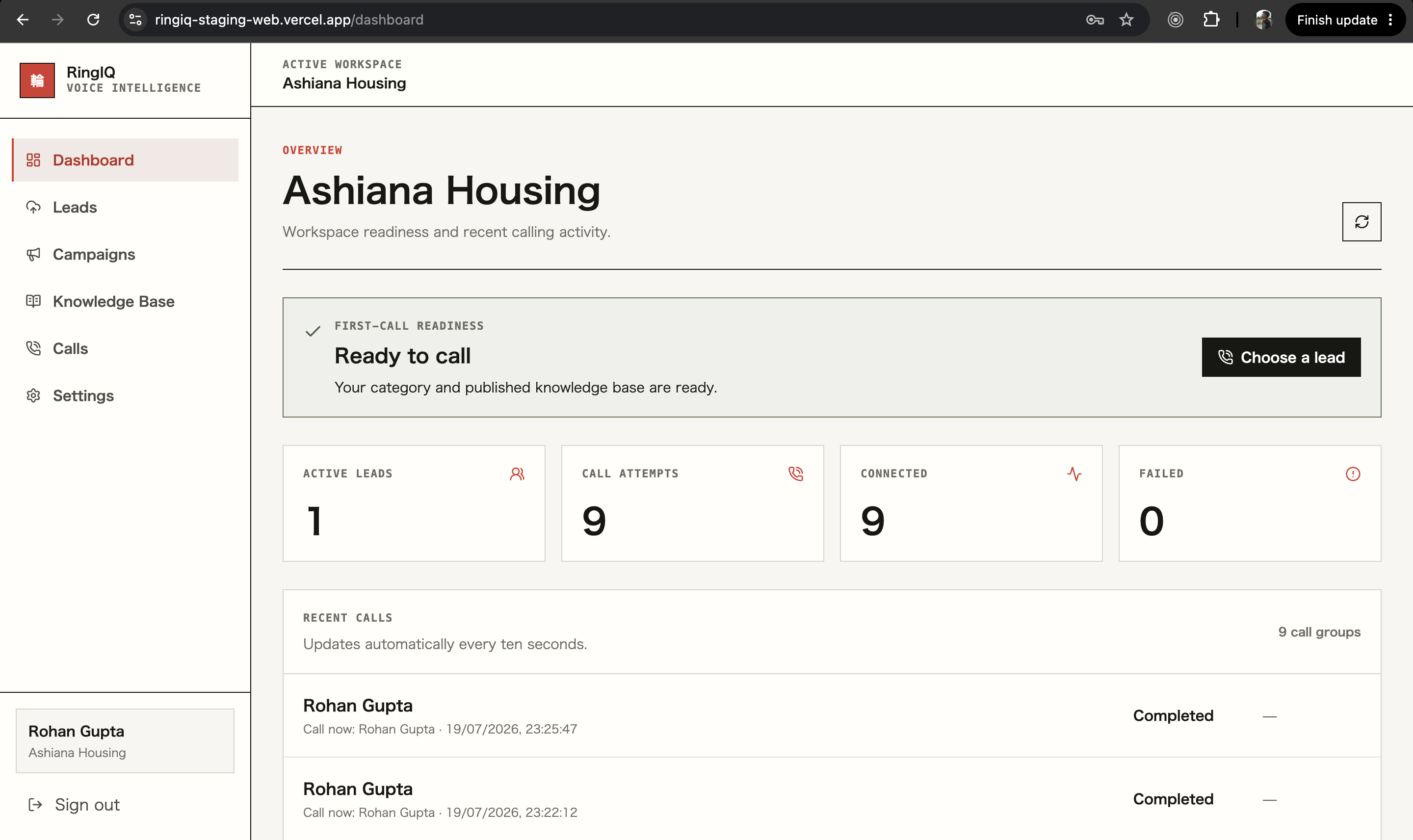
Tenant dashboard with real estate category and leads configured
-
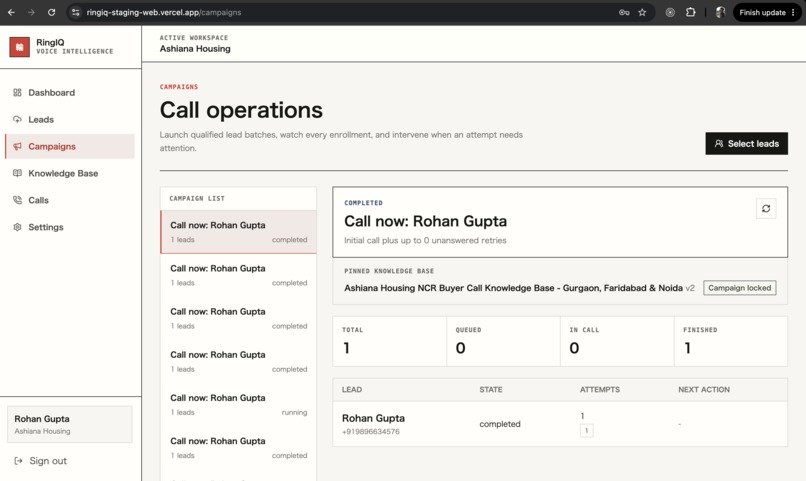
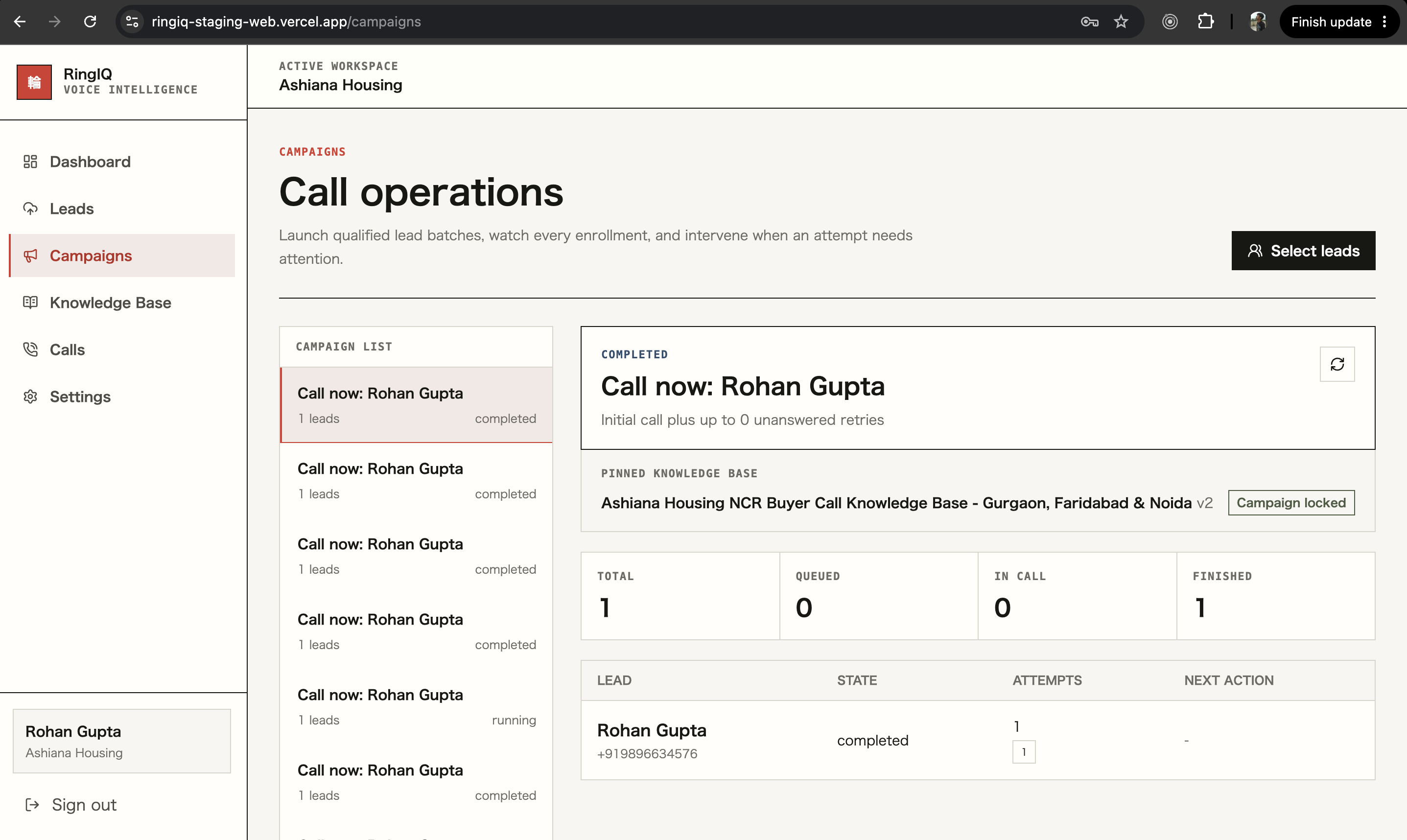
Campaign management page
-
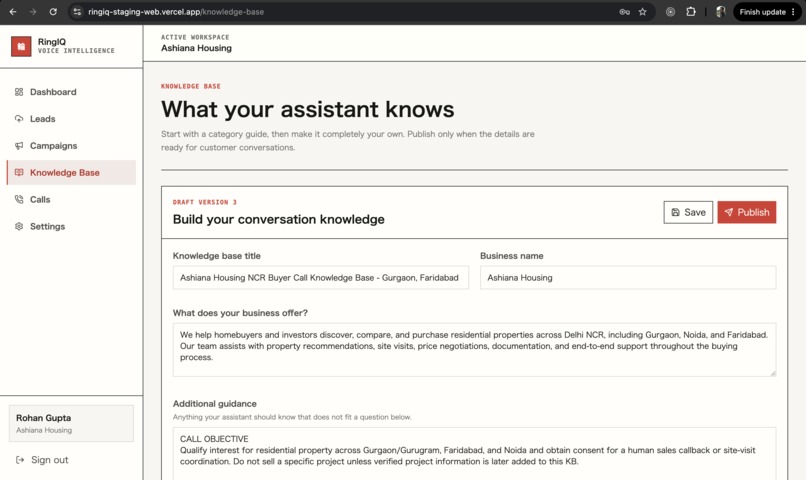
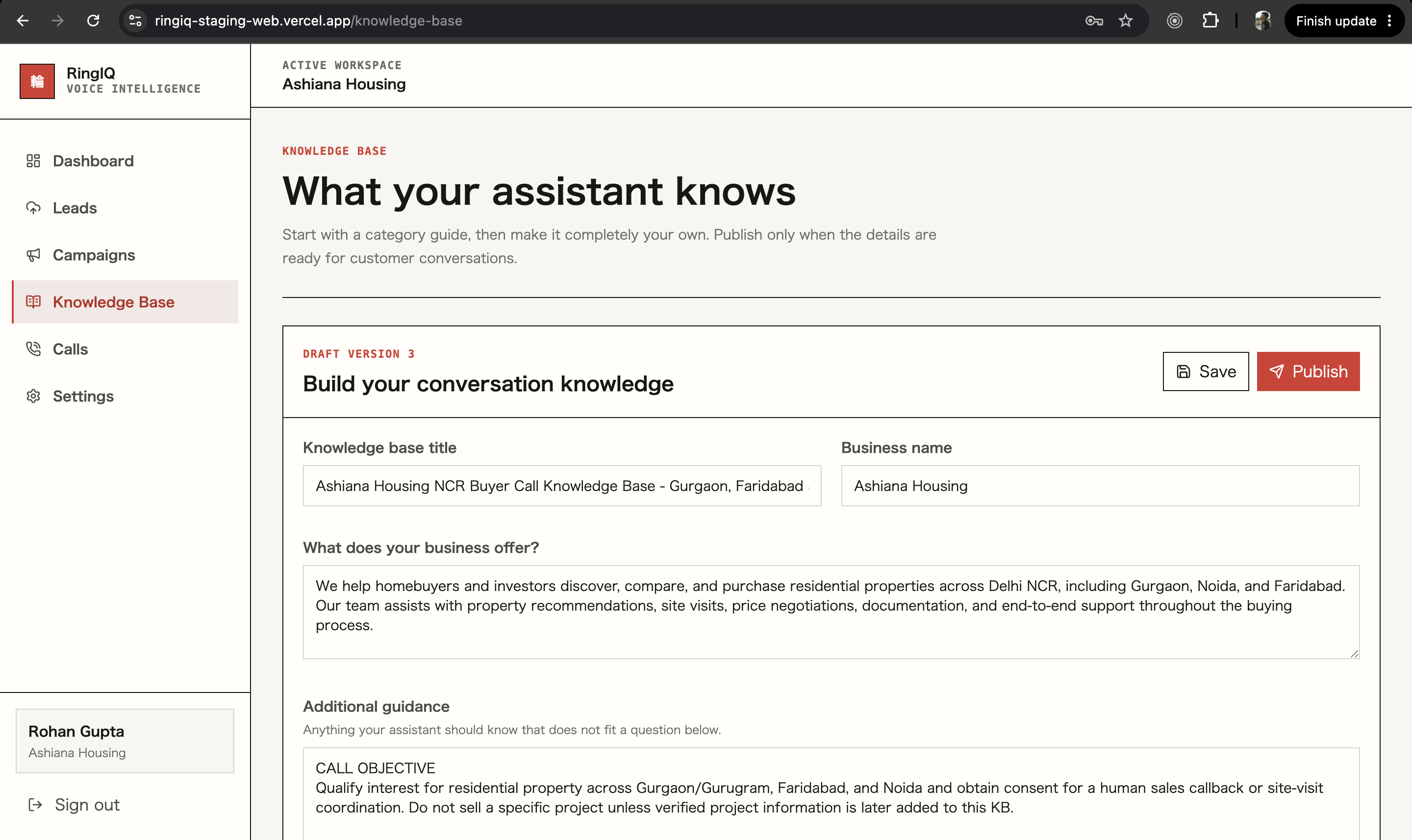
Knowledge base configuration page
-
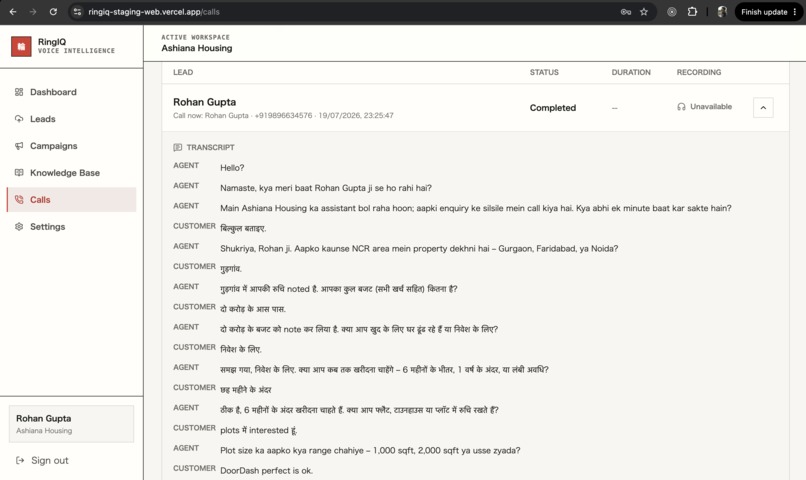
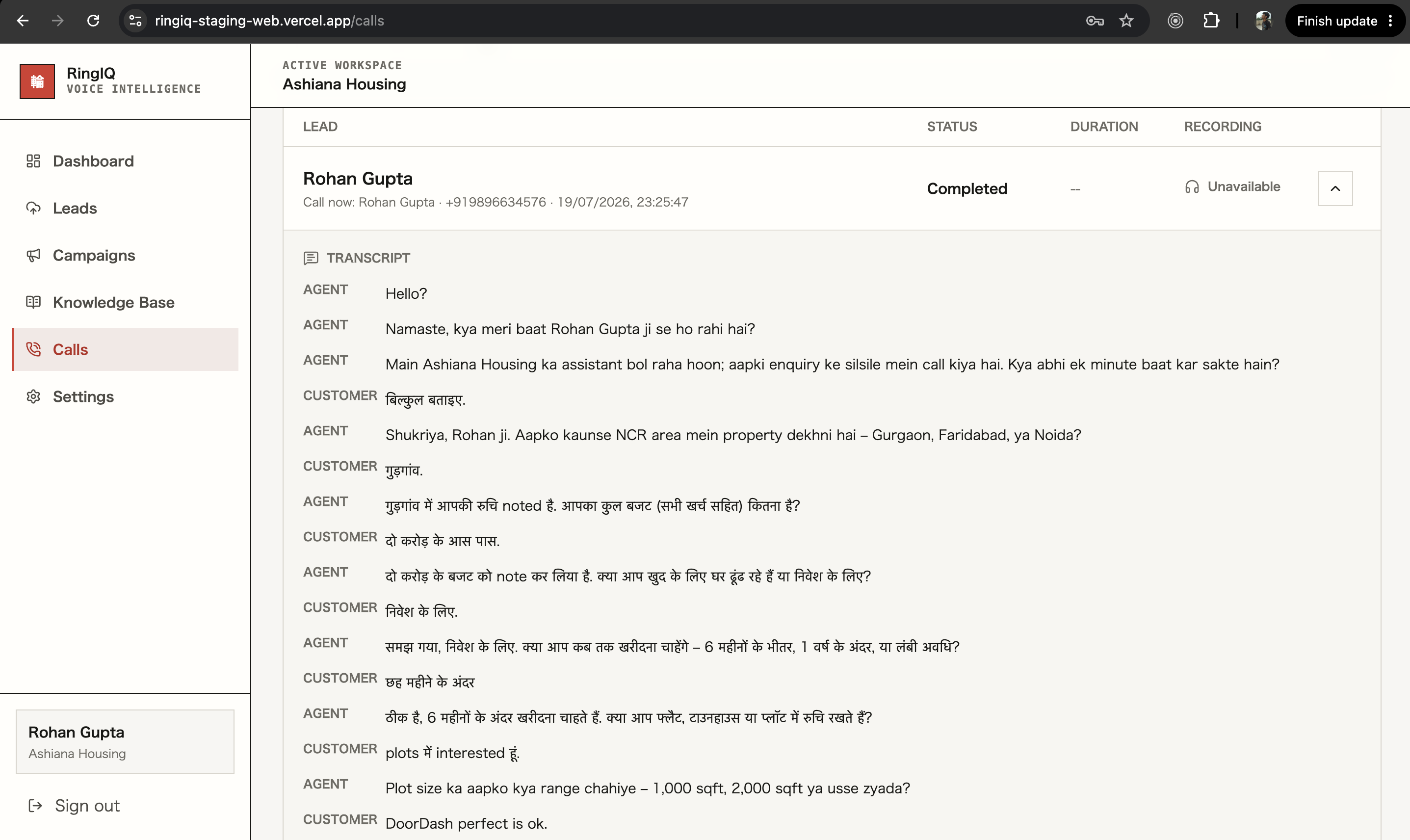
Calls transcription page
-
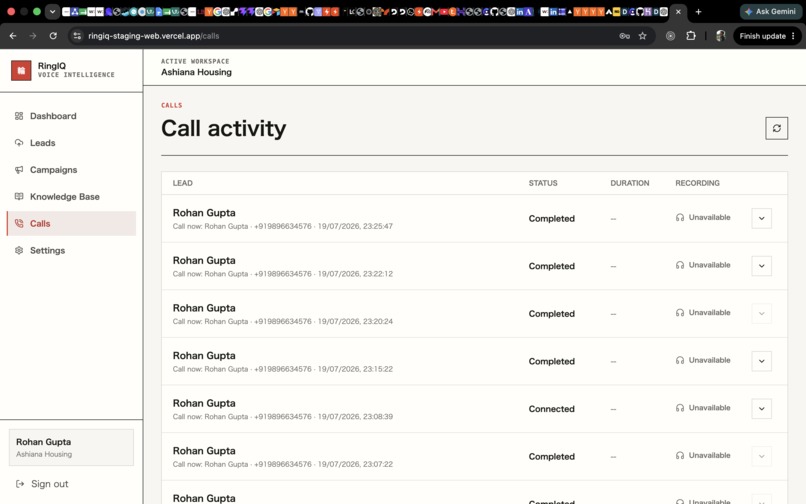
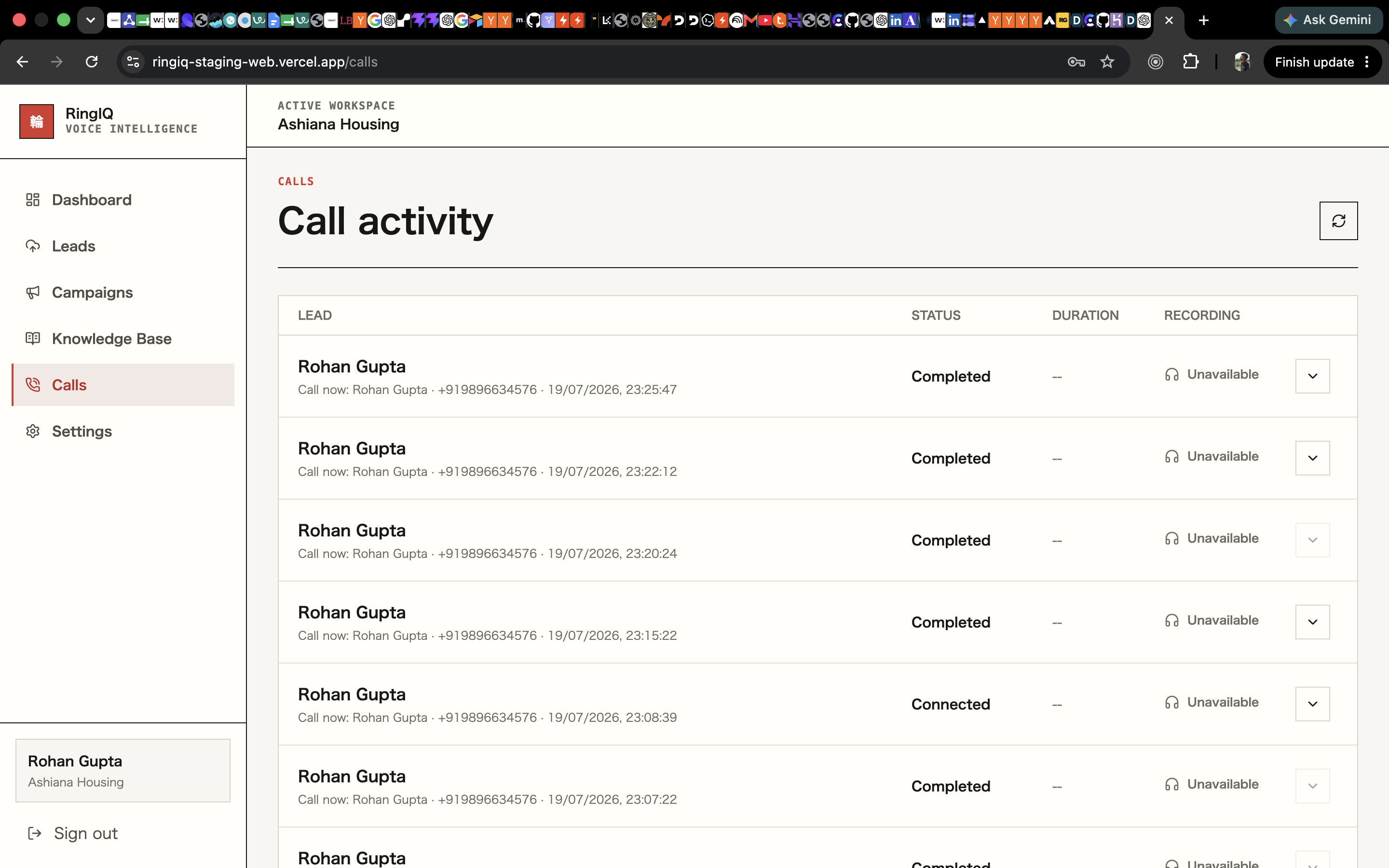
Call history page
Inspiration
RingIQ was inspired by the time and cost businesses spend manually calling large volumes of leads that may never convert.
What it does
RingIQ uses AI voice agents to call, engage, qualify, and prioritise B2B leads through natural Hindi, English, and Hinglish conversations.
How we built it
We built it using LiveKit for real-time voice communication, STT, an LLM grounded in tenant-specific knowledge bases, TTS, telephony, and a multi-tenant web dashboard.
Challenges we ran into
The biggest challenges were reducing voice-pipeline latency, handling interruptions reliably, deploying LiveKit, and measuring per-minute costs to keep calls commercially viable.
Accomplishments that we're proud of
We built an end-to-end system that can place real phone calls, answer business-specific questions, classify interest, and generate recordings, transcripts, and summaries.
What we learned
We learned that building natural voice AI requires balancing latency, response accuracy, audio reliability, and cost rather than optimizing any one component independently.
What's next for RingIQ
The next step is to build a complete ecosystem around AI-powered lead calling, making RingIQ easier to integrate, adopt, and sell to real businesses across different industries.
Built With
- ai
- clerk
- fastapi
- groq
- heroku
- livekit
- nextjs
- openai
- postgresql
- python
- rag
- react
- sarvam
- typescript
- vercel

Log in or sign up for Devpost to join the conversation.