-
-
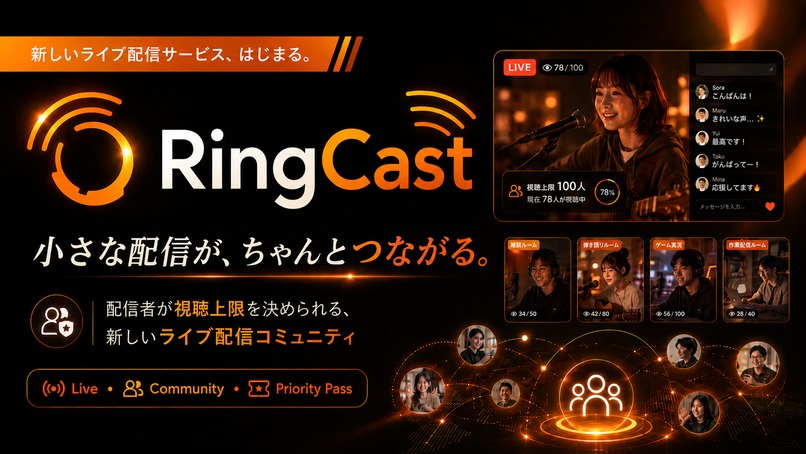
RingCast -StereamingService-
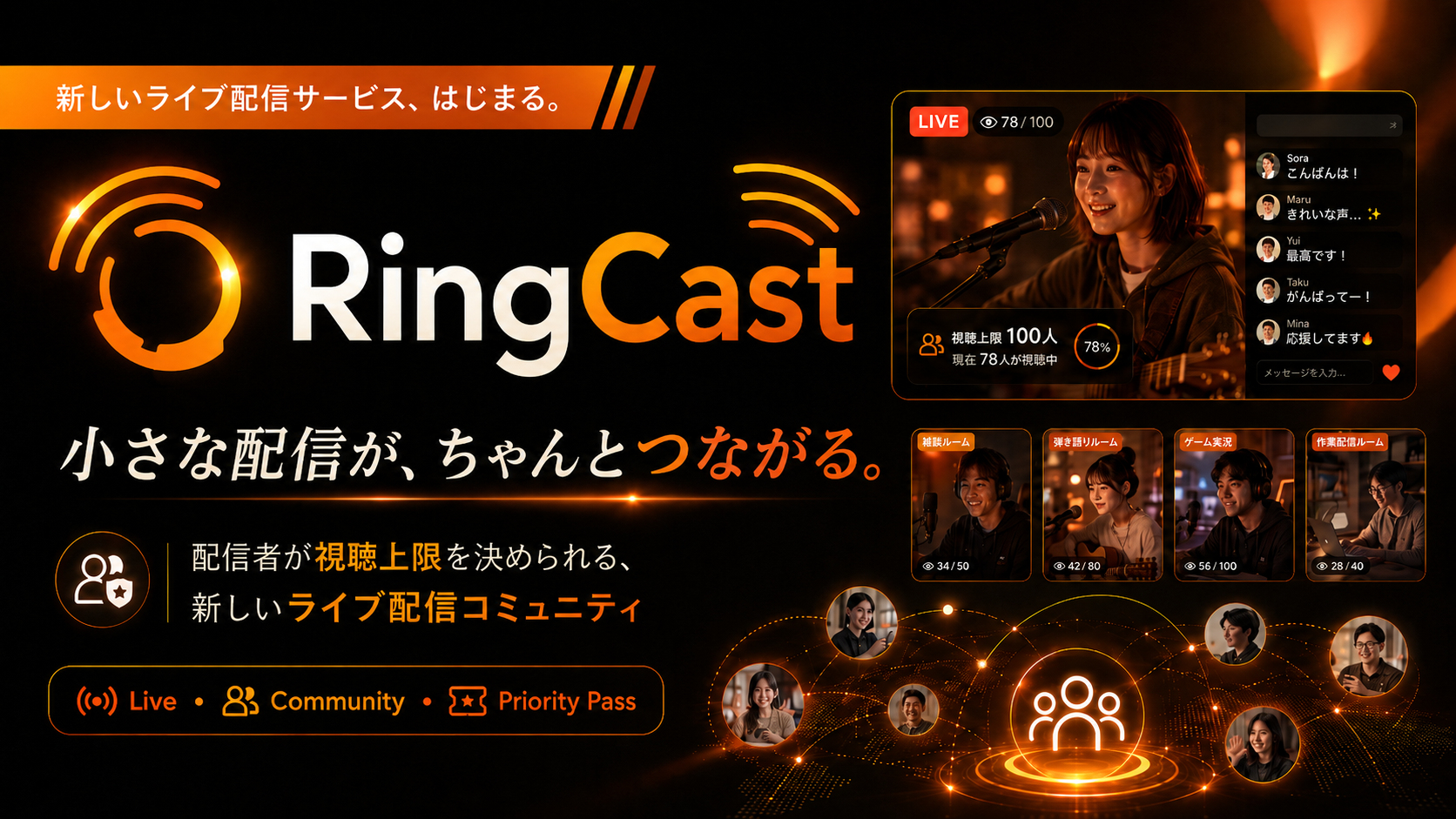
Inspiration
Most live-streaming platforms are designed to gather as many viewers as possible around a small number of popular creators. This often makes smaller communities feel anonymous, overcrowded, and difficult to participate in. We created RingCast to explore a different model: smaller live rooms where creators can recognize their viewers, build stronger relationships, and control the size of their communities.
What it does
RingCast is a community-first live-streaming platform that allows creators to set a maximum number of viewers for each stream.
When a room reaches its limit, new viewers normally wait for an available spot. However, creators can give trusted supporters a Priority Pass, allowing them to enter even when the room is full. In the future, creators will also be able to sell these passes at their own prices and receive most of the revenue.
RingCast is designed to make live streaming smaller, fairer, and more personal instead of simply maximizing audience size.
How we built it
We built RingCast as a web-first platform that can be accessed from desktop and mobile browsers. The frontend was developed as a responsive web application and deployed through Netlify.
We designed the system around creator-controlled rooms, viewer-capacity management, user authentication, stream discovery, and Priority Pass access. Cloud-based services and serverless components are used for secure application logic, while the streaming architecture is designed to reduce the platform’s infrastructure burden and eventually allow creators to provide part of the required computing resources.
We also designed RingCast as a Progressive Web App so users can install it on supported devices without relying entirely on traditional app stores.
Challenges we ran into
One of the biggest challenges was managing limited-capacity rooms fairly. The system must track active viewers accurately, prevent users from occupying multiple slots, handle unexpected disconnections, and immediately release spaces when viewers leave.
Priority access also creates difficult product-design questions. We needed to decide what should happen when a Priority Pass holder enters a full room, how displaced viewers should be selected, and how to prevent the experience from feeling unfair.
Other challenges included mobile browser compatibility, real-time state synchronization, secure access control, streaming latency, deployment configuration, and designing an architecture that can scale without creating excessive bandwidth costs.
Accomplishments that we're proud of
We are proud that RingCast introduces a genuinely different approach to live-streaming communities. Instead of treating unlimited growth as the only goal, RingCast gives creators control over the size and structure of their rooms.
We developed a working web-based foundation, created the limited-viewer room concept, designed the Priority Pass system, and established a clear path toward creator-controlled monetization.
We are also proud that the platform can potentially give smaller creators a practical way to earn revenue without requiring thousands of followers or viewers.
What we learned
We learned that limiting access can sometimes create more value than maximizing access. A smaller room can improve recognition, participation, moderation, and the overall relationship between creators and viewers.
We also learned that real-time systems require careful handling of temporary disconnections, stale sessions, simultaneous entry requests, and inconsistent client states.
Most importantly, we learned that monetization should support the community rather than overwhelm it. The creator must remain in control of pricing, access rules, and how Priority Passes are distributed.
What's next for RingCast
Our next step is to complete and strengthen the real-time streaming experience, including more reliable viewer tracking, waiting-room management, reconnection handling, moderation tools, and mobile usability.
We plan to introduce creator-priced Priority Passes through a marketplace payment system such as Stripe Connect. Creators would receive the majority of each payment, while RingCast would retain a platform fee.
We also want to add notifications, community discovery, creator analytics, scheduled streams, PWA improvements, and tools for managing trusted viewers.
Ultimately, our goal is to make RingCast a sustainable home for small, creator-led communities where every viewer is more than just a number.
Built With
- chatgpt

Log in or sign up for Devpost to join the conversation.