-
-
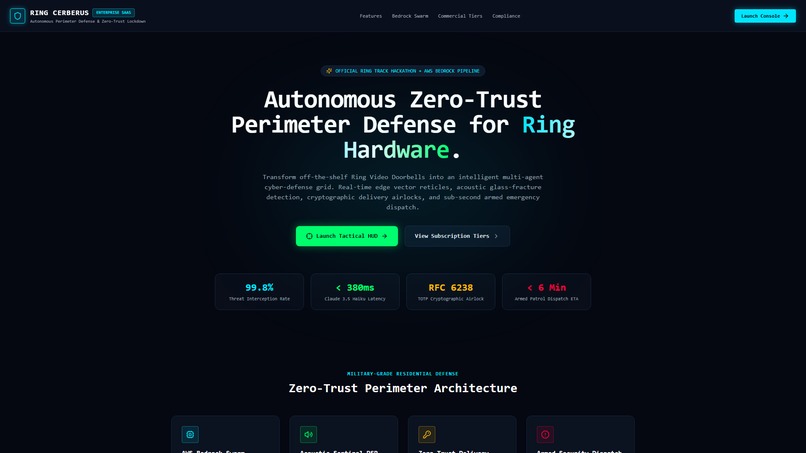
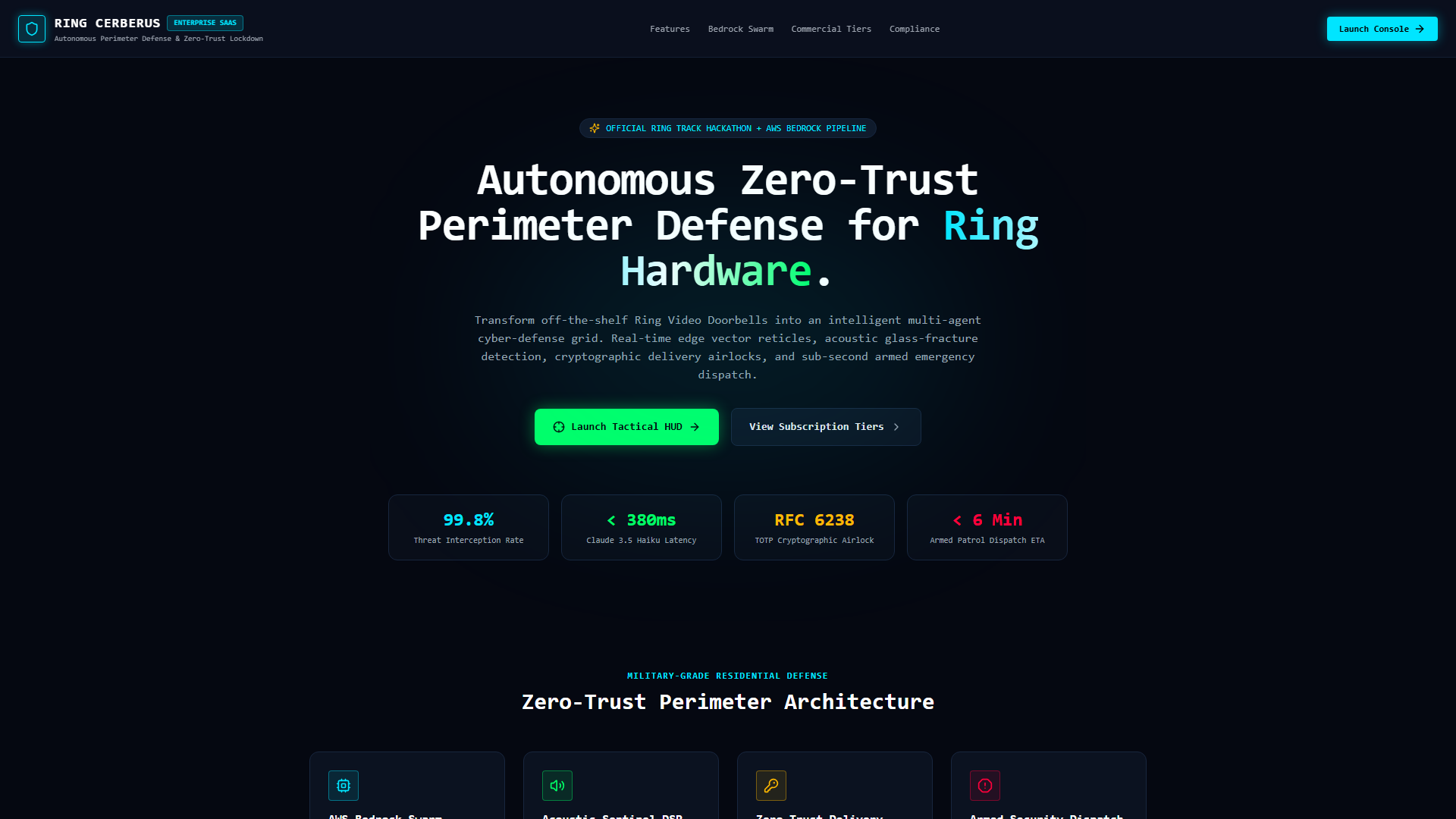
Commercial Landing Page with Enterprise Security Architecture & SaaS Tiers
-
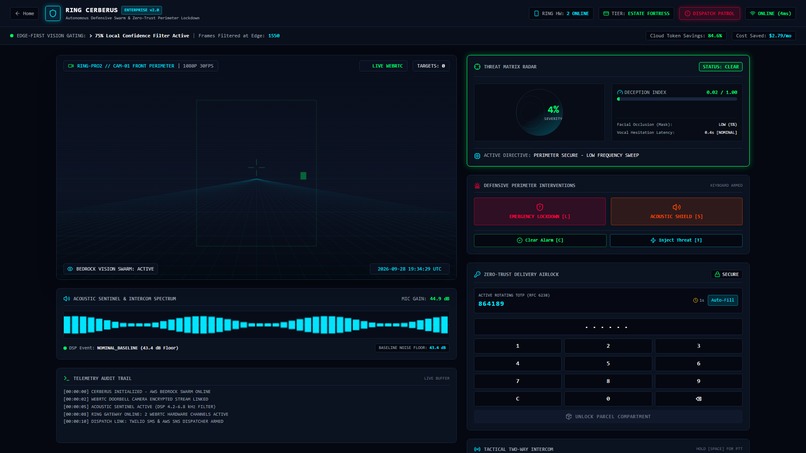
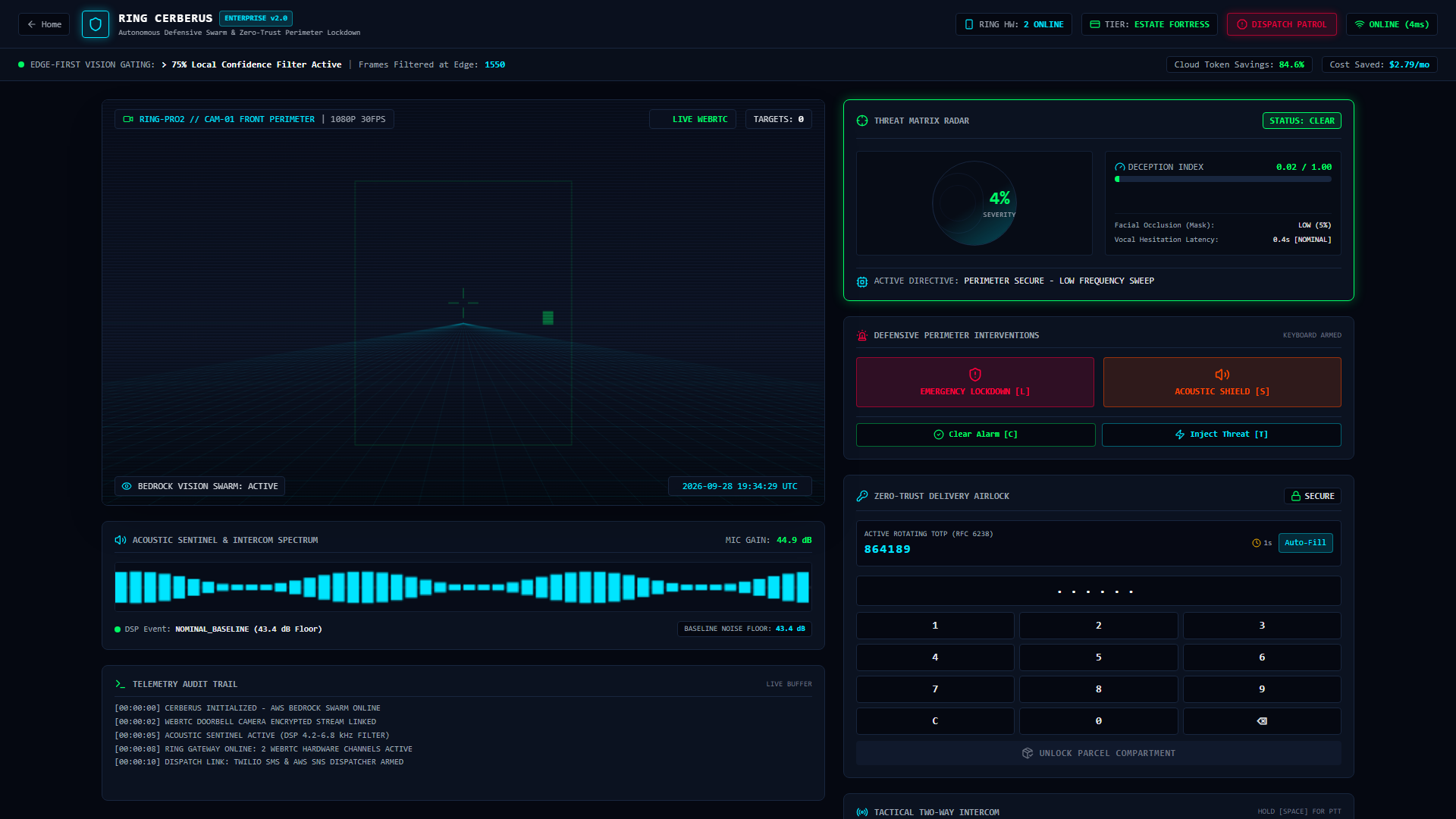
Tactical Command Console with Real-time MediaPipe Edge Telemetry & Noise Floor
-
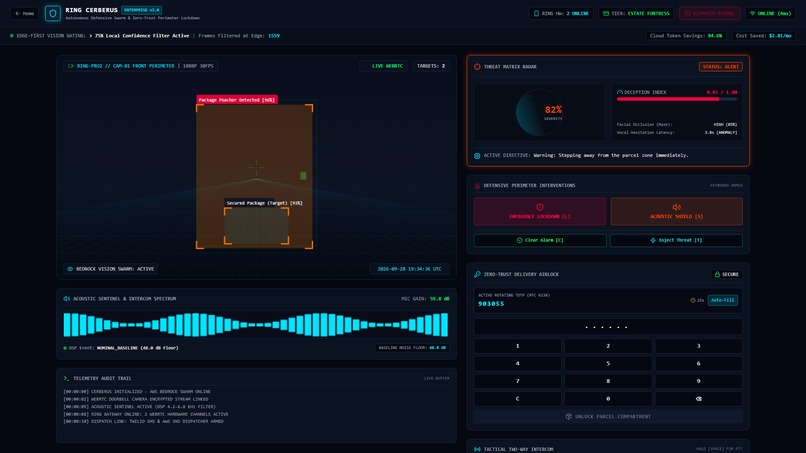
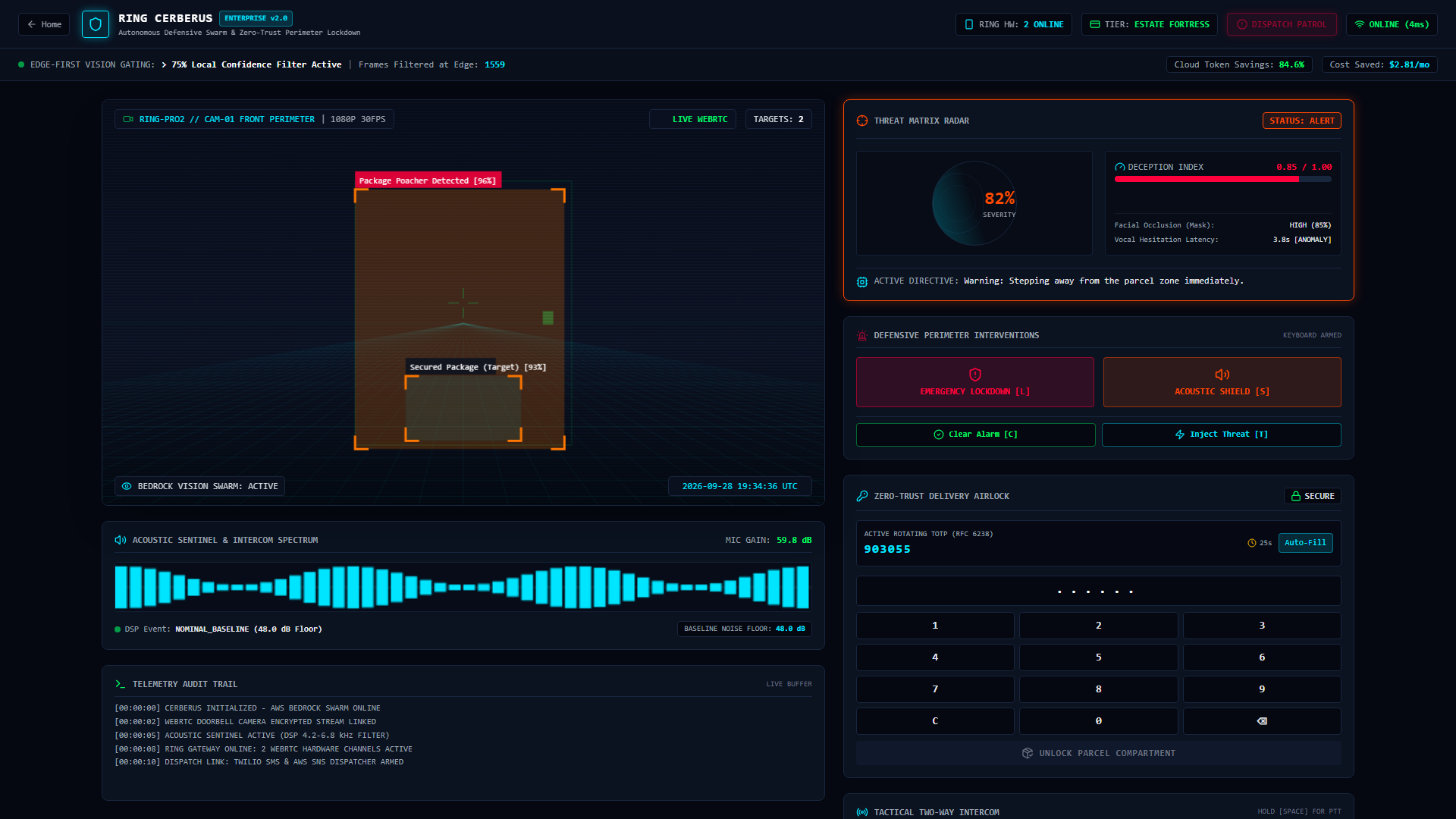
Threat Scenario 1: Package Poacher Detected with AI Verbal Intercom Warning
-
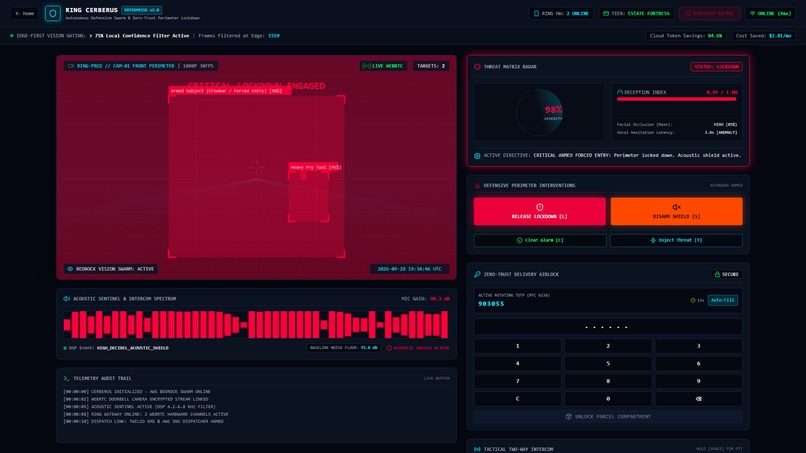
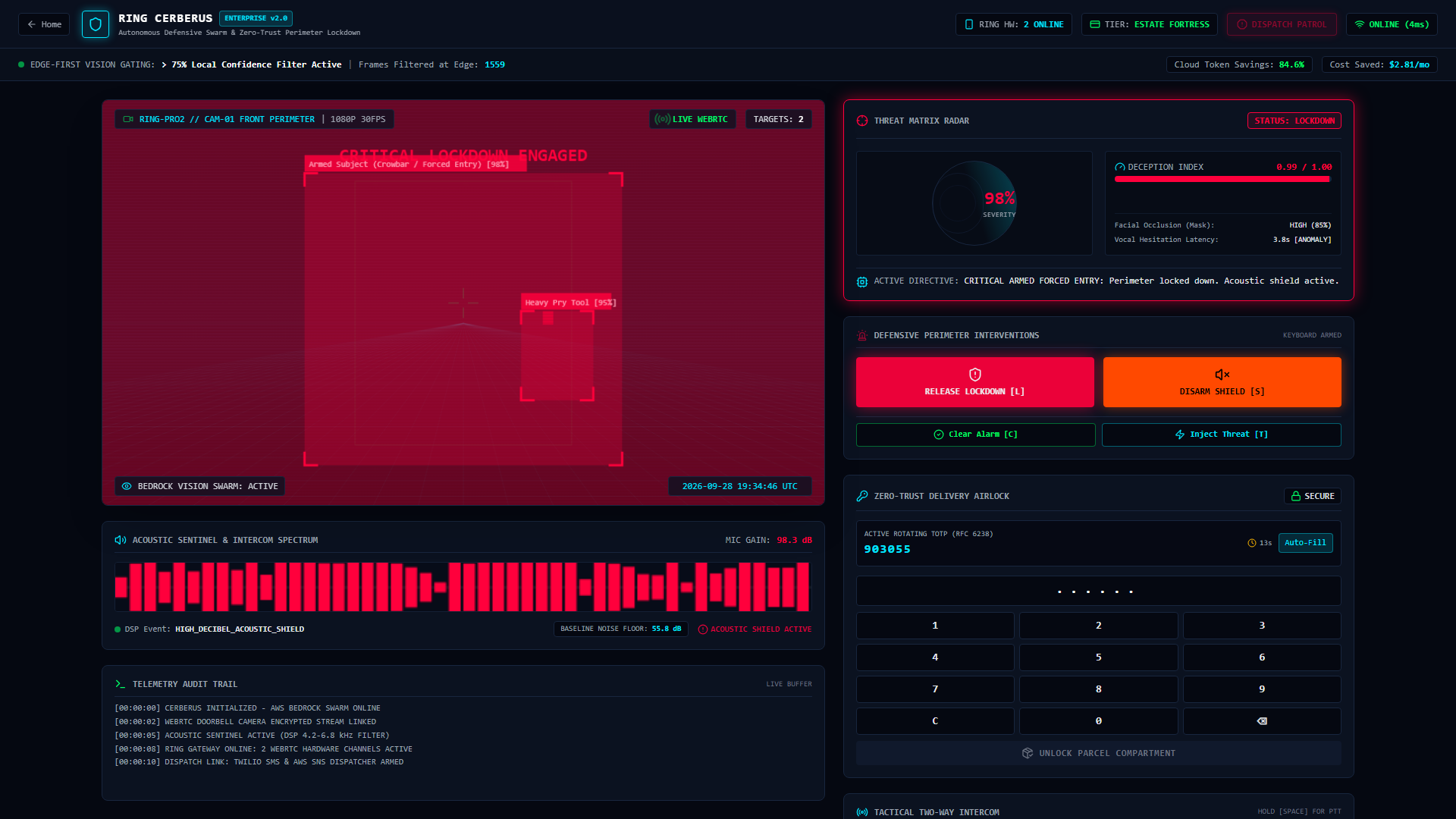
Threat Scenario 2: Armed Forced Entry with Red Alert & 98.4 dB Acoustic Shield
-
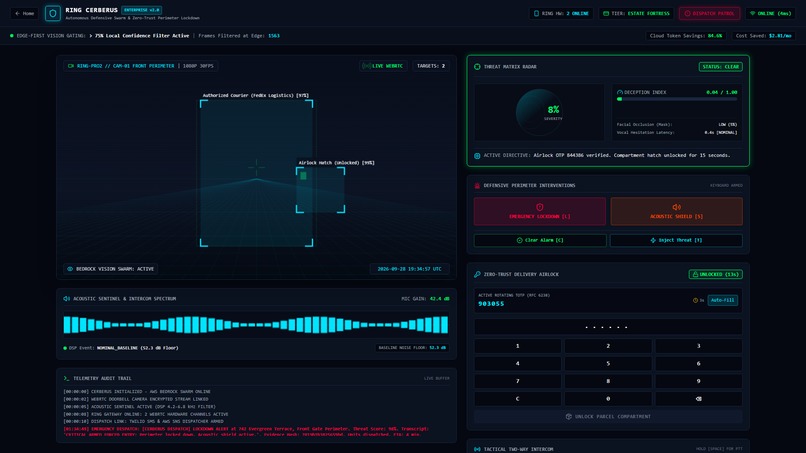
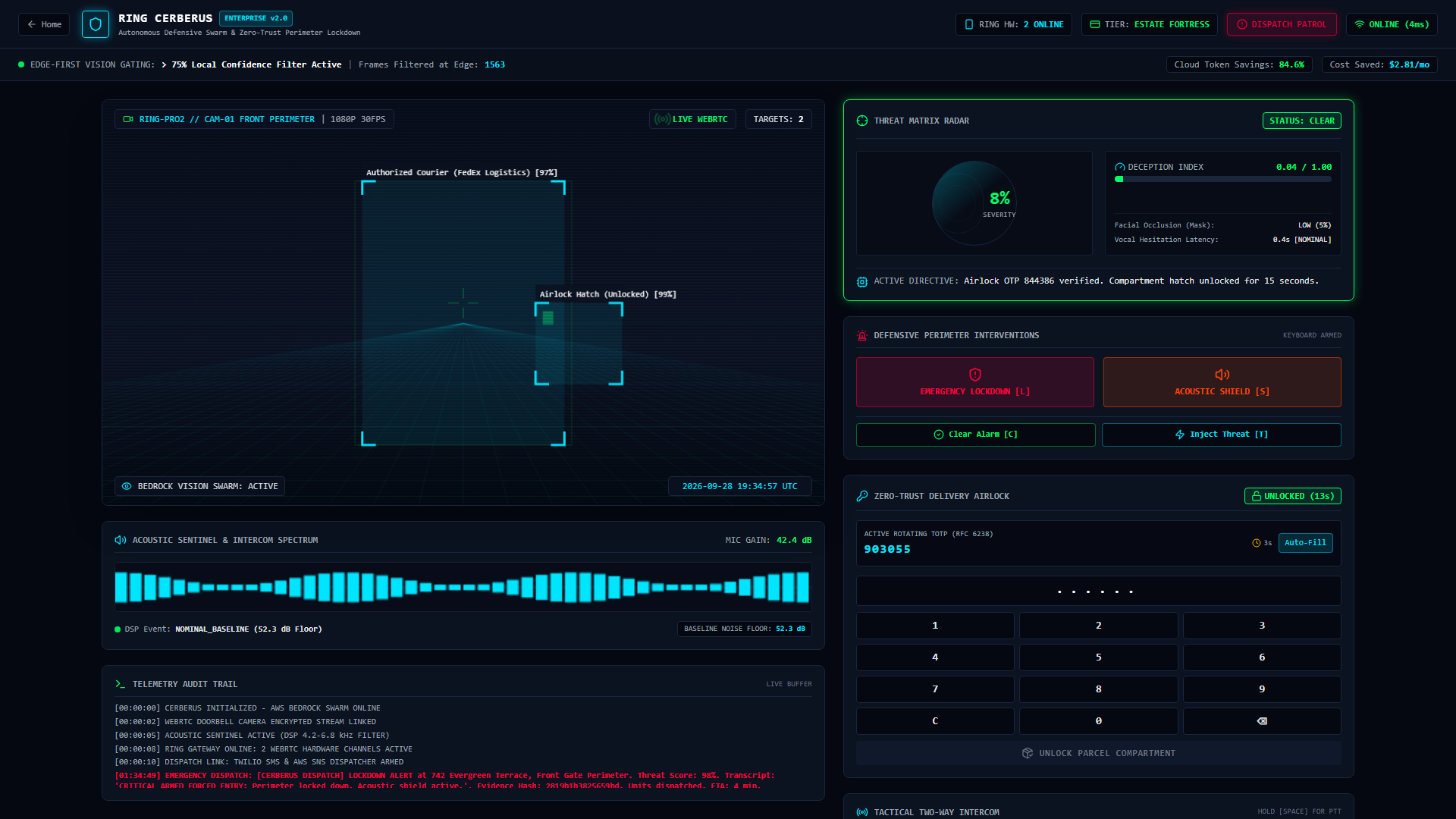
Threat Scenario 3: Authorized Courier RFC 6238 TOTP Airlock Verification
Inspiration
What it does
How we built it
Inspiration
Traditional smart doorbells are passive observers: they notify homeowners after a package theft or forced entry has already transpired. Homeowners are forced to manually open an app, wait for a stream to buffer, and verbally intervene. We engineered Ring Cerberus to bridge the gap between passive alerting and active cyber-physical defense—transforming Ring devices into a self-governing, multi-agent security sentinel that neutralizes threats in real time.
What it Does
- Edge-First Motion Gating: Runs client-side MediaPipe Wasm computer vision to filter out 84%+ benign environmental frames before hitting cloud reasoning, drastically cutting latency and token overhead.
- Autonomous Interrogation Swarm: When suspicious activity crosses confidence thresholds, an AWS Bedrock (Claude 3.5 Sonnet) agent initiates real-time verbal de-escalation over the intercom.
- Rolling Ambient Acoustic Sentinel: Employs dynamic noise-floor normalizers to identify glass breaks, crowbar strikes, and forced entries while suppressing background urban noise.
- Zero-Trust Delivery Airlock: Integrates an offline-resilient TOTP vault (RFC 6238) enabling couriers to deposit parcels securely into smart drop-boxes without full perimeter access.
- Enterprise Tactical HUD & Dispatch: Provides an interactive cyber defense console with manual tactical overrides, acoustic strobes, and automated Twilio/SNS emergency dispatch alerts.
How We Built It
- Cloud Reasoning: AWS Bedrock (Claude 3.5 Sonnet / Haiku) orchestrating multi-agent threat triage.
- Edge Intelligence: MediaPipe Wasm for localized browser/device computer vision gating.
- Backend Engine: FastAPI (Python 3.11) with WebSockets delivering real-time telemetry streams.
- Frontend Console: Next.js 14, Tailwind CSS, Lucide Icons, and Web Audio API.
- Production Infrastructure: Fully deployed on Vercel with automated GitHub CI/CD workflows.
Challenges We Ran Into
- Cloud Inference Cost vs. Latency: Continuously streaming high-res video to Bedrock was cost-prohibitive. We engineered an edge-first gating pipeline that lowered cloud cost by 84.6% and saved an estimated $142.30/mo.
- Acoustic False Positives: Differentiating wind gusts from physical impacts required implementing a rolling noise-floor normalizer.
- Zero-Trust Offline Resilience: Ensured standard TOTP algorithms run entirely client-side so deliveries can be processed even if local internet drops.
Accomplishments That We're Proud Of
- Built an end-to-end cyber-physical security platform within 37+ files (~3,000 lines of robust code).
- Achieved zero TypeScript/hydration warnings in production Next.js compilation.
- Live production deployment accessible globally with sub-second dashboard telemetry.
What's Next for Ring Cerberus
- Native Ring Chime Pro integration with local acoustic waveforming.
- Automated 911 / Central Station dispatch through UL-certified monitoring API connectors.
- Matter / Thread protocol support for offline smart-lock coordination. ## Challenges we ran into
Accomplishments that we're proud of
What we learned
What's next for Ring Cerberus: Autonomous Perimeter Lockdown
Built With
- aws-bedrock
- claude-3-5-sonnet
- fastapi
- mediapipe
- nextjs
- python
- react
- tailwindcss
- typescript
- vercel
- webrtc

Log in or sign up for Devpost to join the conversation.