-
-
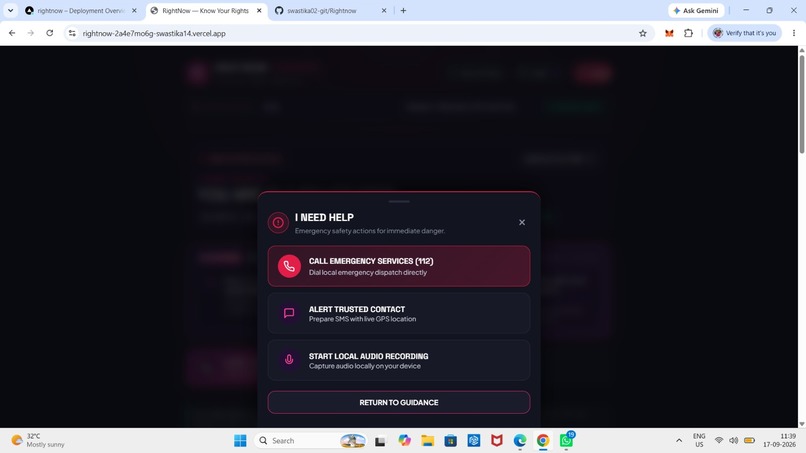
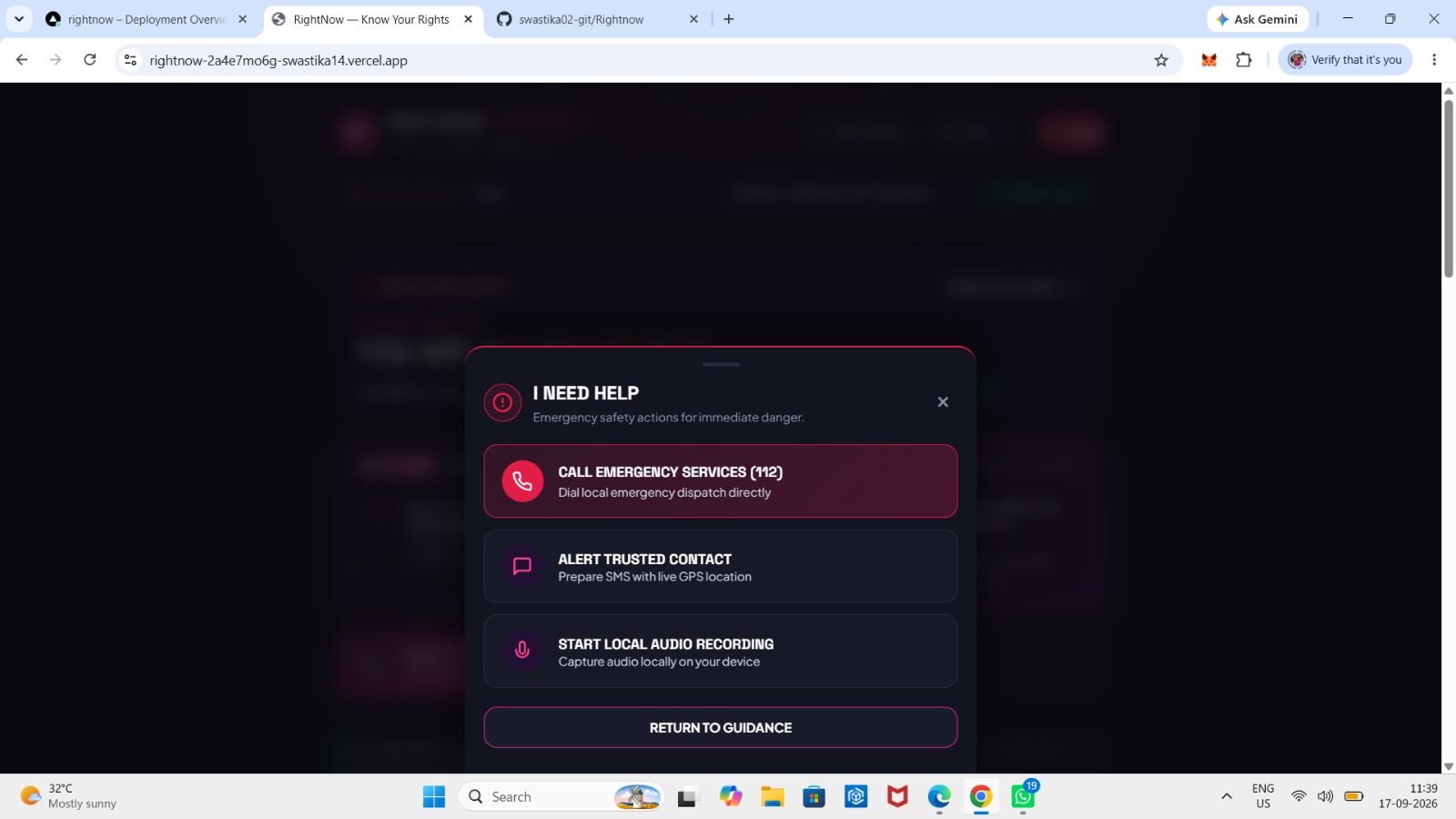
some options if the user needs urgent help
-
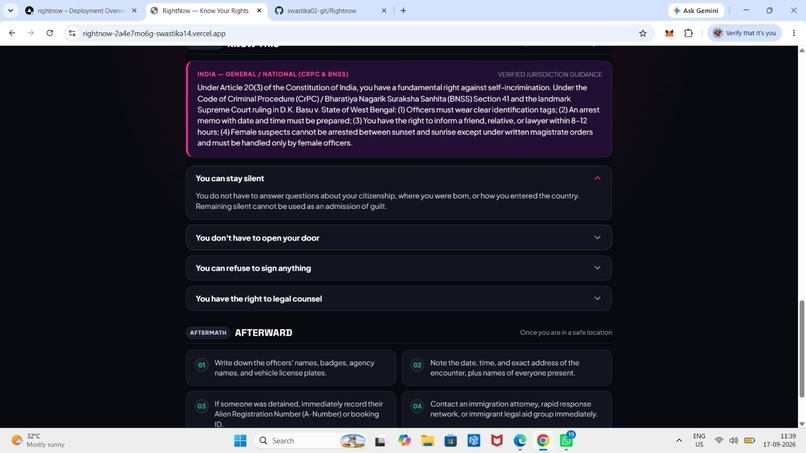
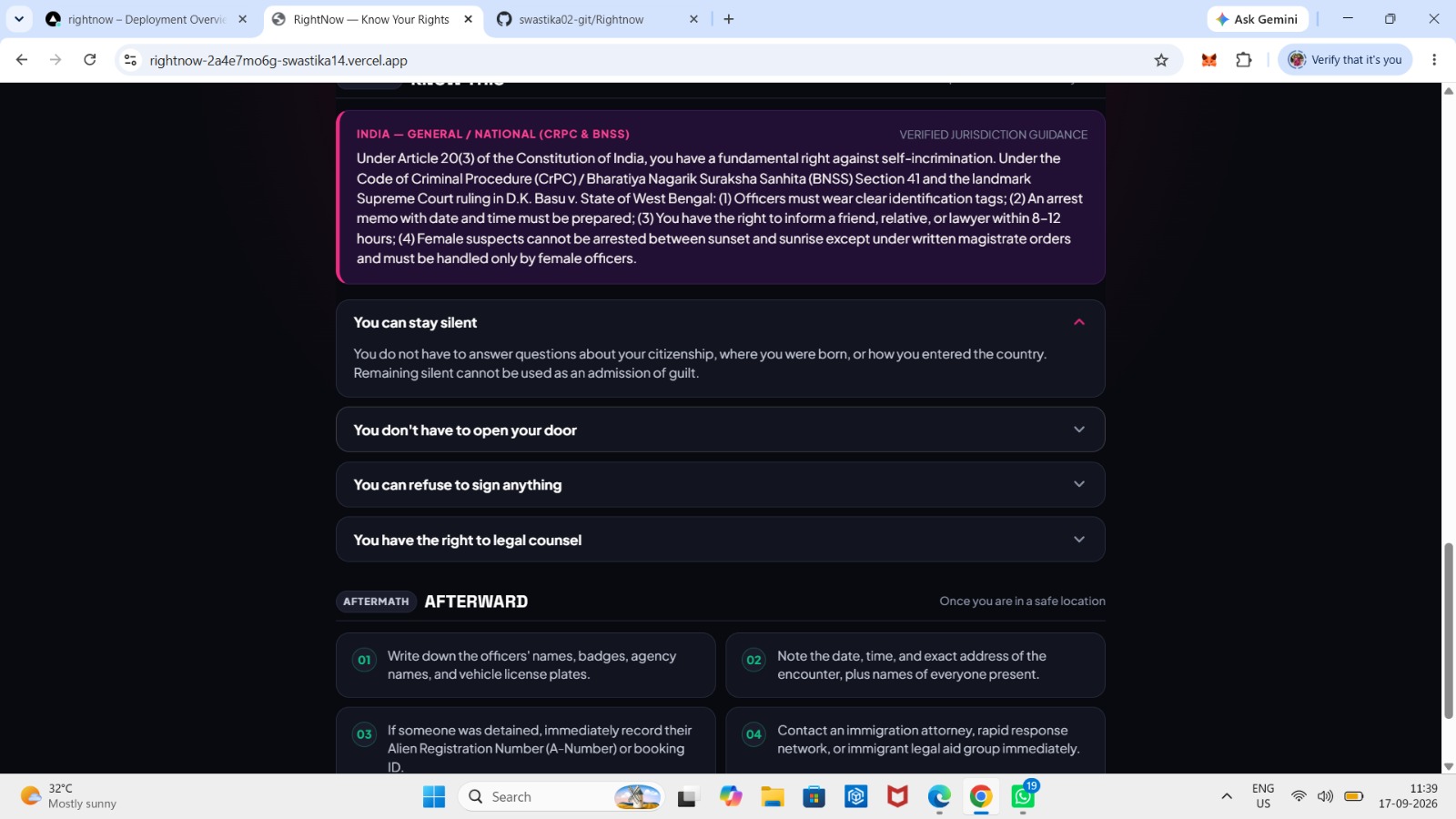
tells you the rules and laws and the rights you have at that moment based on the situation
-
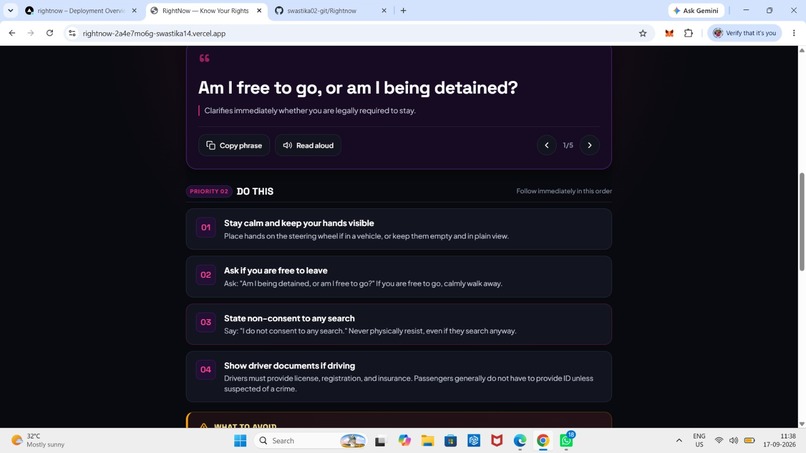
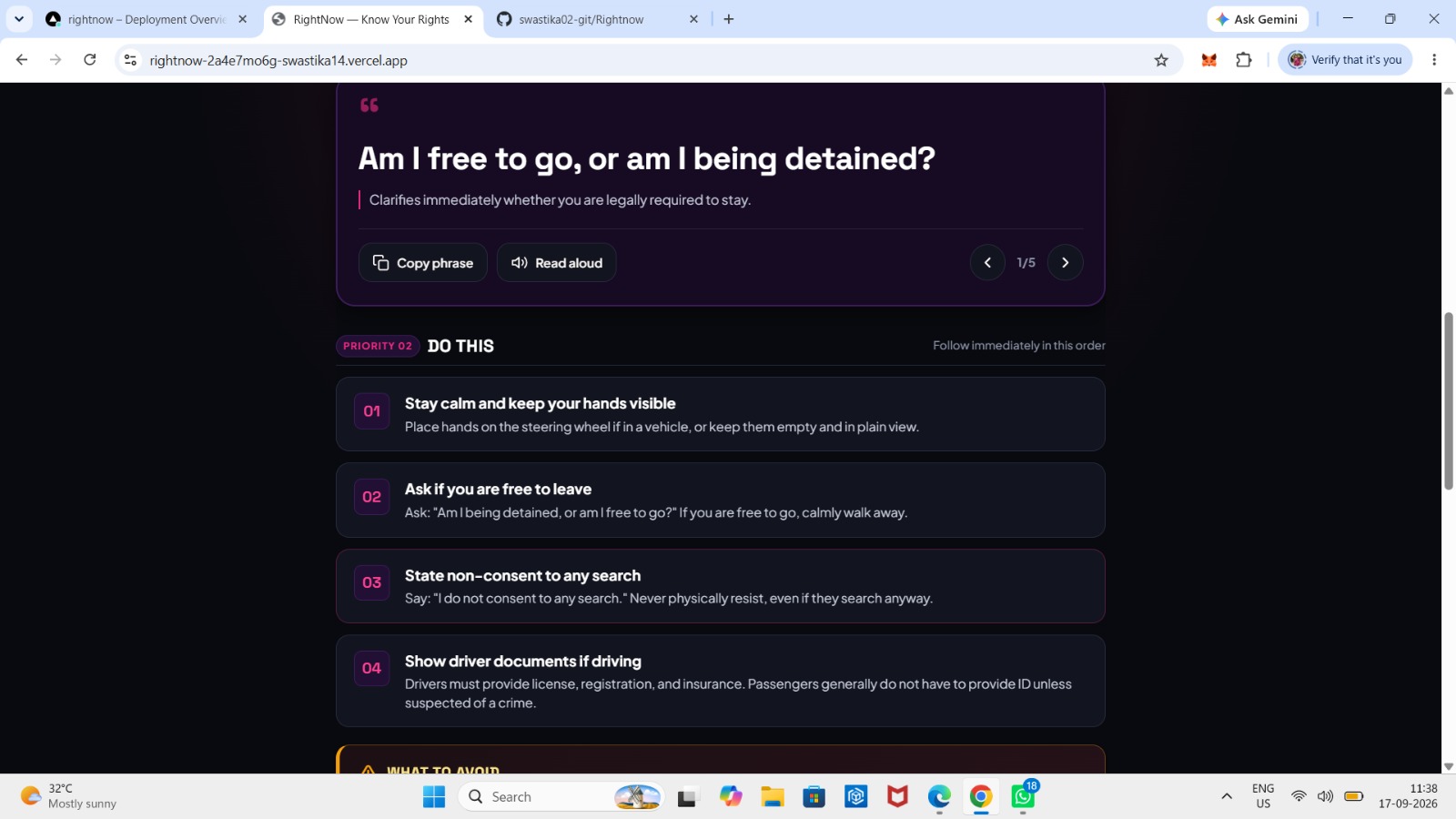
instructions on how to react based on the legal way one is being dealt with
-
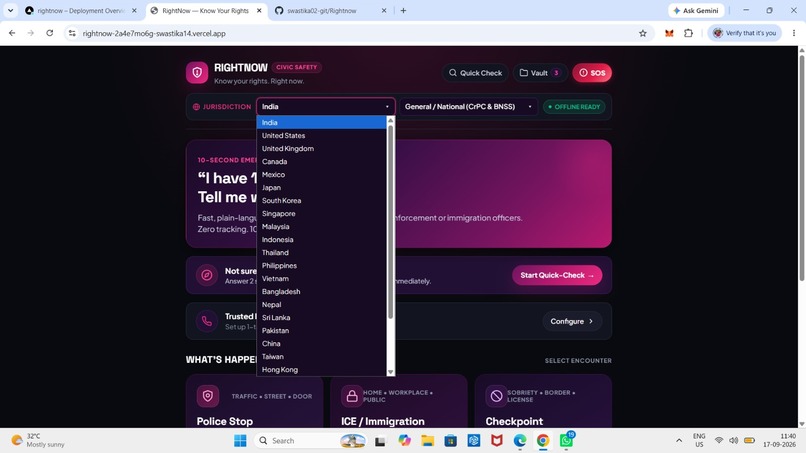
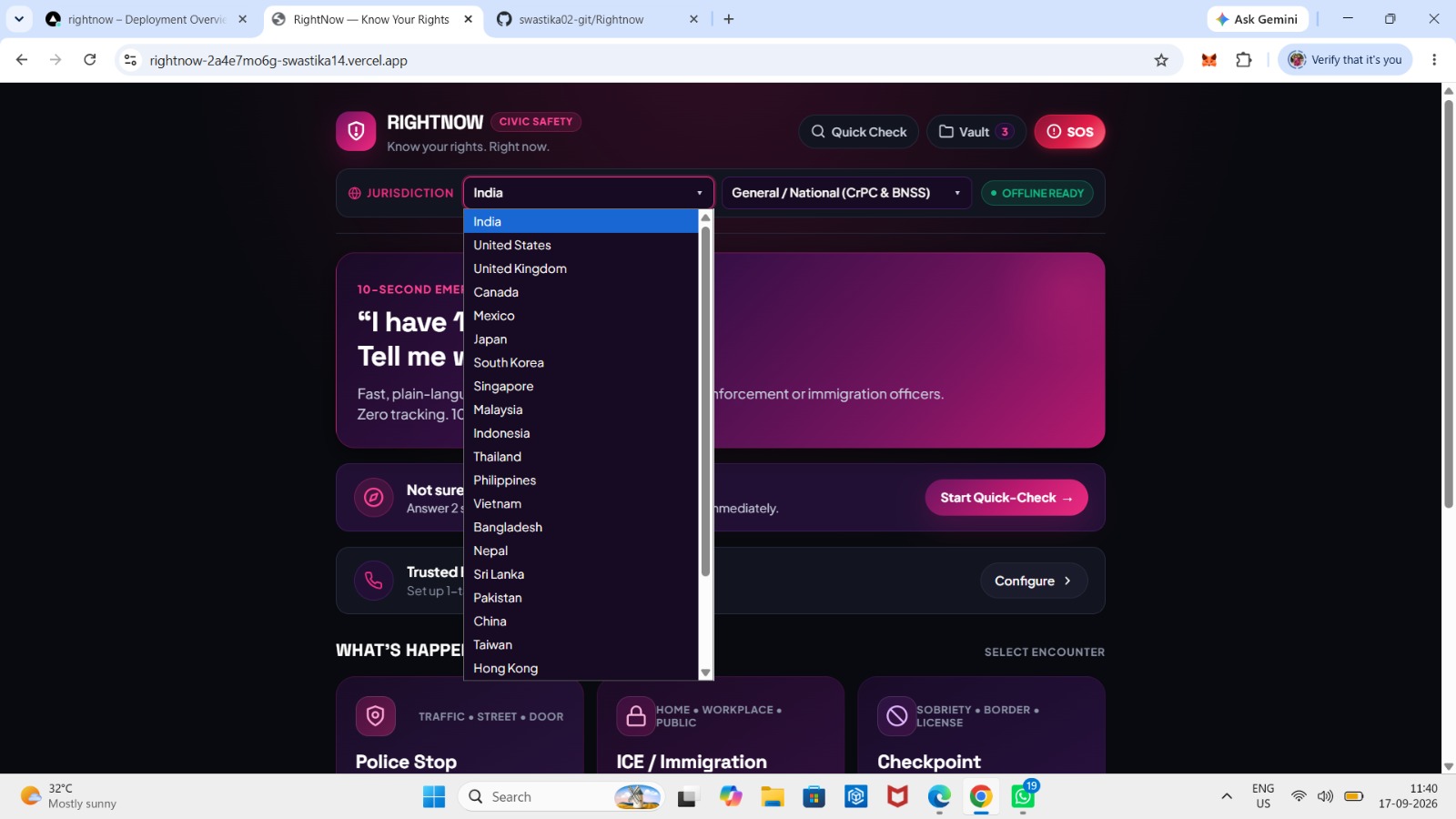
a lot of places option one can choose from to get that place specific help in legal things
-
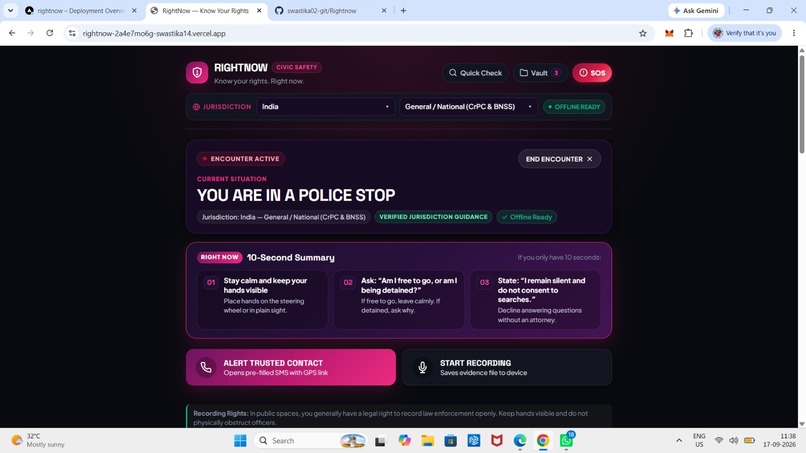
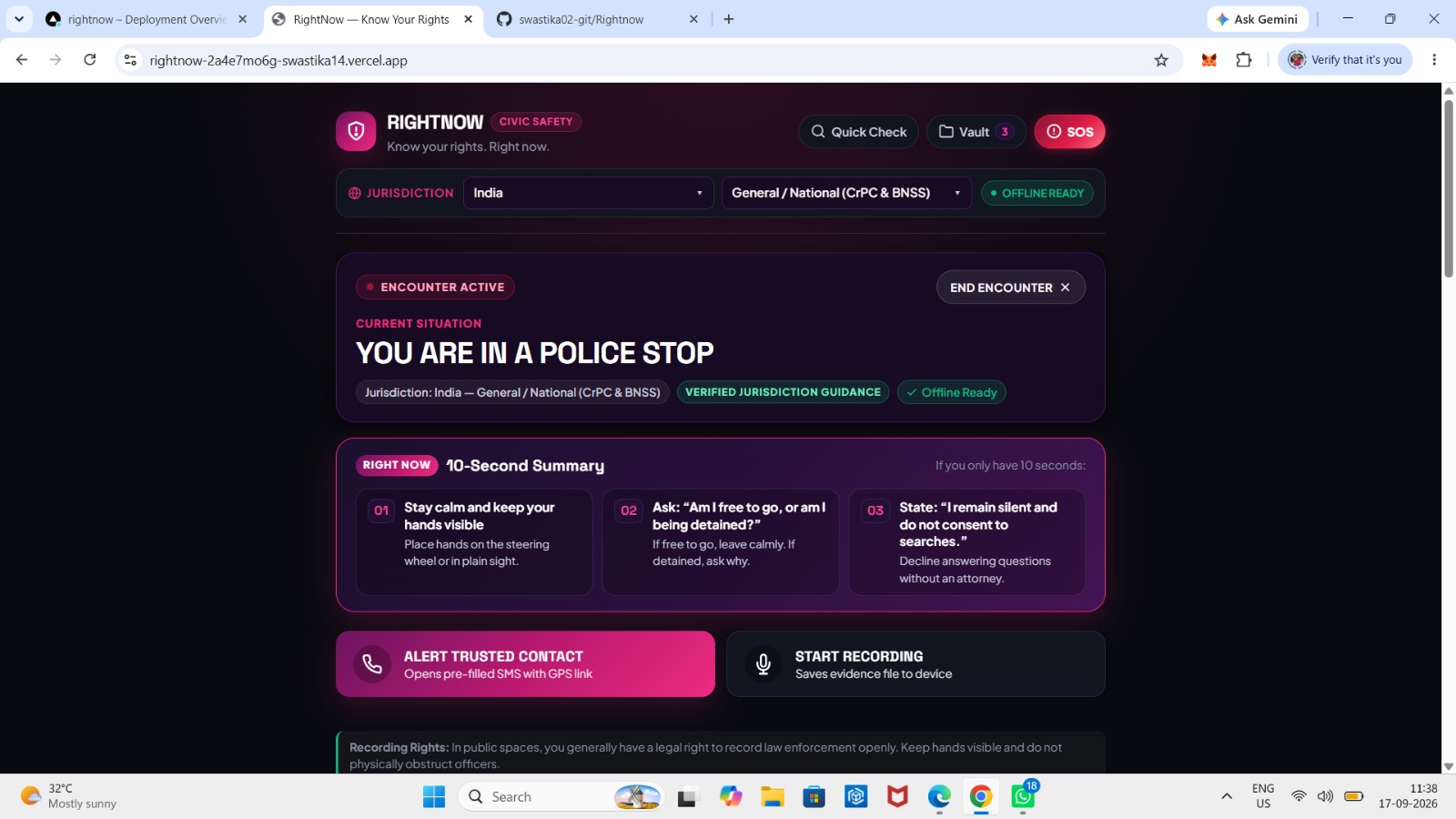
example incident of a police stop
-
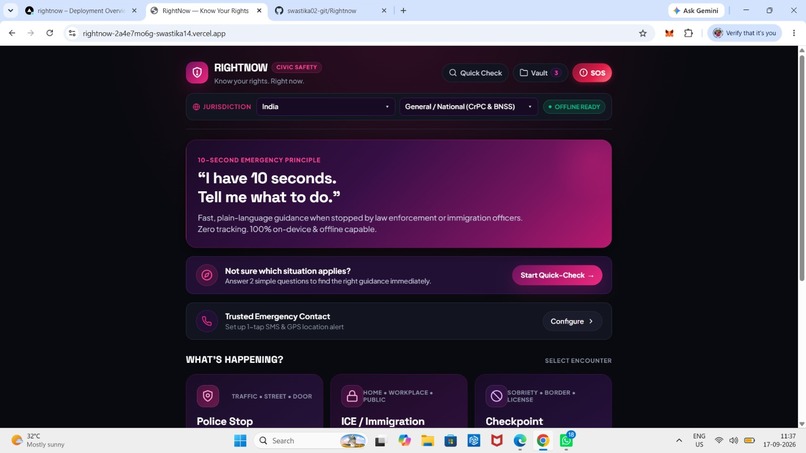
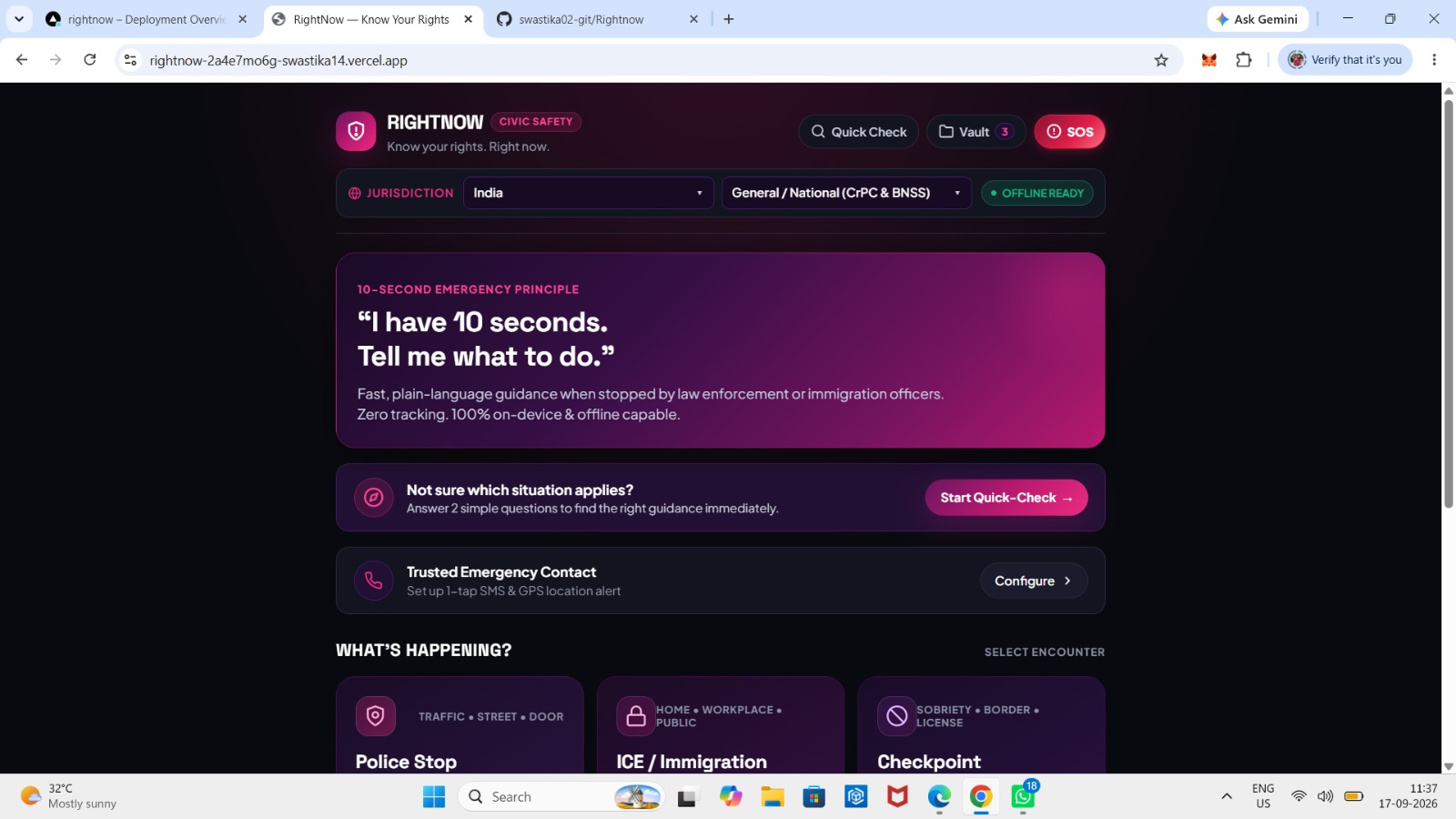
front screen when user opens the website
In a stressful situation such as a police stop or checkpoint, knowing your rights is important — but finding reliable information quickly can be difficult. Legal information is often spread across lengthy articles and resources that aren't designed for someone who needs an answer right now.
That was the idea behind RightNOW.
We wanted to create a tool where a person doesn't have to search through pages of legal information. Instead, they can start with what is happening to them, get relevant general rights information, see practical steps they can consider, and access short phrases they can use in the situation.
How We Built It
We built RightNOW as a lightweight, mobile-first web application using HTML, CSS, and JavaScript.
The experience is organized around scenarios rather than traditional menus. Users can choose situations such as:
- Police stops
- Checkpoints
- Immigration-related encounters
- Other common rights-related situations
We also incorporated state-specific notes, scripted phrases, emergency-contact messaging, and local audio recording.
A major part of the design was making the app fast and usable with one hand. Important actions and information are surfaced first instead of being buried inside long pages.
We also designed the application to work offline-friendly, so that essential guidance can remain accessible when connectivity is limited.
What Inspired Us
The project came from a simple observation: having information is not the same as being able to use it when you need it.
In a stressful situation, people may not have the time or focus to read a long legal document. We wanted to explore how technology and thoughtful UX could make important information more approachable without turning the experience into another complicated information portal.
This led us to design RightNOW around a simple flow:
Situation → Rights → What to do → What to say → Next step
What We Learned
One of our biggest lessons was that UX can be just as important as the information itself.
Initially, it was tempting to include as much information as possible. But while building the application, we realized that more information does not necessarily make a product more useful. We had to decide what a user should see first, what could be placed deeper in the interface, and how to communicate information without overwhelming them.
We also learned how much thought goes into designing for stressful situations. Things such as button placement, readability, navigation depth, and the number of decisions presented to the user can significantly change the experience.
From the technical side, we gained more experience with structuring a JavaScript application, organizing scenario-based data, building responsive interfaces, and thinking about offline-capable web experiences.
Challenges
The biggest challenge was balancing simplicity with completeness.
Rights and legal procedures can vary depending on the situation and jurisdiction, so we had to structure the content carefully rather than presenting everything as one universal set of rules. We focused on providing general informational guidance and clearly separating scenario and state-specific information.
We also had to rethink the interface several times. Our early approach looked more like a conventional information website, but we realized that it did not match the urgency of the problem. That pushed us toward a more action-oriented design.
The Result
RightNOW is our attempt to make important rights-related information easier to reach at the moment it matters.
It isn't intended to replace a lawyer or provide personalized legal advice. Instead, it gives users a clear starting point: understand the situation, find relevant general information, consider practical next steps, and access useful phrases when they need them.
Building RightNOW taught us that sometimes good technology isn't about adding more features. It's about taking something complicated and making it faster to access, easier to understand, and easier to act on.
Built With
- api
- css
- html
- javascript
- localstorage
- mediarecorderapi
- pwa
- webapp

Log in or sign up for Devpost to join the conversation.