-
-
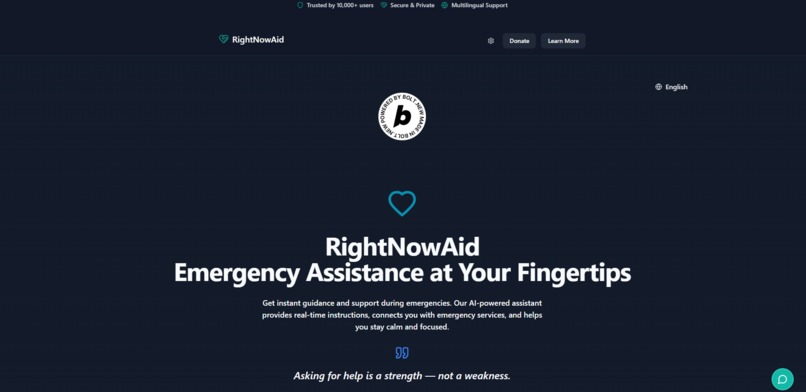
Home screen
-
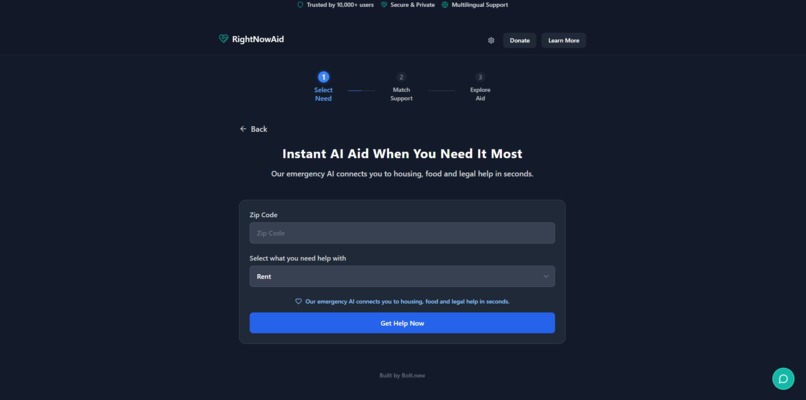
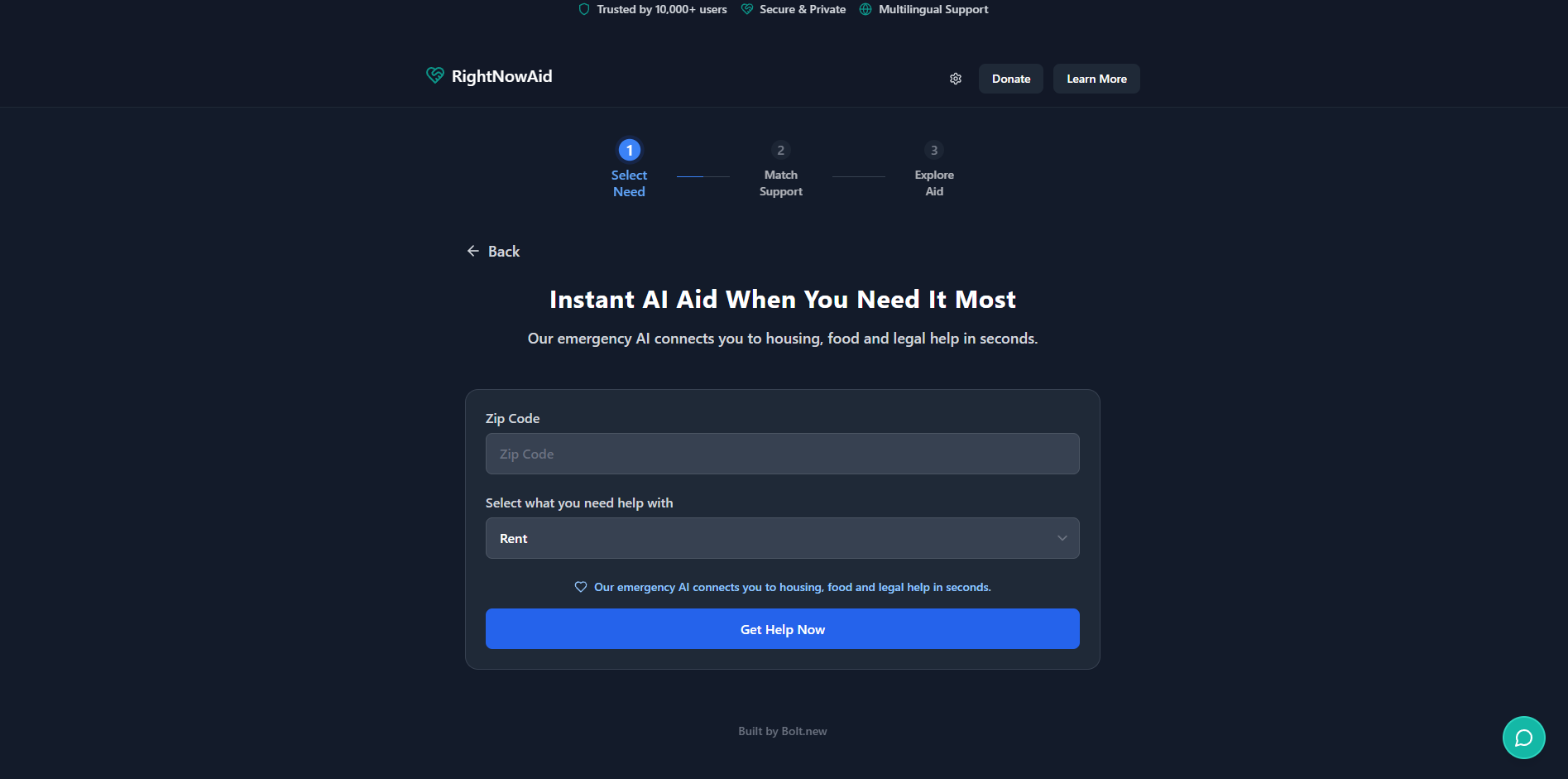
Zip Code input screen
-
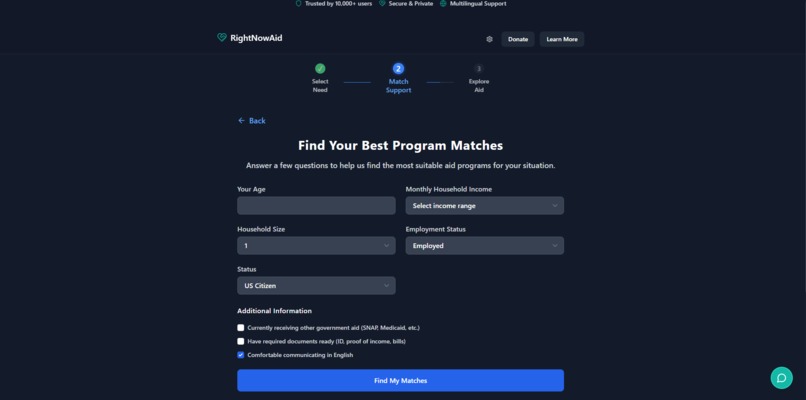
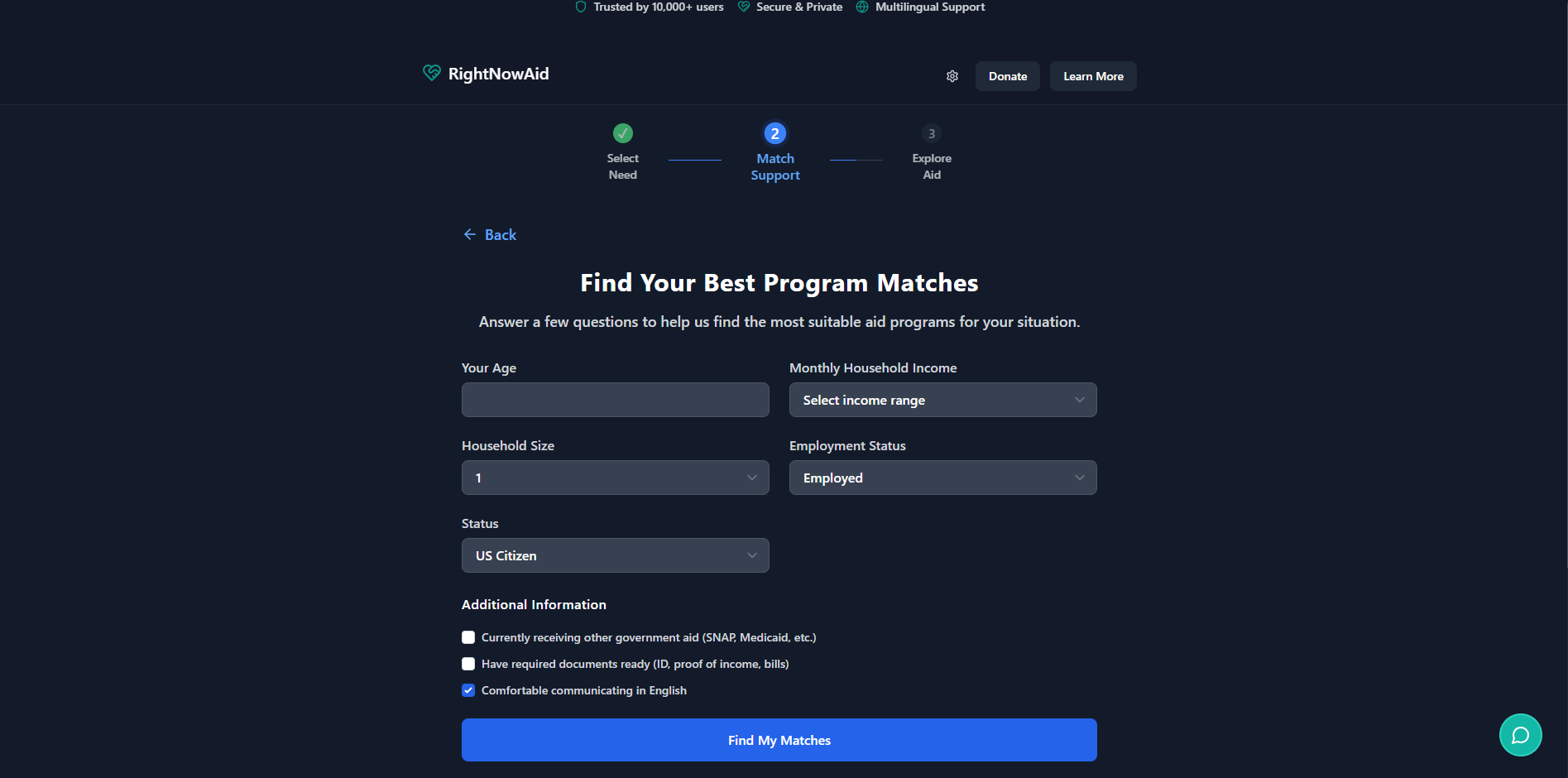
Match screen
-
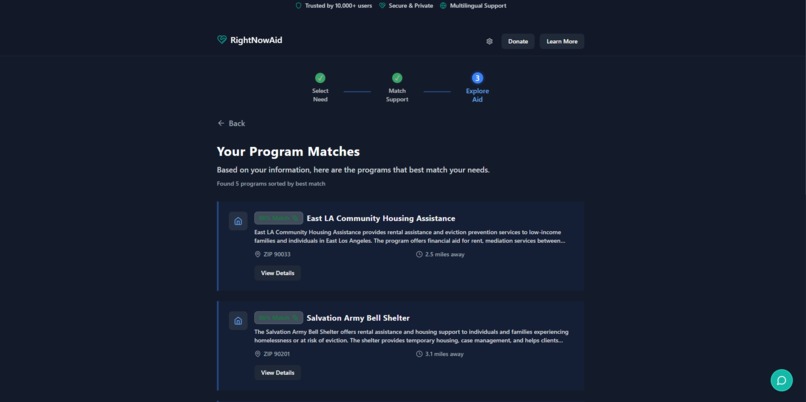
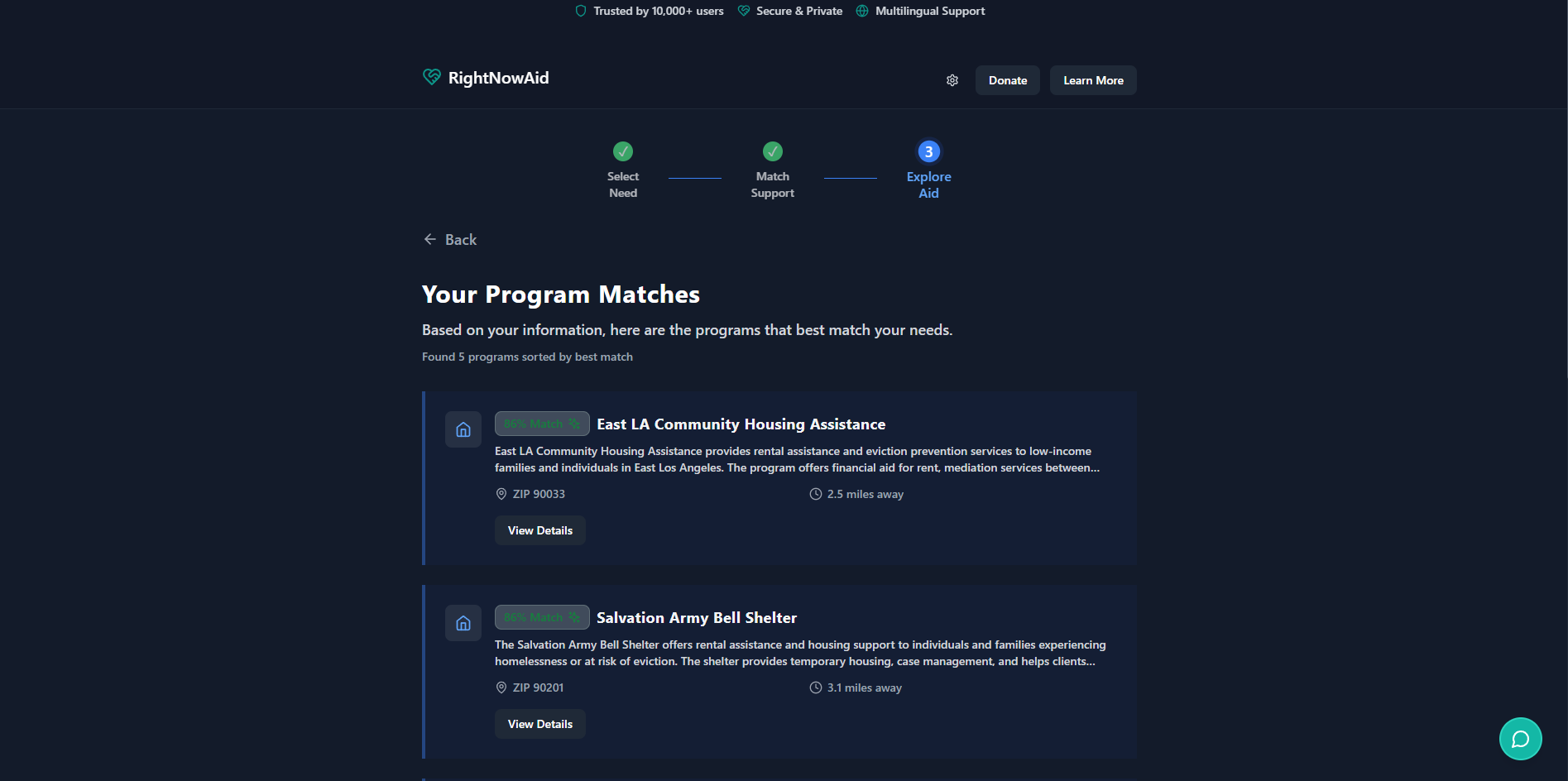
Results screen
-
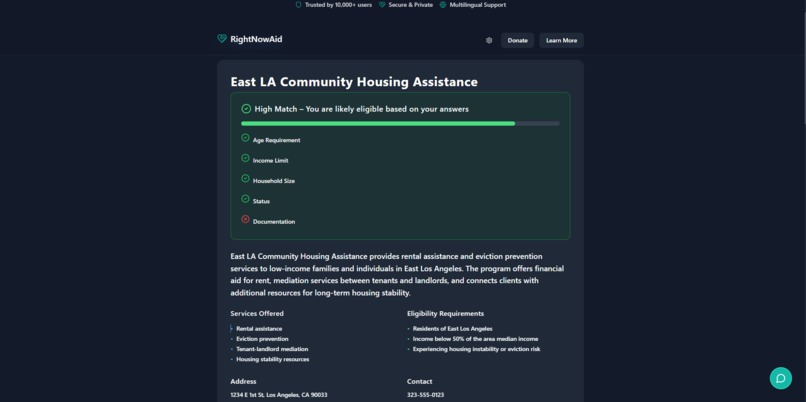
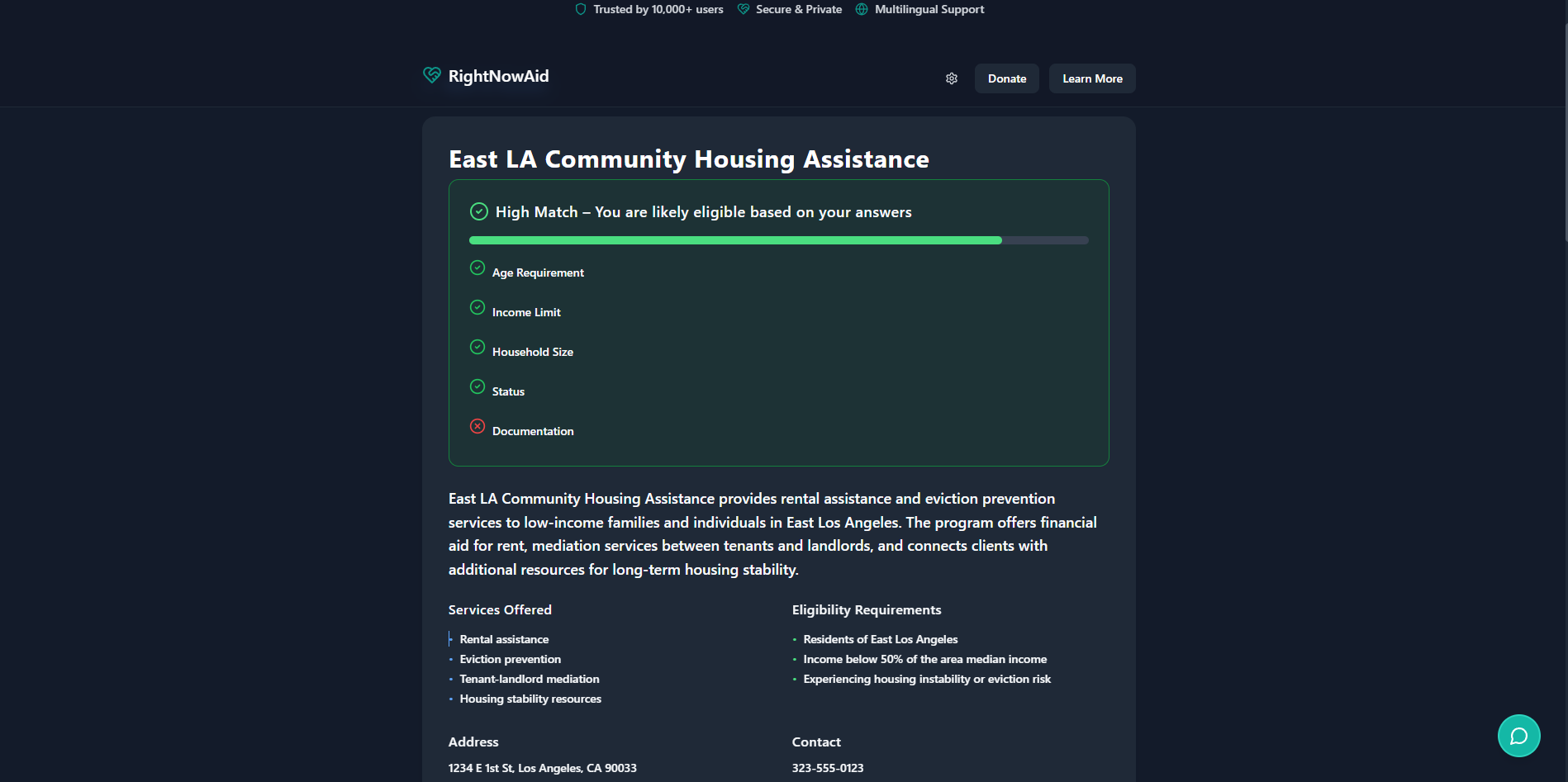
Details screen
-
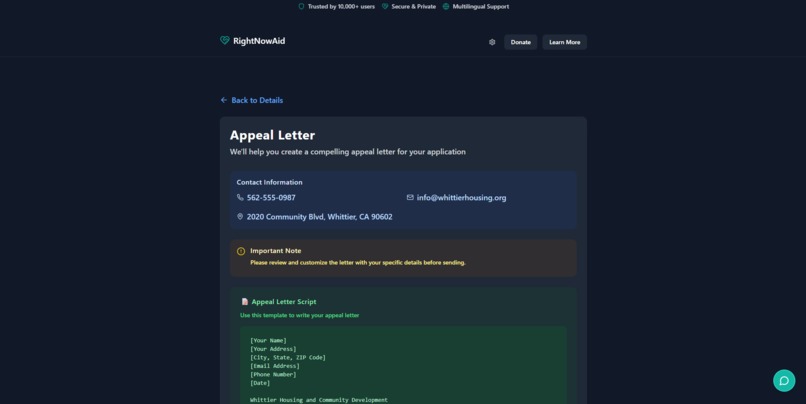
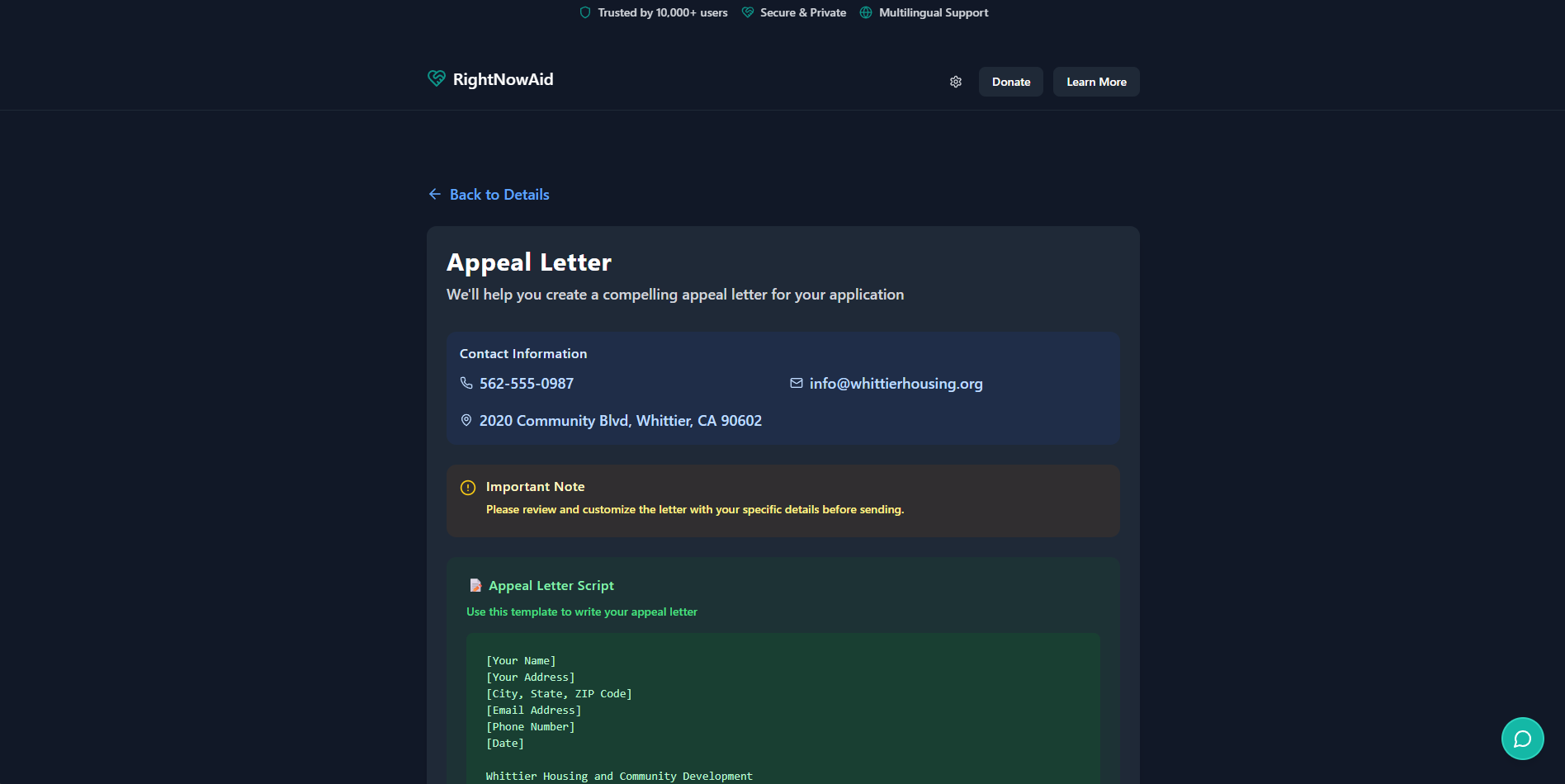
Appeal Letter screen
-
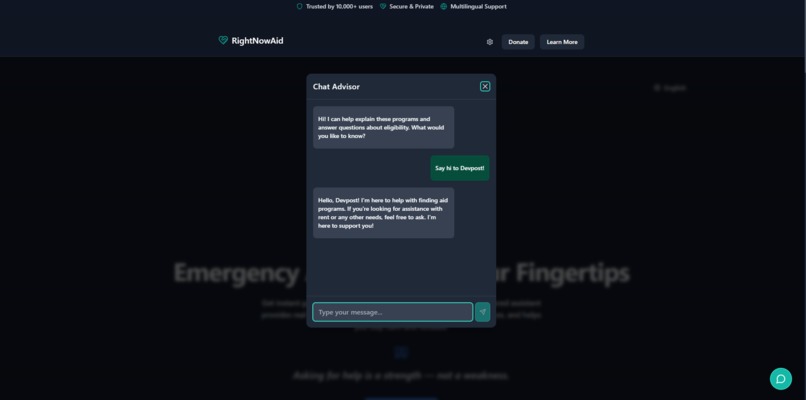
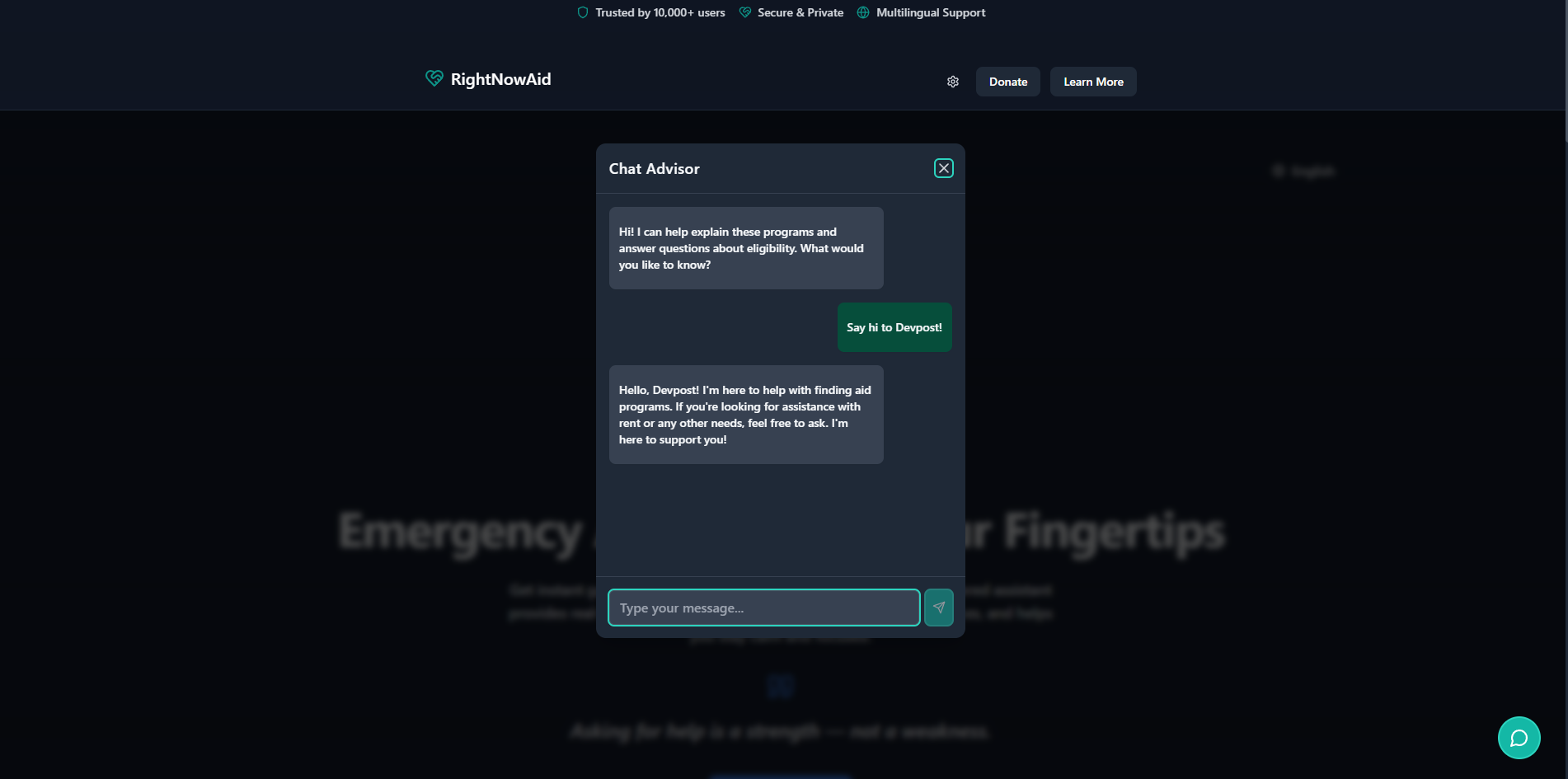
Chat Advisor screen
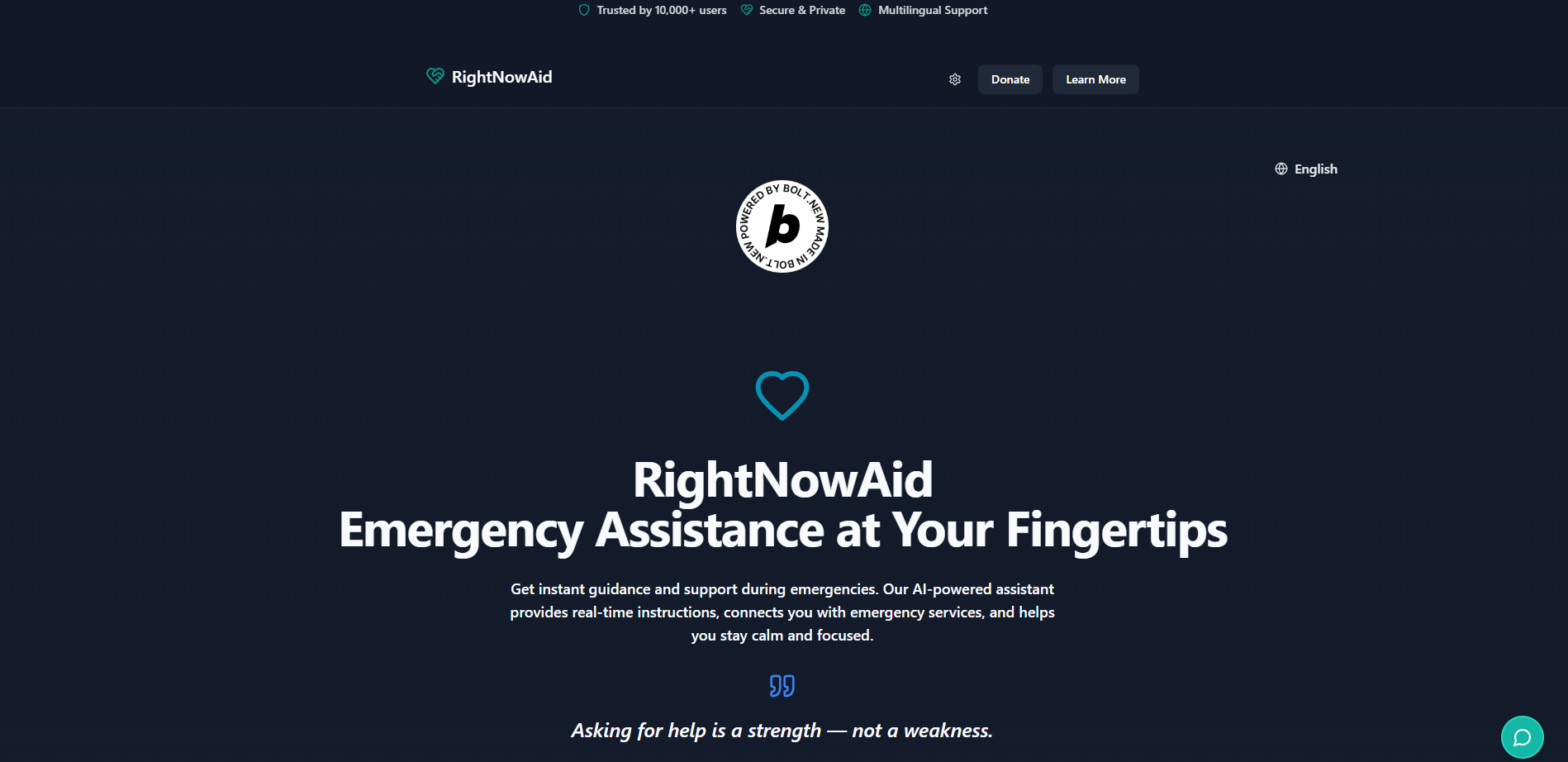
Inspiration
I grew up in East Los Angeles, the youngest of five, raised by an immigrant single mother working three jobs. When she was diagnosed with breast cancer, two jobs disappeared, our income collapsed, and we moved every few months searching for cheaper rent. My mother never found the safety-net programs she qualified for. She is not alone: 25% of L.A. County households or about 830,000+ families face food insecurity. Statewide, 1.20+ million extremely-low-income renter cannot afford average rents in any county, while California's job market has lost 33,000 positions in 2025 and unemployment sits at 5.3%. Many households avoid benefits altogether: roughly 35% families who qualify for benefits report skipping applications out of fear or confusion that they may not qualify. RightNowAid exists so qualified but uninformed families, regardless of language or status, can instantly discover food, shelter, legal help, and job resources without the maze my mother endured.
What it does
RightNowAid is an AI-powered crisis assistant that instantly matches people in urgent need with local help — in their language, with zero confusion.
AI Crisis Matching — Enter a ZIP code and pick a need; RightNowAid finds nearby food banks, job centers, free legal clinics and more in seconds.
Conversational Advisor — GPT-4o explains next steps in plain language.
Instant Call Scripts & Appeal Letters — Users get AI-generated scripts for calls and multilingual PDF letters to advocate for aid without awkward phone calls.
Multi-language Support — English, Spanish, Chinese, Vietnamese, Filipino, Korean, and Arabic — chosen to support immigrant and low-literacy communities most overlooked.
Simple UX for Crisis Situations — Clean design, large text, and minimal steps to get help fast.
How I built it
Bolt.new — Designed and published responsive screens, using TailwindCSS for WCAG-AA contrast and clarity.
Supabase — Stores user queries and program info; serverless Edge Functions communicate with GPT-4o for instant answers.
OpenAI GPT-4o — Powers the crisis advisor, program matching, call script generator, and appeal letter writer.
Netlify — Deploys the static app with HTTPS and CI/CD from GitHub.
Figma — Used for wireframes, pitch slide deck, and branding.
Challenges I ran into
Feature Cuts & Deadline Pressure — As my first real end-to-end build, I had to drop features like the Tavus video advisor, real-time voice input, and advanced fallback APIs to meet the submission deadline.
AI Bugs & Language Issues — Fine-tuning the AI to provide clear, relevant matches in multiple languages caused unexpected errors that required constant prompt tweaking.
UI Perfectionism — I battled my own OCD for polished screens but reminded myself that clarity for stressed users matters more than pixel-perfect design.
Deeply Personal Stakes — I’ve lived the experience of being unable to find help for rent, food, or legal protection. Building this for people like my family kept me going when debugging alone was overwhelming.
Accomplishments that I’m proud of
First fully functional app — Combining conversational AI, smart resource matching, and auto-generated scripts in one simple flow.
Full accessibility audit — Supports screen readers, keyboard navigation, and clear contrast.
Deployed with CI/CD — From Bolt to Netlify live domain in under 24 hours, auto-updating with each push.
Proof of concept for real impact — Demonstrates how AI can help vulnerable communities access aid with dignity.
What I learned
Prompt Engineering — Subtle wording adjustments significantly reduced AI latency and errors.
Serverless Edge is fast — Supabase functions outperformed heavy client-side fetches.
Design for real humans — Fancy features mean nothing if a stressed user can’t use them quickly.
Keep scope tight — This hackathon taught me to build the simplest version that works, then polish.
What’s next for RightNowAid
B2B Dashboard — For caseworkers and nonprofits to track client needs and progress.
Crowdsourced Program API — Verified volunteers can submit or flag resources to keep listings up to date.
Offline Mode (PWA) — Enables families without reliable internet to still find help.
Mobile App (Expo) — With push notifications, saved profiles, and donation options.
Partner Organization Logins — Allows nonprofits to claim, update, reach out and communicate to leads and manage their program listings securely.
More language Implementation — No one should be denied access to essential services due to language barriers. By broadening our language offerings, we aim to ensure that individuals with limited English proficiency can navigate and benefit from the resources they need without confusion or delay.
Built with care by someone who has been there.
Special thanks to my mother, whose strength and resilience inspired this project.
Built With
- algorandjs
- bolt.new
- figma
- githubactions
- netlify
- openai
- react
- supabase
- tailwindcss
- typescript


Log in or sign up for Devpost to join the conversation.