-
-
2
-
1
-
3
Inspiration
Many engineering applications technically meet system requirements on paper, yet still fail to run smoothly in real life.
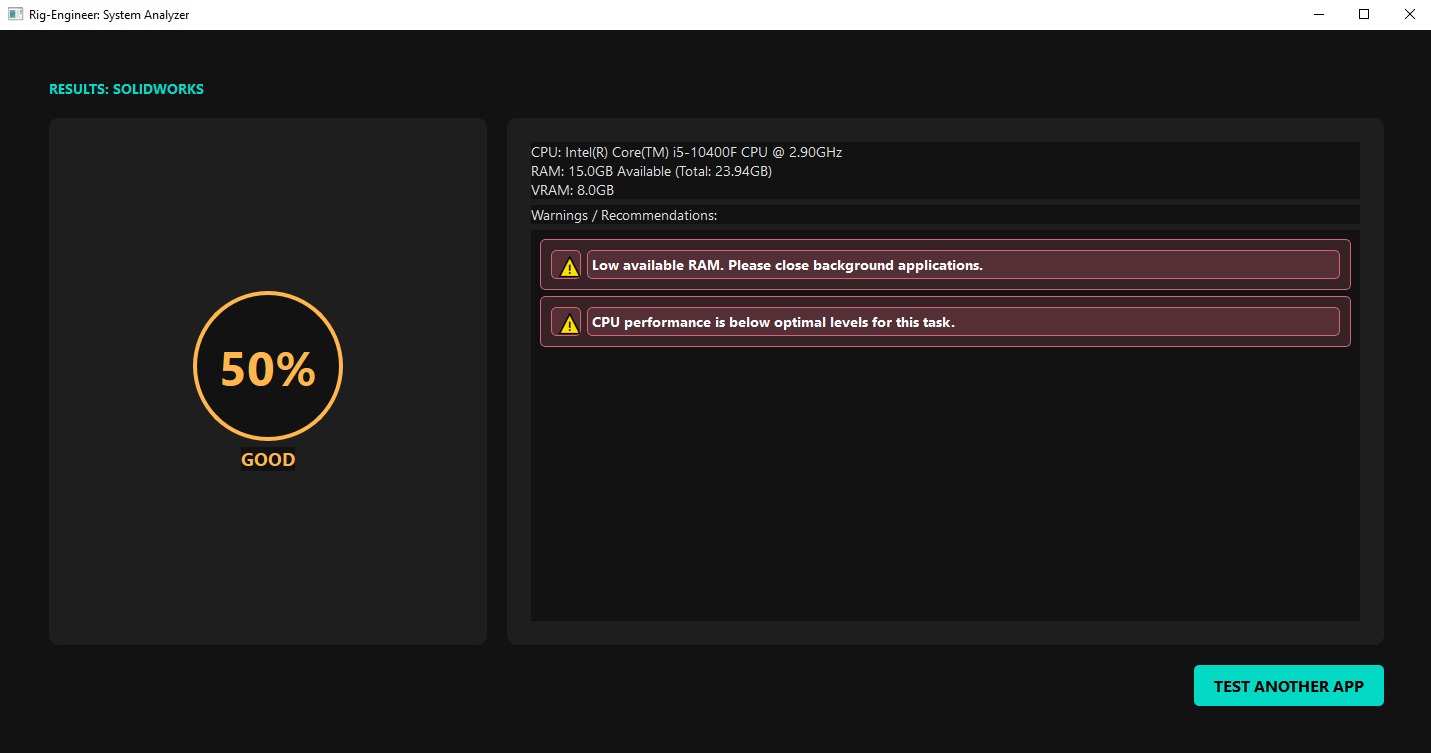
A system may have 32 GB of RAM, but if only 5 GB is actually free due to background processes, heavy engineering software can crash, freeze, or perform poorly.
As engineering students, we constantly faced this problem ourselves. We wanted a way to understand how ready a system truly is to run demanding applications — not theoretically, but in practice.
That need became the inspiration for Rig-Engineer.
What it does
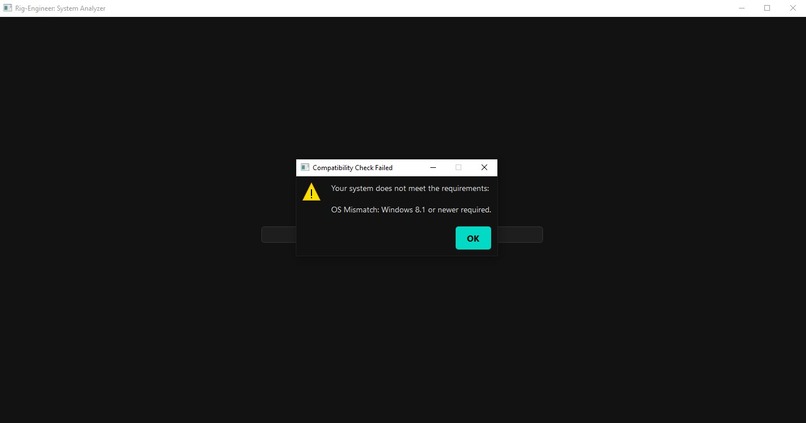
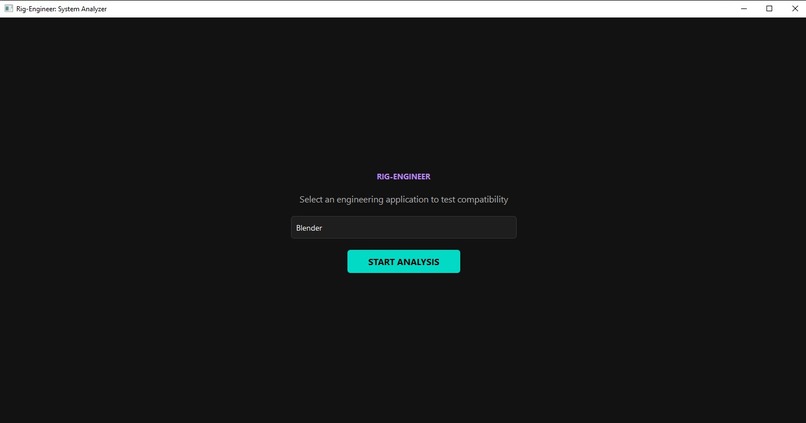
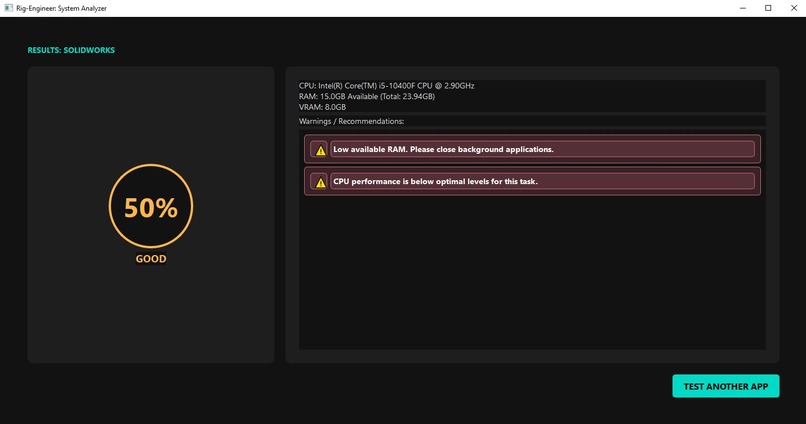
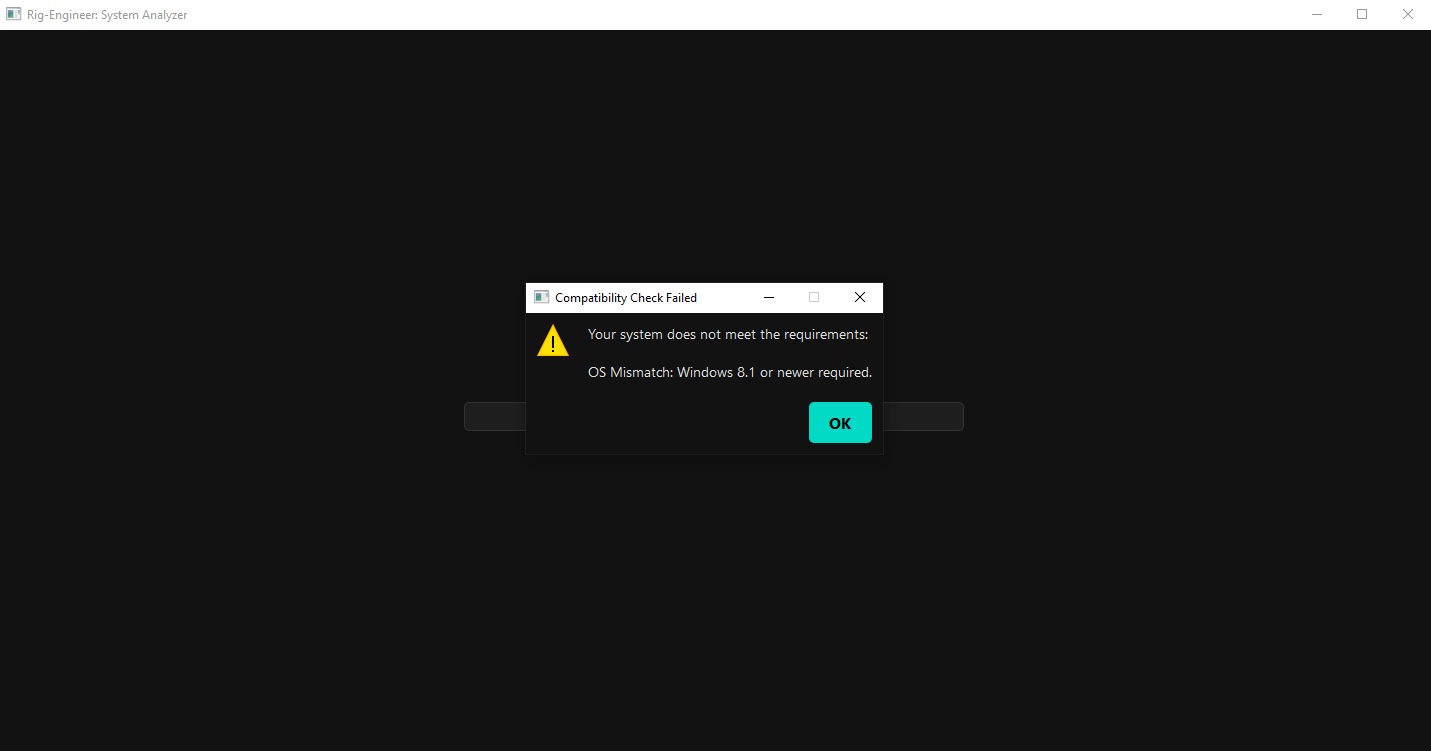
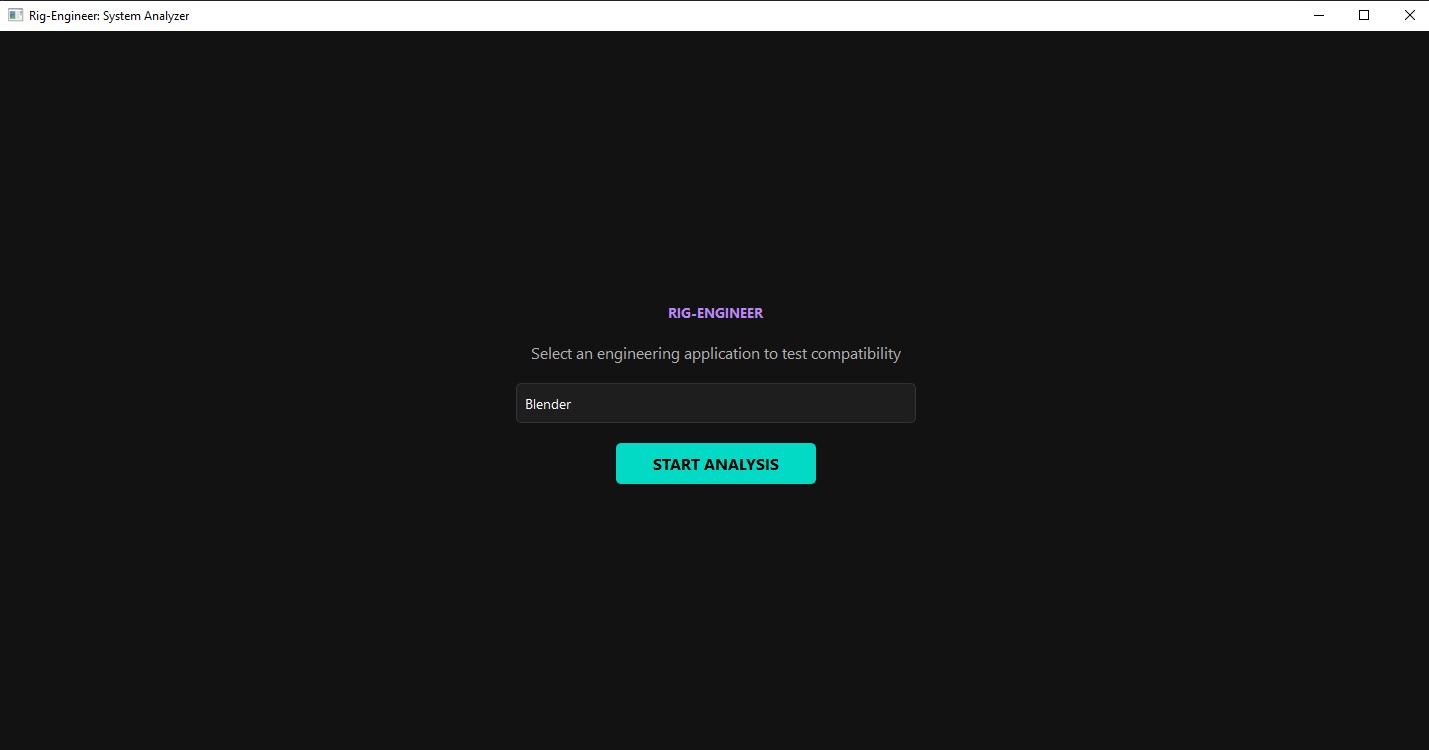
Rig-Engineer analyzes a computer’s real-time system readiness for engineering applications.
Instead of only checking theoretical hardware specs, it:
- Evaluates actual available resources
- Detects performance bottlenecks caused by background usage
- Provides insight into whether a system can realistically run demanding software smoothly
In short, Rig-Engineer answers the question:
“Is my system actually ready to run this application right now?”
How we built it
Rig-Engineer is a desktop application built with a strong backend focus.
- We collect live system data directly from the user’s computer
- CPU and RAM information is dynamically tested and analyzed
- GPU data was initially collected using the
GPUtillibrary
When we discovered that GPUtil did not properly detect AMD and Intel GPUs, we adapted our approach and:
- Retrieved GPU data directly from Windows via PowerShell
- Integrated this data into our backend to ensure accurate hardware detection
This hybrid approach allowed us to overcome library limitations and ensure reliable system analysis.
Challenges we ran into
- Hardware detection libraries not supporting all GPU vendors
- Learning backend development for a desktop application from scratch
- Working under tight hackathon time constraints
- Designing a system that reflects real-world performance, not just specs
Overcoming these challenges required fast learning, experimentation, and adapting our technical approach quickly.
Accomplishments that we're proud of
- Building a fully working and useful application in our first hackathon
- Creating a tool that solves a real problem we personally face
- Successfully pulling dynamic system data from the user’s machine
- Implementing CPU and RAM performance testing ourselves
- Designing a solid backend despite having limited prior experience
We are especially proud of the backend architecture and the fact that Rig-Engineer is something we can genuinely use in real life.
What we learned
- Desktop application backend development
- Collecting and processing system-level data
- Testing CPU and RAM performance dynamically
- Working with OS-level tools like PowerShell
- Problem-solving under pressure in a hackathon environment
This project significantly improved our confidence and technical skills.
What's next for Rig-Engineer
We plan to continue developing Rig-Engineer by:
- Supporting more engineering and professional software
- Expanding performance and stress testing capabilities
- Improving system readiness scoring
- Continuously updating the application based on real-world use
Our goal is to turn Rig-Engineer into a tool that can be widely used in the engineering world.
Built With
- git/github
- gputil
- json
- psutil
- pyqt6
- python-3.10+
- setuptools
- speedtest-cli
- vs-code


Log in or sign up for Devpost to join the conversation.