-
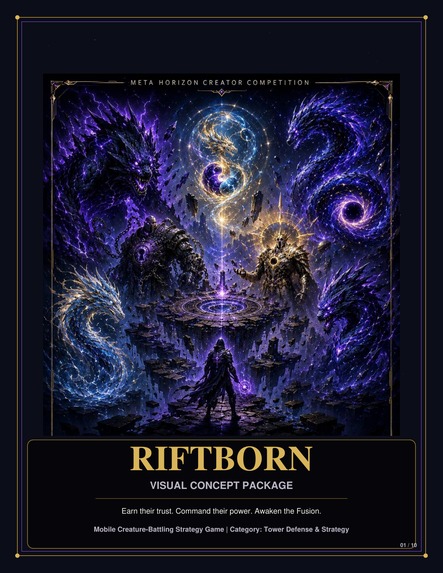
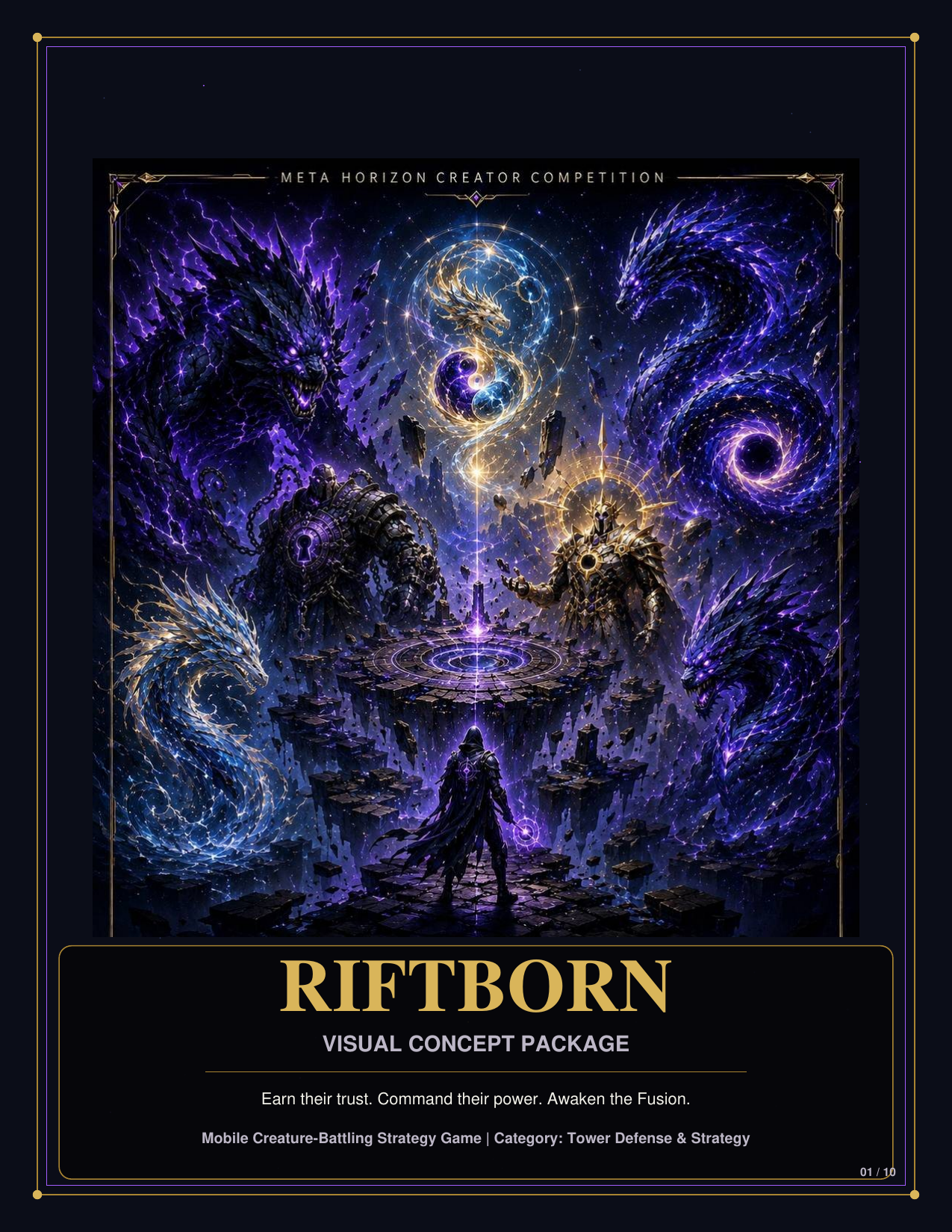
A Riftwalker faces the Rift Arena as ancient Origins gather around the collapsing Realms.
-
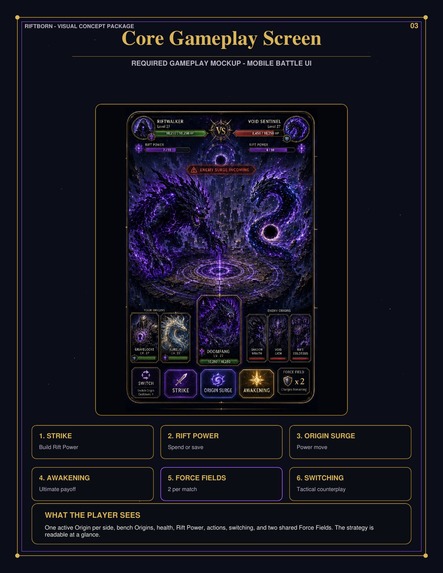
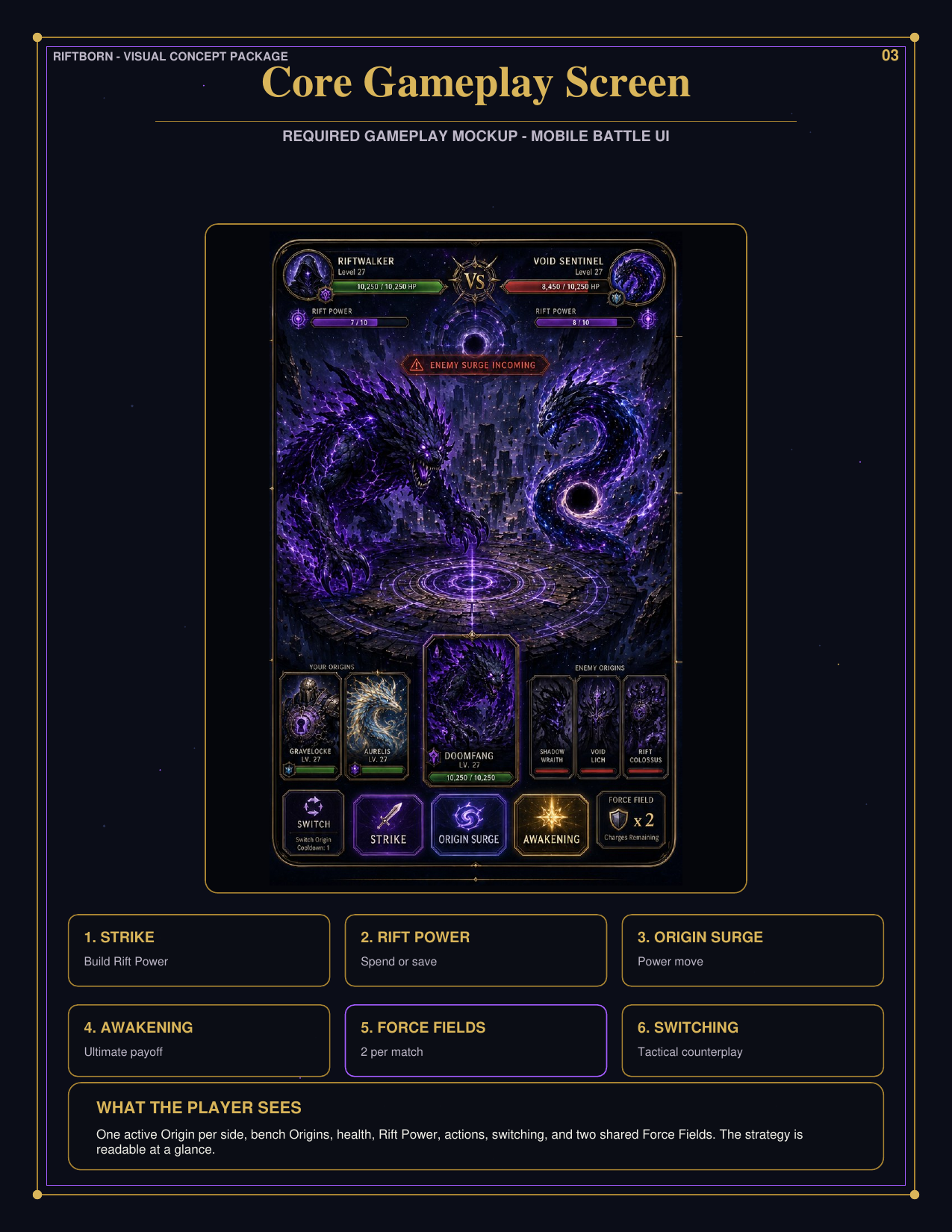
Mobile battle concept showing Strike, Rift Power, Origin Surge, Awakening, Force Fields, and 3-Origin team structure.
-
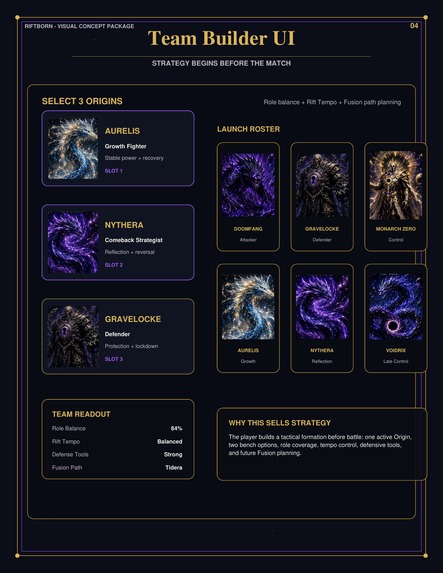
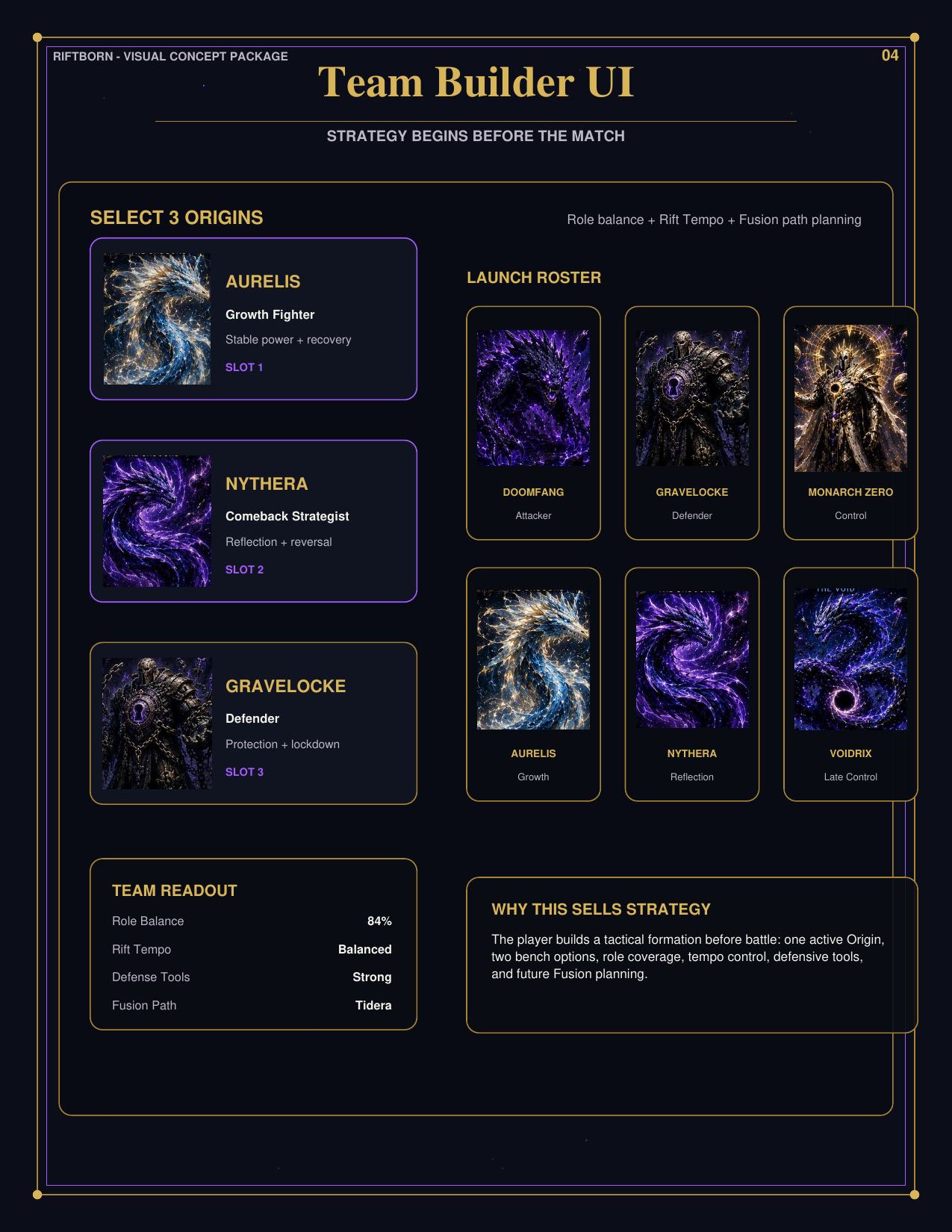
Players build a 3-Origin team by balancing roles, Bond progress, and strategic synergy before battle.
-
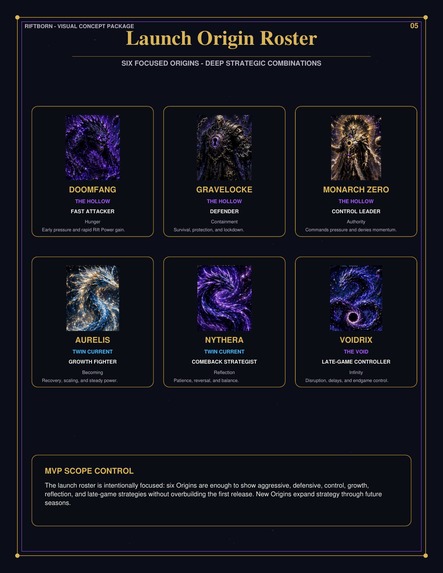
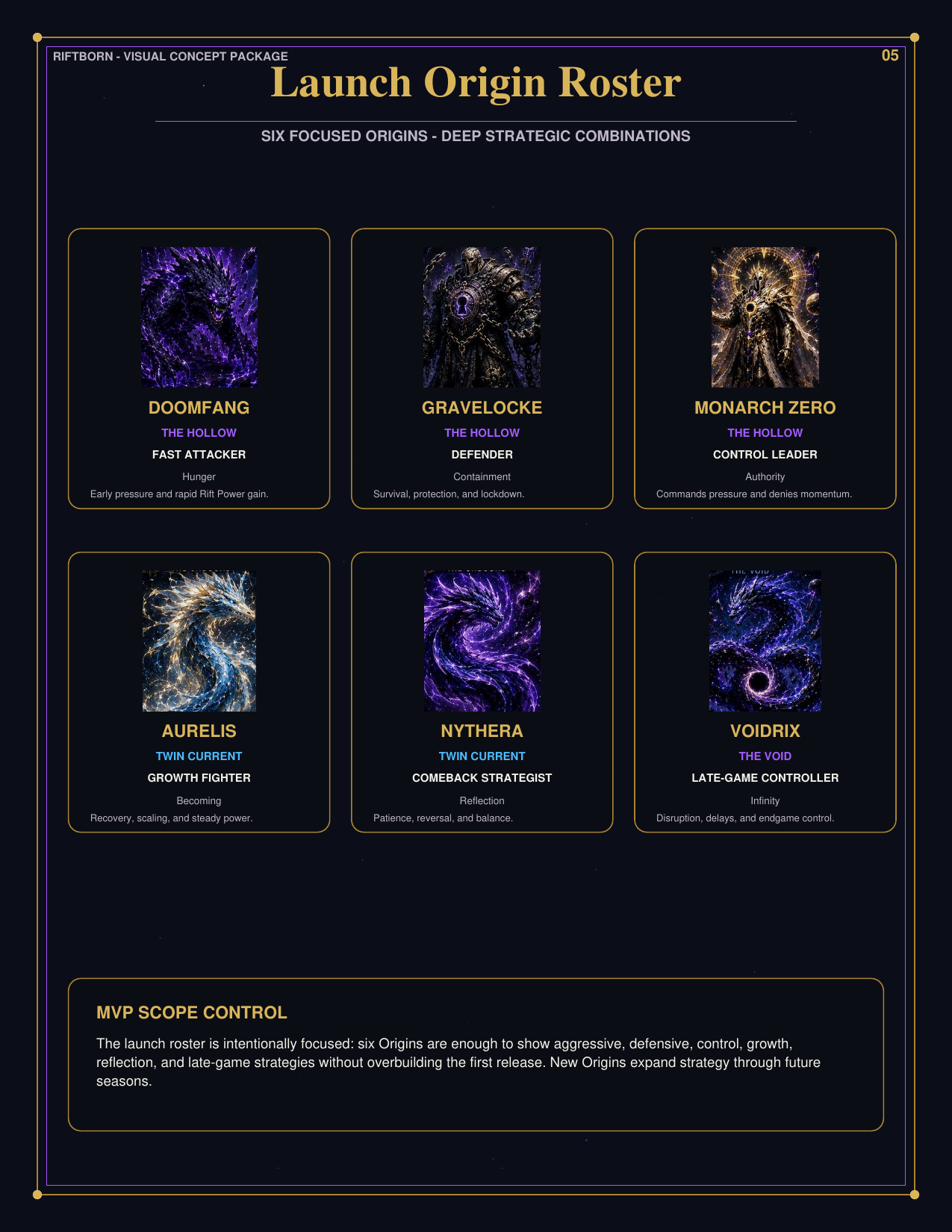
The focused MVP roster: Doomfang, Gravelocke, Monarch Zero, Aurelis, Nythera, and Voidrix.
-
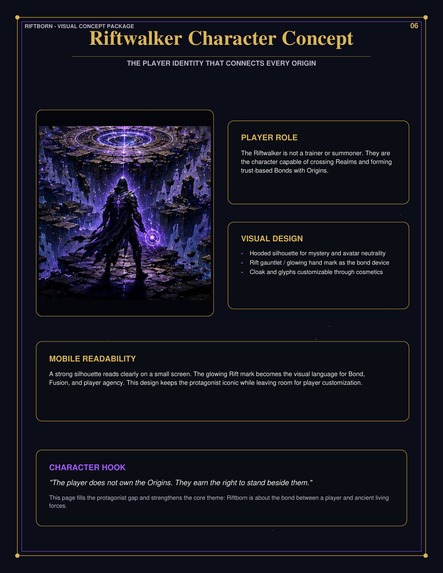
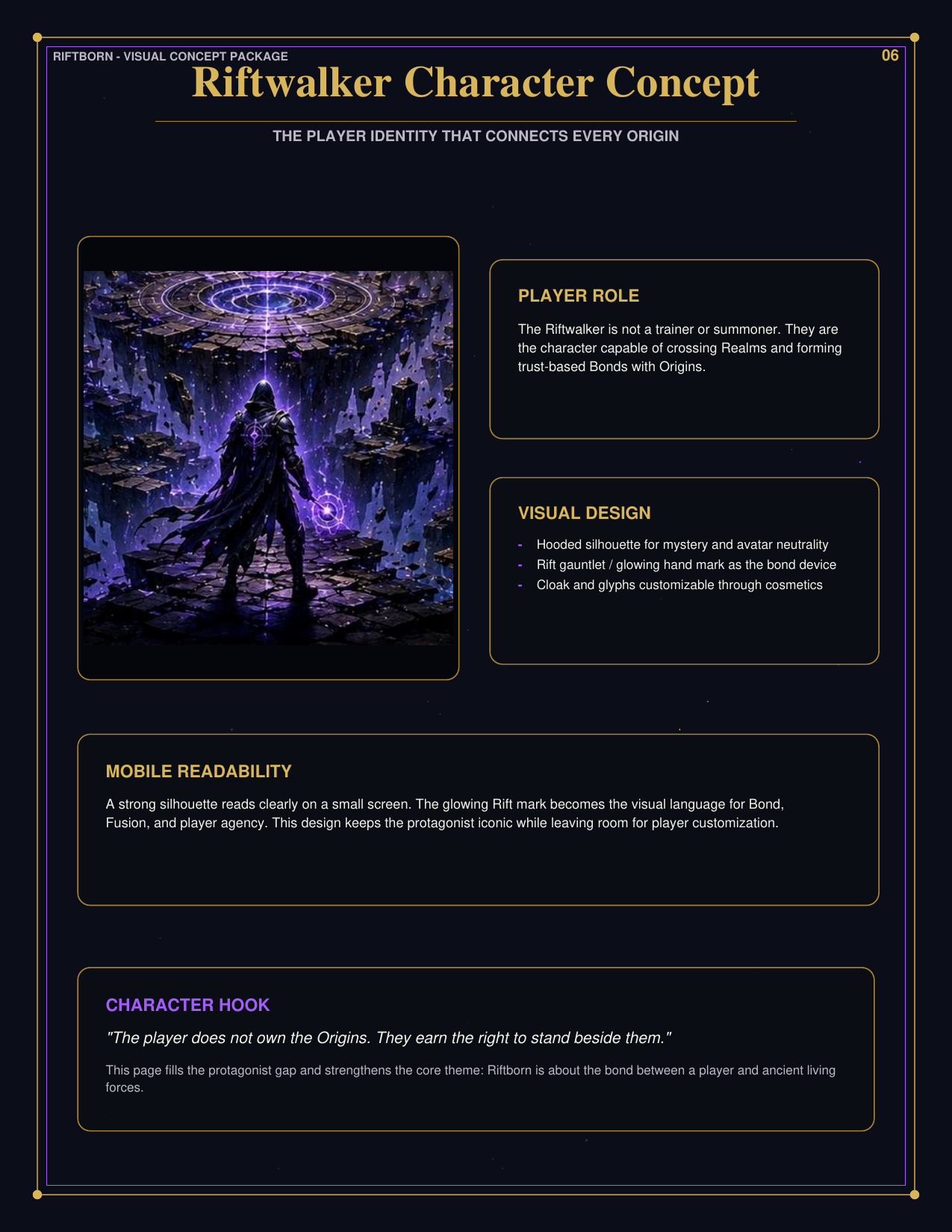
The Riftwalker represents the player: the human link between ancient Origins, Bond progression, and Fusion.
-
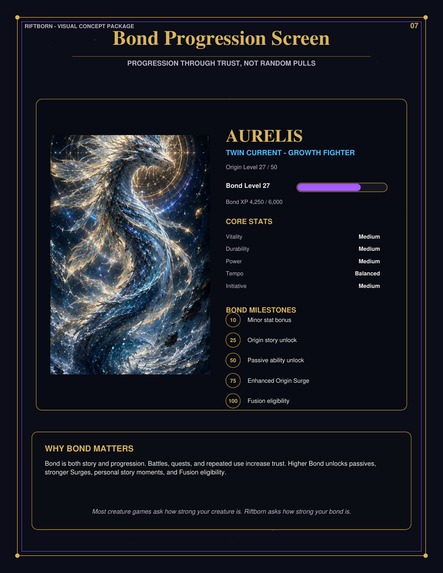
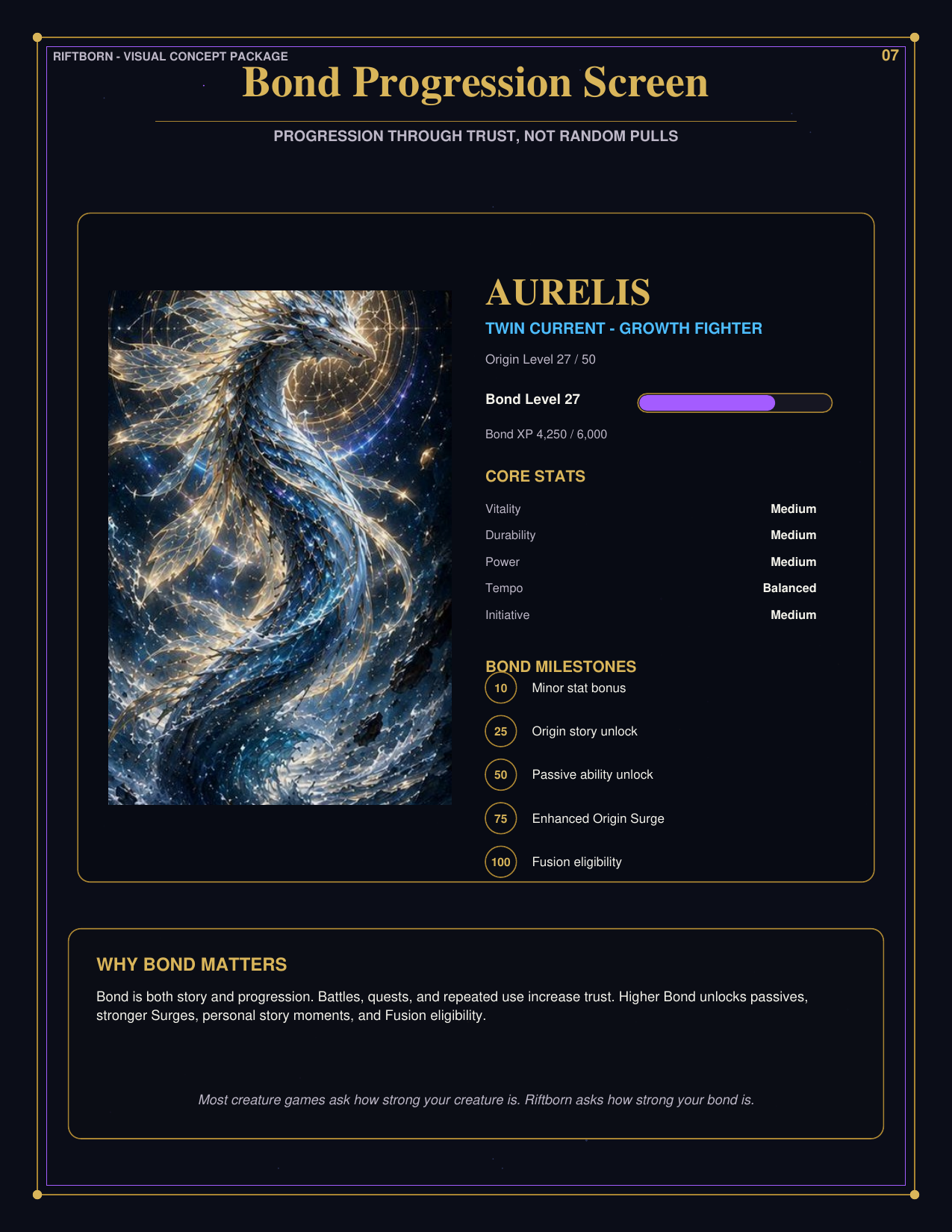
Bond turns trust into progression, unlocking bonuses, story moments, passives, enhanced Origin Surge, and Fusion eligibility.
-
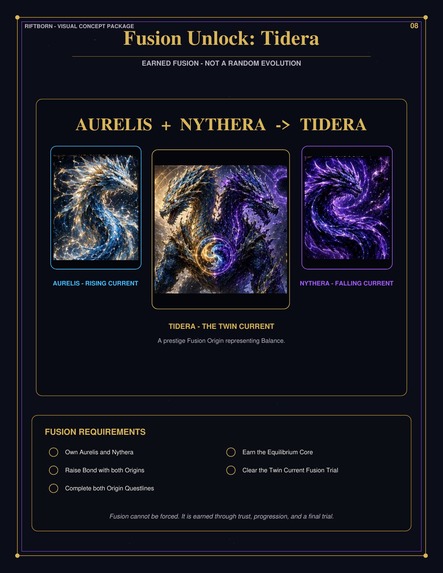
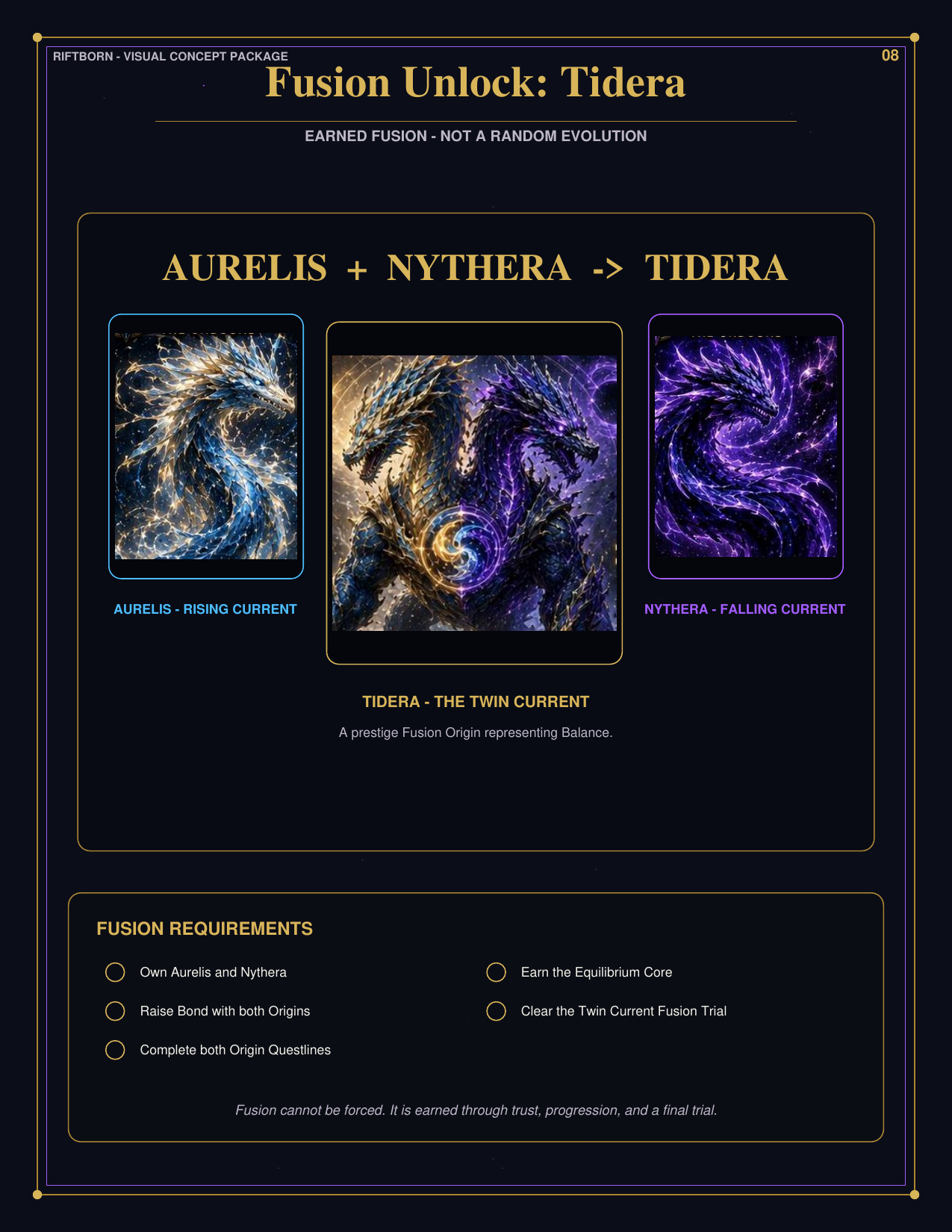
Aurelis + Nythera = Tidera. Fusion is earned through Bond, Origin Quests, and the Twin Current Fusion Trial.
-
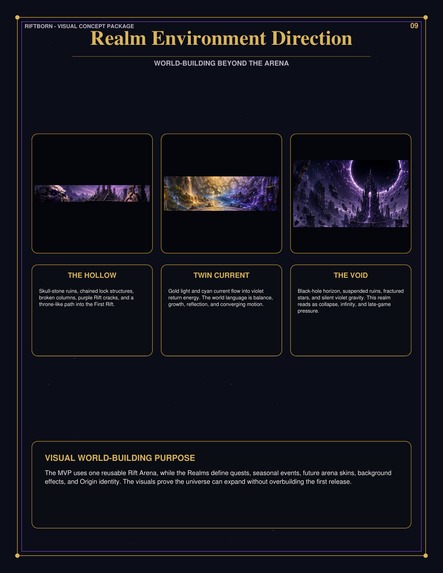
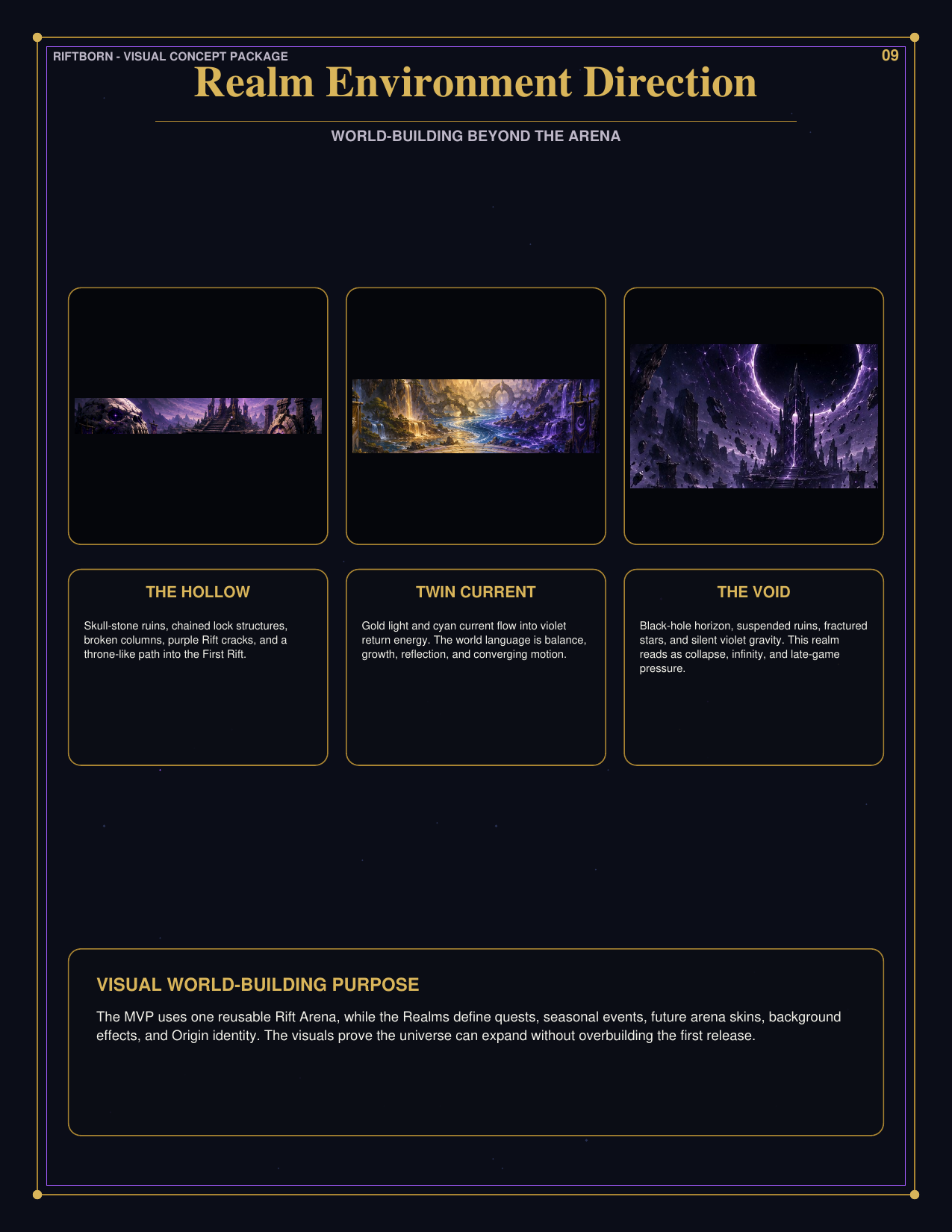
The Hollow, Twin Current, and The Void show how each Realm creates a distinct visual identity and Origin theme.
-
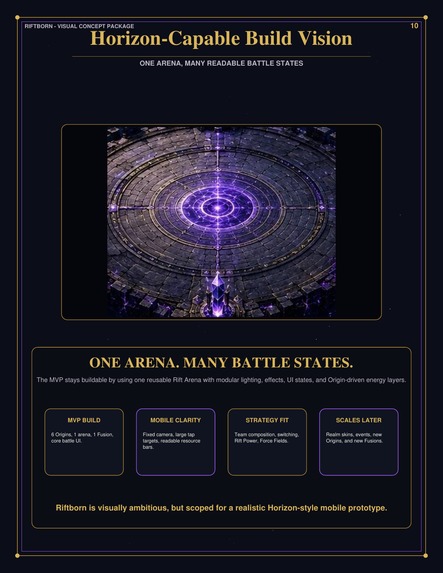
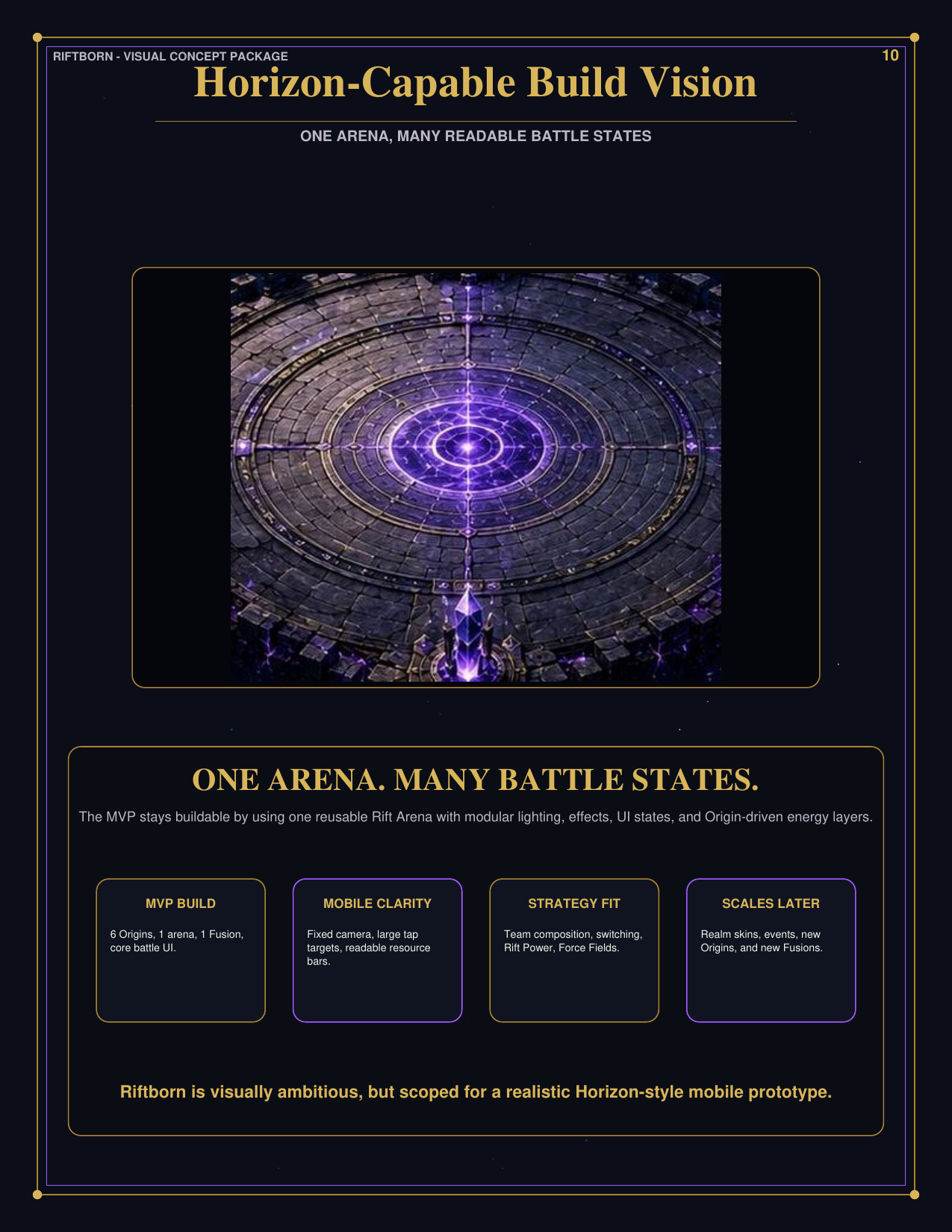
One reusable Rift Arena supports mobile clarity, UI-driven strategy, and future Realm-based visual states.
Riftborn
Riftborn is a mobile creature-battling strategy game concept built for the Meta Horizon Creator Competition. Players become Riftwalkers, rare individuals capable of forming Bonds with ancient beings called Origins. These Origins are not ordinary creatures — they are mythic forces given form, each tied to powers like Hunger, Containment, Authority, Growth, Reflection, Infinity, and Balance.
The core idea behind Riftborn is simple:
Earn their trust. Command their power. Awaken the Fusion.
Inspiration
Riftborn was inspired by the idea of creating a creature-battling game where the relationship between the player and their team matters just as much as strength. Many games focus on collecting stronger characters or chasing bigger numbers. I wanted Riftborn to ask a different question:
How strong is your Bond?
That question became the heart of the game. Instead of just using Origins as battle units, players must earn their trust, complete their Origin Quests, build a team, and unlock powerful Fusion forms through effort and mastery.
What the Project Does
Riftborn is designed as a mobile-first strategy battler. Players build a team of three Origins, but only one Origin is active at a time. Battles are built around decision-making, timing, and resource management.
Players use Strike to generate Rift Power, spend Rift Power on Origin Surge, save enough power for Awakening, switch Origins strategically, and defend against major attacks using limited Force Fields. Each player only has two Force Fields per match, so defensive timing becomes a major strategic decision.
The MVP focuses on six launch Origins:
- Doomfang
- Gravelocke
- Monarch Zero
- Aurelis
- Nythera
- Voidrix
The first major Fusion path is:
Aurelis + Nythera = Tidera
Tidera represents the long-term promise of Riftborn: Fusion is not simply given to the player. It is earned through Bond progression, Origin Quests, and the Twin Current Fusion Trial.
How It Was Built
This submission was built as a complete game design concept package rather than a playable build. I developed the core idea, combat structure, progression systems, Origin roster, Fusion system, visual direction, player journey, and production plan.
The final submission includes four required artifacts:
- Game Design Document — explains the core game concept, target player, combat loop, progression, and future expansion.
- Player Journey Map — shows how the player experience grows from first session to long-term Fusion goals.
- Visual Concept Package — presents the art direction, UI mockups, Origin concepts, Riftwalker design, Realm environments, Bond screen, and Fusion showcase.
- Production Plan — explains how the MVP could be realistically built with a focused scope.
The project was planned around a realistic Horizon-capable MVP: one reusable Rift Arena, six Origins, mobile-first UI, core combat, Bond progression, Origin Quests, and one Fusion path. This keeps the game buildable while still leaving room for long-term growth.
AI tools were used to help organize, refine, visualize, and polish the submission materials, but the concept direction, game systems, final decisions, and creative vision were guided by me.
Challenges Faced
The biggest challenge was balancing ambition with realistic scope. Riftborn has the potential to become a large ongoing game with many Origins, Fusions, Realms, events, and ranked seasons, but the competition submission needed a focused MVP that felt achievable.
To solve that, I narrowed the launch version down to:
- 6 Origins
- 1 Rift Arena
- 3-Origin teams
- Core battle systems
- Bond progression
- Origin Quests
- 1 Fusion path
Another challenge was making sure the game felt unique without becoming confusing. The solution was to make Bond the central thread that connects everything: combat, progression, story, Fusion, and long-term retention.
What I Learned
This project taught me how to turn a large creative idea into a structured game design submission. I learned how important it is to define a clear MVP, keep terminology consistent, connect every feature back to the player experience, and make sure the visuals support the actual gameplay instead of just looking cool.
I also learned that a strong game concept needs more than lore. It needs a clear player journey, readable systems, realistic production planning, and a reason for players to keep coming back.
What Comes Next
Riftborn is designed to launch small and grow over time. Future updates could add new Origins, new Fusion paths, Realm-based events, ranked seasons, cosmetic rewards, social features, and additional Rift Arena states.
The long-term vision is a forever game where every new Origin adds new strategies, every Bond creates new attachment, and every Fusion becomes a meaningful achievement.
Riftborn is built around one belief: power should not just be collected — it should be earned through trust.
Built With
- ai-image-generation
- claude
- desktop-editor
- game-design-document
- meta-horizon-worlds
- mobile-game-design
- openai-chatgpt
- pdf-design
- player-journey-map
- production-planning
- ui/ux


Log in or sign up for Devpost to join the conversation.