-
-
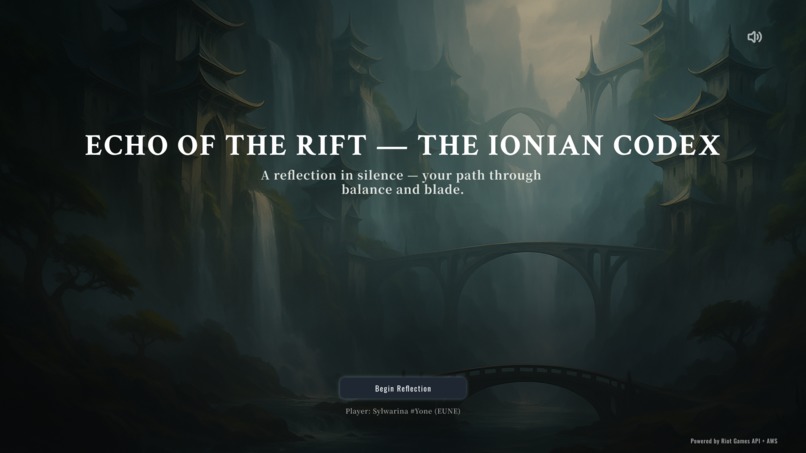
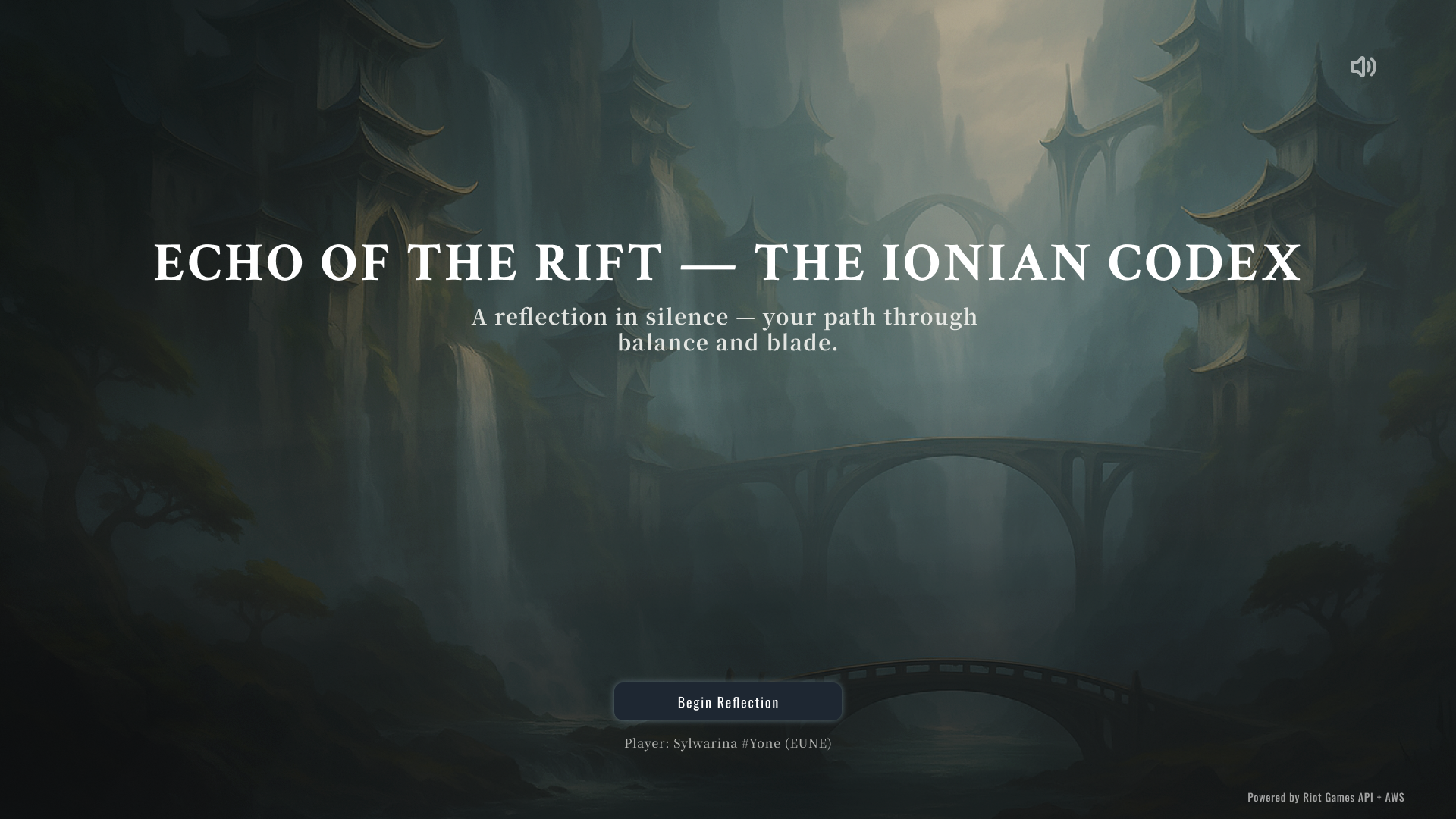
Ionian Hero Slide Ionian Codex - calm, balanced introduction where reflection begins.
-
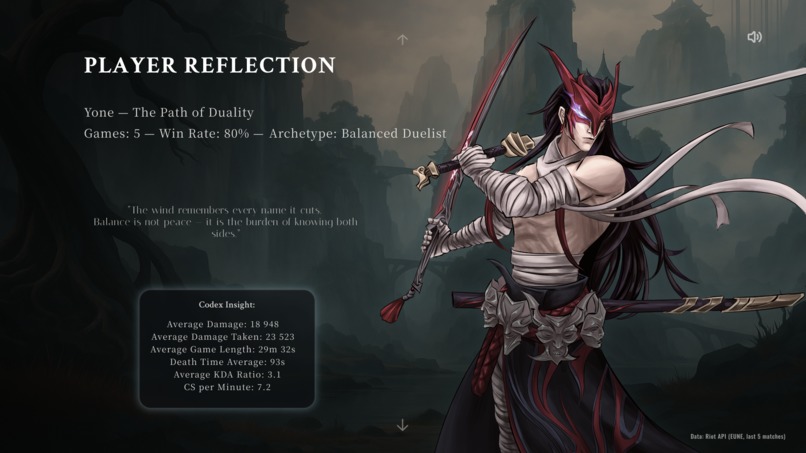
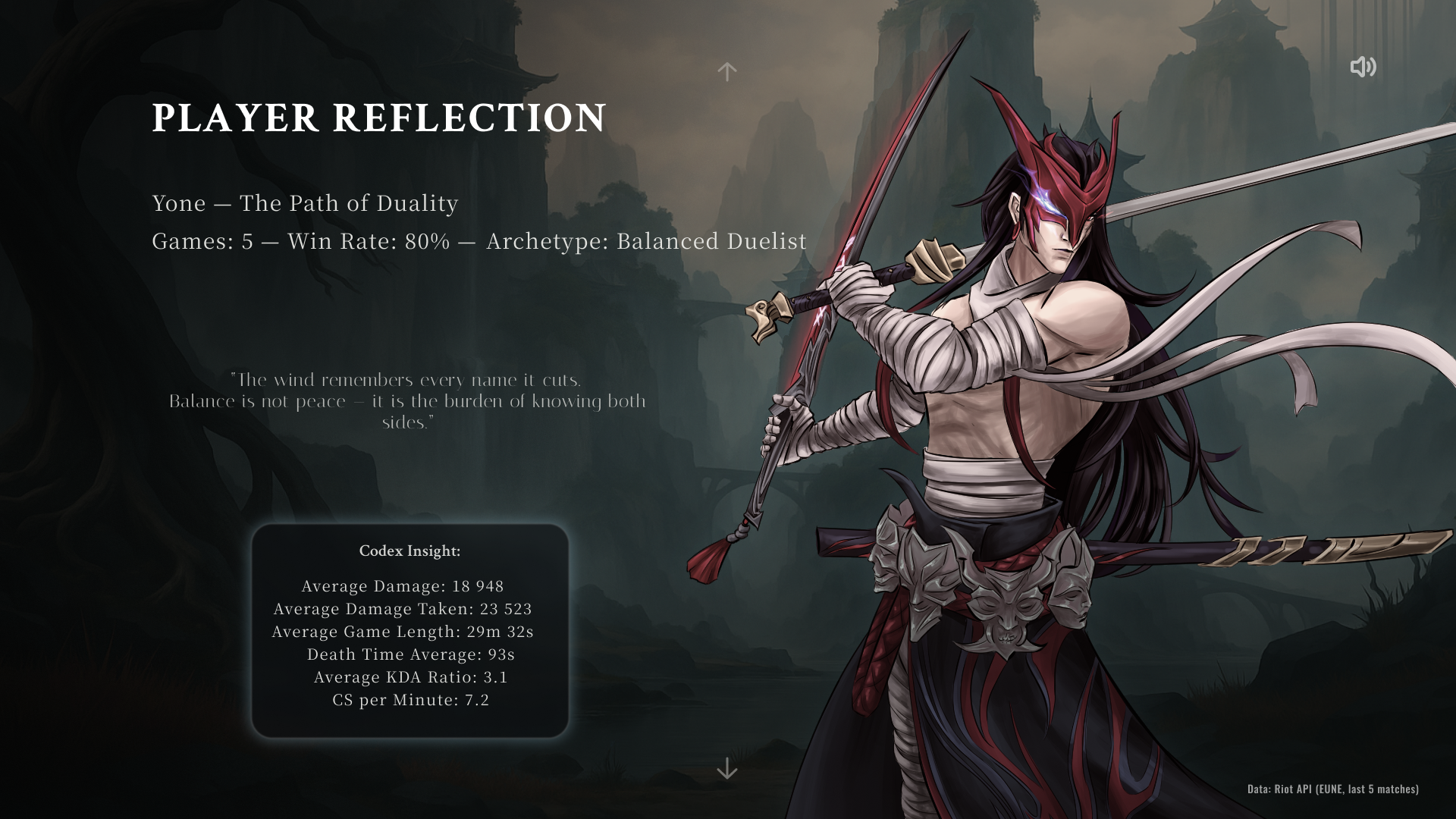
Player overview generated from Riot API - sylwarina real match data, stylized in Ionian form.
-
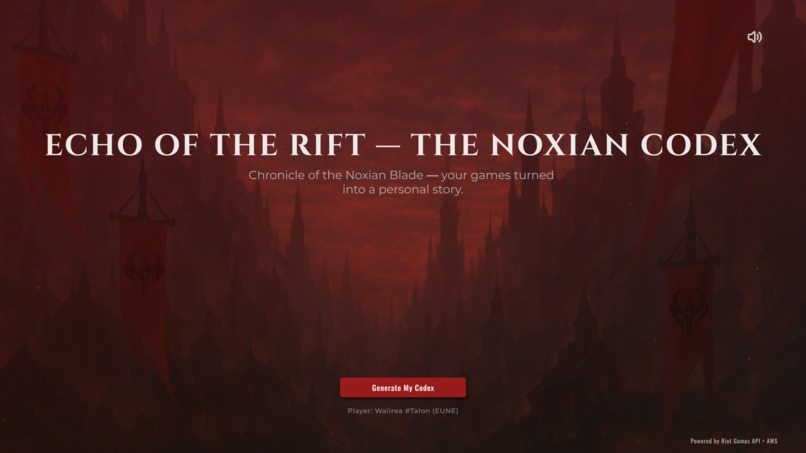
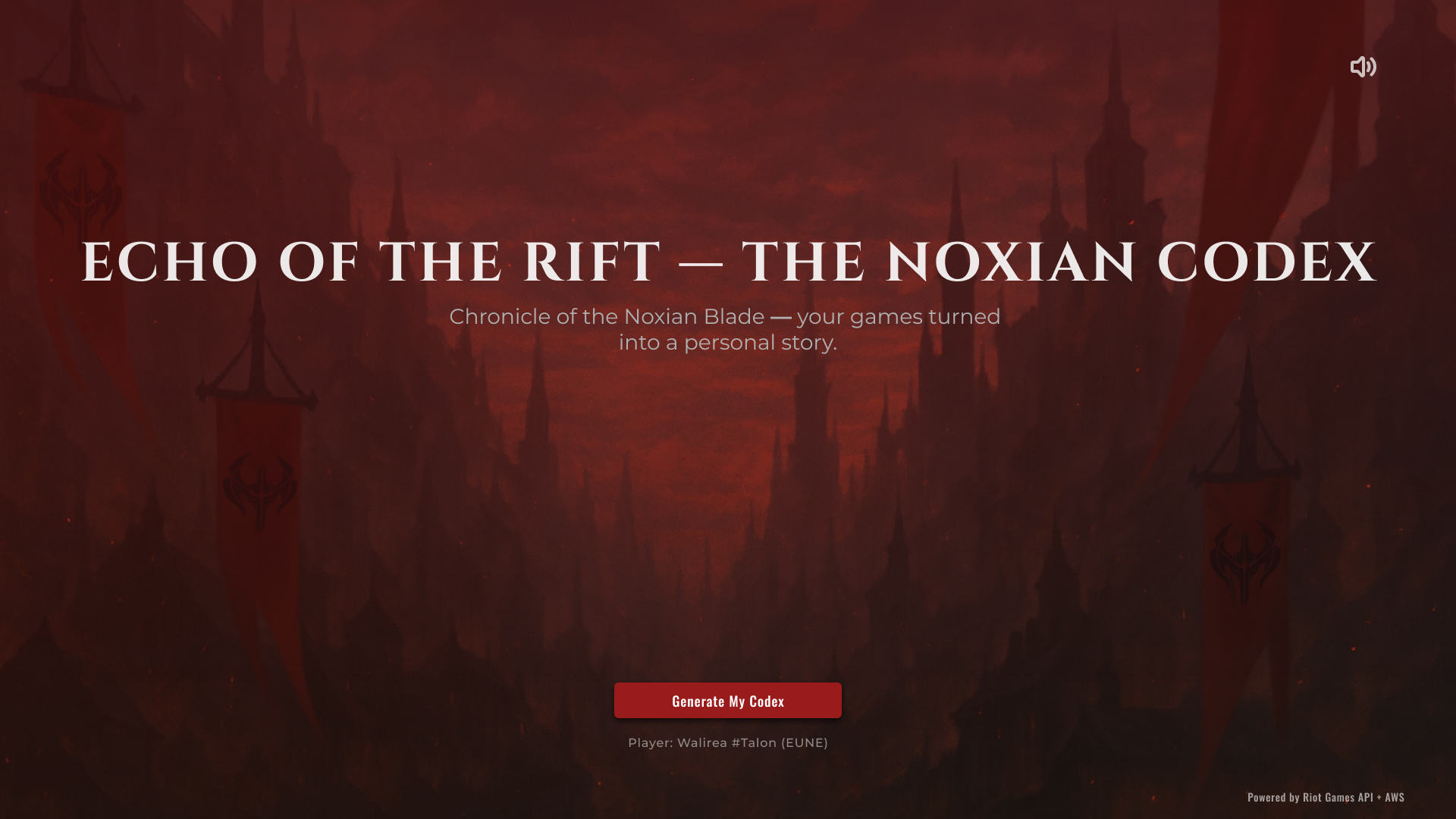
Noxian Hero Slide Noxian Codex - sharp, disciplined entry that turns data into command.
-
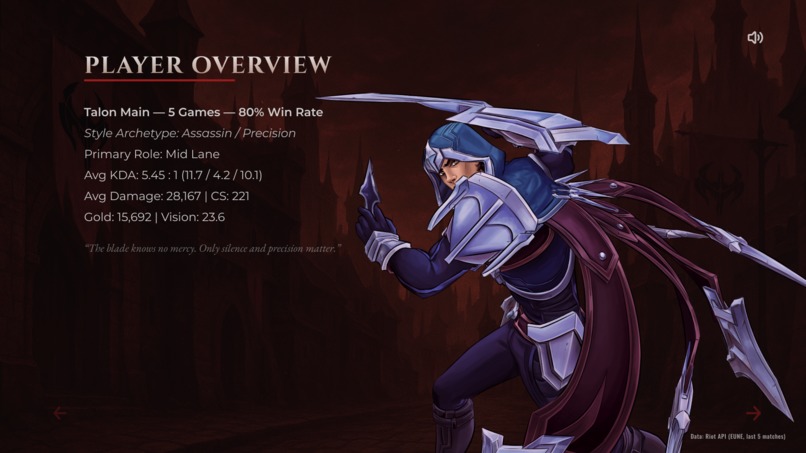
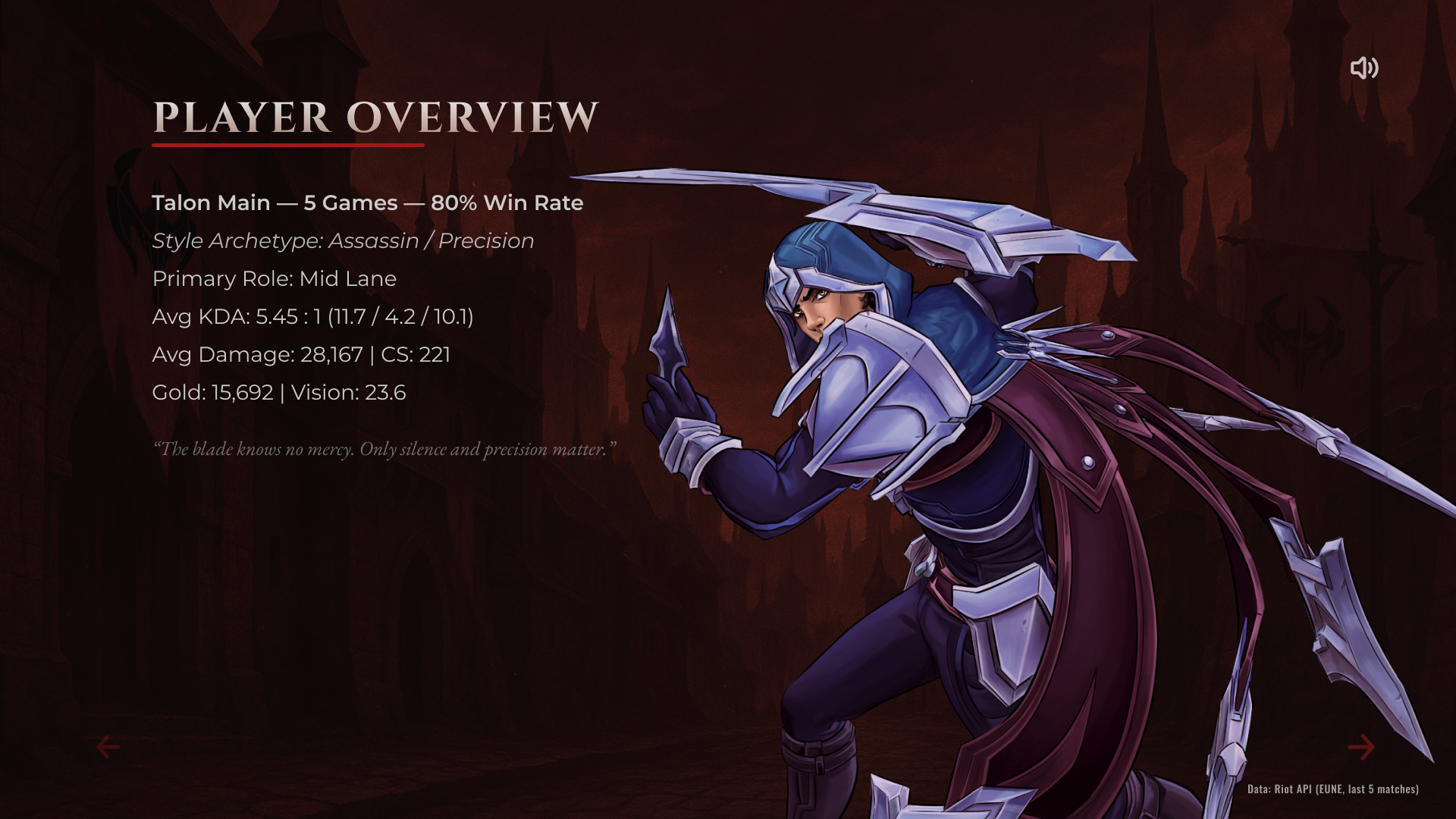
walirea player data visualized through Noxian logic - discipline and precision.
The video is a bit longer because it shows both Codex paths — Noxus and Ionia — together in one story. We wanted to keep it as one full experience instead of cutting it in half.
Inspiration
This project started pretty simply: Walirea mains Talon, Sylwarina mains Yone, and we realized how differently those two champions think. One cuts without hesitation. The other moves through silence.
So we thought: what if our playstyles could talk back to us? What if the Riot API wasn’t just data, but a story about how we play?
That’s how Rift Rewind Codex began: a small side project that turned into a dual-narrative experiment- one shared system, two philosophies: Noxian discipline and Ionian reflection.
What it does
The Codex reads your match history and transforms it into short, lore-style reflections, like your own mini story inside the League universe. It uses AWS Bedrock and Polly to turn stats into dynamic quotes and voice lines. Talon’s side speaks like a command. Yone’s side breathes like memory. At the end, you get a personal Codex page: your data retold as your legend.
How we built it
We connected the Riot Match-v5 API to AWS Lambda, which collects stats from the last five matches: KDA, time alive, damage, vision, and more. Then: Lambda structures and cleans the data. Bedrock turns it into narrative text (either Ionian or Noxian). Polly voices it: Yone’s calm tone or Talon’s sharp one. S3 stores shareable reflection cards. The visuals were designed in Figma, styled like Riot’s lore pages: muted tones, ambient motion, faction color logic.
Challenges we ran into
Getting two completely different tones out of the same dataset was the biggest challenge. Ionian text needs balance and rhythm; Noxian text has to sound absolute and cold.
Accomplishments that we're proud of
Two champions, two regions, one system: all running on live data. Every player gets a different story, not just a score summary. The voices are generated fresh every time. We managed to keep the League vibe without it turning into a data dashboard.
What we learned
Pretty much everything, honestly. We started with curiosity and learned along the way: how Riot’s API works, how AWS tools talk to each other, how to make AI write like a region from League, and how to keep it all from breaking. We figured out how to turn plain numbers into small stories, how to balance two totally different moods in one system. Most of all, we learned that building something together, even without a big plan, can turn into something surprisingly real and personal.
What's next for Rift Rewind Codex — Dual Path: Noxus & Ionia
If we had more time, we’d love to add proper artwork for the Skin Chronicle slides, each one with the skin image that the data comes from. We talked a lot about that part while building it, but everything else (the data logic, UI, and AWS setup) took most of the time. Next, we’d like to add more regions: maybe Demacia, Piltover, or the Shadow Isles; and make the Codex interactive, so it feels more like a growing story than a static summary. And one day, we’d like to connect two Codexes, to see how different playstyles could reflect each other in one shared screen.
We’re both visual creators: a concept artist and a graphic designer who also writes stories, so this project was never meant to be pure code. It was an experiment in turning data into atmosphere, numbers into narrative, and stats into something that feels alive. We used AWS tools and paid version of ChatGPT not as shortcuts, but as new brushes: different kinds of creative tools.
Built With
- amazon-web-services
- api
- bedrock
- capcut
- chatgpt
- clipstudiopaint
- css
- dynamodb
- figma
- html
- javascript
- json
- lambda
- pixabay
- polly
- python
- riotapi
- s3


Log in or sign up for Devpost to join the conversation.