RiffRoulette: Interactive Guitar Learning Game
Project files created on the repository by Akshat Namdeo for the hackathon UGAHacks X and are submitted for the following tracks:
- Main Tracks:
- Sponsor Tracks:
Quick Description
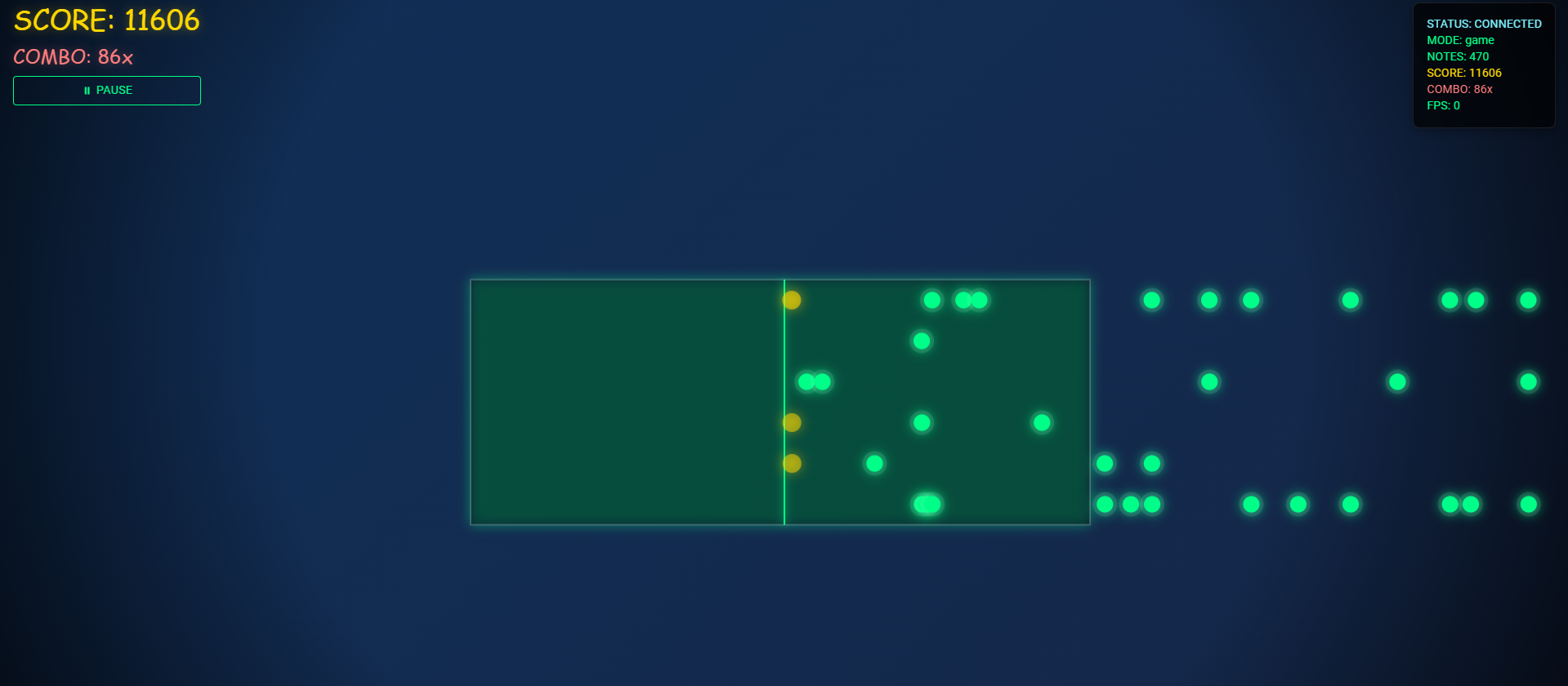
RiffRoulette is a guitar-based game through which users can create, perfect, and learn their craft. This Gen AI solution for musicians allows you to upload your own audio samples (or choose from 50 preprocessed famous tracks) and freestyle on them. Currently mapped to keyboard keys (Q, W, E, R, T, Y), the game combines real-time audio processing, adaptive difficulty, and dynamic scoring to offer a unique learning experience.
Table of Contents
- Overview
- Game Flow
- Gen AI & Adaptive Difficulty
- MongoDB Data Storage & Schema
- HPCC Integration
- Preprocessing & Pinata Integration
- Models & Credits
- Sponsor Challenges
- Challenges & Future Work
- Acknowledgements
Overview
RiffRoulette is designed to empower a wide variety of users—from beginners learning guitar basics to indie rock artists refining their performance skills. At its core, the project demonstrates how Gen AI can be used as a tool for creative and technical growth in music, rather than something to be feared. By dynamically adapting to your performance, our system helps you build confidence, improve timing and precision, and explore improvisation in an engaging, game-like setting.
Game Flow
User Input:
The user can either upload their own audio file or select from 50 preprocessed famous audio tracks.Audio Processing:
Two key models process the audio:- Demucs Model:
Separates the audio into various aspects. - Onset & Frames Model:
Analyzes the audio to extract guitar riffs and timing information, returning these details to the frontend.
- Demucs Model:
Gameplay:
The frontend displays a dynamic, scrolling note visualization where the player must hit notes in sync. The game features:- Real-time scoring and combo multipliers.
- An option to simulate a perfect run for inspiration or demonstration.
Adaptive Learning:
Two additional models drive the Gen AI capabilities:- Adaptive Mutation Model (Our Own):
If the user performs well, this model introduces "problem sections" by dynamically altering or removing notes. During these sections, the player can choose to improvise. - Music VAE:
Works in tandem with the adaptive mutation model by detecting successful improvisations and generating similar notes to extend the track until the next improvisation opportunity.
- Adaptive Mutation Model (Our Own):
Performance metrics (timing, precision, rhythmic details) are continuously monitored and stored in MongoDB for adaptive feedback.
Gen AI & Adaptive Difficulty
Our system leverages Gen AI to offer an adaptive learning experience:
- Adaptive Mutation:
Introduces challenging sections by altering the standard note sequence based on the player's performance. - Dynamic Improvisation:
Detects and rewards creative playing by dynamically generating similar musical phrases when the player hits impressive notes.
This approach not only improves technical skills but also encourages musical creativity and improvisation, making the learning process both challenging and engaging.
MongoDB Data Storage & Schema
All user data, game sessions, performance metrics, and progress analytics are stored in MongoDB. Below is an excerpt of our Python script that sets up the database with multiple collections and validation rules:
from pymongo import MongoClient
from pymongo.errors import CollectionInvalid
import logging
from typing import List, Dict
import os
from datetime import datetime

# Configure logging
logging.basicConfig(level=logging.INFO)
logger = logging.getLogger(__name__)

class RiffRouletteDBSetup:
    def __init__(self, connection_string: str):
        """Initialize database connection"""
        try:
            self.client = MongoClient(connection_string)
            self.db = self.client.riff_roulette  # database name
            logger.info("Successfully connected to MongoDB")
        except Exception as e:
            logger.error(f"Failed to connect to MongoDB: {str(e)}")
            raise

    def create_collections(self):
        """Create all required collections with validators"""
        try:
            # Users Collection
            self.create_users_collection()

            # GameSessions Collection
            self.create_game_sessions_collection()

            # UserProgress Collection
            self.create_user_progress_collection()

            # Achievements Collection
            self.create_achievements_collection()

            # Leaderboards Collection
            self.create_leaderboards_collection()

            # UserSessions Collection
            self.create_user_sessions_collection()

            # UserSkillAnalytics Collection
            self.create_user_skill_analytics_collection()

            # Create indexes
            self.create_indexes()

            logger.info("Successfully created all collections and indexes")

        except Exception as e:
            logger.error(f"Error creating collections: {str(e)}")
            raise

    # ... (other collection creation methods)
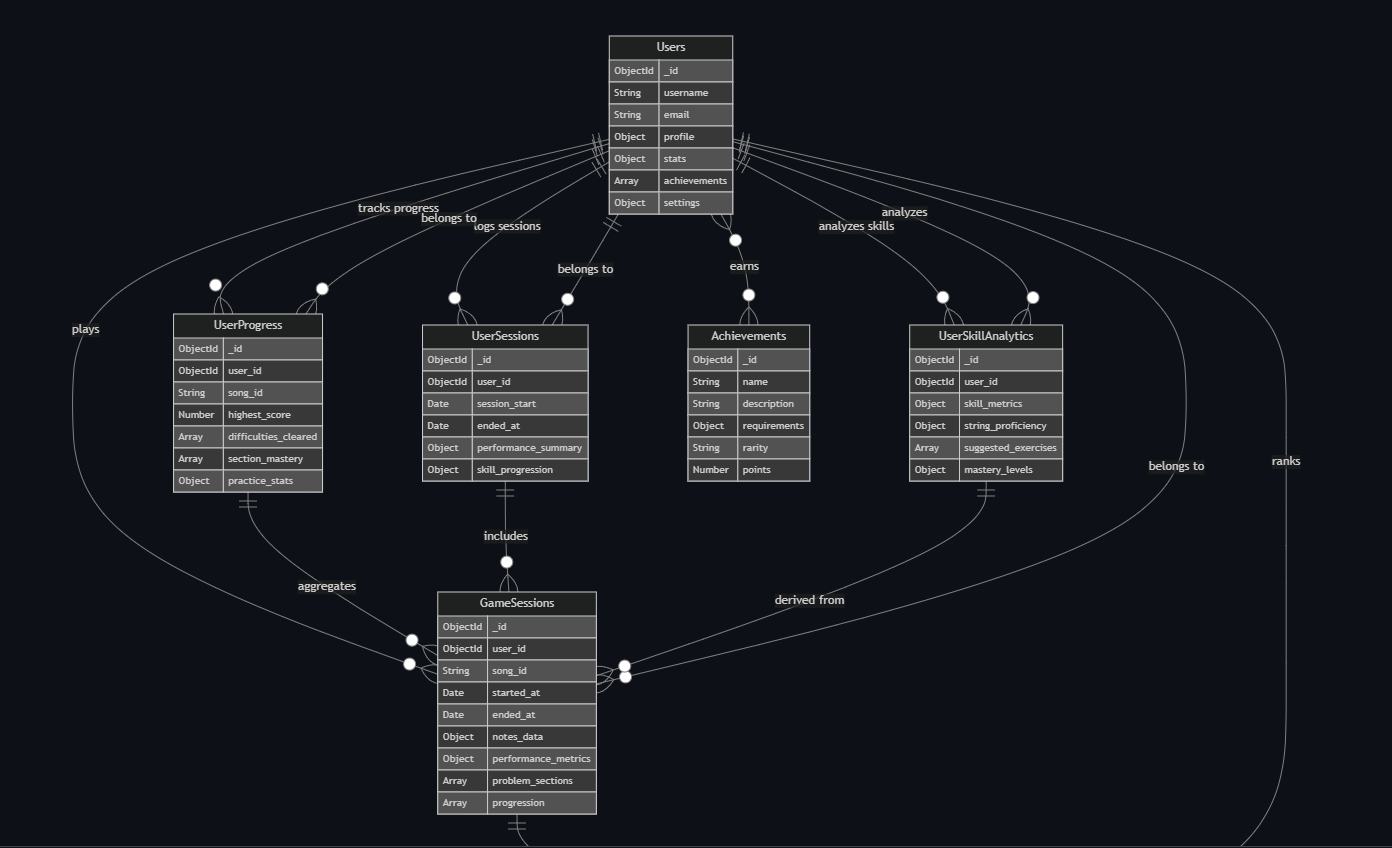
ER Diagram of the Database Schema
erDiagram
    Users ||--o{ GameSessions : "plays"
    Users ||--o{ UserProgress : "tracks progress"
    Users ||--o{ UserSessions : "logs sessions"
    Users ||--o{ UserSkillAnalytics : "analyzes skills"
    Users }o--o{ Achievements : "earns"

    GameSessions ||--|{ Leaderboards : "contributes to"
    GameSessions }o--|| Users : "belongs to"

    UserProgress }o--|| Users : "belongs to"
    UserProgress ||--o{ GameSessions : "aggregates"

    UserSessions }o--|| Users : "belongs to"
    UserSessions ||--o{ GameSessions : "includes"

    UserSkillAnalytics }o--|| Users : "analyzes"
    UserSkillAnalytics ||--o{ GameSessions : "derived from"

    Leaderboards }o--|| Users : "ranks"

    Users {
        ObjectId _id
        String username
        String email
        Object profile
        Object stats
        Array achievements
        Object settings
    }

    GameSessions {
        ObjectId _id
        ObjectId user_id
        String song_id
        Date started_at
        Date ended_at
        Object notes_data
        Object performance_metrics
        Array problem_sections
        Array progression
    }

    UserProgress {
        ObjectId _id
        ObjectId user_id
        String song_id
        Number highest_score
        Array difficulties_cleared
        Array section_mastery
        Object practice_stats
    }

    Achievements {
        ObjectId _id
        String name
        String description
        Object requirements
        String rarity
        Number points
    }

    Leaderboards {
        ObjectId _id
        String song_id
        String difficulty
        String type
        String timeframe
        Array entries
    }

    UserSessions {
        ObjectId _id
        ObjectId user_id
        Date session_start
        Date ended_at
        Object performance_summary
        Object skill_progression
    }

    UserSkillAnalytics {
        ObjectId _id
        ObjectId user_id
        Object skill_metrics
        Object string_proficiency
        Array suggested_exercises
        Object mastery_levels
    }
HPCC Integration
We actively participated in the HPCC challenge and solved almost all the ECL questions that were part of the challenge. These results can be viewed using these identifiers-
    User: TeamMunde
    BWR1_MusicMozChallenge.ecl - W20250209-121221
    BWR2_MSDChallenge.ecl - W20250209-121300
    BWR3_SpotifyChallenge.ecl - W20250209-120939
    BWR4_BonusChallenge.ecl - W20250209-122035
We also utilized HPCC Systems to analyze various datasets and determine the best rock n roll tracks to feature in our game. The following ECL script processes the music dataset by filtering rock-related genres and computing a composite score based on musical attributes:
    IMPORT $;
    SpotMusic := $.File_Music.SpotDS;

    // Define rock-related genres
    RockGenres := ['alt-rock', 'hard-rock', 'heavy-metal', 'psych-rock', 'punk-rock', 'rock', 'rock-n-roll'];

    // Layout for unified structure
    UnifiedLayout := RECORD
        STRING title;
        STRING375 artist_name;
        STRING genre;
        REAL score;
    END;

    RockFiltered := SpotMusic(genre IN RockGenres);

    // Output the raw data before score processing
    OUTPUT(RockFiltered, NAMED('Rock_Related_Songs_Before_Scoring'));

    // Filter and score for rock-related genres
    SpotScored := PROJECT(RockFiltered,
        TRANSFORM(UnifiedLayout,
            SELF.title := LEFT.track_name;
            SELF.artist_name := LEFT.artist_name;
            SELF.genre := LEFT.genre;
            SELF.score := (0.2 * (REAL)LEFT.tempo) +
                          (0.2 * (REAL)LEFT.loudness) +
                          (0.15 * (REAL)(LEFT.danceability)) +
                          (0.15 * (REAL)(LEFT.energy)) +
                          (0.15 * (REAL)(LEFT.instrumentalness))));

    // Filter and sort the dataset
    FilteredScored := SpotScored(score > 0);
    SortedScored := SORT(FilteredScored, -score);

    // Top 100 unique songs
    Top100 := CHOOSEN(SortedScored, 100);

    OUTPUT(Top100, NAMED('Top_100_Rock_Related_Songs_With_Scores'));
Score Explanation:
The composite score for each track is calculated by taking weighted contributions from:
- Tempo (20%)
- Loudness (20%)
- Danceability (15%)
- Energy (15%)
- Instrumentalness (15%)
This approach allows us to rank tracks based on a blend of rhythmic and sonic qualities that are most appealing for a rock n roll vibe.
Preprocessing & Pinata Integration
Note Extraction Example
During preprocessing, audio files are analyzed to extract note details. Here’s a sample JSON output representing the extracted notes:
    [
        {
            "id": 0,
            "pitch": 29,
            "string": "E",
            "velocity": 99,
            "start": 0.0,
            "end": 0.28800000000000003
        },
        {
            "id": 1,
            "pitch": 39,
            "string": "E",
            "velocity": 116,
            "start": 0.0,
            "end": 0.28800000000000003
        },
        {
            "id": 2,
            "pitch": 57,
            "string": "B",
            "velocity": 126,
            "start": 0.0,
            "end": 0.928
        }
    ]
Uploading to Pinata: Optimization & Dynamic Retrieval
Our integration with Pinata is designed for both optimization and ease of dynamic data retrieval:
Optimization:
We use asynchronous HTTP requests viaaiohttpwith a 30-second timeout to ensure rapid and efficient file uploads. Files are wrapped within a directory (wrapWithDirectory) to facilitate structured storage. Custom pinning options (customPinPolicy) replicate files across multiple regions (FRA1 and NYC1), ensuring high availability and reliability.Metadata & Indexing:
Each file is uploaded with detailed metadata (e.g., song ID, format, artist, title, timestamp, compression details). The IPFS hash (CID) returned by Pinata is dynamically indexed, which allows our system to quickly reference and retrieve files.Dynamic Retrieval:
By indexing CIDs, the system can efficiently load audio or JSON data from IPFS during gameplay. This approach not only optimizes storage but also enhances performance for our Gen AI music processing pipeline.
Below is an excerpt from our Pinata integration script illustrating these optimizations:
    import requests
    import json
    import os
    import re
    from pathlib import Path
    from typing import Dict, List, Optional, Tuple
    import asyncio
    import aiohttp
    from datetime import datetime, timedelta
    from tqdm import tqdm
    from dotenv import load_dotenv

    class PinataManager:
        def __init__(self, api_key: str, api_secret: str):
            self.api_key = api_key
            self.api_secret = api_secret
            self.base_url = "https://api.pinata.cloud"
            # Use API key authentication headers for all requests
            self.headers = {
                'pinata_api_key': api_key,
                'pinata_secret_api_key': api_secret
            }

        async def pin_file_to_ipfs(self, file_path: Path, metadata: Dict) -> Dict:
            """Pin a file to IPFS with metadata and customized pinning options."""
            url = f"{self.base_url}/pinning/pinFileToIPFS"

            # Customize pinning options
            pinataOptions = {
                "cidVersion": 1,
                "wrapWithDirectory": True,
                "customPinPolicy": {
                    "regions": [
                        {"id": "FRA1", "desiredReplicationCount": 2},
                        {"id": "NYC1", "desiredReplicationCount": 2}
                    ]
                }
            }

            timeout = aiohttp.ClientTimeout(total=30)  # 30-second timeout
            async with aiohttp.ClientSession(timeout=timeout) as session:
                with open(file_path, 'rb') as file:
                    form = aiohttp.FormData()
                    form.add_field('file', file)
                    form.add_field('pinataOptions', json.dumps(pinataOptions))
                    form.add_field('pinataMetadata', json.dumps(metadata))
                    async with session.post(url, data=form, headers=self.headers) as response:
                        return await response.json()

        async def create_submarine_pin(self, cid: str, duration_hours: int = 24) -> Dict:
            """Create a submarine (temporary) pin."""
            url = f"{self.base_url}/pinning/createSubmarinePin"

            data = {
                "cid": cid,
                "timeoutInSeconds": duration_hours * 3600
            }

            timeout = aiohttp.ClientTimeout(total=30)
            async with aiohttp.ClientSession(timeout=timeout) as session:
                async with session.post(url, json=data, headers=self.headers) as response:
                    return await response.json()

        async def pin_json_to_ipfs(self, json_data: Dict, metadata: Dict) -> Dict:
            """Pin JSON data to IPFS."""
            url = f"{self.base_url}/pinning/pinJSONToIPFS"

            data = {
                "pinataContent": json_data,
                "pinataMetadata": metadata,
                "pinataOptions": {
                    "cidVersion": 1
                }
            }

            timeout = aiohttp.ClientTimeout(total=30)
            async with aiohttp.ClientSession(timeout=timeout) as session:
                async with session.post(url, json=data, headers=self.headers) as response:
                    response_data = await response.json()
                    if 'IpfsHash' not in response_data:
                        print("Full Pinata response:", response_data)
                        raise Exception("No IpfsHash in Pinata response")
                    return response_data
Models & Credits
This project leverages three key models:
- Demucs: For audio source separation.
- Onset & Frames: For precise note and timing detection.
- Music VAE: For generating new musical phrases.
While these models form the backbone of our audio processing, our innovation lies in integrating them within a Gen AI framework. Our proprietary Adaptive Mutation Model dynamically adjusts gameplay difficulty by introducing challenges and rewarding improvisation in real time.
Sponsor Challenges
For details on our participation in the sponsor challenges (such as the Pinata Challenge, Best Use of MongoDB Atlas, HPCC Systems Music is Life Challenge, and Best Domain Name from GoDaddy Registry), please refer to the respective sections above. Each challenge has been integrated into our project to demonstrate innovative use cases of technology in music and gaming.
Challenges & Future Work
One of the major challenges we faced was the strict time limitation during the hackathon. Despite this, we are extremely proud of our progress. Moving forward, we plan to:
- Enhance the adaptive difficulty algorithms.
- Incorporate more advanced audio processing techniques.
- Expand support to include real guitar inputs alongside keyboard mappings.
- Further refine our Gen AI system to create even more engaging musical experiences.
Our aim is to promote the idea that Gen AI is here to empower musicians to explore, learn, and grow, rather than replace traditional skills.
Acknowledgements
- UGAHacks X for hosting the event.
- The developers and maintainers of Demucs, Onset & Frames, and Music VAE.
- HPCC Systems and Pinata for their sponsorship challenges and support.
- All the contributors who helped bring RiffRoulette to life.
For any questions or further discussion, feel free to reach out or open an issue in this repository.
Built With
- fastapi
- flask
- machine-learning
- nextjs
- websockets


Log in or sign up for Devpost to join the conversation.