Inspiration
Hunting has always been an activity our family cherished. But as the city grew up around where we lived, it became harder and harder to take part in. Ridgehunt is an effort to recreate that feeling without needing the real environment.
Most hunting games miss what made those days special. They're shooting galleries: the animals stand still, and you can walk right up to them. I wanted a hunt that feels like the real thing. Wind, scent, noise and patience should matter. Animals should notice you, and the land itself should push back. VR is the obvious medium for this: raising a scope to your eye or drawing a bow string with your own hands brings back the feeling of being out there.
What it does
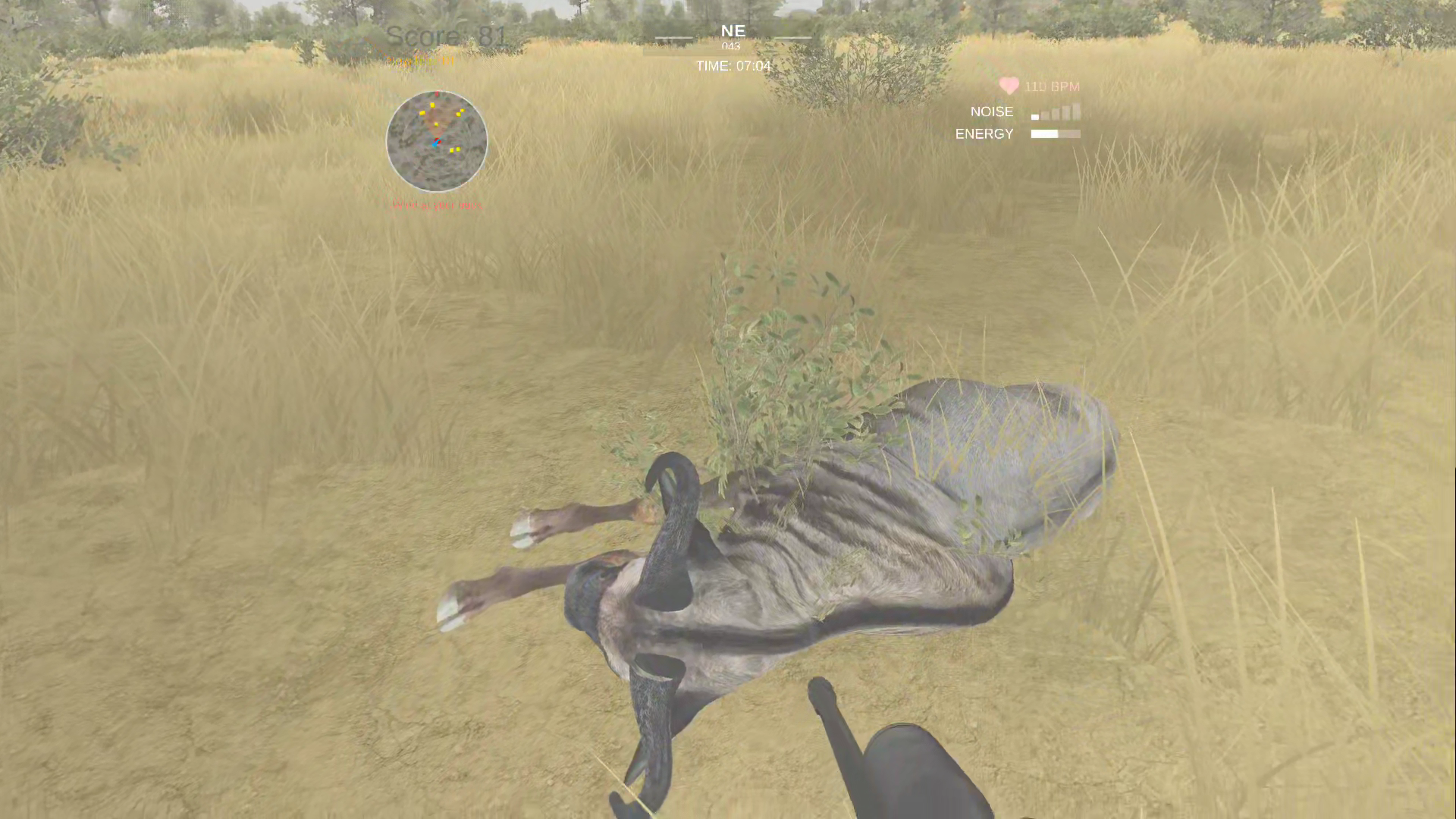
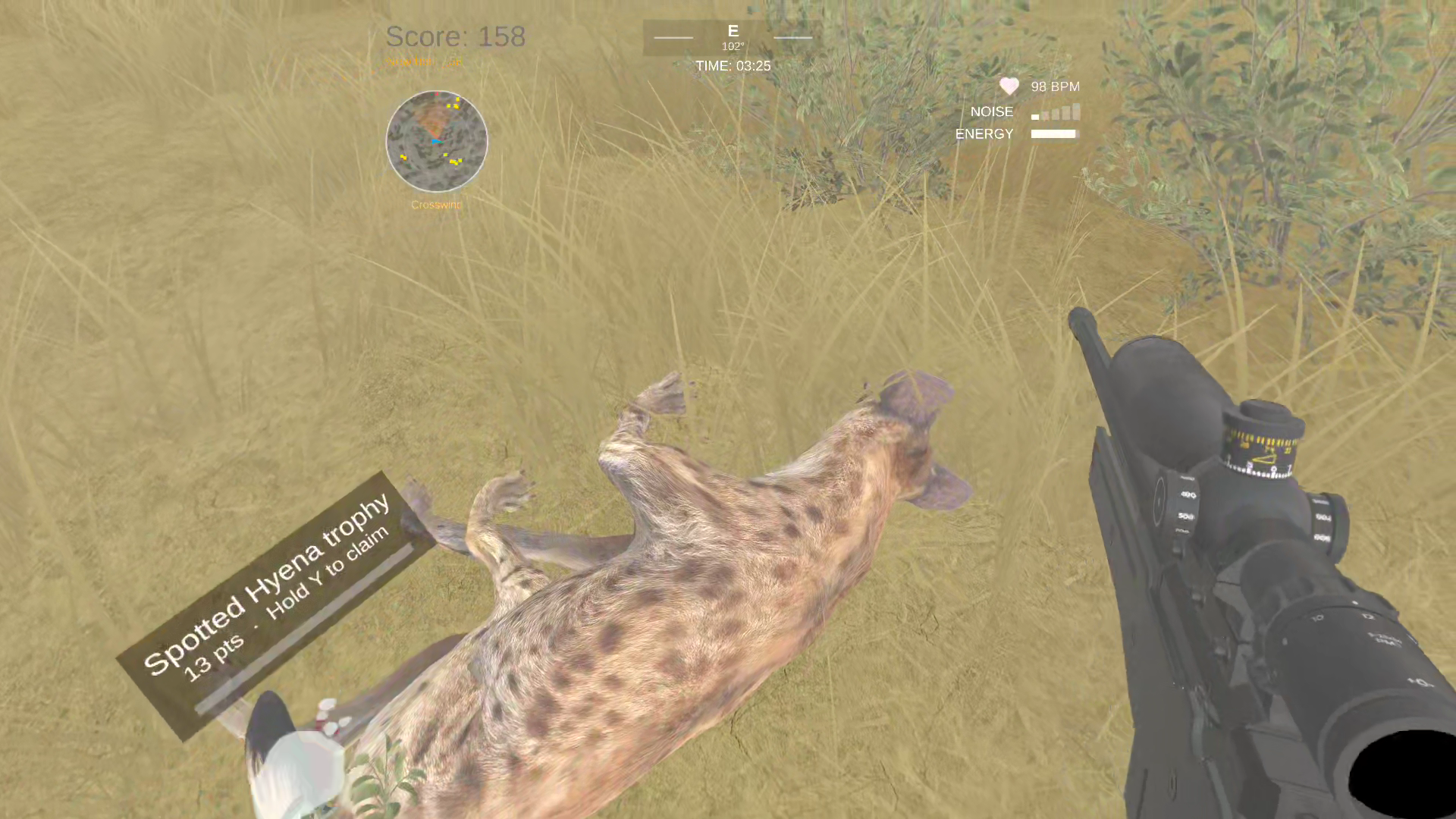
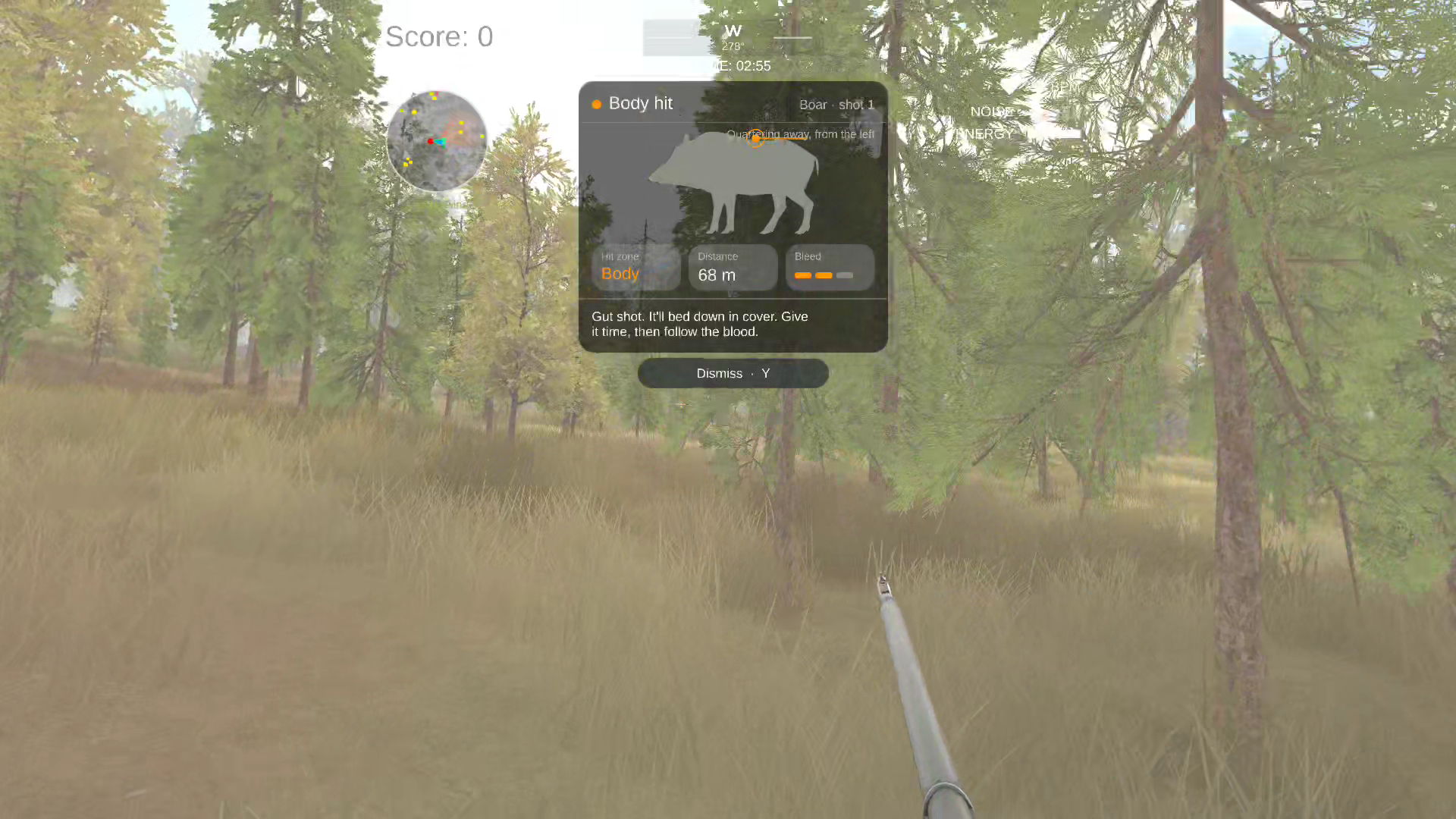
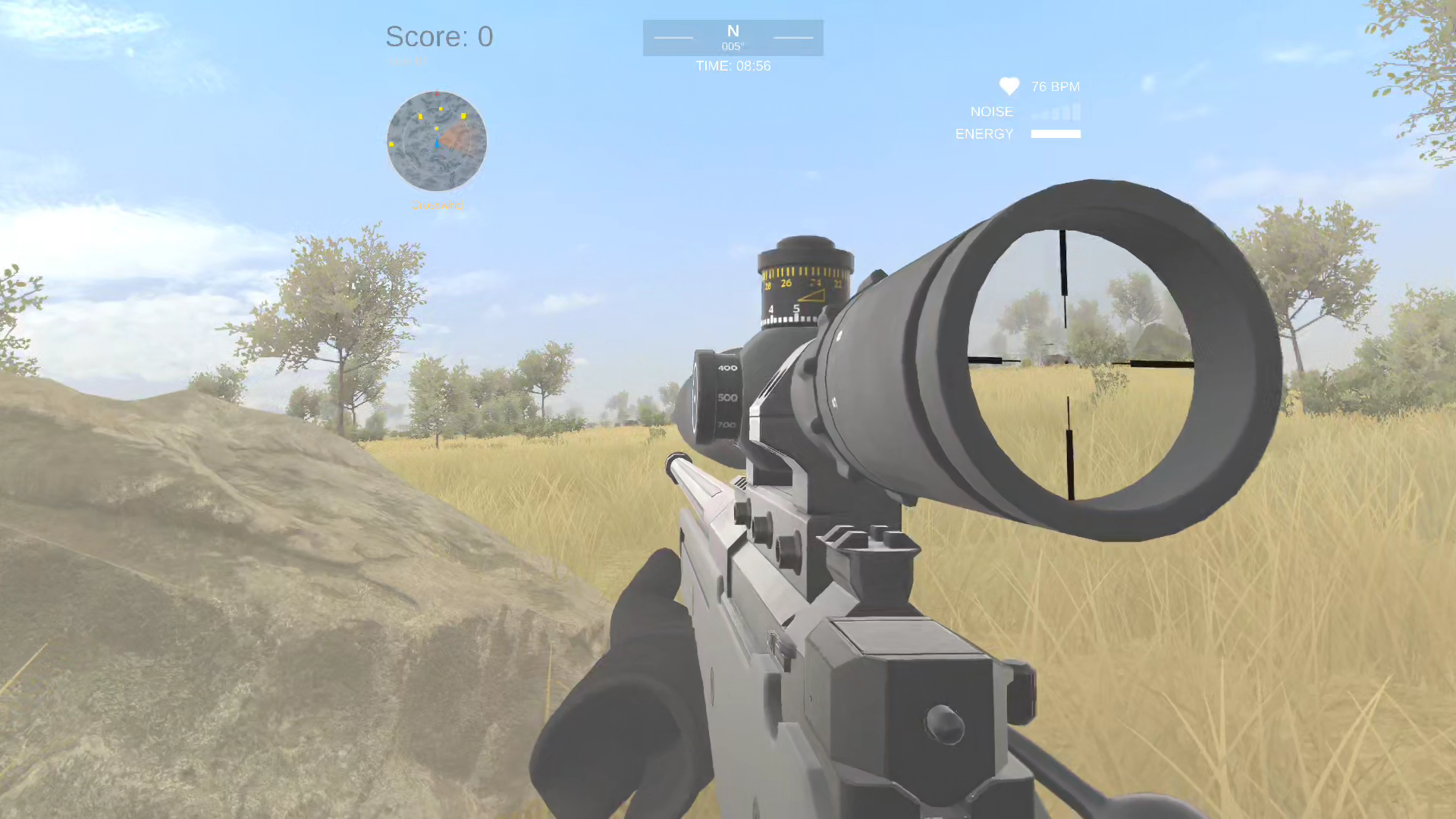
Ridgehunt is a standalone Quest 3 hunting game with two hand-built reserves: a misty northern forest and Mopane Ridge, an open African plain.
- Fully playable with hands or controllers. You can switch at any time, per hand: a held controller takes over, otherwise that hand is tracked. You point to move, pinch and drag to swipe turn and grab weapons from over your shoulder. To fire a rifle you put both hands on it and pinch with each. You raise the spotting scope to your eye and aim it with your head. There's also a seated mode.
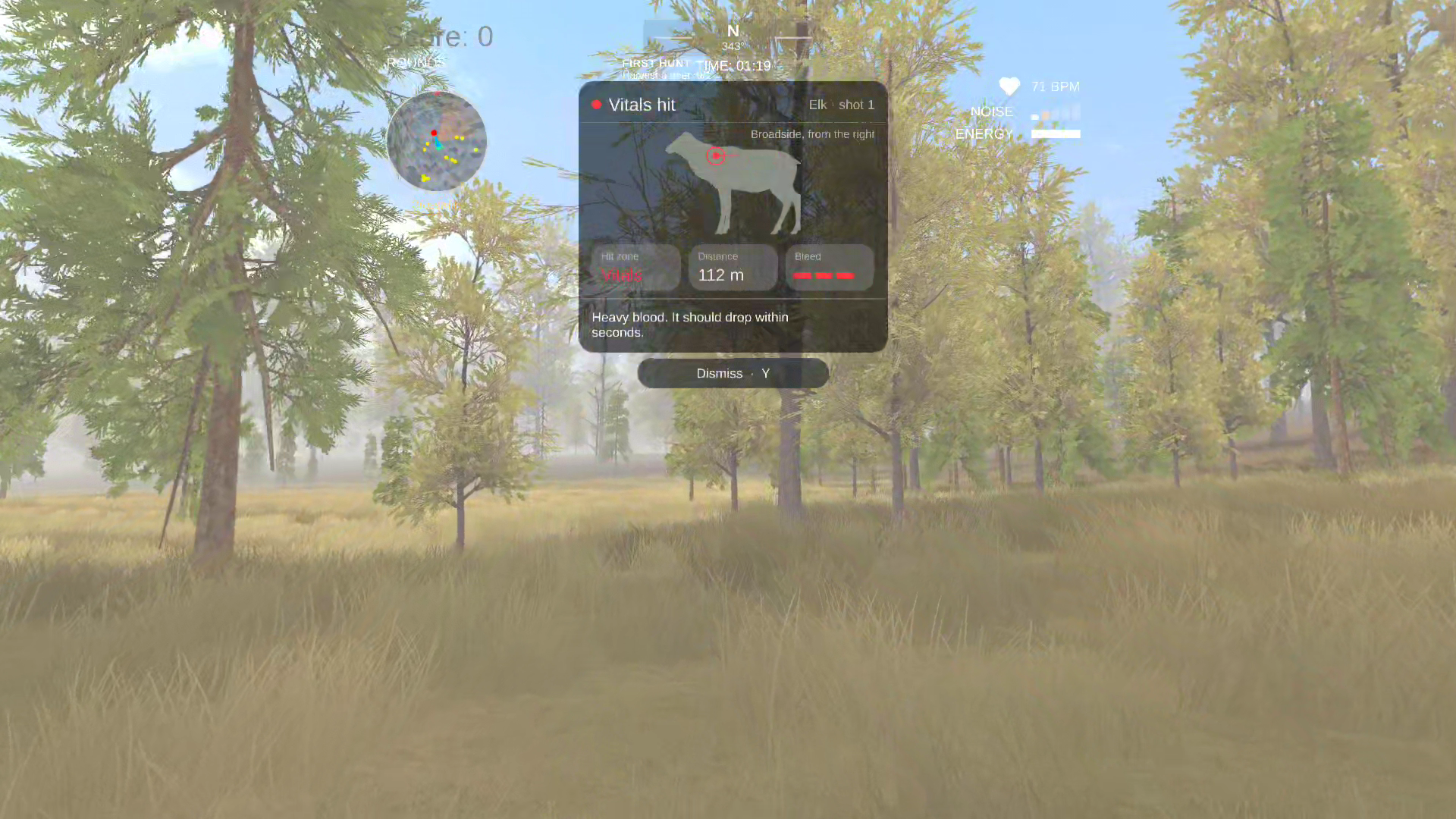
- Real stalking. Animals smell, hear and see you. Wind direction matters, and elk, moose, wildebeest and buffalo smell you from all around, so they demand long shots. A noise meter, an energy meter and your heart rate (which sways your aim) all react to how you move.
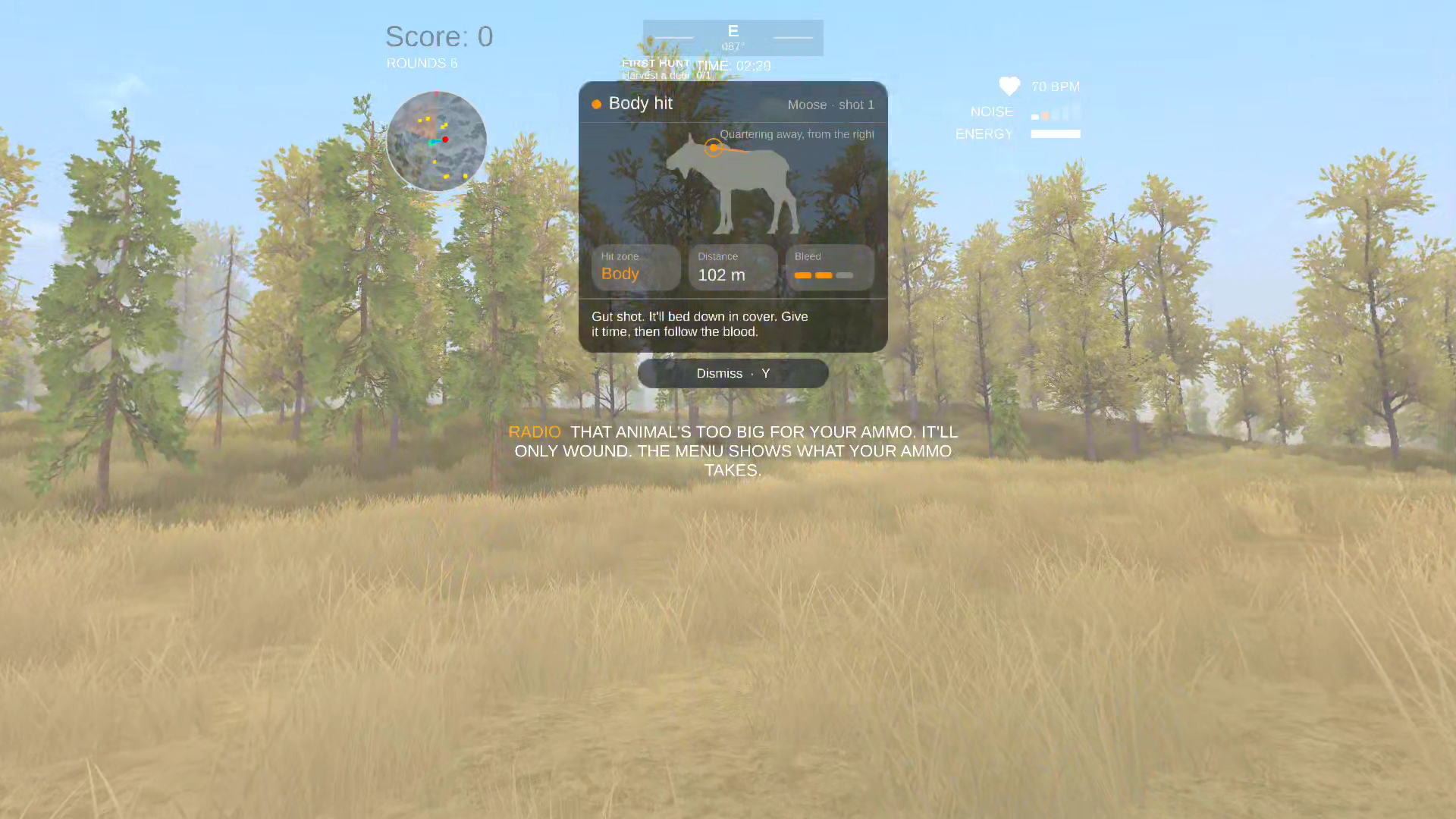
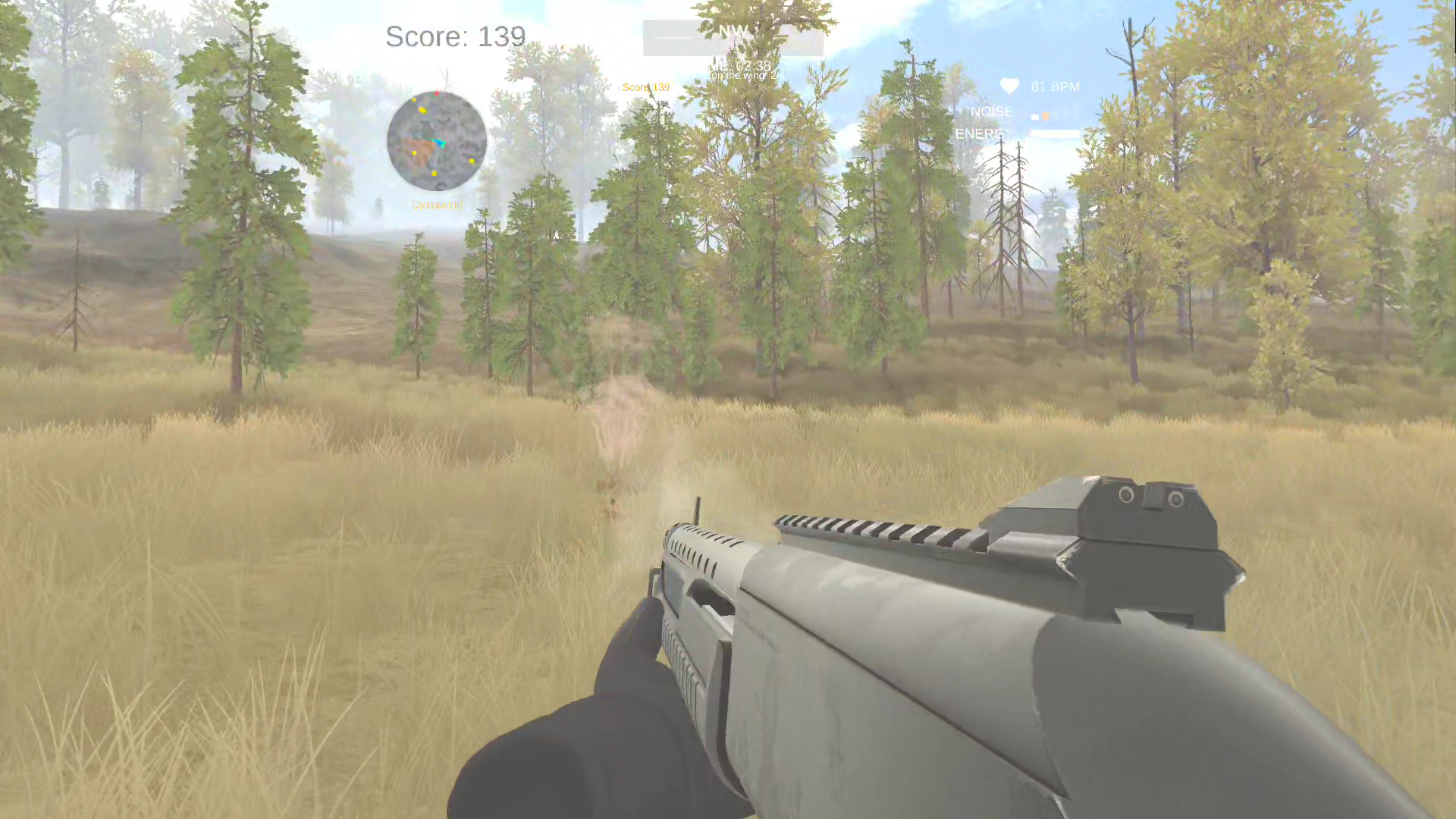
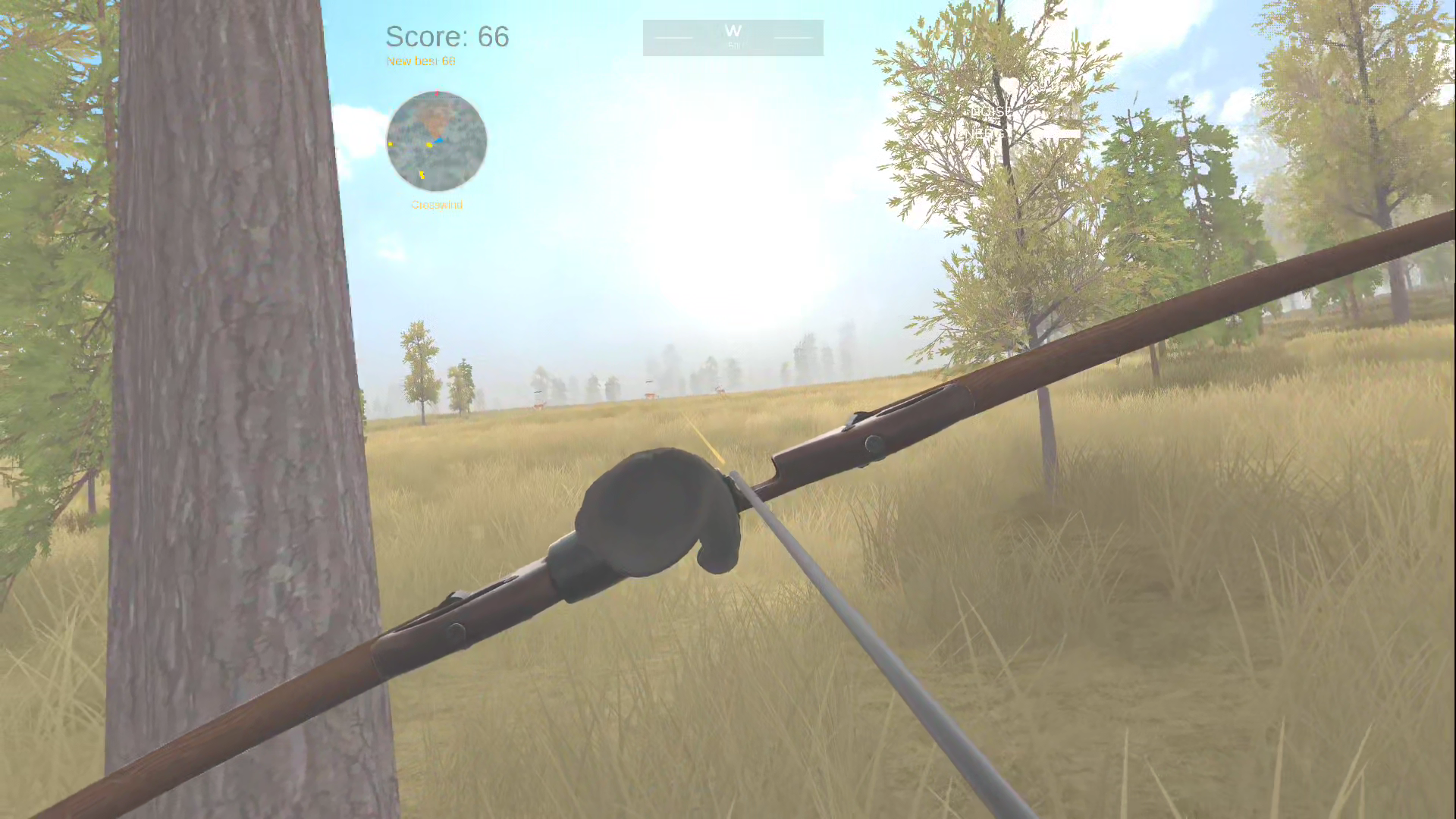
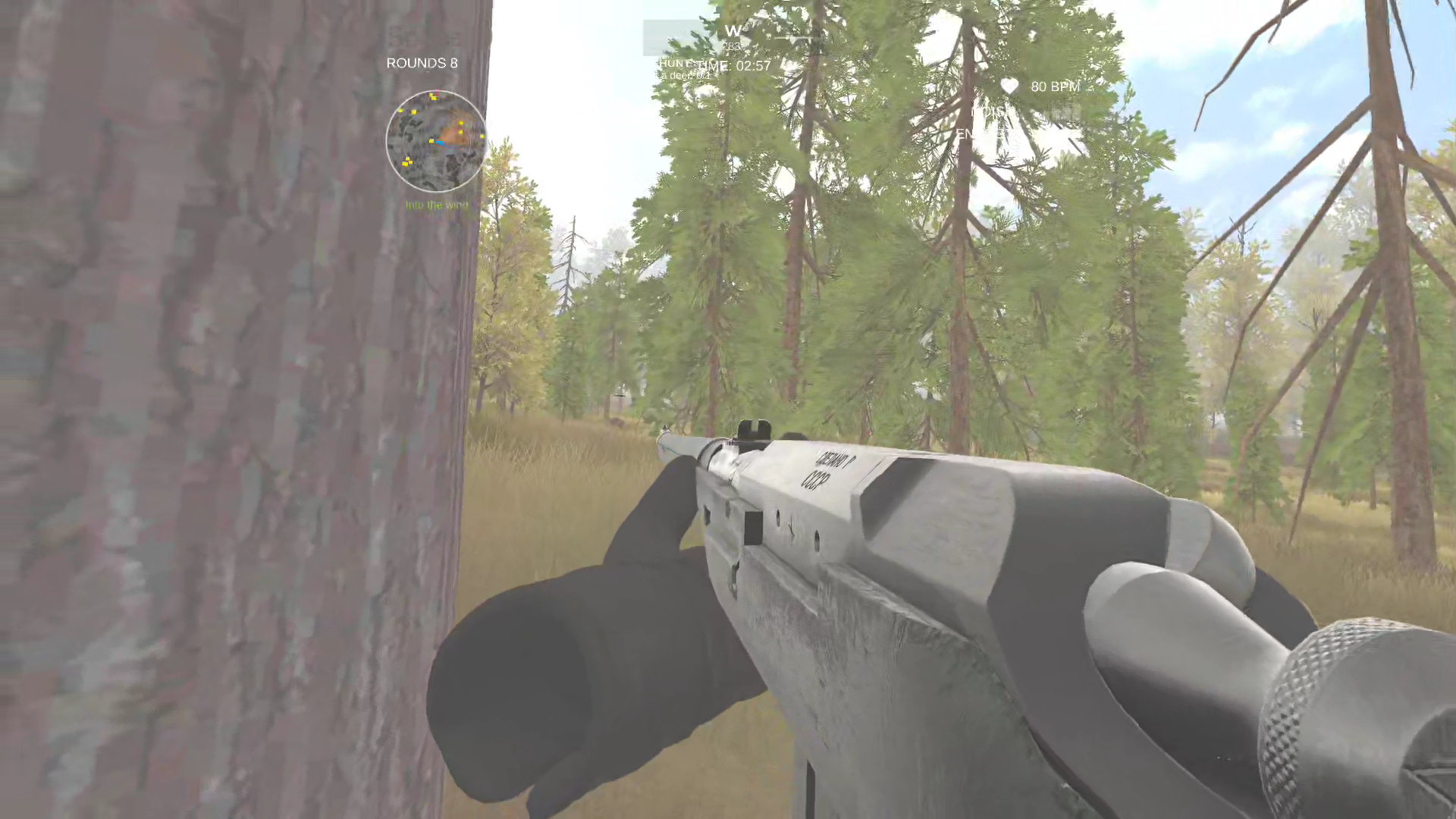
- An arsenal you earn. You start with a shotgun, recurve bow and a throwing axe. Guns unlock in order: rifle, then sniper. Each has its own ammo class, and under-powered ammo wounds instead of killing.
- Predators. Hyenas never show on the map. They hear your gunshots, shadow you from a distance, race you to your kills and attack from behind when you stop paying attention.
- Replayability. There are 10 scored missions per reserve, a free-roam score mode with a best score for each kit, length and ammo setup, a level and economy system, gear (scent, boots, camo), fast travel by truck, and a Hard mode where only brain, heart, lung or liver shots kill.
- A radio guide. A voiced field guide on a chest radio teaches you as you play, and a How to Play page is drawn as a hunter's field journal.
How we built it
- Unity 6 with the XR Interaction Toolkit and OpenXR, plus Meta's hand-tracking features. The hand interactions follow Meta's hand design guidelines.
- Custom animal AI for over a dozen species: senses, herd behaviour, flee and charge reactions, blood trails and tracks. A "hunt director" sets up encounters within a performance budget.
- Blender pipelines for retargeting animations (the hare is built from rabbit clips), generating animal LODs, fixing the glove rig for tracked hands, and rendering the How to Play illustrations.
- Local text-to-speech (Kokoro) for the radio guide, with radio static mixed under each line.
- Editor automation: a command bridge into the Unity editor and scripted test scenarios for missions, the economy, hyenas and the guide.
Challenges we ran into
- Making hand tracking work for guns. I tried several fire gestures (index curl, a single pinch, a thumb-tap microgesture) and dropped them because they misfired or made the aim jump. What finally felt right: both hands on the gun, each pinch counts only after the hand opens, and the shot uses your aim from 0.15 s before the pinch, so the gesture itself doesn't move the aim.
- Hand-tracking dropouts. Hands get hidden by the gun during reloads, which used to make players drop their rifle. The hold logic had to tolerate these dropouts.
- Comfort. Smooth turning, wrist-flick turns and walk-by-reaching all felt wrong, so I settled on pinch and drag for snap turns.
- Quest 3 performance. I capped visible big-game triangles at 80k by controlling which herds come close, while keeping species variety. I also stripped animal skeletons (the bear went from 263 bones to 65) and added LODs.
- Fitting in Meta's 1 GB size limit. The APK started at 1.4 GB. Moving terrain caches out, recompressing textures and stripping data at build time brought it under the limit.
- Predators that are scary in VR. My first hyena ambush felt cheap in VR. I rebuilt them to pursue the player, so the tension comes from always having to watch your back.
Accomplishments that we're proud of
- A complete hunting game that you can play from start to finish with just your hands, with no controller fallback needed.
- Weapons that feel physical: two-handed rifle aiming, a scope you raise to your eye, a bow and a throwing axe.
- Animals that make you think like a hunter about wind, distance and noise, and hyenas that keep you on edge.
- Two big open reserves running well on standalone Quest 3, shipped under 1 GB.
- Enough depth to come back to: progression, missions, score modes and Hard mode.
What we learned
- Hand tracking needs its own design, not a copy of the controller scheme. The best gestures are the ones that can't fire by accident.
- Playtesting beats theory. Many systems were built, tried and thrown away (pinch triggers, the ambush, an eye-anchored rifle).
- On standalone VR, performance is a design problem. Shaping encounters works better than just cutting detail.
- Teaching the player inside the game (the radio guide, the journal) matters as much as the mechanics.
What's next for Ridgehunt
- More reserves and species, including crocodiles at the Mopane lakes
- A red-dot rifle and more weapons
- An interactive, narrated first hunt for new players
- Daily challenge seeds and online leaderboards for the score modes
- Co-op hunting
