-
-
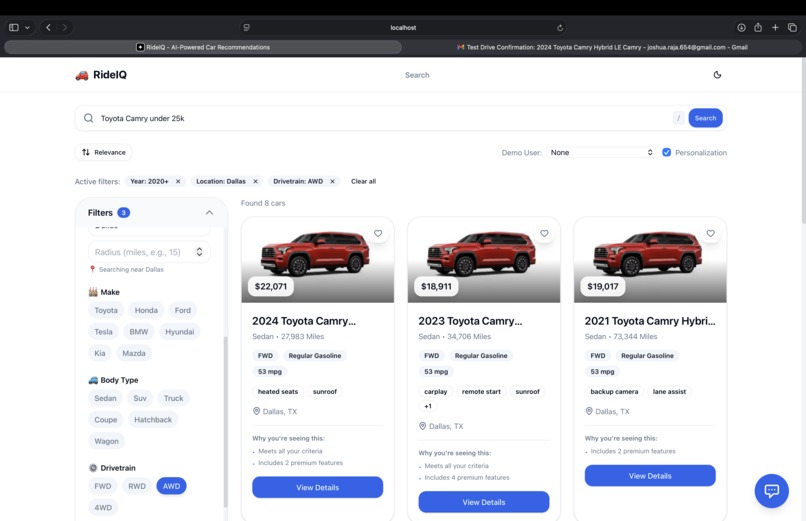
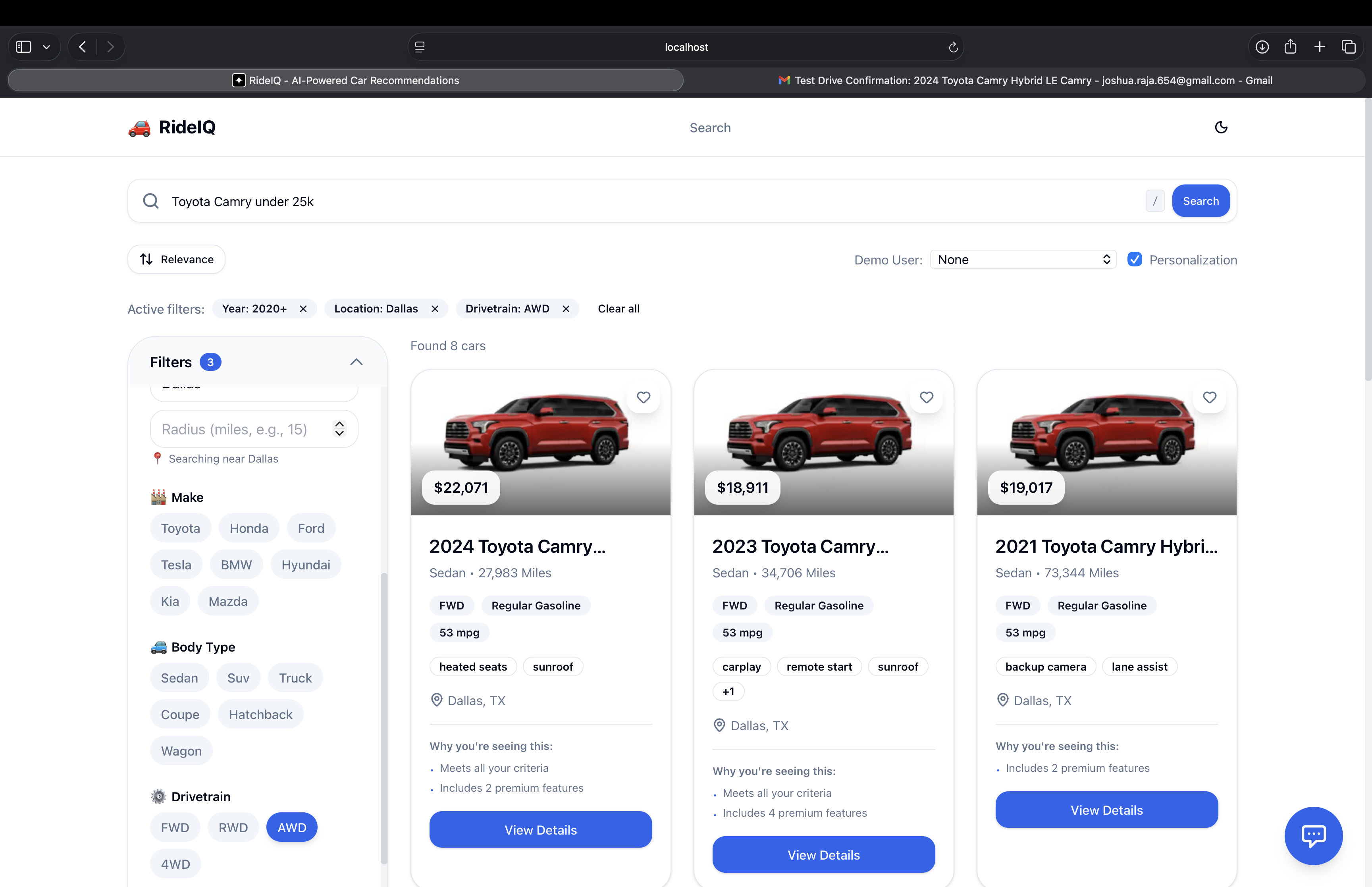
Home Page to search for cars
-
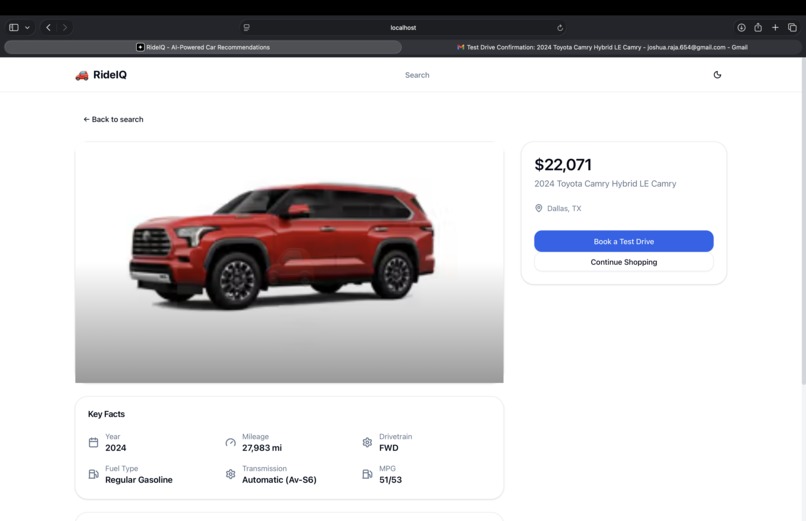
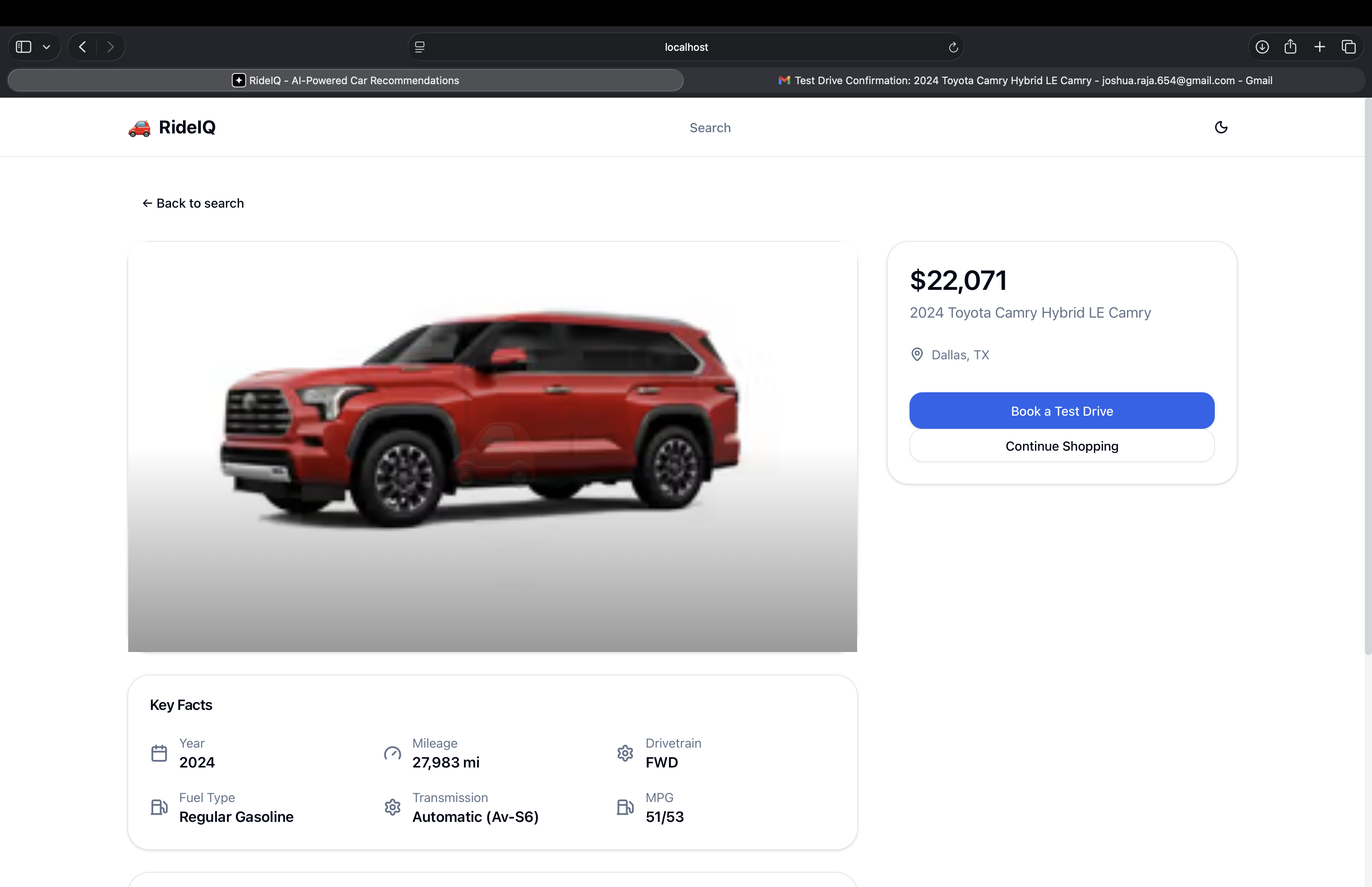
View Details for Car
-
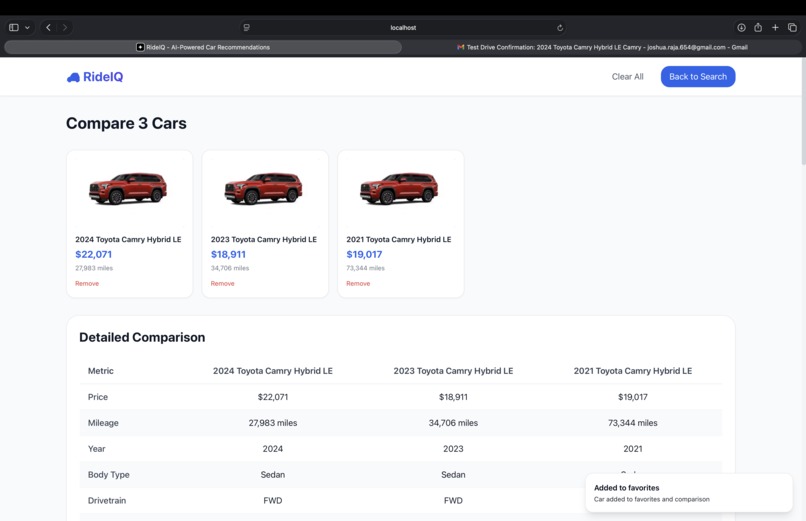
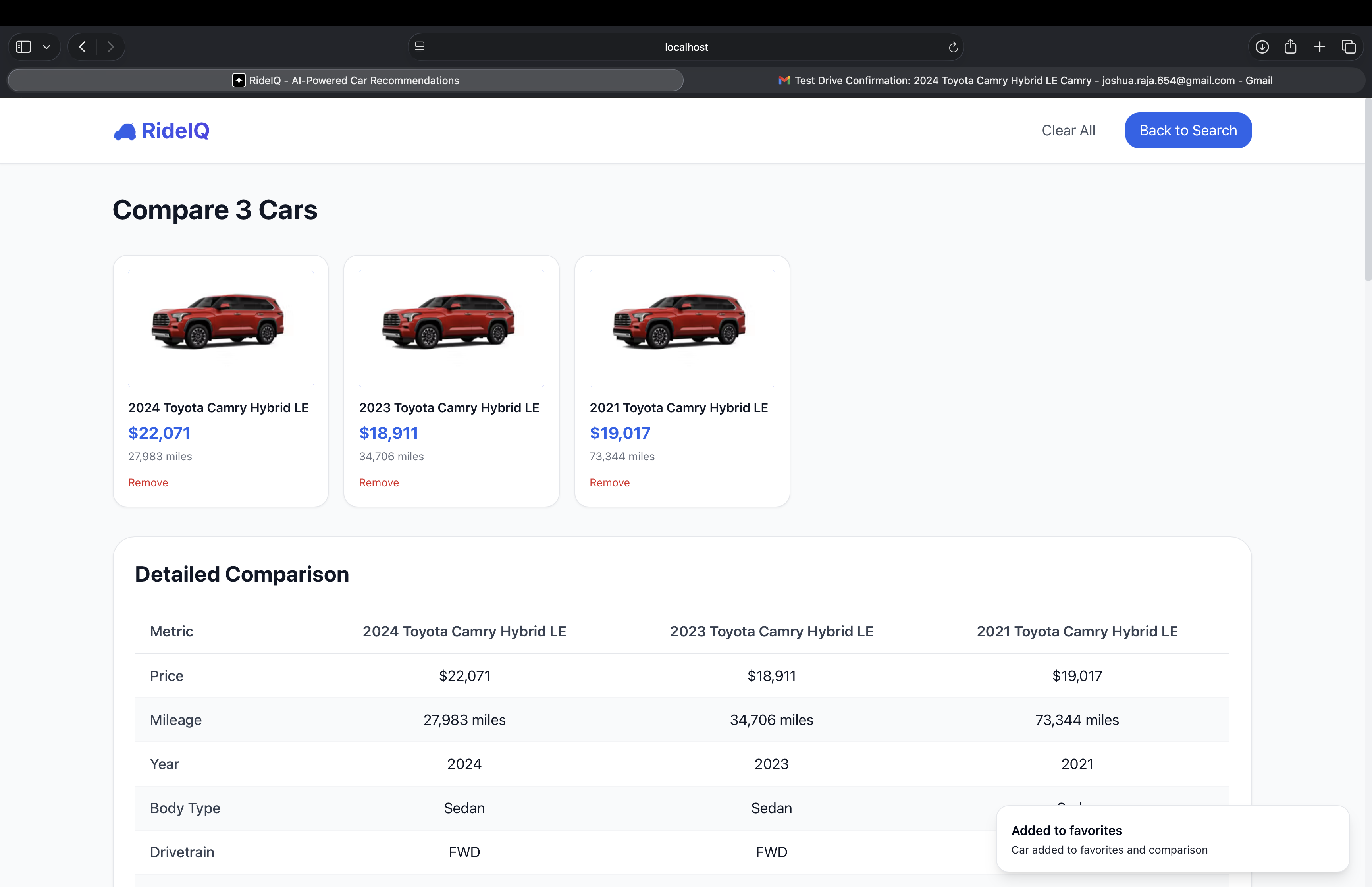
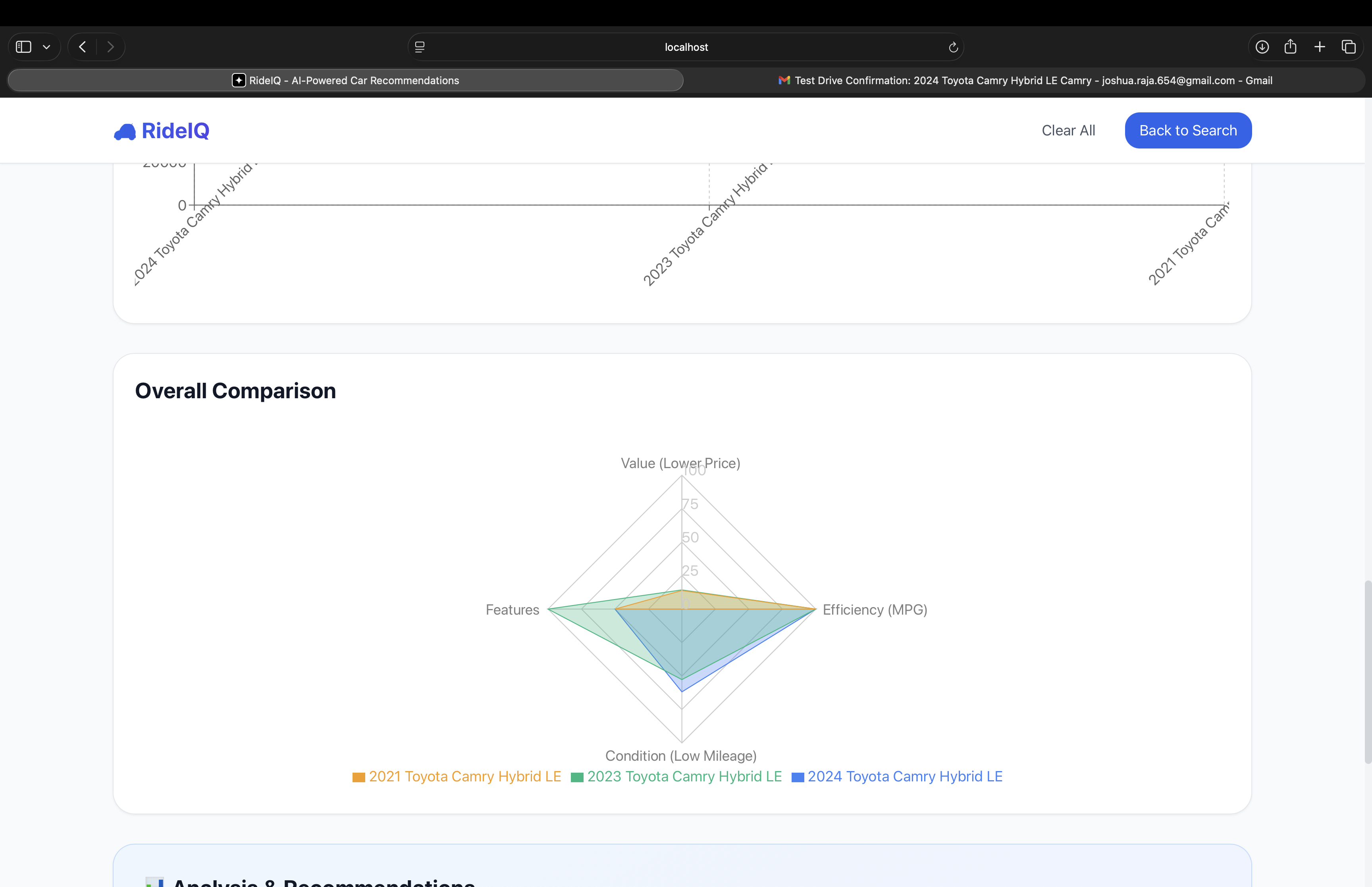
Compare Feature
-
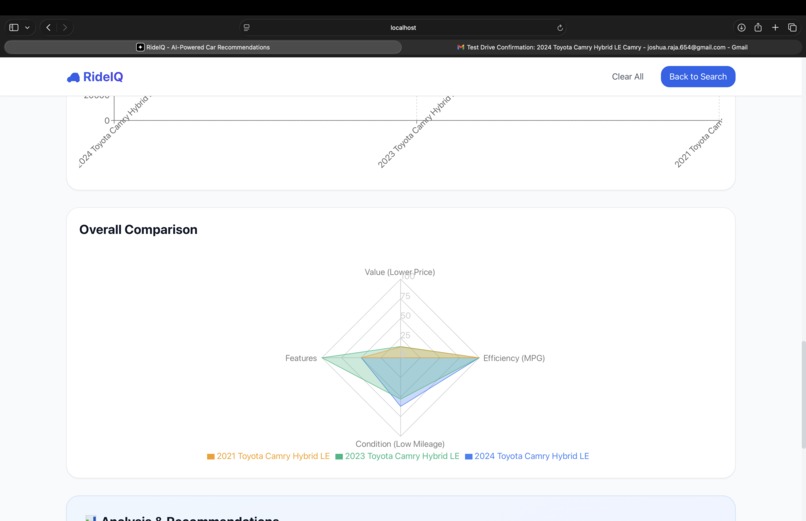
Charts for analysis
-
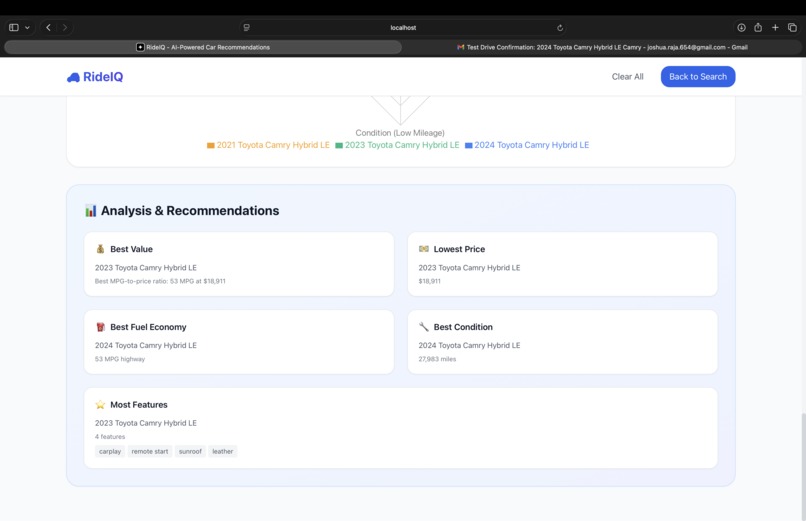
Recommendations on the cars

Inspiration
Buying a car online is overwhelming. Most marketplaces rely on rigid filters and keyword search, forcing users to guess the “right” specs instead of expressing what they actually want. We wanted to build a smarter experience, one that understands intent, not just inputs.
What it does
RideIQ is an AI-powered car marketplace that uses semantic search and intelligent recommendations to understand user intent and help buyers discover vehicles that truly match their needs, beyond rigid filters and keywords.
How we built it
We built an AI-powered car marketplace using Next.js (TypeScript) for the frontend and Supabase for the backend and database. Vehicle listings are embedded into vectors and stored in a vector-enabled PostgreSQL database. When users search, their natural-language queries are embedded and compared using similarity search, enabling semantic search and recommendations instead of strict filtering.
Challenges we ran into
One major challenge was designing a system that felt intelligent while remaining fast and reliable during a hackathon timeframe. Balancing embedding quality, query performance, and UI responsiveness required careful iteration. Another challenge was translating AI results into a user experience that felt trustworthy and intuitive, not opaque.
Built With
- ai
- authentication
- css
- embeddings
- engine
- ml
- next.js
- pgvector
- postgresql
- react
- recommendation
- semantic
- supabase
- tailwind
- typescript
- vector


Log in or sign up for Devpost to join the conversation.