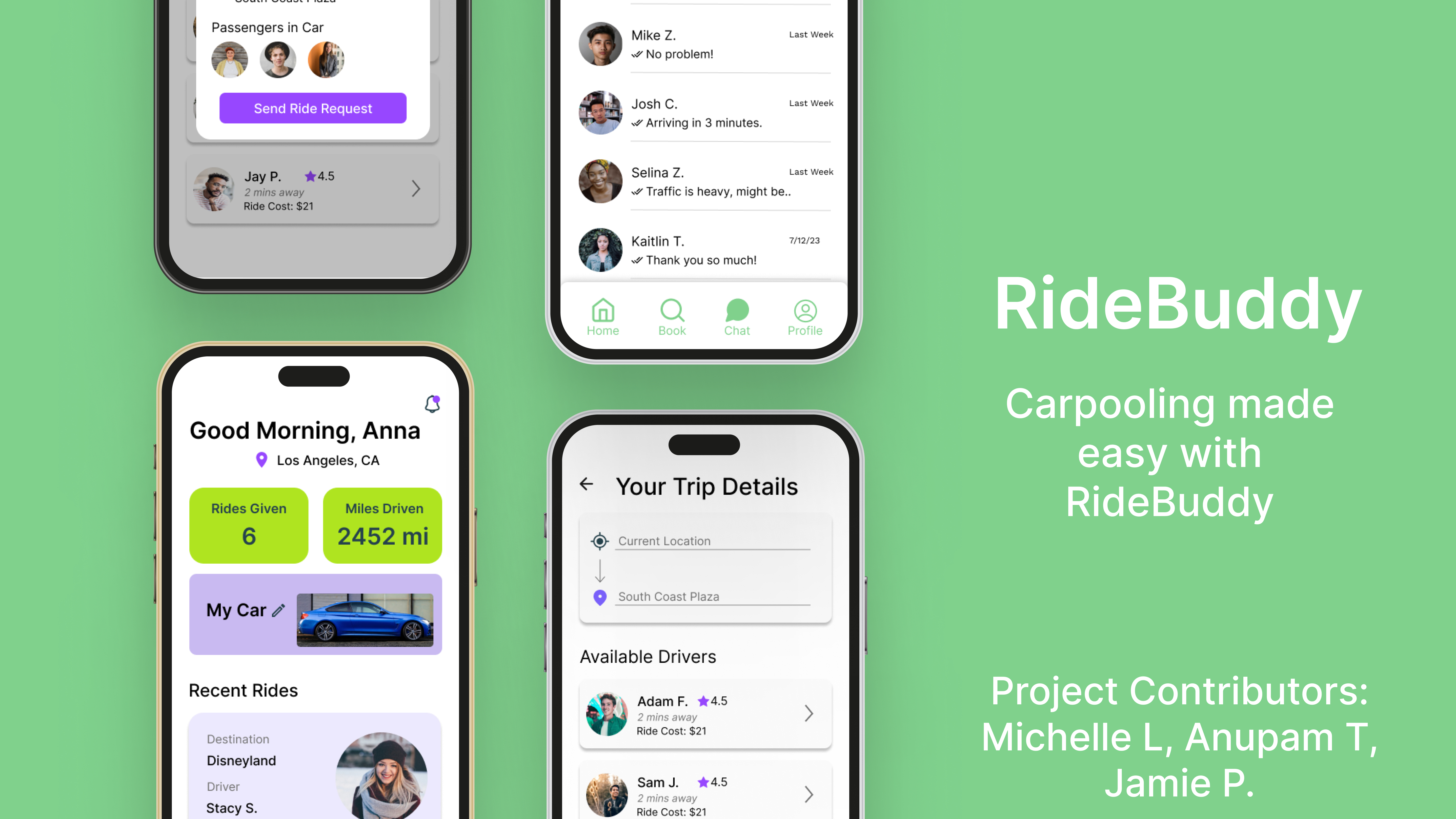
Anupam worked on the backend while Michelle and Jamie worked on the UI/UX design/frontend.
Inspiration
The inspiration behind creating RideBuddy was to address the inefficiencies and challenges faced in the traditional ridesharing industry. We recognized that many existing ridesharing platforms suffer from centralized control, high commission fees, lack of transparency, and limited user data protection. To overcome these issues, We decided to leverage blockchain technology to build a decentralized and transparent ridesharing app called RideBuddy.
What it does
RideBuddy is a ridesharing blockchain app that allows users to connect directly with drivers in a peer-to-peer manner. It facilitates the sharing of rides and transportation services without the need for intermediaries. Here are some of the main features of RideBuddy:
Decentralized Platform: RideBuddy operates on a blockchain network, which means there is no central authority governing the platform. All transactions and interactions are recorded on the blockchain, ensuring transparency and security.
Peer-to-Peer Ridesharing: RideBuddy enables riders and drivers to connect directly, eliminating the need for a middleman and reducing commission fees. Users can negotiate terms and payment within the app.
Secure Payments: The app uses cryptocurrency or a digital token for payments. This ensures fast, secure, and borderless transactions, while protecting sensitive financial information.
Smart Contracts: RideBuddy implements smart contracts to automate and enforce the terms of each ride agreement. These contracts execute when predefined conditions are met, providing a trustless environment for users.
Reputation System: To establish trust among users, RideBuddy features a reputation system that allows both riders and drivers to rate and review each other after each completed ride.
How we built it
The development of RideBuddy involved multiple stages:
Conceptualization and Planning: We brainstormed the idea of a decentralized ridesharing app and outlined the essential features and functionalities.
Blockchain Selection: We chose a suitable blockchain platform that aligns with their requirements, considering factors like scalability, security, and developer support.
Smart Contract Development: Smart contracts were designed and coded to manage ride agreements and payment processes on polygon.
App Development: The RideBuddy app was build using figma and react.
Backend Infrastructure: The backend infrastructure was set up to handle user authentication, data storage, and interaction with the blockchain.
Testing: Rigorous testing was conducted to ensure the app's functionality, security, and usability.
Deployment: We deployed the app on polygon chain.
Challenges we ran into
During the development of RideBuddy, the team encountered several challenges, including:
User Adoption: Convincing users to switch from established centralized ridesharing platforms to a new decentralized app.
Regulatory Compliance: Navigating the legal and regulatory landscape surrounding ridesharing and cryptocurrency payments in different regions.
Data Privacy: Implementing robust data privacy measures to protect user information without compromising transparency.
Accomplishments that we're proud of
Despite the challenges faced, we successfully created RideBuddy, a fully functional and decentralized ridesharing app. Some of the accomplishments they are proud of include:
Decentralization: Establishing a truly decentralized platform that empowers users and reduces dependency on intermediaries.
Transparency: Creating a transparent system where all ride transactions are recorded on the blockchain, ensuring trust among users.
Smart Contracts: Implementing smart contracts to automate and secure ride agreements, providing a reliable and trustless environment.
Cryptocurrency Integration: Integrating cryptocurrencies or digital tokens for secure and borderless payments within the app.
What we learned
Throughout the development process, We learned valuable lessons, including:
Blockchain Implementation: Gaining hands-on experience in integrating blockchain technology into real-world applications.
Security Considerations: Understanding the importance of robust security measures to protect user data and digital assets.
Regulatory Challenges: Gaining insights into the complexities of navigating regulatory frameworks when dealing with decentralized platforms and cryptocurrencies.
What's next for RideBuddy
The journey for RideBuddy does not end with the initial development. We plan to work on this idea after the hackathon too
By continually evolving and addressing the needs of both riders and drivers, RideBuddy aims to revolutionize the ridesharing industry and lead the way towards a decentralized and sustainable transportation future.
Built With
- blockchain
- css
- figma
- html
- javascript
- polygon
- react
- solidity
- tailwindcss
- typescript


Log in or sign up for Devpost to join the conversation.