Inspiration:
Students on college campuses, especially in urban environments like here in Pasadena, consume a lot of fuel to get around to what are often common locations. Whether taking a personal vehicle or an Uber, there is a clear need to increase the extent to which rides are shared in the interests of cutting down on fuel consumption, with the added benefit of helping students save on transportation costs and find easier rides. In a world where campus specific apps are gaining popularity (such as Fizz), why shouldn't ride sharing be next?
What it does:
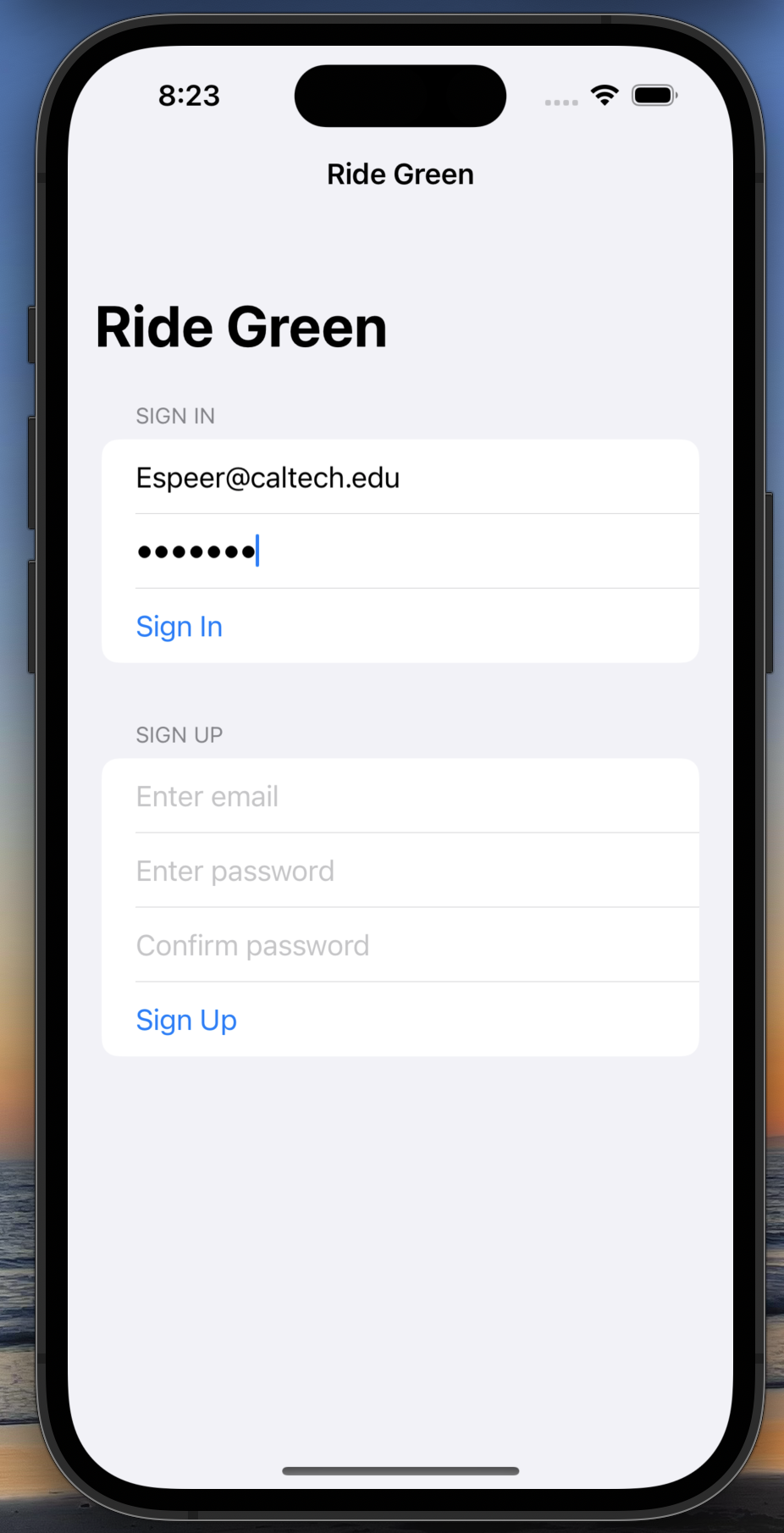
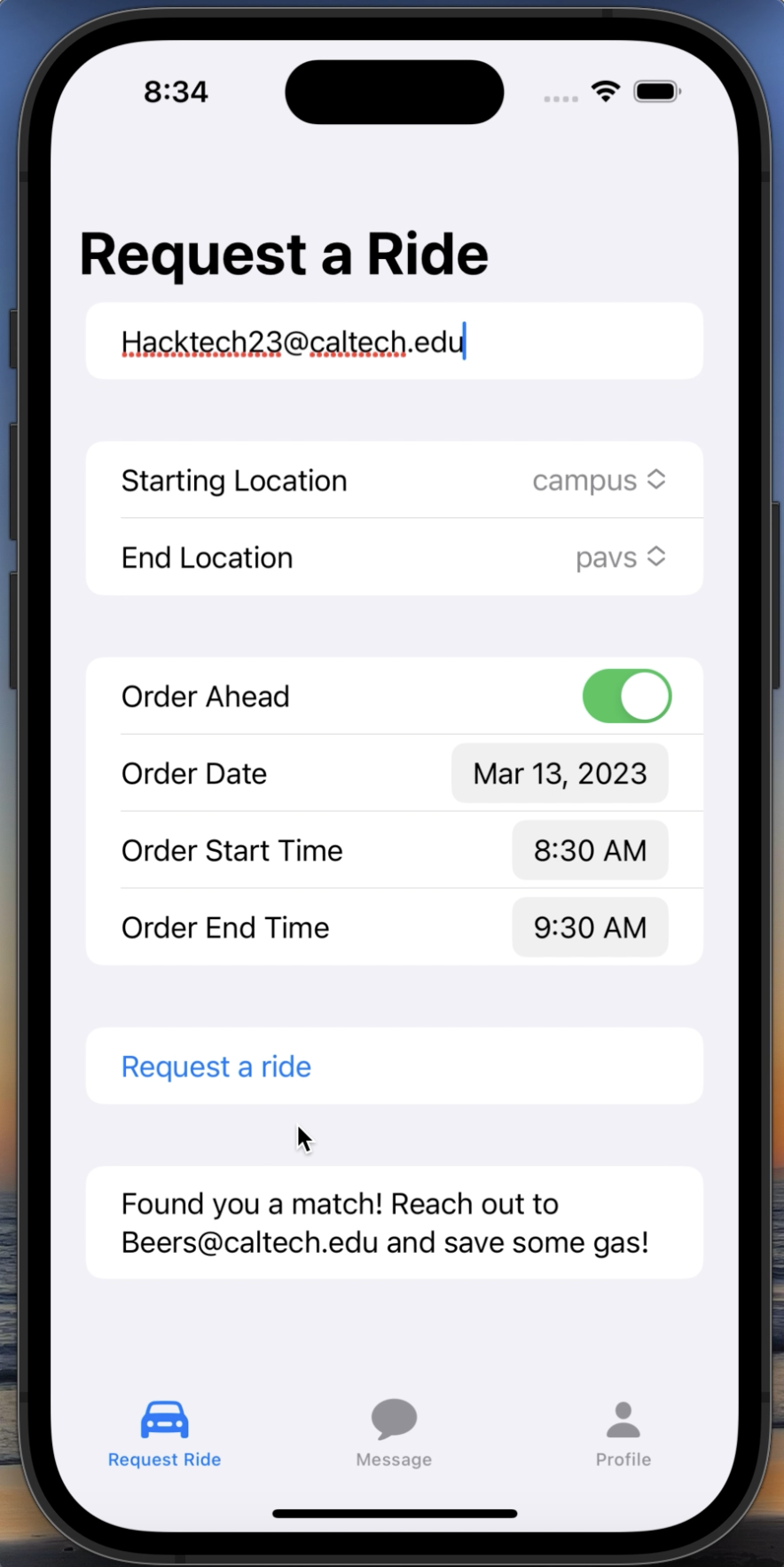
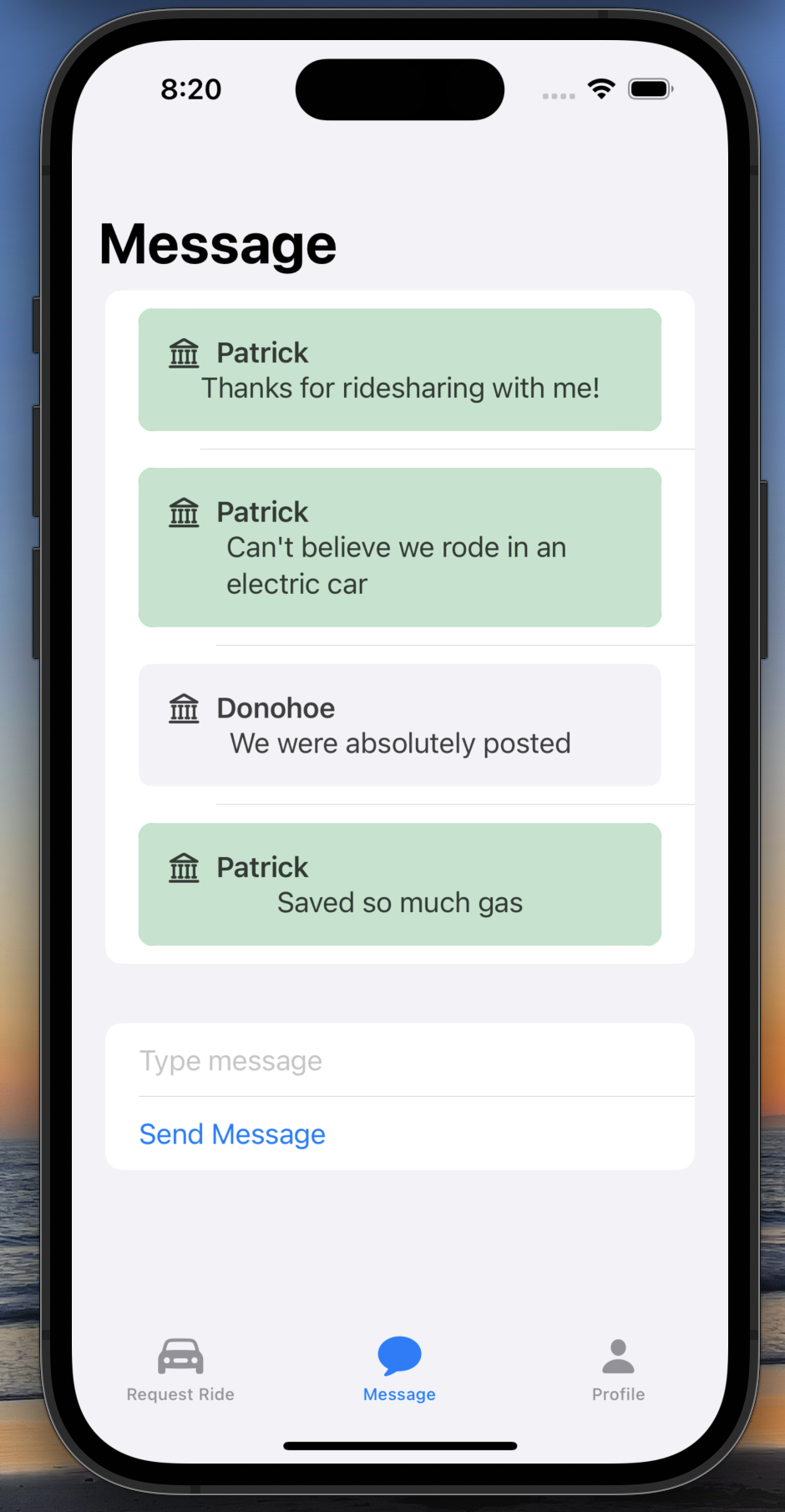
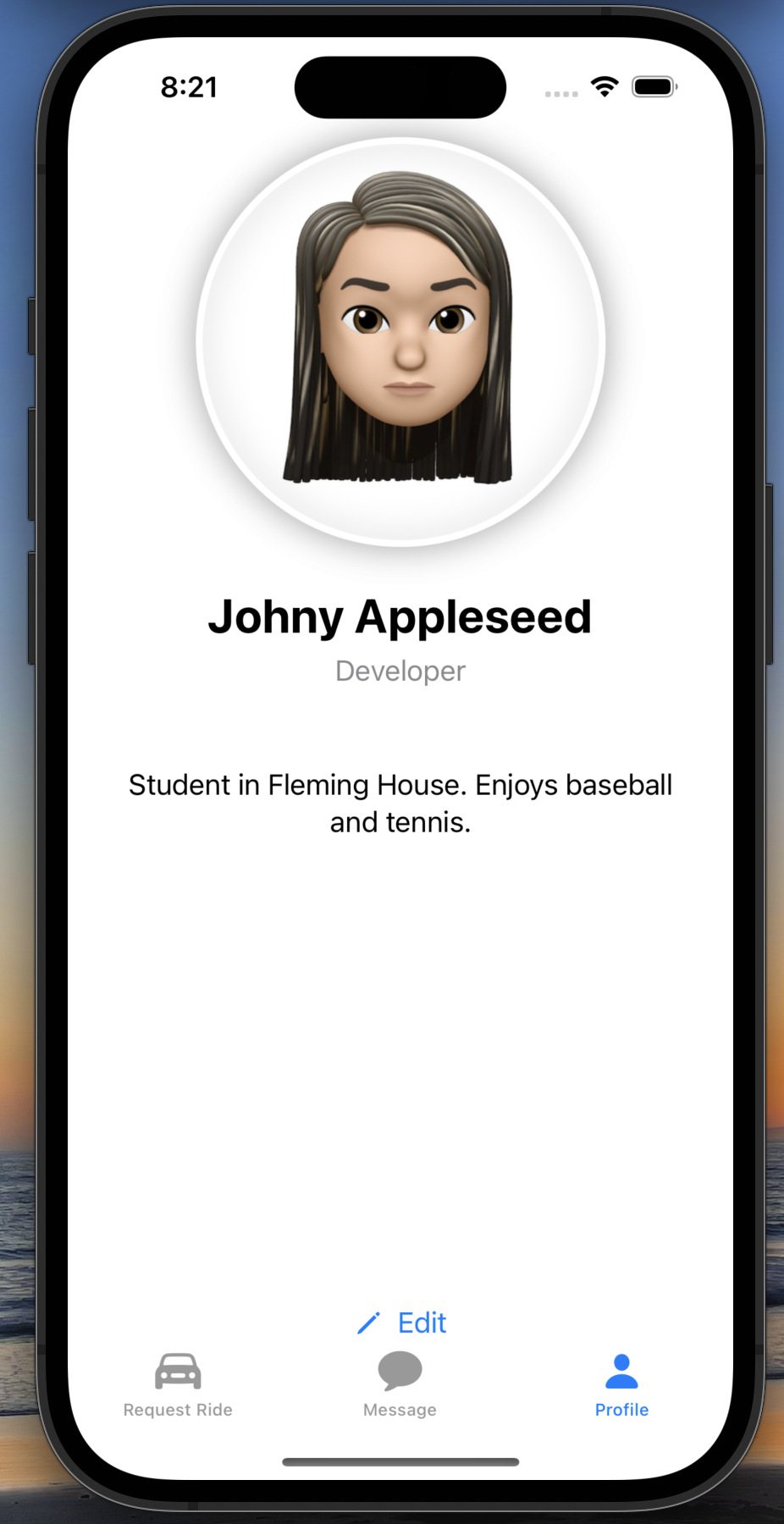
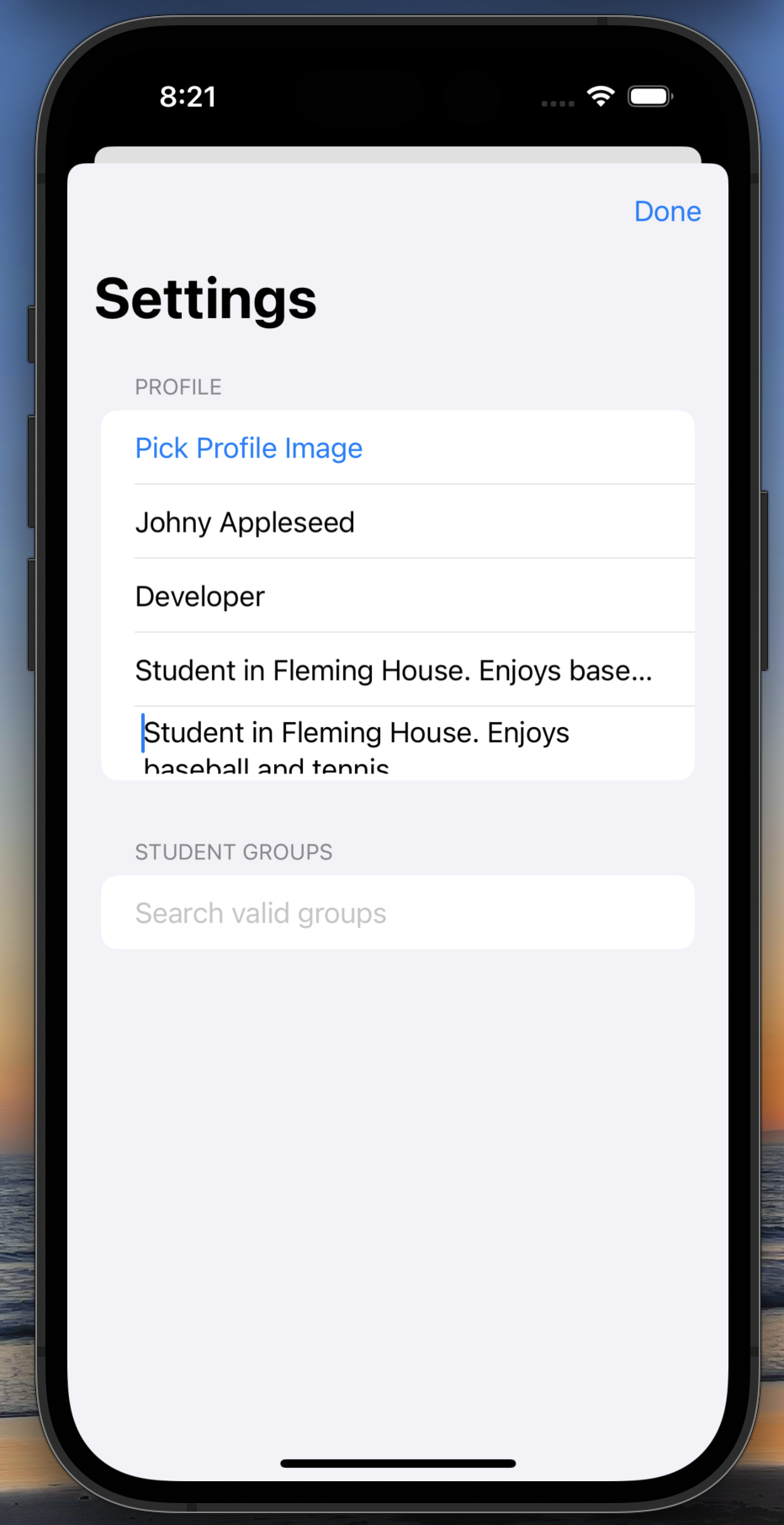
This app allows students who attend a common university to quickly check if any other students on campus are headed to the same place as they are at a given time, and reach out to share a car if they are. There is the basis of an in-app messaging and user profile tool which will eventually allow authentication of users and in-app messaging to help students carpool safely. A student can simply put in where they want to go and when, and instantly see if any other student in the database has also logged similar plans. This will be greatly useful at school breaks when many students head to the airport at the same time, but also at any time throughout the year.
How we built it
This app is built with a frontend which is written in SwiftUI, and plugged into a database hosted with Firebase via the Firebase API. Industry standard Github practices were used. The SwiftUI frontend simply triggers a search in the database which is stored as a tree of ride data, which returns a match if one is found. Otherwise, the unmatched request is added to the database to be paired with another student who searches for the same thing.
Challenges we ran into
Location data and time data are tricky! Establishing thresholds for distance and time in which a ride request is still relevant to another student is difficult to gauge, and also tricky to leave up to the user. Also, SwiftUI and Firebase are very new, constantly evolving products, and unfortunately the documentation on how to interface them together is out of date. We had to find many patches for different issues and deprecated methods in order to accomplish basic functionality of the database system.
Accomplishments that we're proud of
The app design is simple and compact; while there is plenty of room to add bells and whistles to the design, we feel we were able to provide clear user value with an interface with obvious, self-explanatory functionality. Similarly, we are proud of the data querying in the database functionality, which was very difficult to navigate with the deprecated Firebase documentation.
What's next for Ride Green
RideGreen is ready for a full-fledged authentication system! With Firebase, it is possible to add both user authentication and in-app messaging with paid service. We built the app with this in mind, with the skeleton of these features ready to go. These features therefore could be plugged in to greatly enhance the user experience with much higher levels of user customization. The app is also ready to have a maps implementation dropped into it, so that users can plug in addresses instead of just common locations, and to provide an enhanced interface based on pin-dropping.


Log in or sign up for Devpost to join the conversation.