-
-
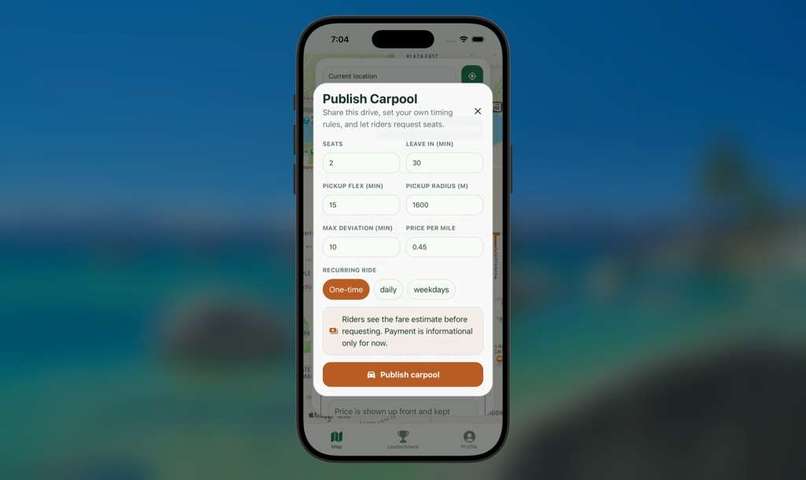
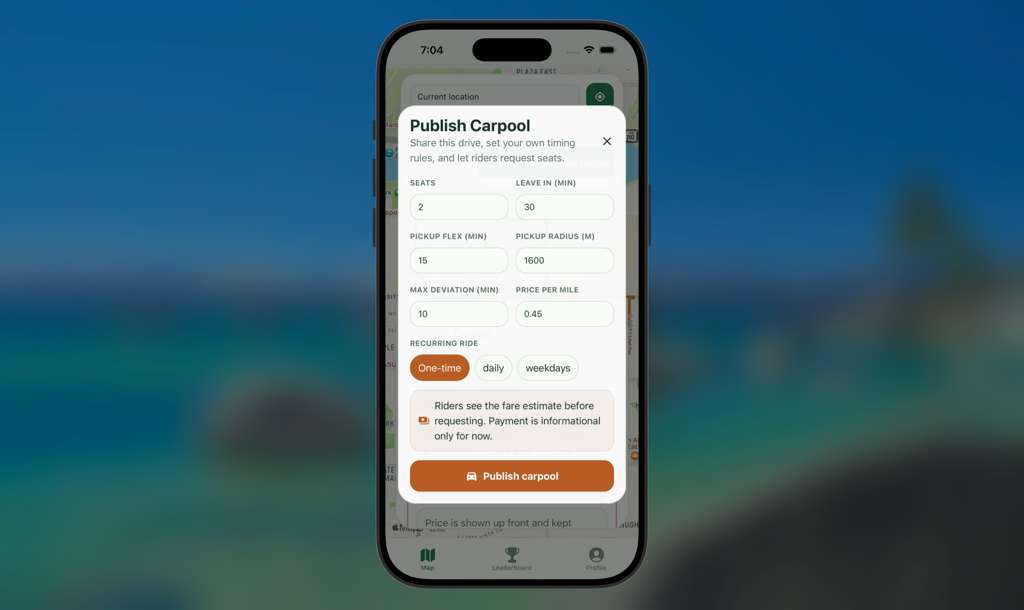
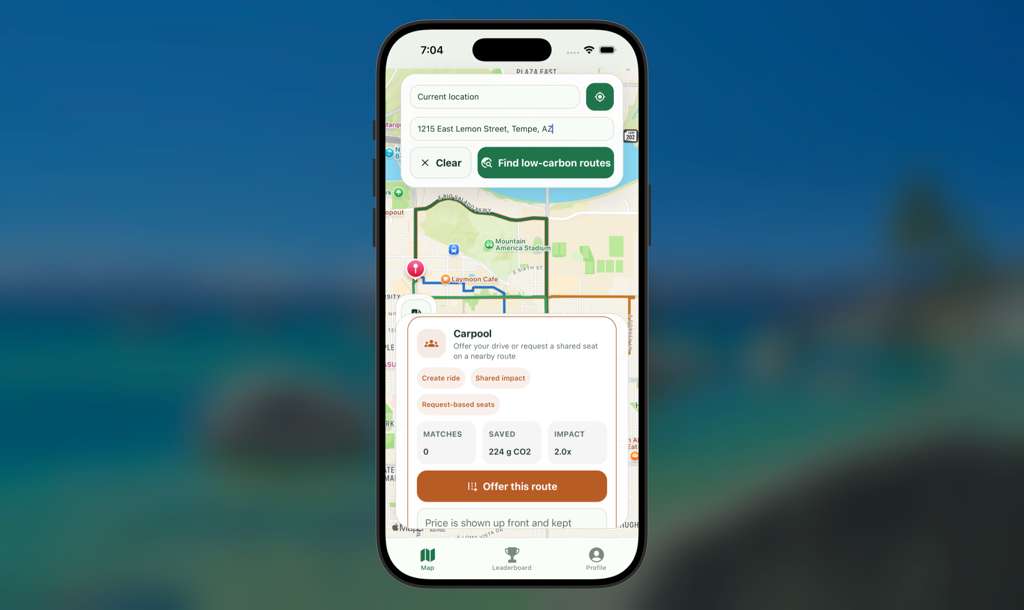
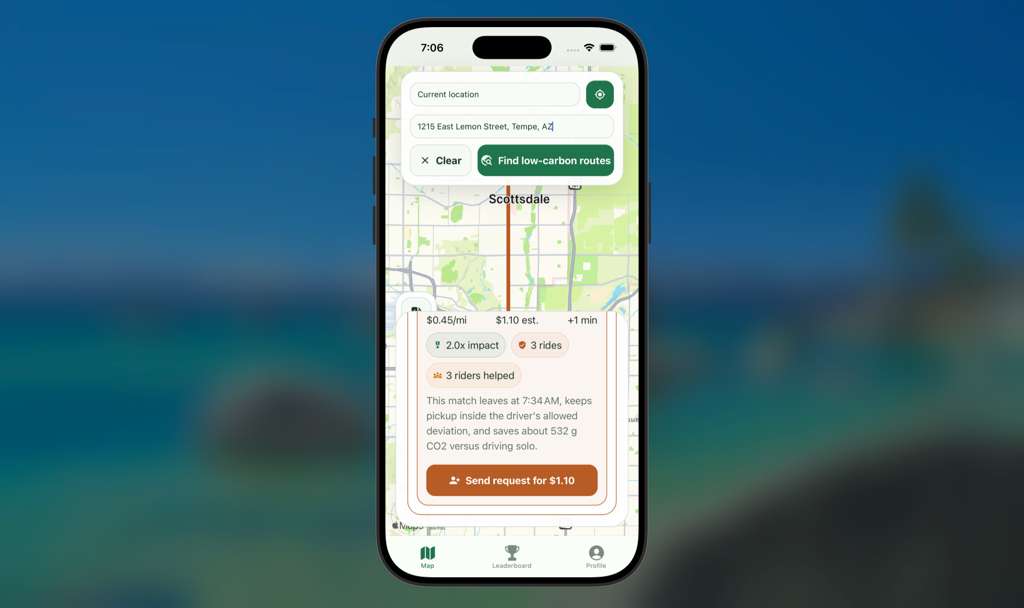
Create Carpool
-
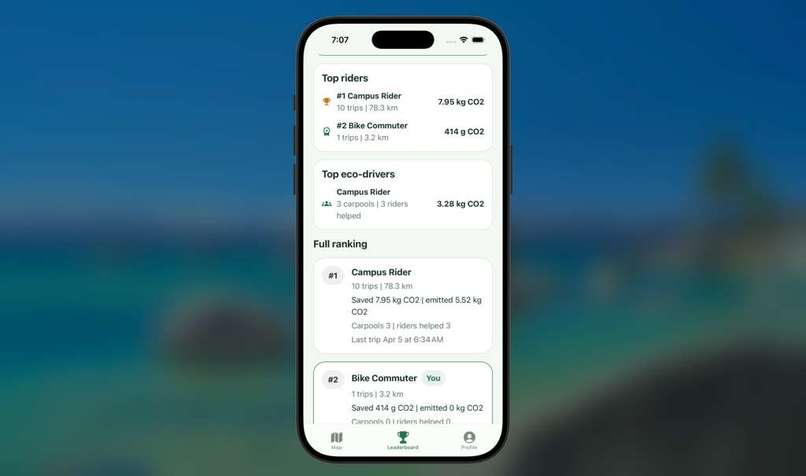
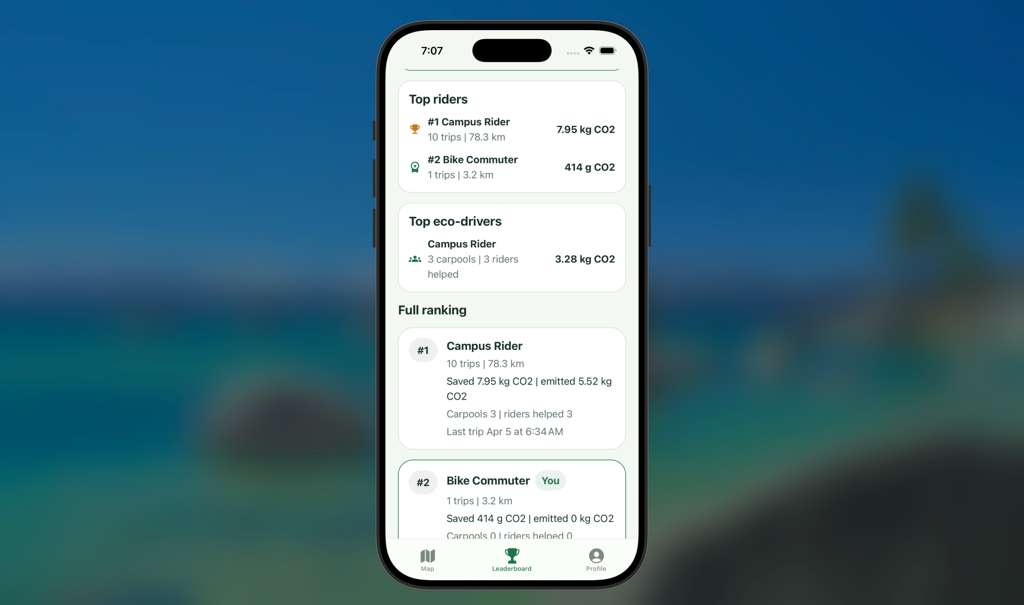
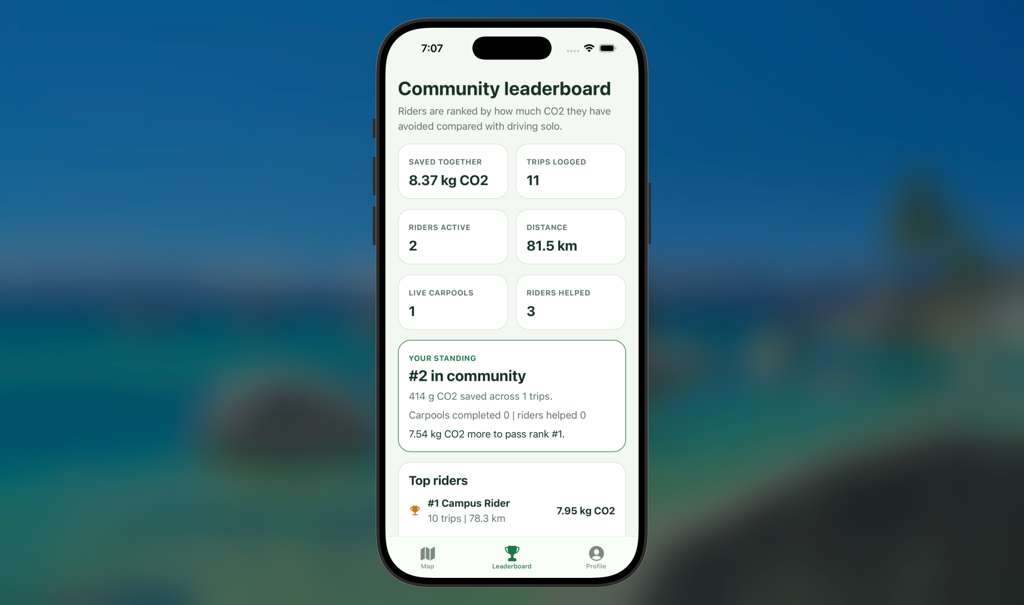
Full Ranking
-
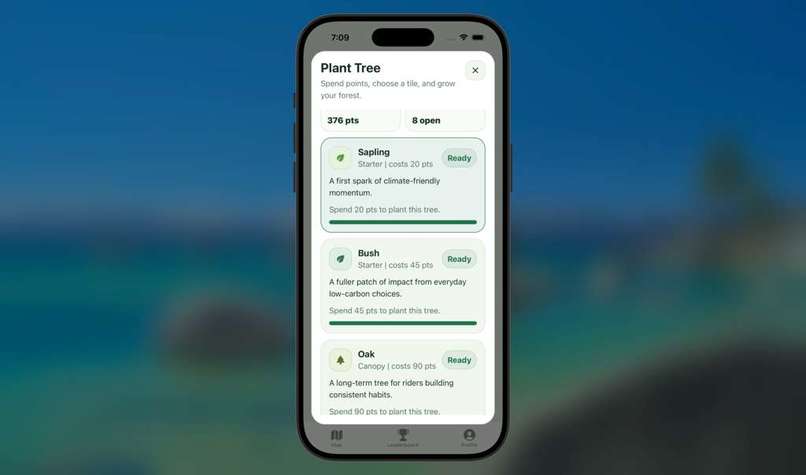
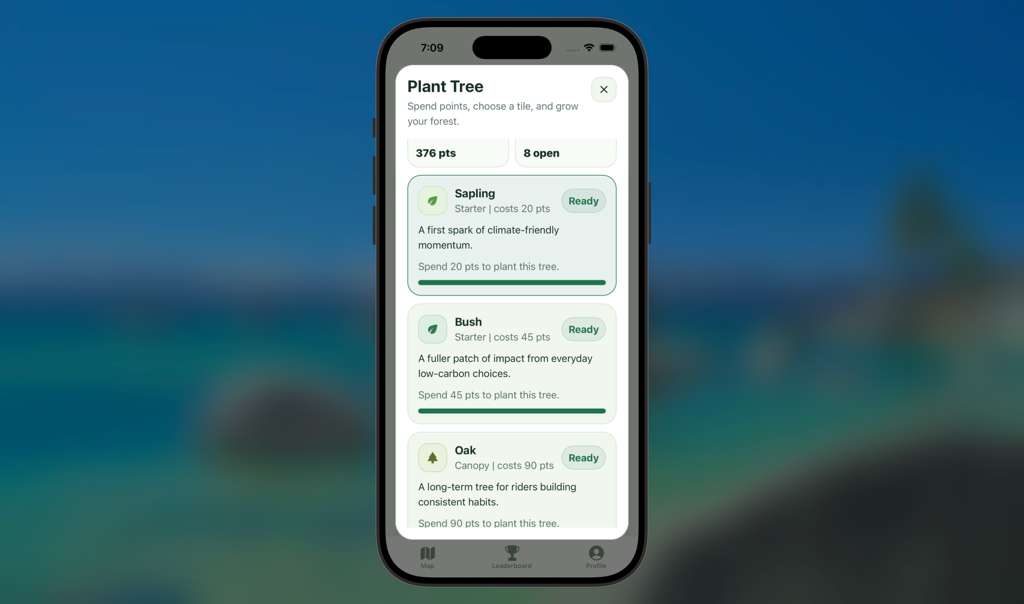
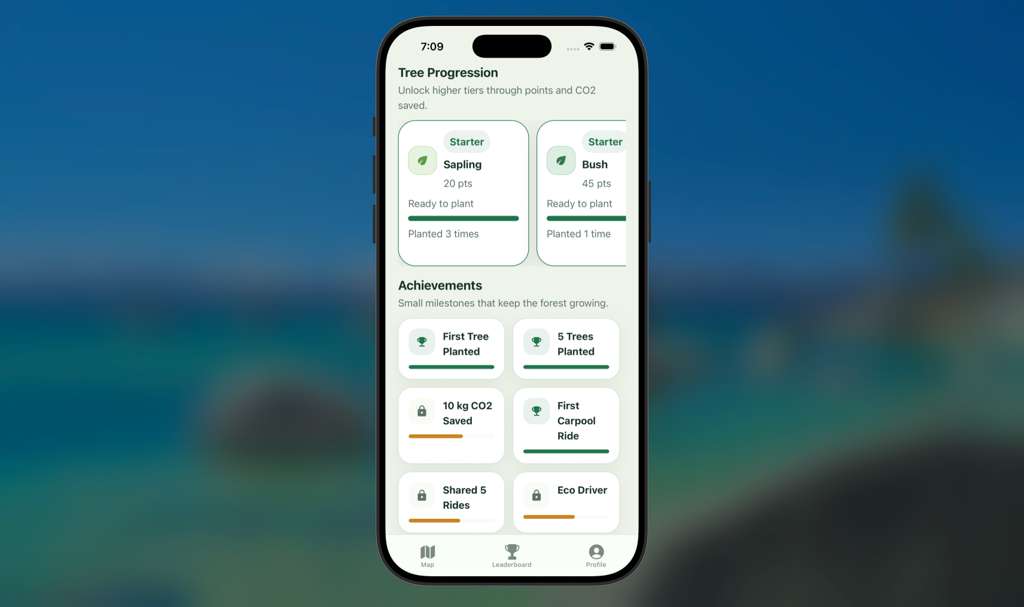
Planting a Tree Menu
-
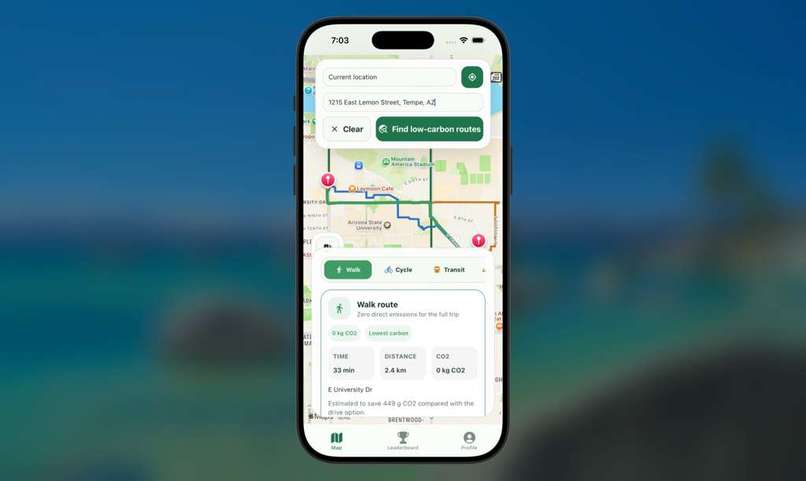
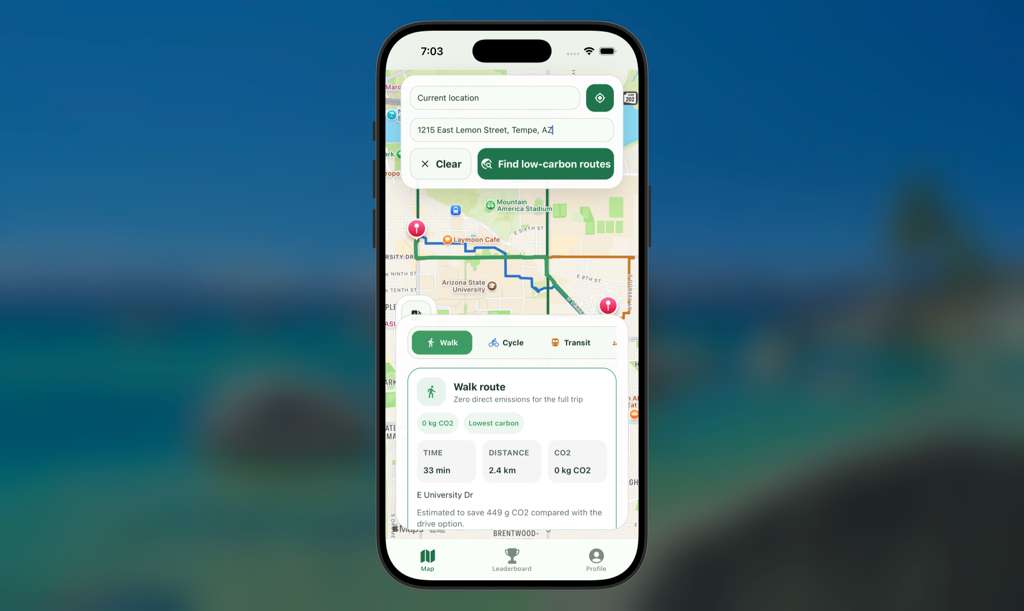
Walking Route
-
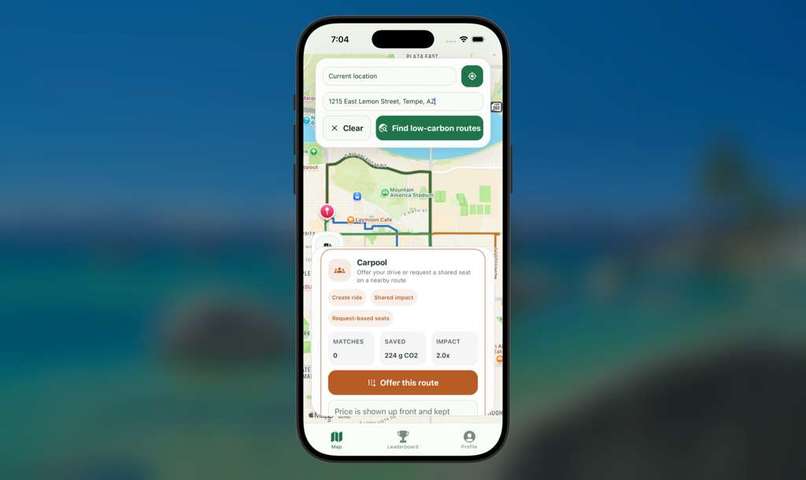
Carpooling Menu
-
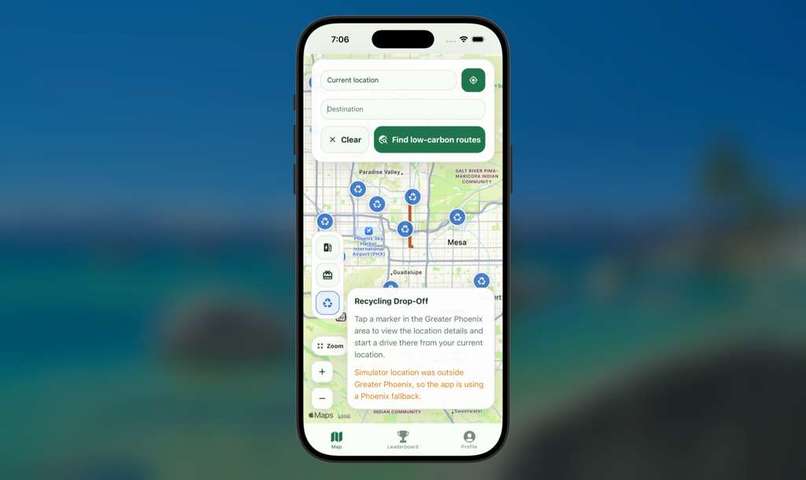
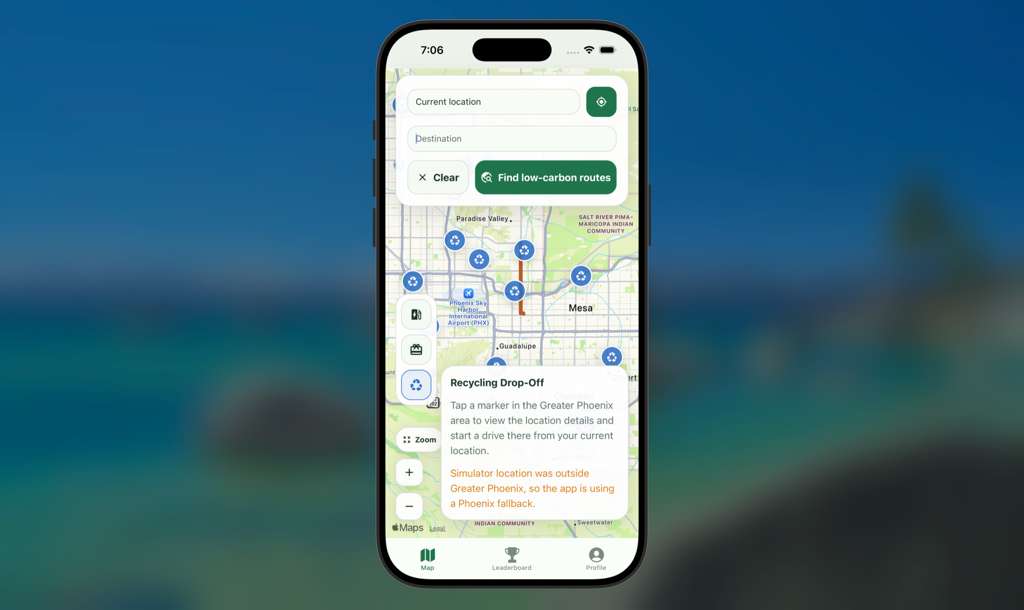
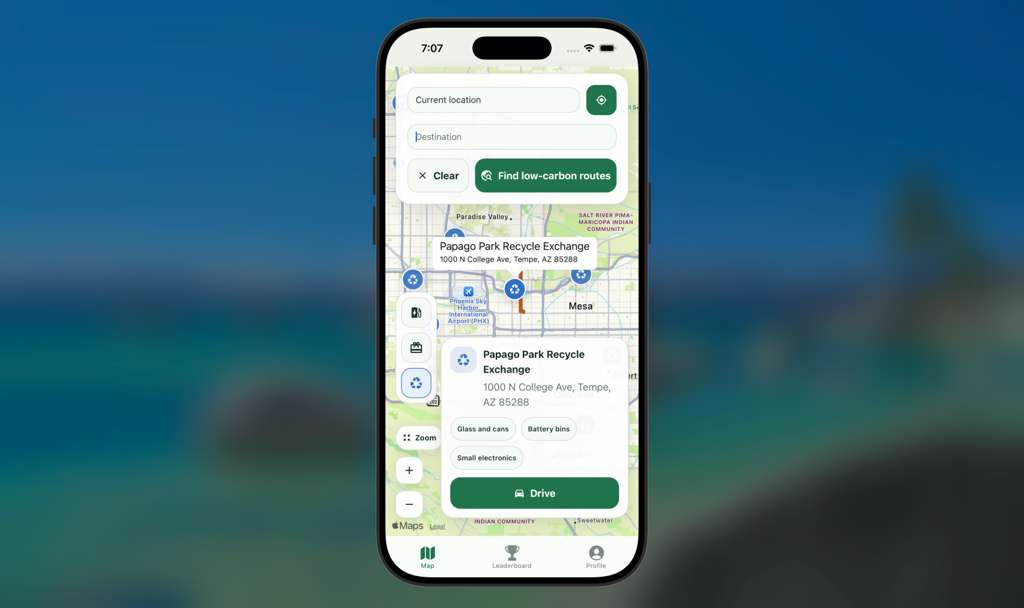
Discovering Recycling Drop-Off Centres with one click
-
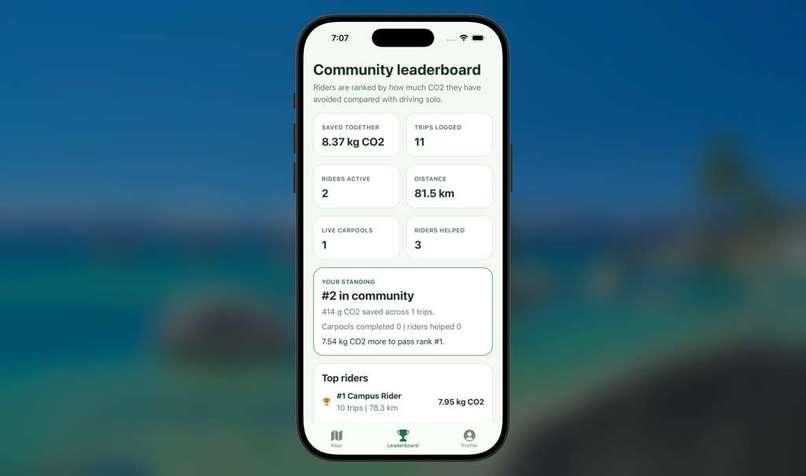
Community Leaderboard!
-
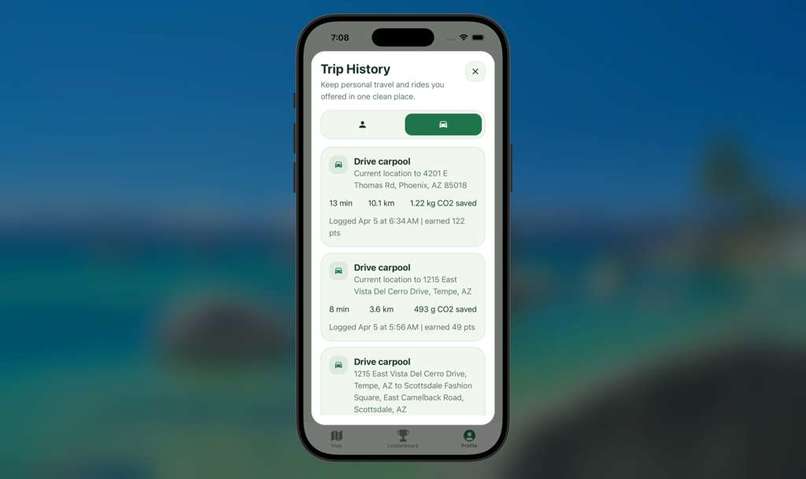
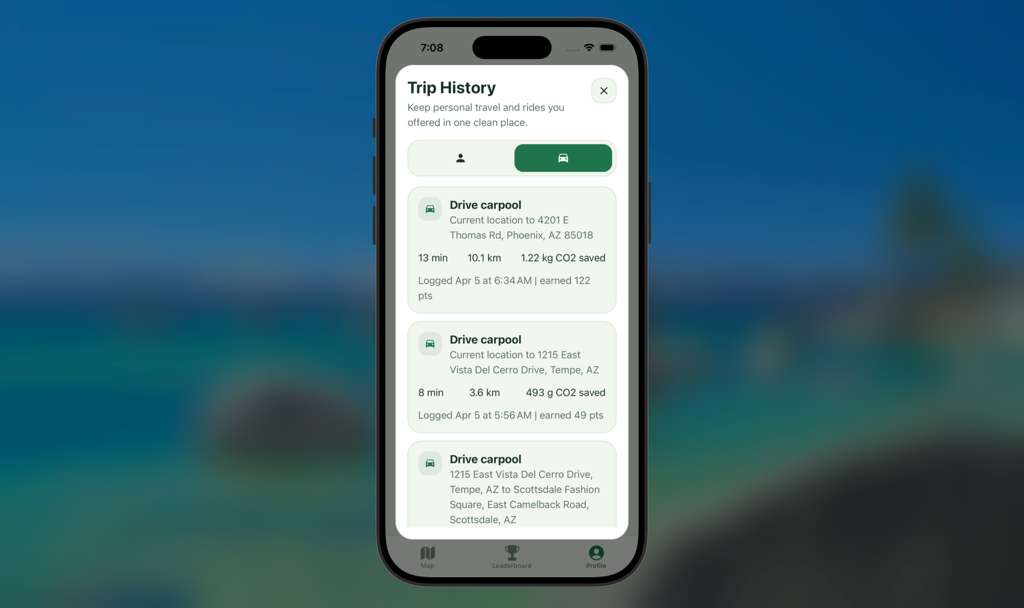
Carpooling History
-
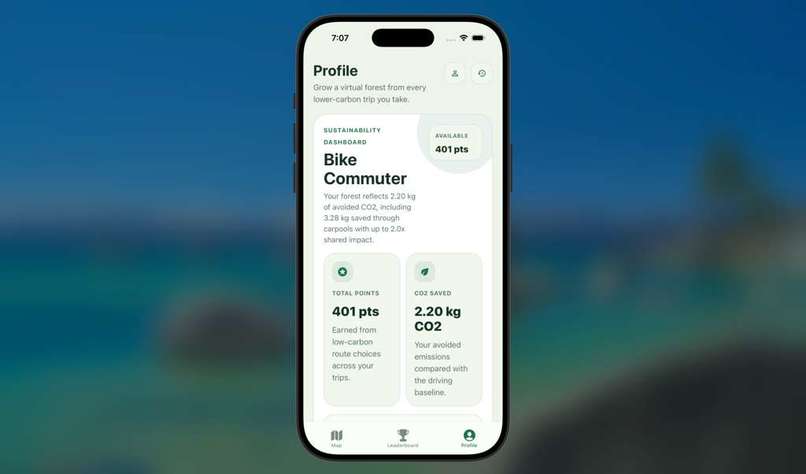
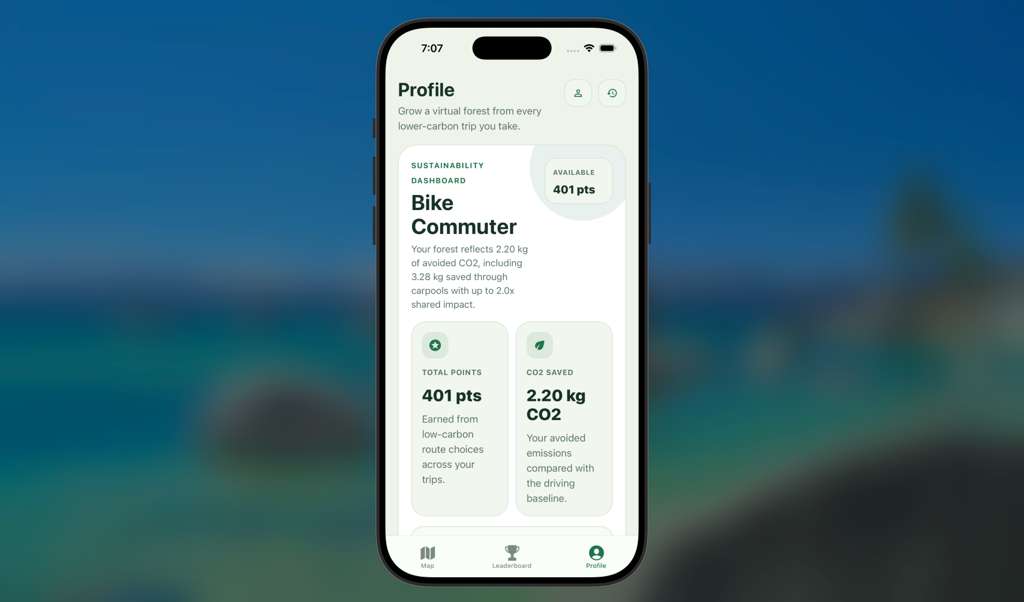
User Dashboard
-
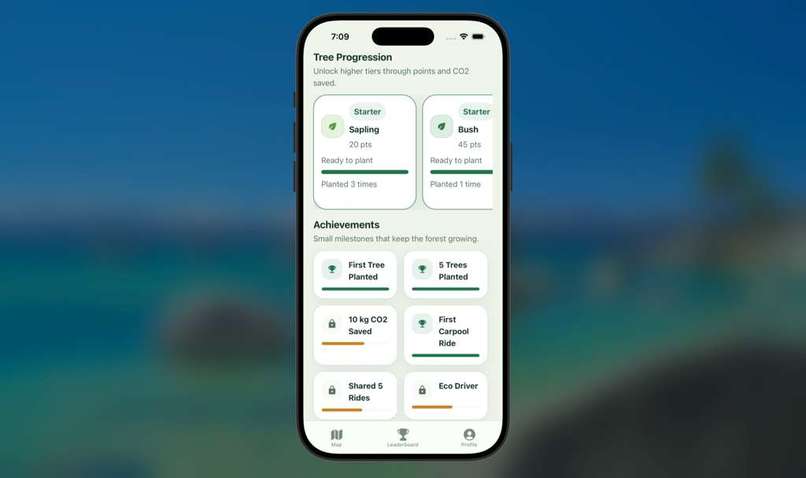
Achievements and Badges!
-
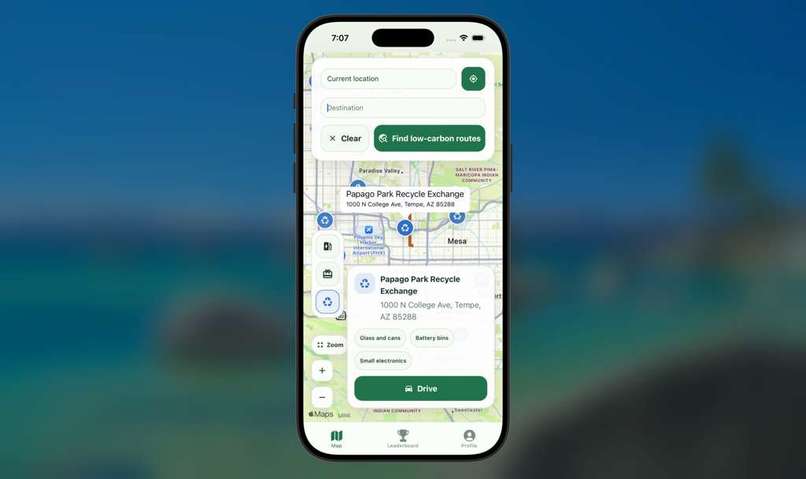
Exploring particular center with option to navigate
-
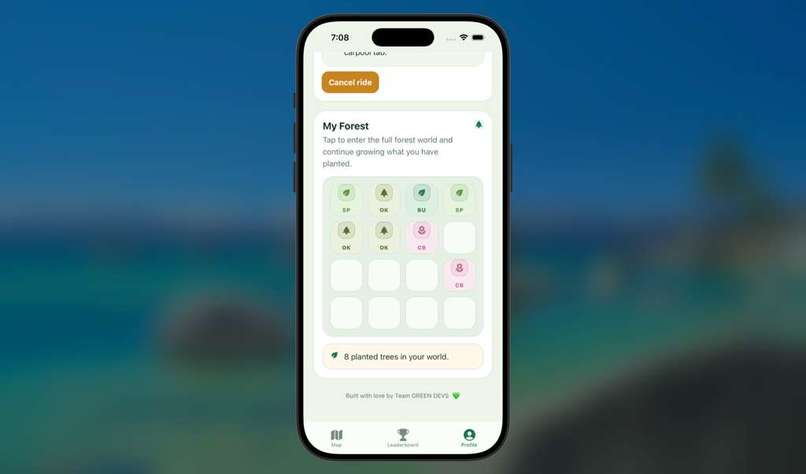
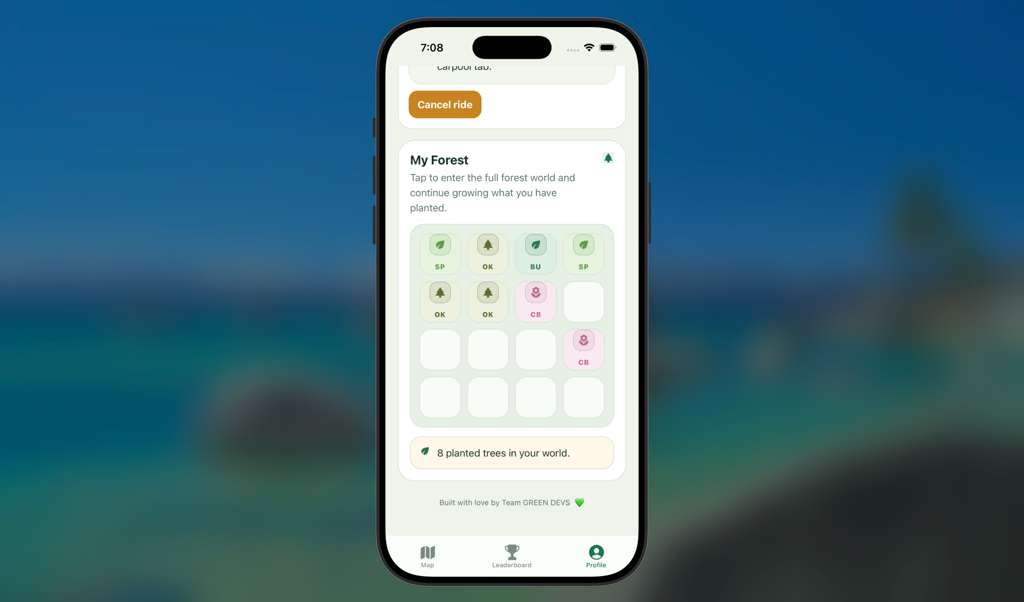
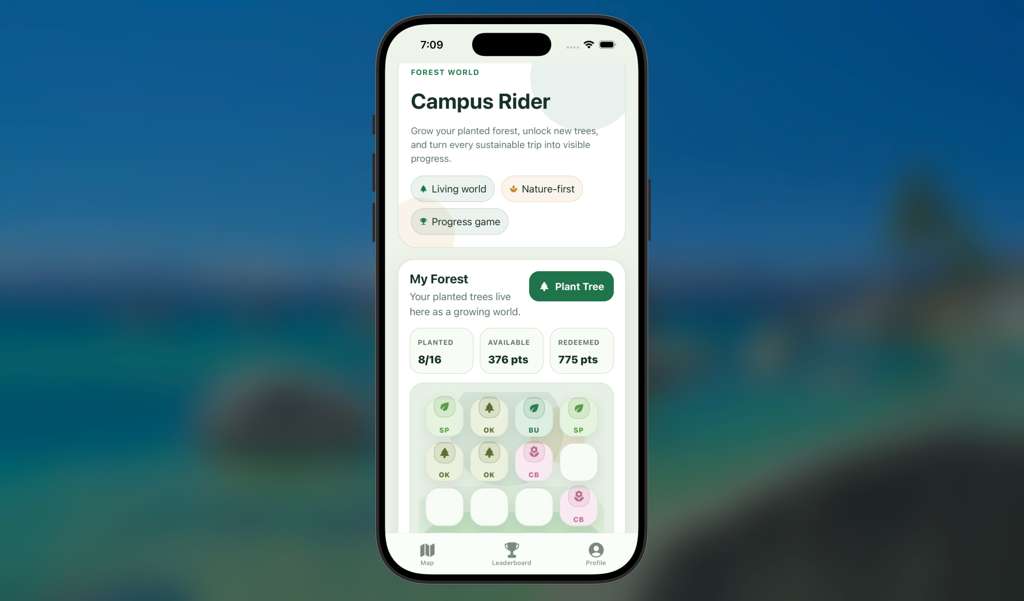
Forest Dashboard
-
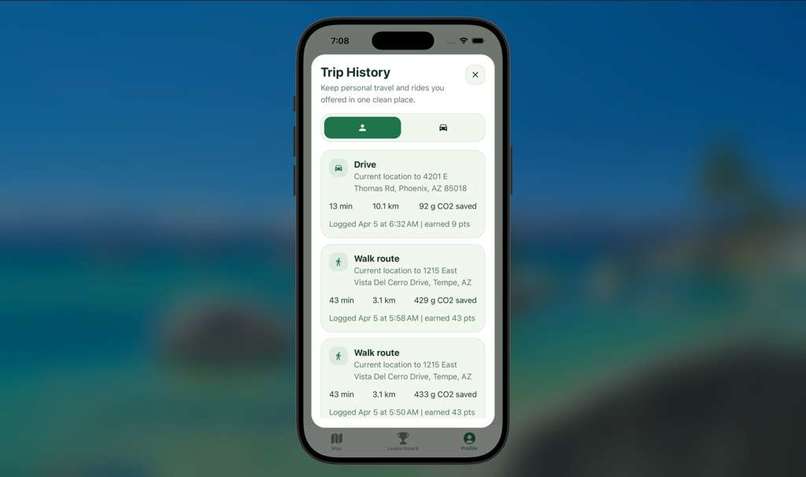
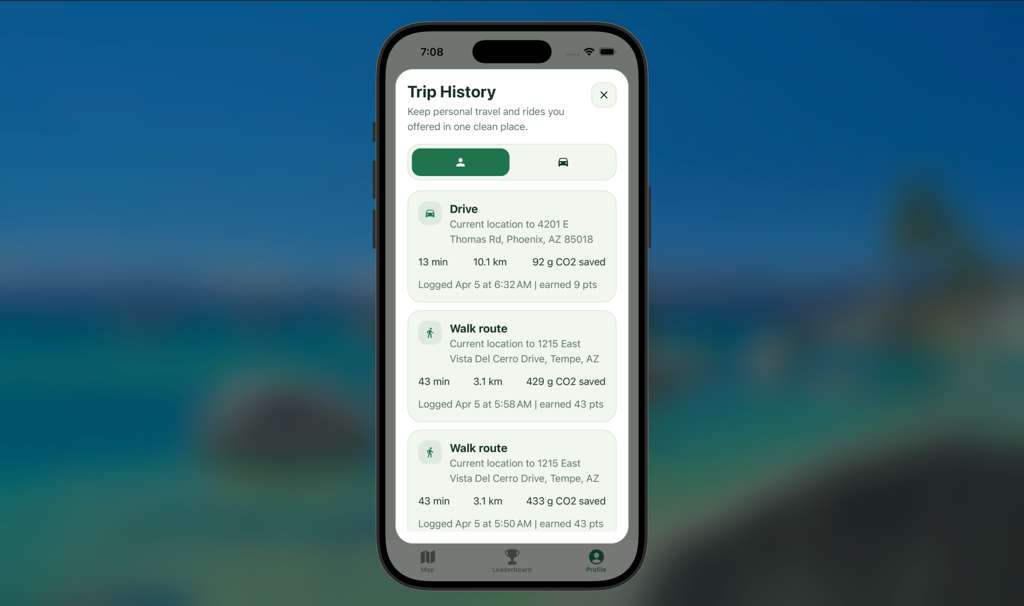
Trips History
-
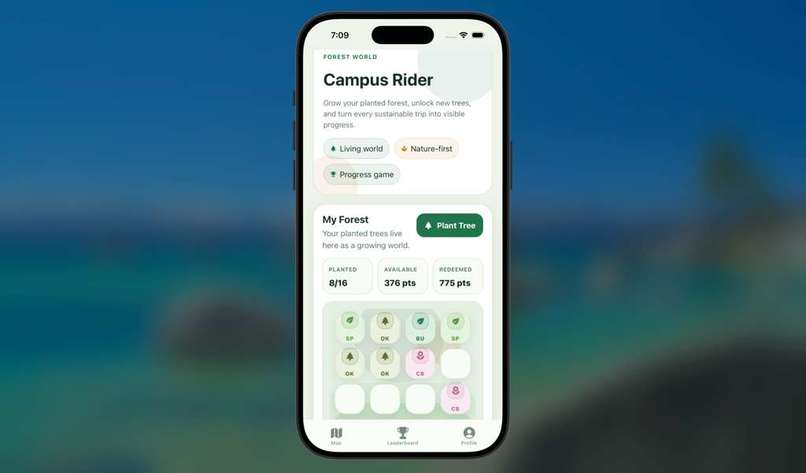
Interactive Forest Board filled with plants
-
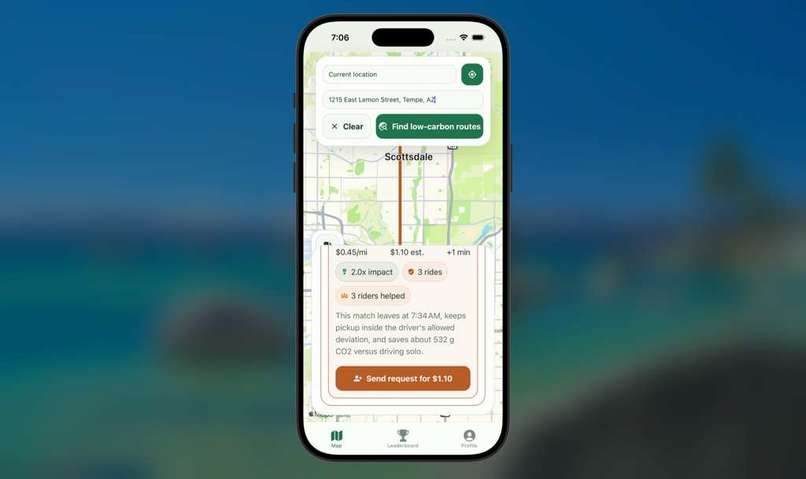
Rider requesting to join a car pool
Inspiration
Transportation is one of the biggest sources of everyday carbon emissions, but most people make commuting decisions based on convenience and speed, not sustainability. We wanted to challenge the idea that greener travel always takes more effort. Ride Green was inspired by the belief that sustainable choices should feel just as accessible as the default option, with quick shortcuts that let users explore better alternatives in just one tap.
What it does
Ride Green helps users compare lower-emission travel options like walking, biking, public transit, and carpooling while showing the carbon impact of each choice. A big part of the experience is making sustainability feel easy: instead of forcing users to search through multiple apps or menus, Ride Green gives them simple one-click shortcuts to explore greener destinations and commuting options instantly. It reduces the friction around sustainable travel and shows that making a better choice does not have to feel like extra work.
How we built it
We built Ride Green as a mobile-first app using Expo React Native for the frontend, giving us a smooth cross-platform experience and fast iteration during development. On the backend, we used Node.js, Express, and PostgreSQL to manage trip data, user activity, carpool coordination, and leaderboard progress. We also integrated mapping and routing APIs to generate commute options, estimate travel details, and surface carbon-conscious alternatives in real time.
Challenges we ran into
One of our biggest challenges was balancing convenience and sustainability in a way that felt practical to users. We also had to coordinate real-time style carpool flows, route comparisons, and shared trip state while keeping the experience simple and intuitive. On the technical side, integrating map-based routing, trip simulation, and synchronized rider-host interactions required careful logic and a lot of debugging.
Accomplishments that we're proud of
We’re proud that Ride Green does more than just raise awareness. It turns sustainable commuting into something users can actually act on right away. One of our favorite parts is how we simplified discovery through quick, one-tap shortcuts that let users explore locations and greener travel options without the usual hassle. That experience helps break the assumption that sustainability is inconvenient, and instead makes it feel intuitive, fast, and realistic for everyday use.
What we learned
We learned that sustainability products are most effective when they meet people where they are instead of expecting perfect behavior. Small design choices, like showing impact at decision time or rewarding progress, can make greener habits feel more achievable. We also strengthened our skills in full-stack development, API integration, real-time state handling, and building a product around both user motivation and technical execution.
What's next for Ride Green
Next, we want to make Ride Green even more personalized and intelligent by improving route recommendations, expanding reward systems, and refining the carpool matching experience. We’d also love to add deeper analytics, community challenges, and long-term habit tracking to keep users engaged over time. Ultimately, our goal is to turn Ride Green into a daily commuting co-pilot that helps people save emissions consistently without sacrificing convenience.


Log in or sign up for Devpost to join the conversation.