-
-
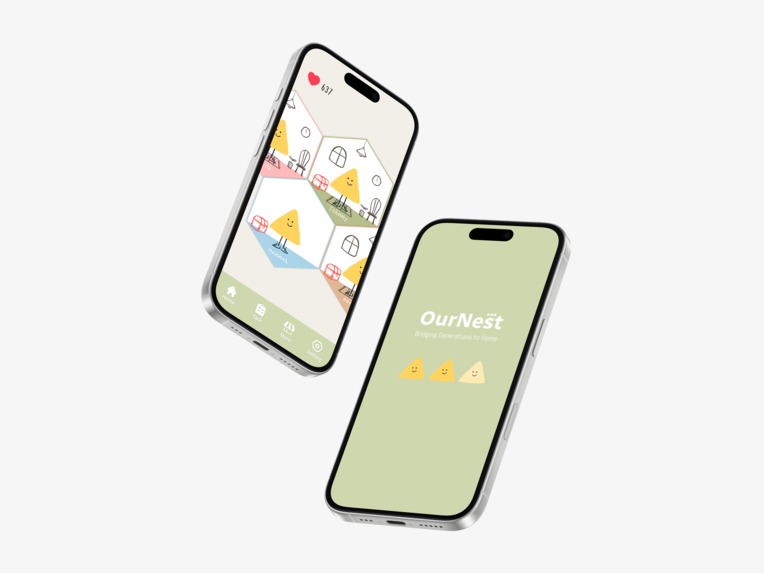
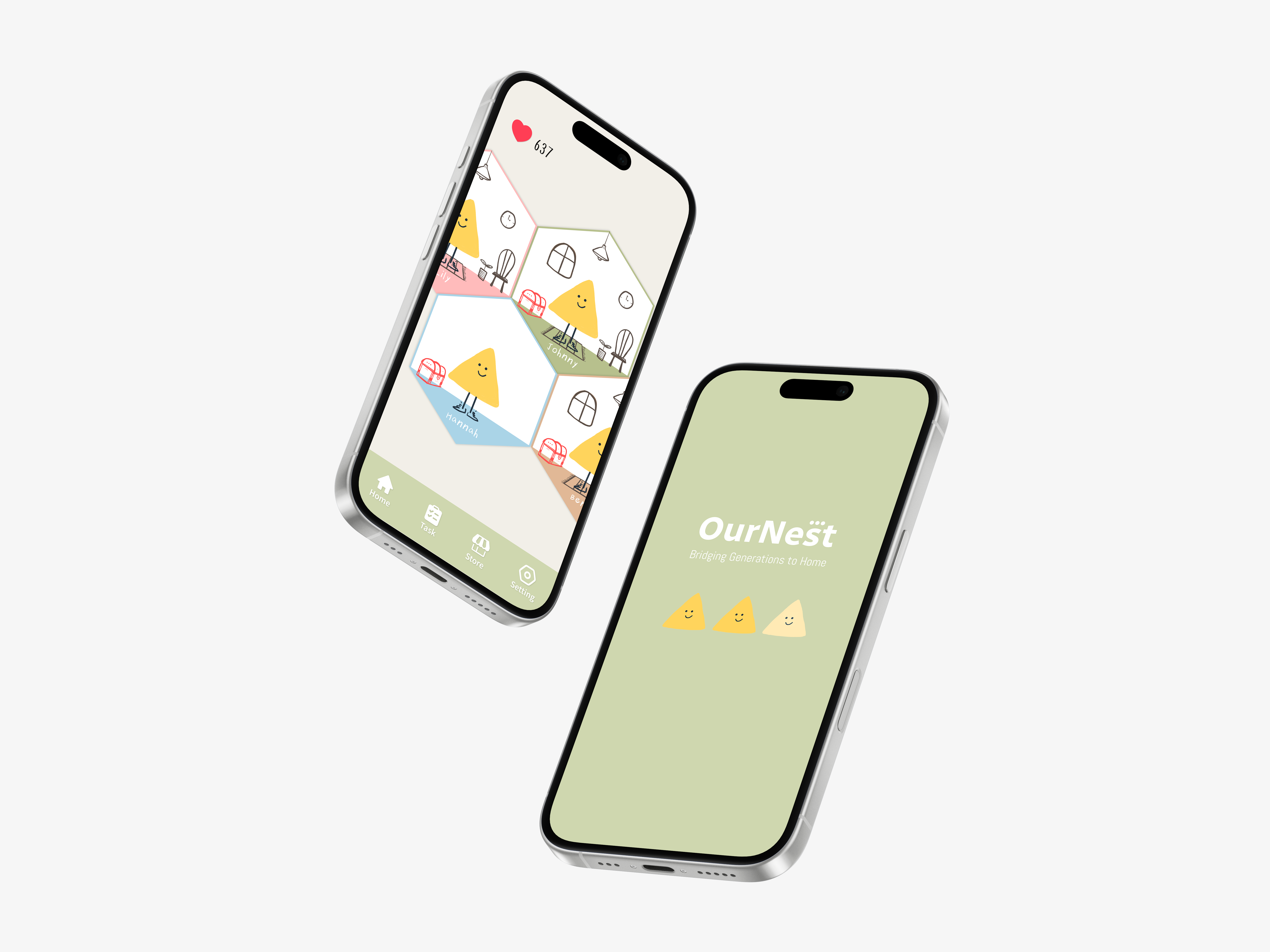
Home & Loading Screen
-
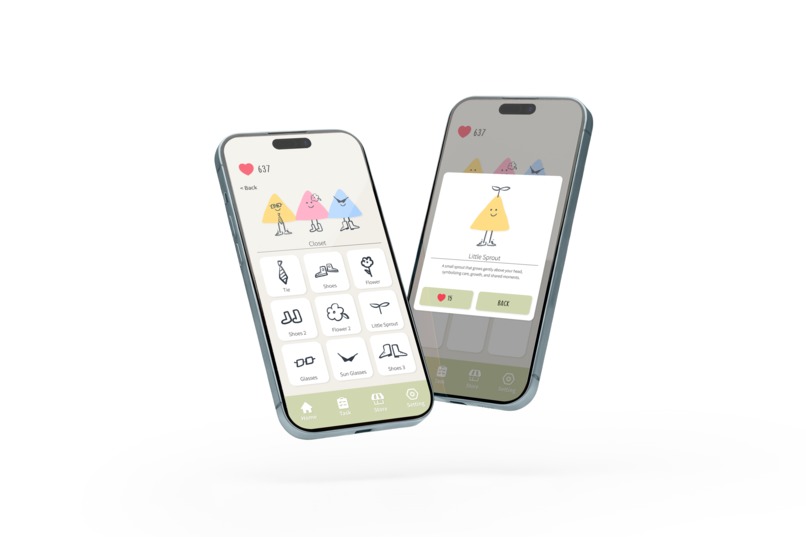
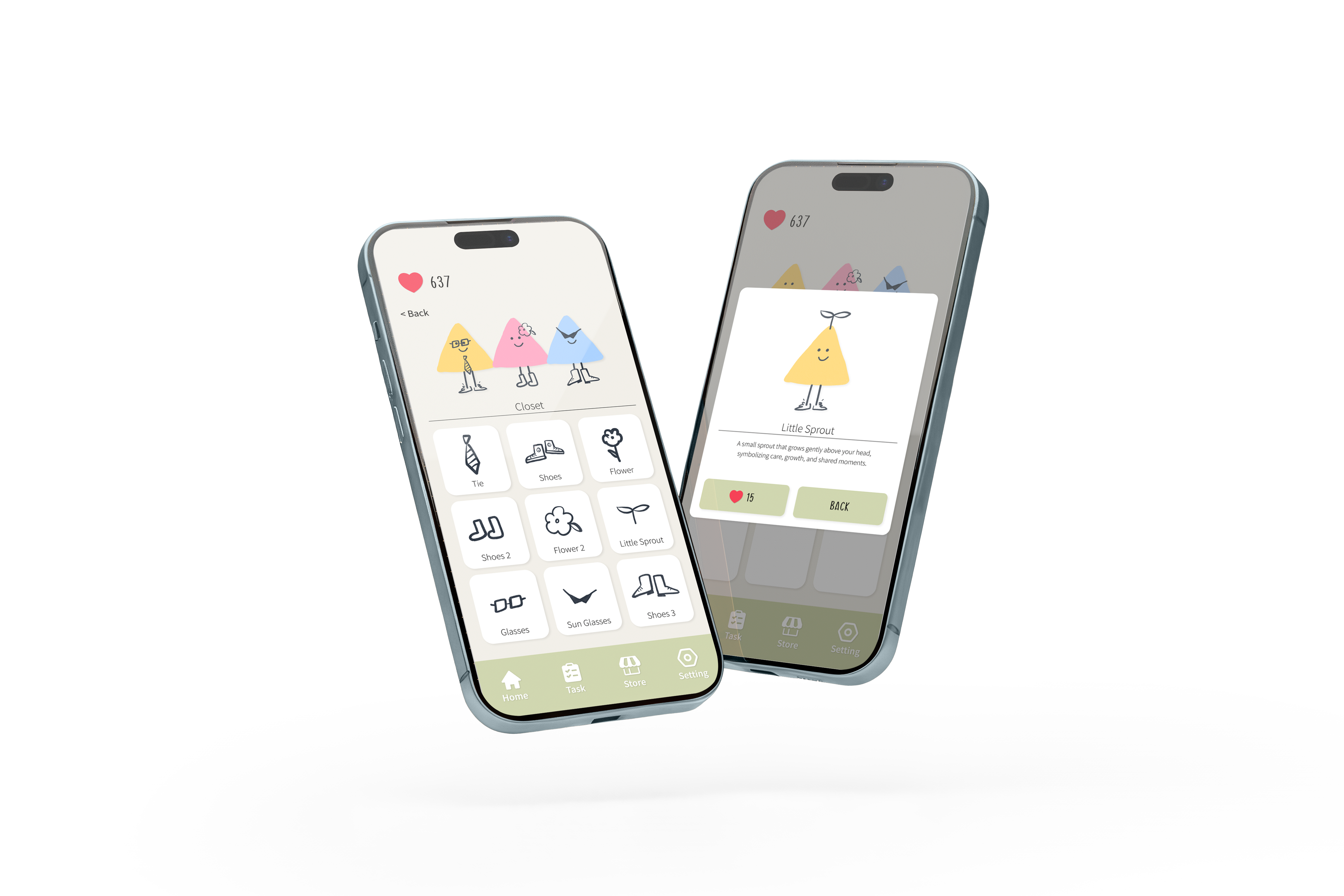
Closet & Store
-
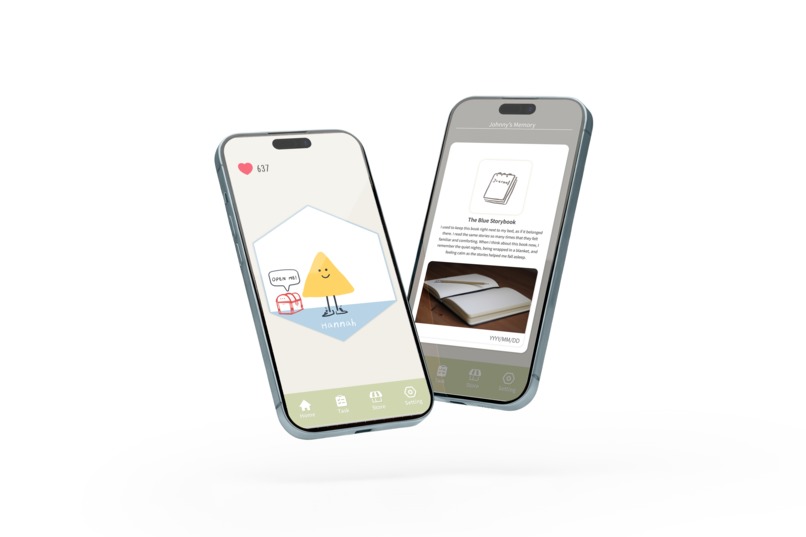
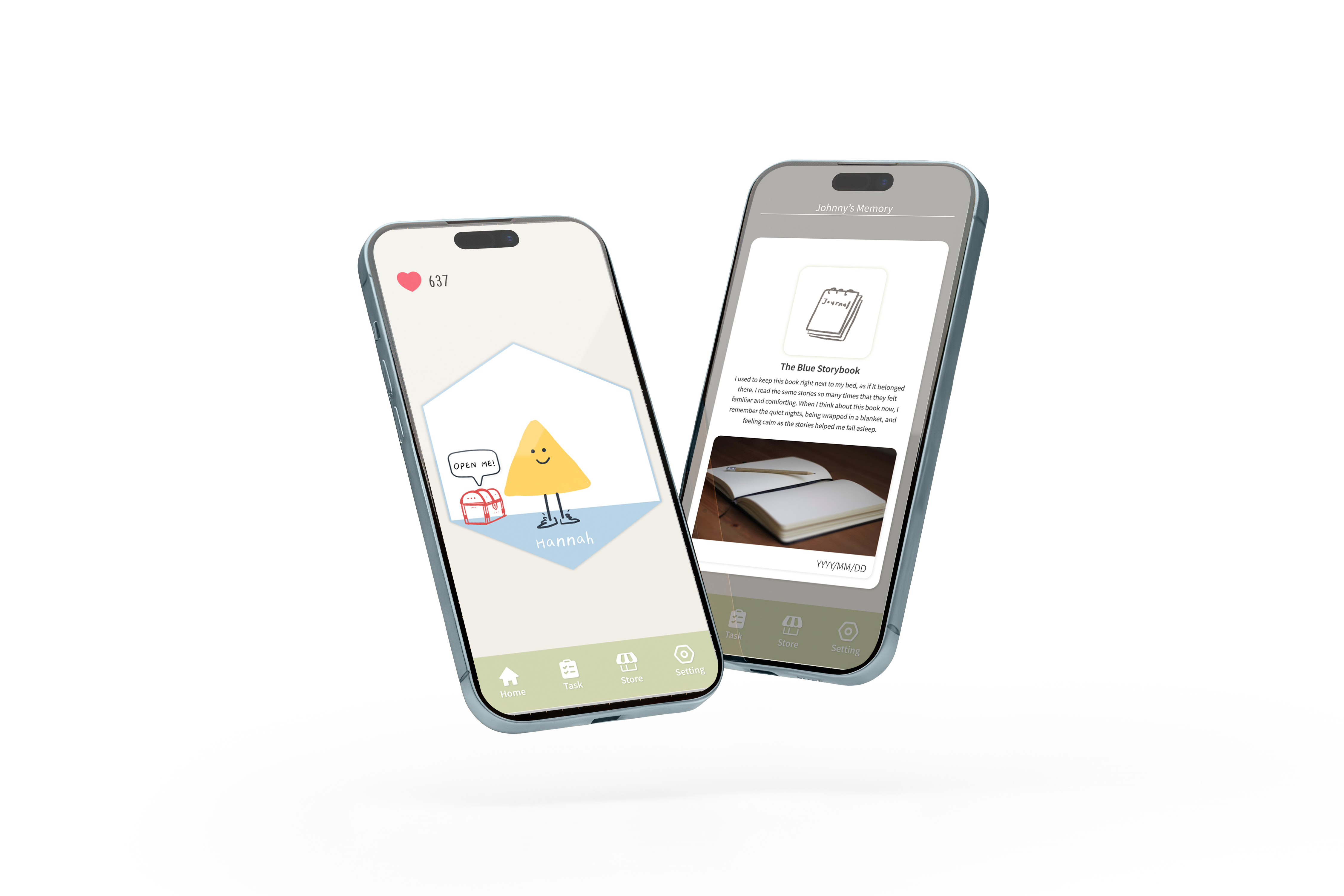
Memory Box
Prototype link: OurNest_Prototype_Link
Project Description
OurNest is a digital platform designed to bridge generational gaps within families through shared memories and interactive experiences. Each user has a personal virtual room containing a shared Memory Box, where family members can upload stories, photos, or objects significant to their lives. When a memory is added, the app generates a unique illustration representing it, making each contribution tangible and visually engaging. All family members can explore the shared Memory Box from their own rooms, fostering understanding and empathy without forcing conversation. The app also presents guided tasks, and completing them earns points that can be used to unlock rewards and decorative items, which can be applied to decorate both users’ rooms and their avatars, encouraging continued participation. By transforming personal memories into a playful, visible, and meaningful collection, OurNest creates a low-pressure, emotional bridge between younger and older generations, allowing understanding and connection to grow naturally over time.
Research Process and Findings
To understand generational misunderstandings in everyday family life, we conducted two surveys. The first survey was designed to identify pain points and friction in family communication. Our goal was to uncover where misunderstandings happen and which interactions cause frustration or emotional distance between generations.
Results from the first survey showed that parent–child (53%) and grandparent–grandchild (26%) relationships are the most common sources of misunderstandings. Core causes included differences in expectations, tone, and emotional reactions, with feelings and emotions being the hardest topics to discuss. Responses to miscommunication ranged from repeated explanations to giving up, indicating that current communication is often inefficient and emotionally draining. Over 88% of participants expressed interest in a structured digital tool to clarify intentions, confirming the relevance of our design prompt.
Based on these insights, we conducted a second survey focused specifically on family storytelling, memory sharing, and meaningful interactions. This helped us refine our understanding of which features and interactions would best encourage connection, empathy, and reciprocal engagement among family members.
We also explored the existing app market. While no app directly addresses intergenerational family communication, we found apps for task management, relationship maintenance, and virtual rooms, which taught us the value of reward systems, gamification, and visual customization. These insights inspired features in OurNest to make interactions playful, engaging, and emotionally rewarding.
From these combined findings, we designed OurNest, a digital platform where family members can complete guided tasks, share memories, and earn points to unlock decorations. Each user has a personal virtual room they can decorate, while a shared memory box collects stories, photos, and AI-generated illustrations that all family members can view. By structuring interactions and providing visual, rewarding feedback, OurNest helps families understand each other better, reduce miscommunication, and strengthen intergenerational bonds.
This research confirmed the priority of features, ensuring that all app functions are intentionally designed based on user needs rather than arbitrary choices.
Design Process
Most Important Design Decisions
Visual Identity & Character System
One of our key design decisions was establishing a clear and approachable visual identity for OurNest.
- We selected a primary color palette centered on #D0D6AF, creating a warm, calm, and home-like atmosphere.
- The app’s character is a triangle-shaped avatar with a body color of #FFD365 and an outline of #574E48.
- The triangle was chosen because it is a simple, universal shape that symbolizes connection and relationships, while remaining easy to recognize and customize.
- A minimal geometric character allows users to focus on storytelling and interaction rather than complex visuals.
Customization & Rewards System
We integrated a points-based reward system to encourage engagement and personalization.
- Users earn points by completing family memory tasks and can spend them on decorative items for their virtual rooms.
- Early prototypes used full-color, solid furniture, but testing showed this felt visually heavy on small screens.
- We shifted to single-color line illustrations, which created a cleaner, more cohesive aesthetic and reduced cognitive load.
- The same style was applied to all furniture and wearable items to maintain consistency across the app.
Accessibility & Typography
Because OurNest is designed for all generations, accessibility became a core priority.
- Font sizes were intentionally set larger to support older users.
- We maintained one consistent typeface and color system throughout the app to avoid confusion.
- Information, notifications, and tasks are presented using a card-style layout, providing structure and clear visual hierarchy.
Iteration Through Testing
Our design evolved through continuous experimentation.
- We tested adding arms and extra details to the character but found that a simpler form felt more inclusive and expressive.
- Removing unnecessary elements allowed users to project their own identity onto the avatar more easily.
- Layout, icon style, and interaction patterns were refined to ensure the experience remained playful yet intuitive.
Design Philosophy
All decisions were guided by three principles:
- Clarity – interfaces must be easy to understand for both young and older users.
- Simplicity – visual elements should support, not distract from, family connection.
- Meaningful Interaction – every feature should encourage storytelling and empathy.
Through these decisions, we shaped OurNest into a platform where design gently supports the deeper goal: bridging generations through shared memories and everyday interaction.
How we used AI in our design process
We integrated AI throughout our design process to improve both research and communication. During the creation of our surveys, AI helped us refine and define our questions more clearly, ensuring they would capture the specific friction points and misunderstandings between generations. It allowed us to iterate quickly on wording, structure, and clarity, making the questions easy for participants to understand and respond to honestly. AI also supported us in crafting text for our app. From app descriptions and task instructions to the content guiding users through their Memory Boxes, AI helped us generate clear, concise, and engaging language. This ensured that our interface communicates intentions effectively while remaining warm and approachable.
Additionally, we used AI to organize and polish our written content, including research summaries, project descriptions, and design documentation. By leveraging AI, we were able to simplify complex ideas, maintain consistent tone, and express our concepts in the clearest and most efficient way possible. Overall, AI was not used to create the design itself but as a tool to enhance clarity, communication, and presentation. It helped us translate insights from research into actionable, understandable content for both users and reviewers, ensuring that our ideas could be conveyed effectively and professionally.
Built With
- figjam
- figma
- framer
- photoshop
- procreate


Log in or sign up for Devpost to join the conversation.