Inspiration
10 years ago, Spotify removed a beloved feature that played music based off of your running pace. We were devastated. 10 years later, we present to you RhythmSync. It's time to make your music move with you.
What it does
RhythmSync is an intelligent MP3 player that personalizes your music experience in real time based on your heart rate. Using input from a heart rate sensor, RhythmSync chooses songs that match your current workout intensity level. So whether you’re pushing through a high-intensity run or enjoying a relaxed jog, RhythmSync adjusts the music to perfectly match your current needs—boosting your energy with upbeat tracks when your heart rate rises and easing you with calmer tunes as your run winds down. The result is an extremely personalized and immersive experience that keeps you in rhythm with your body.
How we built it
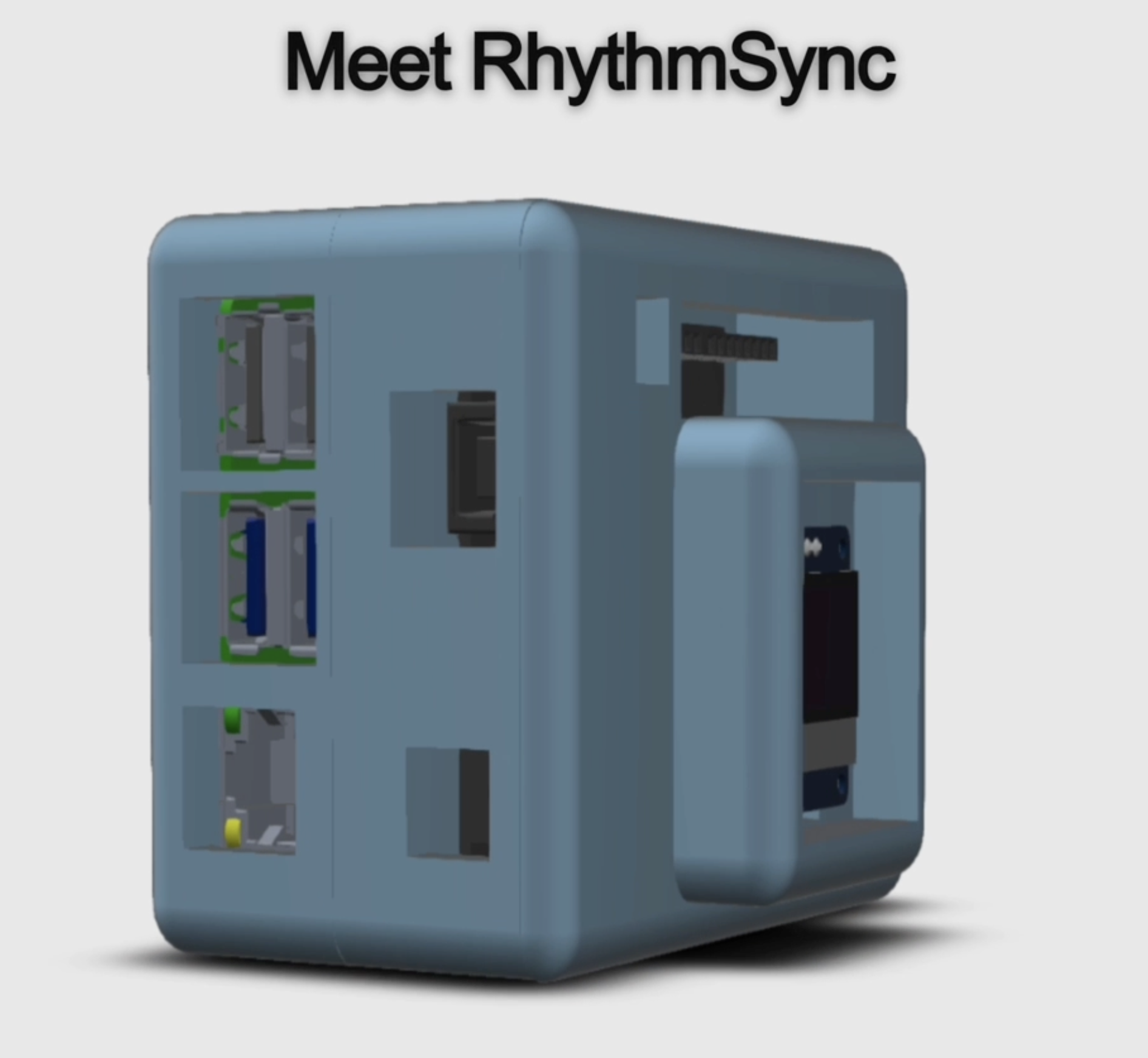
We built RhythmSync by integrating a heart rate sensor with a Raspberry Pi that ran a robust music recommendation engine. Our heart rate sensor continuously reads the user’s BPM in real-time. This data is then digitized using our Arduino, which is then passed into our custom algorithm run on the Raspberry Pi, in which it determines the intensity of the user's exercise and queues up corresponding music to aid the user in their workout. The overall seamlessness of our design creates a simple and inviting user experience.
Challenges we ran into
We ran into many issues with the serial communication between our Arduino and Raspberry Pi, as these devices cannot both read and write simultaneously. In addition, we needed to compact our design to make it feasible to take along when doing intense workout sessions such as running, leading to our final product design.
Accomplishments that we're proud of
We are very proud of the capabilities that we were able to implement into RhythmSync. In addition, we are very happy to be able to bring back a once very sought-after feature that was deprecated by Spotify.
What we learned
Throughout the hackathon, we gained a lot of experience with connecting different hardware together and making them work seamlessly. We also learned the power that music has on human physical performance, which is what further motivated us in designing this product.
What's next for RhythmSync
Next, we plan to expand RhythmSync's capabilities by adding support for additional peripherals, such as the addition of low-energy Bluetooth connections to allow for connections of wireless headsets and earbuds. We also hope to include additional biometric markers such as respiration rate, running pace, and skin temperature to further refine our music recommendations. Finally, we want to integrate machine learning models that will learn what type of songs the user performs best to in order to further personalize the recommendation system.
Built With
- arduino-uno
- python
- raspberry-pi

Log in or sign up for Devpost to join the conversation.