

Inspiration
- We love rhythm games but wanted a story-driven journey instead of disconnected songs.
- Social media already feels like a game—likes, followers, “going viral”—so we turned that into an actual mechanic.
- Each song is a memory in our hero’s life: college gate, dorm jam, homecoming, late-night drives, etc.
- One environment per track keeps the whole journey visually and emotionally connected.
What it does
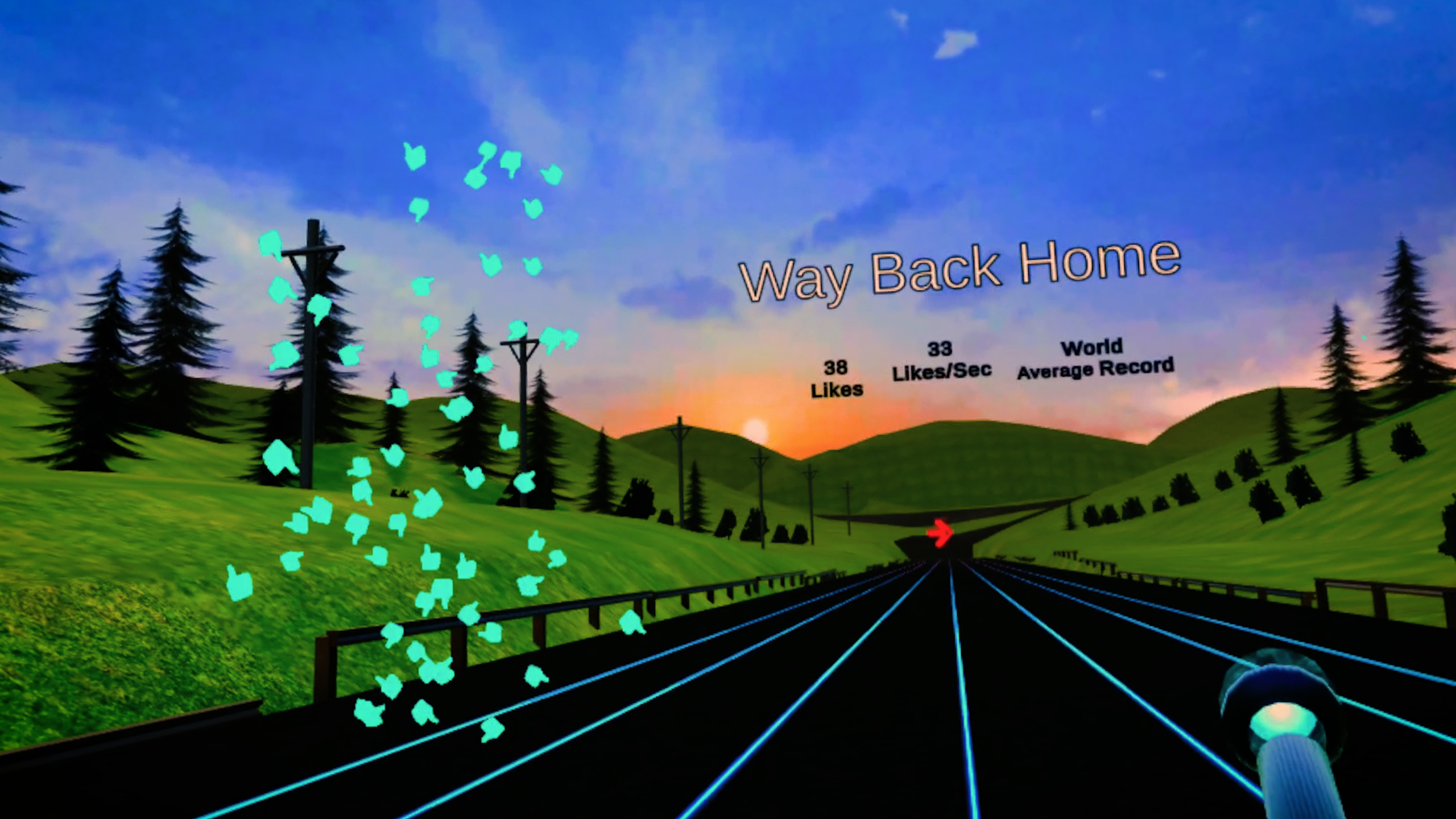
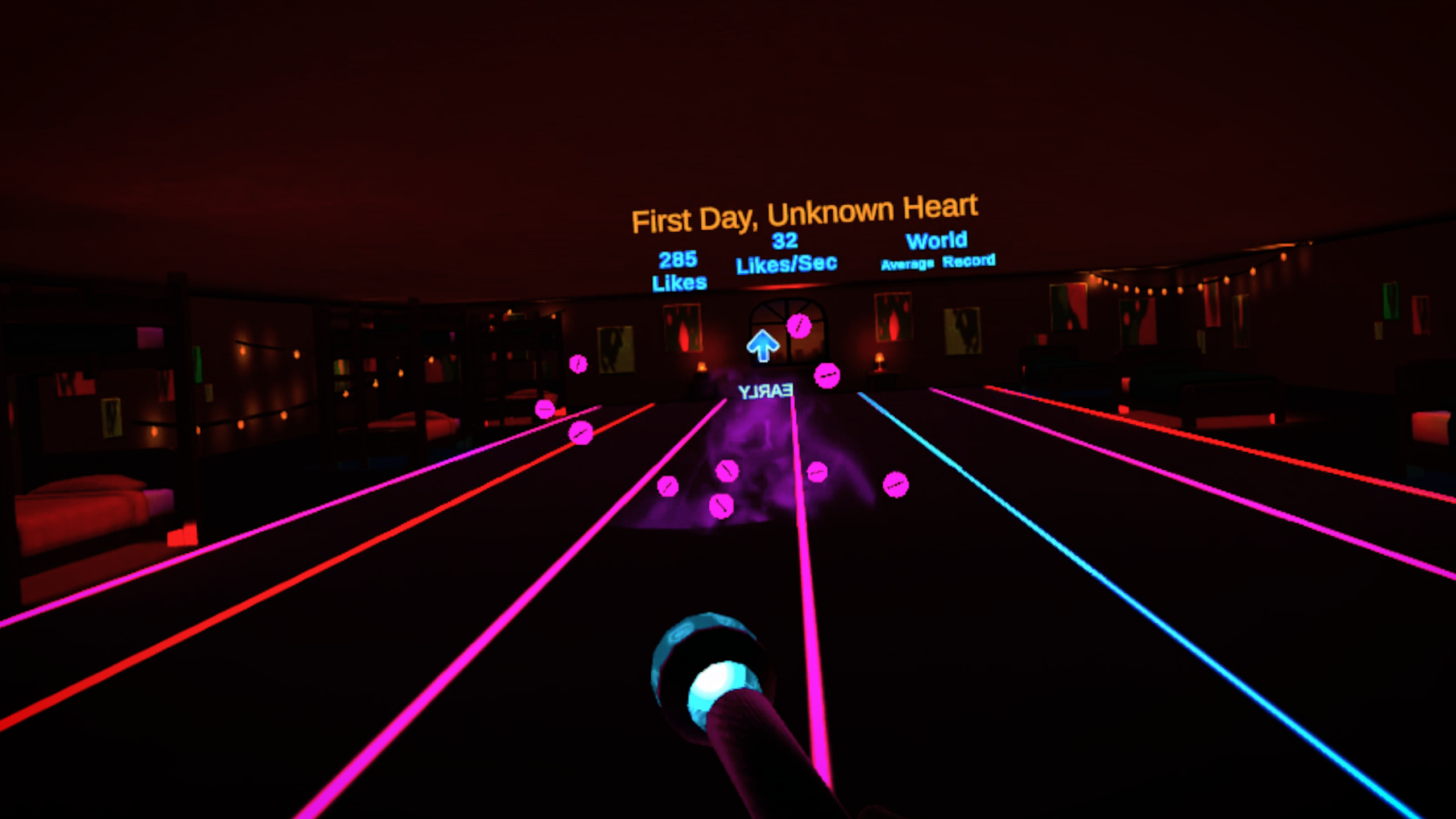
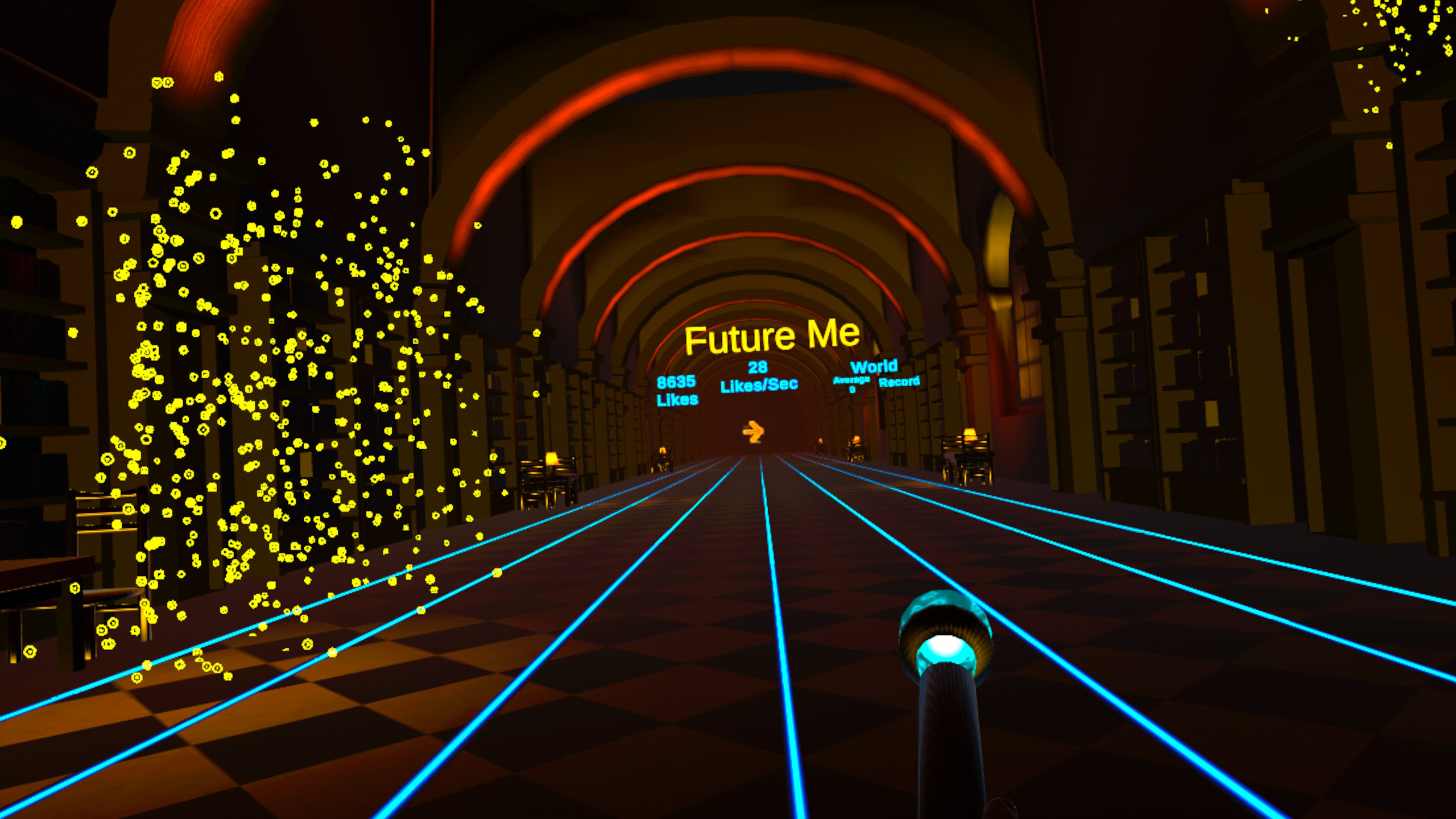
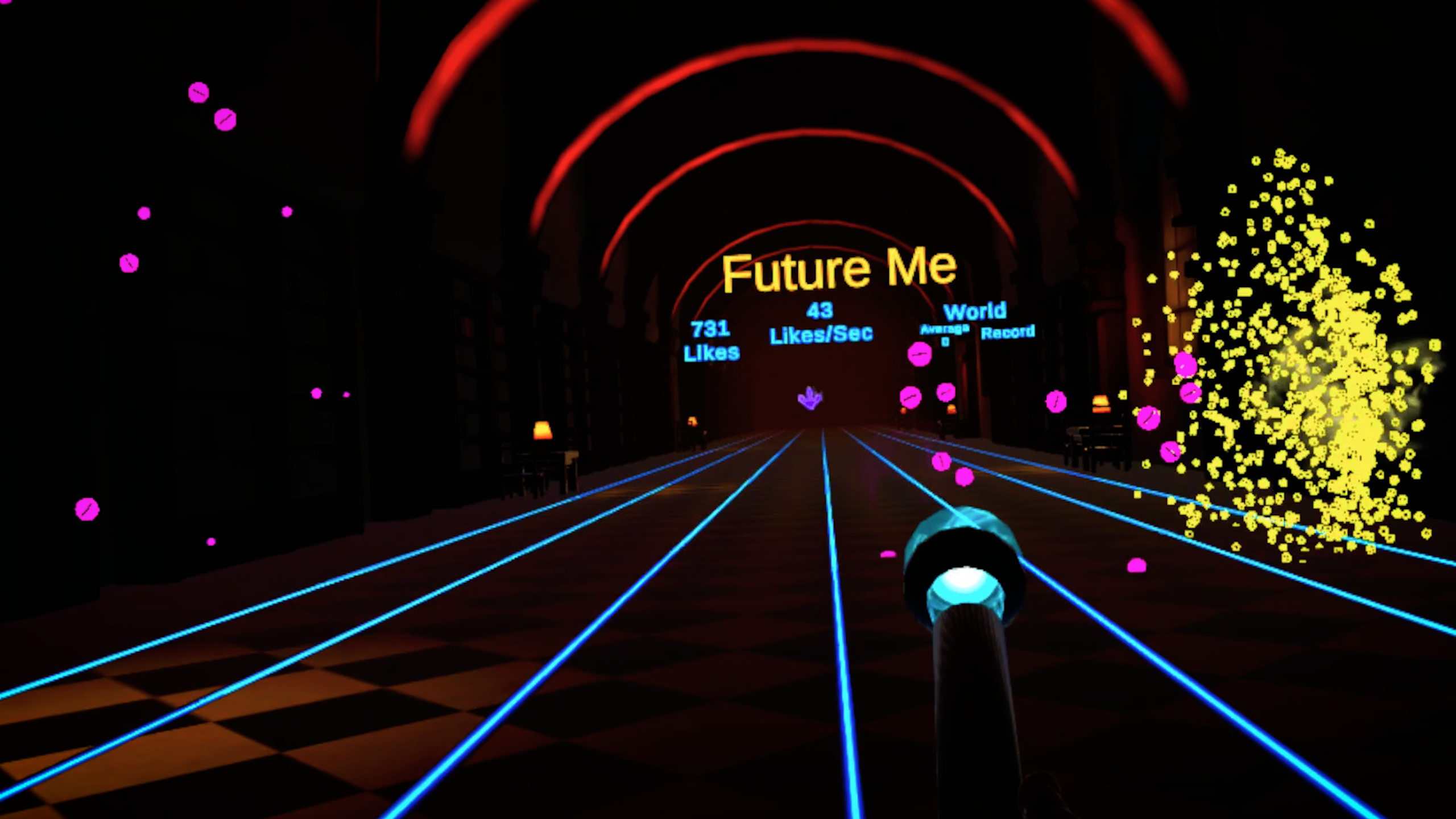
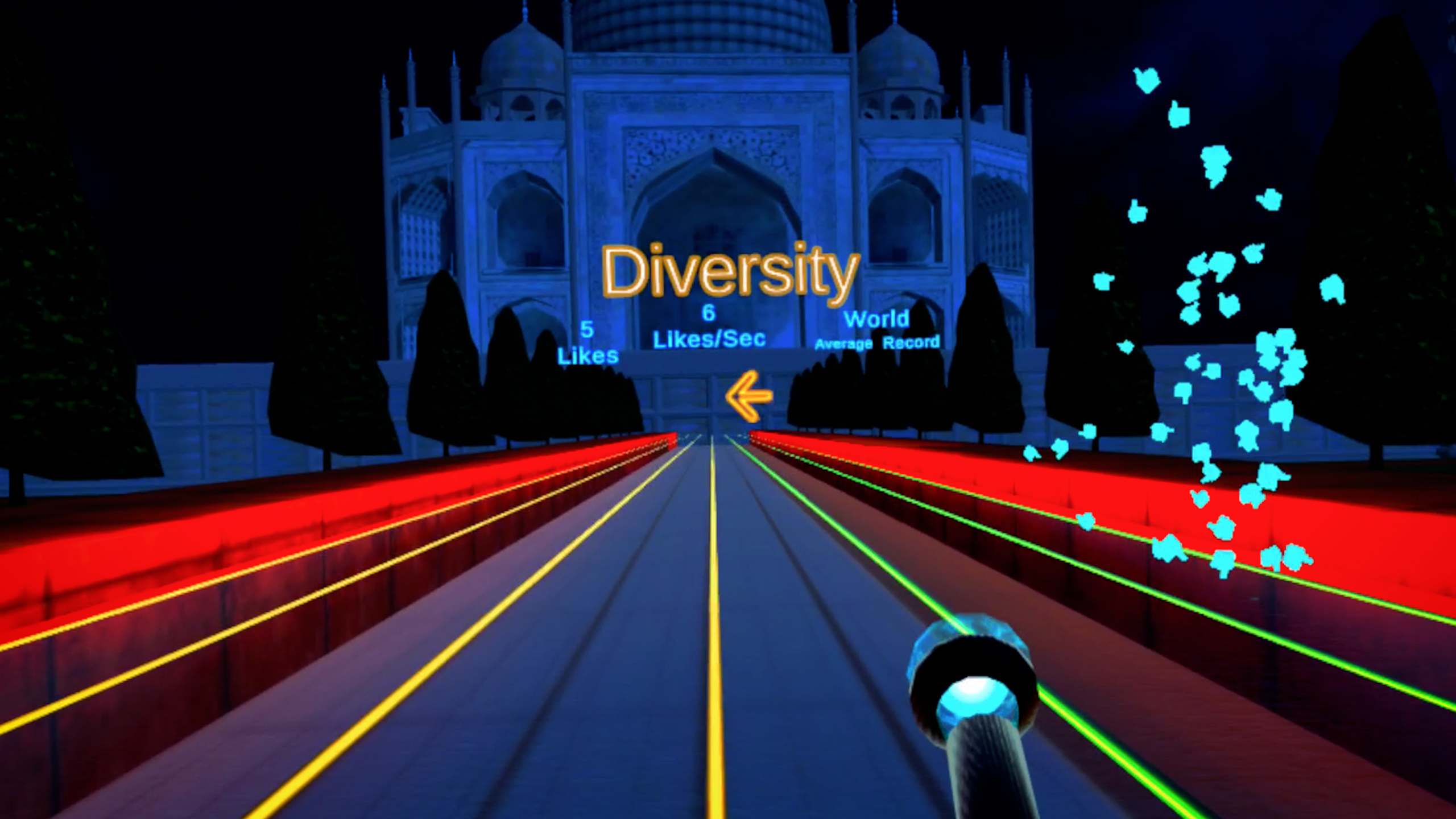
- First-person VR rhythm gameplay with 3–4 neon lanes and LRUD arrows (Left, Right, Up, Down) flying into a central hit zone.
- You hit these arrows with a glowing Repeller wand; only correct hits give Like Points.
- Like Points feed into a meta layer:
- More Like Points → more Viewers.
- More Viewers → stronger multipliers for future Like Points.
- Misses or no input make Viewers drop, so even a big audience isn’t guaranteed.
- More Like Points → more Viewers.
- Every song has its own environment (one per music track), so changing tracks feels like visiting a new “chapter” in the same life story.
- Designed for short, high-impact sessions that still feel like long-term progression.
How we built it
- Built in Unity (URP) with custom neon lane shaders and high-contrast arrows for VR readability.
- Rhythm logic in C# synced to the audio timeline with combos, multipliers, and Like Point calculations.
- Used Unity editor tools to automate beat placement, pattern testing, and song–environment setup, speeding up iteration.
- Story, music, and environments are mapped together so each track feels like a concrete place and moment in the hero’s life.
- UI flows and meta screens are tuned directly inside VR to keep everything readable and comfortable.
Challenges we ran into
- Explaining LRUD patterns clearly in VR without cluttering the screen.
- Making the Like→Viewer loop feel powerful but understandable at a glance.
- Balancing risk and reward so misses feel punishing but not rage-quit level.
- Keeping environments rich while ensuring arrows and hit zones stay easy to read.
- Making UI animations feel cohesive across menus, results, and meta screens.
Accomplishments that we're proud of
- A complete loop where good play grows your audience, and that audience boosts future Like gains.
- A connected journey from first day of college to the end of the college arc, with one environment per song.
- A clean neon-lane visual style that works across very different locations.
- Editor automation that lets us iterate quickly on patterns, difficulty, and environments.
- Hit feedback, SFX, and HUD behavior that already feel satisfying and reactive.
What we learned
- Players don’t just want a high number; they want to feel how Likes and Viewers affect each other.
- Tying Like Points strictly to correct input keeps the meta honest—you can’t “idle” your way to fame.
- A HUD score that can rise fast but also drop on wrong or missing inputs is more exciting than a slow bar that only creeps up or down.
- That risk of losing progress actually motivates players to focus and push forward.
- That risk of losing progress actually motivates players to focus and push forward.
- Environmental storytelling (different places visited, one per track) helps players remember songs and care about the journey.
- Lightweight editor tools can change development speed more than adding one more feature.
What's next for Rhythm Fame
- Extend the story beyond college: our hero’s first company job, office life, commutes, and balancing 9–5 with creator dreams.
- New songs and environments for this post-college arc (office floors, café breaks, night-time home setup, etc.).
- Expand a central Hub where players can discover and unlock more wand types, each with its own feel or visual style.
- Connect the Hub to brand associations and PR systems, where certain wands, skins, or boosts are tied to in-game brands and reputation.
- Introduce and balance in-game currency that works with the brand/PR systems without breaking the core Like–Viewer loop.
- Further tuning of the Like–Viewer loop so growth, drops, and comebacks feel dramatic but fair.
- More polish on UI animations, SFX, and transitions so the whole meta layer feels alive, not like static menus.
- Difficulty tiers, achievements, and playtests focused on how players react to risk, drops, and comeback moments.
Built With
- leaderboard
- unity


Log in or sign up for Devpost to join the conversation.