Inspiration
Rhythm Dojo started three years ago with a simple idea: what if your entire room could become a musical instrument?
We're a team of music producers, game developers, and dedicated rhythm game players. Music and games have always been a big part of our lives, but we wanted to experiment with a different way of experiencing rhythm in VR. We're also fascinated by Japanese culture and martial arts, especially the connection between movement, concentration, and precision. We started imagining a game that could combine these elements with music, where players use their bodies to interact with rhythm in a fully spatial environment.
What makes Rhythm Dojo special to us is that the same game can feel completely different depending on who's playing. You might feel like a martial artist practicing Tai Chi, carefully following flowing patterns. You might be a dancer, moving freely to your favorite tracks. You can even sit comfortably in a chair, listen to music, and gently move your arms to relax. Or, if you're a competitive rhythm gamer, you can grab your controllers, master your precision, build combos, and fight for the highest score.
We love that there's no single right way to enjoy it.
What We Built
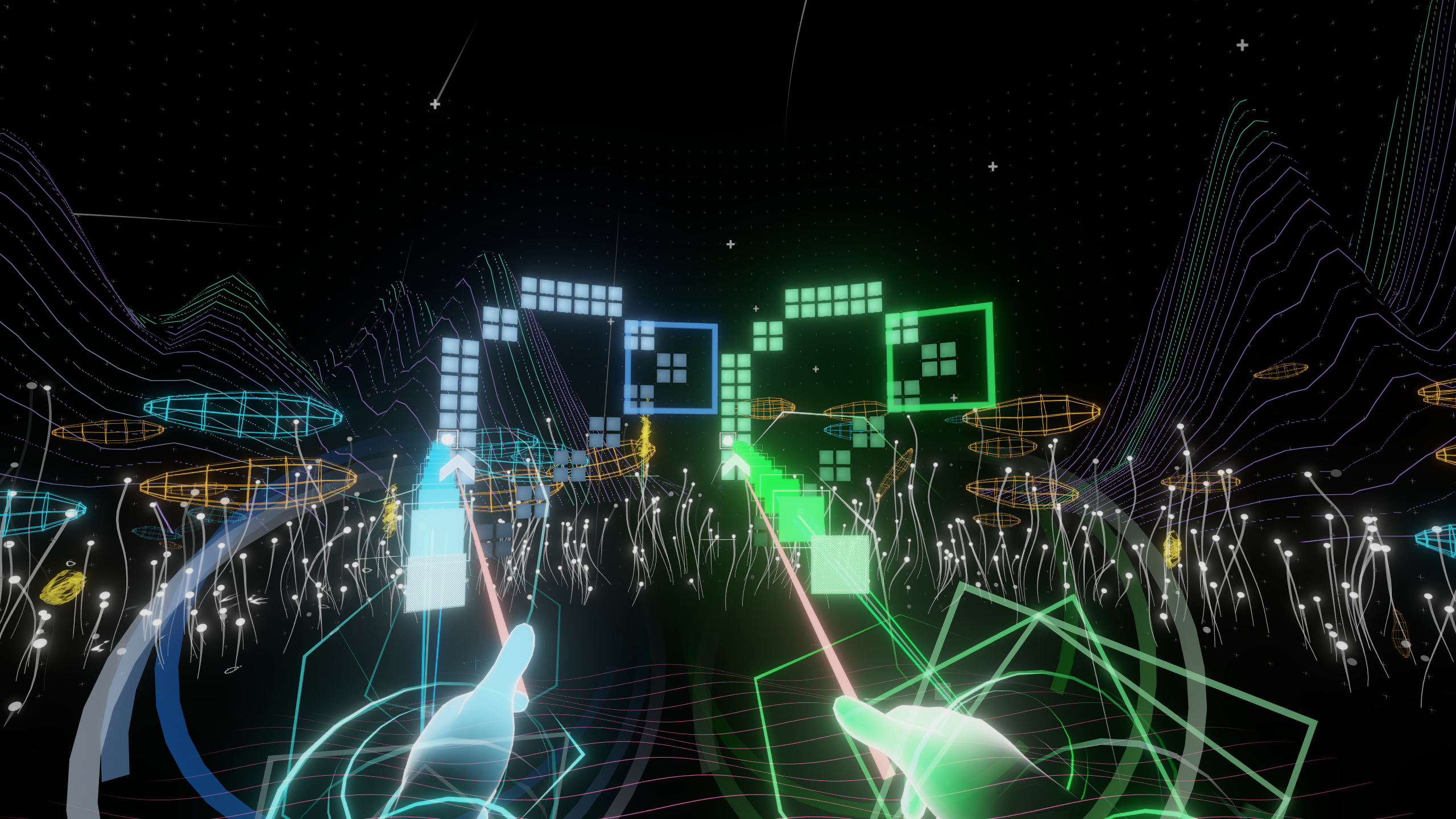
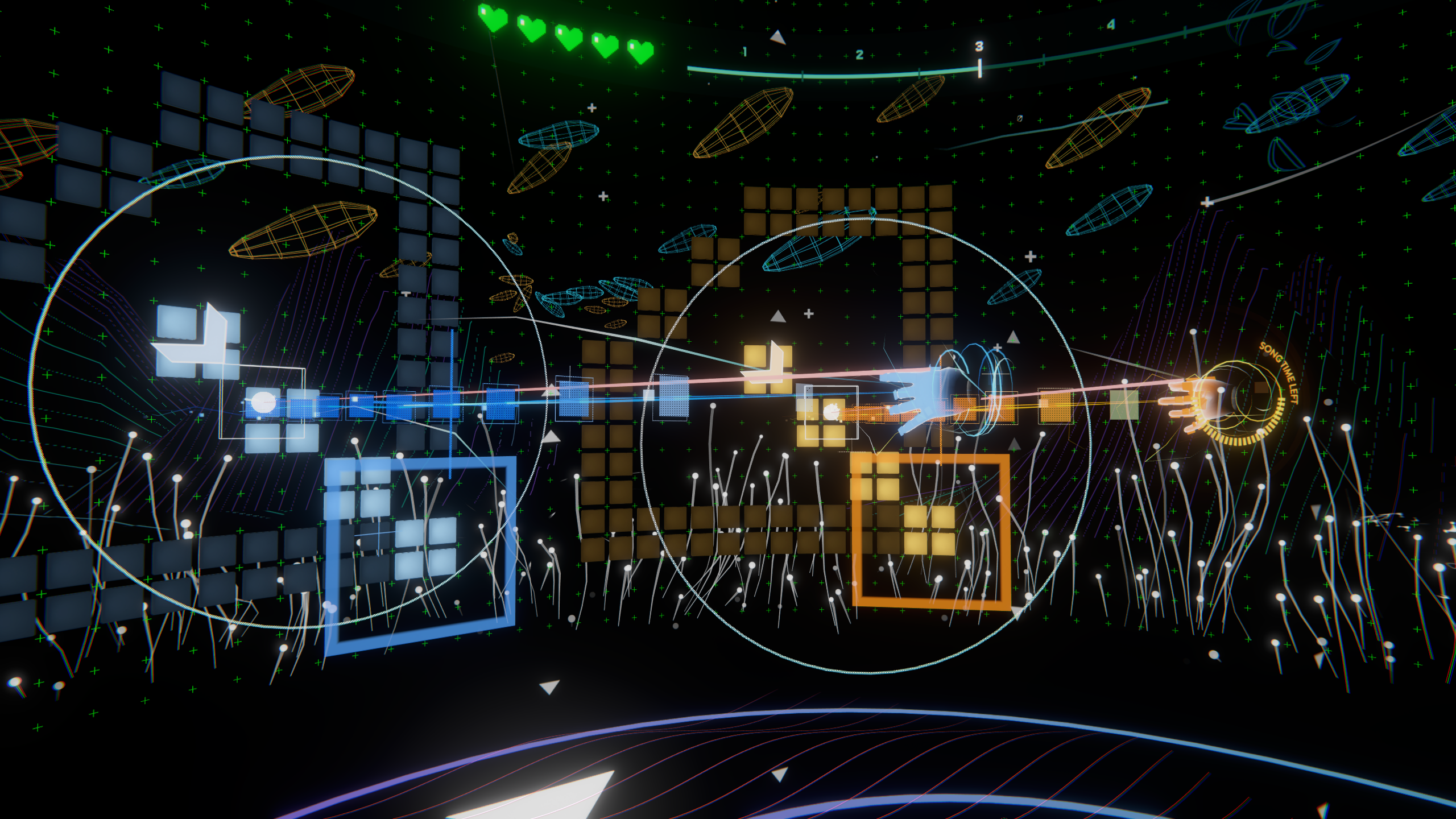
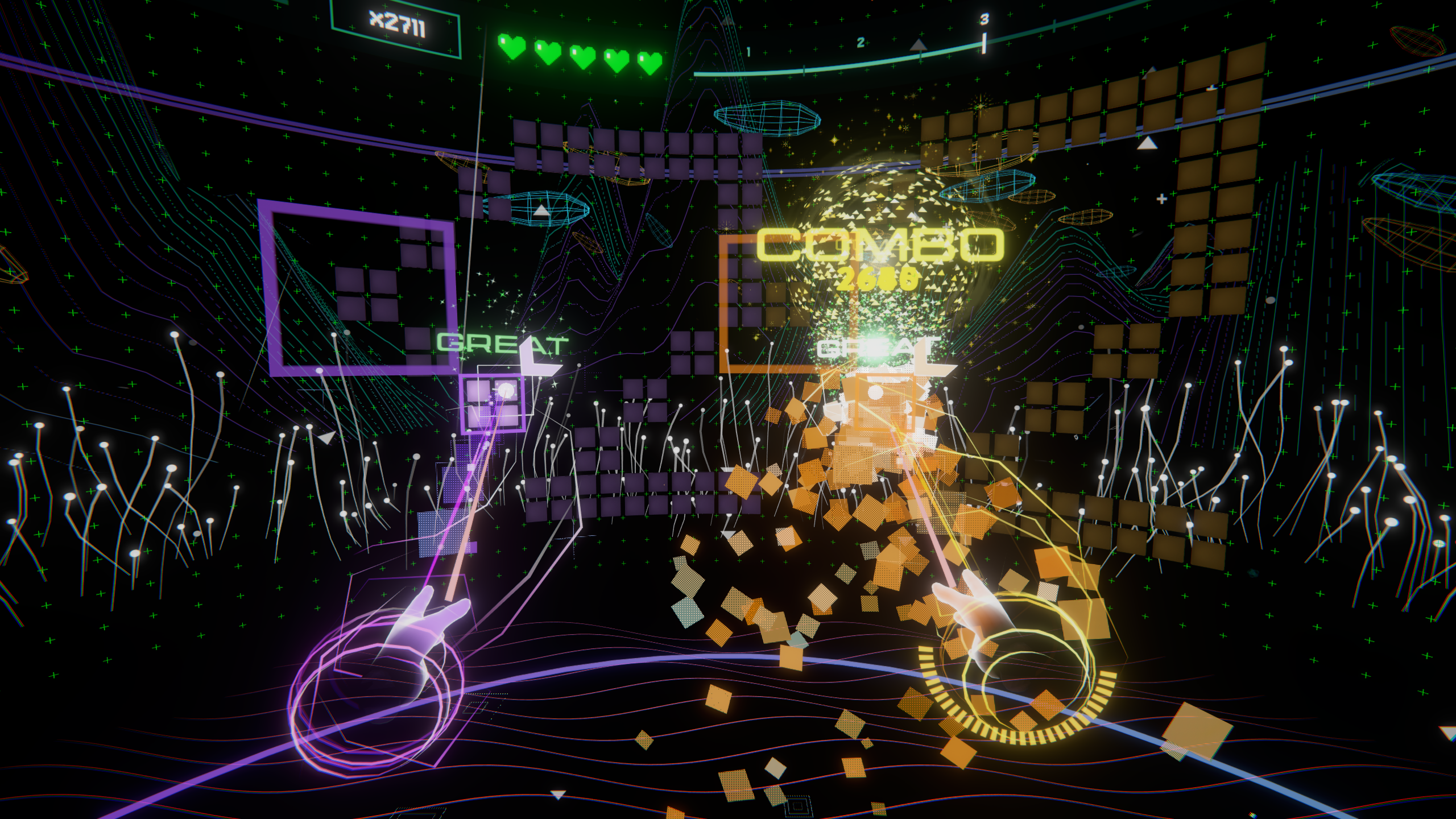
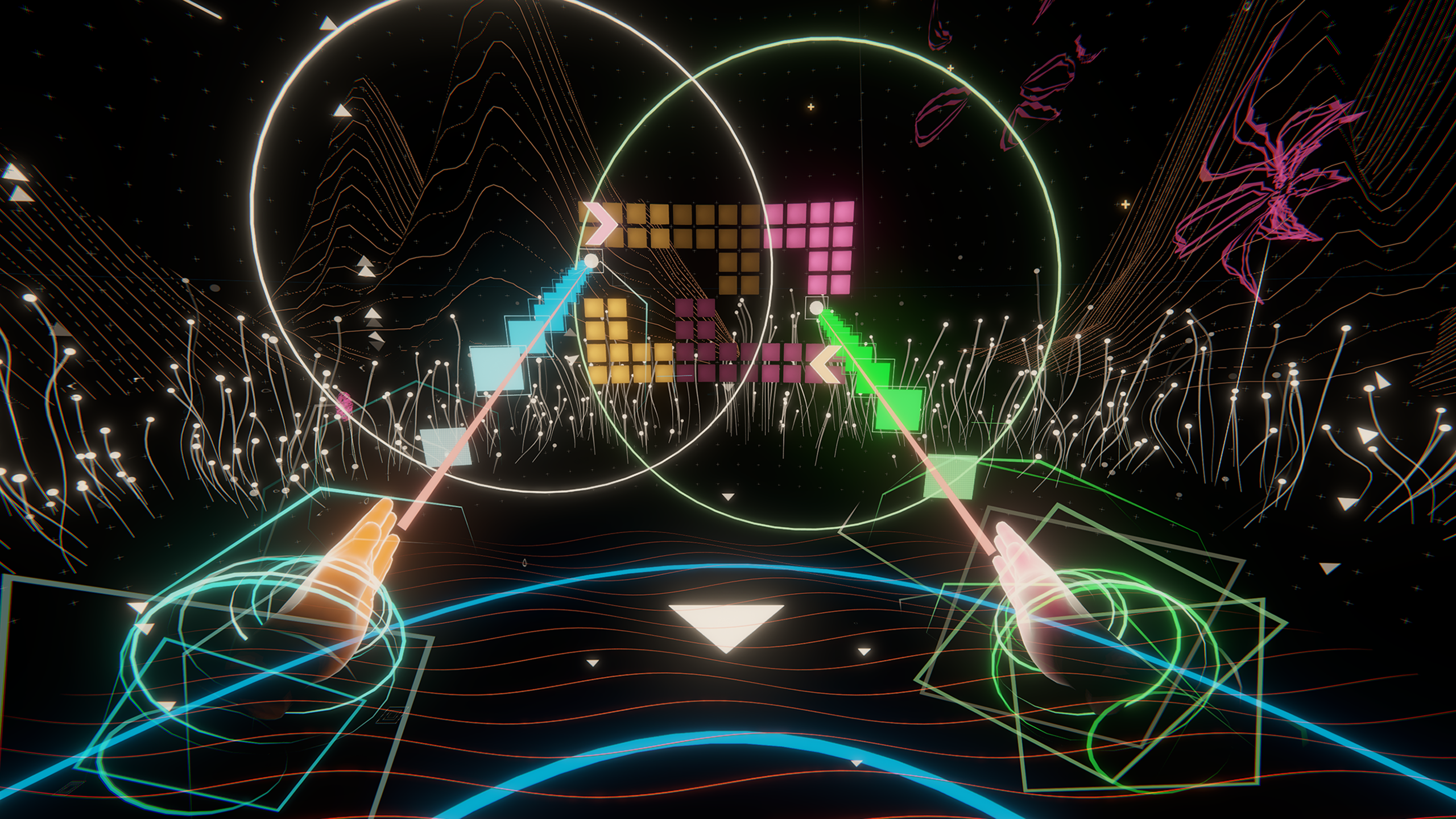
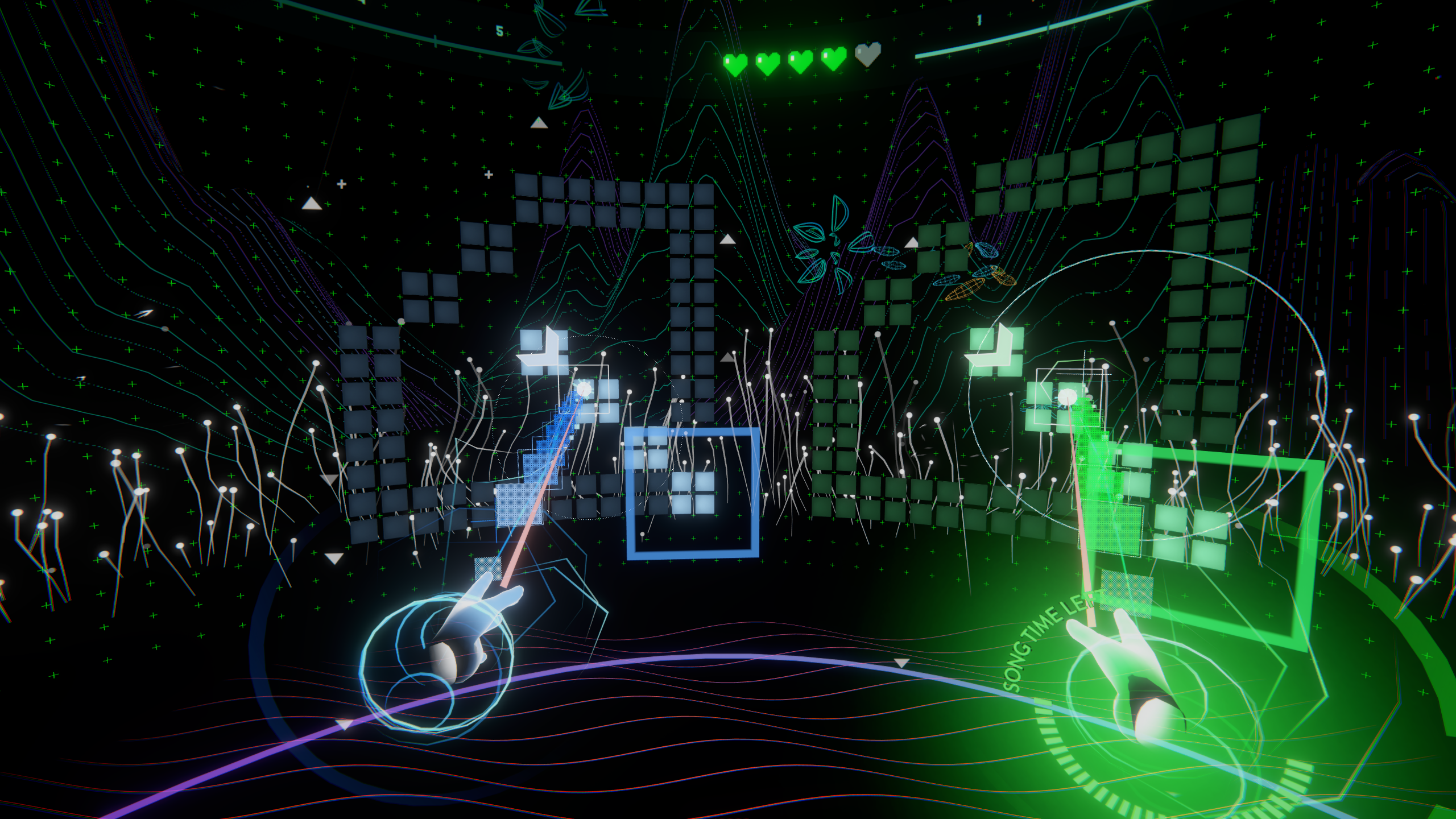
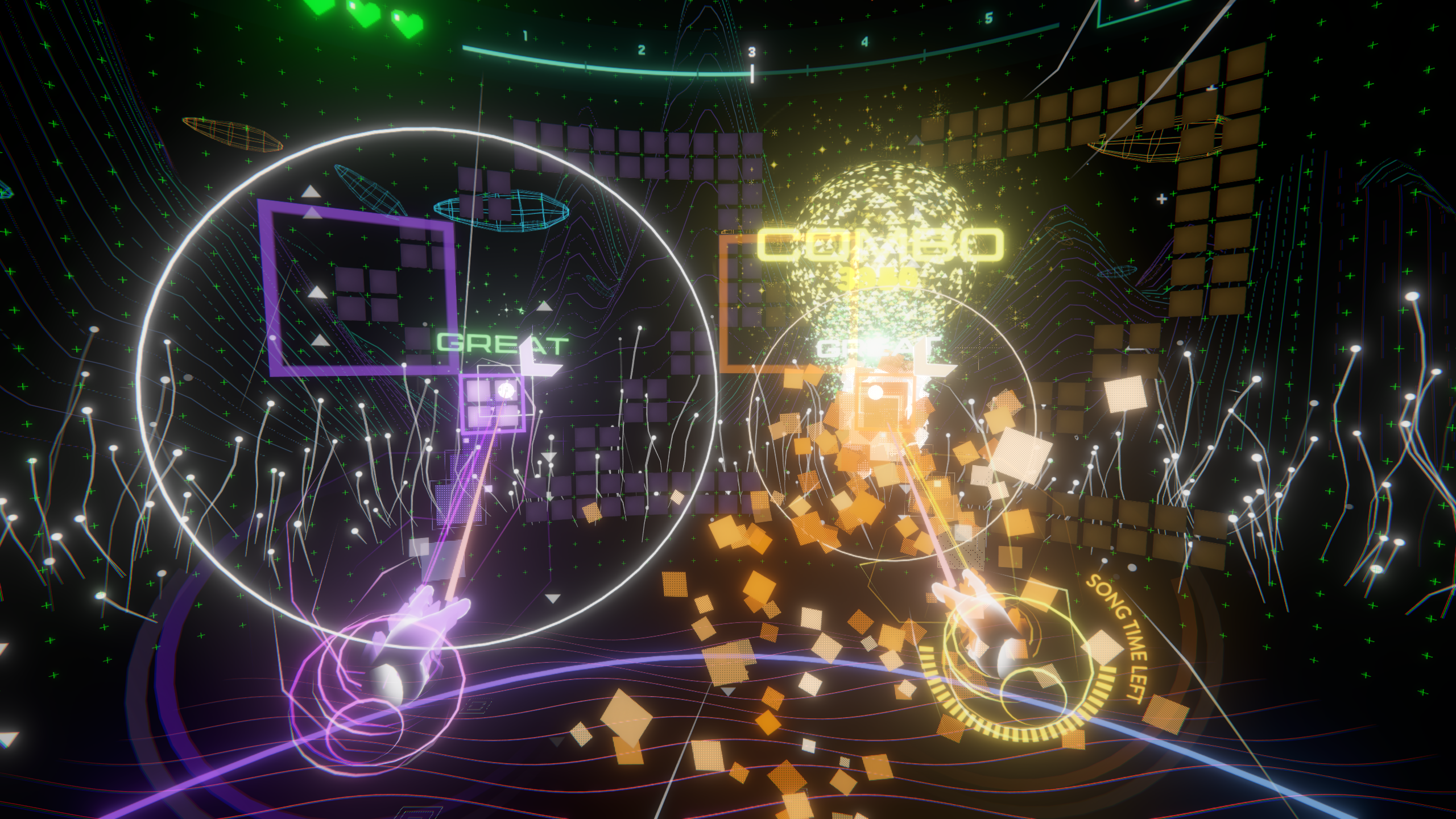
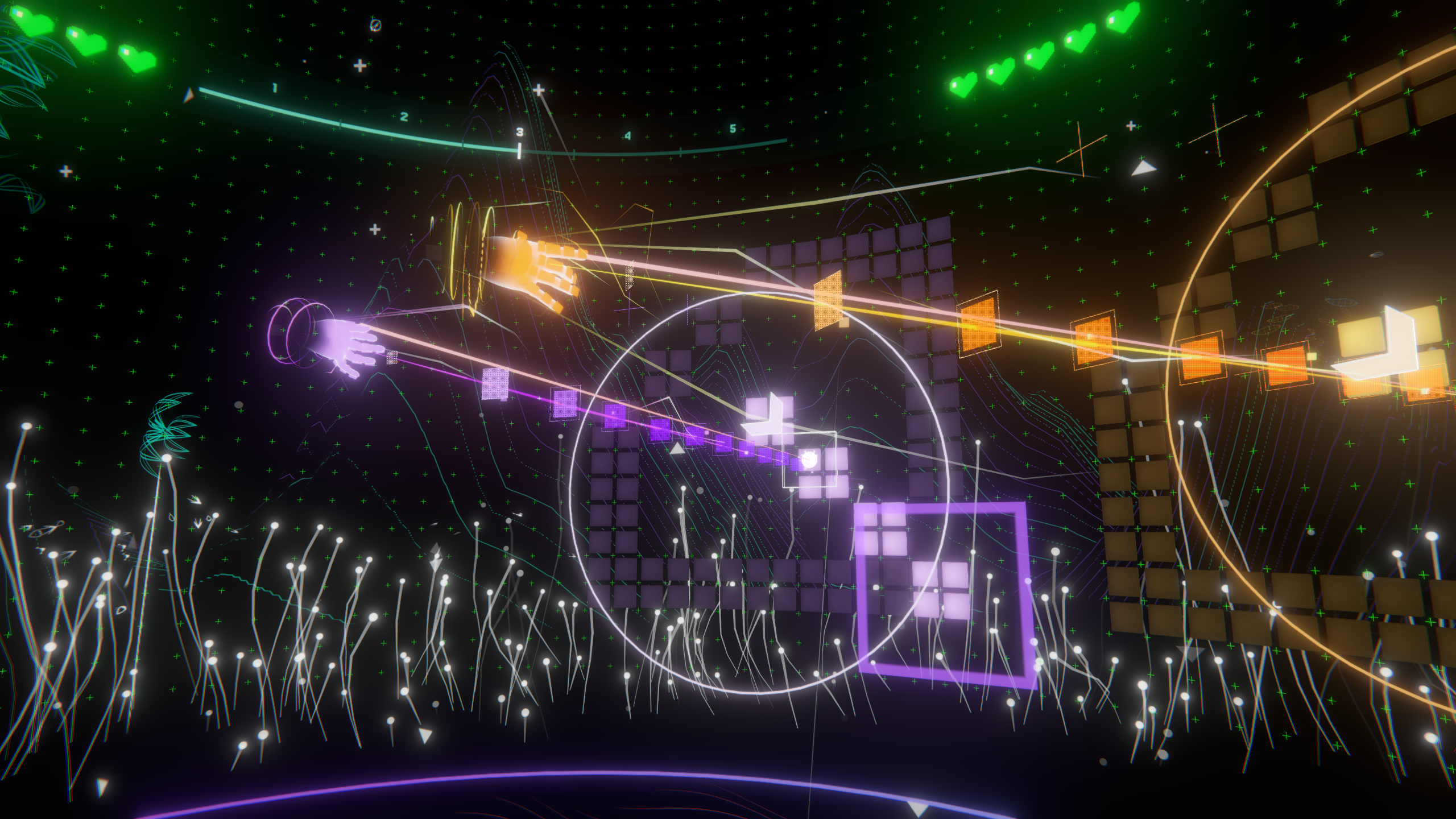
Rhythm Dojo is a VR rhythm game where players trace glowing patterns with their hands, following the beat of the music. Patterns can appear anywhere around you in 360 degrees: on the walls, above your head, near the floor, or behind you. Instead of watching notes approach from one direction, you become surrounded by the music.
Players can choose between two experiences:
- Controller gameplay: Focused on precision, timing, combos, and competitive scoring.
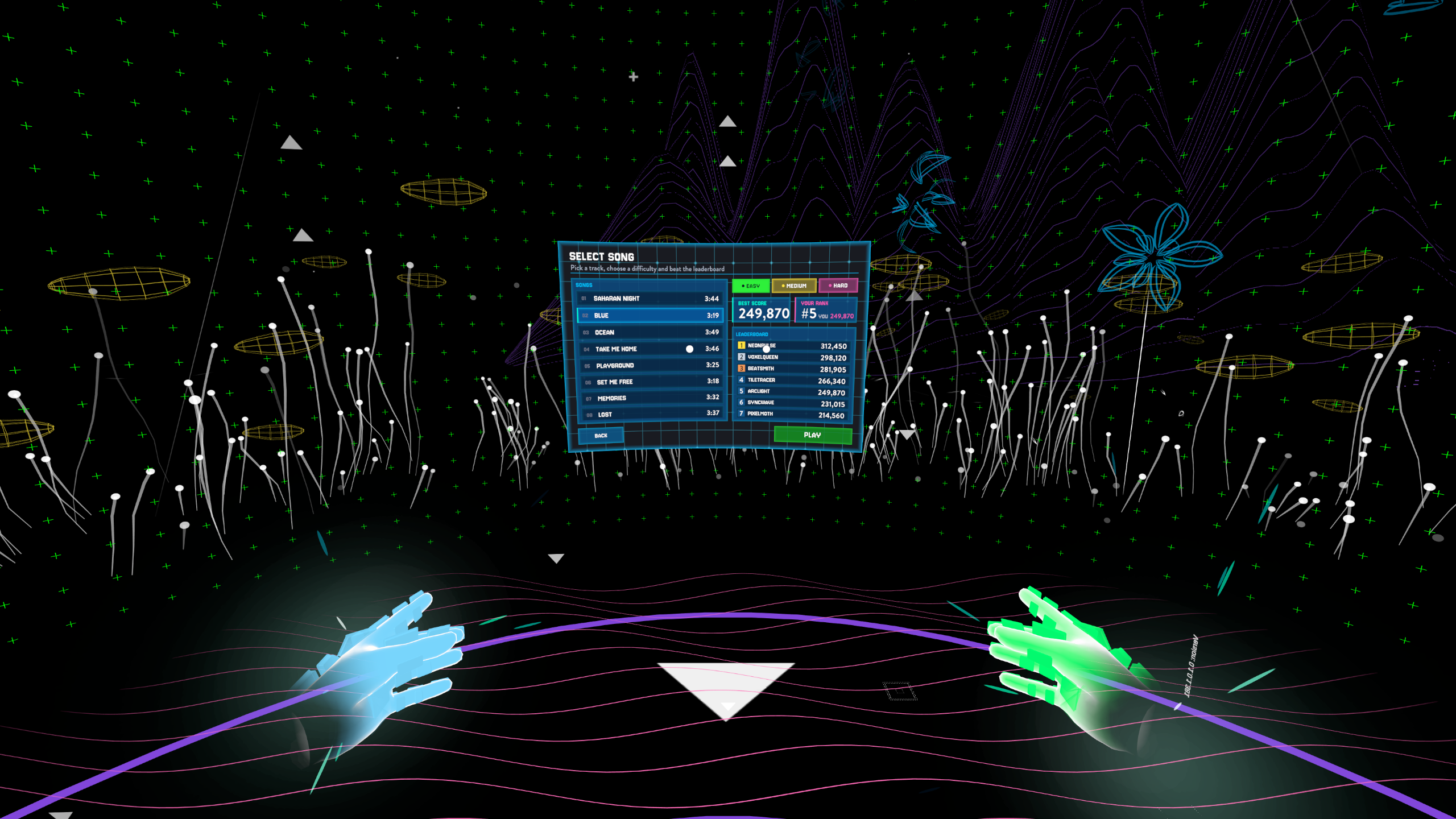
- Hand tracking: Put the controllers aside and interact naturally using only your hands, enjoying the music through movement.
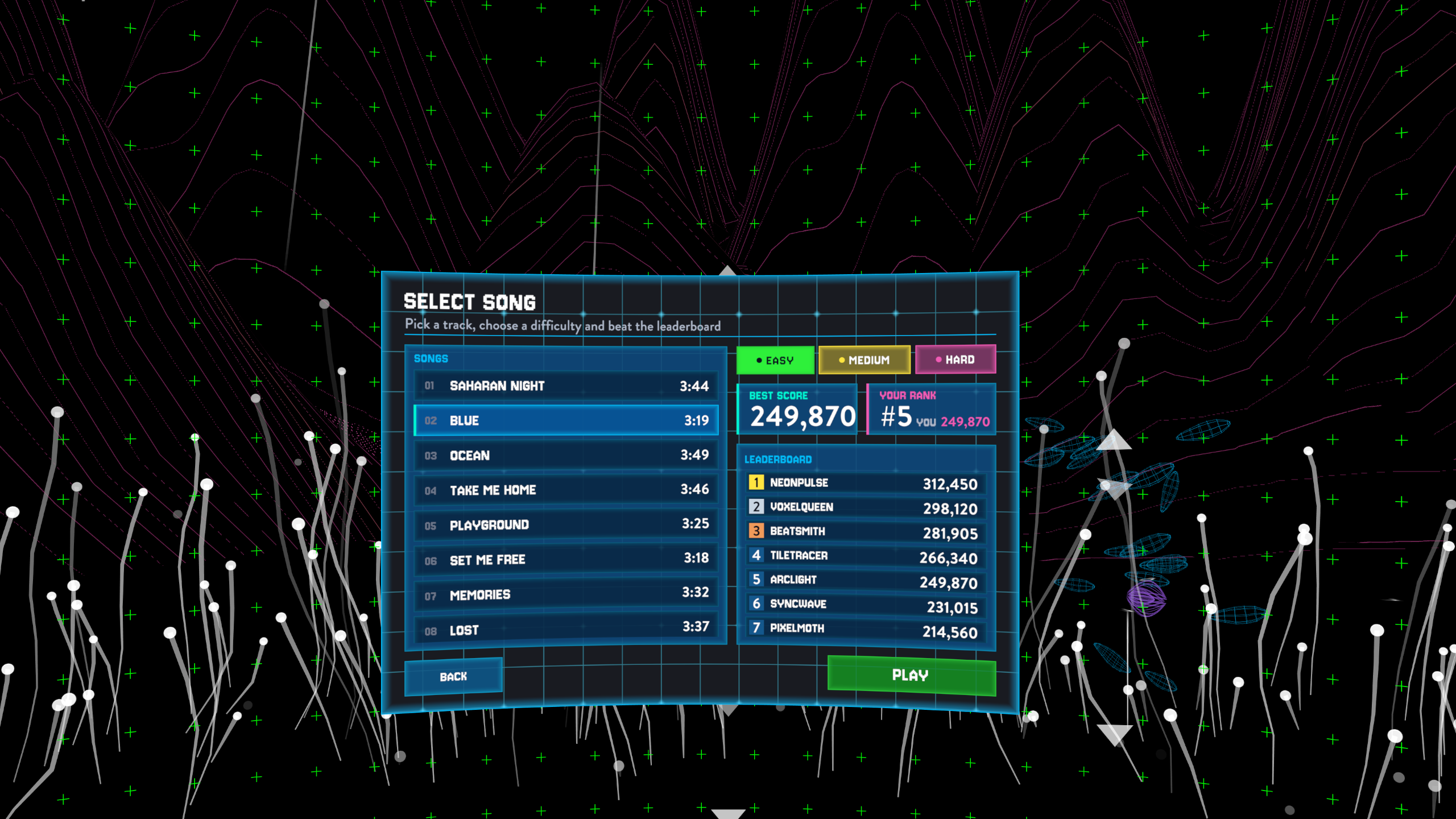
Each song has three difficulty levels (Easy, Medium, and Hard), individual scores, and leaderboards.
Visually, we wanted to create something unusual: a world where technology and nature coexist, with glowing plants, digital landscapes, floating flowers, and geometric structures. Although everything is built from digital elements, we wanted the environment to feel organic and alive, with a human touch.
How We Built It
We began by experimenting with how rhythm patterns could exist in three-dimensional space rather than on a traditional flat gameplay surface. We developed a pattern-based interaction system that responds to hand movement, direction, accuracy, and musical timing. We also built an internal song mapper that lets us design patterns, place them around the player, assign beats, and create different difficulty levels.
Supporting both controllers and hand tracking was important from the beginning because we wanted Rhythm Dojo to accommodate different ways of playing. As music producers ourselves, we approached the gameplay from a musical perspective, thinking carefully about how each movement connects to the rhythm, structure, and energy of a track.
Challenges and What We Learned
One of our biggest challenges was finding the right balance between freedom of movement and precise rhythm gameplay. Traditional rhythm games usually have a predictable direction for incoming notes. In Rhythm Dojo, patterns can appear anywhere, which creates exciting possibilities but also introduces challenges with player orientation, readability, and timing.
We also learned that mechanics that feel obvious to experienced rhythm players aren't necessarily intuitive to newcomers. Through feedback and testing, we discovered how important it is to clearly communicate beat timing, explain scoring, and introduce new movements gradually.
Hand tracking introduced another design challenge: making natural movement feel enjoyable while preserving the precision needed for competitive gameplay.
The biggest lesson was that different players want different things from music in XR. Some want a serious challenge. Others simply want to move, dance, and have fun. We wanted to make room for both.
What's Next
Music collaboration is at the heart of our plans for Rhythm Dojo. Our team has connections with hundreds of independent music producers, and we want Rhythm Dojo to become a place where their music can find new audiences. We're working toward releasing our song mapper to the community, allowing players to create their own rhythm patterns for music contributed by our indie producer partners.
We also have connections with established musicians and plan to bring additional music to Rhythm Dojo through collaborations and DLC.
Our Early Access release includes 15 songs, with more planned as the project grows.
Ultimately, we'd love Rhythm Dojo to become a creative meeting point for musicians, rhythm gamers, dancers, and anyone who enjoys moving to music. We started with the idea of turning a room into an instrument. Now we want to see what people will create and how they'll move when the whole room becomes part of the music.
Join Our Discord
We are starting Beta Testing with the community, if you're interested to try our game, join us: https://discord.gg/p6rBQBHFqy
Built With
- ableton
- metavr
- operator
- unity
- unity-cli


