-
-
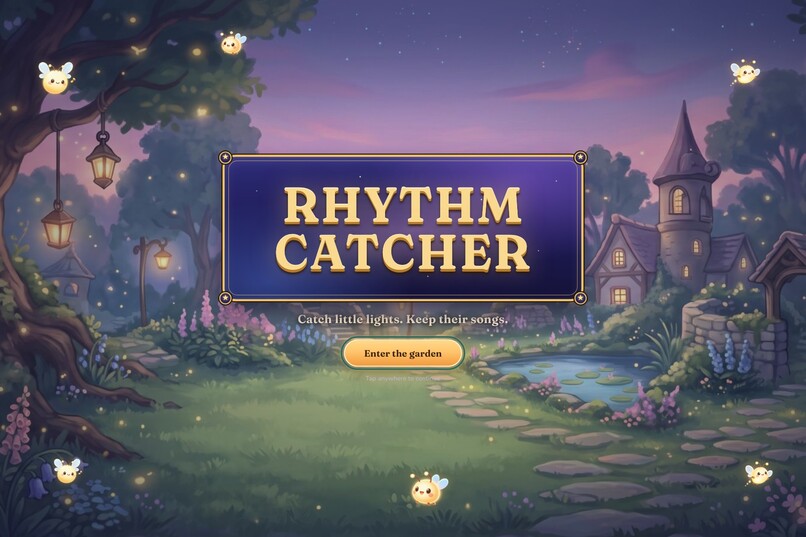
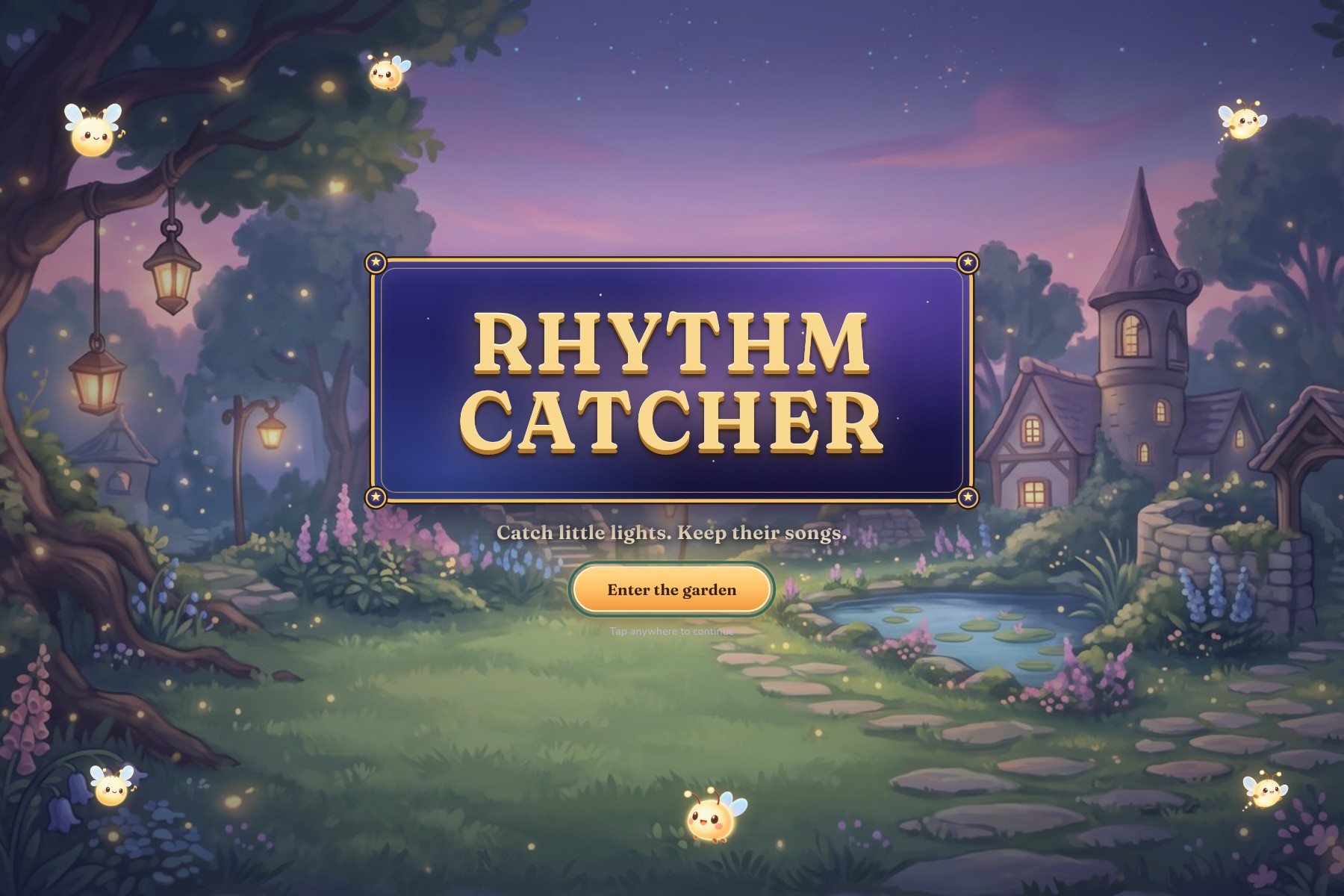
Rhythm Catcher: catch little lights, keep their songs. A hands-only rhythm game for Meta Quest.
-
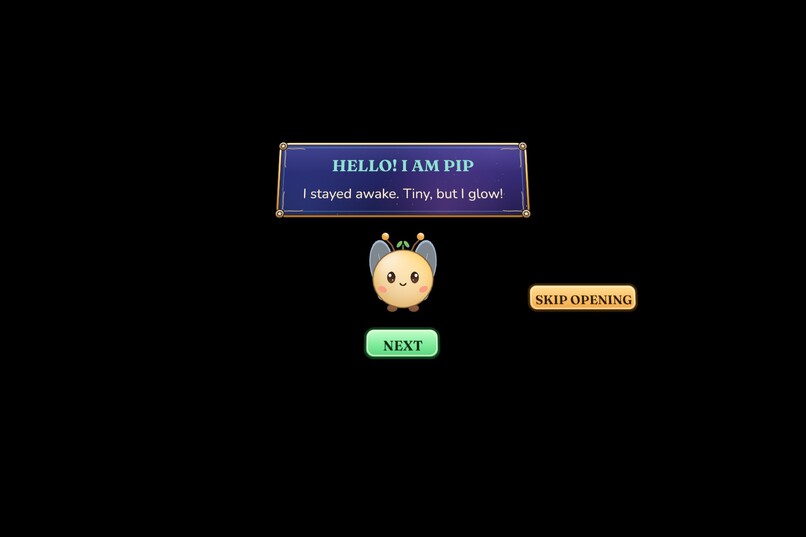
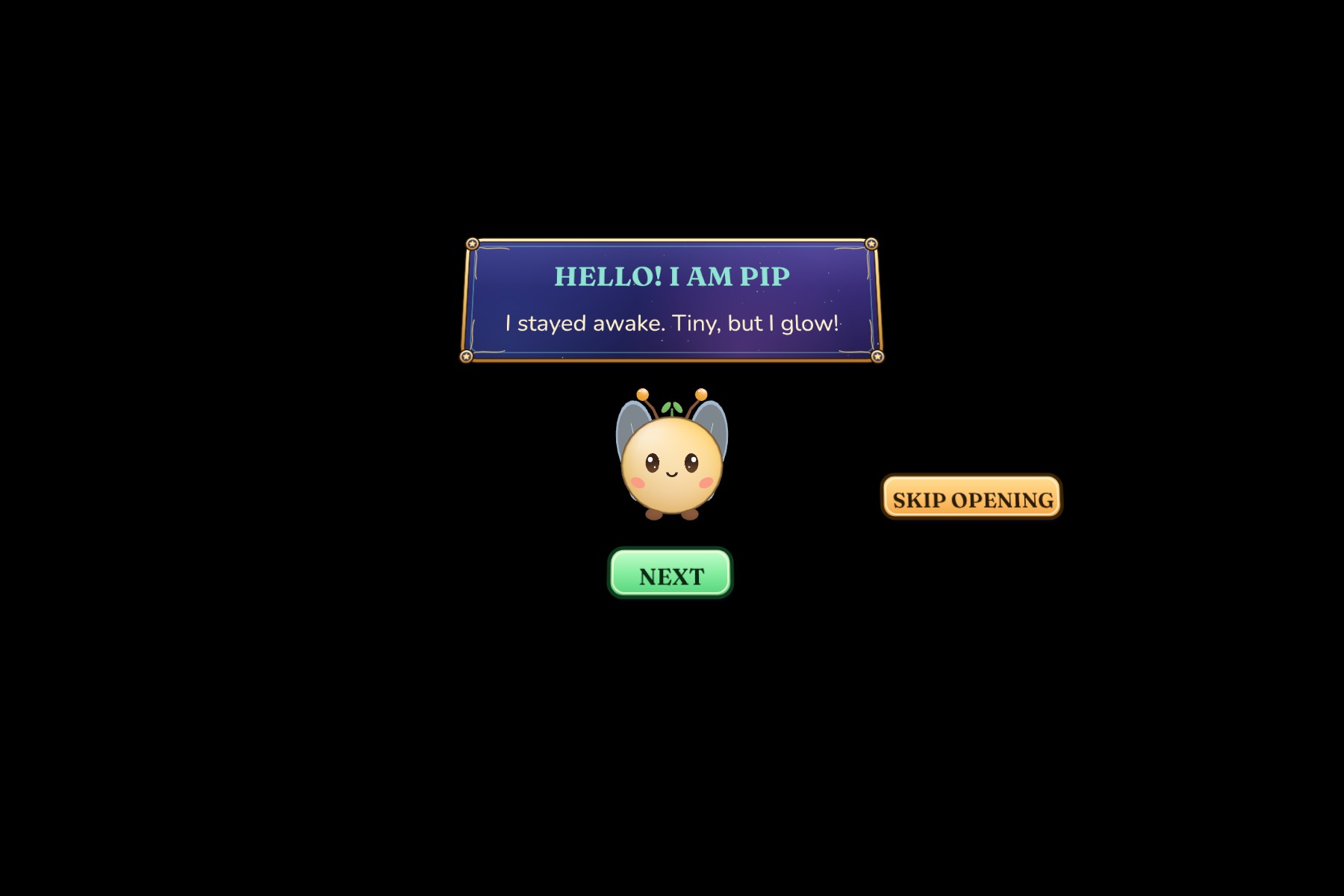
It begins in the dark: Pip, the one firefly still awake, tells you how the garden fell asleep.
-
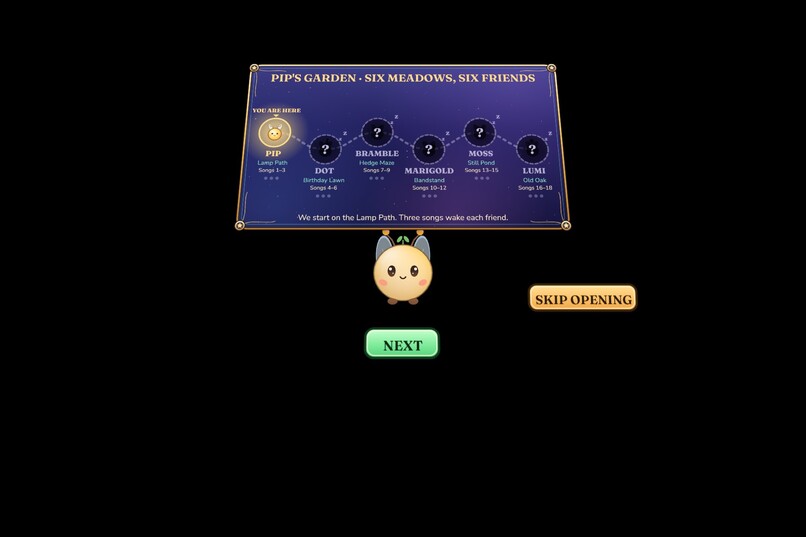
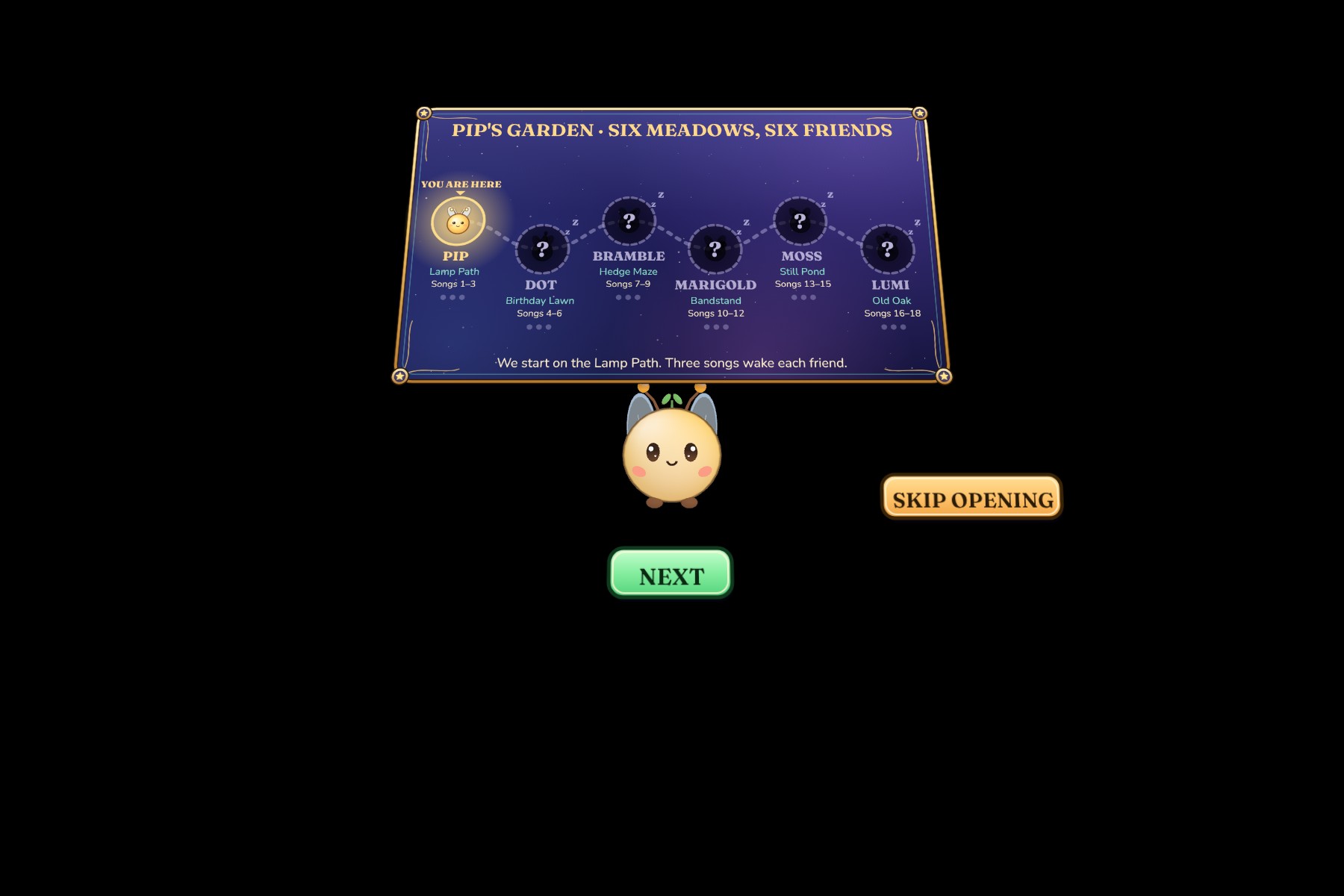
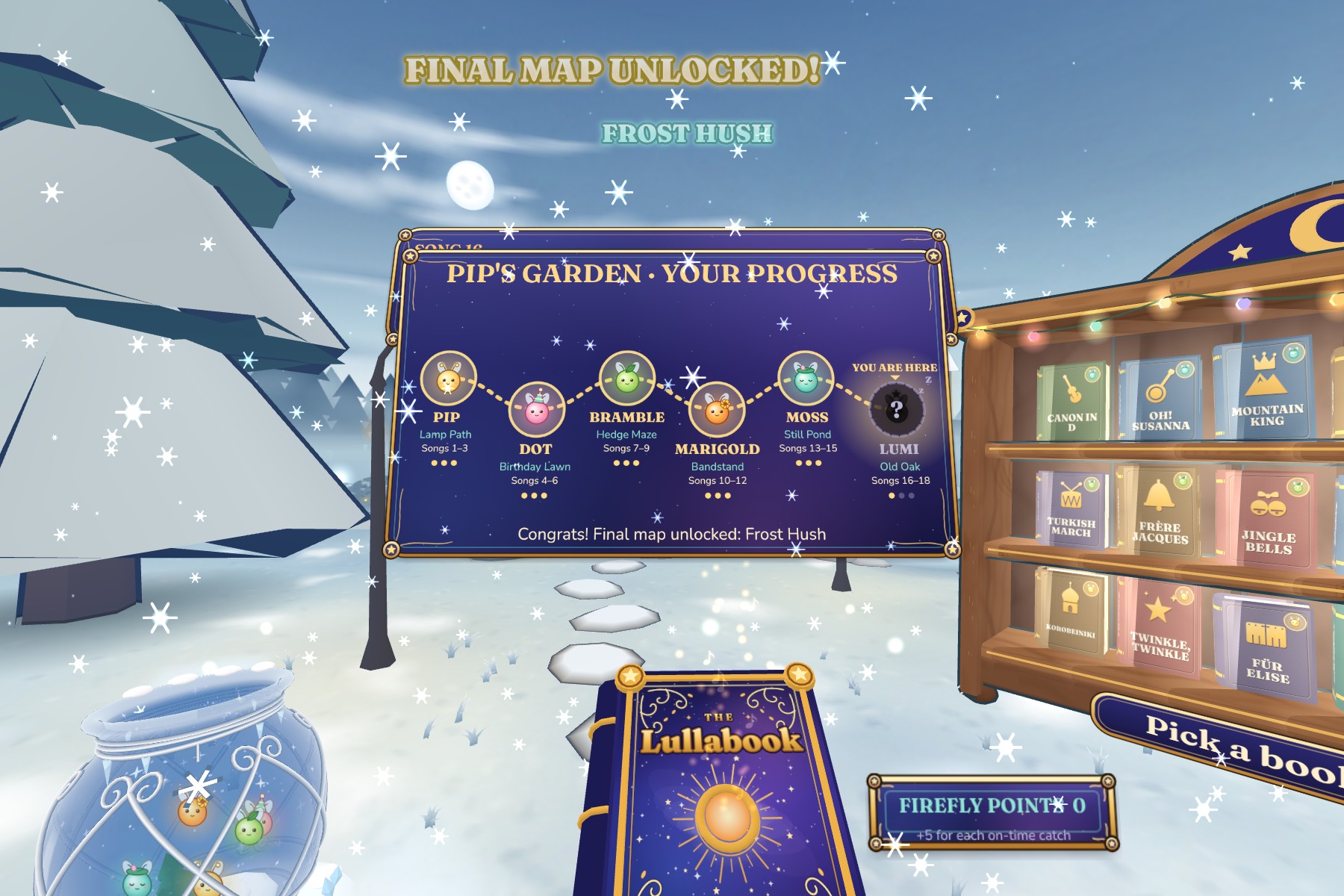
Pip’s map: six meadows, six sleeping friends. Three songs wake each one.
-
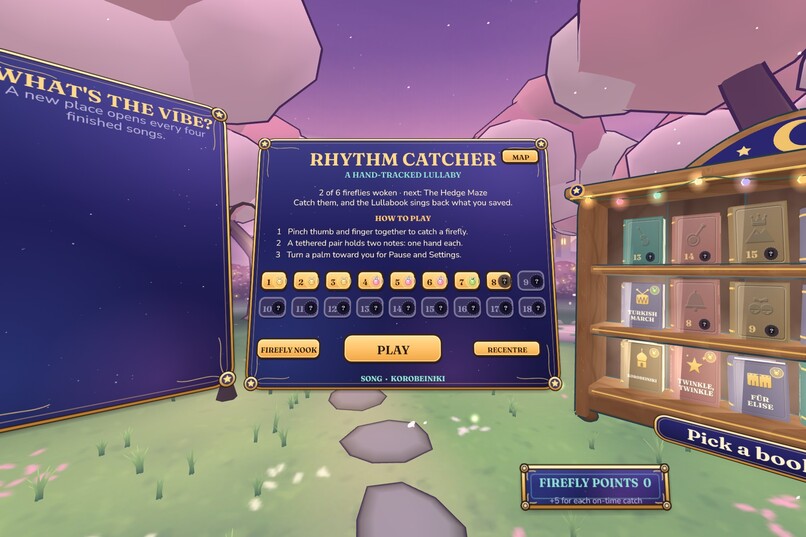
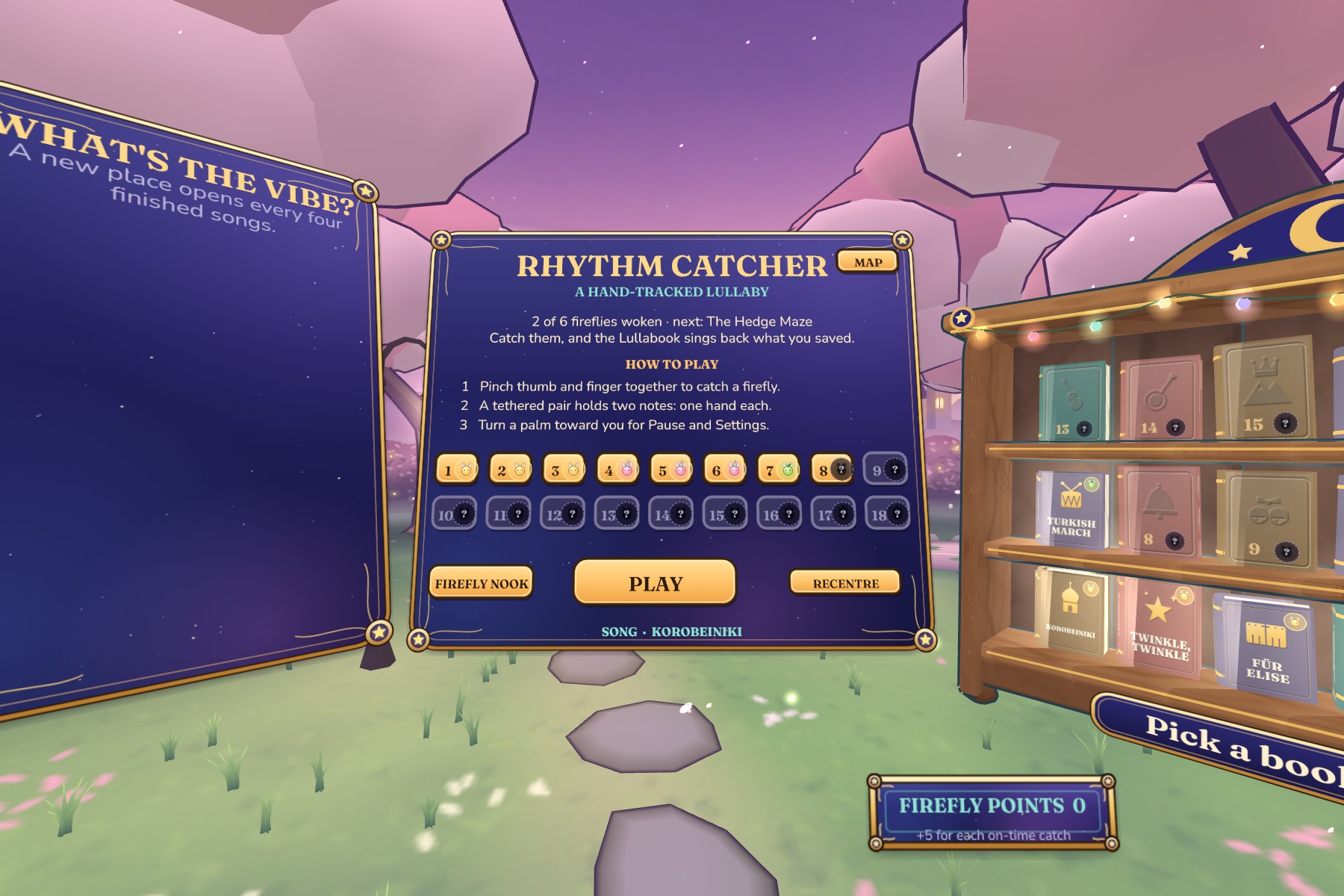
Every song number has a firefly slot. Play a song to fill it in.
-
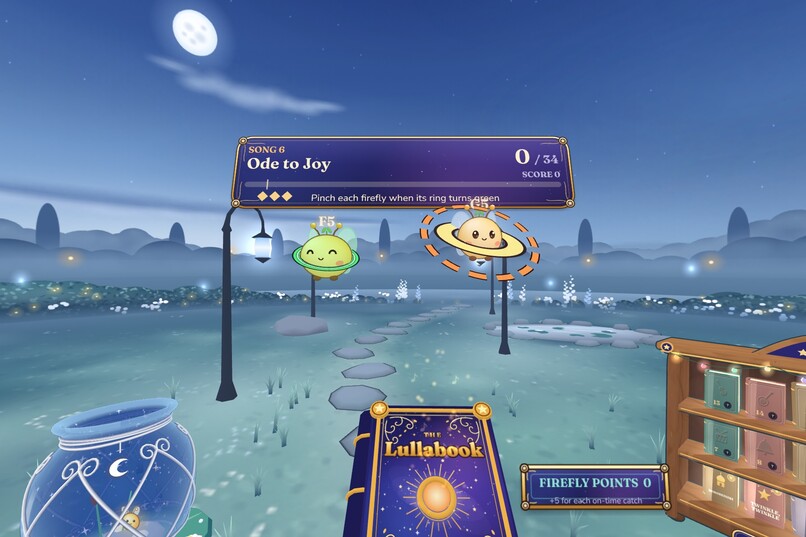
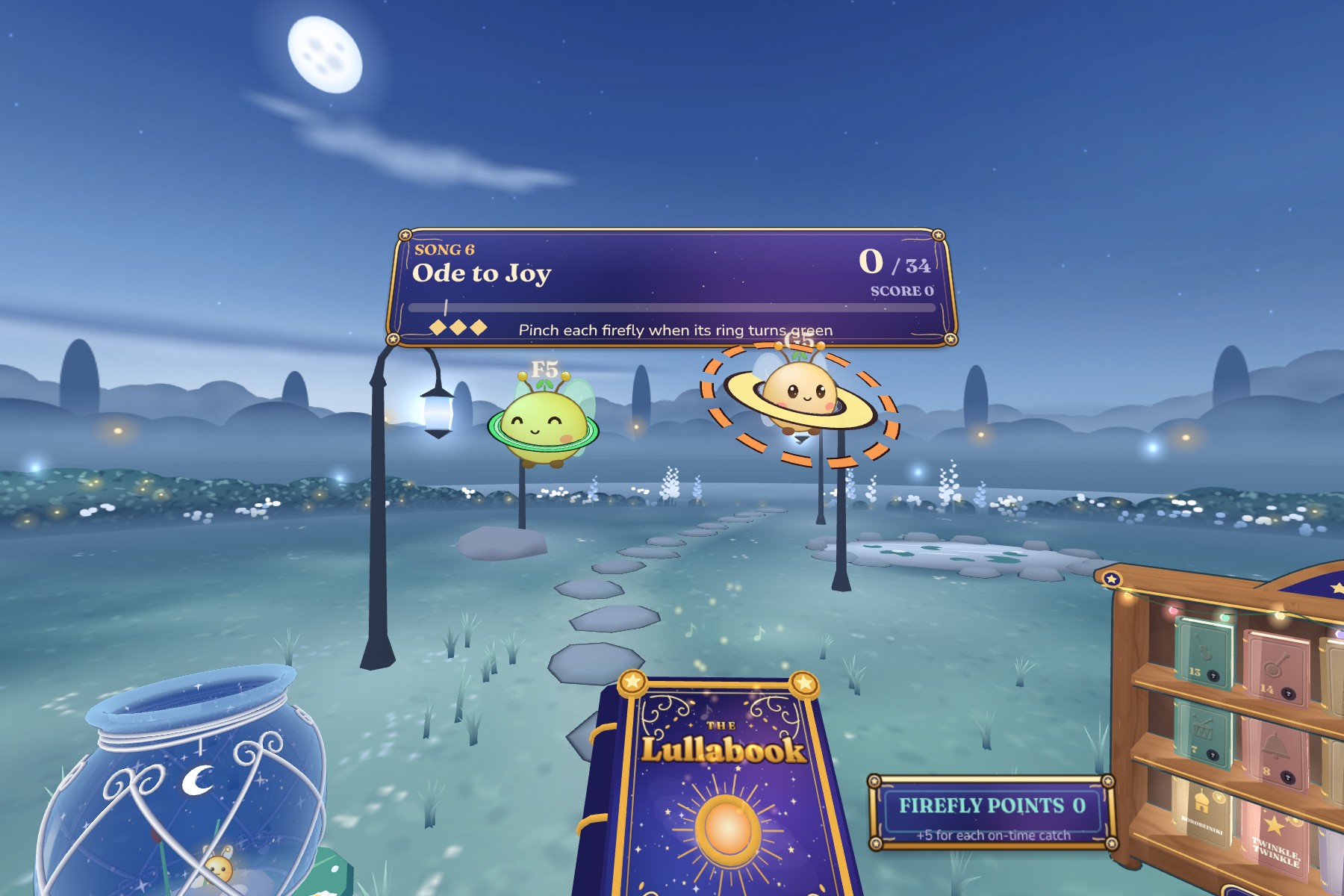
Pinch each firefly when its ring turns green. Every catch plays its note.
-
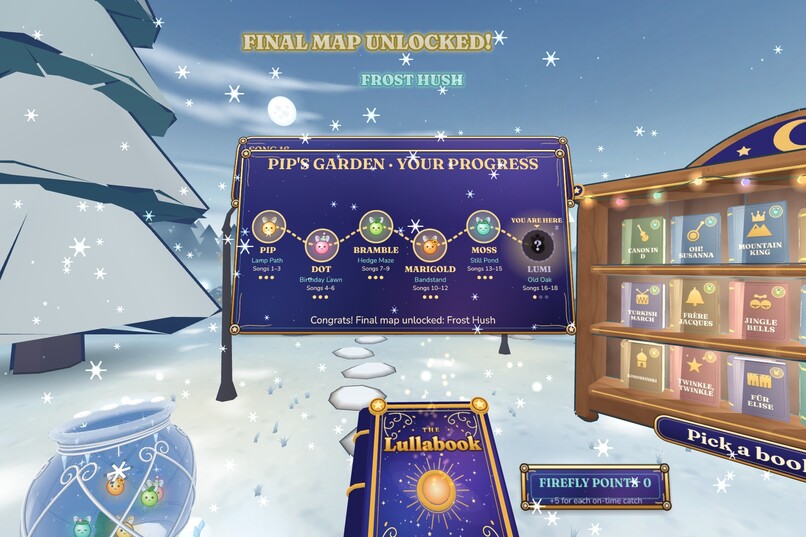
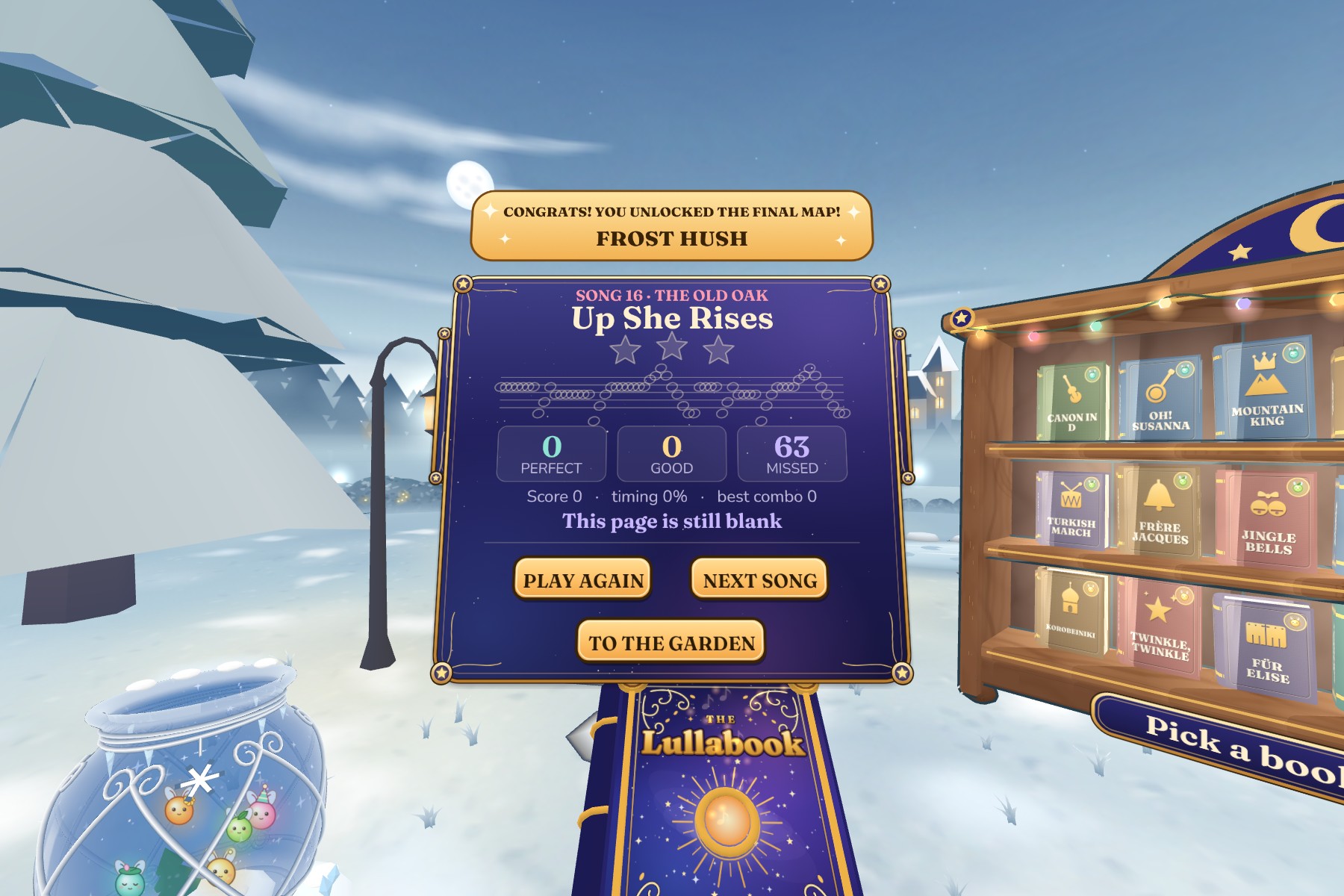
Map unlocked: the garden turns to Frost Hush with a swirl of snow.
-
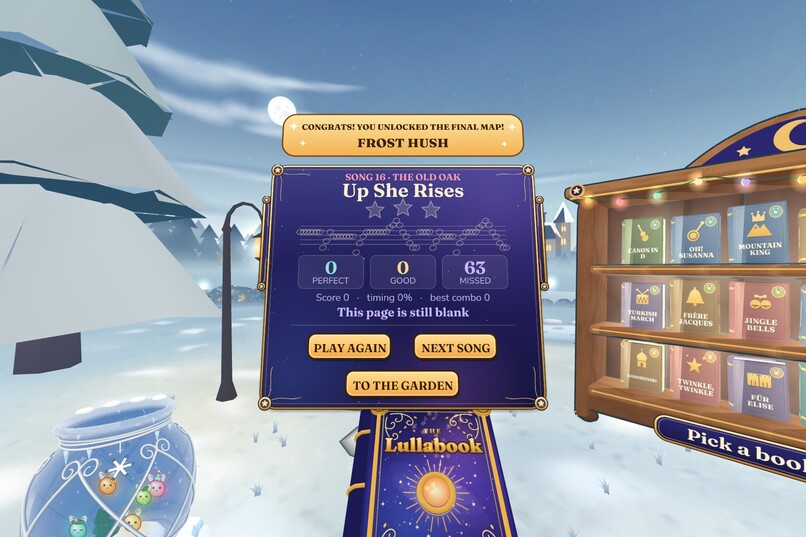
Catch enough to pass, then see what you unlocked: new friends and new maps.
-
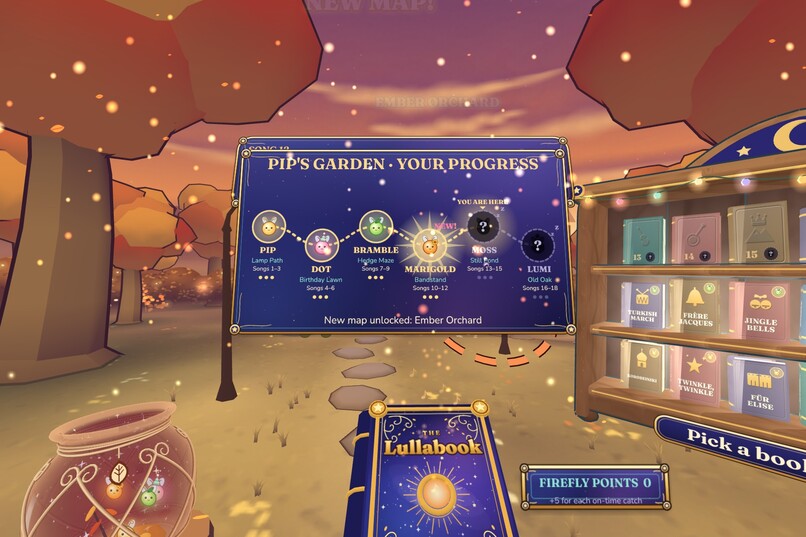
Every four songs a new map opens, each with its own magic: moon sparkles, petals, embers, snow.
-
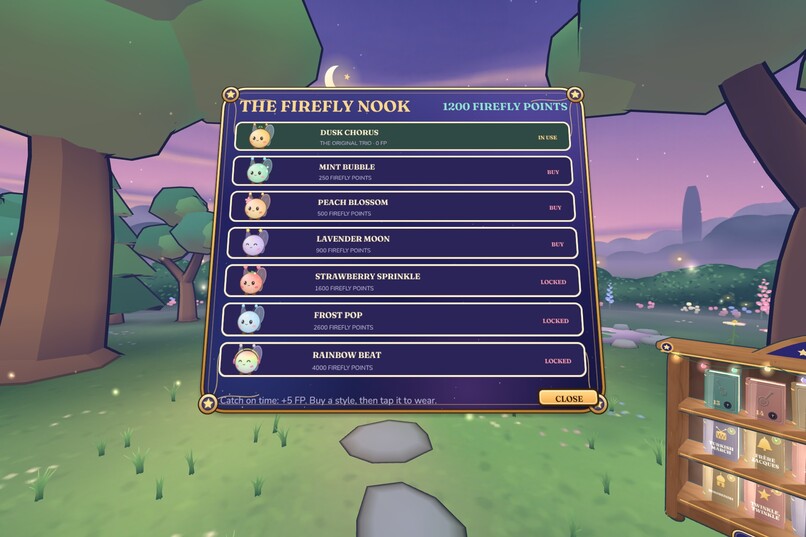
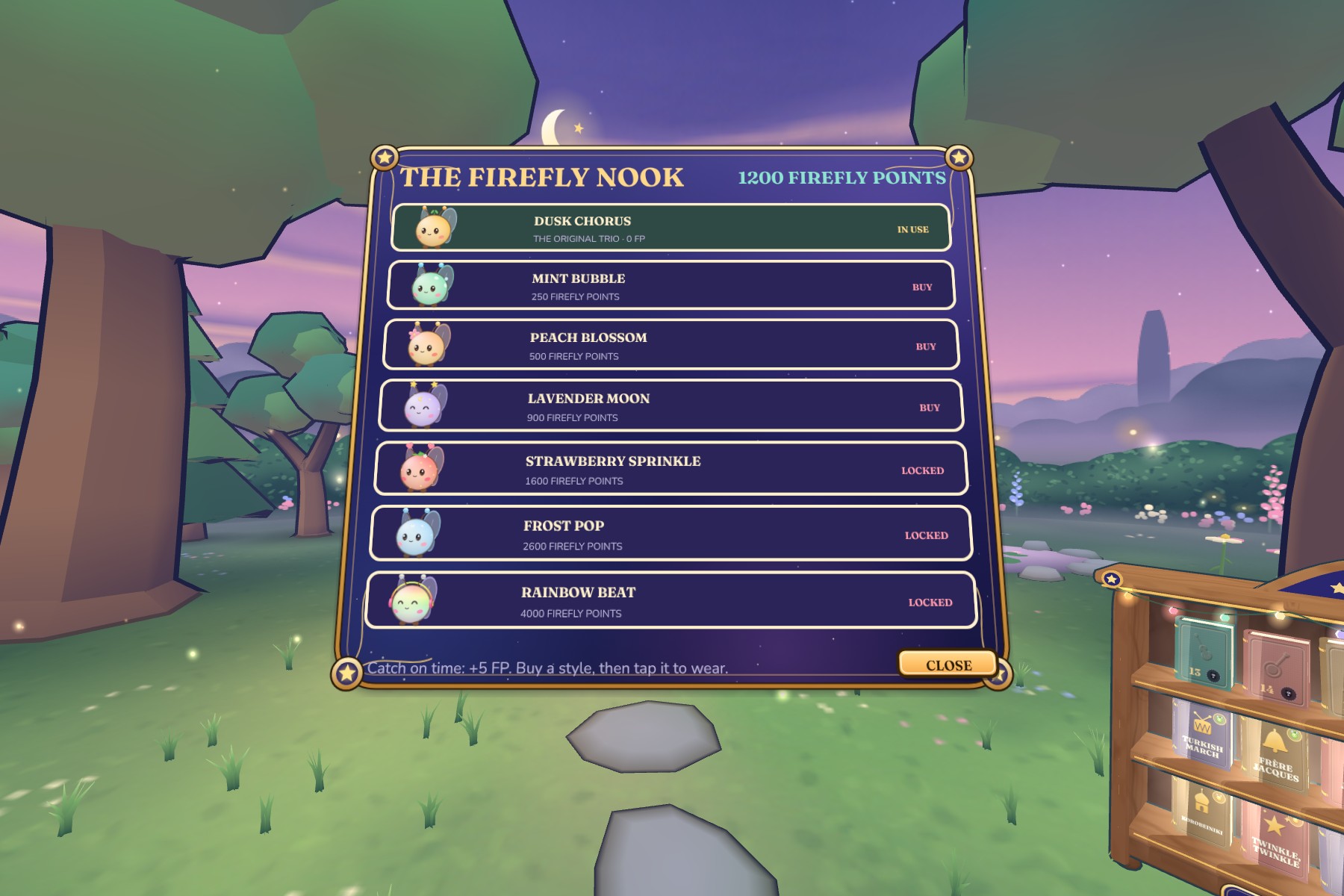
Spend Firefly Points from on-time catches on new looks in the Firefly Nook.

Inspiration
Most rhythm games give you a score as a number. I wanted one where you could hear how you did, and one you could play seated, at the end of the day, without holding anything.
What it does
The player sits in a garden at dusk. Fireflies appear in time with a tune most people already know, and each firefly stands for one note. A ring closes around it. If you pinch it as the ring lands, it turns green. When the song ends, a book called the Lullabook plays the melody back using only the notes you caught. The gaps are the notes you missed, so a perfect run plays the whole song.
There are 18 songs, from Twinkle, Twinkle to the Can-Can. Each has its own instrument and a backing band. Long notes are held in a closed hand, and some fireflies come in pairs that need both hands at once. Songbooks sit on a shelf beside you, and you touch one to start it.
Progress shows in a jar that fills with the fireflies you catch. The garden has five places that open as you finish songs, each with its own jar. There is also a song of the day and a set of firefly styles you earn with points from play. Nothing in the game is sold.
A short story runs through the songs, called The Garden Wakes. The garden has six corners with three songs each. Finishing the third song in a corner wakes a firefly, which then lives in your jar. Finishing the last song wakes the whole garden.
Hands first
The whole game is played with bare hands. You pinch to catch, close your hand to hold a note, touch a book to choose it, and turn a palm toward you for pause and settings. No controller is needed at any point. It is designed for a seated player, with everything inside arm's reach and a comfortable field of view. The options include a left-handed layout, a one-hand mode for the paired notes, timing rings that differ by shape as well as colour, reduced motion, larger text and a high-contrast mode.
Mixed reality
With passthrough on, the fireflies come out of your own wall and the jar sits on your own table. The shelf stands against your wall until you reach for it.
How I built it
It is a web page, built with three.js, TypeScript and Vite, using WebXR hand tracking and plane detection and the Web Audio API. Nothing needs to be installed, there are no accounts or servers, and progress is saved in the browser. The download is 4.2 MB. The glass-and-gold hands are drawn in code from the 25 tracked joints. The sky, far wood, hedge and lawn are also painted in code when the page loads, so the garden has no scenery image files. The melodies are in the public domain. The instrument notes come from an openly licensed sample library, and the backing band is synthesised and scheduled on the audio clock, which keeps the music and the timing rings together. The project has 327 automated tests.
I started on 1 October 2026. I used AI coding tools while building it. A few early concept pictures (a first firefly, a cover and a tree) were made with an AI image tool.
Challenges
Playing with bare hands means there is nothing to hold, so every menu has to be reachable and readable from a seat. In early headset sessions my own hands showed through the cards, the settings menu let other menus show through, and the jar sat too far away. I fixed these by bringing things closer, making settings a proper overlay, and keeping the wrist menu clear of the other hand. Keeping the download small was the second challenge, which is why the scenery is painted in code. The third was testing. Much of the game was checked on a flat screen with the headset layout forced on, so it still needs more time in a real headset.
What I learned
In a hands-only game, every control has to be checked in the headset, not only on a screen. I also learned to make difficulty depend on timing rather than aim, so a song gets harder because fireflies come more often and stay for less time.
What's next
More songs, a second instrument for each song, and a two-player duet in which each player catches one hand of the same tune.

