-
-
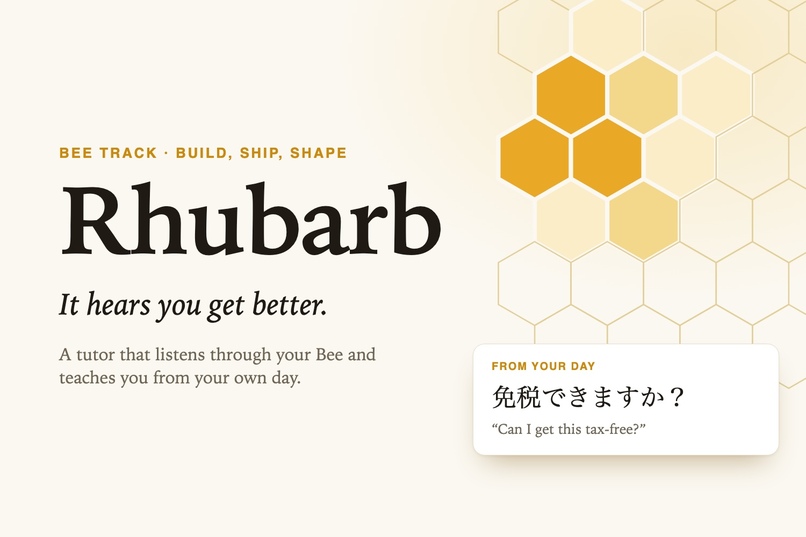
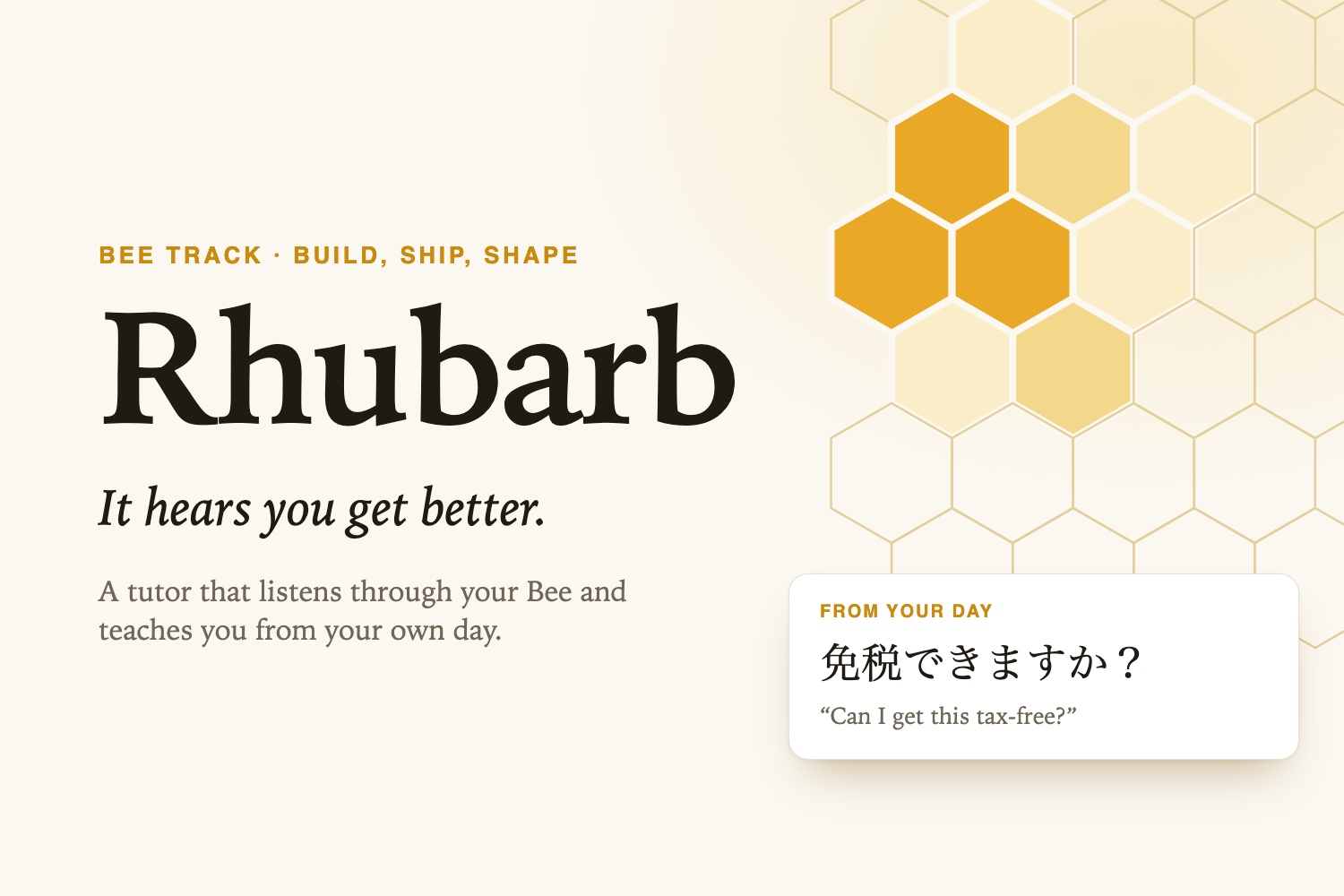
Rhubarb: a tutor that listens through your Bee and teaches you from your own day.
-
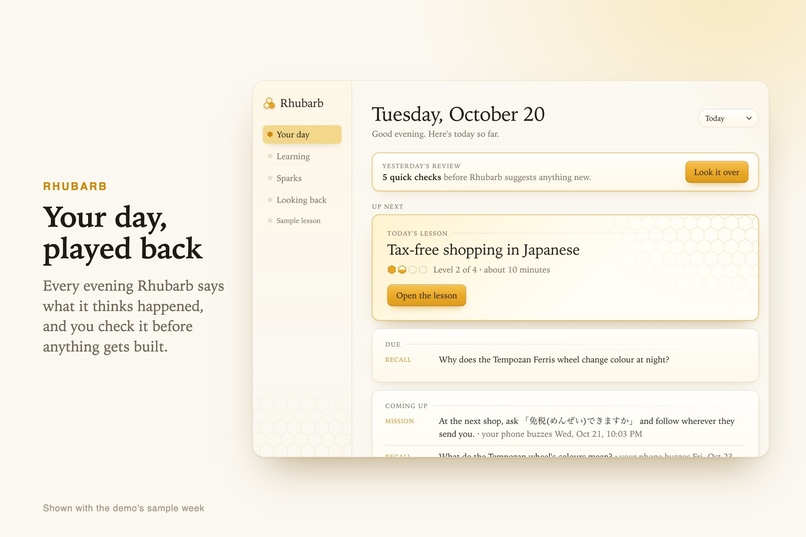
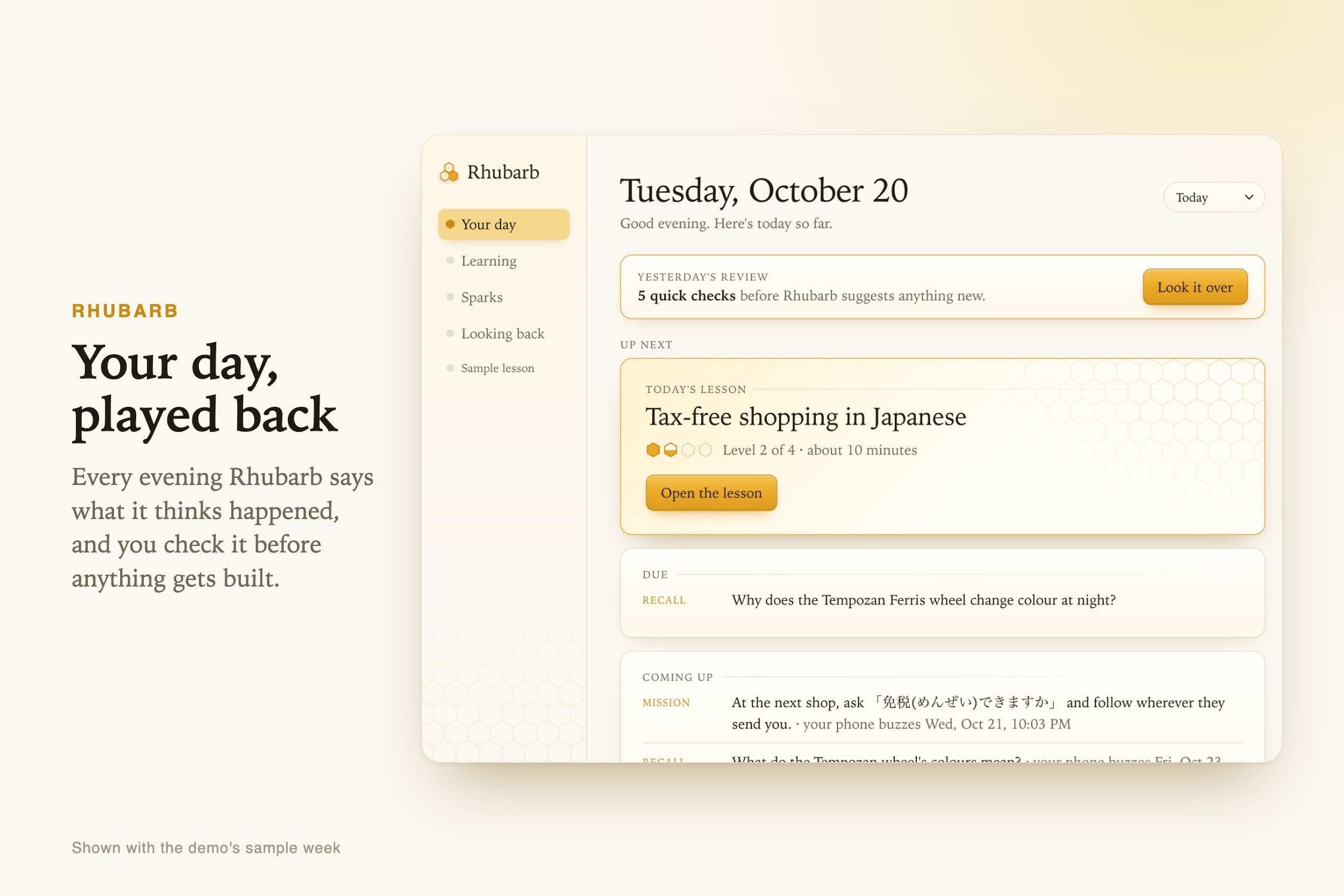
Your day: what Bee heard, where, and what came of it. Each evening you check Rhubarb's reading before anything is built.
-
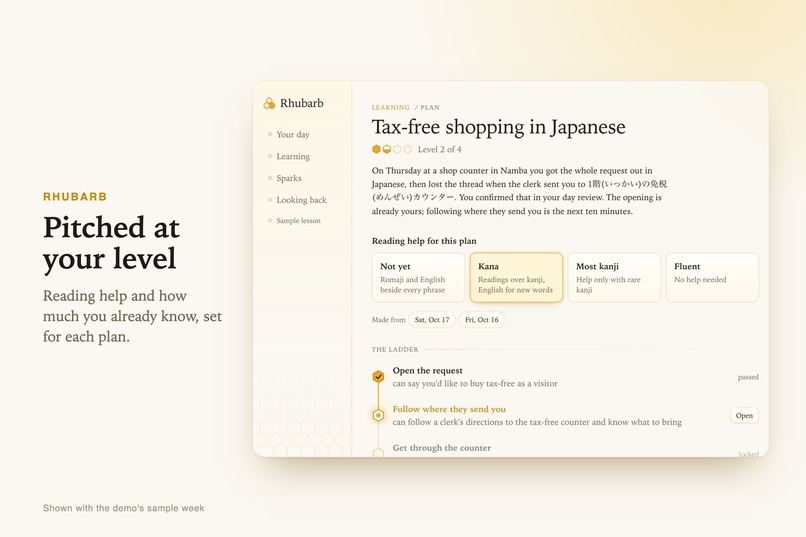
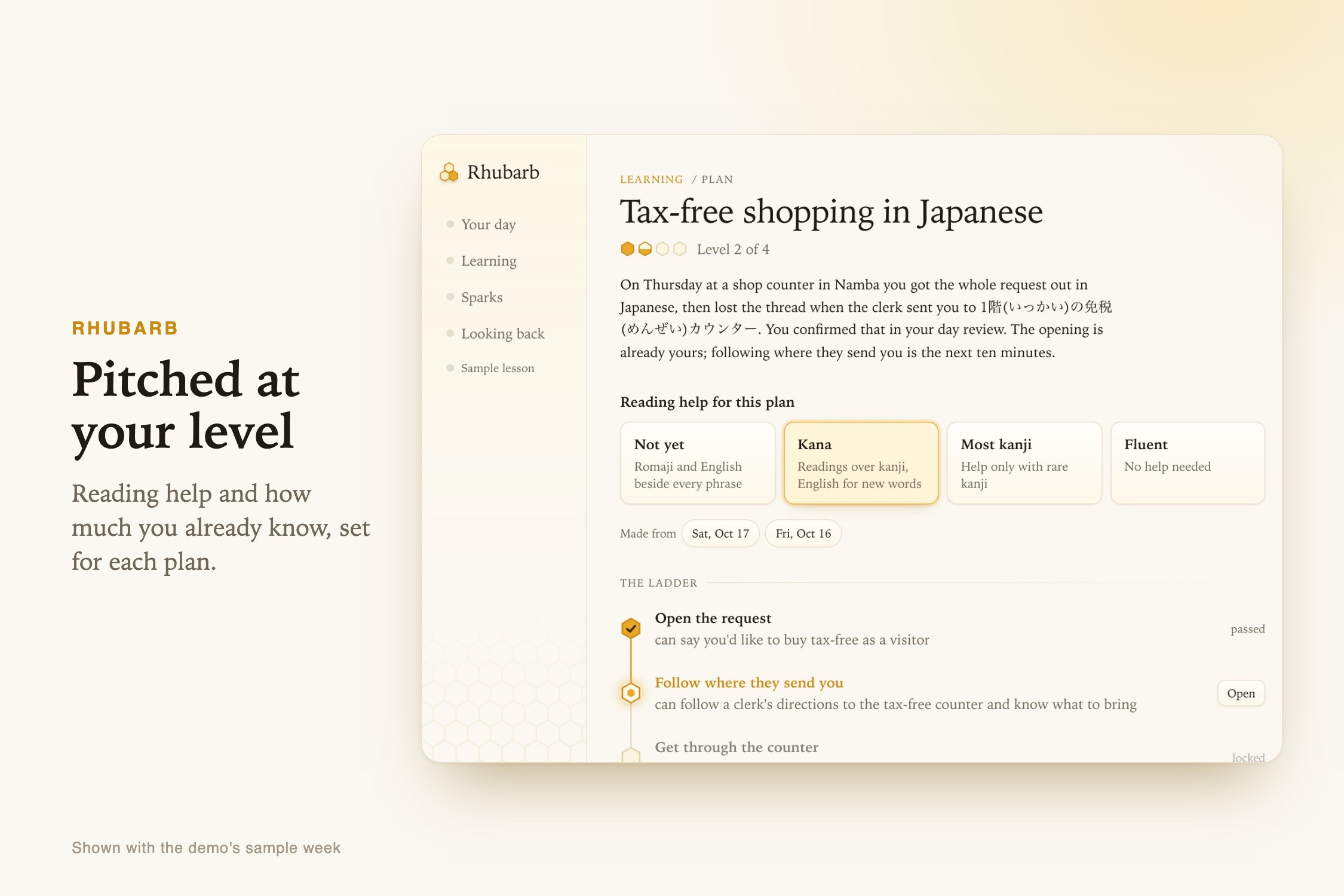
Each plan is pitched at your level: how much you already know, and how much reading help you want.
-
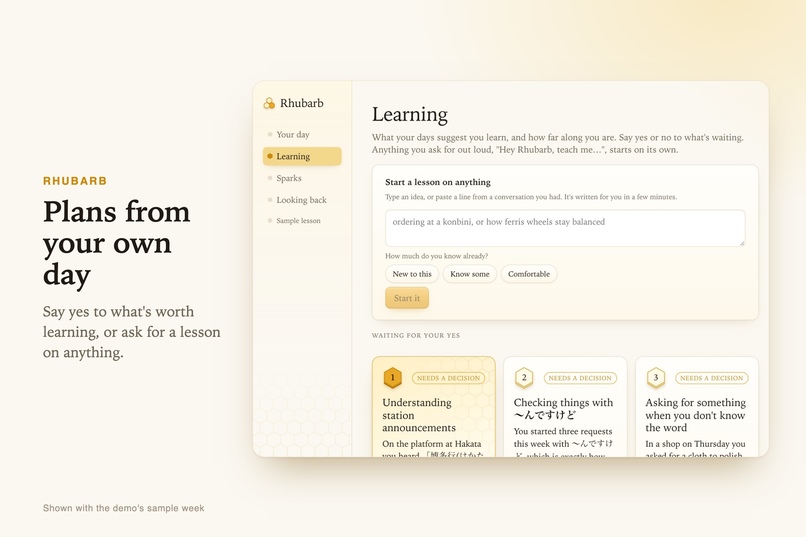
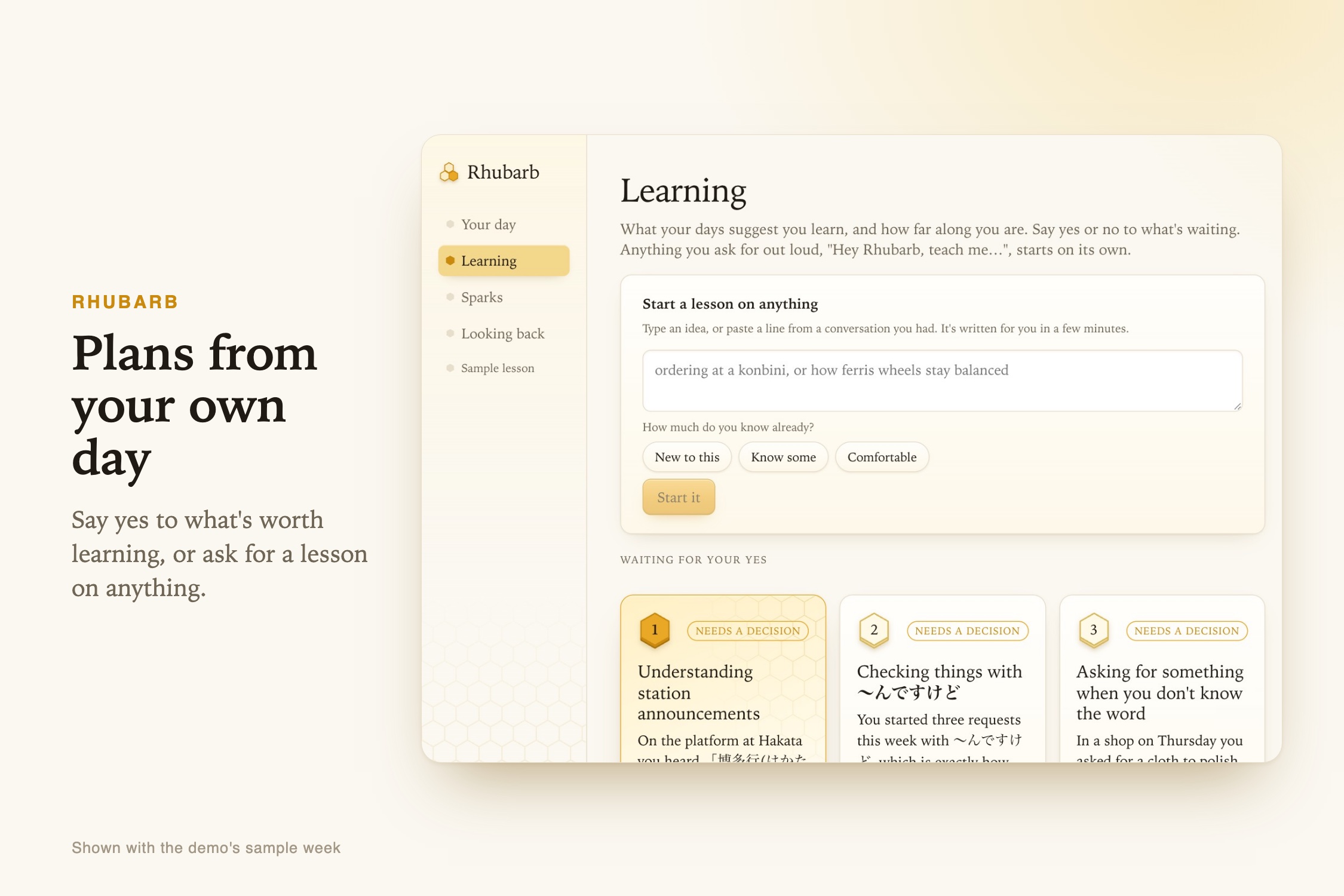
Plans from your own day. Say yes to what's worth learning, or ask for a lesson on anything.
-
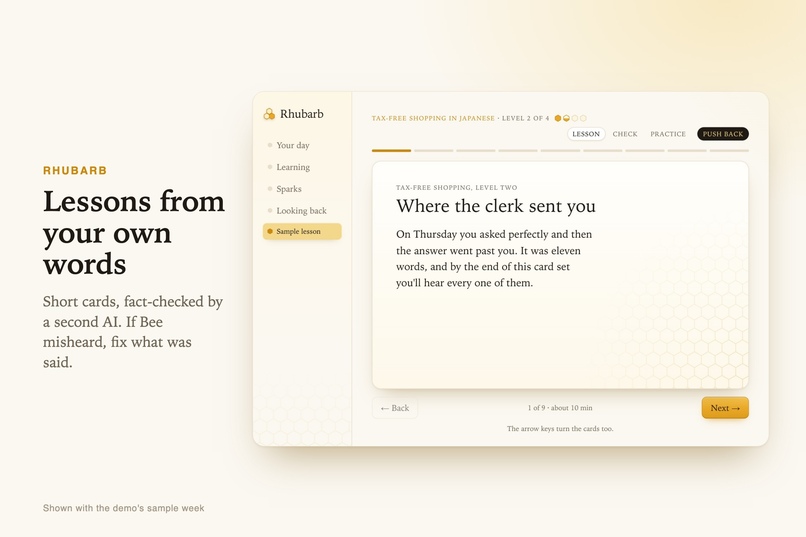
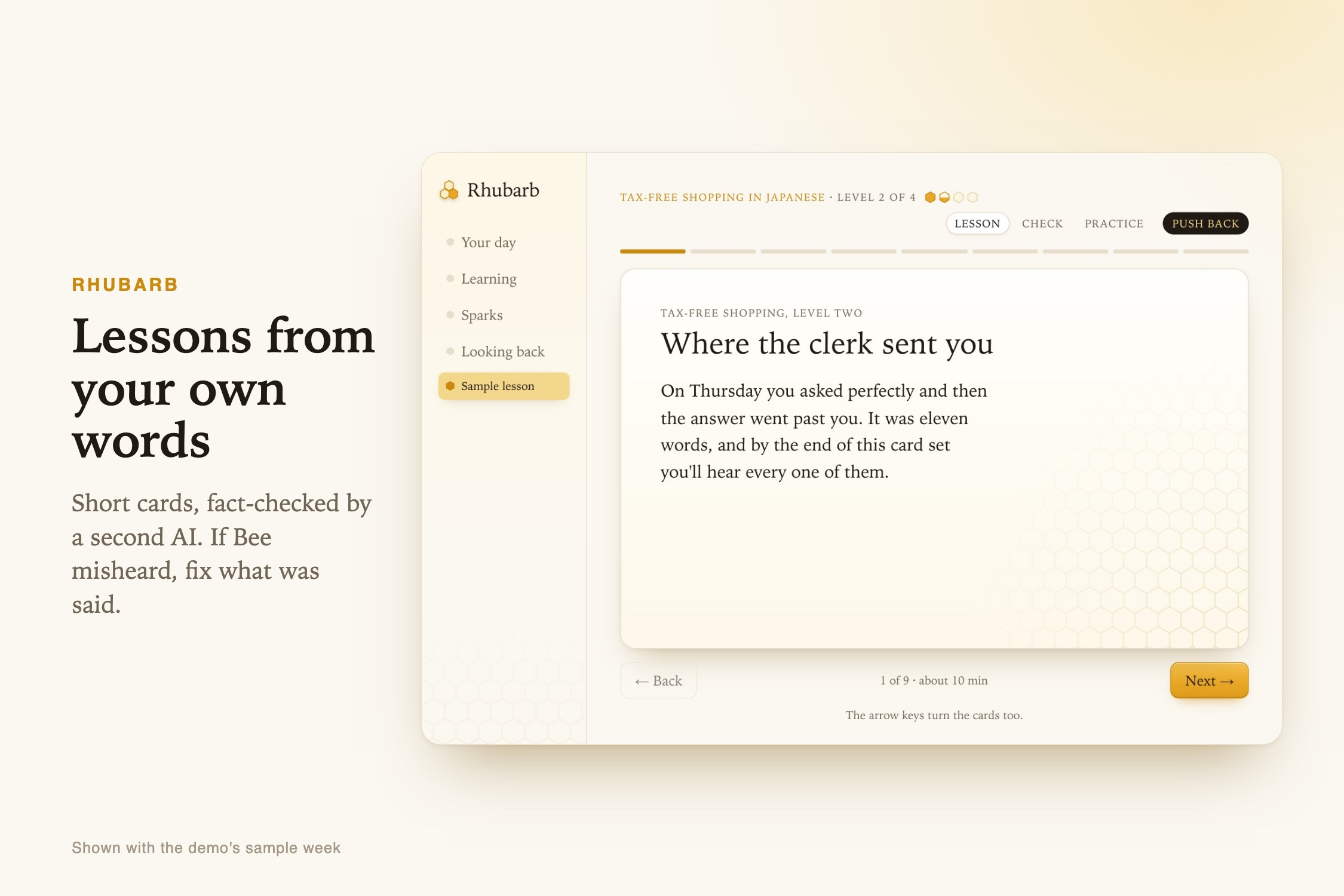
Lessons built from your own words, fact-checked by a second AI. If Bee misheard, fix what was said.
-
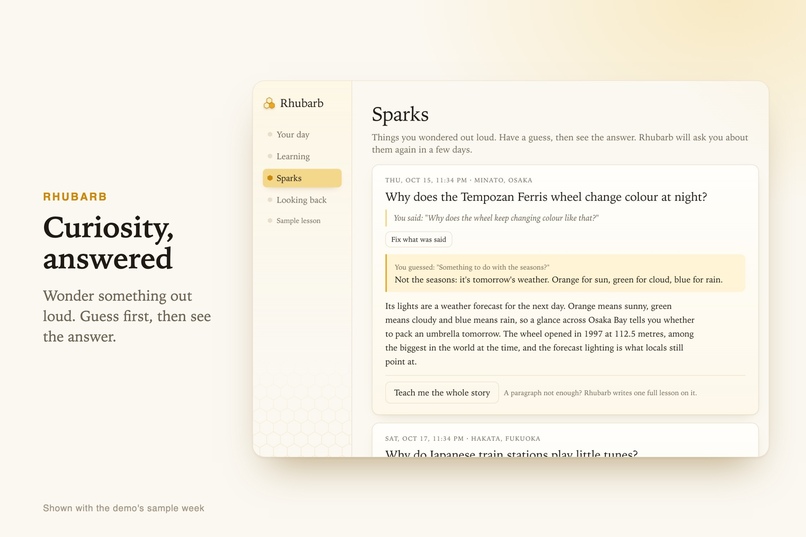
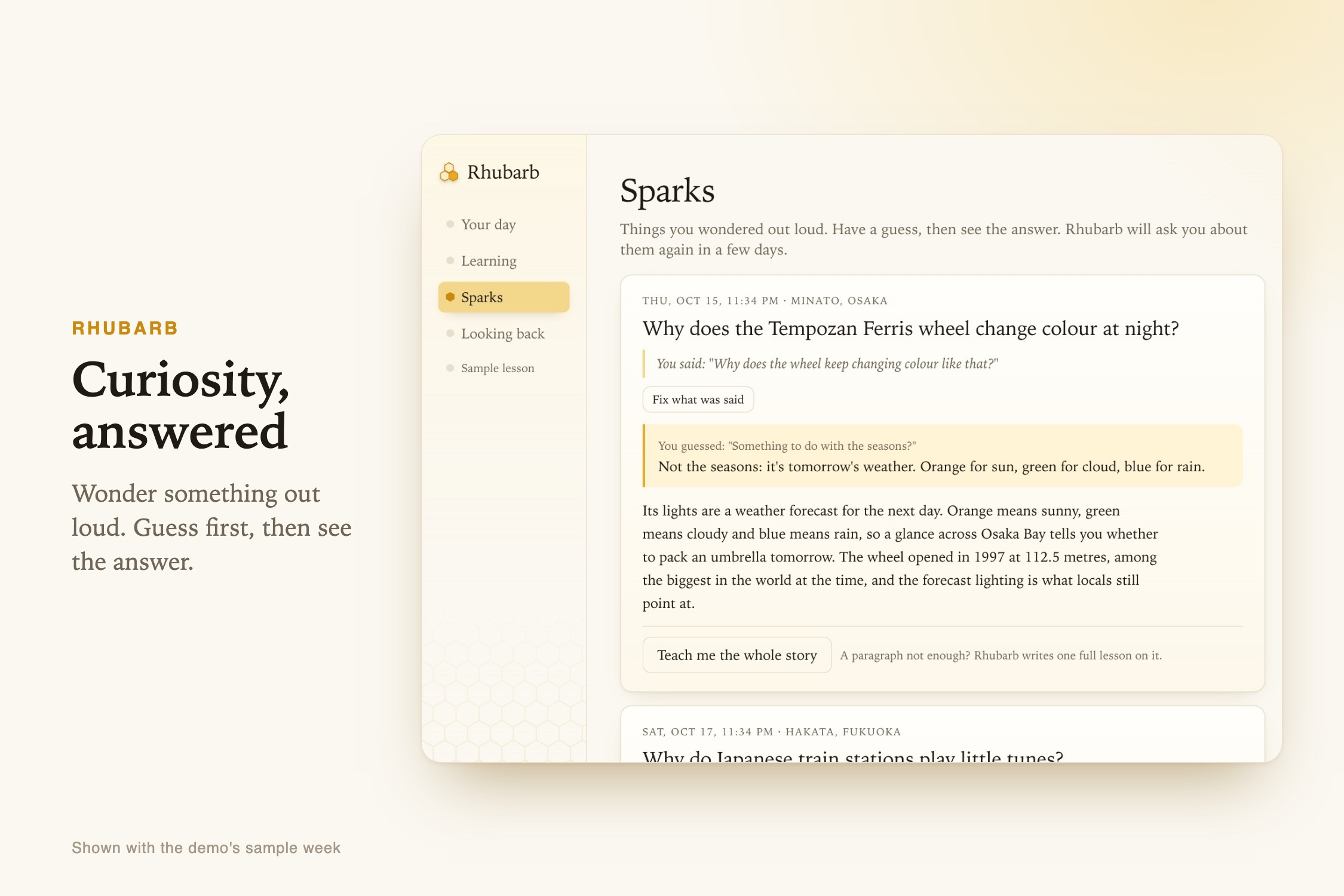
Sparks: quick answers to things you wondered out loud. Guess first, then see the answer.
-
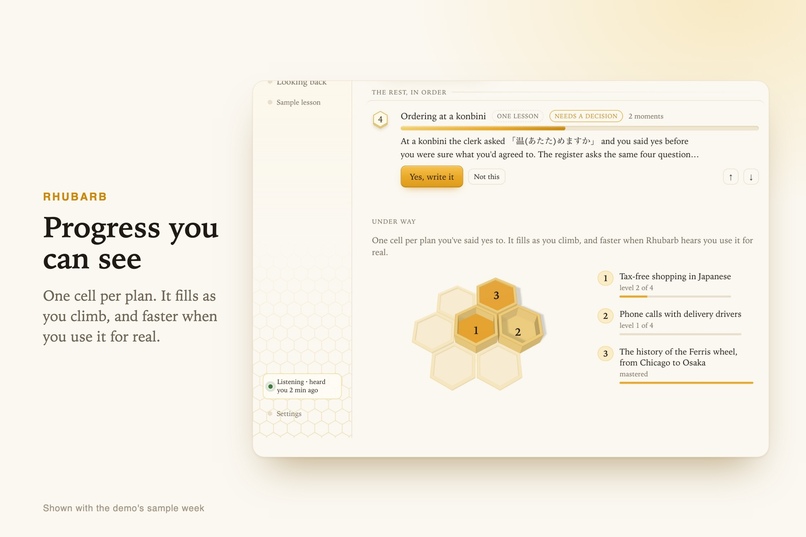
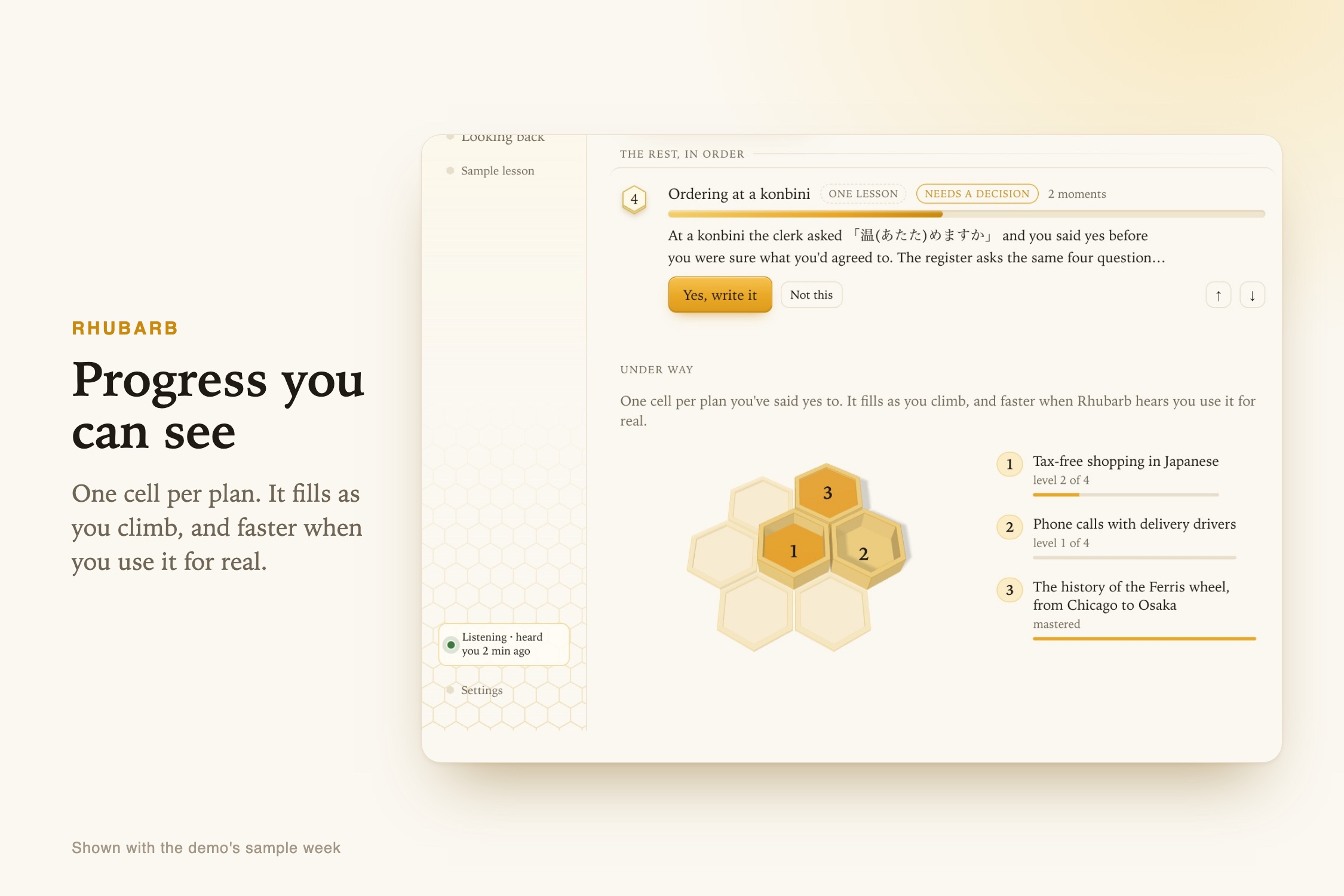
The Honeycomb: one cell per plan. It fills as you climb, and faster when you use a skill for real.
-
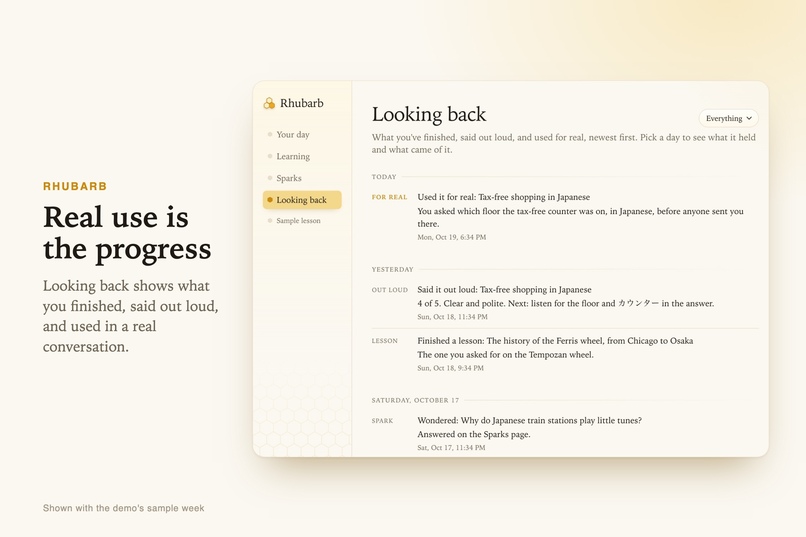
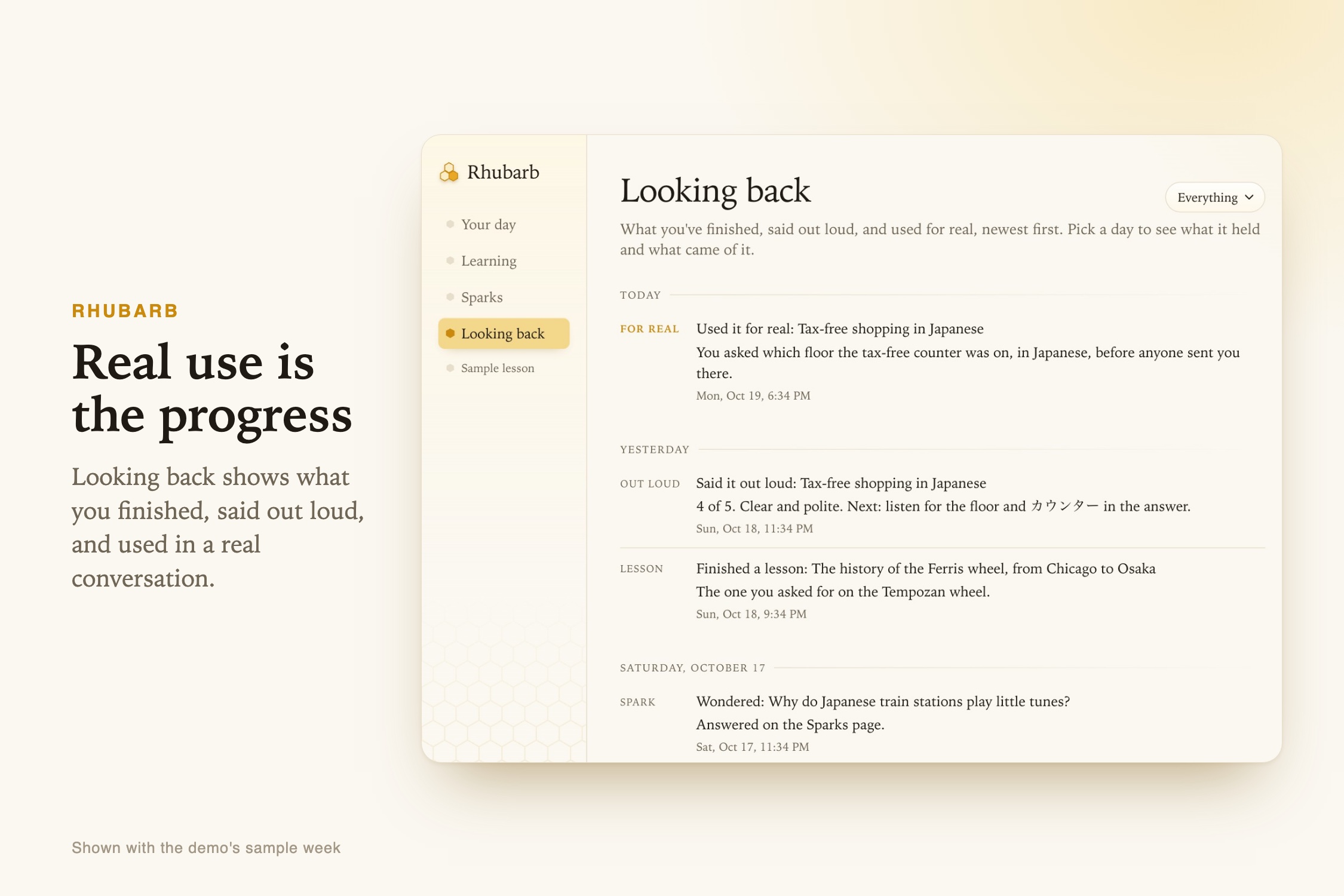
Looking back: what you finished, said out loud, and used in a real conversation.
-
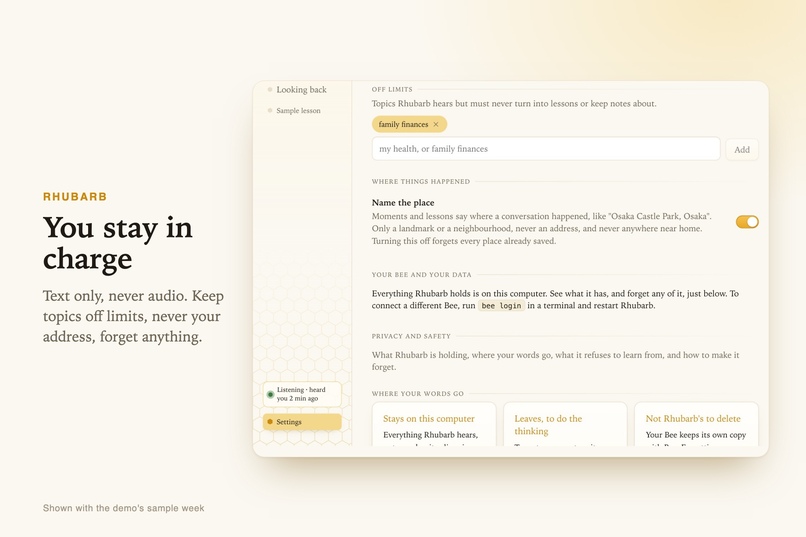
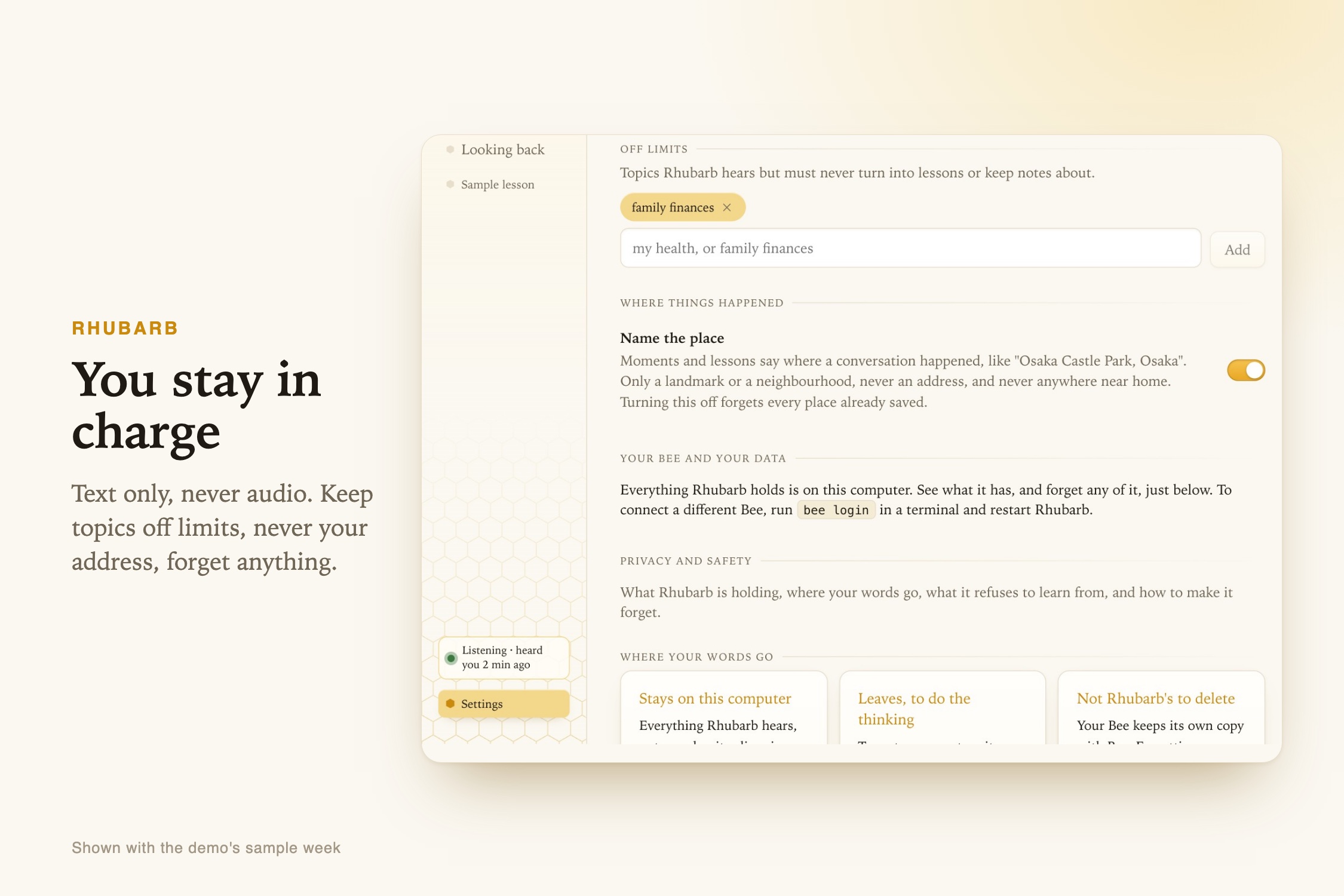
You stay in charge: text only, never audio. Keep topics off limits, never your address, forget anything.
Inspiration
Most of what you could learn from your day is gone by dinner: a word you didn't know, a question you couldn't answer, a clerk you couldn't follow. On a trip to Japan I wore a Bee and realised it hears all of it. What if a tutor started from your real day, and counted progress by whether you use what you learned?
What it does
Rhubarb is a tutor that listens through your Bee and builds learning plans from your own day, for a language, a work skill, or anything you're curious about.
- Listens: reads the Bee's live transcript. Text only, never audio. Private moments are dropped before any AI sees them.
- Checks with you: every evening it shows what it thinks happened. You mark each finding right or not quite, and fix anything Bee misheard. Nothing is built on a guess.
- Teaches: suggests plans from what you confirmed. Say yes and how much you already know, and it writes a short lesson around your own words, fact-checked by a second AI.
- Practises through the Bee: your phone buzzes with a question, and you answer out loud into your Bee.
- Hears you get better: later conversations are checked for the skill used for real. That's the progress, not streaks.
Also: ask out loud to get a lesson on anything, quick "guess first" answers, places (a landmark, never your address), reading help per plan, a day-by-day look back, and forget anything.
How we built it
- Bee:
bee stream --jsonfor the live transcript and voice notes, the Bee API to recover missed lines, todos with alarms to reach the phone, and conversation locations for places. - Claude on Amazon Bedrock: Opus writes, fact-checks and grades; Sonnet sorts what was heard. Anthropic's API is an automatic fallback.
- Stack: TypeScript, Node, SQLite, React, three.js. Runs on Railway around the clock; the judges' demo is on Vercel. Tavily for sources, 68 tests, a daily cost cap.
Challenges we ran into
- Bee deletes short conversations minutes after they end, so we capture everything live.
- The live stream drops about every 90 minutes, and nightly transcripts use different ids, so we built a supervisor and matching by time and text.
- Bee can mishear ("Osaka" became "Old Southfield") and doesn't always know who's speaking. That's why the evening check exists.
- A new AWS account couldn't call any model until AWS Support enabled them.
Accomplishments that we're proud of
- It works on real life: across six days of wearing the Bee, 6,978 lines heard, 20 plans suggested and 7 lessons written and fact-checked, in Japanese and English. ## What we learned
A first reading of someone's day is a guess. Rhubarb got much better once it asked before assuming.
What's next for Rhubarb
- Use Bee's voice recognition to tell your lines from everyone else's.
- A phone-only mode, no wearable needed.
- Bring it to adult English learners, with real-world use as the measure of progress.
Built With
- amazon-bedrock
- bee
- bee-cli
- claude
- mermaid
- node.js
- railway
- react
- sqlite
- tavily
- three.js
- typescript
- vercel
- vite

Log in or sign up for Devpost to join the conversation.