-
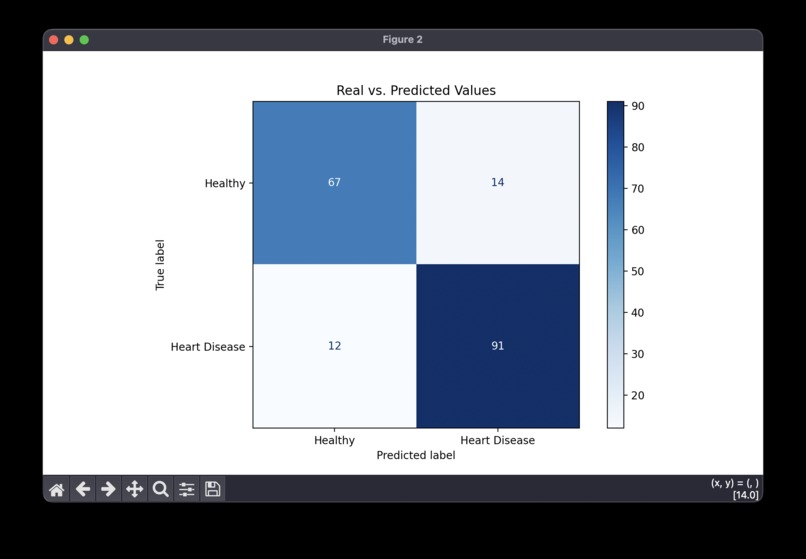
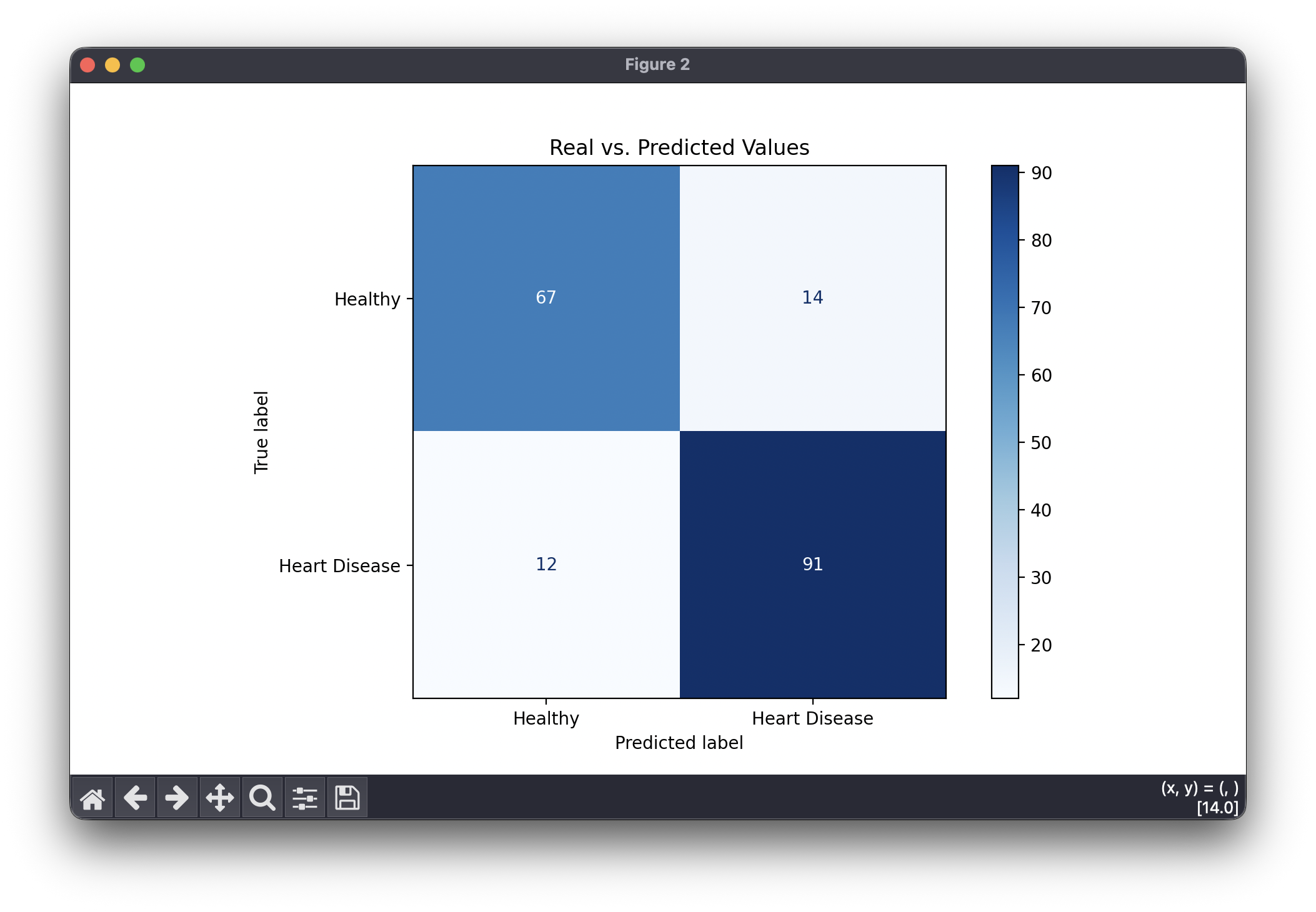
Correct Result vs Predicted Result
-
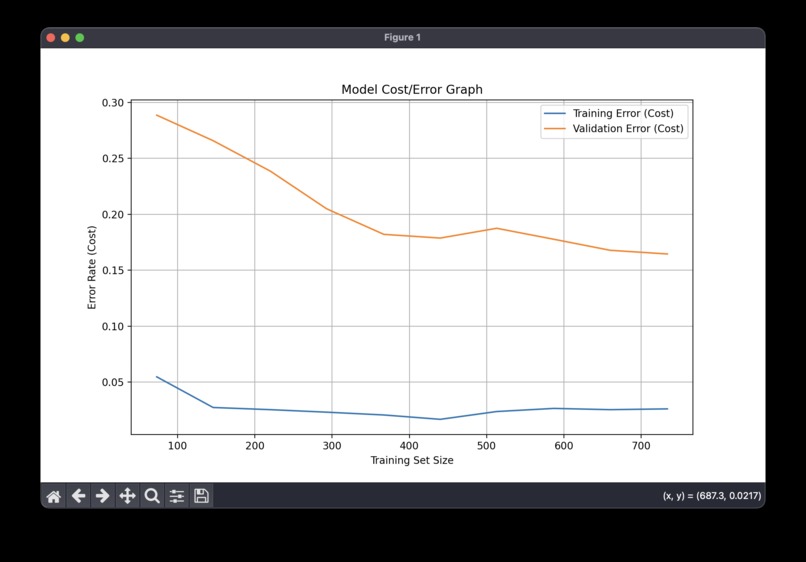
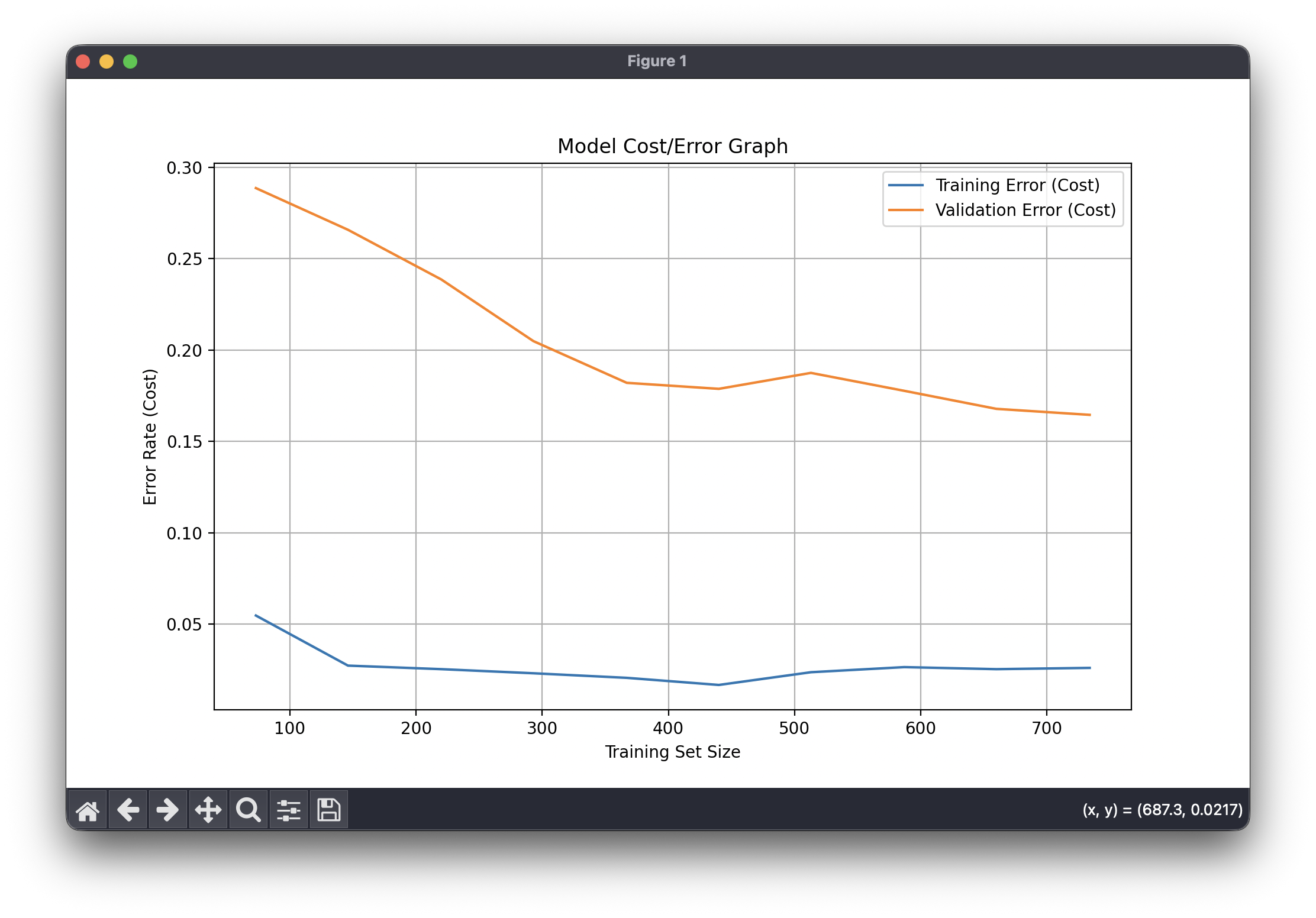
Training Cost and Validation Cost
How to use
Upload the heart_processed.csv provided by the hackathon organizers in Google Colab.
Inspiration
Heart disease affects over half population globally, yet early detection remains a major challenge.
I was inspired to leverage Random Forest Classifier (RFC), which have demonstrated state-of-the-art performance.
The most critical challenge was handling the outliers in the features.
What it does
RFC4Heart is an automated Heart disease detection system that analyzes heart reports and classifies disease stages with 86% accuracy.
Key highlights:
- Handles extreme class imbalance and outliers
- Achieves a perfect F1-score of 0.86+ in all test cases
- Provides fast inference along with confidence scores for clinical decision support
- Designed to be deployment-ready for real-world hospital integration
How we built it
I used Scikit Learn's Random Forest Classifier to train on the heart reports and fine tuning the parameters.
The model was trained on 800+ heart reports using Scikit Learn.
Challenges we ran into
The major challenge was the model high cost convergence that is stuck on 86% with all optimizations.
Accomplishments that we're proud of
The accuracy of 86% is a very good base line for the model that classifies heart disease.
What we learned
Good to know that this was my first Random Forest Classification even my first ML project, and for this project i learn in 5 days.
What's next for RFC4Heart
With a good base line model, I think to try tuning the model and testing different models to check for any advantages and make it a user friendly model by implementing in a website.
Built With
- pandas
- python
- random-forest-classifier
- rfc
- scikit-learn


Log in or sign up for Devpost to join the conversation.