-
-
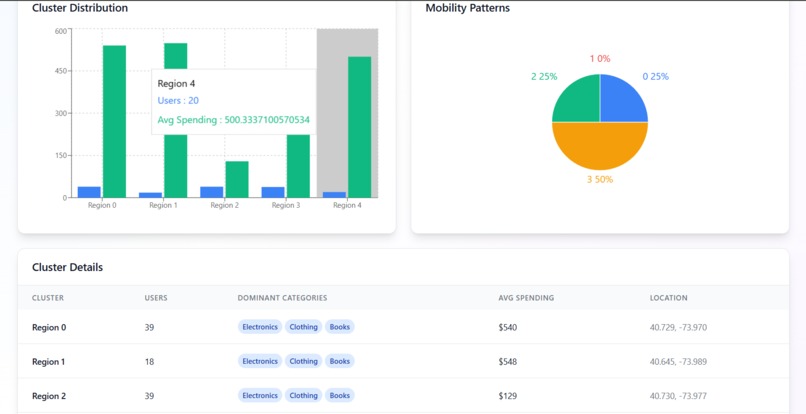
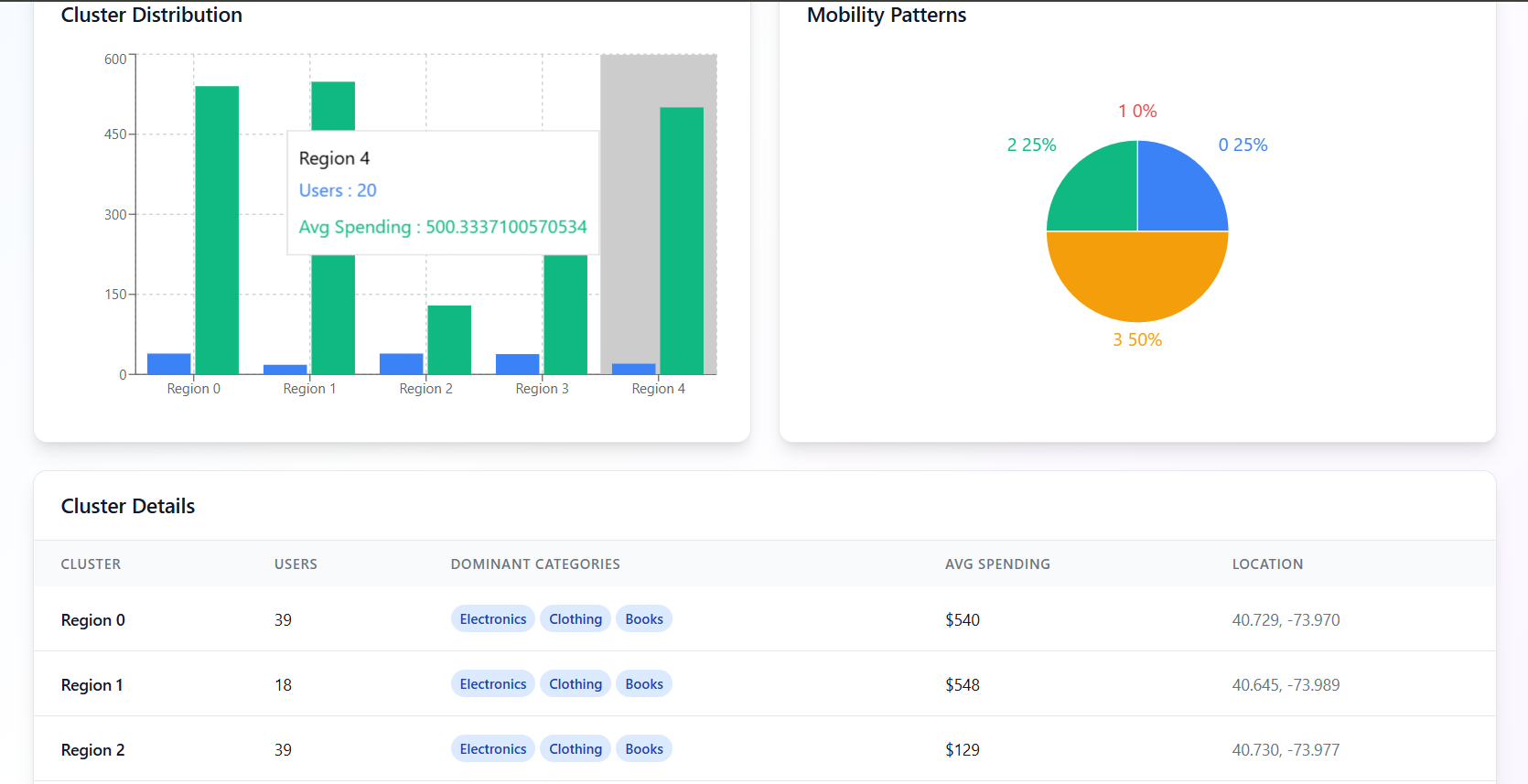
GeoAI Analytics
-
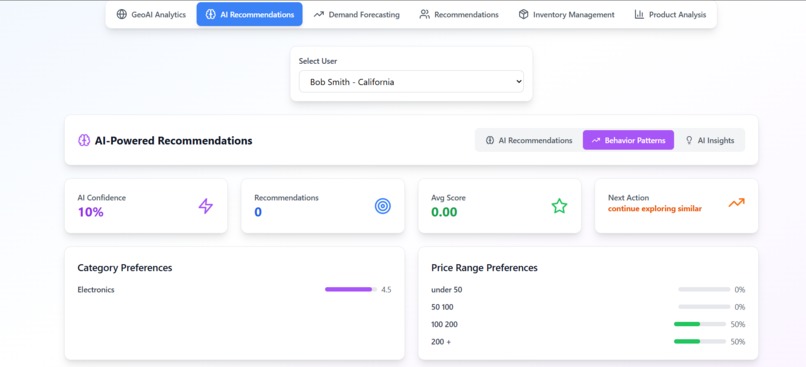
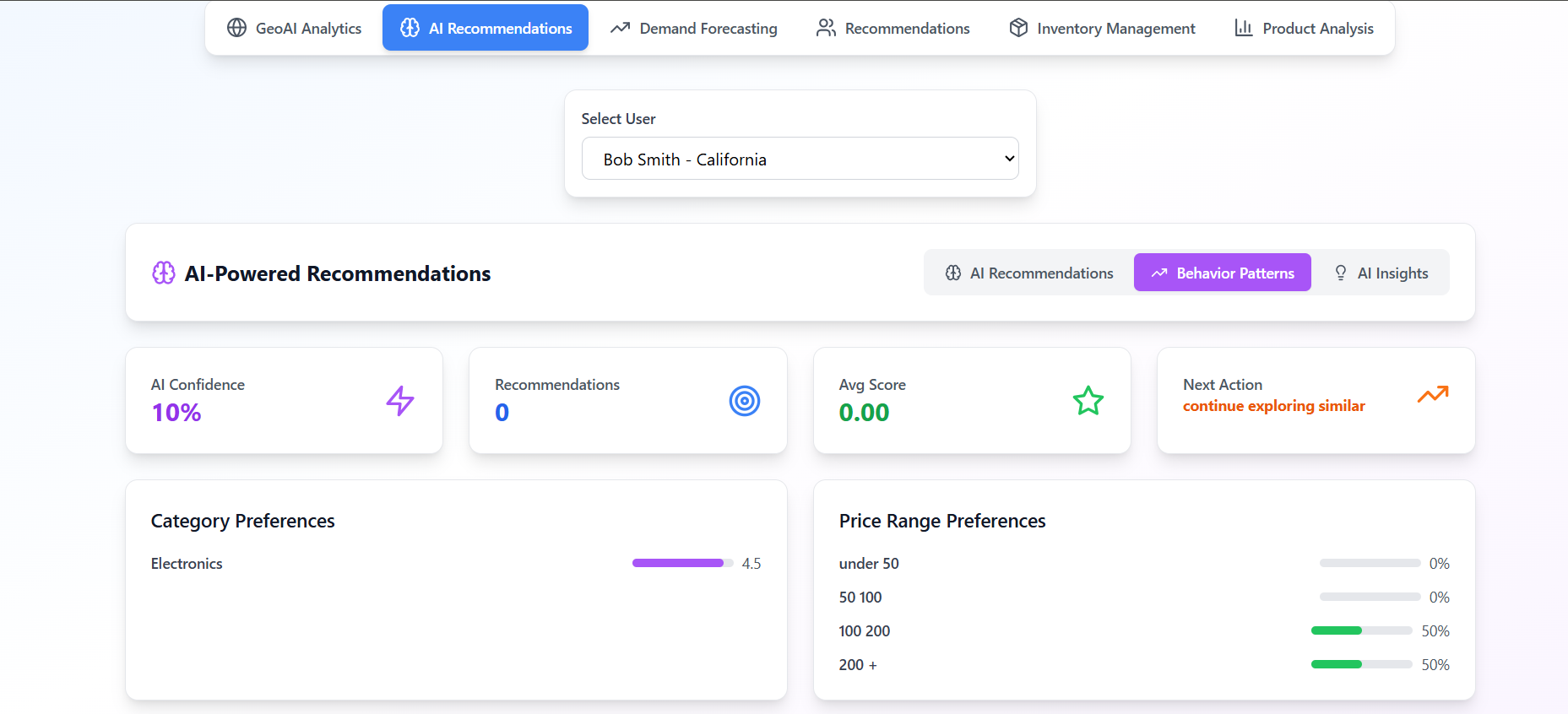
AI Reccommendation
-
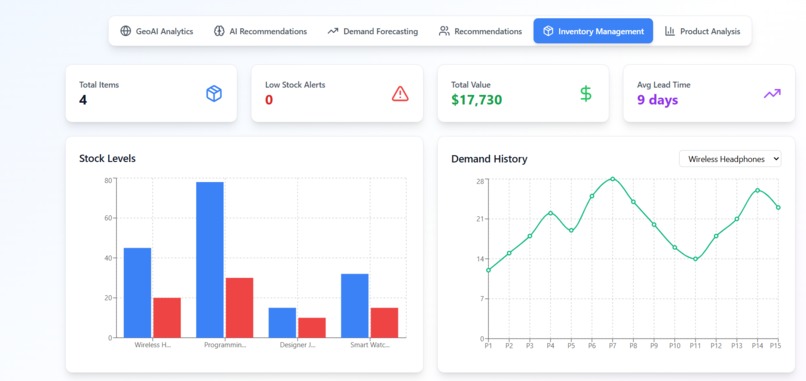
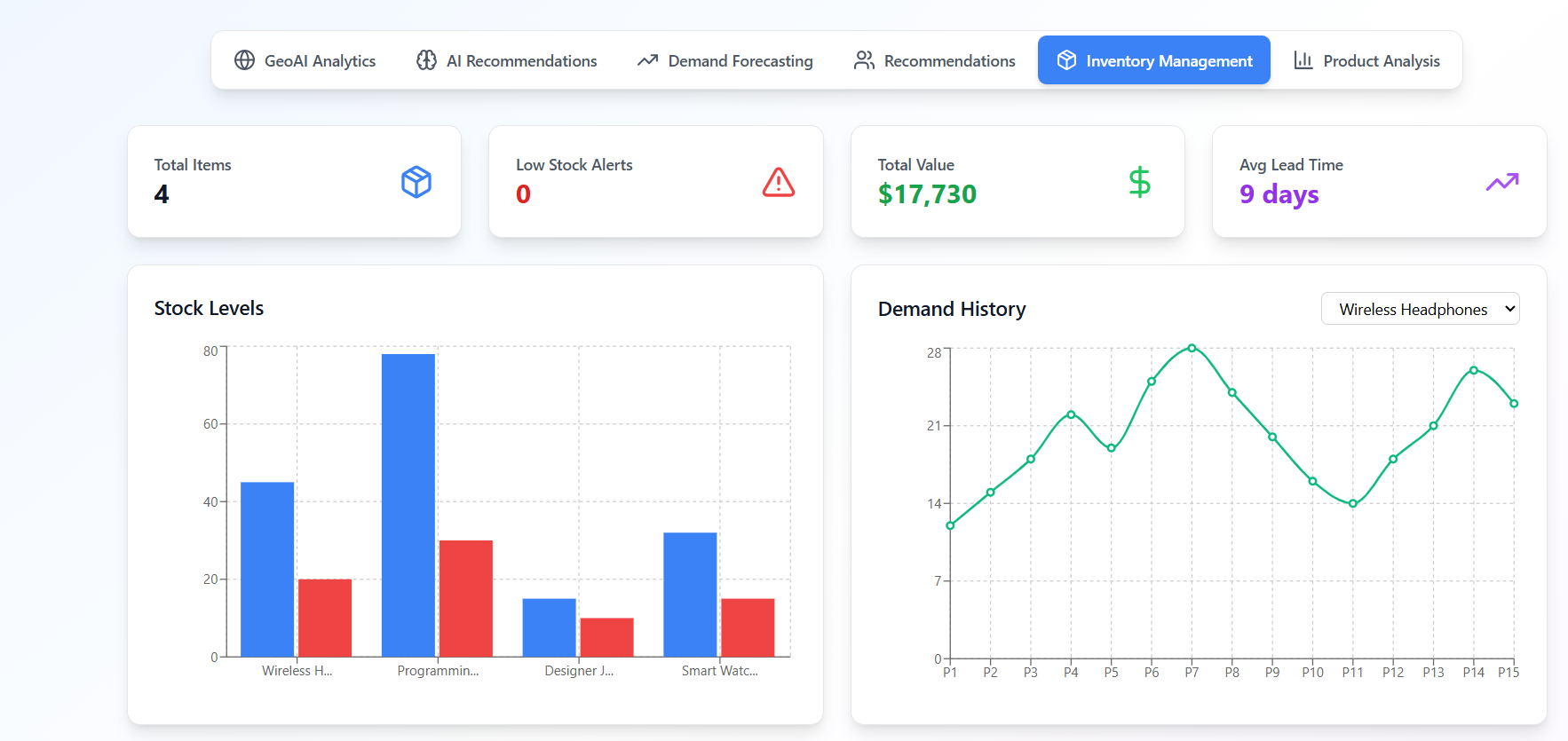
Inventory Management
-
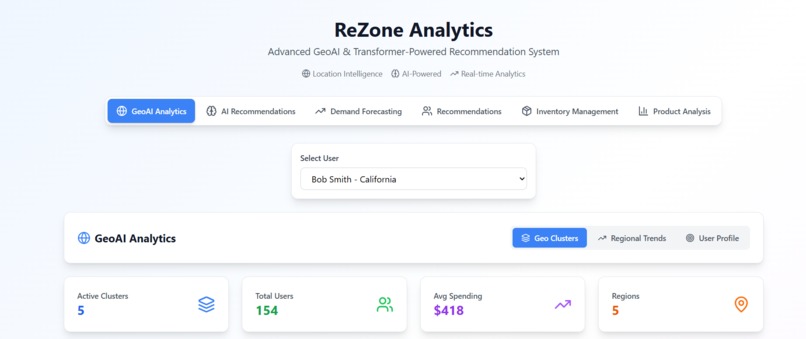
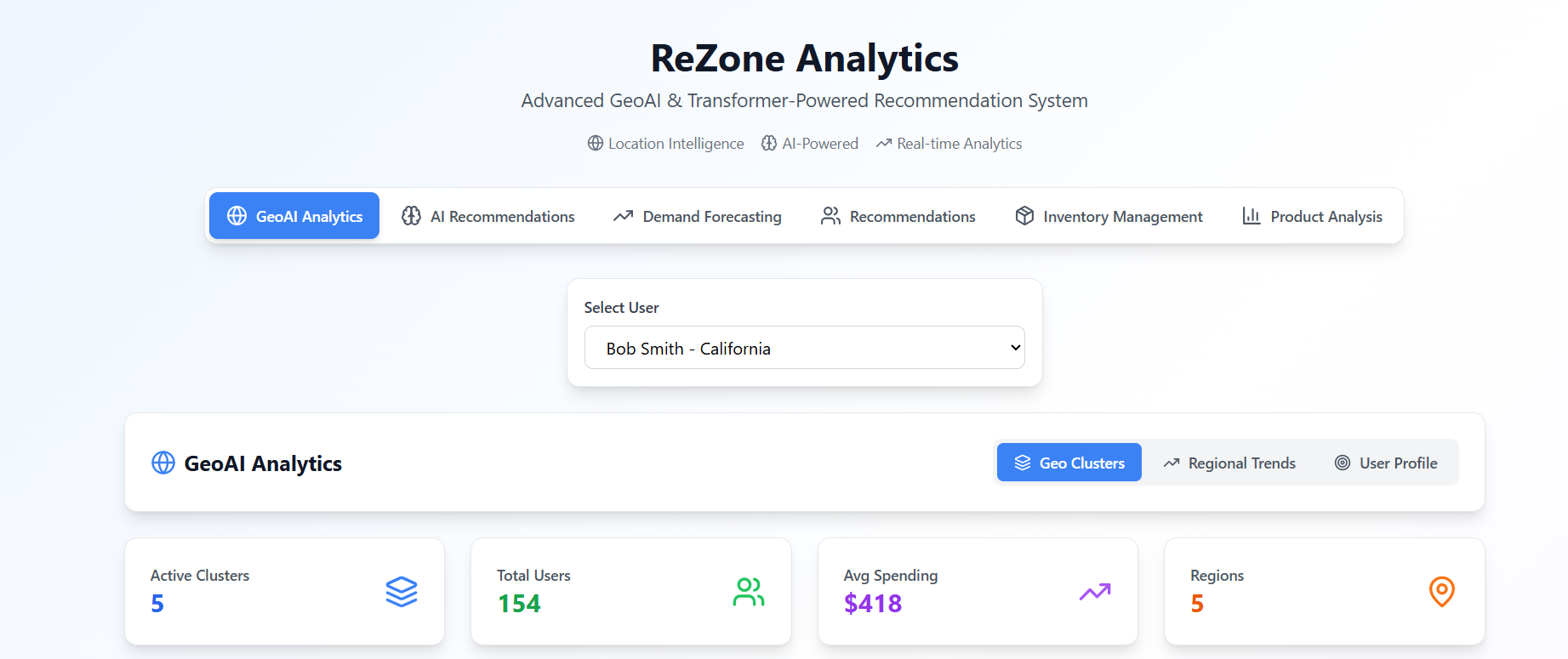
Initial startup interface
Inspiration
ReZone AI was born out of a spontaneous conversation with a friend in marketing, who asked if product storage and sales could be better optimized. I initially suggested recommendation systems, but when the need for predictive insight came up, I realized the power of combining geospatial data with time series forecasting. Drawing from my background in computer science, recent work with ARIMA and social media analytics, and an upcoming Master’s in AI, I saw an opportunity to merge these domains into something actionable. That moment sparked ReZone AI — a platform where applied data science meets real-world business impact.
What it does
ReZone AI is a comprehensive analytics platform that combines geospatial intelligence with AI-powered recommendations to optimize business decisions through location-based user behavior analysis and demand forecasting.
It’s designed for e-commerce businesses, retail chains, marketing teams, and data analysts looking to understand geographic customer patterns and optimize their product strategies.
Key Features:
- GeoAI Clustering: Automatically identifies and groups users based on geographic location and purchasing behavior to uncover region-specific market trends.
- Transformer-Based AI Recommendations: Delivers personalized product suggestions using cutting-edge machine learning models with contextual and location-aware relevance.
How It was built
The platform was developed using a modern full-stack architecture:
- Frontend: React with TypeScript, styled using Tailwind CSS, Recharts for data visualizations, and Lucide React for UI icons.
- AI/ML: Hugging Face Transformers API, TensorFlow.js, and ML-Matrix for handling computations and model logic.
- Geospatial Analysis: Turf.js for geographic operations and Leaflet for interactive maps.
- Analytics Engine: ARIMA forecasting was implemented from scratch; statistical operations were supported using Simple-statistics.
- Platform: Entire project built and deployed on the Bolt platform.
- Team: Built solo.
Challenges I ran into
The most complex challenge was harmonizing multiple AI components — transformer-based embeddings, collaborative filtering, and geospatial clustering — while preserving real-time performance. There was also an issue with the nameservers, which I was unable to resolve as I was denied access and login to IONOS. While looking for solutions, I came across similar issues and queries from other users and so I decided to change my approach.
Additional blockers included:
- Managing Hugging Face API rate limits and building fallback systems using synthetic embeddings.
- Resolving data flow issues between geospatial clusters and recommendation logic.
- Tackling quirks in JavaScript, especially handling numeric object keys that broke expected behavior.
Accomplishments
The biggest win was building a hybrid recommendation system that successfully merged geospatial intelligence with transformer-based AI, producing truly personalized, location-sensitive suggestions.
We not only delivered the planned core features — including GeoAI clustering, transformer recommendations, demand forecasting, and inventory management — but also bonus elements like user behavior pattern analysis and regional trend visualizations.
What I learned
This project offered deep insights into:
- Production-level integration of Hugging Face APIs.
- Building ARIMA models from scratch and embedding them into web platforms.
- Advanced geospatial computations and how they enhance personalization.
- Visualization of high-dimensional data in real-time interfaces.
- The importance of building fallbacks for external dependencies and prioritizing feature sets under time pressure.
What's next for ReZone AI
Planned Next Steps:
- Production deployment with real-time data ingestion.
- API integration with live e-commerce platforms.
- Advanced seasonal ML models and real-time collaborative filtering.
- Dynamic clustering maps with real-time updates.
Features on the Roadmap:
- A/B testing frameworks for fine-tuning recommendation logic.
- NLP enhancements to interpret product descriptions and reviews.
- Integration with external datasets (e.g., weather, local events, demographics).
- A mobile companion app for geo-notifications and on-the-go insights.
ReZone AI already demonstrates enterprise-grade potential and is well-positioned to evolve into a scalable SaaS platform for smart retail analytics.
Built With
- d3.js
- eslint
- face
- hugging
- leaflet.js
- lucide
- ml-matrix
- postcss
- react
- recharts
- tailwind
- tensorflow.js
- turf.js
- vite

Log in or sign up for Devpost to join the conversation.