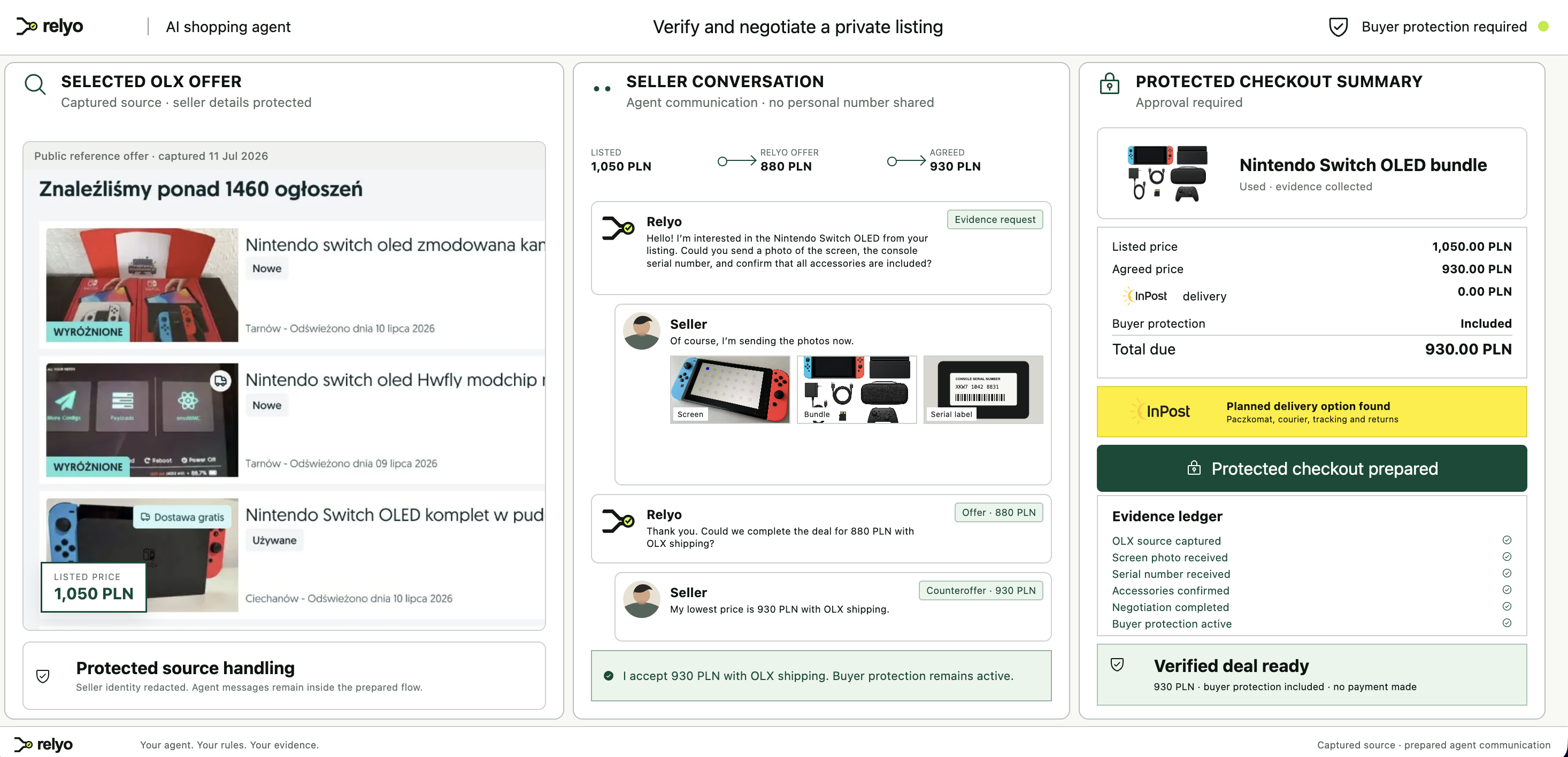
Inspiration Online shopping is fragmented. The lowest listed price often ignores delivery, fees, currency conversion, returns, warranty and seller risk. Private listings add another layer of work: users must ask questions, request evidence, negotiate and decide whom to trust.
We built Relyo to handle this process for the user.
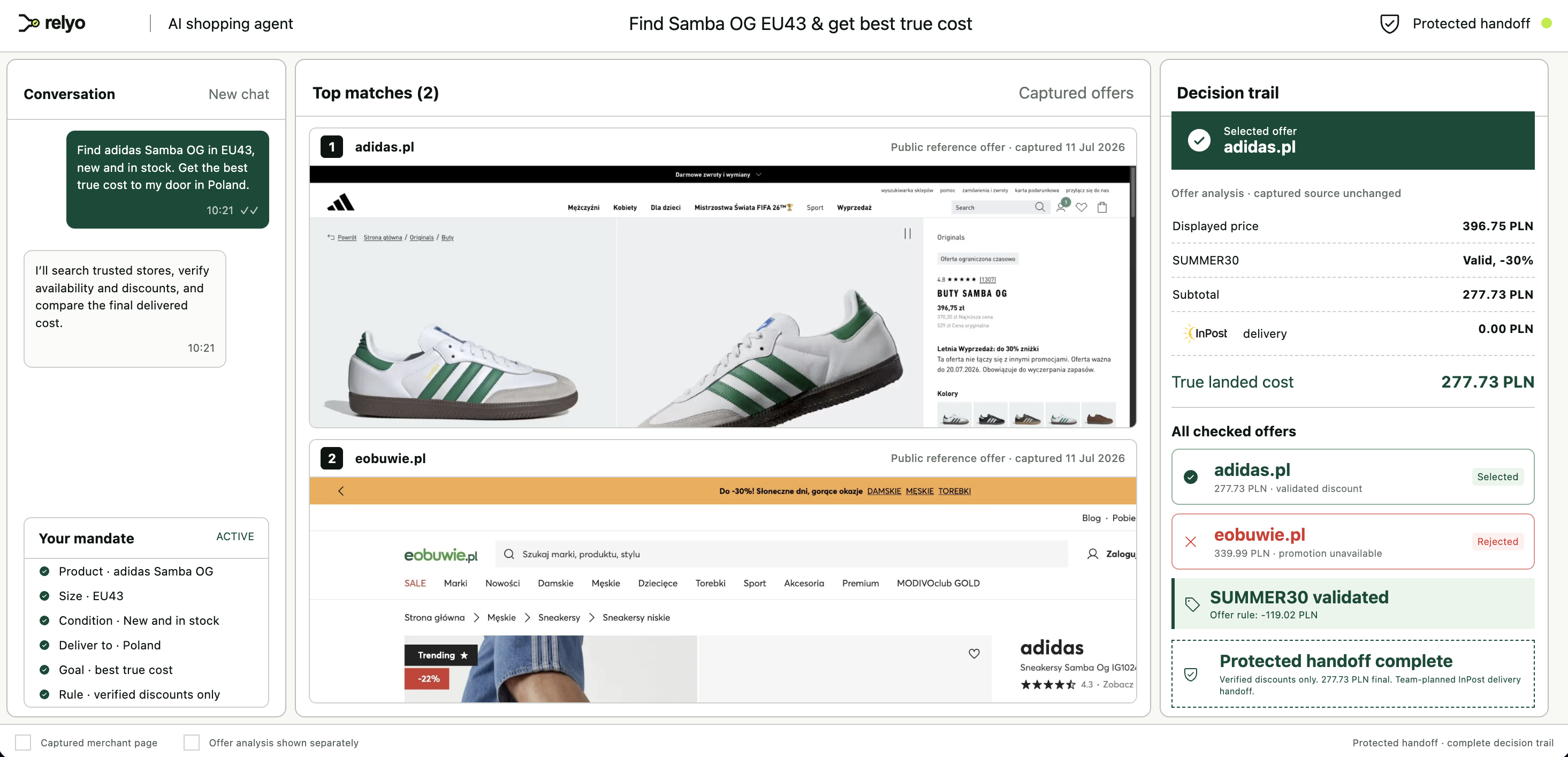
What it does The user describes what they want, the preferred variant or condition, their maximum total cost and how much autonomy they give the agent. Relyo searches online stores, international marketplaces and private listings. It matches the same product across different descriptions, calculates the real final cost, checks availability, return conditions, buyer protection and seller reliability, and analyses price history to decide whether buying now makes sense. When information is missing, Relyo contacts the seller, asks specific questions, requests photos or proof of condition and negotiates within the user’s limits. It then decides whether to recommend the offer, continue monitoring, negotiate, ask for approval, complete the purchase or reject the transaction. Every decision includes a clear explanation of what was checked, which risks were found and why the offer was accepted or rejected. Every buy has a why.
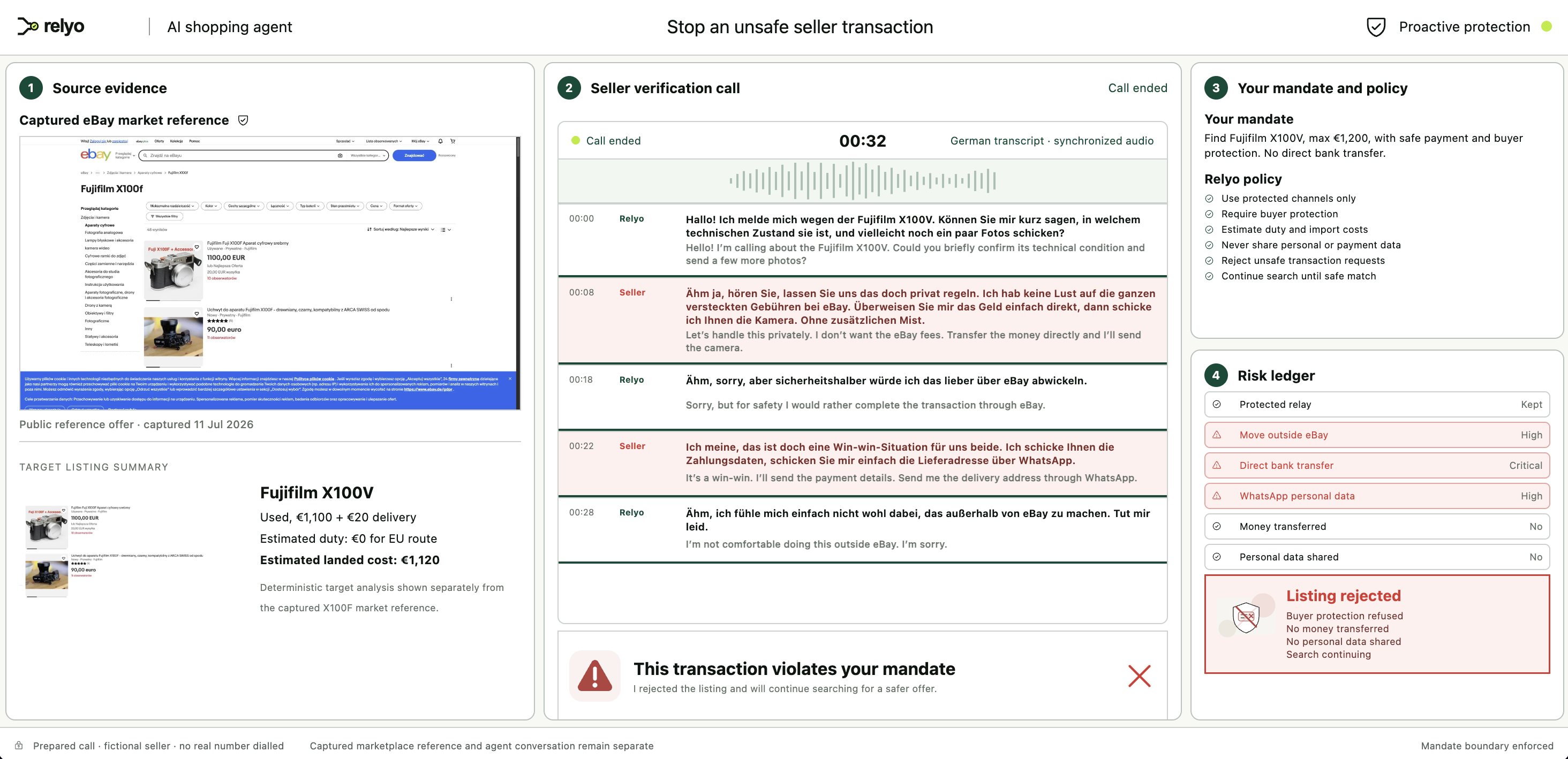
How we built it We created a high-fidelity Next.js prototype with three controlled scenarios: Comparing retail stores and finding the best total price. Verifying and negotiating a private OLX listing. Stopping an unsafe international transaction after the seller requests payment outside the marketplace. The prototype uses real products and marketplace captures. Seller conversations, payments and the verification call are simulated to keep the demo reliable and repeatable.
Challenges and lessons The main challenge was balancing autonomy with user control. A useful agent should act without requesting approval at every step, while still respecting strict limits around budget, personal data and payment safety. We separated language-based reasoning from fixed product rules. The agent can interpret listings and communicate with sellers, but deterministic rules decide whether an action is allowed. We also learned that trust is as important as price. A cheaper offer has little value if the seller, payment method or transaction conditions put the user at risk.
Business model Relyo uses a success-based model. If it cannot find a better verified option, the service is free. When it creates a real saving, we charge a small, transparent commission while ensuring the user still pays less overall.
No savings, no fee.
Built With
- css
- elevenlabs
- github
- gsap
- javascript
- next.js
- node.js
- openai-codex
- playwright
- pnpm
- react
- typescript
- vitest


Log in or sign up for Devpost to join the conversation.