Inspiration
We all have decisions we wish we could revisit — opportunities we missed, choices we delayed, or paths we never explored. I wanted to build something that transforms that feeling of "what if?" into something useful.
Rewind AI was created to help people explore how different choices might have unfolded, not to predict the future, but to turn reflection into actionable insight.
What it does
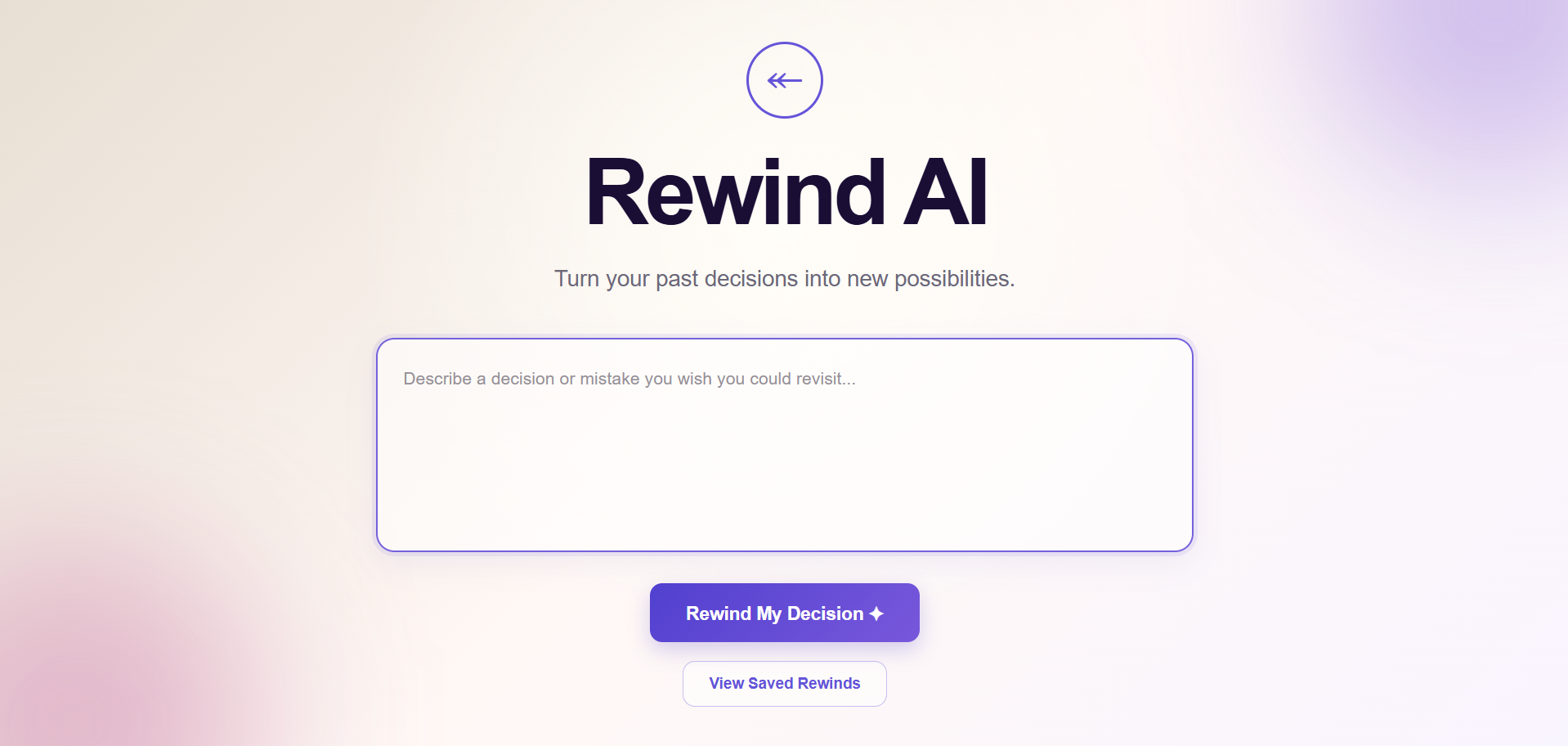
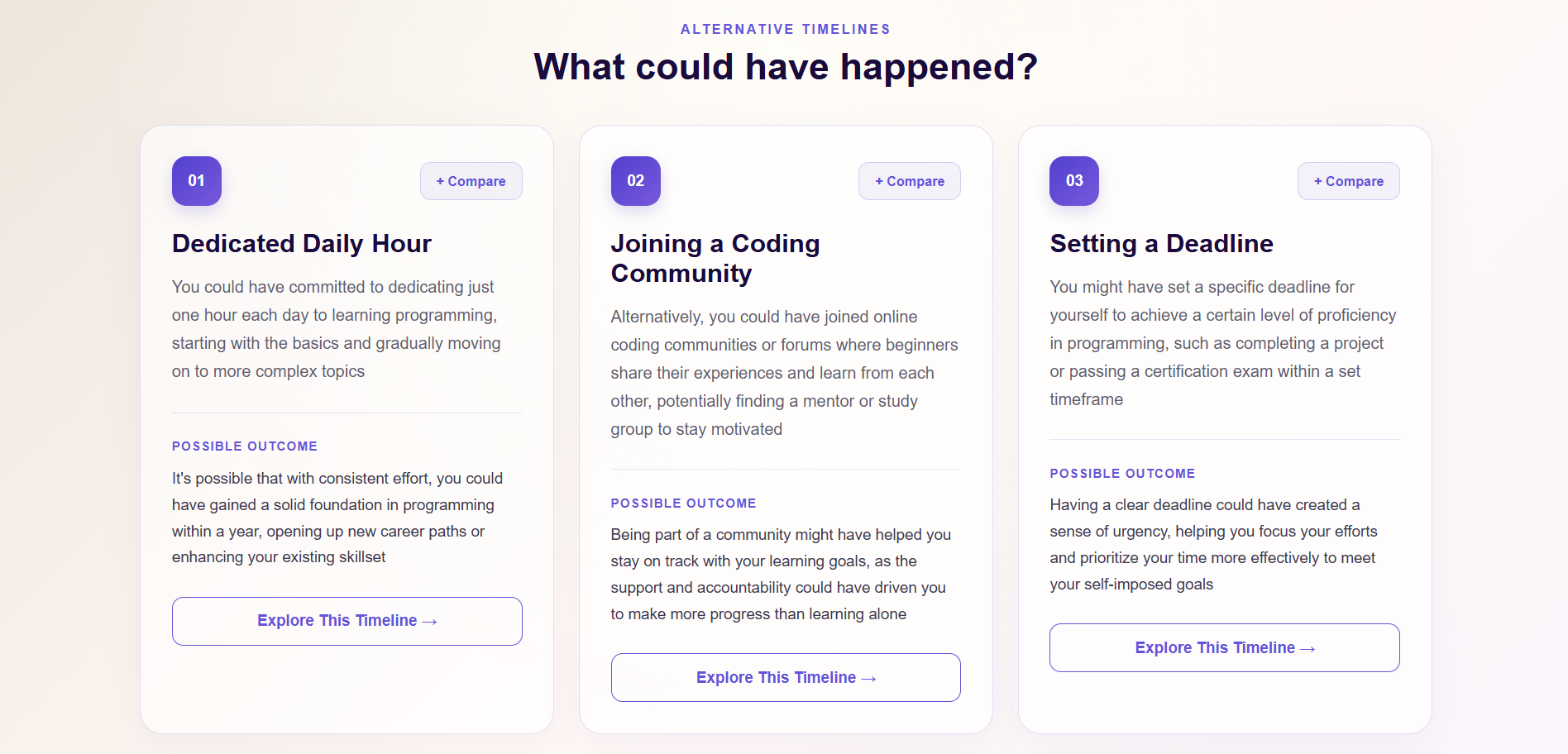
Rewind AI lets users enter a past decision or missed opportunity. AI then generates three alternative paths that the user could have taken.
Users can:
- Explore three AI-generated alternative timelines
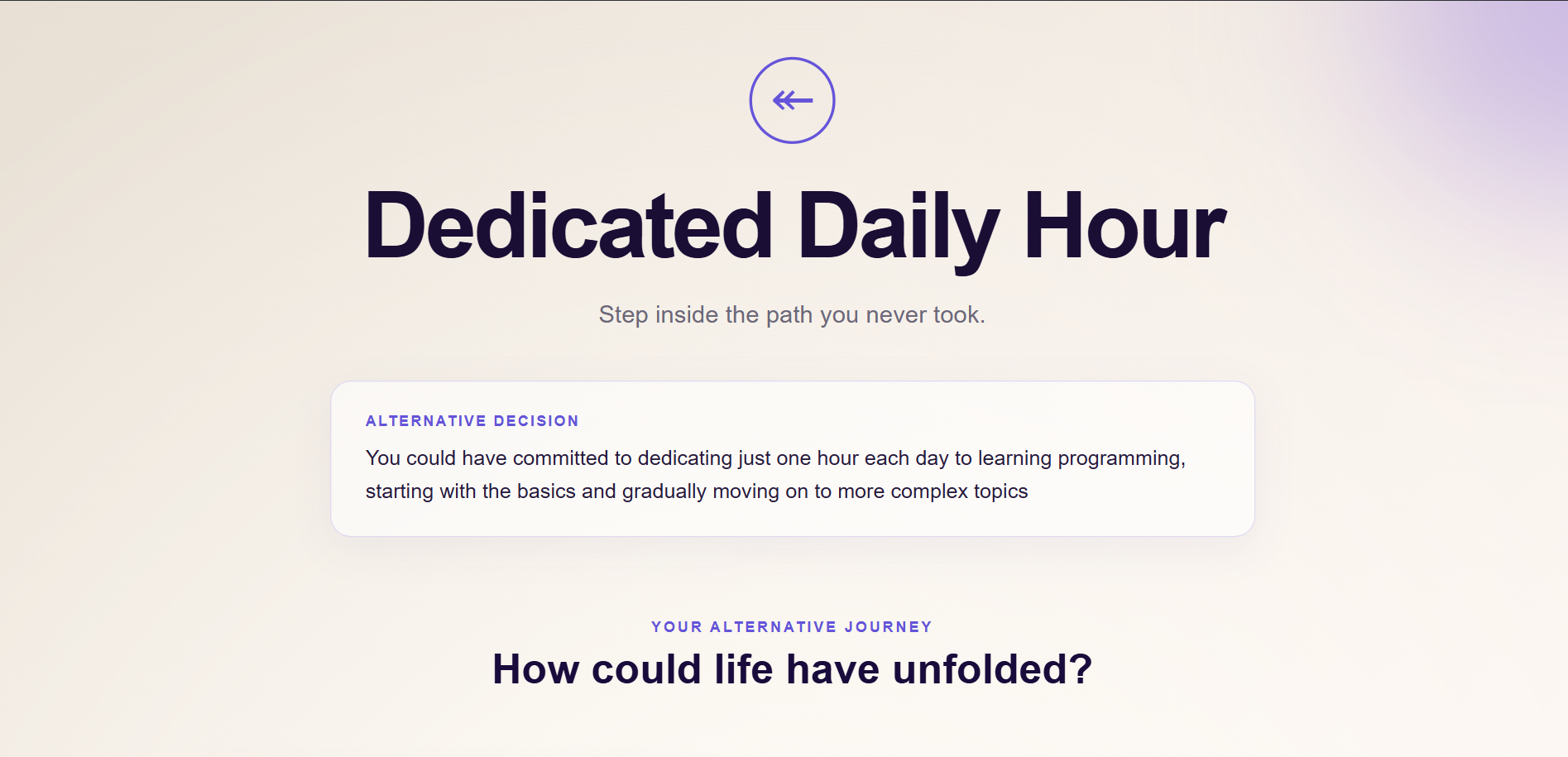
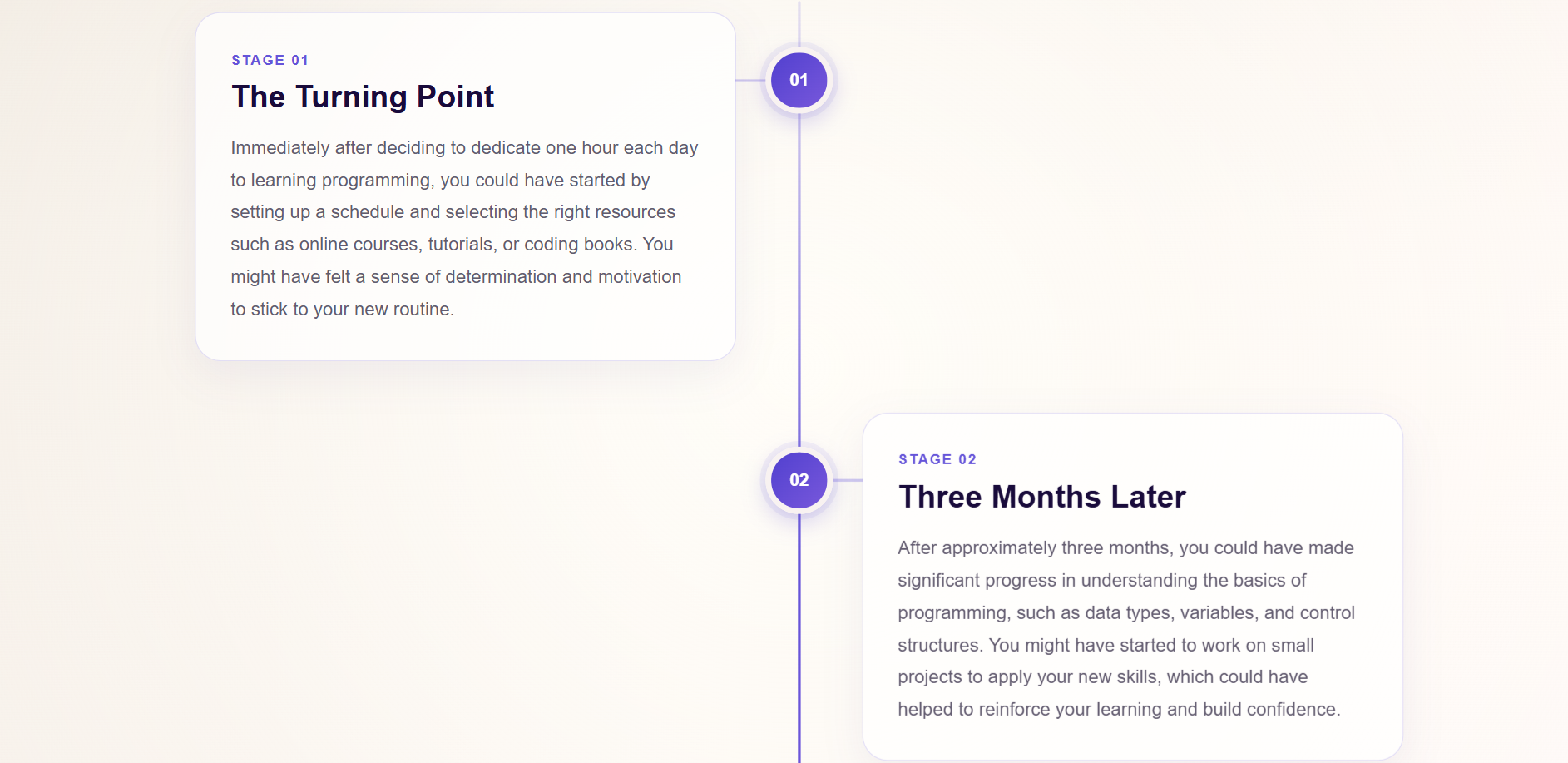
- Step inside a selected path and see how it could unfold over time
- See the turning point, short-term progress, long-term impact, and ripple effects
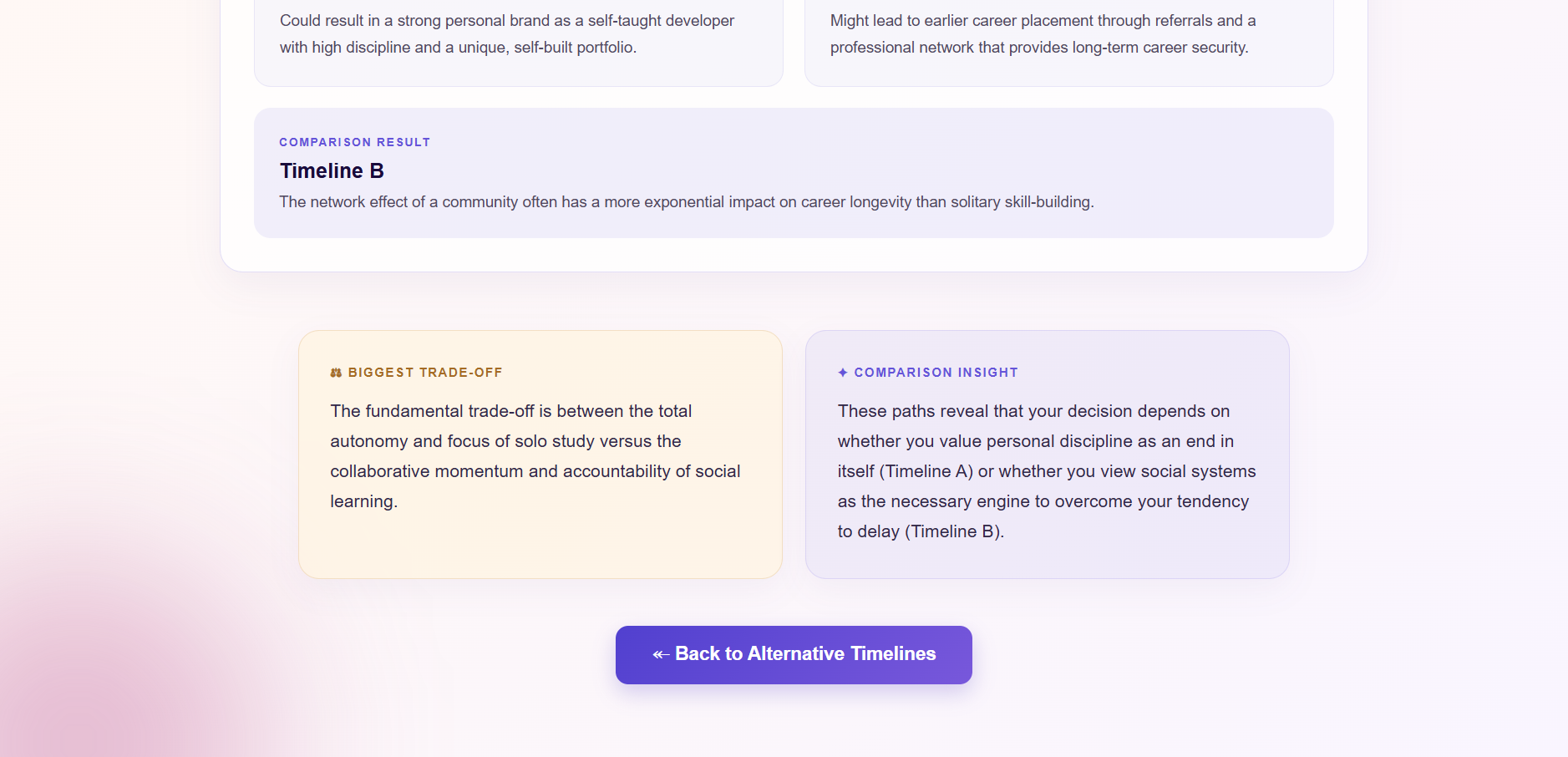
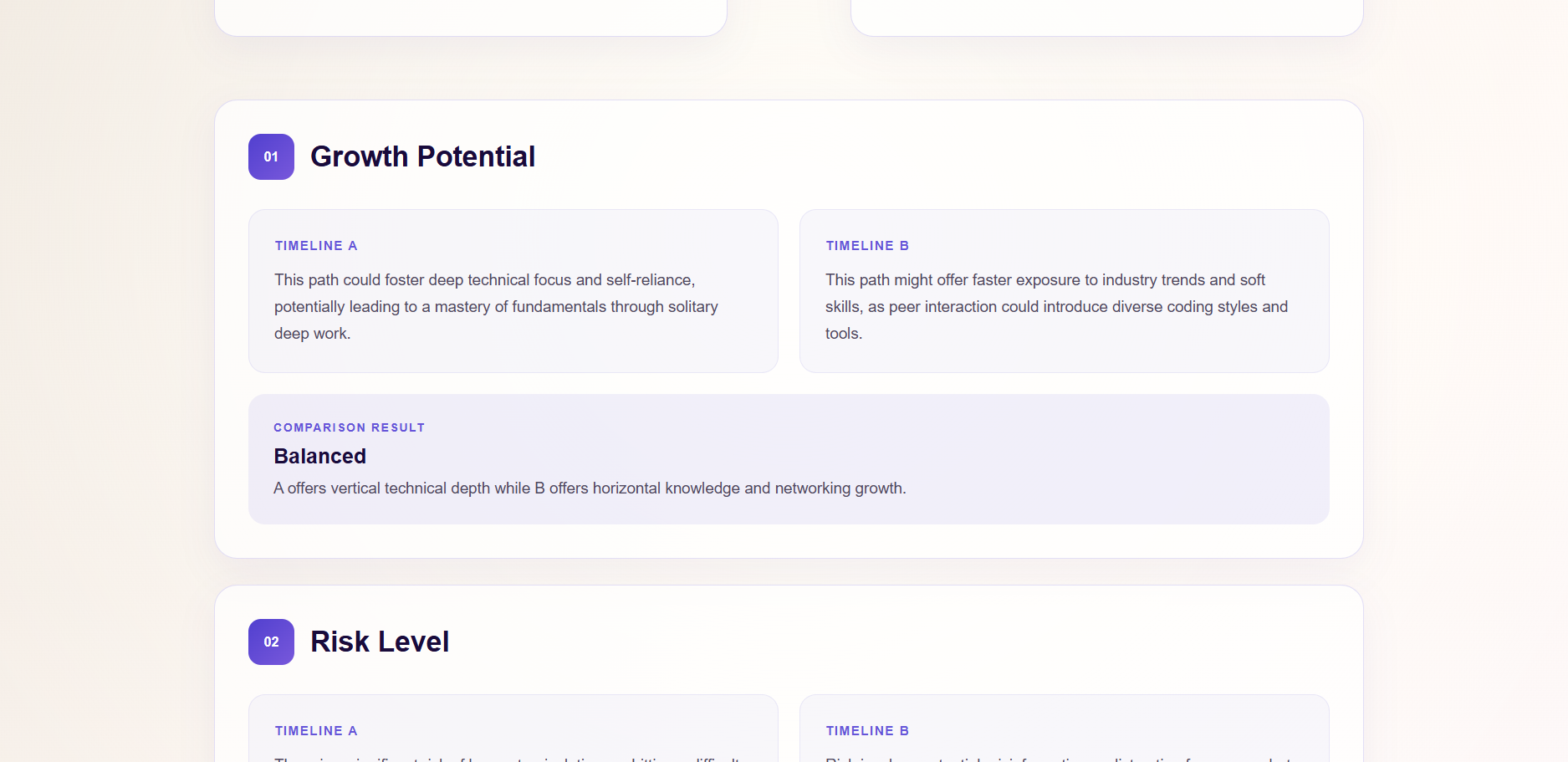
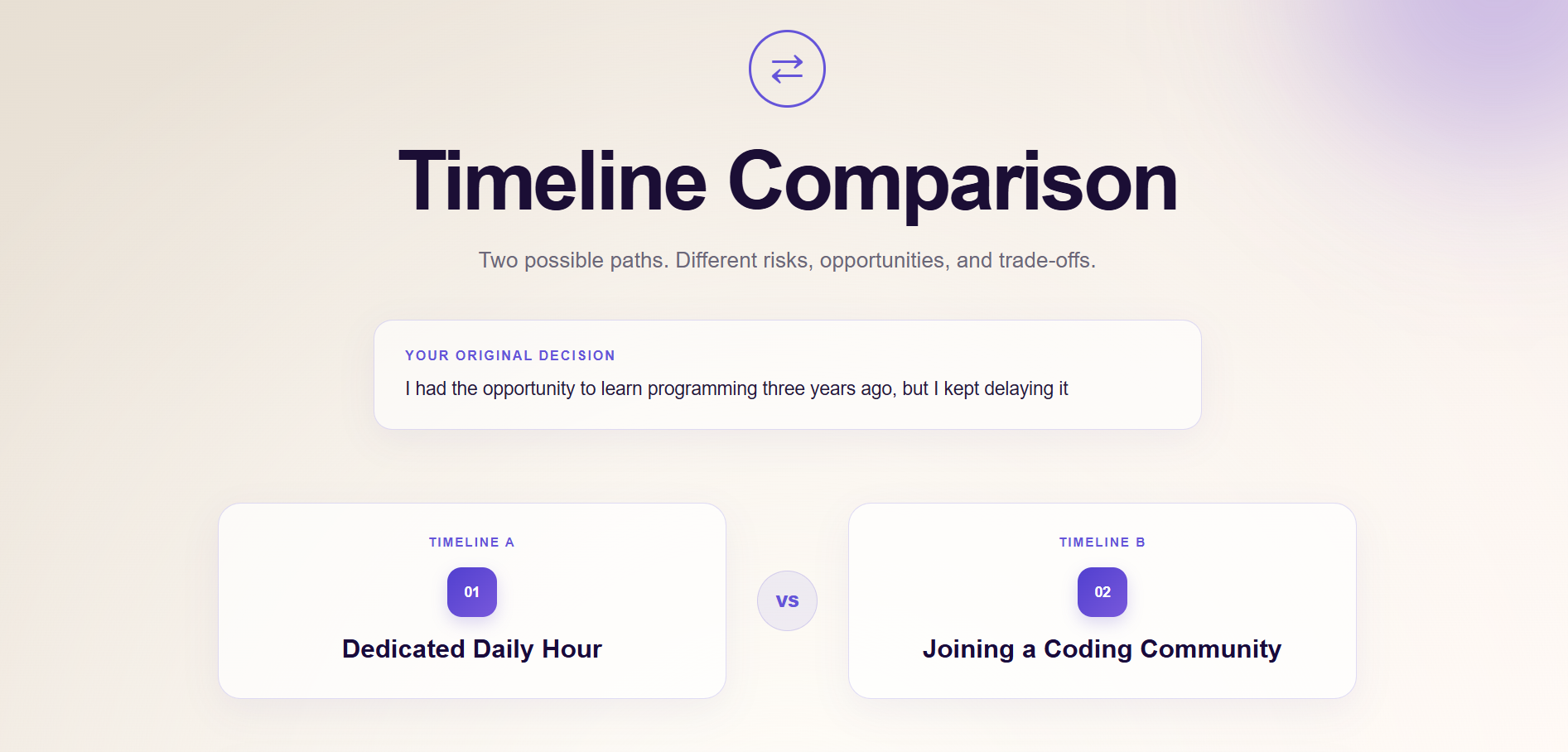
- Compare two alternative timelines across factors such as growth potential, risk, stability, and long-term impact
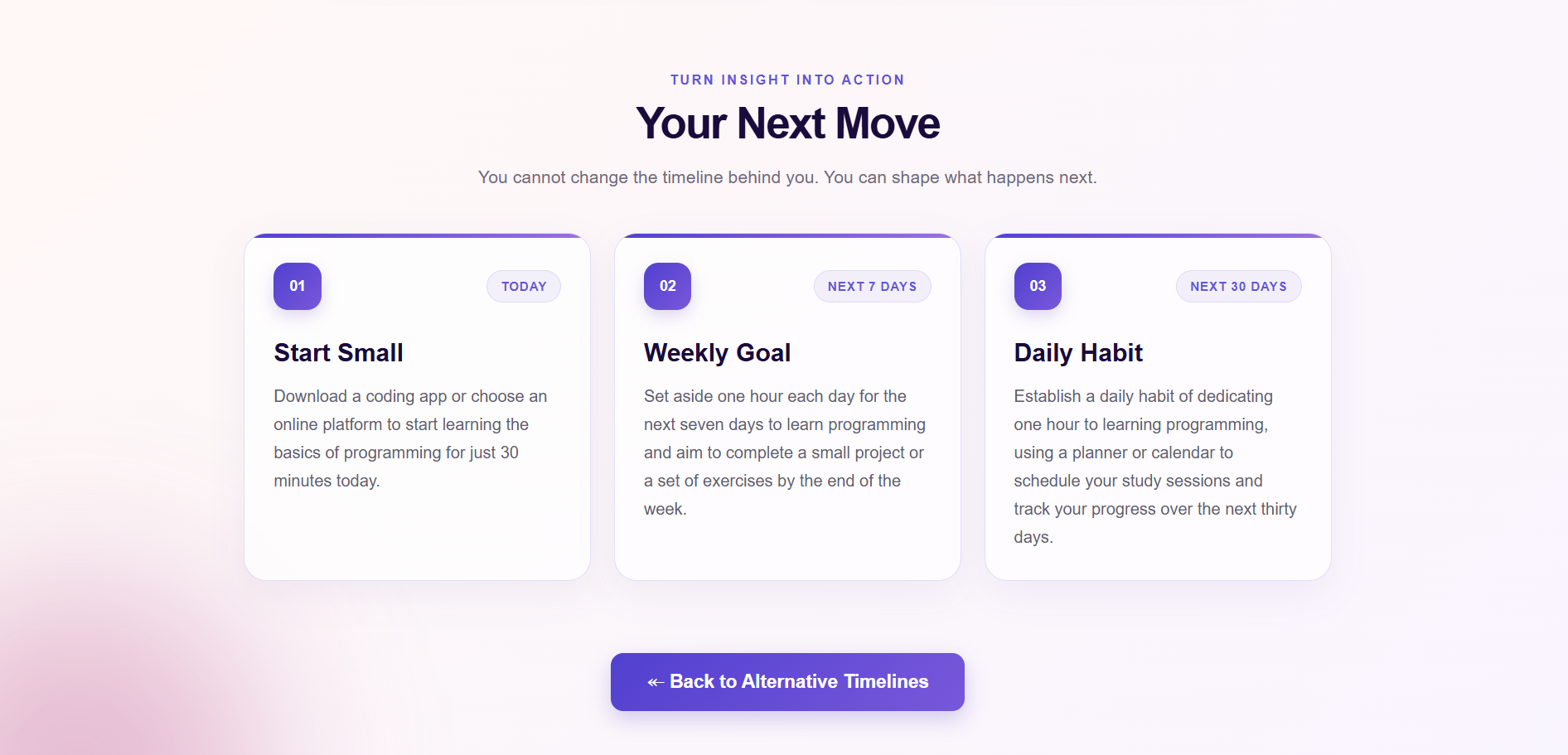
- Receive practical next steps they can take today, over the next 7 days, and over the next 30 days
- Save previous rewinds for later reflection
The goal is simple: you cannot change the past, but you can use it to make better decisions about what comes next.
How I built it
I built Rewind AI as a full-stack web application.
The frontend was built with React and Vite and deployed on Vercel. The backend uses Node.js and Express and is deployed on Render.
For AI generation, I implemented a multi-provider fallback system:
Gemini → Groq → OpenRouter
If one AI provider reaches its quota or becomes unavailable, the backend automatically tries the next provider. This makes the application more reliable and prevents a single API failure from breaking the experience.
Challenges I ran into
One of the biggest challenges was API reliability. During development, the Gemini free-tier quota was exhausted, which initially caused timeline generation to fail.
Instead of relying on a single provider, I redesigned the backend to support automatic AI fallback. The application now attempts Gemini first, then Groq, and finally OpenRouter before returning an error.
Another challenge was transforming raw AI responses into structured information that could consistently power alternative timeline cards, detailed simulations, comparisons, and actionable next steps.
Accomplishments that I'm proud of
I'm proud that Rewind AI goes beyond simply asking an AI chatbot a question. It creates a complete interactive experience around decision exploration.
The timeline visualization, side-by-side AI comparison, actionable next steps, and multi-provider fallback system turned the original idea into a complete working product.
What I learned
Building Rewind AI helped me learn how to connect a React frontend with a deployed backend, work with multiple generative AI APIs, handle API failures and quotas, structure AI-generated responses, and deploy a complete full-stack application.
I also learned that designing a good AI product is not only about generating text. The way AI output is structured and presented can completely change the usefulness of the experience.
What's next for Rewind AI
In the future, I would like to add user accounts, cloud-based rewind history, deeper personalization, more advanced timeline visualizations, and the ability to revisit previous decisions as real-life circumstances change.
The larger vision is to make Rewind AI a personal decision-reflection tool that helps people turn hindsight into better future action.
Built With
- express.js
- gemini-api
- groq
- javascript
- node.js
- openrouter
- react
- render
- rest-api
- vercel
- vite


Log in or sign up for Devpost to join the conversation.