-
-
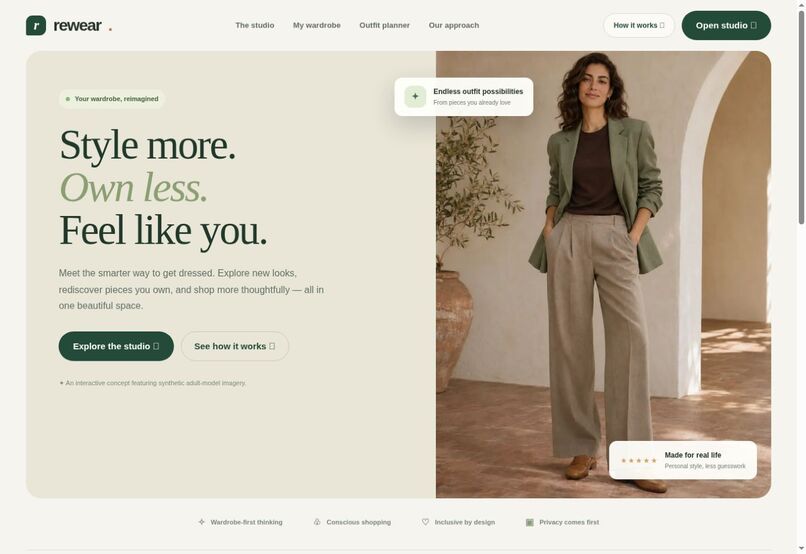
ReWear Studio: public homepage and product concept
-
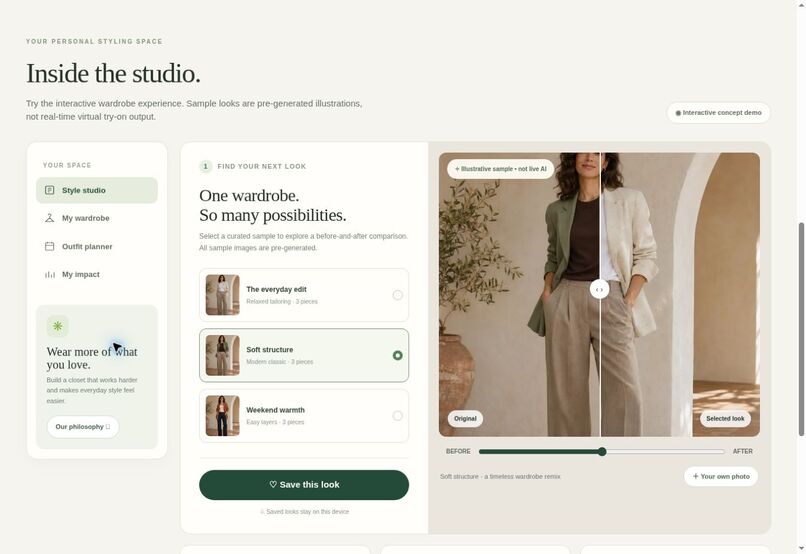
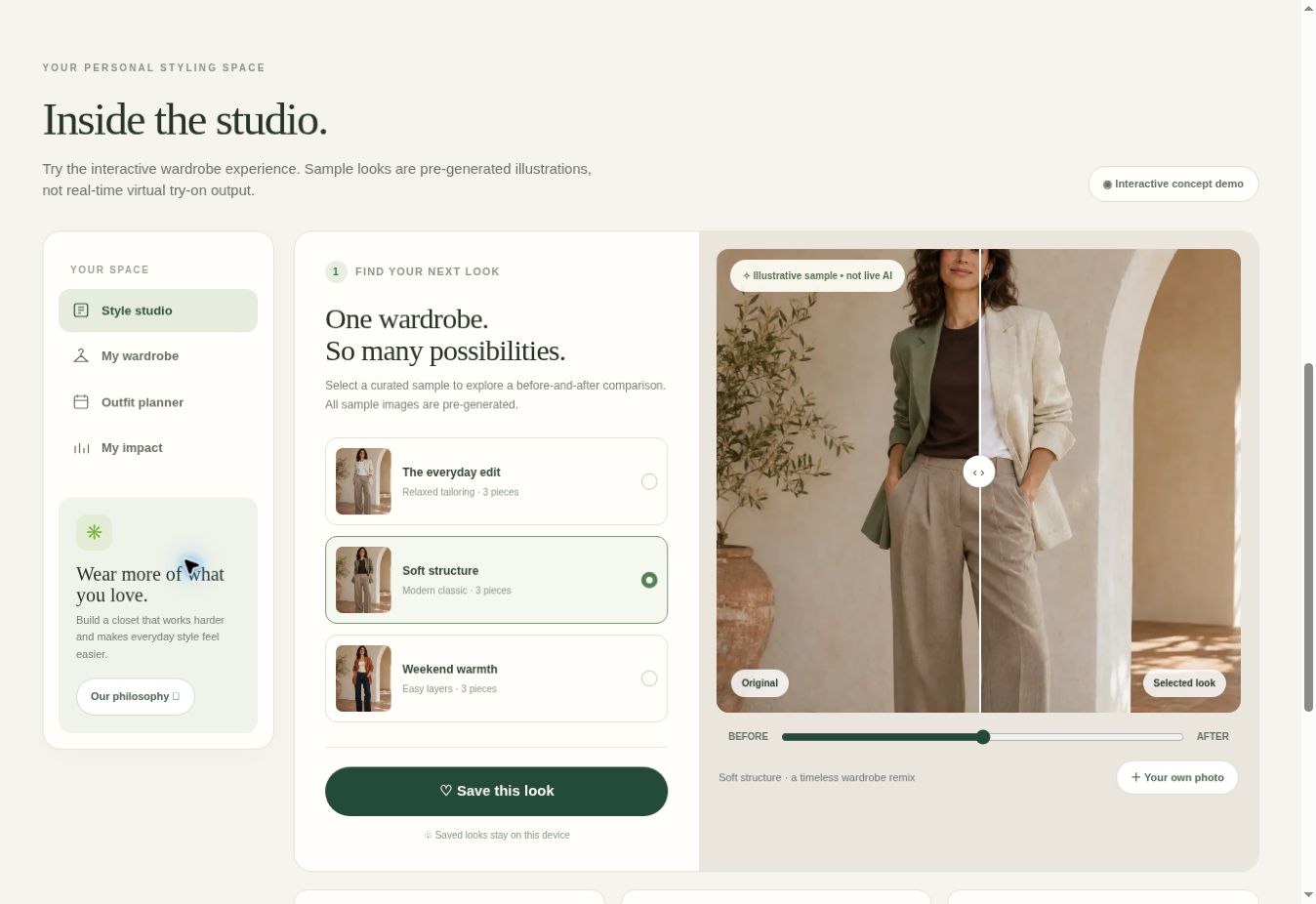
Outfit comparison studio with curated synthetic model examples
-
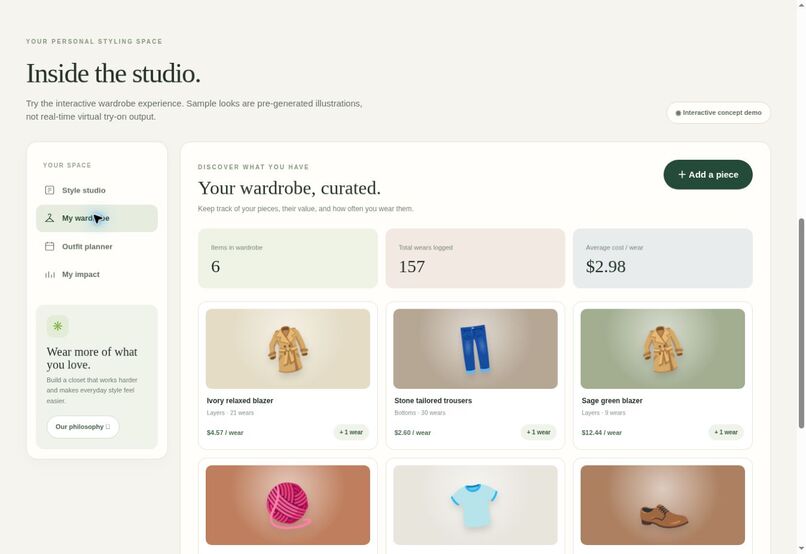
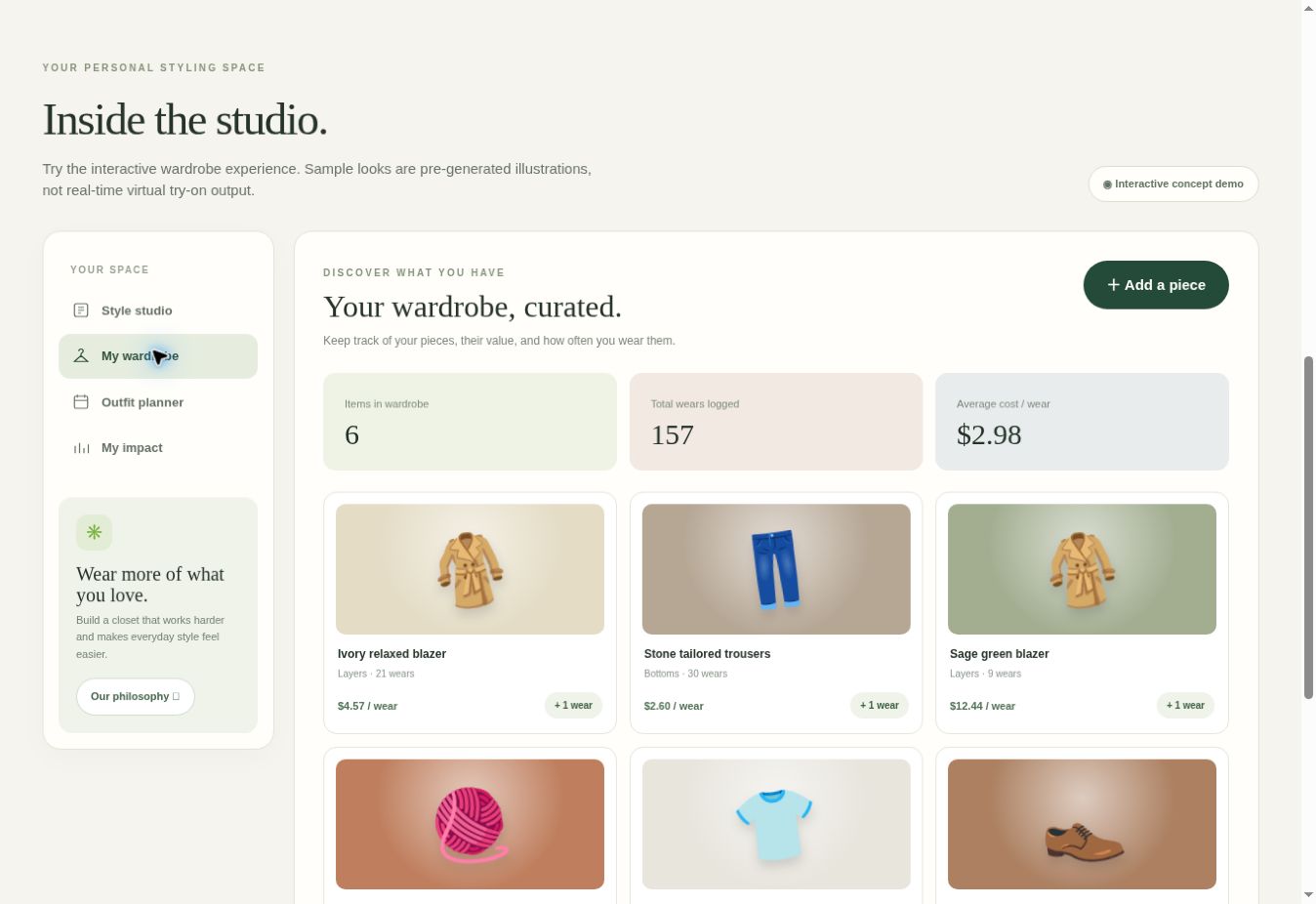
Local wardrobe with garments, logged wears and cost-per-wear
-
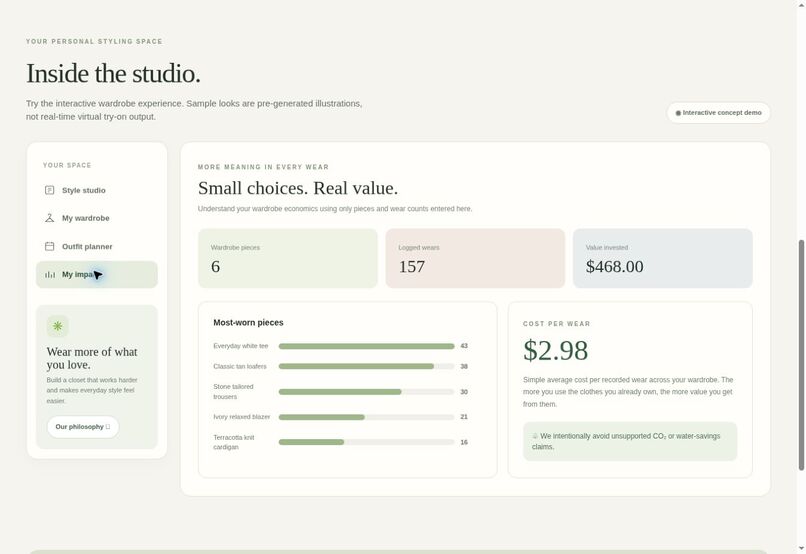
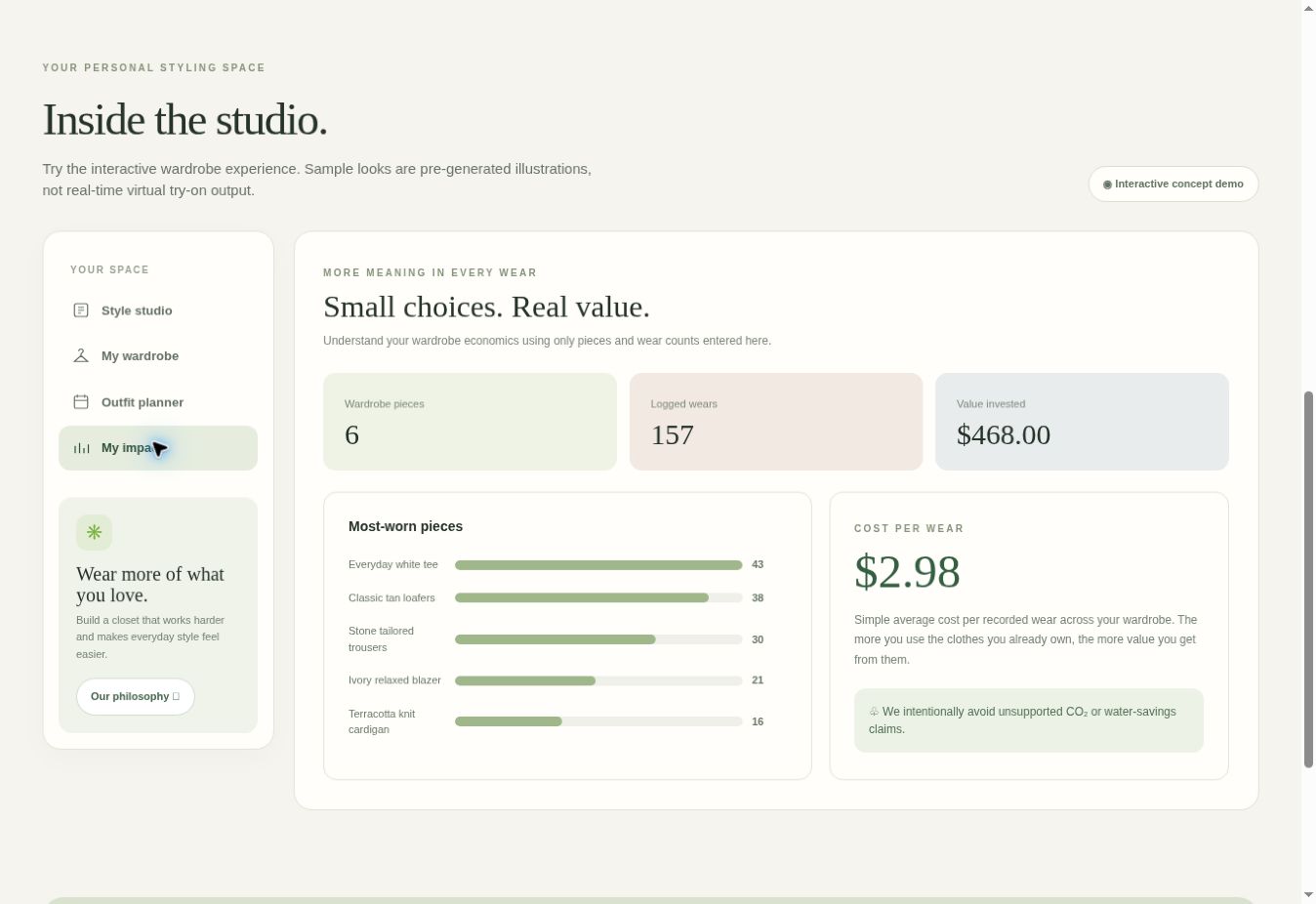
Wardrobe impact dashboard based on recorded wear counts
-
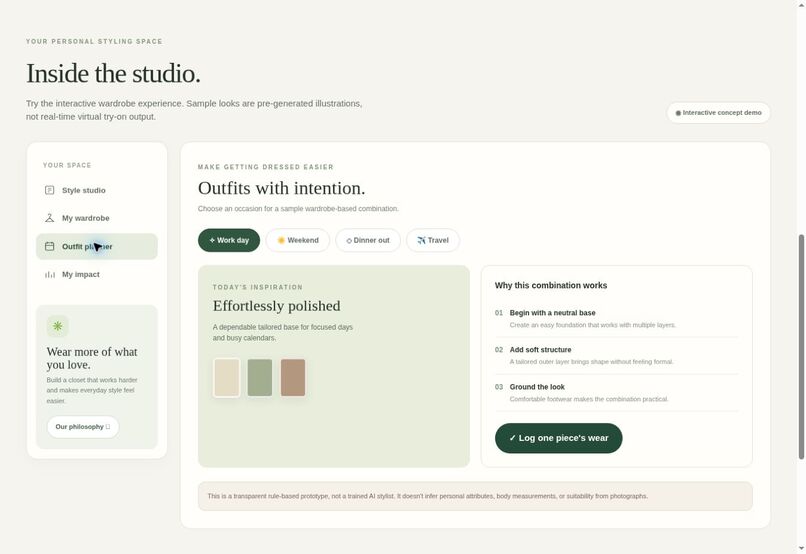
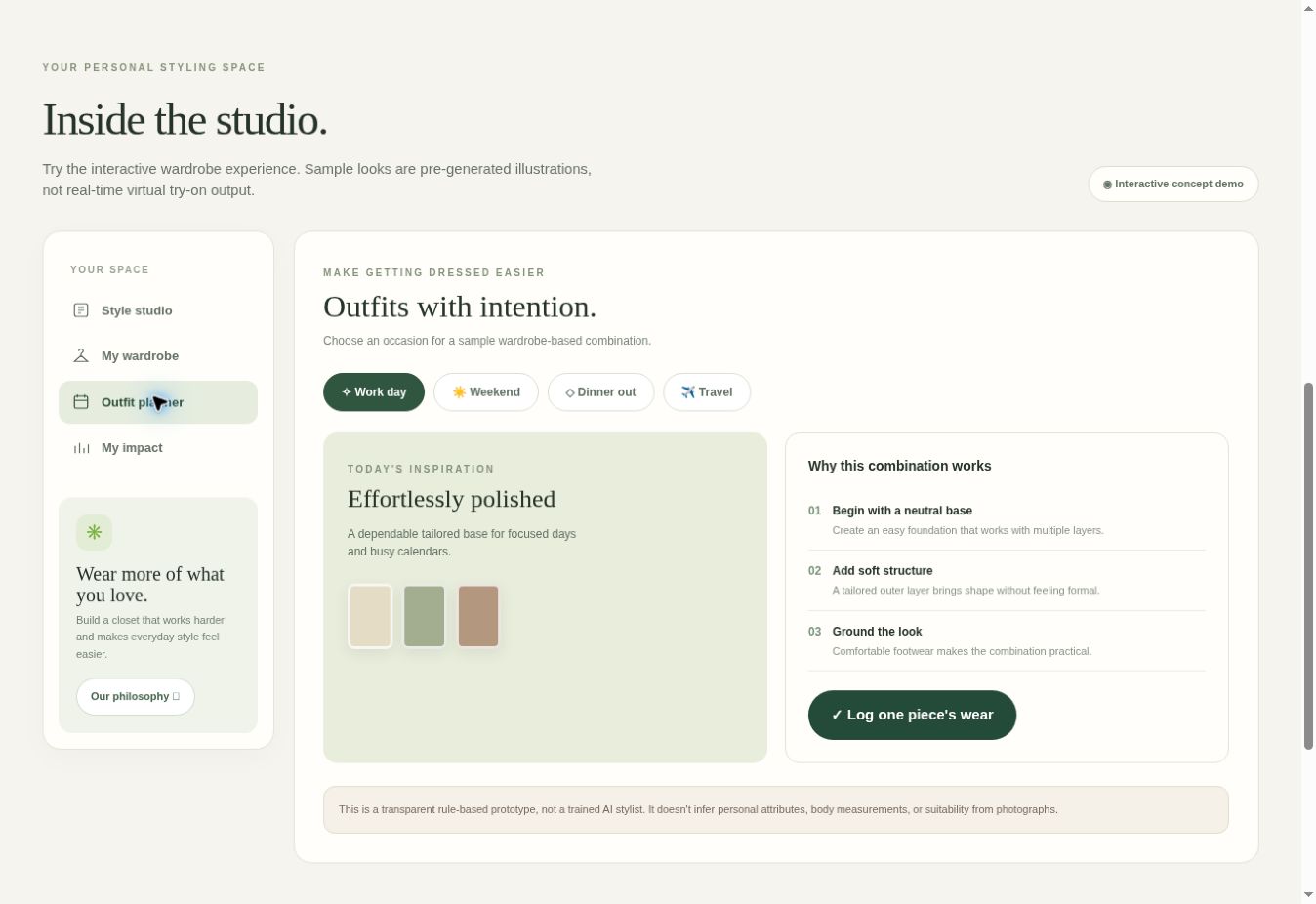
Occasion-based outfit planner with transparent styling suggestions
Inspiration
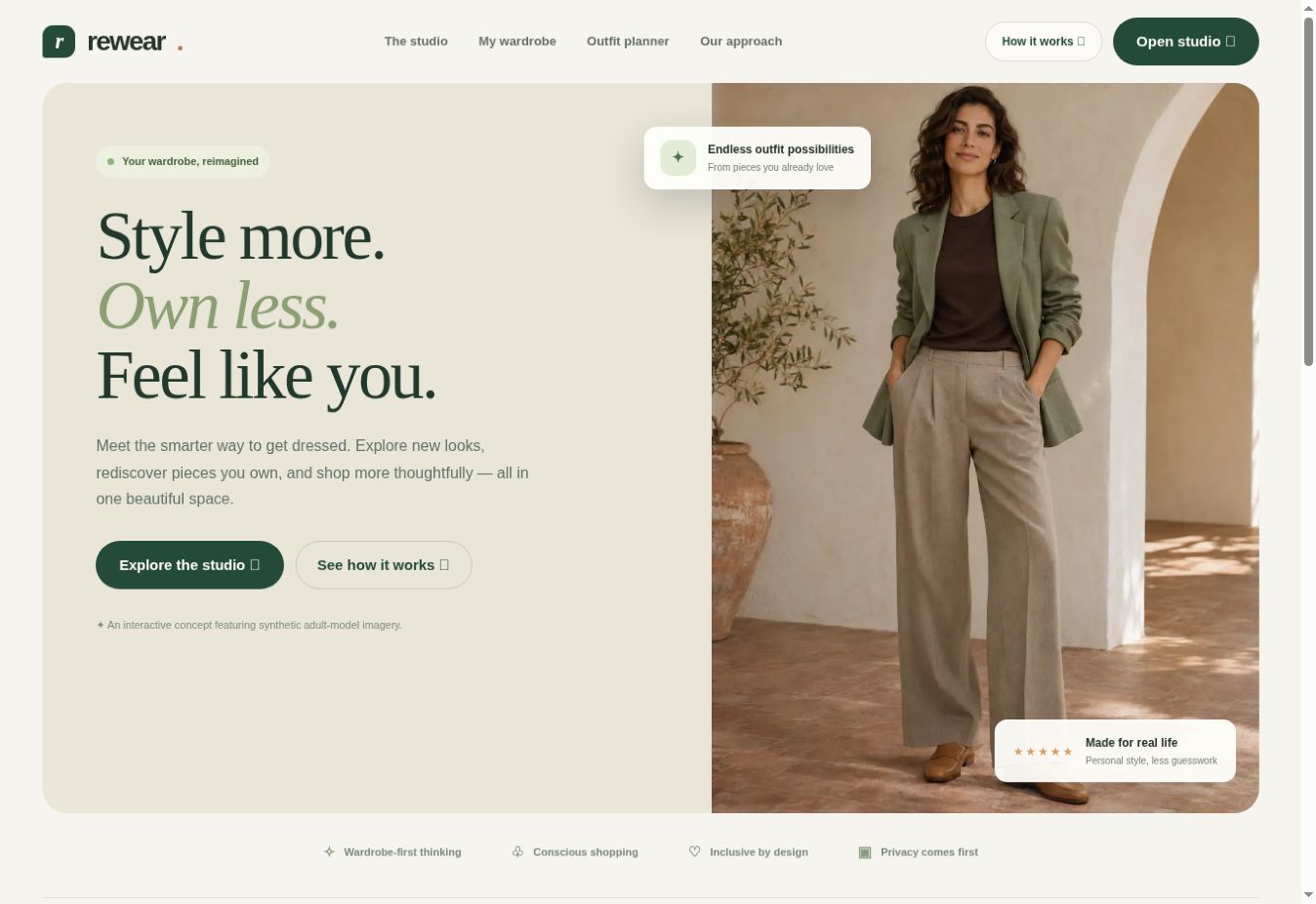
Online fashion shopping often encourages more purchases while leaving people uncertain about how garments will work in their lives. ReWear Studio explores another starting point: make better use of the clothes you already own, then shop more intentionally.
What it does
ReWear Studio is a responsive, privacy-conscious wardrobe planning prototype. Visitors can compare three editorial outfit examples using an interactive before-and-after slider, add and organize wardrobe items locally in their browser, record wears, and see cost-per-wear change over time. An occasion-based planner suggests combinations from the local wardrobe using transparent rules. A photo preview requires an adult-consent acknowledgement; images stay in the browser and are not sent to a server.
How I built it
I designed and implemented the experience as a lightweight web app using HTML, CSS, JavaScript and browser local storage. The sample looks use original synthetic adult-model imagery. I focused on responsive UX, accessible controls, clear empty states, and making each interaction understandable to a first-time user.
Challenges and learnings
The key design challenge was balancing useful styling guidance with privacy and trust. A wardrobe assistant must distinguish illustrative samples from actual results, avoid unsupported fit claims, and handle images responsibly. I chose browser-local data and explicit image-consent messaging to demonstrate those principles.
Hackathon track and value
Track: Styling & Wardrobe, with a sustainability benefit. ReWear Studio helps people rediscover outfits, measure garment use, and make more considered wardrobe decisions. It is a working UX prototype, not a validated reduction-in-returns or environmental-impact claim.
Current integration status
Important limitation: The editorial comparisons are pre-generated examples, not real-time virtual try-on output. The required organizer try-on API is not integrated yet because the published hackathon resources still list placeholder API names, documentation links and access instructions. I have requested the correct API details from the organizers. An API-backed try-on will require an official endpoint, credentials and testing once supplied. This project should not be judged as meeting that integration requirement until it is actually implemented and verified.
Next steps
Connect the official try-on API when documentation and credits are released; add explicit upload and deletion controls for consented adult photos; test image fidelity and failure cases; publish a judge-accessible deployment and a genuine end-to-end demo.
Built by Samer Tallauze — https://samertall.com.
