-
-
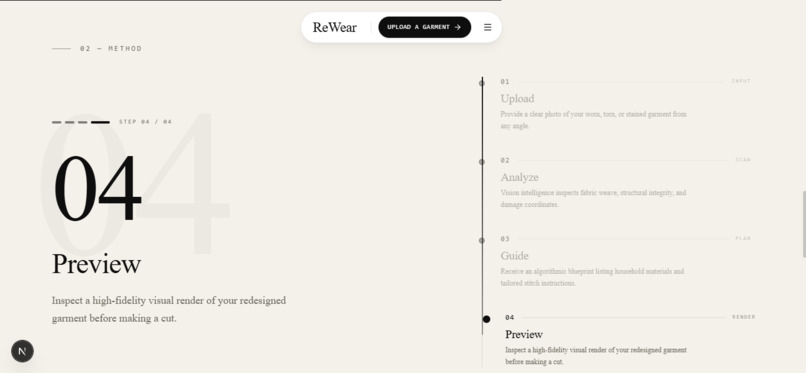
How it works
-
-
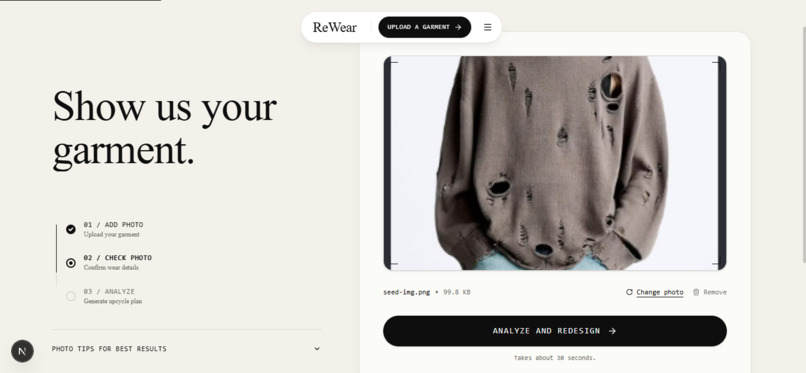
Upload your dress and check the magic
-
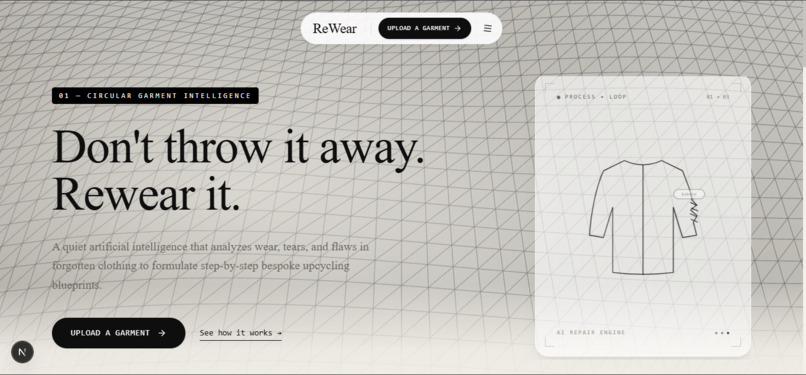
Home Screen Hero Section
Inspiration
Every year, millions of tons of clothing are thrown away simply because they are old, damaged, or feel out of style. Over 80% of discarded clothes are still physically wearable, but people throw them out because they lack the creative imagination to visualize how a stained or torn garment could be transformed into something fresh. We wanted to build a bridge between fashion waste and creative possibilities, turning an intimidating upcycling process into a fun, accessible, and visual experience.
What it does
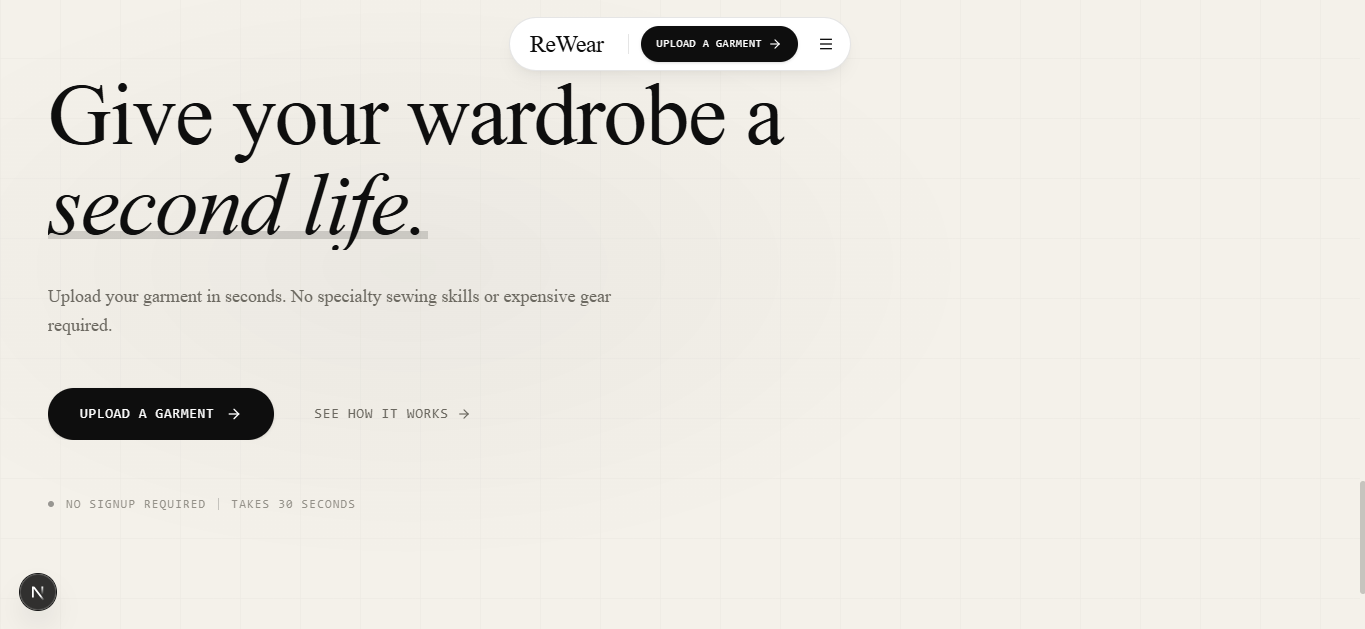
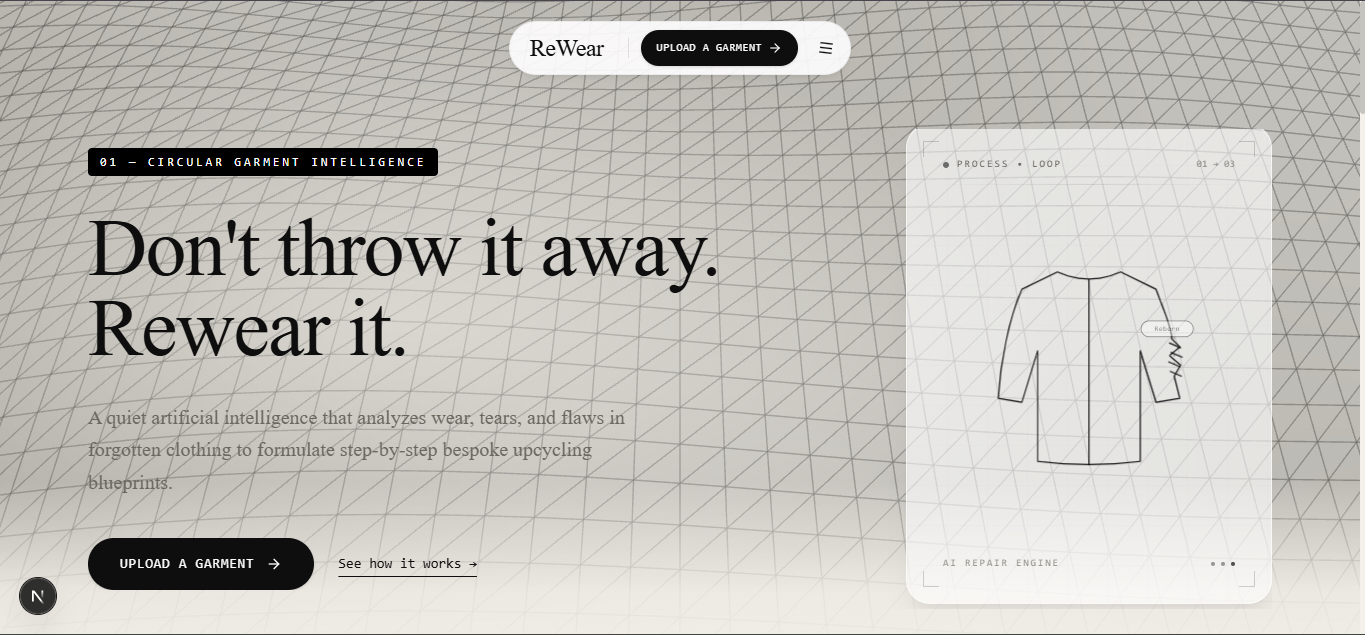
ReWear AI uses computer vision and generative AI to give old clothes a second life:
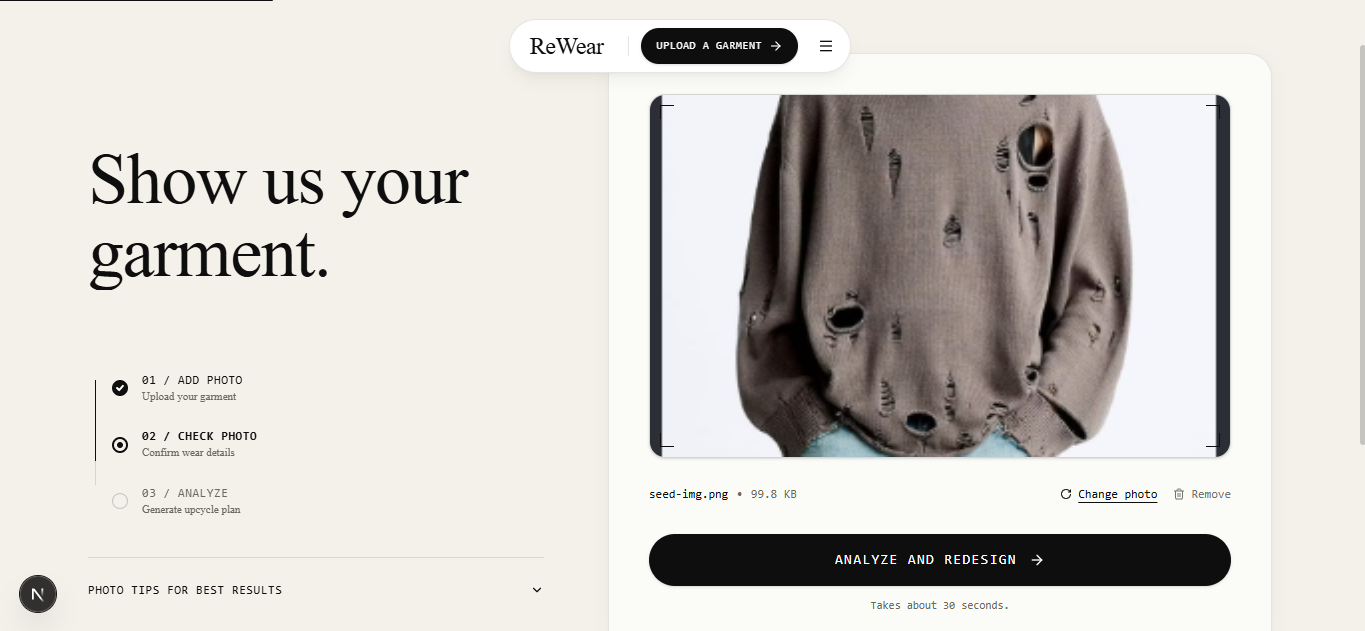
- Garment & Damage Detection: Users upload a photo of a damaged, faded, or outdated piece of clothing, and the system automatically detects the garment type and visible flaws.
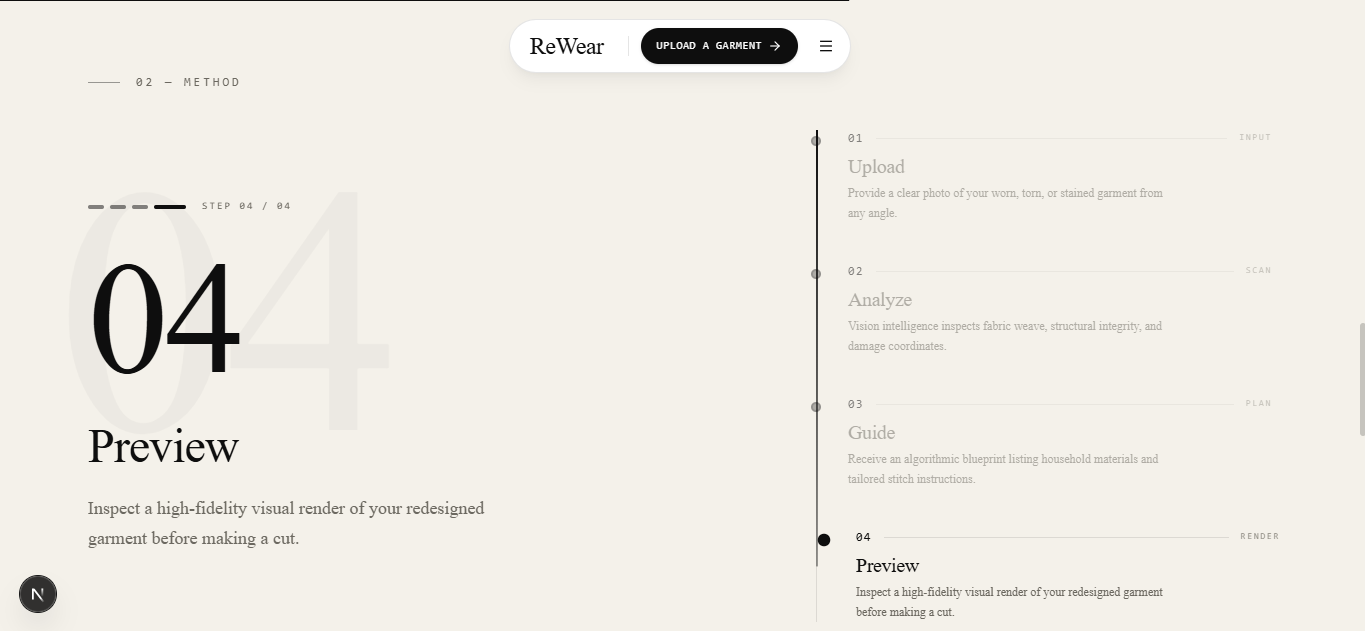
Visual Redesign Preview: It generates an AI-powered preview image showcasing what the redesigned, upcycled garment will look like.
Step-by-Step Upcycling Guide: It provides a structured DIY blueprint detailing the exact materials needed and clear steps to execute the transformation.
How we built it
We designed a clean, professional, and modular architecture optimized for rapid hackathon execution:
- Frontend: Built with a sleek, responsive interface to handle image uploads and display side-by-side transformation previews.
- Backend: Built using Python (FastAPI) with a modular structure (
routes,schemas, andservices) for high performance and clean separation of concerns. - AI Engine: Integrated OpenAI GPT-4o Vision to analyze fabric, clothing type, and damage, returning structured JSON blueprints, paired with DALL-E 3 to generate high-resolution visual previews of the redesigned fashion items.
Challenges we ran into
- Latency Management: Coordinating between vision analysis and image generation could occasionally slow down response times, requiring streamlined API calls and efficient payload handling.
- Structured Output Parsing: Ensuring that the vision model returned strictly valid JSON data without breaking downstream processing required careful system prompt engineering and Pydantic validation schemas.
- Hackathon Time Constraints: Building a full-stack AI application from scratch in a weekend meant ruthlessly prioritizing core features over complex database migrations and multi-user auth.
Accomplishments that we're proud of
Successfully creating a smooth, end-to-end pipeline from a raw photo upload of a damaged garment to a fully visualized AI redesign with actionable steps.
Designing a professional, production-grade FastAPI backend complete with clean code modularity and robust error handling.
Turning a real-world sustainability problem into an engaging, interactive tool that makes sustainable fashion practical.
What we learned
- The immense power of combining multimodal vision models with image generation APIs to solve real consumer problems.
- How structured output formats and Pydantic schemas drastically reduce bugs and runtime exceptions in AI-driven backends.
- The importance of an MVP mindset—focusing on core utility and seamless user experience over unnecessary infrastructure complexity during a tight deadline.
What's next for ReWear AI — "Old clothes, new designs"
- Advanced Inpainting Control: Integrating models like ControlNet or Stable Diffusion to edit the original uploaded image directly (keeping the user's exact fabric texture and body pose) rather than generating a brand-new image.
- Community Marketplace: Allowing users to share their upcycled creations, trade materials, or even sell custom pieces to others.
- Tailor Integration: Partnering with local tailors or DIY craft stores so users can order the exact patches, threads, or alterations recommended by the AI with a single click.
Built With
- fastapi
- grok
- nextjs


Log in or sign up for Devpost to join the conversation.