-
-
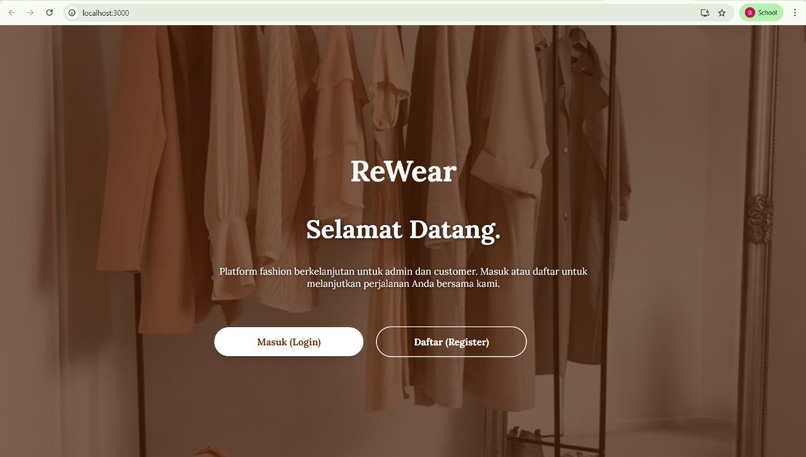
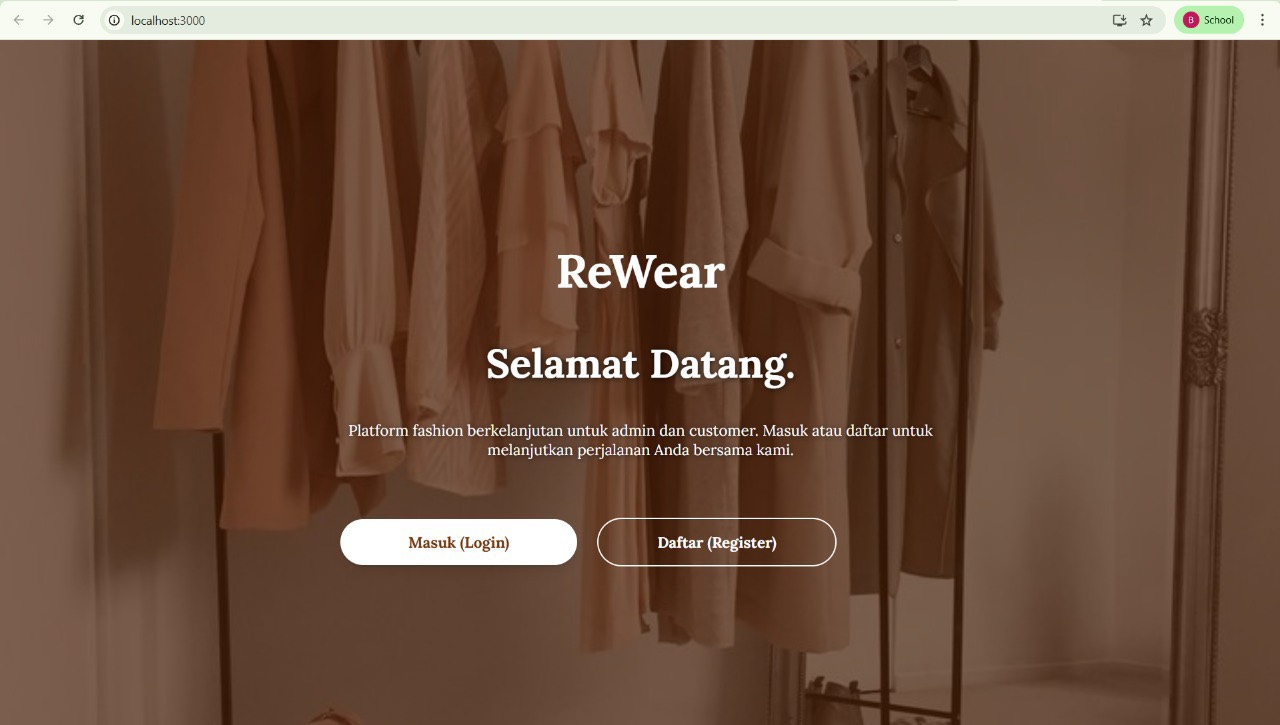
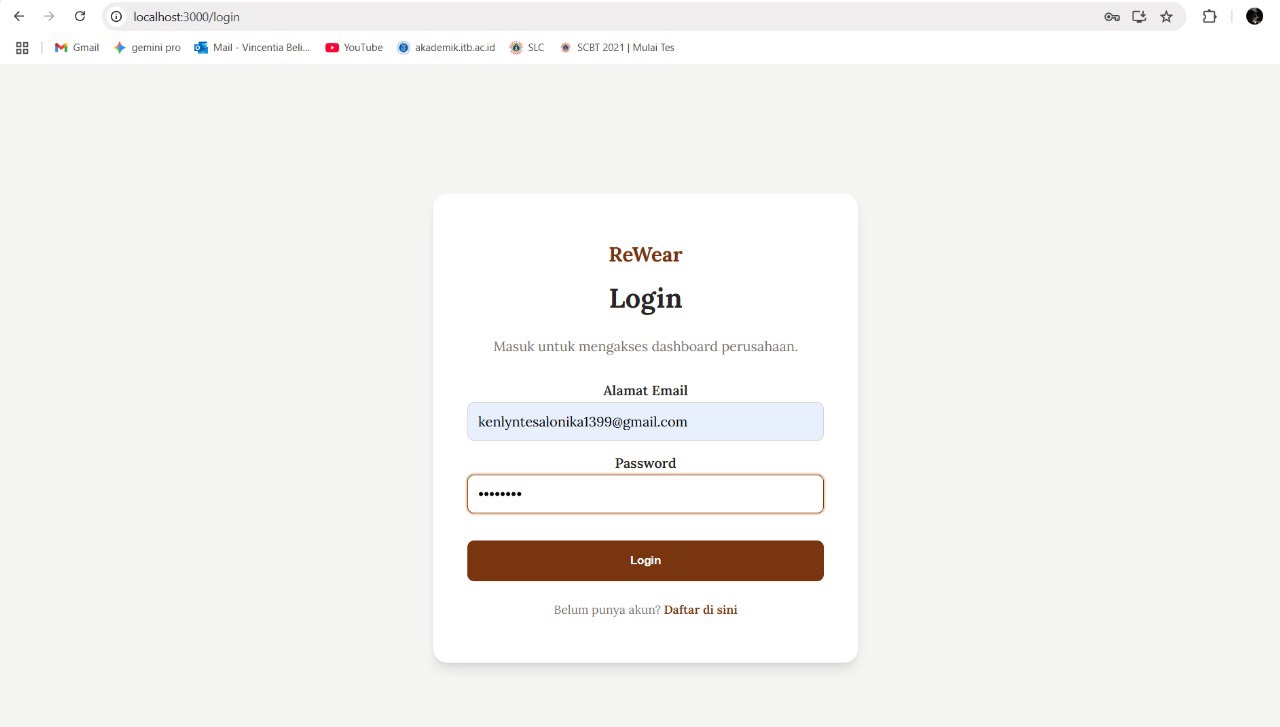
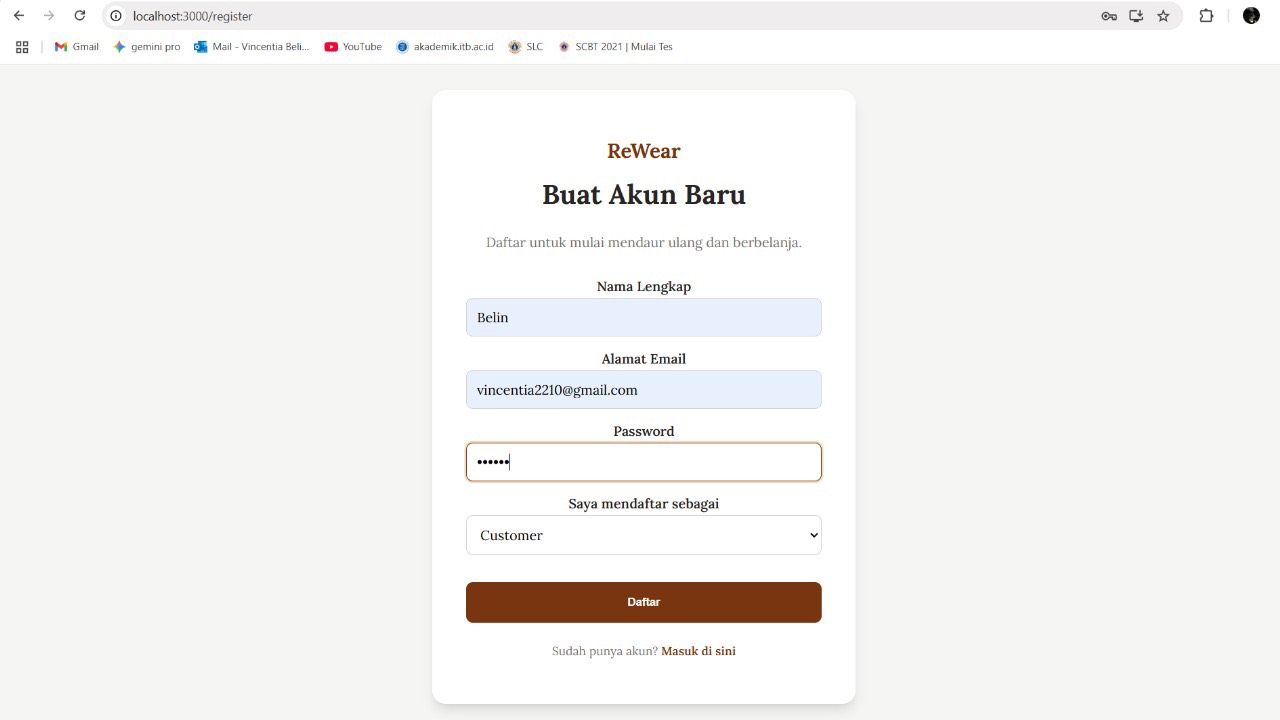
Login and Register Page
-
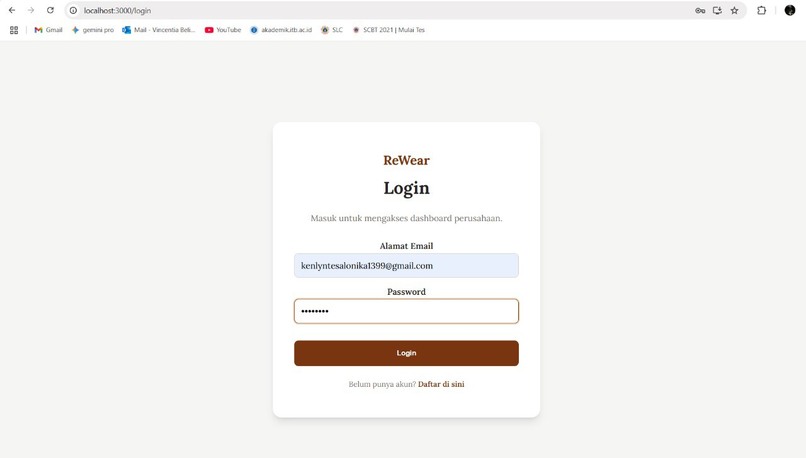
Login Page
-
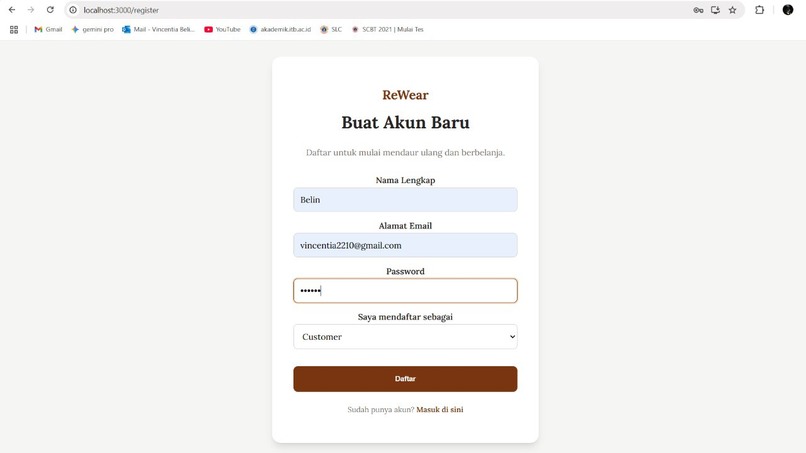
Register Page
-
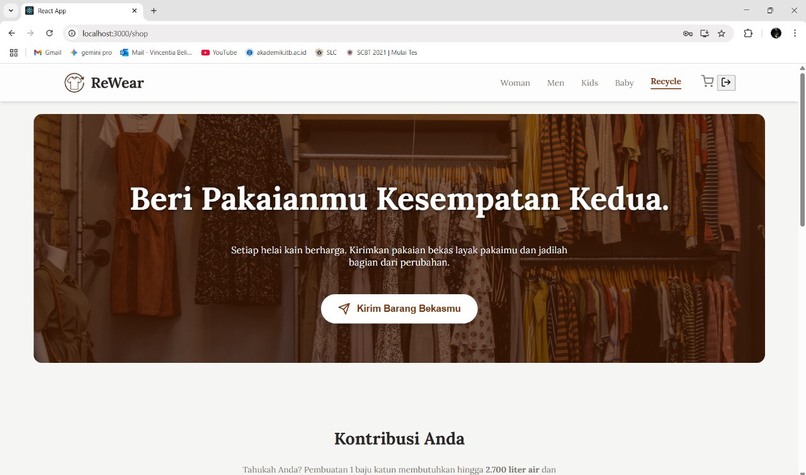
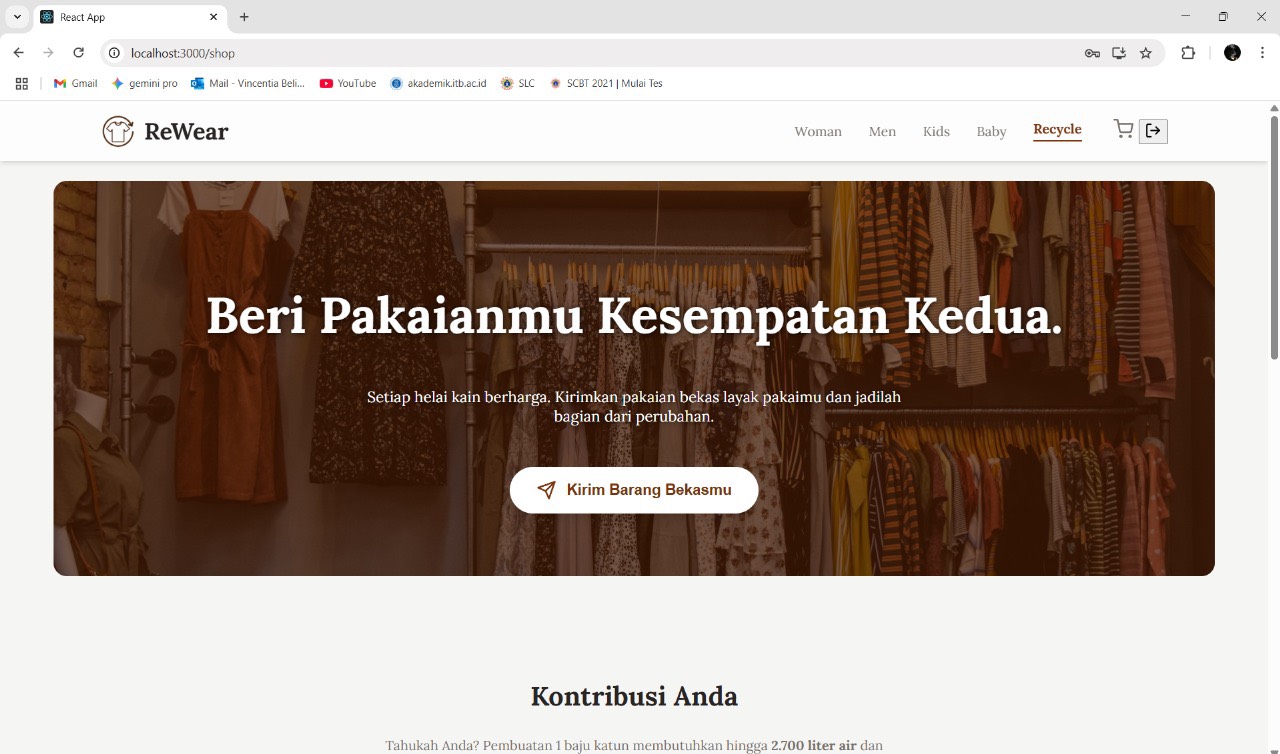
Customer Page
-
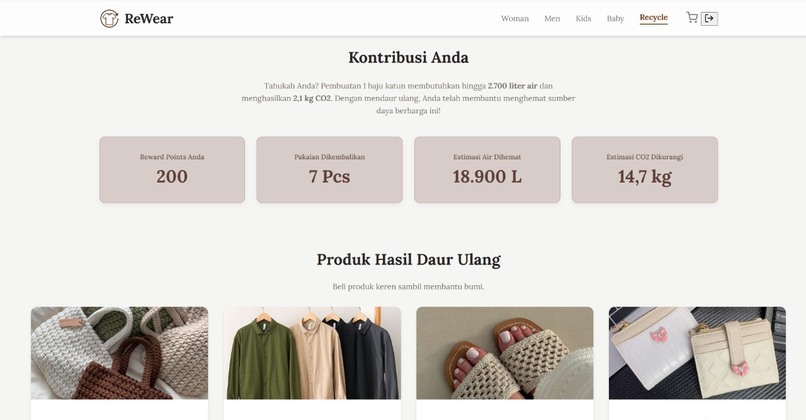
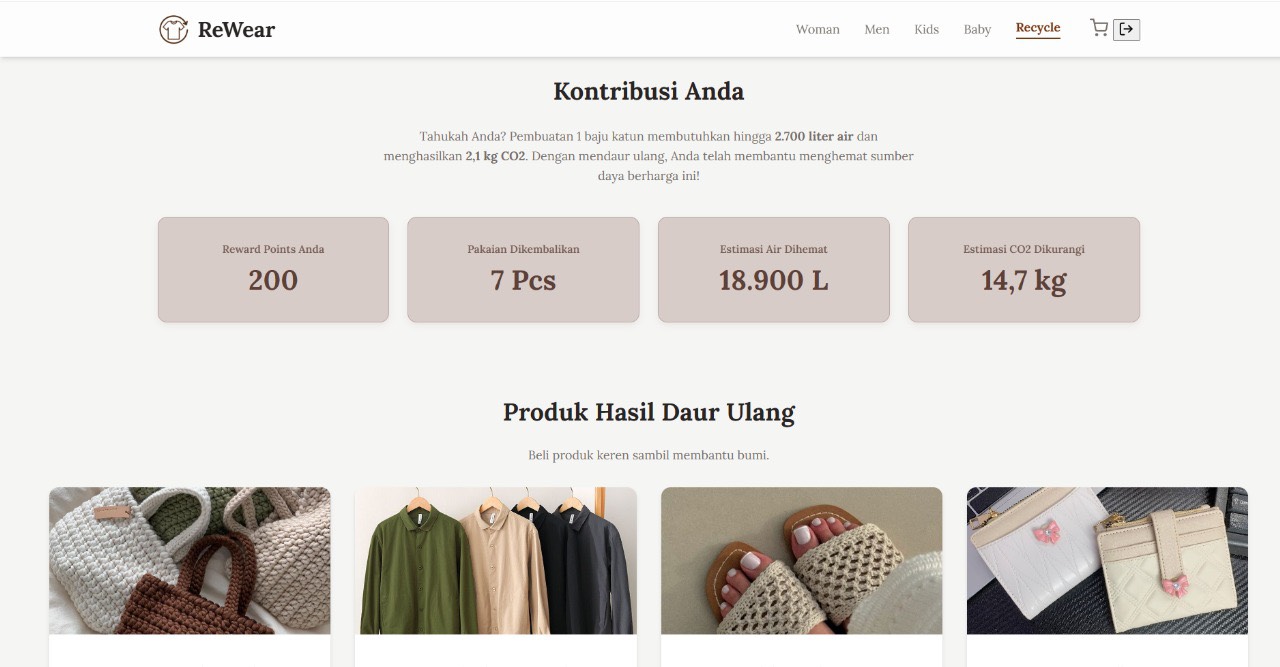
Customer Dashboard
-
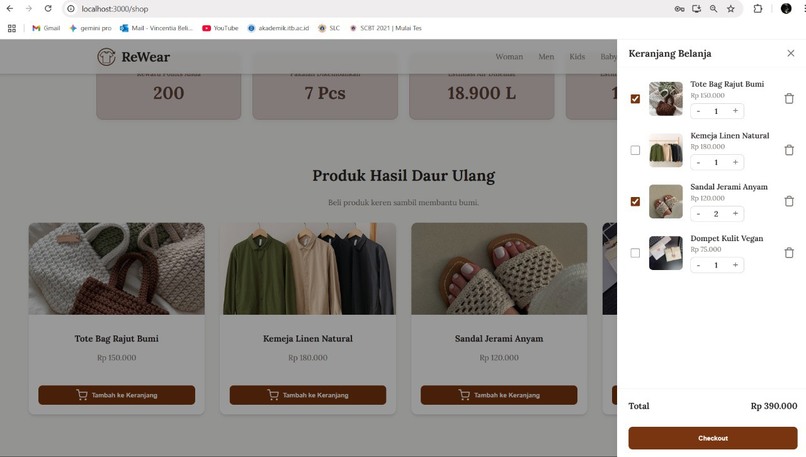
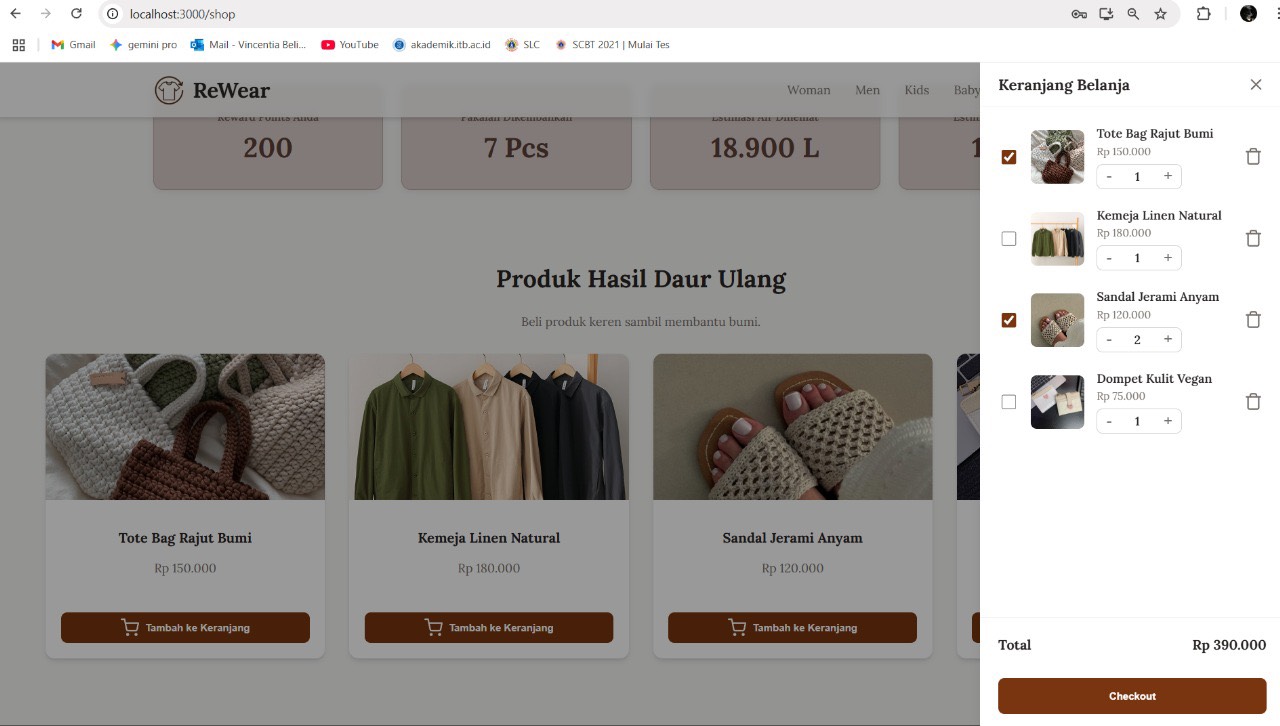
Customer Catalog and Checkout Page
-
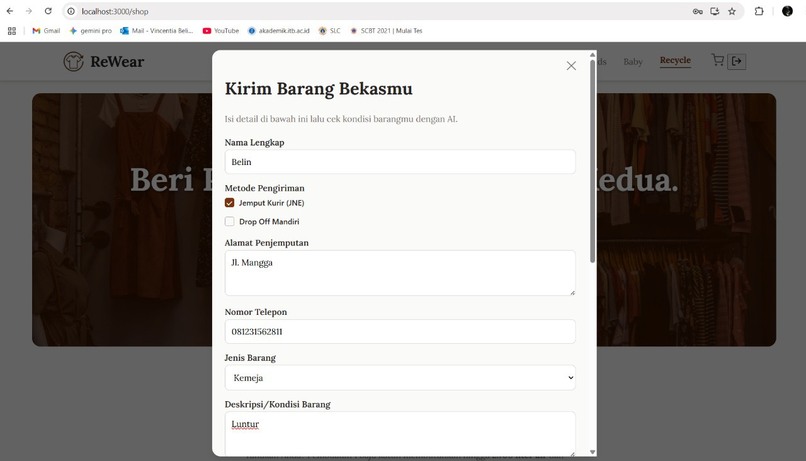
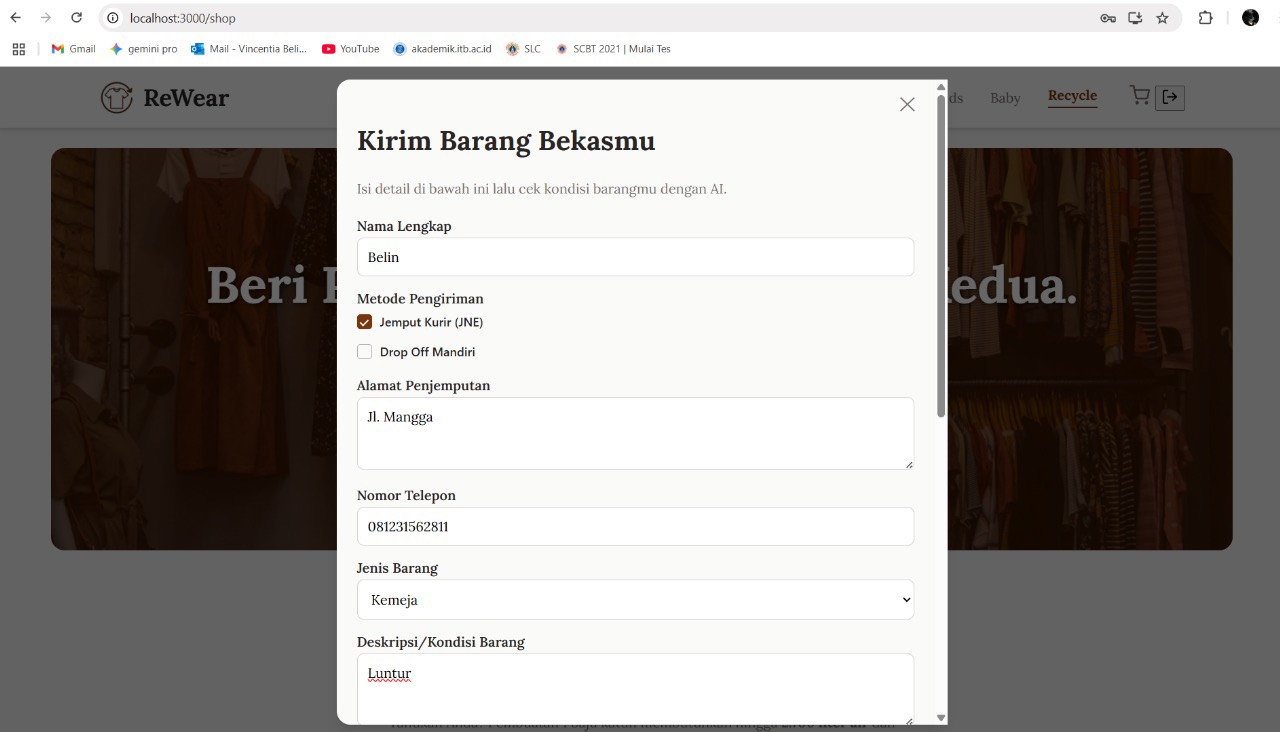
Kirim Pakaian Bekas Page
-
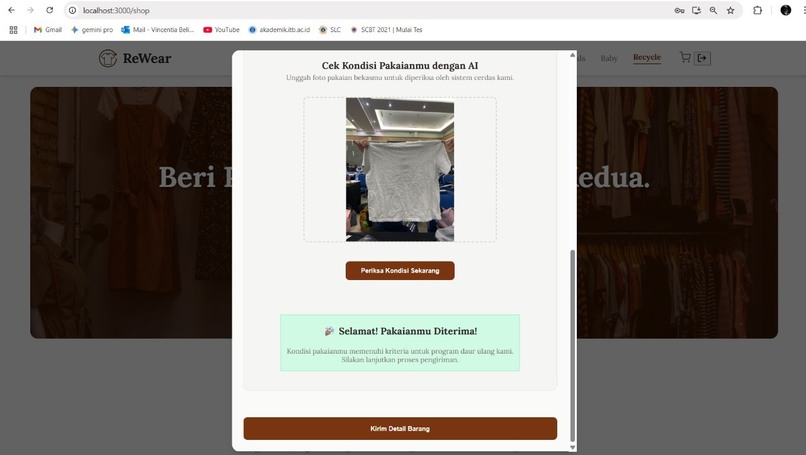
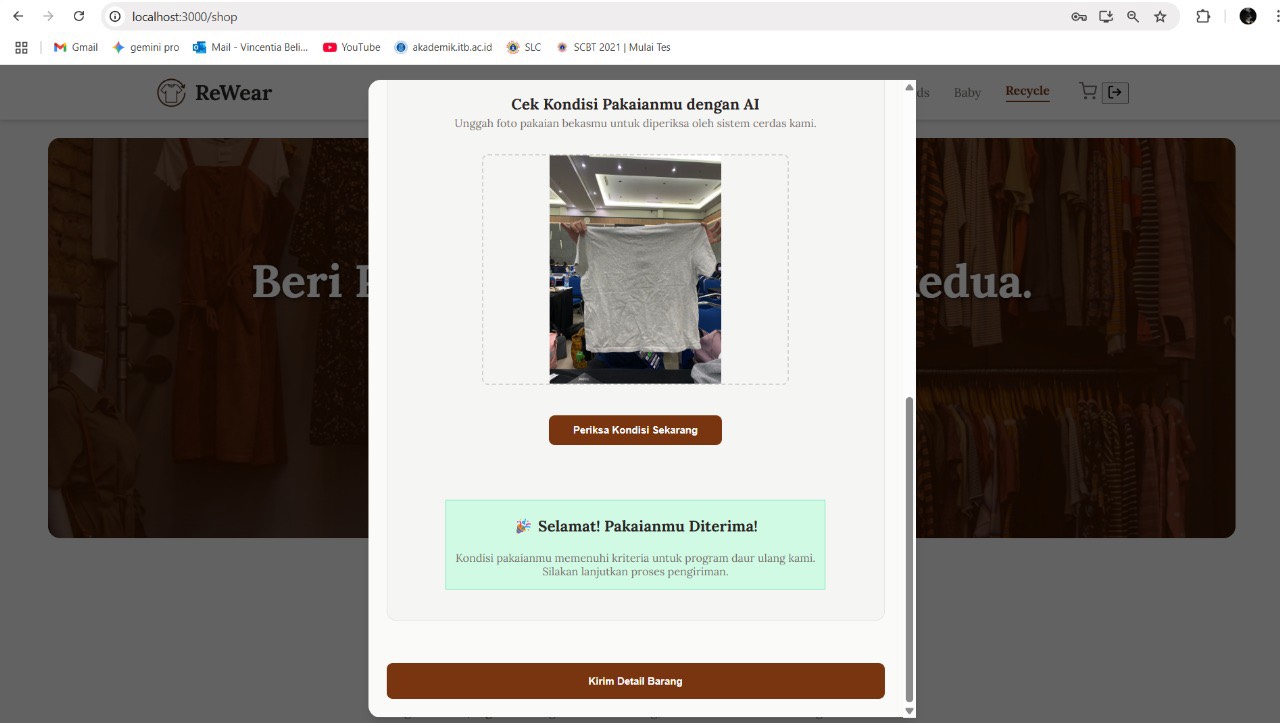
Clothes that Fulfill the Requirements Page
-
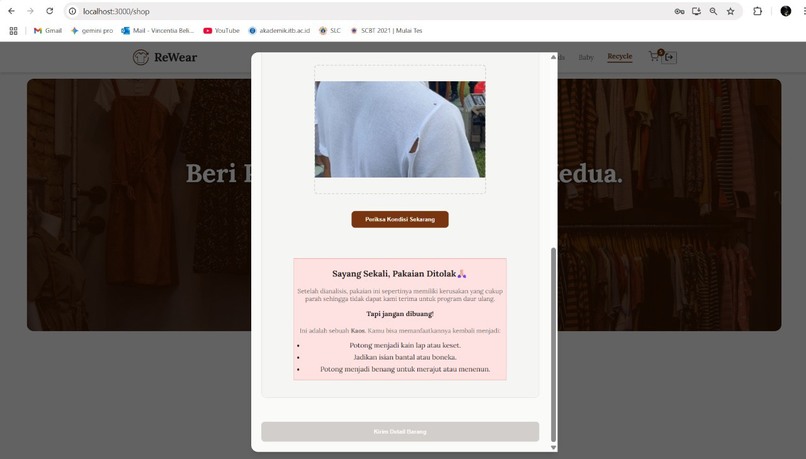
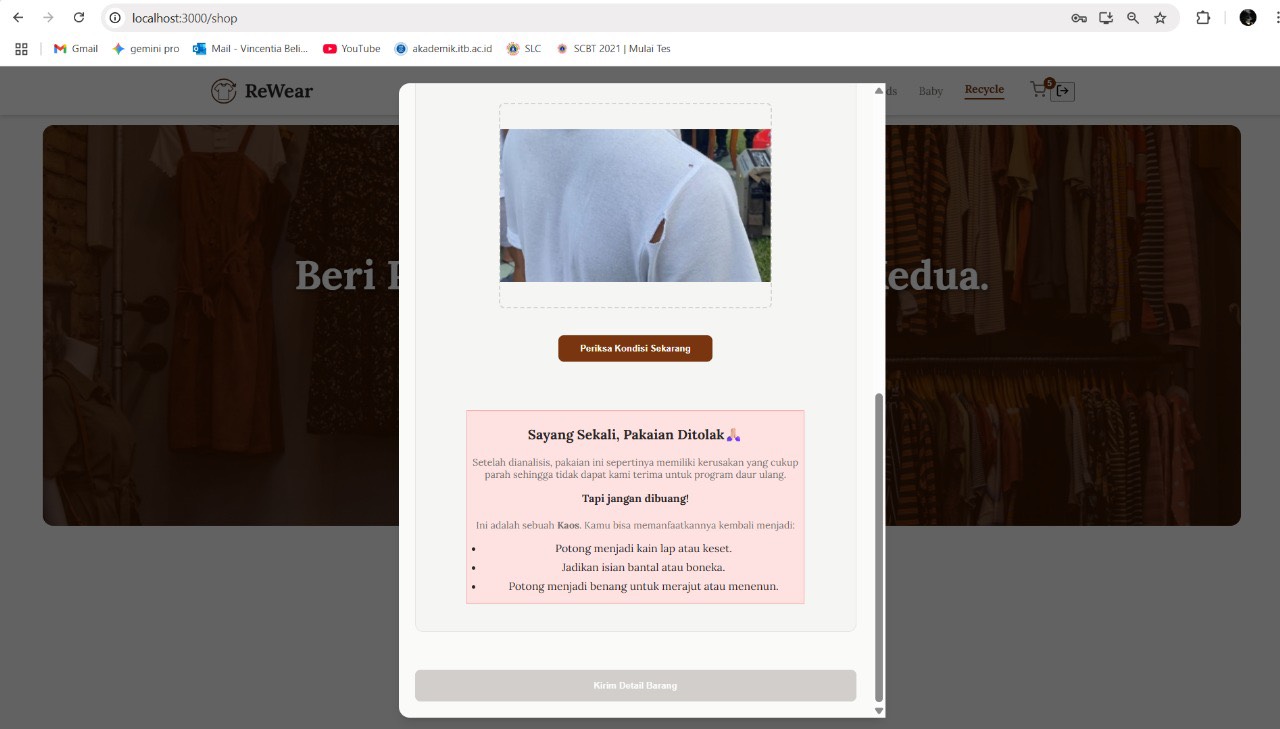
Clothes that Do Not Meet the Requirements Page
-
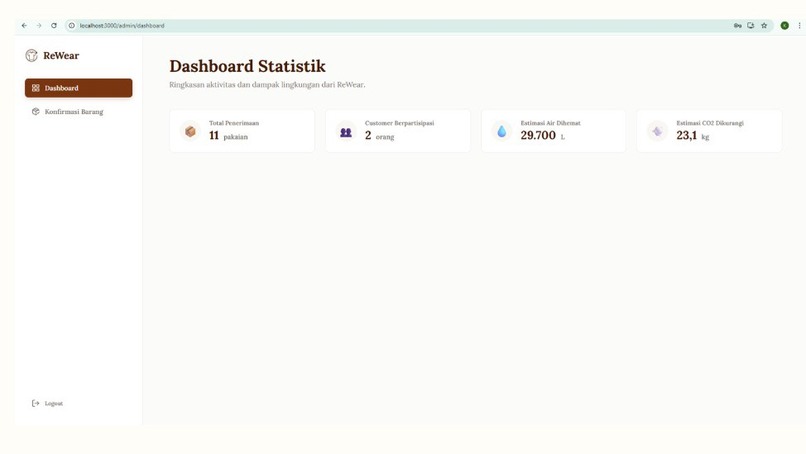
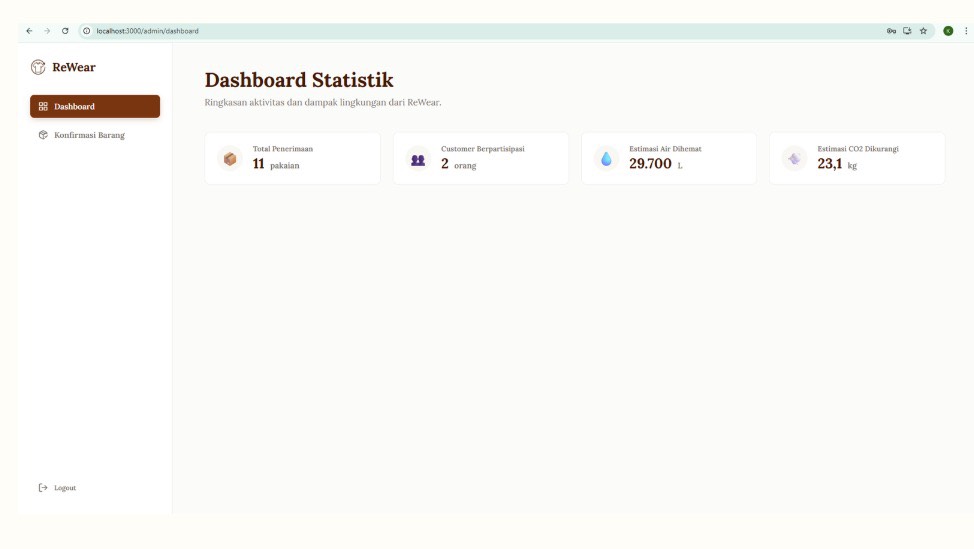
Dashboard Admin Page
-
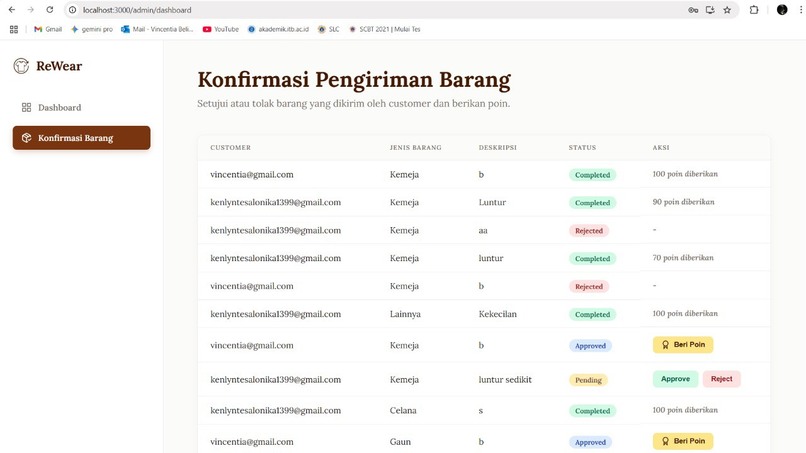
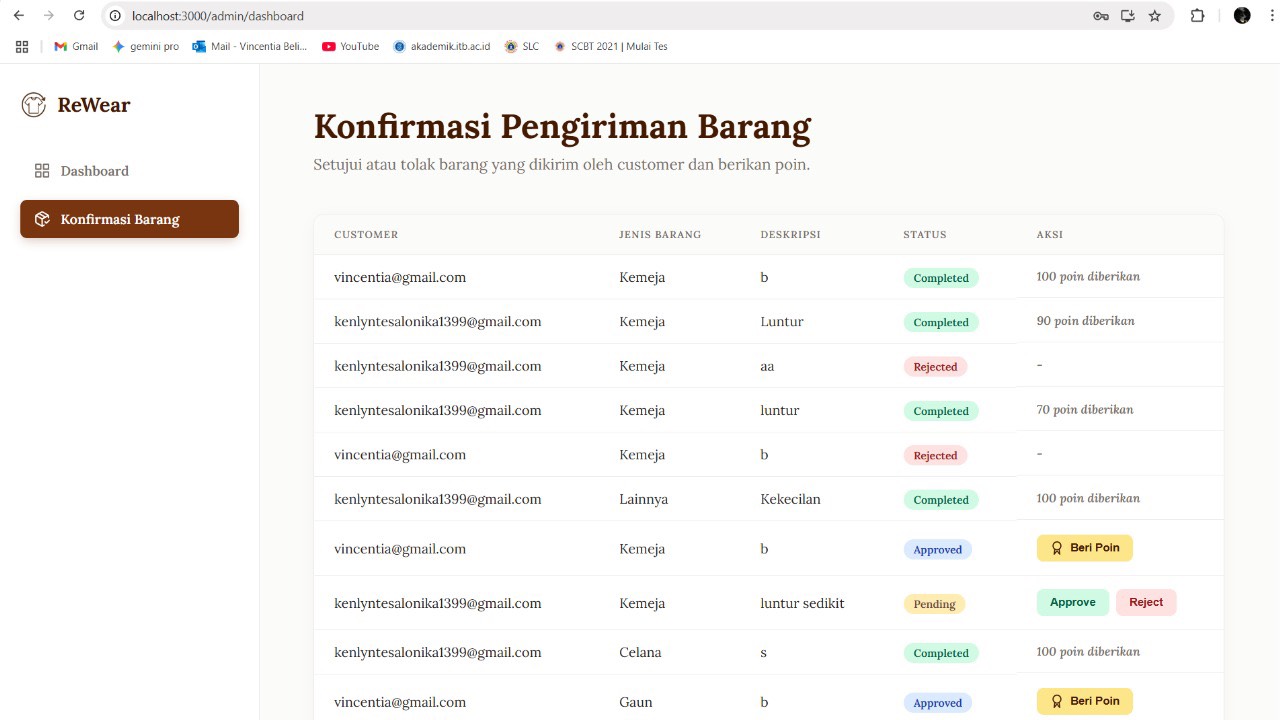
Confirmation Admin Page
Inspiration
Indonesia's fast fashion industry, true to its name, generates a significant amount of textile waste. After some research, we discovered that Indonesia produces around 2.3 million tons of textile waste annually and this figure is projected to increase by 70% if no action is taken. In fact, Indonesia also ranks as the second-largest G20 country in terms of water pollution from the textile industry. This inspired us to develop ReWear, a solution that aims to close the loop in the circular fashion economy by making sustainable practices accessible for both brands and consumers.
What it does
ReWear is a sustainable return-and-recycle system integrated into a clothing brand’s platform, allowing customers to send back their used fashion items. Before the return is approved, the system uses AI to assess whether the items meet the brand’s acceptance criteria. If the item qualifies, the customer is allowed to proceed with the return. Once the brand receives the items, customers are rewarded with points or vouchers. The returned fashion items are then recycled by the company and either turned into new clothes, upcycled fashion pieces, reusable bags, or even recycled yarn to support a truly circular fashion model.
How we built it
We began by brainstorming ideas as a team and decided to first detail the flow of our system to ensure a clear and structured approach. Once the flow was finalized, we divided tasks among team members which one person worked on the low-fidelity UI/UX design, one person handled the database setup, and another person focused on the pitch deck preparation. After completing the UI/UX design, we proceeded with the development phase, starting with the front-end and back-end implementation. For the front-end implementation, we built using React.js and CSS to create a clean and responsive user interface. Next, for the back-end implementation, we developed using Firebase Firestore for real-time data storage and Firebase Authentication for secure user login. Lastly, for the database implementations, we integrated it with the Gemini API to analyze returned customer’s fashion clothes.
Challenges we ran into
Throughout the development process, we encountered several unexpected challenges, both technical and non-technical. Working in a cold room for hours was physically uncomfortable and affected our focus. Additionally, we felt pressured seeing the progress of other teams, which sometimes impacted our confidence. On the technical side, our AI model initially struggled to accurately detect and respond to photo inputs as intended. We also realized that many parts of the system flow still lacked of detail, and a few important features were unintentionally overlooked during development. One of the most significant challenge was integrating the back-end and front-end smoothly, which required extra coordination and debugging under time constraints. Then, for the non-technical parts, working in a cold room for hours was physically uncomfortable and affected our focus. Because of that, we often go outside to warm ourselves up. Additionally, during this hackathon, we felt pressured seeing the progress of other teams, which sometimes impacted our confidence.
Accomplishments that we're proud of
My team proud that even with a few flaws, we managed to complete our project and deliver a working prototype within the given time. Most of all, we are proud of the main idea we propose that not only solving a sustainable problem, but also business problem. Our solution contributes to the broader goal of sustainability, specifically by helping to close the loop in the circular economy within the fashion industry. We believe that this idea has real potential to create impact, both environmental and economically.
What we learned
Through this competition, we learned a lot, both technically and personally. We improved our time management skills, learned how to collaborate under pressure, and discovered the importance of trust and communication within a team. On the technical side, we gained hands-on experience using Firebase efficiently for authentication and data storage, and we also explored how to integrate AI features into a real-world project. Overall, this experience has helped us grow as developers and as a team.
What's next for ReWear
We want ReWear being fully implemented as a B2B SaaS solution adopted by various fashion brands. By integrating ReWear into their platforms, brands can strengthen their sustainability branding, enhance customer loyalty, and actively contribute to a more eco-conscious fashion industry. Our next goal is to improve the system, collaborate with real industry partners, and turn ReWear into a meaningful step toward closing the loop in circular fashion.


Log in or sign up for Devpost to join the conversation.