Inspiration
ReVU started with a simple but important observation: radiologists carry enormous cognitive and legal pressure while working at high speed. My dad is a radiologist, so I had a close view into that workflow, from constant dictation to the reality that a single missed finding can have serious consequences for both the patient and the physician. That made us ask a very practical question: what would a genuinely helpful second set of eyes look like?
We also knew the wrong kind of AI could make things worse. If a system speaks too early, overflags everything, or sounds more certain than it should, it can bias the radiologist instead of supporting them. Current tools often create exactly that problem. So we built ReVU around a different principle: AI should strengthen independent clinical judgment, not replace it.
What it does
ReVU is a live radiology copilot: a desktop-based second reader that can see the radiologist's workflow, reason over what's on screen, answer questions in real time, and call specialized diagnostic tools when they are actually relevant.
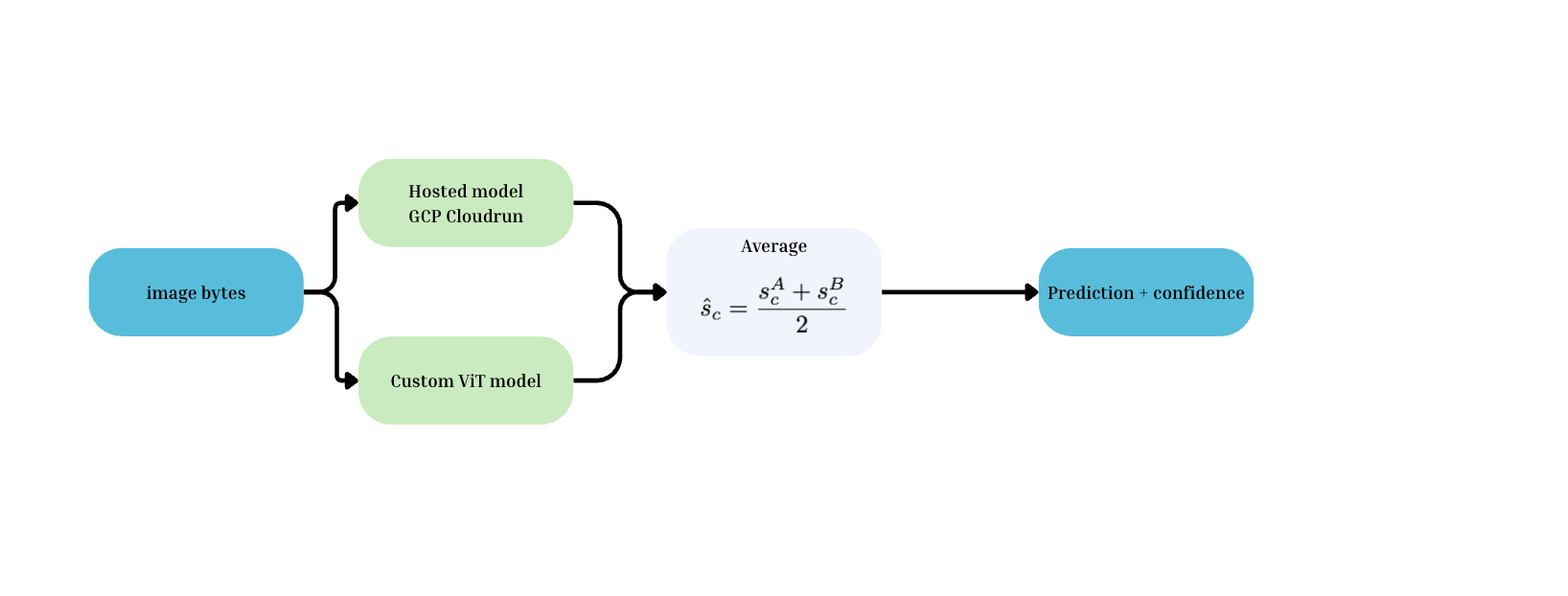
Instead of acting like a generic chatbot or a one-off classifier, ReVU behaves like an agent embedded in the reading workflow. It can intelligently decide when it needs a screenshot, inspect the active screen, answer general radiology questions, and navigate the interface in context. Most importantly, it does not send every image through the same pipeline. ReVU first looks at the image, infers the modality and anatomical context, and then routes the case to the most relevant specialist subagents and submodels. For example, a chest study can trigger chest-specific models like tuberculosis, pneumonia, or COVID detection, while a knee X-ray or brain MRI gets routed to a different set of tools entirely. That lets the system use narrower, more appropriate models instead of pretending one general model should handle every scan equally well.
After gathering those model outputs, ReVU synthesizes them into a coherent second opinion that the radiologist can interrogate live. The radiologist can ask follow-up questions, request clarification, and continue dictating or reviewing without breaking their normal flow. The result is a system that feels less like "upload an image and get a label" and more like an adaptive AI copilot working alongside the physician.
How we built it
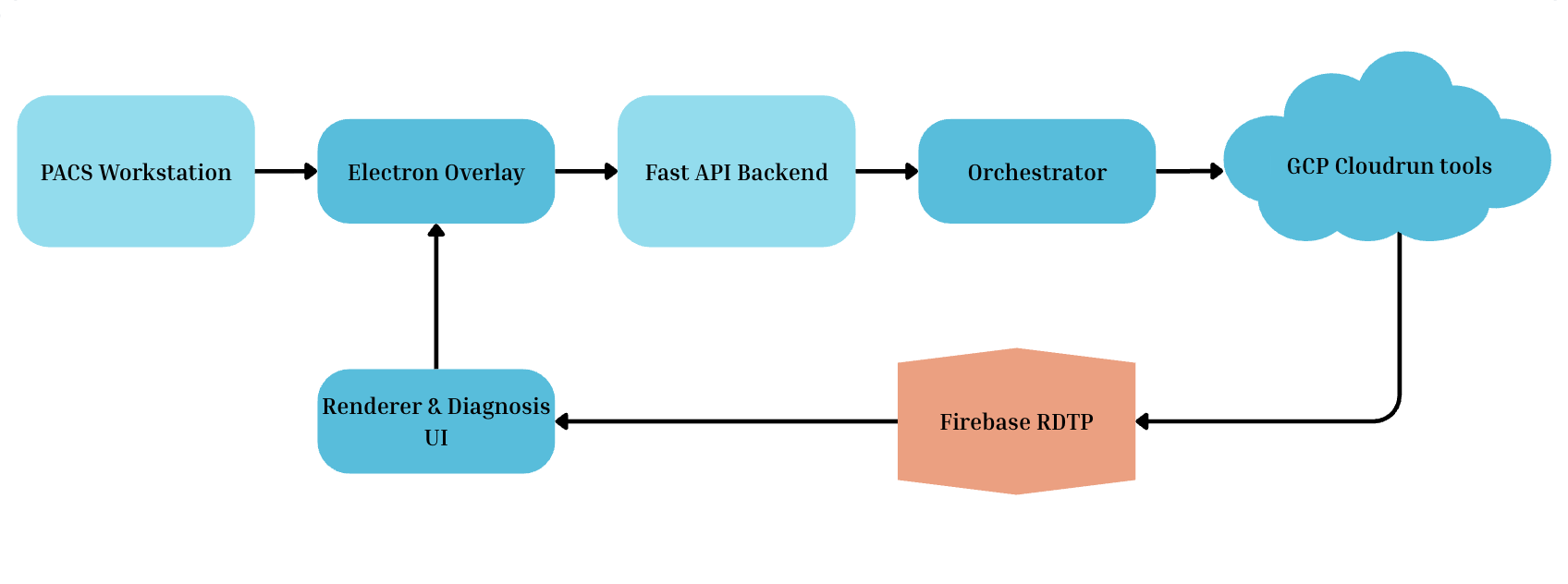
We built ReVU as a full-stack desktop product. The user-facing layer is an Electron app with a React and TypeScript interface designed to fit naturally into radiology workflows. On the backend, we used Python and FastAPI to support orchestration and tool integration. For multimodal reasoning, live interaction, and synthesis, we used Gemini, then connected it to a specialist-model pipeline that triages scans and selects the right submodels dynamically.
A major part of the build was making the experience truly agentic. ReVU doesn't just wait for a static input. It can respond to voice, inspect screen context, decide when to capture visual information, call tools, and reason across multiple sources of context at once. That orchestration layer is what makes the product feel like a real copilot instead of a collection of disconnected models.
Challenges we ran into
The hardest challenge was not just technical, but product and safety related: how do you build an AI system for a high-stakes medical setting without encouraging overreliance? In radiology, "helpful" is not enough. The interaction has to be carefully designed so the radiologist stays in control and the AI adds signal instead of noise.
We also had to rethink our platform choices. We originally started in PyQt, but it became clear it would be difficult to support the live overlay behavior, hotkeys, UI control, and orchestration loop we wanted. Moving to Electron gave us the flexibility to build a smoother, more ambitious desktop experience, but it meant reworking a significant part of the system architecture along the way.
Accomplishments that we're proud of
We're proud that ReVU is not just a model demo. It's a real end-to-end product prototype that combines desktop UX, multimodal AI, live voice interaction, intelligent screenshotting, specialist model routing, and radiology-specific workflow design into one system.
We're especially proud of the philosophy behind it. A lot of medical AI projects focus on automation first. We focused on trust first. ReVU is built to support radiologists as decision-makers, not sideline them. We think that human-centered design choice is what makes the project genuinely valuable.
We're also proud that ReVU feels agentic in a meaningful way. It can observe, ask, answer, inspect the screen, decide when more visual context is needed, and invoke relevant tools and specialist submodels based on what the radiologist is actually looking at.
What we learned
We learned that in healthcare, the hard part is not only building intelligence, but building the right interface between intelligence and human judgment. Accuracy matters, but workflow, timing, trust, and interpretability matter just as much.
We also learned that orchestration is powerful. Specialized models can outperform a one-size-fits-all approach, but only if there is a smart layer above them deciding when to use each one and how to present the results in a way that is actually useful to the clinician.
Most of all, we learned that the best medical AI products won't win by pretending to replace experts. They'll win by making experts safer, faster, and more confident.
What's next for ReVU
The next step for ReVU is deeper integration into real radiology workflows. We want to connect it with PACS and dictation systems, expand the library of specialist models and submodels, and make the orchestration engine even better at deciding what to call and when.
We're also excited to keep improving the live agent itself: making it better at understanding on-screen context, navigating interfaces intelligently, and serving as a real-time assistant during reads. In a lot of ways, we see ReVU as "Cluely for radiologists" - not a meeting copilot, but a live on-screen copilot for clinical work. Instead of helping someone during a sales call, it helps a radiologist during the read itself: seeing what they see, answering questions in real time, and surfacing the right support exactly when it's needed.


Log in or sign up for Devpost to join the conversation.