
Inspiration
Millions of people lose their ability to speak due to conditions like ALS, throat cancer, or injuries. Voice is deeply personal—it's how we express emotions, connect with others, and navigate life. Existing text-to-speech solutions sound robotic and impersonal, making communication feel unnatural. We wanted to give people their voices back so they can express themselves authentically.
What It Does
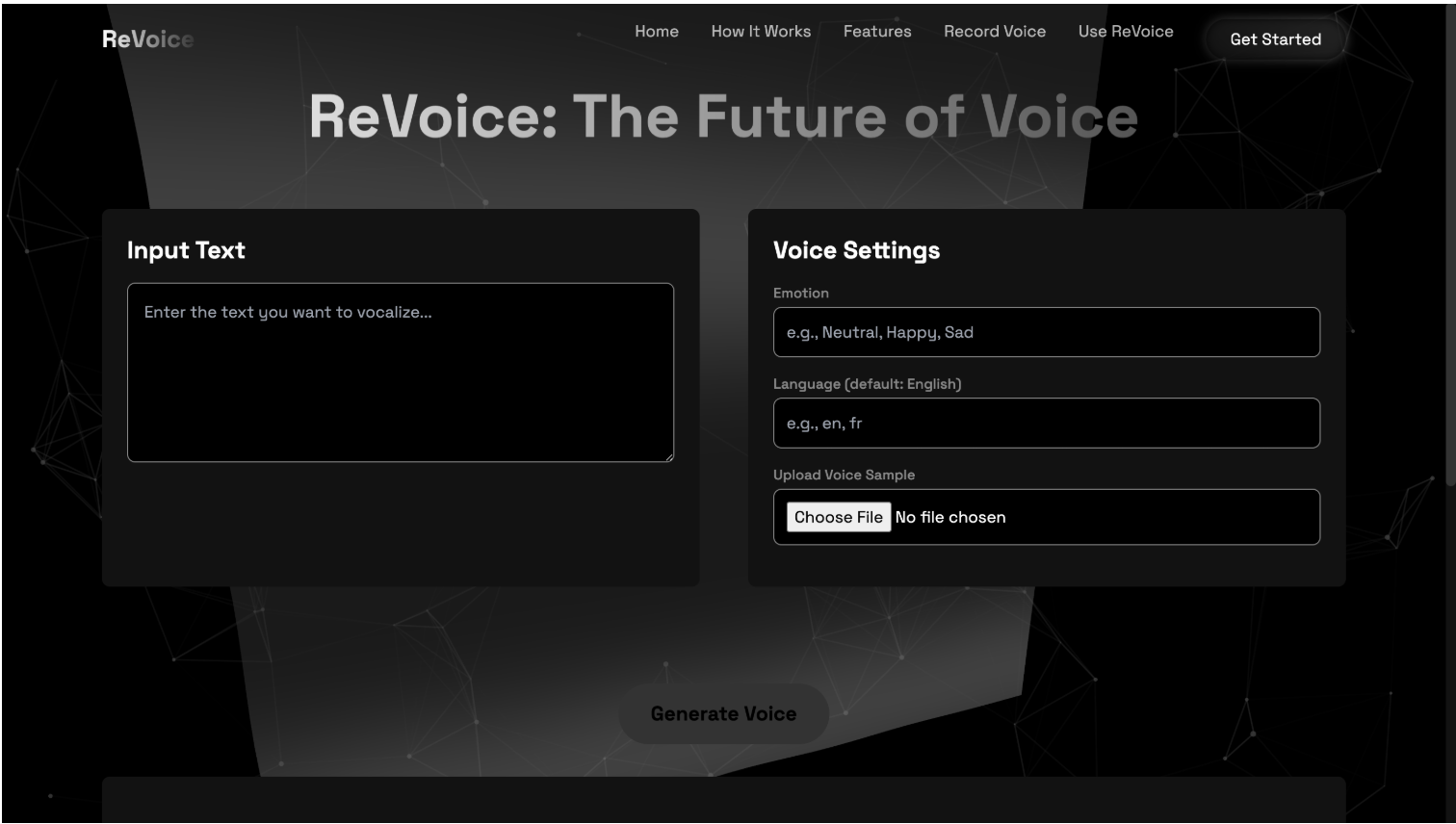
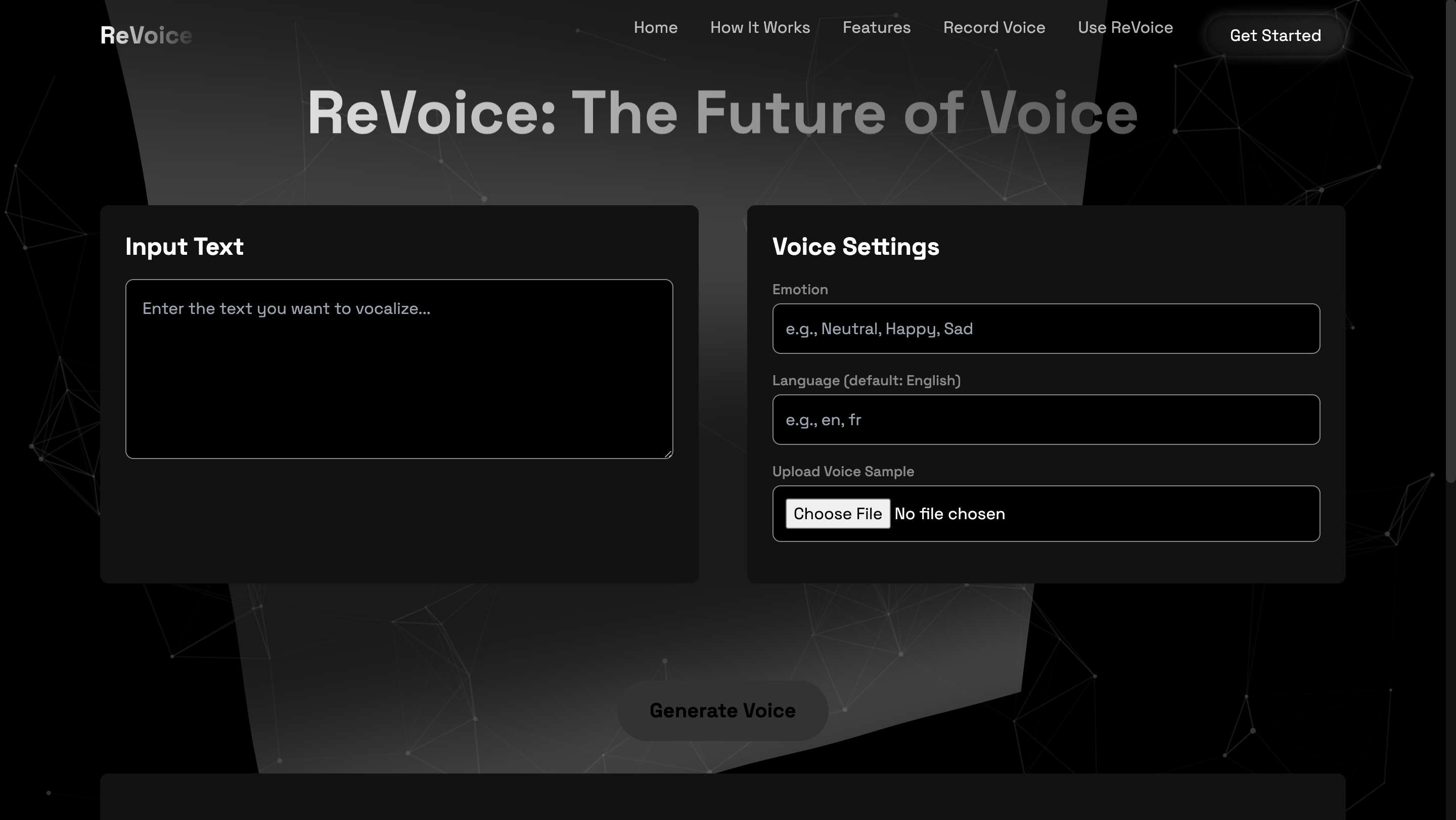
ReVoice recreates a person’s unique voice using AI, trained on old recordings like videos or voice messages. Once trained, users can type messages, and the system generates speech in their own voice, complete with natural emotional tones. Key features include:
- Voice Reconstruction AI: Uses deep learning to restore a person’s natural voice with up to 80% accuracy.
- Emotion Integration: Users can select emotional tones (happy, sad, angry, neutral) for more expressive communication.
- Real-Time Text-to-Speech: Converts typed input into spoken words, allowing natural interactions.
How We Built It
We combined state-of-the-art AI with cloud computing to make ReVoice possible:
- Deep Learning & Speech Synthesis: Used neural networks (Tacotron 2, WaveNet) to train on recorded speech and generate realistic voice outputs.
- NLP & Emotion Modeling: Integrated Natural Language Processing to add emotional nuances to speech.
- Web Interface: Built a user-friendly frontend with React.js, and the backend runs on Flask and FastAPI.
Challenges We Ran Into
- Limited Voice Samples: Many users don’t have hours of recorded speech, so we optimized for smaller datasets.
- Voice Accuracy: Ensuring the reconstructed voice closely matches the original required fine-tuning.
- Natural Sounding Emotions: Making AI-generated speech sound truly expressive rather than artificial was tough.
- Real-Time Processing: Balancing quality with fast response times was a major challenge.
What We Learned
- AI Ethics & Personalization: Voice is deeply personal, so privacy and ethical AI usage are crucial.
- Optimizing AI for Limited Data: We explored data augmentation techniques to improve results with minimal recordings.
- User Feedback Matters: Real-world testing helped refine the emotional tones and improve usability.
What’s Next
- Less Data, More Accuracy: Enhancing the model to work with just a few minutes of recorded speech.
- Multilingual Support: Expanding support for different languages and accents.
- Mobile Integration: Developing a mobile app for accessibility and ease of use.
- Healthcare Partnerships: Collaborating with speech therapists and hospitals to bring ReVoice to those in need.
ReVoice has the potential to revolutionize communication for people with vocal disabilities, giving them back not just their voices, but their identity. 🚀

Log in or sign up for Devpost to join the conversation.