-
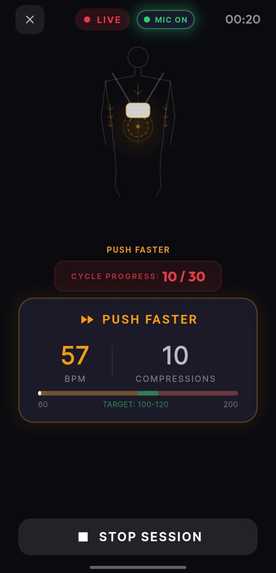
Progress
-
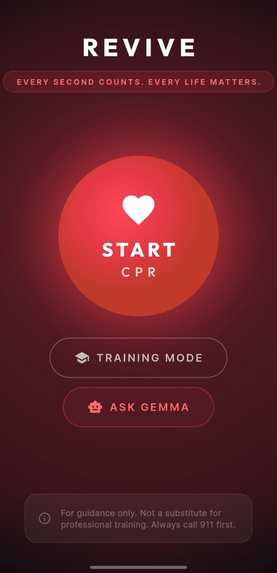
Homepage
-
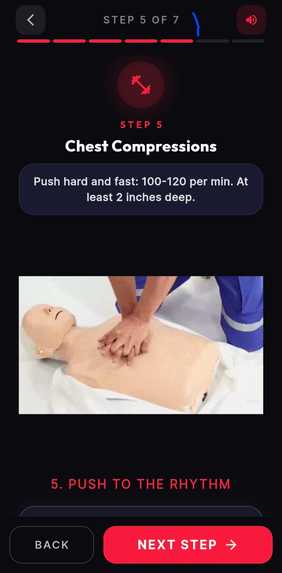
Training
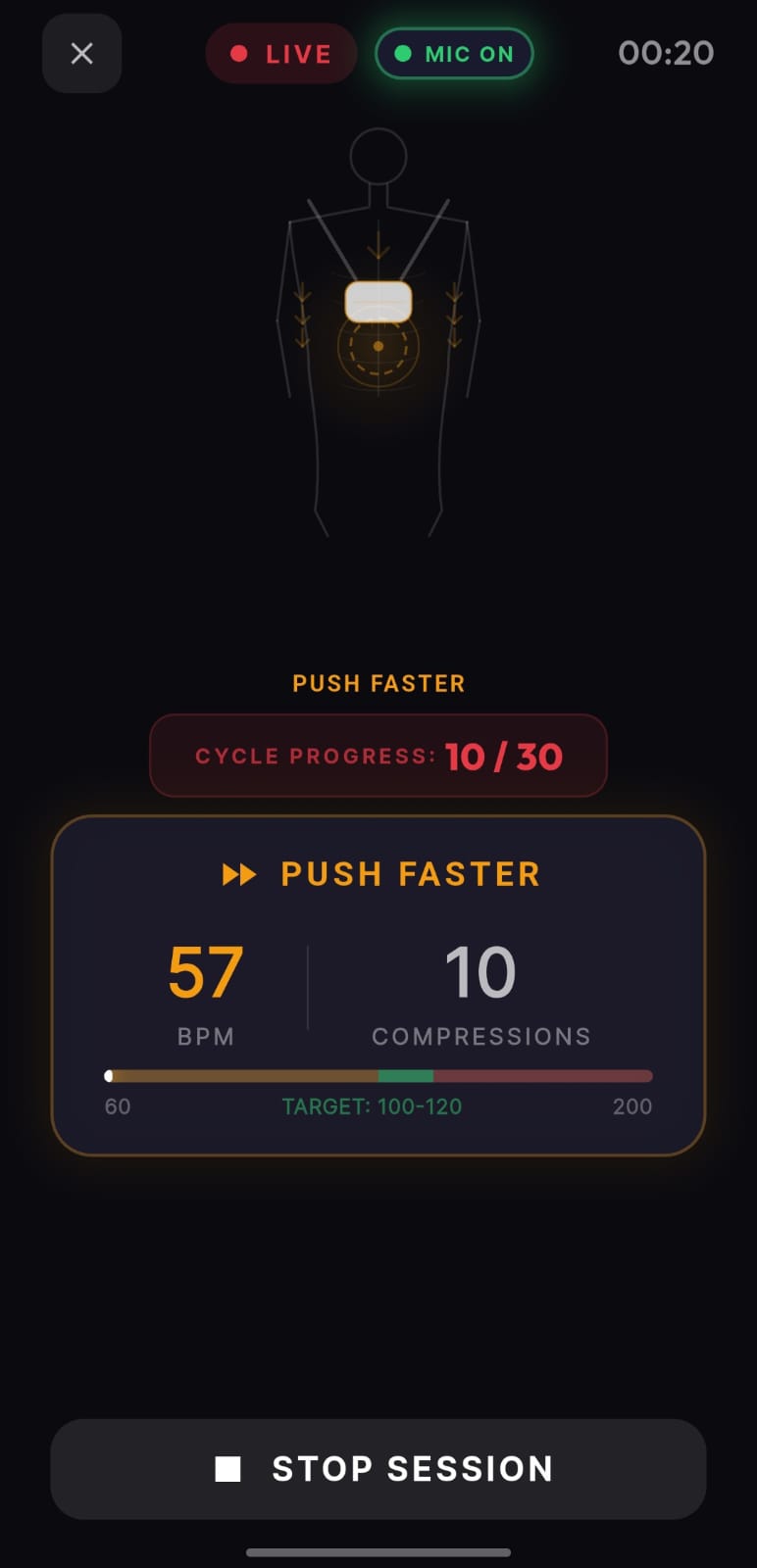
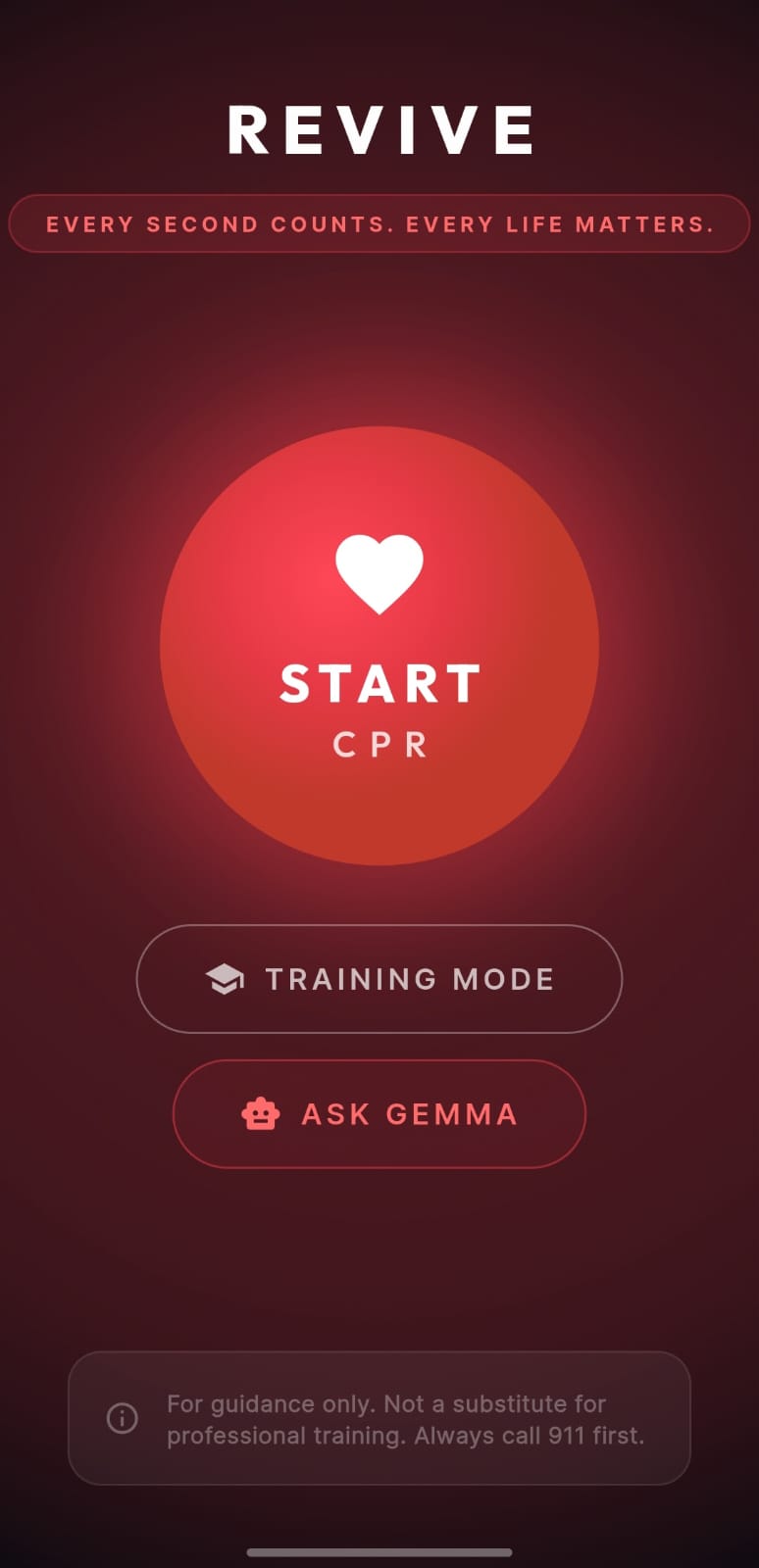
Revive: Edge-AI CPR Coach & Emergency Assistant
Inspiration
Every minute without CPR significantly reduces a cardiac arrest victim's chance of survival. In many emergencies, bystanders hesitate because they lack medical knowledge or panic under pressure. We built Revive to bridge those critical first minutes by providing real-time AI guidance while simultaneously coordinating emergency communication. Our goal is to transform any smartphone into an intelligent emergency assistant that helps save lives when every second matters.
What it does
Revive is an AI-powered emergency response agent that combines on-device intelligence with multi-channel communication.
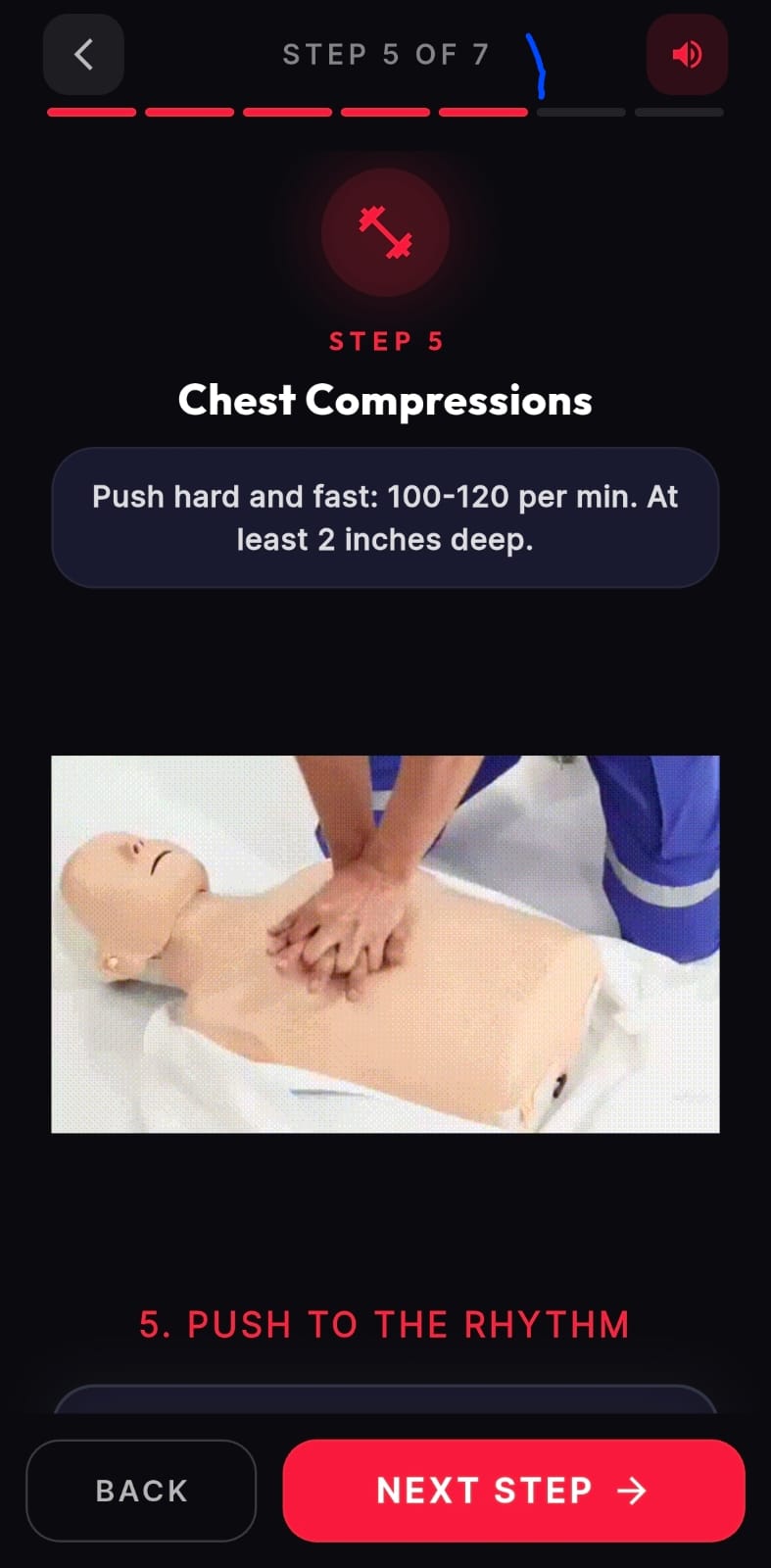
The application guides users through CPR using real-time voice assistance, monitors chest compressions using smartphone sensors, and provides instant feedback to maintain the recommended compression rate of 100–120 BPM.
Using the Caspian SDK, Revive extends beyond being a CPR coach. When an emergency is detected, a single AI handler can notify emergency contacts, responders, or hospitals across multiple communication channels such as WhatsApp, Telegram, and Email, ensuring critical information reaches the right people immediately.
How we built it
Revive is built using Flutter for a responsive mobile experience and integrates the Gemma 4 model running locally through Ollama for private, low-latency AI inference.
The application continuously processes accelerometer data at 50Hz to detect and count chest compressions while monitoring compression rhythm in real time.
Speech-to-Text and Text-to-Speech pipelines enable hands-free interaction, allowing users to receive CPR guidance without interrupting compressions.
For this hackathon, we integrated the Caspian SDK to provide a unified communication layer. Instead of managing separate implementations for every platform, a single AI handler communicates seamlessly across WhatsApp, Telegram, and Email during emergencies.
Challenges we ran into
Building a system for emergency situations required balancing speed, reliability, and usability.
Some of the biggest challenges included:
- Maintaining accurate compression detection using noisy smartphone sensor data.
- Designing a continuous voice interaction system without introducing latency.
- Running an advanced AI model locally while maintaining smooth mobile performance.
- Integrating multi-channel communication through a unified Caspian handler while ensuring fast emergency notifications.
Accomplishments that we're proud of
- Built a fully local AI-powered CPR assistant.
- Achieved real-time compression monitoring with immediate visual feedback.
- Developed a hands-free emergency guidance system using voice interaction.
- Integrated Caspian to enable one AI agent to communicate across multiple channels from a single handler.
- Created a privacy-first architecture that continues working even without reliable internet connectivity.
What we learned
Developing Revive showed us that AI is most impactful when it augments people during high-stress situations rather than replacing them. We also learned the importance of edge AI, real-time sensor processing, and unified communication systems for building reliable emergency applications.
What's next for Revive
Our vision is to evolve Revive into a complete emergency response platform.
Future plans include:
- Automatic emergency detection using wearable devices.
- Live location sharing with emergency responders.
- Integration with AED locator services.
- Volunteer responder networks.
- Multilingual emergency guidance.
- Smartwatch support for faster emergency detection.
- AI-powered post-emergency incident reporting and hospital coordination.
Every second counts. Every life matters.


Log in or sign up for Devpost to join the conversation.