-
"Revision Rocket, the AI exam prep portal."
-
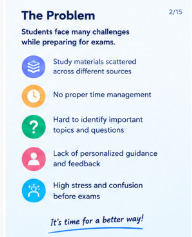
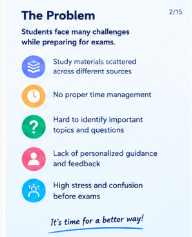
"Students struggle with scattered resources, no clear plan, and difficulty identifying important questions and time management.
-
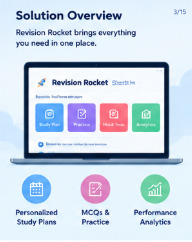
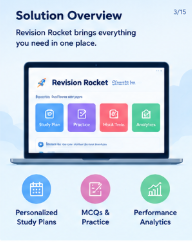
"Revision Rocket helps students plan study time, focus on important topics, practice previous questions, take mock tests.
-
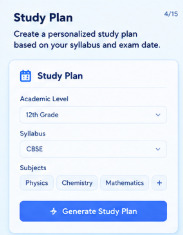
"BLR plan sets study schedules, highlights key topics, and provides practice tests with quick feedback to help improve."
-
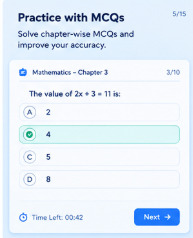
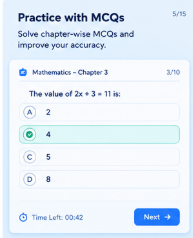
Practice with MCQs and check answers instantly to spot weak areas."
-
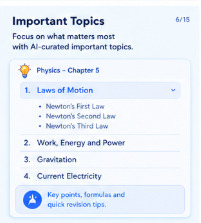
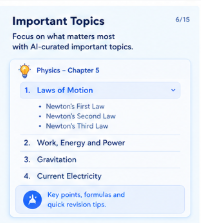
"Important topics by chapter with brief notes to focus study time."
-
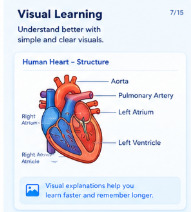
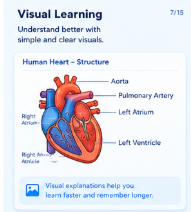
"Visual learning uses images and simple graphics to explain key concepts more clearly."
-
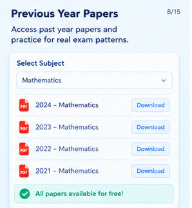
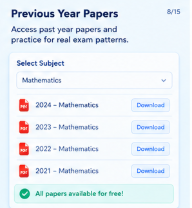
"Previous year papers are organized by subject and year, making it easy to review question patterns without guaranteeing repeats."
-
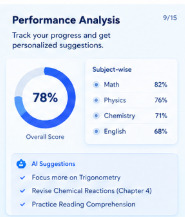
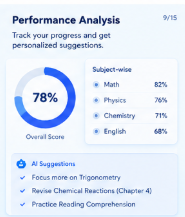
"Performance analytics summarizes test results and highlights weak topics to guide the next study steps."
-
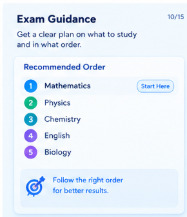
"Exam guidelines show key rules and time tips to avoid mistakes."
-
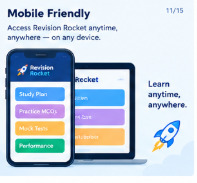
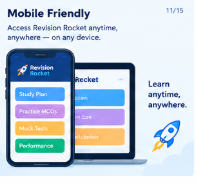
"Mobile friendly design lets students study and practice smoothly on phones."
-
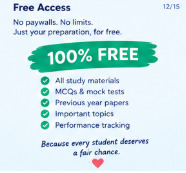
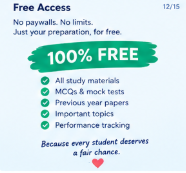
"Free access ensures essential study resources are available to all learners."
-
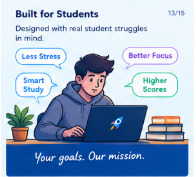
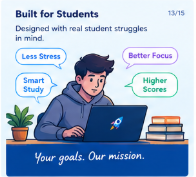
"Built for students focuses on simple language, clean layouts, and helpful guidance for different subjects and grade levels."
-
Vision "Our vision is stress-free exam prep where every student knows what to study and how to improve."
-
"Thank you"
1. Inspiration
The inspiration behind Revision Rocket comes from my personal experiences as a student and my observations of the challenges students face throughout their academic journey. During my childhood and school years, I realized that not every student has access to the same learning opportunities. Some students can afford private tuition, additional study materials, and personal guidance, while others must depend entirely on classroom teaching and their own efforts. When financial circumstances make extra academic support difficult to access, students may have to find their own ways to understand lessons, prepare for examinations, and improve their performance. I also observed that students learn differently. Some students understand a concept immediately when a teacher explains it, while others need additional examples, visual explanations, repeated practice, or more time to understand the same concept. However, in a classroom with many students, providing individual attention to everyone can be challenging. When students do not understand a lesson during class, they may hesitate to ask questions because they fear being judged by their classmates or teachers. Some turn to YouTube, search for explanations online, read textbooks repeatedly, or try different methods until they understand the concept. Although these resources can be helpful, finding the right explanation and identifying what to study next can take considerable time and effort. I began thinking about these problems more deeply, particularly when I considered the pressure students experience before examinations. Students are often expected to complete multiple subjects and chapters within a limited period. They must decide which topics deserve more attention, revise important concepts, practise questions, manage their time, and prepare themselves to write examinations confidently. Many students spend hours studying without knowing whether they are focusing on the right topics. Others repeatedly practise questions but struggle to identify their weak areas. Some students have access to previous-year question papers, while others find it difficult to locate reliable study materials in one place. These observations inspired me to think about a simple but meaningful question: What if students could access the tools they need to prepare for examinations, understand their weaknesses, and improve their performance through a single, intelligent learning platform? That question became the foundation of Revision Rocket. My vision is to develop a platform that makes exam preparation more organized, accessible, personalized, and effective. Rather than forcing students to move between multiple websites, books, question papers, and practice tools, Revision Rocket aims to bring essential examination preparation resources together in one place.
- The Problem I Want to Solve Examinations are an important part of academic life, but preparing for them can be stressful and confusing. Students may struggle with several connected problems:
- Lack of personalized study guidance: Students often do not know which subject or chapter they should study first.
- Difficulty identifying important topics: Understanding chapter weightage and prioritizing topics can be challenging.
- Scattered learning resources: Notes, previous-year question papers, practice questions, and explanations may be available across different sources.
- Limited examination practice: Students may not have enough opportunities to practise under realistic examination conditions.
- Poor time management: Students can struggle to divide their preparation time between subjects and complete examinations within the allotted time.
- Difficulty identifying weaknesses: A test score alone does not always explain which concepts a student needs to improve.
- Different learning needs: Students may require different explanations, practice methods, and revision schedules.
- Limited access to additional academic support: Not every student can afford private tuition or other paid learning resources. These problems are interconnected. A student who does not understand a concept may lose marks in an examination. If the student cannot identify the underlying weakness, the same problem may continue in subsequent tests. I want Revision Rocket to address this wider preparation journey instead of focusing on only one part of studying.
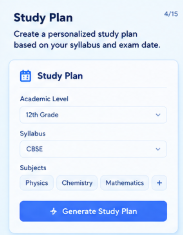
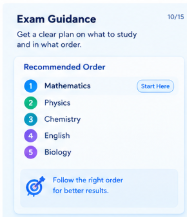
- What Revision Rocket Aims to Do Revision Rocket is an AI-powered examination preparation platform designed to help students organize their studies, practise effectively, understand their performance, and make better decisions about their next steps. The platform aims to support multiple academic levels and subjects, with relevant syllabuses and academic resources provided for each supported curriculum. Its main experience will be organized around three connected stages. Stage 1: Study Smart The first stage helps students understand what they need to study and how to organize their preparation. Students will be able to select their academic level, syllabus or curriculum, subjects, and relevant examination details. Based on the information and verified academic resources available, the platform aims to provide:
- Personalized study timetables based on examination dates and available preparation time.
- Chapter-wise syllabus organization.
- Important topics and concepts for revision.
- Chapter weightage where reliable information is available.
- Important definitions, key sentences, formulas, grammar points, and other subject-specific learning material.
- Topic-wise questions with answers.
- Concise explanations to make revision easier.
- Relevant illustrations and visual learning aids where appropriate.
- Access to available previous-year question papers. The goal is to reduce the confusion students experience when deciding where to begin and help them use their preparation time more effectively. Stage 2: Practise Smart Understanding a topic is only one part of examination preparation. Students also need opportunities to apply what they have learned. Revision Rocket aims to provide a dedicated practice environment where students can test their knowledge before sitting for their actual examinations. Planned features include:
- Topic-wise multiple-choice questions.
- Chapter-wise quizzes.
- Subject-wise practice tests.
- Important questions with answers.
- Previous-year questions where reliable papers are available.
- Timed mock examinations.
- Examination-style practice sessions.
- Automatic scoring for supported question types.
- Results that help students understand their current performance. For example, a student preparing for a mathematics examination could practise questions from a particular chapter, take a timed test, review the results, and identify the concepts that require additional attention. Similarly, students studying languages could practise relevant grammar, comprehension, paragraph writing, letter writing, and other syllabus-specific question types. The platform should adapt its question formats and learning resources to the selected subject rather than treating every subject in the same way. Stage 3: Improve Smart The third stage is where I want artificial intelligence to make a meaningful difference. Students often receive marks after an examination, but marks alone do not necessarily tell them how to improve. A student may know the score but still be unsure about which concepts caused mistakes or how to prepare differently for the next test. Revision Rocket aims to analyse available assessment results, question-level performance, and topic-wise weaknesses to generate useful recommendations. For example, if a student performs well in algebra but struggles with geometry, the system could recommend additional geometry practice, revision of the relevant concepts, and a follow-up assessment. The platform could also help students understand:
- Which topics they have answered correctly and incorrectly.
- Which areas require additional revision.
- How their performance changes across assessments.
- Which subjects or chapters deserve more study time.
- What they should practise next.
- Whether their performance is improving over time. Where sufficient assessment data is available, the AI could use these results to recommend a more suitable revision schedule. The objective is not simply to tell students that their marks are low or high. It is to help them understand why they may be struggling and what practical steps they can take to improve.
- Why Artificial Intelligence Matters I do not want Revision Rocket to be merely a website containing question papers, notes, and quizzes. I want AI to help students make better use of those resources. The planned AI capabilities include personalized study recommendations, analysis of assessment results, identification of learning gaps, and guidance on what to revise next. For example, two students might receive the same score in a mock examination but make completely different mistakes. One student might struggle with basic concepts, while another might understand the concepts but lose marks because of poor time management. A useful system should not automatically give both students the same recommendation. Instead, Revision Rocket aims to use the available performance data to identify their different needs and recommend appropriate next steps. AI-generated academic explanations and answers must also be checked for accuracy. Previous-year questions, chapter weightage, and claims about repeated questions should be based on reliable academic sources rather than unsupported predictions. AI should support students' learning decisions, not mislead them with guarantees about what will appear in an examination.
- Accessibility and Affordability One of the most important motivations behind Revision Rocket is the belief that students should have better opportunities to prepare for examinations regardless of their financial circumstances. Not every student can pay for private tuition, expensive courses, or multiple educational subscriptions. Therefore, I want Revision Rocket to prioritize free access to its essential study and practice features, subject to the resources and operating costs required to run the platform. The vision is to provide a convenient place where students can access available learning resources, practise questions, review their performance, and receive useful study recommendations. The platform should also be designed with a simple interface so that students can understand how to use it without needing extensive technical knowledge. My goal is to make effective examination preparation more accessible and help students use their time and available resources wisely.
- How I Plan to Build Revision Rocket I plan to develop Revision Rocket as a student-friendly digital platform that combines an accessible interface, organized academic resources, interactive assessments, and AI-assisted performance analysis. The development process will involve several important components:
- Student setup: Allow students to select their academic level, syllabus, subjects, and examination details.
- Academic content organization: Structure available syllabuses, chapters, topics, questions, answers, and previous-year papers.
- Study planning: Generate revision schedules based on examination dates, available time, and student priorities.
- Practice system: Provide topic-wise quizzes, MCQs, and timed assessments.
- Performance tracking: Record assessment results and identify areas that need improvement.
- AI recommendations: Use the available results to recommend suitable topics, exercises, and revision activities.
- Progress monitoring: Help students compare assessment results and understand their development over time. The platform will need reliable academic content, an appropriate technology stack, and careful testing to ensure that its recommendations are useful. I also recognize that supporting multiple academic levels, subjects, and syllabuses is a substantial challenge. The system must distinguish between curricula and question formats rather than assuming that the same content applies to every student. The long-term goal is broad subject and curriculum coverage, developed through a structured approach that can expand as the platform grows.
- Challenges I Anticipate Building Revision Rocket presents several challenges. First, collecting and organizing accurate academic resources across different subjects and syllabuses will require careful work. The quality of the recommendations will depend partly on the quality of the information available to the system. Second, identifying important topics and repeated questions requires reliable historical examination data. The platform must not present uncertain predictions as guaranteed examination questions. Third, analysing student performance requires more than calculating a percentage. The system should interpret question-level results where possible and distinguish between different types of learning difficulties. Fourth, designing a simple interface for students across different academic levels requires careful consideration. Younger students, school students, and college students may have different needs and expectations. Finally, combining study planning, academic resources, mock examinations, and AI-assisted recommendations into one platform requires a well-organized architecture and thorough testing. I intend to approach these challenges by prioritizing reliable content, modular development, understandable recommendations, and a student-focused design.
- What I Hope to Learn Through Revision Rocket, I hope to gain practical experience in developing an AI-powered educational application. I want to learn how to combine software development, artificial intelligence, academic content management, assessment systems, and user experience design to solve a real-world problem. I also want to understand how assessment data can be used responsibly to identify learning gaps and recommend personalized improvement strategies. Beyond the technical aspects, this project will help me develop problem-solving skills, evaluate the needs of different users, make design decisions, test assumptions, and improve a product based on feedback. I understand that an idea alone is not enough. Building a useful solution requires research, implementation, testing, and continuous improvement. Revision Rocket gives me an opportunity to turn a problem I understand into a practical technological solution.
- My Vision for Revision Rocket My vision is to create a learning platform that helps students prepare for examinations with greater clarity, confidence, and direction. I want students to spend less time feeling confused about what to study and more time understanding concepts, practising questions, and improving their performance. I want them to have a clearer picture of their strengths and weaknesses, a practical plan for their preparation, and useful guidance on what to do next. Most importantly, I want Revision Rocket to reflect a simple belief: students may have different learning needs, different financial circumstances, and different starting points, but every student deserves an opportunity to learn and improve. Revision Rocket aims to transform examination preparation from a confusing and stressful process into a more organized, personalized, and measurable learning journey. My ultimate goal is not to promise that every student will achieve top marks. It is to build a tool that helps students understand their learning needs, prepare more strategically, and make continuous progress toward their academic goals. Inspiration
What it does
How we built it
Challenges we ran into
Accomplishments that we're proud of
What we learned
What's next for "Revision Rocket: AI-Powered Exam Preparation"
Built With
- alllanguage
- openai-api-if-integrated
- or-react
- python
- supabase


Log in or sign up for Devpost to join the conversation.