Inspiration
The inspiration for the project stemmed from the challenges faced by businesses in accurately predicting and optimizing their revenue streams. Traditional methods often fell short in capturing complex patterns and dynamics in data, leading to suboptimal decision-making and missed opportunities. Recognizing the transformative potential of machine learning, we sought to develop a solution that could leverage advanced algorithms to uncover hidden insights and forecast future revenue trends with unprecedented accuracy. By harnessing the power of data-driven analytics, our aim was to empower businesses to proactively manage their revenue streams, mitigate risks, and drive sustainable growth in an ever-evolving market landscape.
What it does
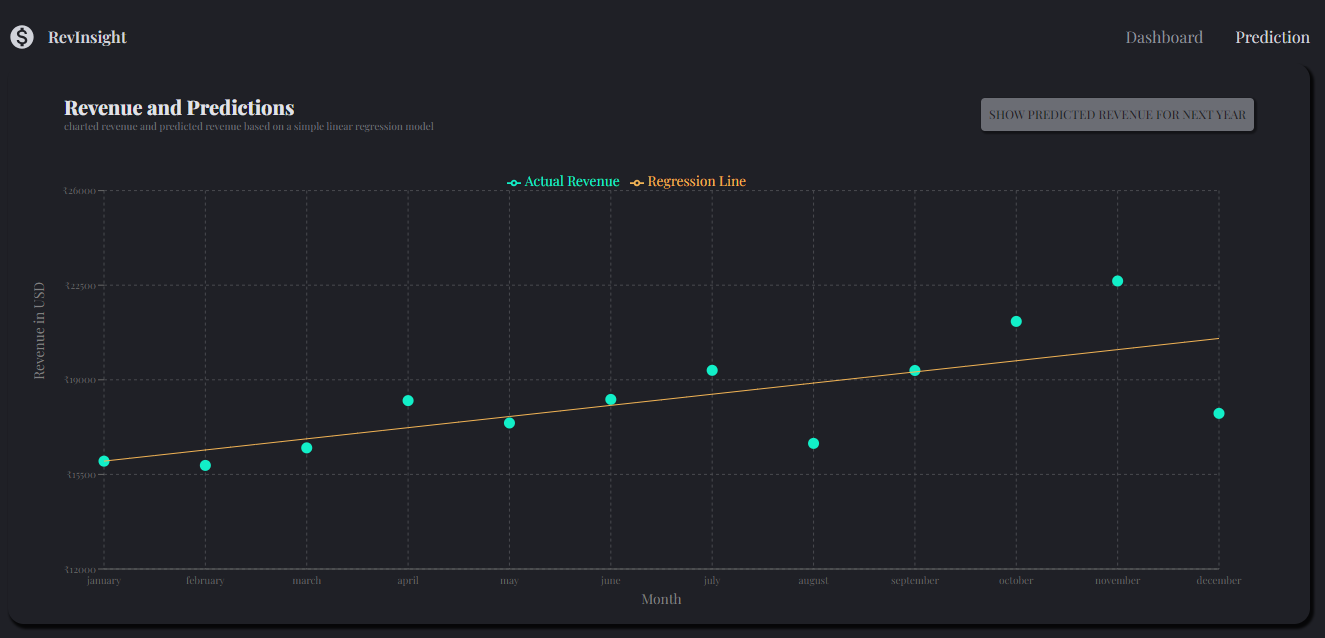
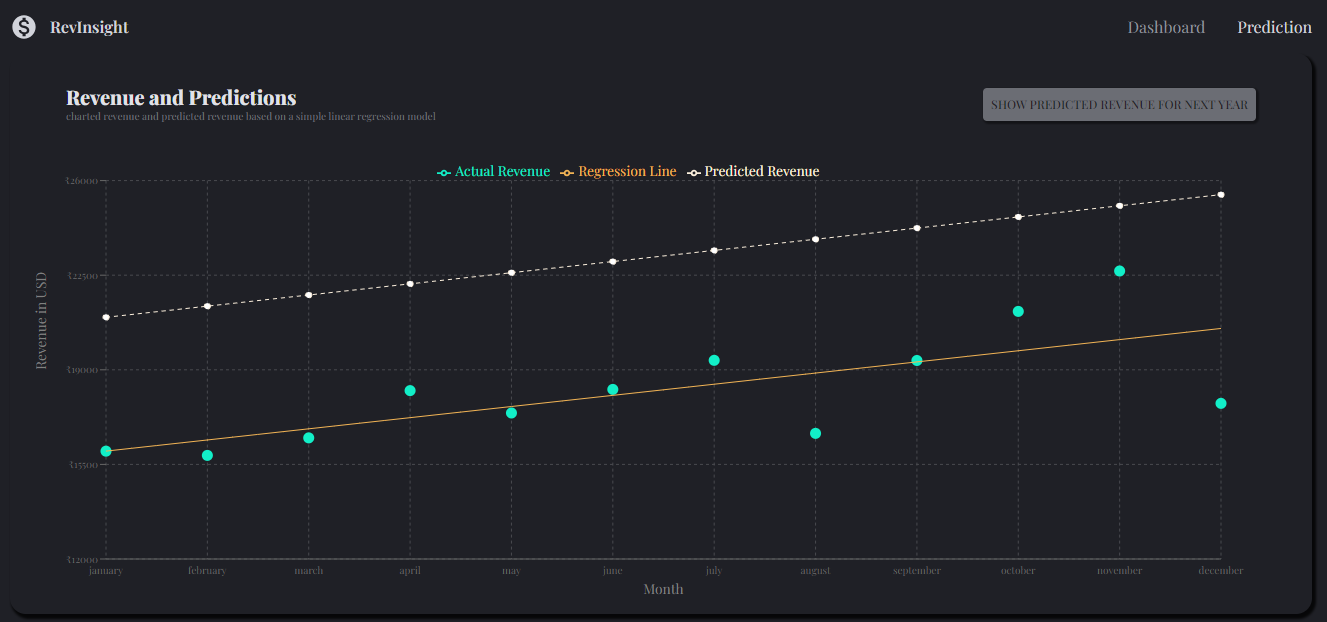
Analyzing vast amounts of data, my system provides invaluable insights into revenue trends, identifying patterns and correlations that may otherwise go unnoticed. With advanced predictive algorithms, we forecast future revenue streams with remarkable accuracy, empowering businesses to make informed decisions and optimize their financial strategies. Stay ahead of the curve and unlock the potential of your revenue with our intelligent machine learning solution.
How I built it
To build the project for revenue insights and prediction using machine learning, following steps were used: Define Objectives: Clearly outline the goals of the project, such as predicting future revenue trends, identifying key factors impacting revenue, and providing actionable insights for decision-making.
Data Collection: Gather relevant data sources such as sales records, customer demographics, marketing campaigns, economic indicators, and any other information that may influence revenue.
Data Preprocessing: Clean the data to handle missing values, outliers, and inconsistencies. Transform and preprocess the data into a format suitable for machine learning algorithms.
Feature Engineering: Extract meaningful features from the data that may impact revenue, such as seasonality, customer behavior, pricing strategies, and market trends.
Model Selection: Choose appropriate machine learning algorithms for revenue prediction, such as linear regression, decision trees, random forests, or more advanced techniques like gradient boosting or neural networks.I have used linear regression for predicting the revenue.
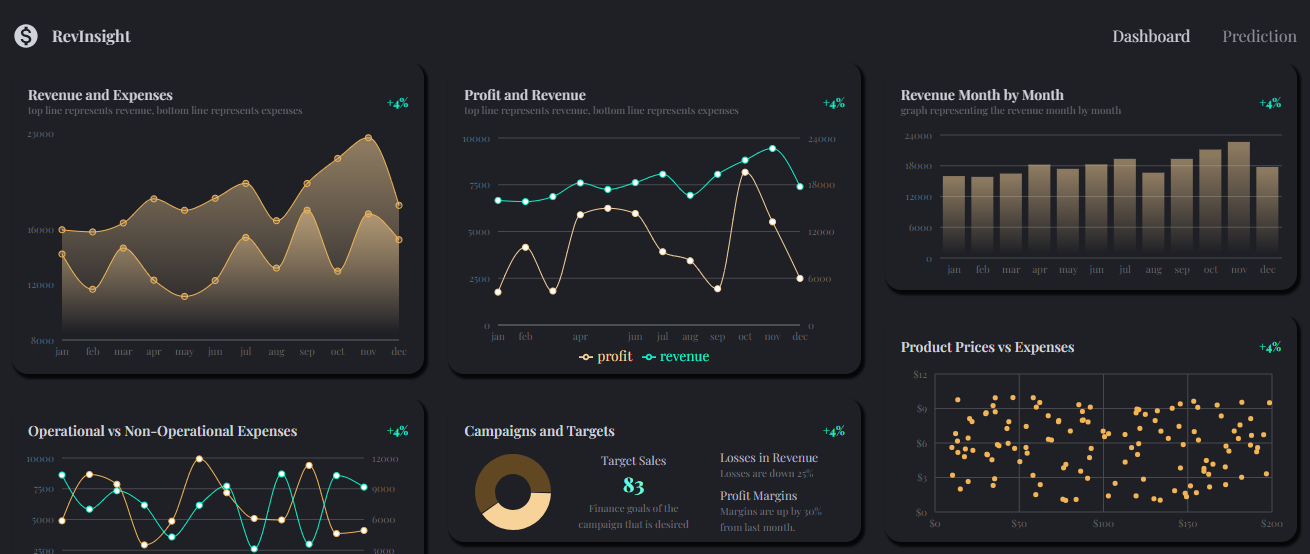
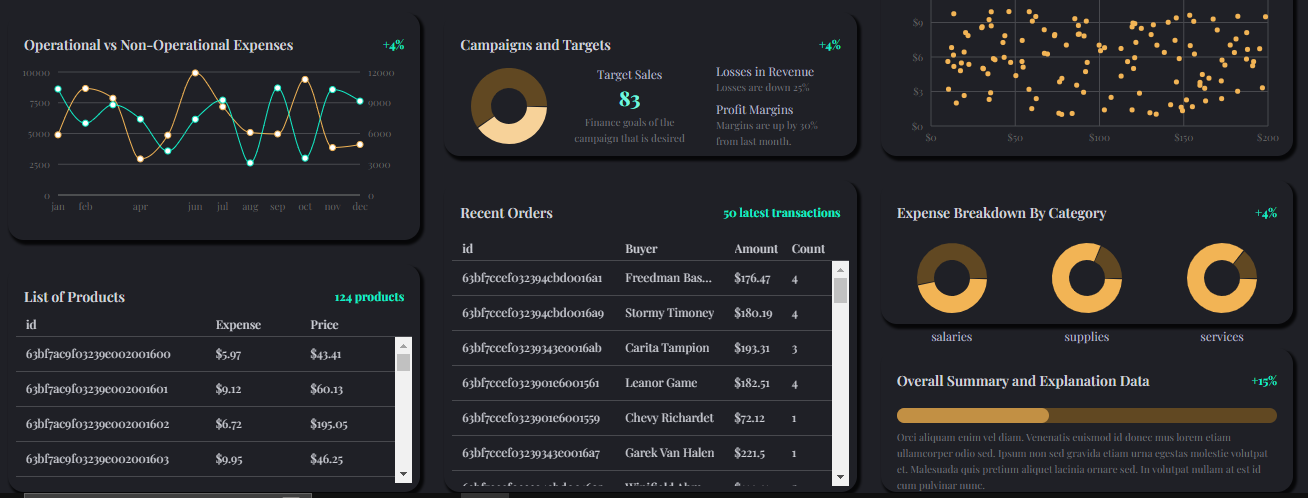
Insights Generation: Analyze model predictions and interpret feature importance to extract actionable insights for revenue optimization. Visualize key findings using charts, graphs, and dashboards for better understanding.
Deployment: Deploy the trained machine learning models into a production environment where they can generate real-time revenue predictions and insights for stakeholders.
Challenges I ran into
I faced several challenges building a project for revenue insights and prediction using machine learning . Some of the key challenges you may encounter include:
Data Quality: Obtaining high-quality data can be challenging due to issues such as missing values, outliers, inconsistencies, and inaccuracies. Ensuring data cleanliness and reliability is crucial for accurate predictions.
Feature Selection: Identifying relevant features that impact revenue and extracting meaningful insights from the data can be complex. Feature engineering requires domain knowledge and experimentation to determine the most predictive variables.
Model Selection: Choosing the right machine learning algorithms and techniques for revenue prediction involves experimentation and evaluation of various models. Selecting models that can handle nonlinear relationships and complex patterns in the data is essential for accurate predictions.
Scalability: Handling large volumes of data and scaling machine learning algorithms to accommodate increasing data sizes can be challenging. Distributed computing frameworks and optimization techniques are often required to scale models efficiently.
Interpretability: Interpreting machine learning models and explaining their predictions to stakeholders, especially in complex models like neural networks, can be challenging. Ensuring model transparency and interpretability is important for gaining trust and buy-in from decision-makers.
Deployment and Integration: Deploying machine learning models into production environments and integrating them with existing systems and workflows can pose technical challenges. Ensuring seamless deployment, scalability, and maintainability are critical for successful implementation.
Business Alignment: Aligning the project with business objectives and ensuring that the insights generated are actionable and valuable to stakeholders can be challenging. Effective communication and collaboration between data scientists and business stakeholders are necessary to address this challenge.
Accomplishments that I am proud of
Reflecting on the accomplishments of my project for revenue insights and prediction using machine learning, several achievements may stand out:
Accuracy Improvements: Successfully improving the accuracy of revenue predictions over time through iterative model refinement and feature engineering. Achieving higher accuracy levels indicates the effectiveness of your approach in capturing relevant factors influencing revenue.
Actionable Insights: Generating actionable insights that have directly contributed to revenue optimization and informed strategic decision-making within the organization. These insights may have led to the implementation of targeted marketing campaigns, pricing adjustments, or operational improvements resulting in tangible revenue gains.
Scalability and Efficiency: Designing a scalable and efficient solution capable of handling large volumes of data and delivering real-time predictions. The ability to scale the solution to meet growing business needs demonstrates your technical prowess and foresight in anticipating future demands.
Cross-functional Collaboration: Fostering effective collaboration between data scientists, domain experts, and business stakeholders throughout the project lifecycle. Building strong relationships and aligning diverse perspectives has been instrumental in driving project success and maximizing the impact of your insights.
Deployment Success: Successfully deploying machine learning models into production environments and integrating them with existing systems and workflows. Achieving seamless deployment and adoption demonstrates your ability to bridge the gap between research and practical implementation, delivering value to the organization.
Recognition and Adoption: Receiving recognition from leadership and peers for the innovation and impact of your project. The widespread adoption of your insights and recommendations across the organization validates the significance of your contributions and underscores your value as a data-driven decision-maker.
Continuous Improvement: Demonstrating a commitment to continuous improvement by monitoring model performance, incorporating feedback, and iteratively enhancing the solution over time. Your dedication to refining the project demonstrates a growth mindset and ensures its long-term relevance and effectiveness.
Regulatory Compliance: Ensuring compliance with relevant data privacy regulations and industry standards throughout the project lifecycle. Adhering to legal and ethical considerations safeguards sensitive information and maintains trust with stakeholders, reflecting your commitment to responsible data practices.
Positive Business Impact: Quantifying the positive impact of your project on key business metrics such as revenue growth, customer retention, or profitability. Demonstrating concrete business outcomes reinforces the value of your work and highlights your contribution to the organization's success.
Personal Growth: Recognizing your personal growth and development throughout the project, acquiring new skills, overcoming challenges, and expanding your expertise in machine learning, data analytics, and business strategy. Your journey of learning and discovery is an accomplishment in itself, positioning you for future success in your career endeavors.
What i learned
Few things i learned from the project are as follows: Scalability and Efficiency: Designing a scalable and efficient solution capable of handling large volumes of data and delivering real-time predictions. The ability to scale the solution to meet growing business needs demonstrates your technical prowess and foresight in anticipating future demands.
Cross-functional Collaboration: Fostering effective collaboration between data scientists, domain experts, and business stakeholders throughout the project lifecycle. Building strong relationships and aligning diverse perspectives has been instrumental in driving project success and maximizing the impact of your insights.
Interpretability: Interpreting machine learning models and explaining their predictions to stakeholders, especially in complex models like neural networks, can be challenging. Ensuring model transparency and interpretability is important for gaining trust and buy-in from decision-makers.
Deployment and Integration: Deploying machine learning models into production environments and integrating them with existing systems and workflows can pose technical challenges. Ensuring seamless deployment, scalability, and maintainability are critical for successful implementation.
What's next for Revinsight
This project currently has a mockdata set avaliable online , it can be extended to give insights and predictions on revenue by taking inputs and information from the user itself . Can make a proper user creation and authentication for it .Keeping subscription model as per the usability of the site. We can also build it as a proper application by using Android rather than keeping it a web app only.
Built With
- express.js
- linear-regression
- machine-learning
- material-ui
- mongodb
- node.js
- react
- recharts
- redux
- typescript
- vite


Log in or sign up for Devpost to join the conversation.