Inspiration
The whole theme of this hackathon is to 'Save the World'. We believed that achieving that goal begins with a small step in the right direction, so we initially brainstormed ways to benefit local businesses in our area. Eventually, we came upon the idea of helping restaurants sift through and process the numerous reviews they receive via a large language model.
What it does
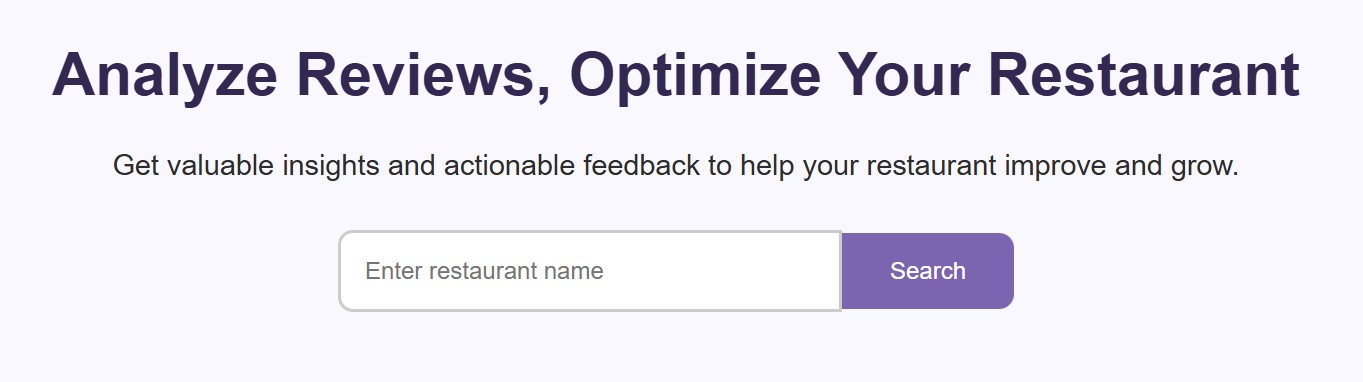
Users input the name of their restaurant into our app. Then, the app retrieves the related reviews associated with the restaurant and passes that information into a large language model. The model analyzes the sentiment of the reviews and returns a thorough list of recommendations for improvement to the user.
How we built it
Initially, we found a large 300,000-entry dataset from Yelp and filtered it down. We developed a backend server to store our filtered dataset, which consists of a list of restaurants and their related reviews. When a call comes in, the server parses through the dataset and finds the corresponding information. The API call to the large language model was also completed here. Then, a frontend was developed to pass requests from the user to the backend.
Challenges we ran into
Our original plan was to summarize public reviews sourced by web scraping from Yelp. However, due to time constraints and issues with the necessary APIs costing money, we were forced to pivot to manually reaping review data from a public dataset released by Yelp. Although this method of sourcing data is not as up-to-date as scraping data directly, it was still sufficient for this hackathon. As we worked on processing the JSON dataset, a challenge arose from this approach. The sheer size of the dataset made processing the data difficult, given our limited computational resources.
Accomplishments that we're proud of
We were ultimately successful in parsing through the entries of the dataset. Our project also came out better than we had originally hoped.
What we learned
Due to conflicts in scheduling and prior obligations, much of the team's work was completed asynchronously from each other. Nonetheless, we completed this project and gained experience working on a codebase in a nonconcurrent environment.
What's next for ReviewByte
The next step for ReviewByte would be to develop the quality of feedback returned by the large language model. An avenue for this could possibly be ensemble learning, where multiple models are specifically trained in a certain domain or aspect of restaurant service (customer service, quality control, atmosphere), and then consolidated into a larger model. This approach returns a higher quality of review processing by the model.
Built With
- api
- css
- dataset
- express.js
- gemini
- html
- javascript
- node.js
- react.js


Log in or sign up for Devpost to join the conversation.