-
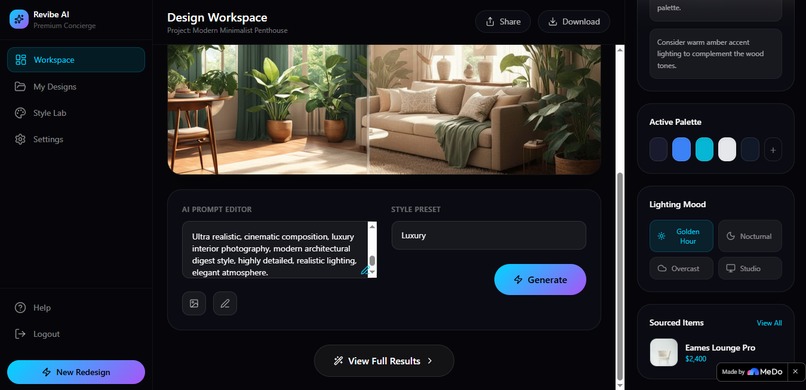
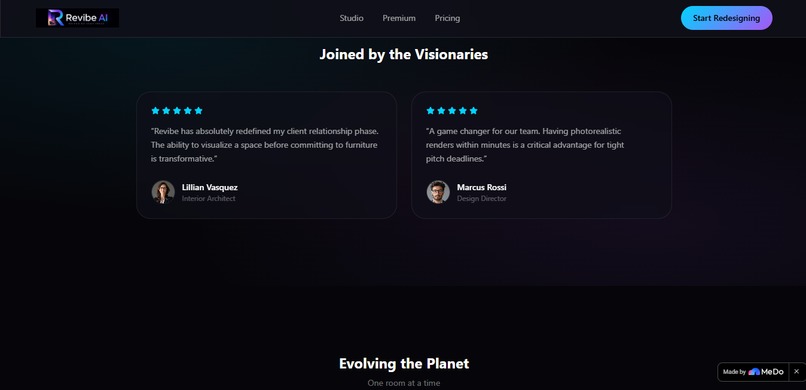
Dashboard 1
-
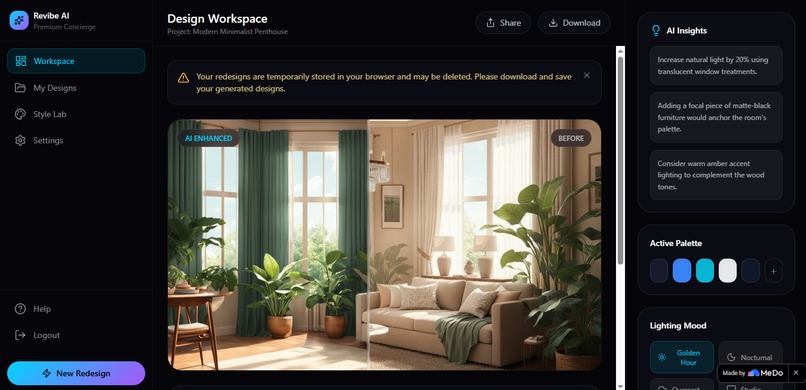
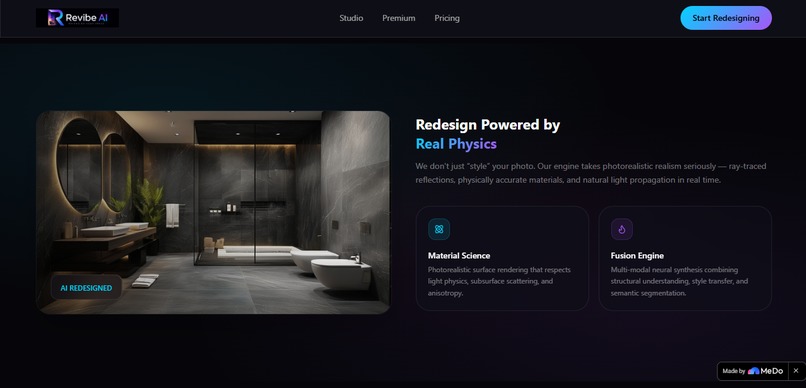
Dashboard 2
-
-
-
-
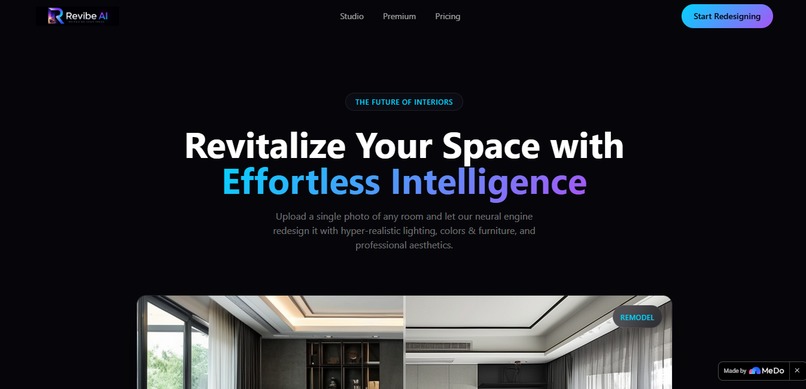
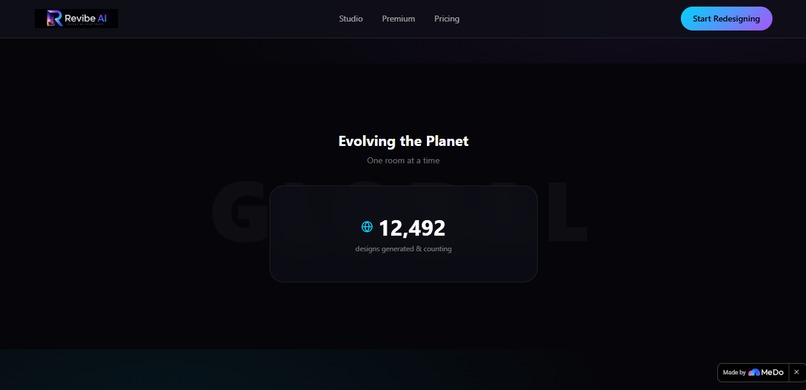
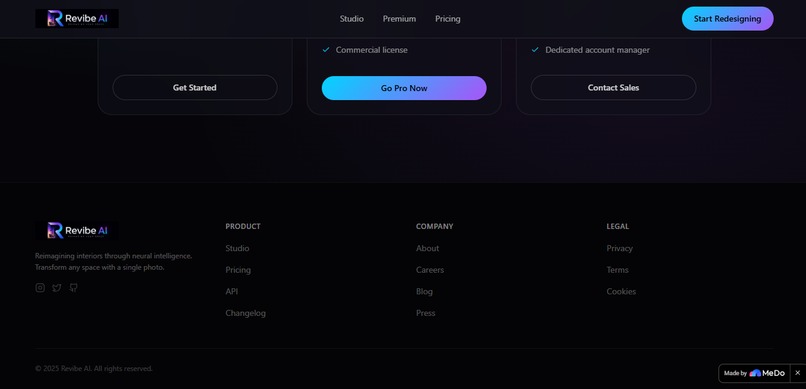
landing page
-
-
-
-
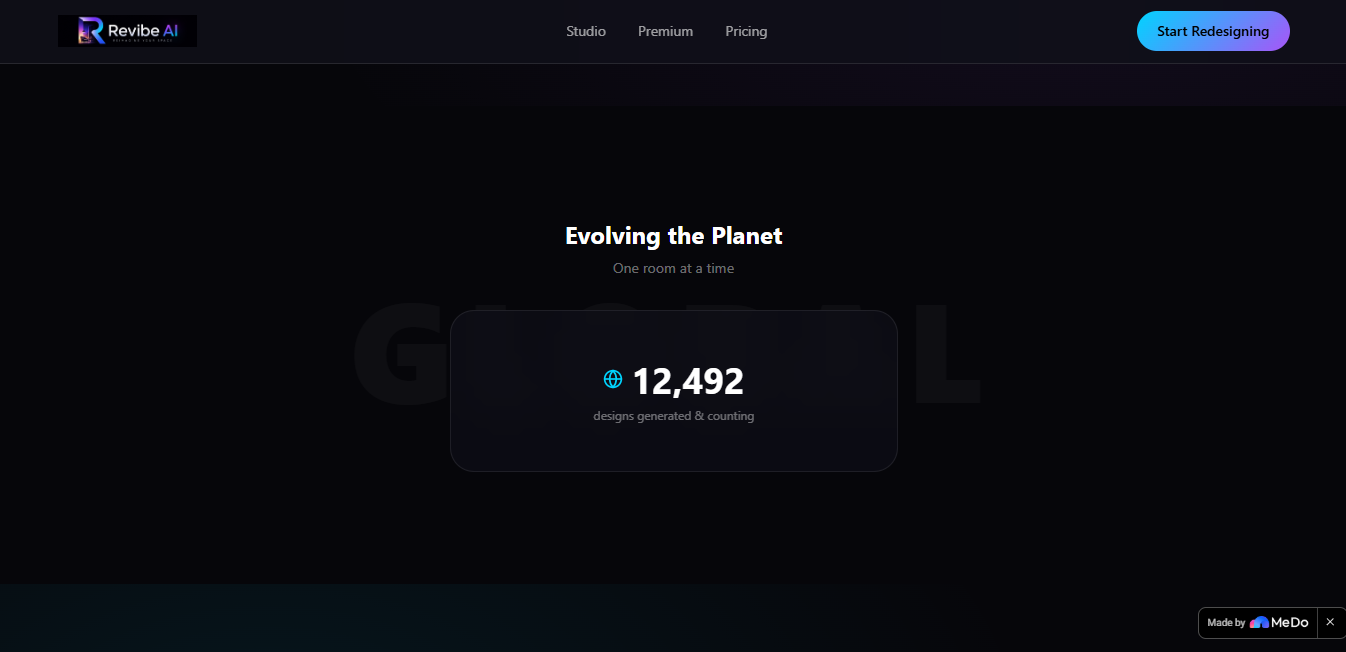
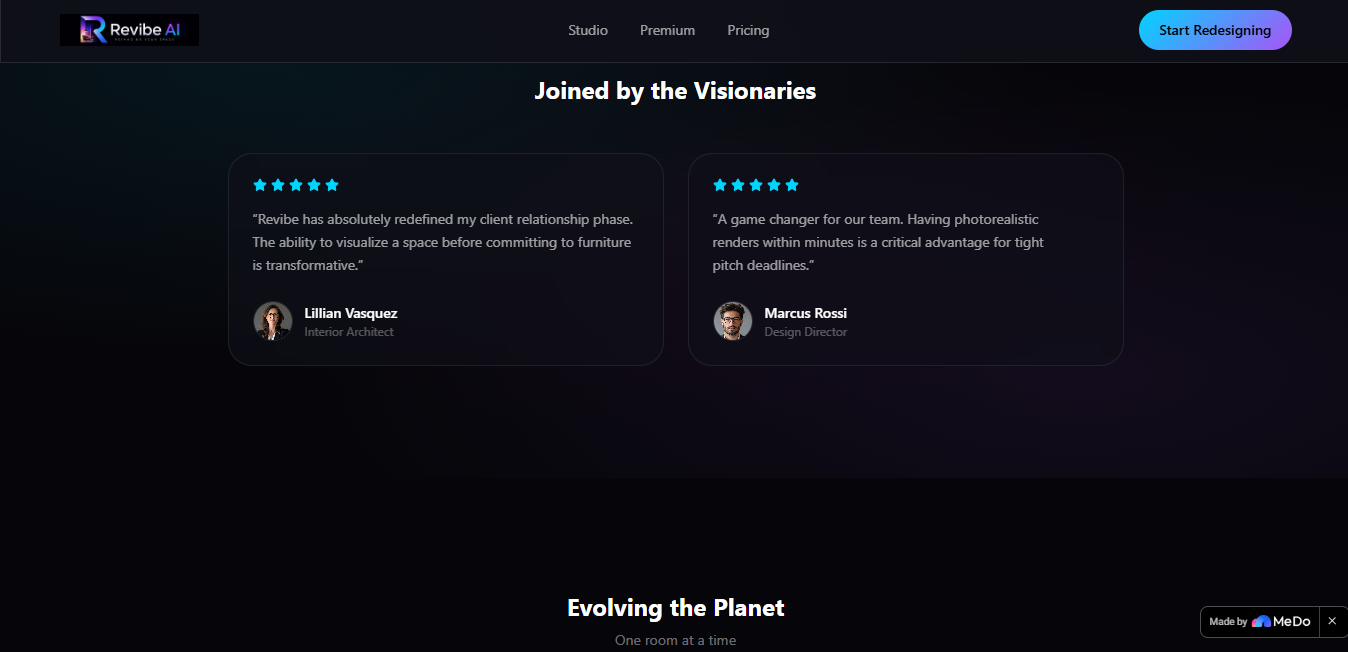
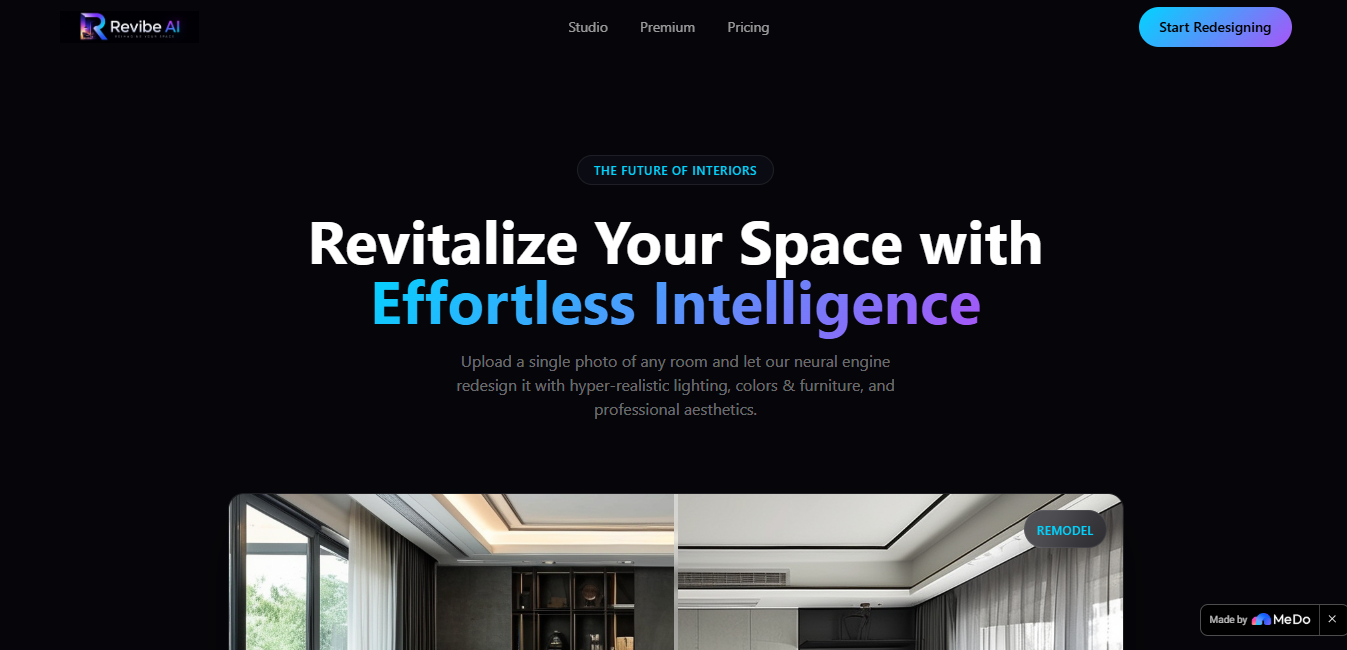
Revibe AI
Inspiration
Interior redesign is expensive, time-consuming, and often difficult to visualize before making real changes. Most people struggle to imagine how their room could look with different styles, lighting, furniture, or layouts.
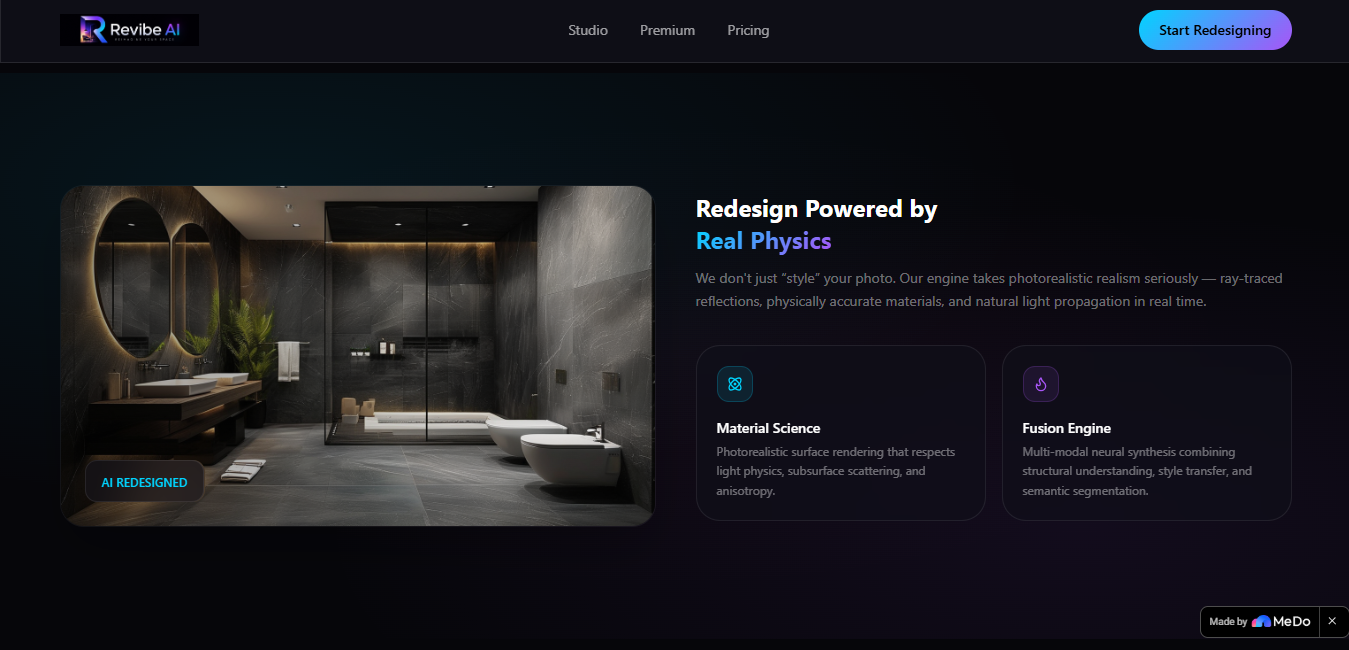
We wanted to create an experience where anyone could upload a room photo and instantly transform it into a cinematic AI-designed space while preserving the real structure of the room.
The inspiration came from the idea of combining the creativity of AI image generation with practical interior design. We also noticed that many AI image tools generate beautiful rooms but completely change the architecture and layout. Revibe AI solves this by focusing on preserving the room’s real geometry while redesigning only the aesthetics.
Our vision was to create something that feels like “Midjourney for Interior Design” with a premium and immersive user experience.
What it does
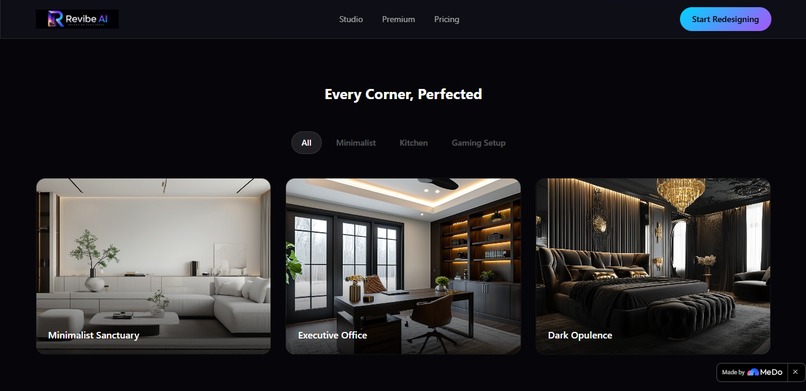
Revibe AI is a full-stack AI-powered interior redesign platform that allows users to:
- Upload a real room image
- Preserve the room’s original layout and architecture
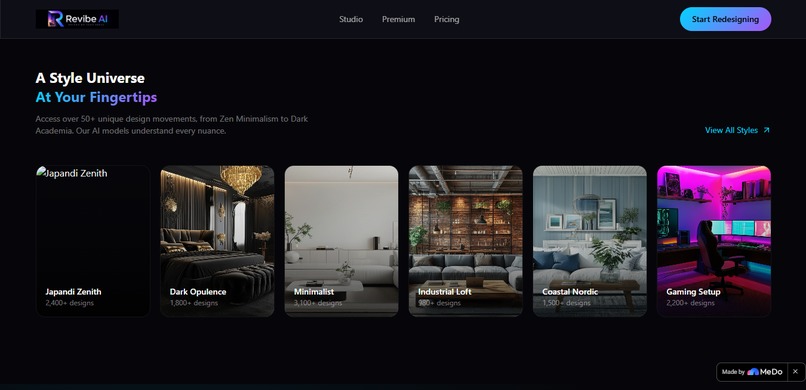
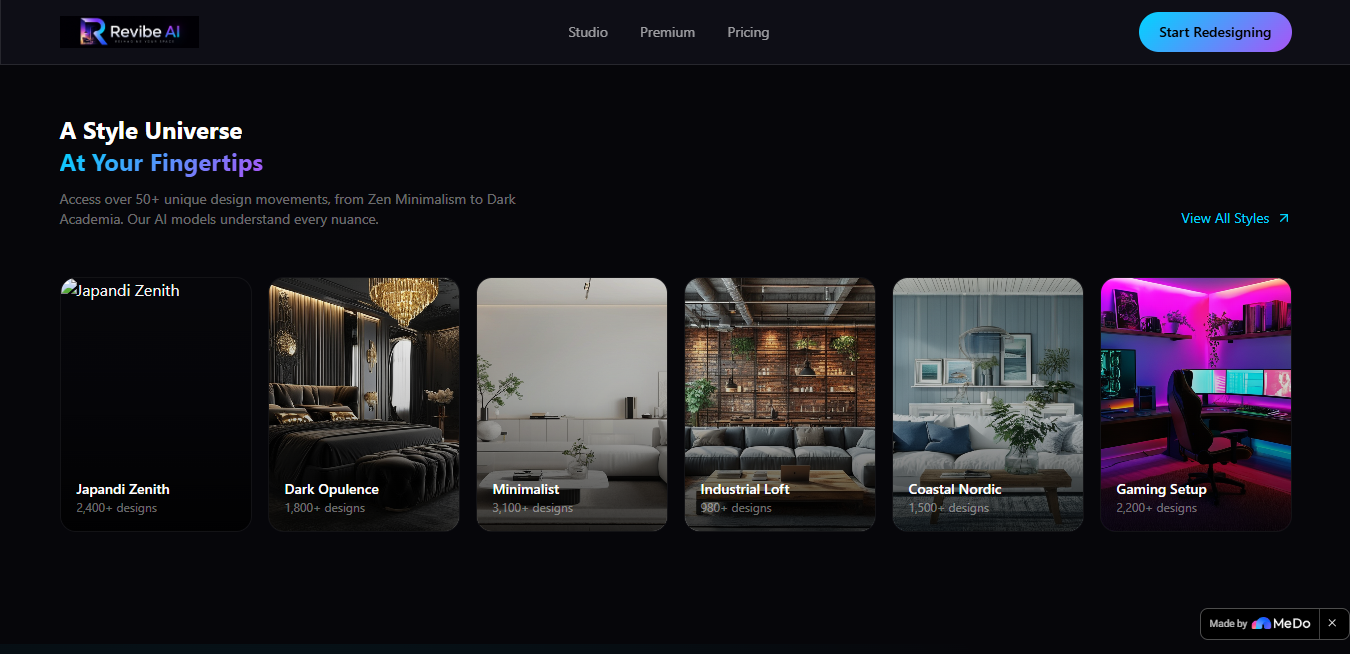
- Apply different interior design styles
- Generate cinematic AI redesigns
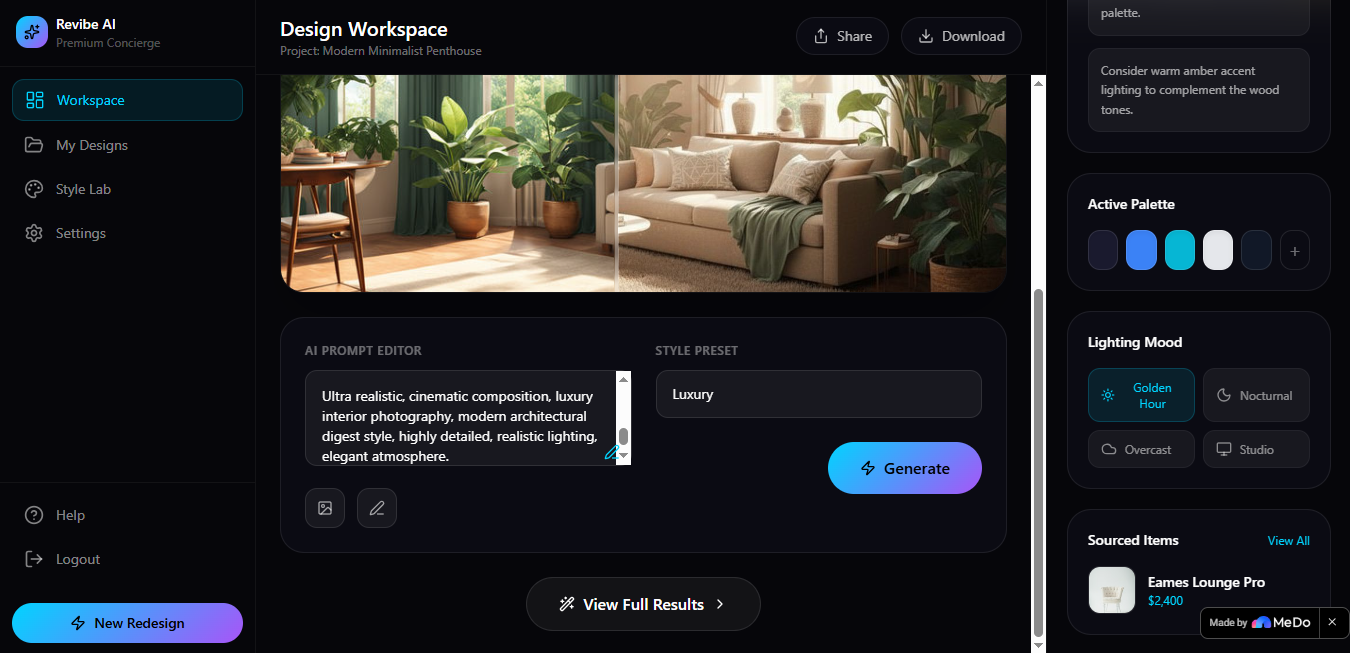
- Customize redesign prompts
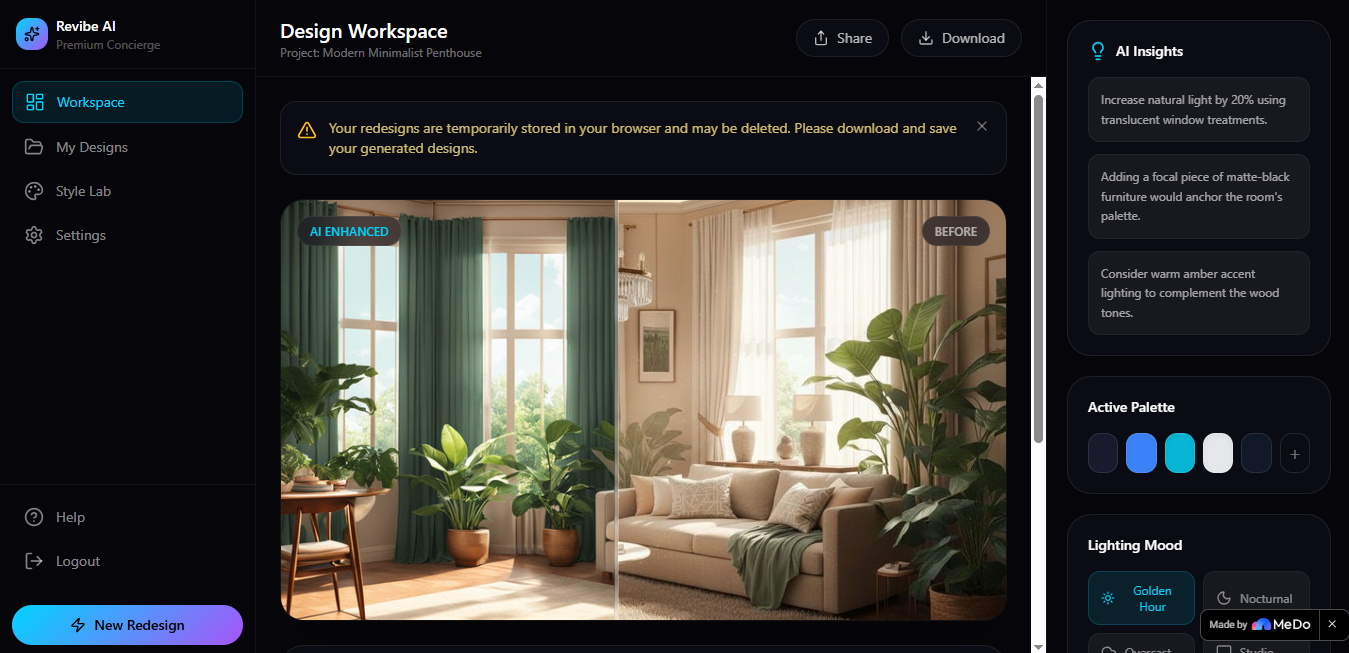
- Explore AI-generated lighting and decor suggestions
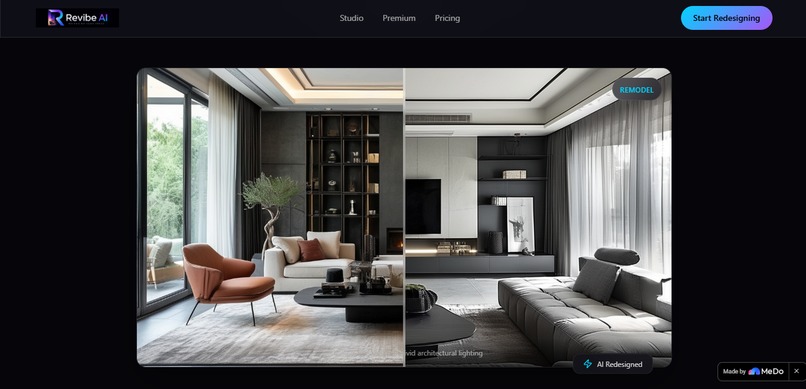
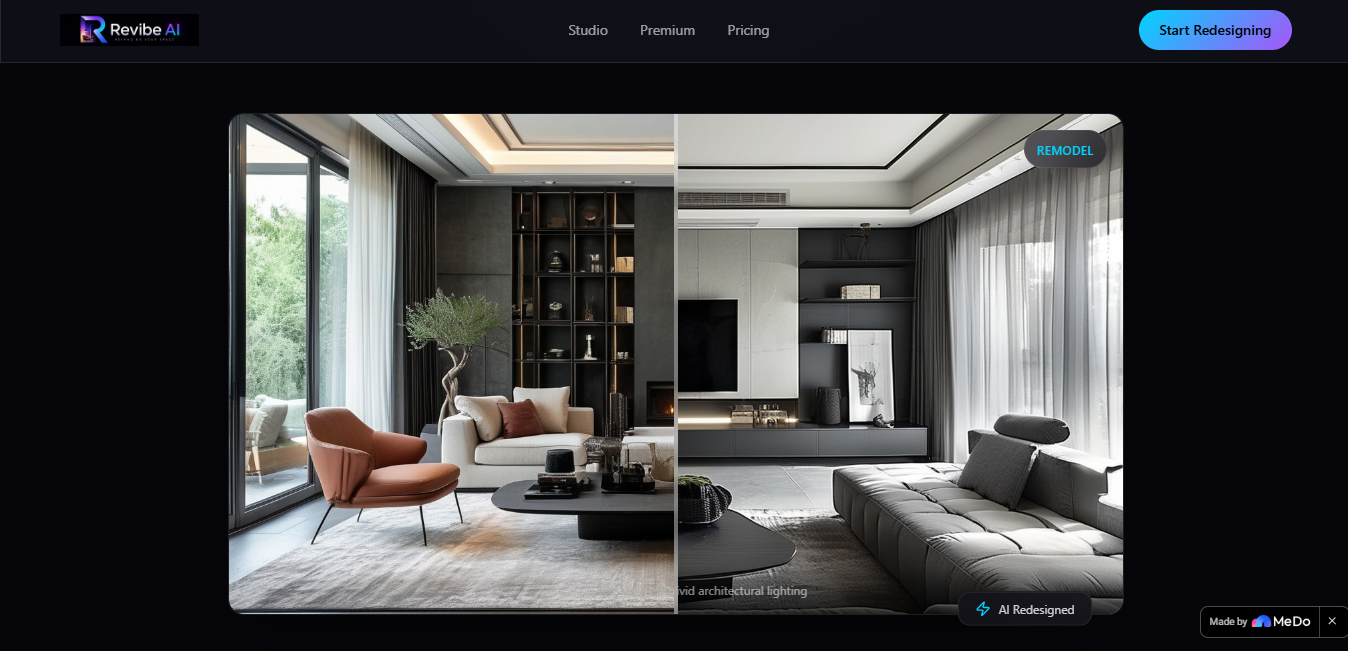
- Compare before/after transformations interactively
- Save and download generated redesigns locally
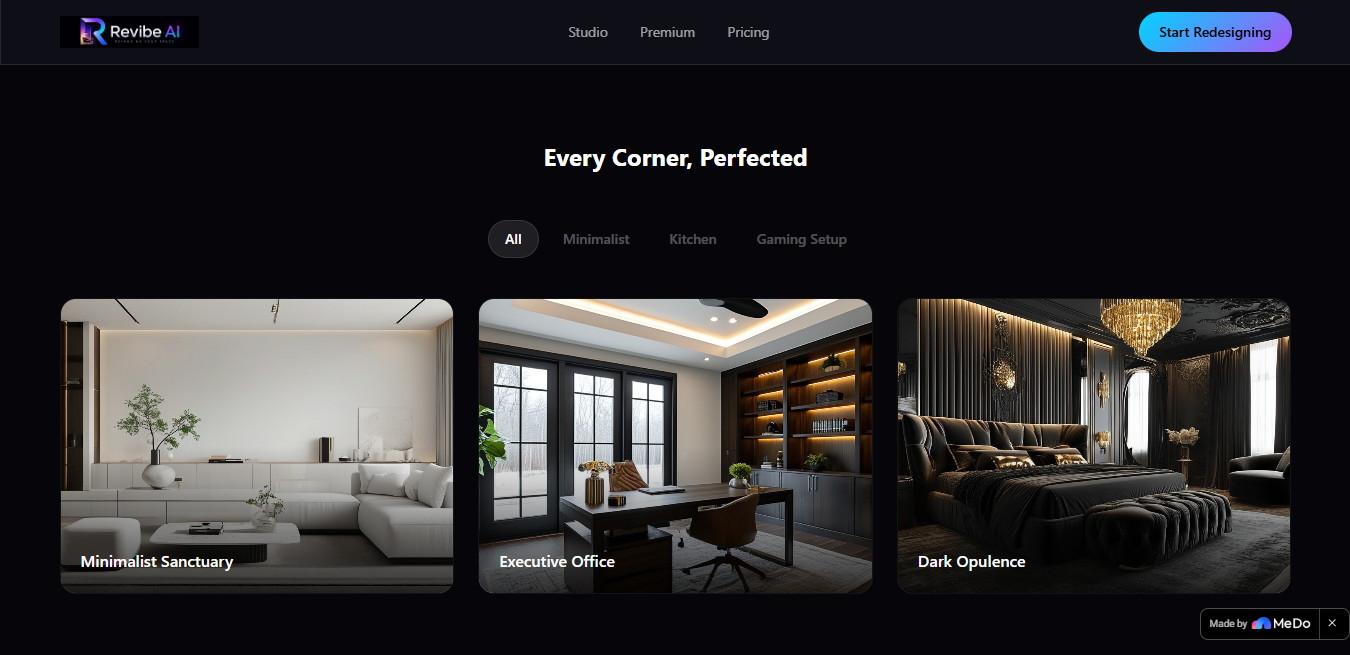
Users can redesign bedrooms, gaming rooms, cafes, workspaces, kitchens, studios, and more using AI-generated visual transformations.
The platform creates realistic redesigns while maintaining:
- wall placement
- windows
- room geometry
- perspective
- architectural structure
How we built it
We built Revibe AI as a modern full-stack web application using:
Frontend
- Next.js 15
- TypeScript
- TailwindCSS
- Framer Motion
- Zustand
- Shadcn/UI
- Lucide React
Backend
- Python FastAPI
- Server-side API handling
- Secure environment variable configuration
AI Models
We experimented with multiple image generation and editing models before selecting the best-performing workflow.
The main redesign pipeline uses:
- FLUX 1.1 Pro
- FLUX Schnell
- Google Nano Banana via Replicate
The AI workflow:
- User uploads a room image
- Backend analyzes the request
- Prompt engineering preserves room layout
- AI redesigns the room aesthetics
- Generated redesigns are returned to the frontend
- Users can compare results using an interactive slider
We focused heavily on:
- cinematic UI/UX
- smooth animations
- immersive interactions
- realistic AI workflow presentation
The application was designed to look and feel like a premium AI startup product rather than a traditional hackathon demo.
Challenges we ran into
One of the biggest challenges was choosing the right AI model for interior redesign generation.
Different models produced different tradeoffs:
- some generated beautiful visuals but completely changed room layouts
- some preserved structure but lacked cinematic quality
- some were too expensive or too slow for real-time workflows
We spent a significant amount of time testing prompt engineering techniques to preserve:
- room geometry
- camera perspective
- windows
- furniture alignment
- architectural consistency
Another challenge was balancing:
- generation speed
- visual quality
- API cost
We also worked on creating a UI that feels emotionally engaging and premium while keeping the application lightweight and responsive.
Building a realistic AI workflow experience within hackathon timelines was challenging, especially while maintaining polished animations, responsive layouts, and smooth interactions across devices.
Accomplishments that we're proud of
We are proud of creating:
- a visually polished AI startup-style product
- cinematic AI-generated redesigns
- a premium futuristic UI
- realistic before/after comparisons
- smooth user experience and animations
- structure-preserving redesign workflows
We are especially proud that Revibe AI feels like a real product that could launch publicly rather than just a prototype.
The combination of:
- immersive design
- AI-powered creativity
- practical real-world utility made the project feel unique and impactful.
What we learned
During this project we learned:
- how important prompt engineering is for AI image generation
- how different models behave for architecture and interiors
- how UI/UX can dramatically improve perceived AI quality
- how to optimize AI workflows for speed and realism
- how to structure a scalable full-stack AI application
We also learned that preserving architectural structure during AI generation is significantly harder than generating completely new scenes.
The project gave us hands-on experience with:
- AI image pipelines
- FastAPI backend development
- Next.js App Router
- animation systems
- scalable frontend architecture
- API optimization
What's next for Revibe AI
We plan to continue improving Revibe AI with more advanced AI-powered interior design capabilities.
Future plans include:
360° AI Room Visualization
Generate immersive 360-degree redesigned room experiences for virtual walkthroughs.
Smart Product Linking
Automatically detect furniture and decor items inside generated redesigns and provide direct e-commerce purchase links.
Authentication System
Add login/signup functionality for personalized user dashboards and saved projects.
Cloud Database Storage
Store generated redesigns securely using cloud storage and database systems.
AI Color Palette Generator
Allow users to generate complete interior color palettes from uploaded room images.
Real Furniture Mapping
Map AI-generated furniture suggestions to real-world purchasable products.
AI Design Assistant
Add conversational AI guidance for style recommendations and redesign suggestions.
Multi-Room Projects
Allow users to redesign entire homes instead of single rooms.
Video & Animation Rendering
Generate cinematic walkthrough animations of redesigned spaces.
AR Preview
Preview redesigned rooms directly in augmented reality on mobile devices.
Revibe AI is just the beginning of creating an intelligent AI-powered interior design ecosystem.

Log in or sign up for Devpost to join the conversation.