-
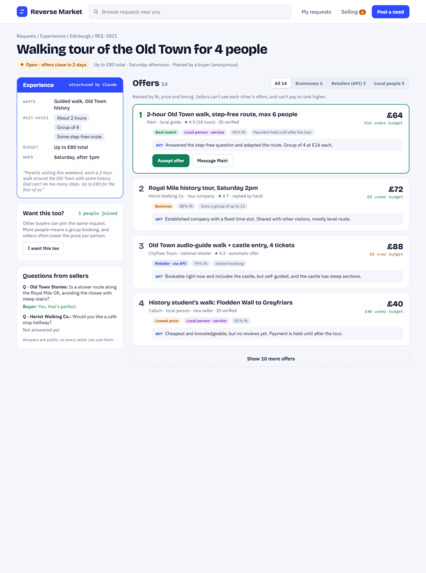
Design of the search result page
-
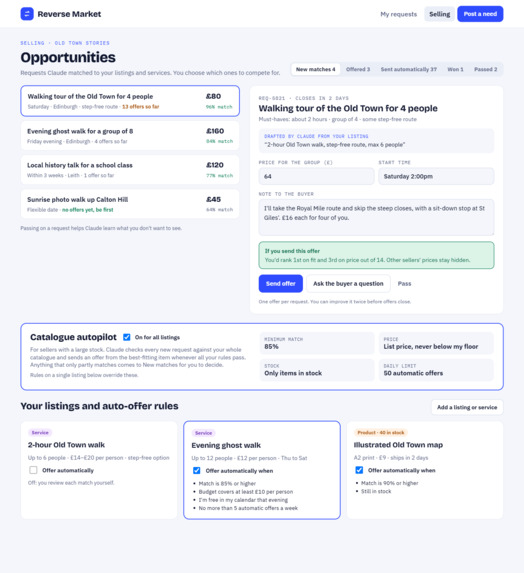
Design of the seller's page
Inspiration
We started with a simple frustration: buying something often means opening lots of tabs, comparing prices and reading reviews, without knowing whether you have found the right thing.
The hackathon theme, “Flip the Script”, made us question why the buyer has to do all that work. What if you could describe what you need once, and sellers came to you?
That is the idea behind Reverse Market. You can ask for a particular product, but you can also start with something less specific, or even services, like “I’ve just moved to Edinburgh and want to meet people.”
What it does
Customers describe what they need in their own words. Claude picks out the budget, location, deadline and requirements, then turns the description into a request sellers can respond to. If the request is vague, it can ask a follow-up question.
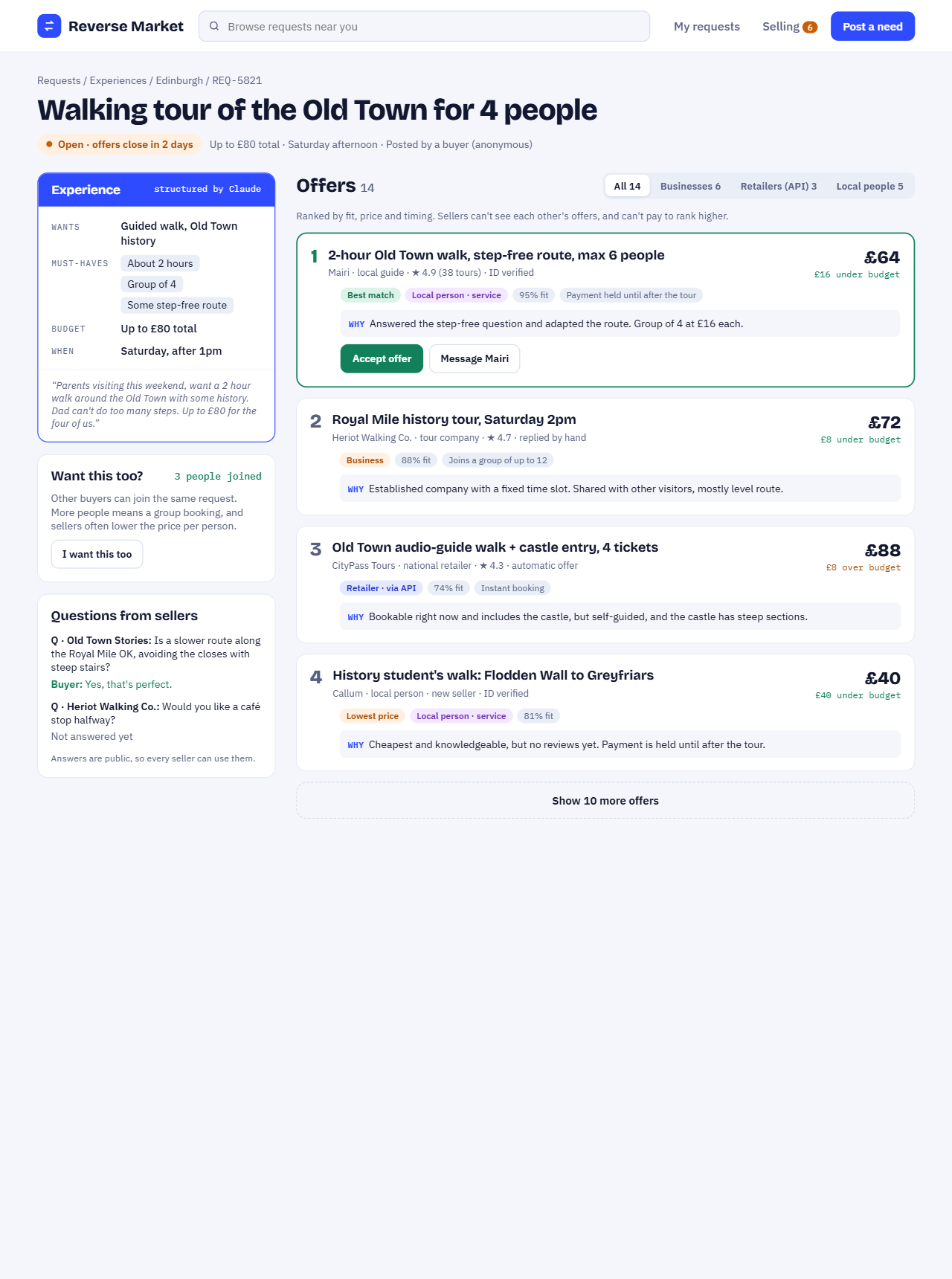
Offers arrive in one place, ranked by how well they fit, their price and their delivery time. Each includes a short explanation of the tradeoffs.
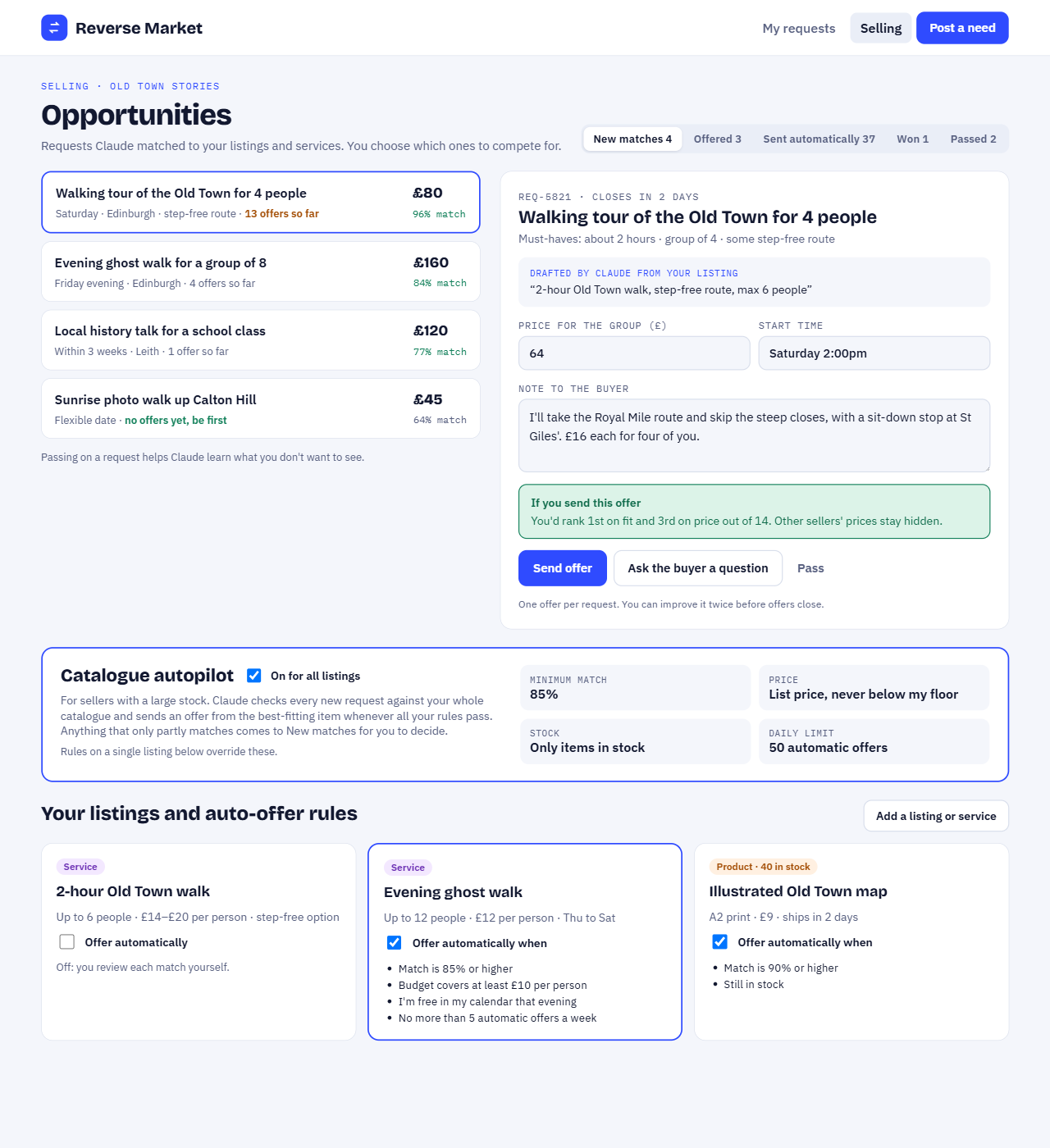
Sellers have their own dashboard, where they can see requests that match their catalogue, make offers and answer questions. They can also enable automatic offers for listings that meet their rules.
Other buyers can join a request if they want the same thing, opening up the possibility of group deals.
For the demo, other sellers and buyers are simulated. Some example requests also include links to existing online listings.
How we built it
We built the website with plain HTML, CSS and JavaScript. It runs from a single file, so there is nothing to install before trying it.
We connected Claude through the Anthropic API to understand requests, match them with catalogue items and check seller offers. We use structured responses and validate the returned data before displaying it.
The ranking itself uses a fixed formula based on fit, price and delivery speed. If the AI connection fails, an offline parser and example offers keep the demo working.
We also wrote tests for the parser and AI response handling, using a fake API so the tests do not need a key or internet connection.
Challenges we ran into
One major challenge was bringing the buyer and seller experiences together so users could switch naturally between the two roles.
Time was another challenge. We were able to build a working prototype, but some features and design details still need refinement.
Accomplishments that we're proud of
We brought information scattered across the internet together in one well-organised webpage, saving people time searching and comparing options.
We are also pleased that the prototype handles more than shopping for physical products. It can work with services and activities, which gives people more ways to solve their original problem.
What we learned
We learned that looking at a problem from a different perspective, or even its opposite side can reveal solutions we might otherwise miss.
We also realised that customers do not always know what they should buy. Sometimes they know only what they want to change or achieve. Helping them work that out could be just as useful as comparing prices.
What's next for Reverse Market
We want to add suggestions before the product results. For example, if someone wants a better study space, the website could suggest a compact desk setup, improvements to their existing furniture or a fold-away option before showing things to buy.
We would then connect real sellers, add live product search and save requests so customers can receive offers over time. Before opening it up more widely, we would move API calls to a backend and add proper accounts and data storage.
We would like to start with MVP among Edinburgh students and extend it to a larger market.
Built With
- claude

Log in or sign up for Devpost to join the conversation.