Inspiration
REVERSE was inspired by a simple question: why do we replace entire products when only one small component might be broken? Many people use electronic devices and everyday objects without understanding what is inside them or whether they can be repaired. I wanted to create a platform that makes product anatomy easier to understand and encourages people to consider repairing products before replacing them.
What it does
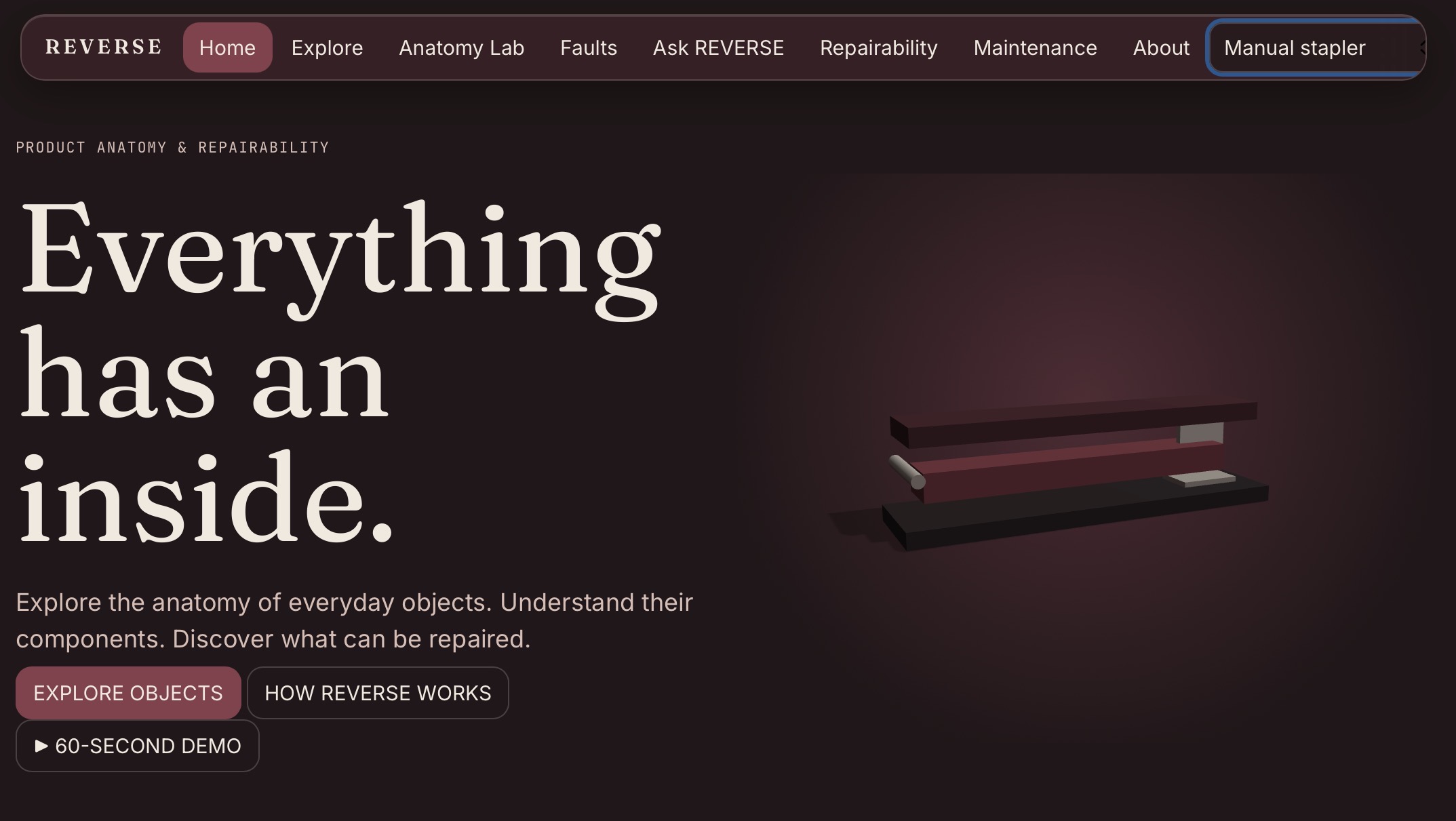
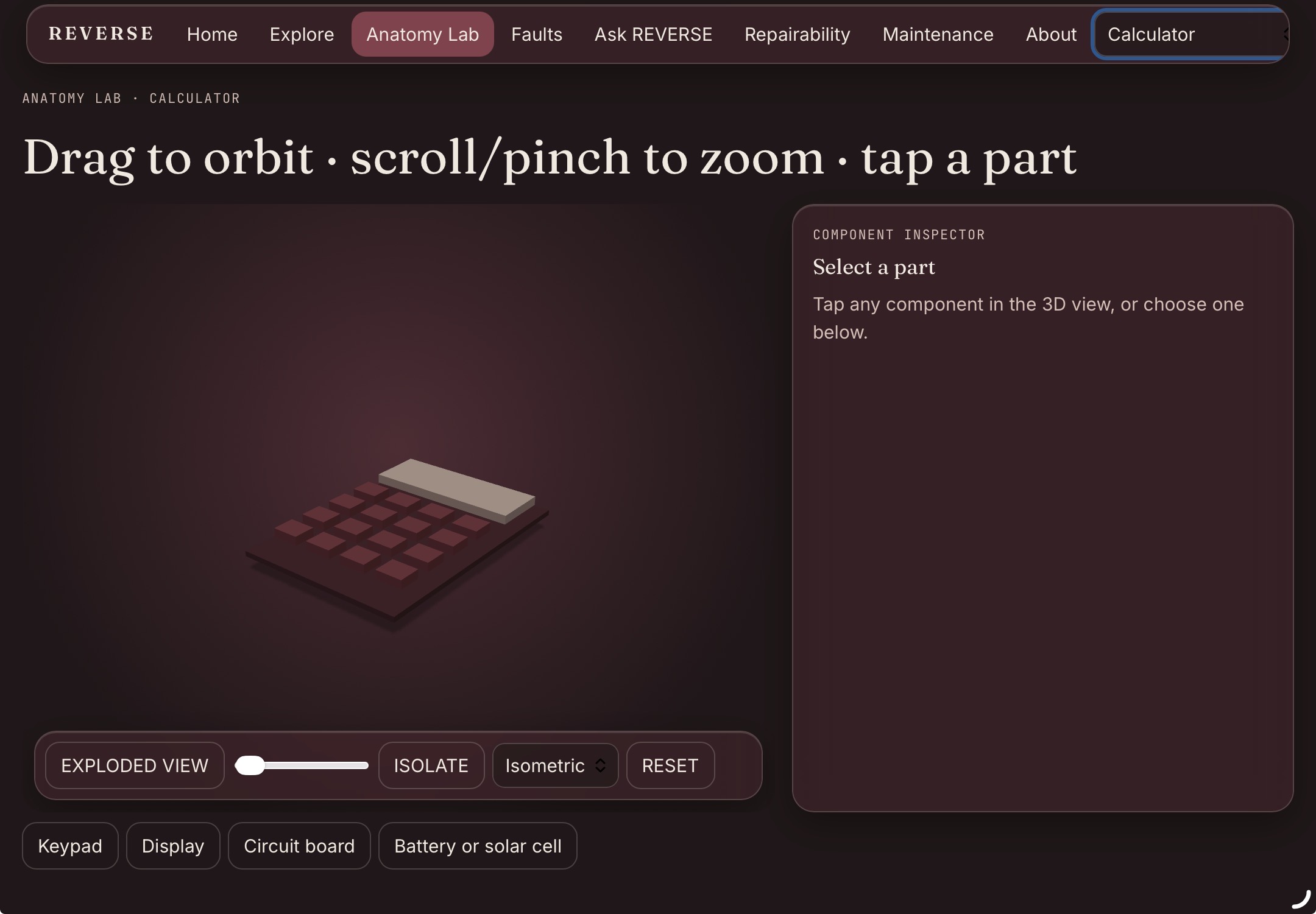
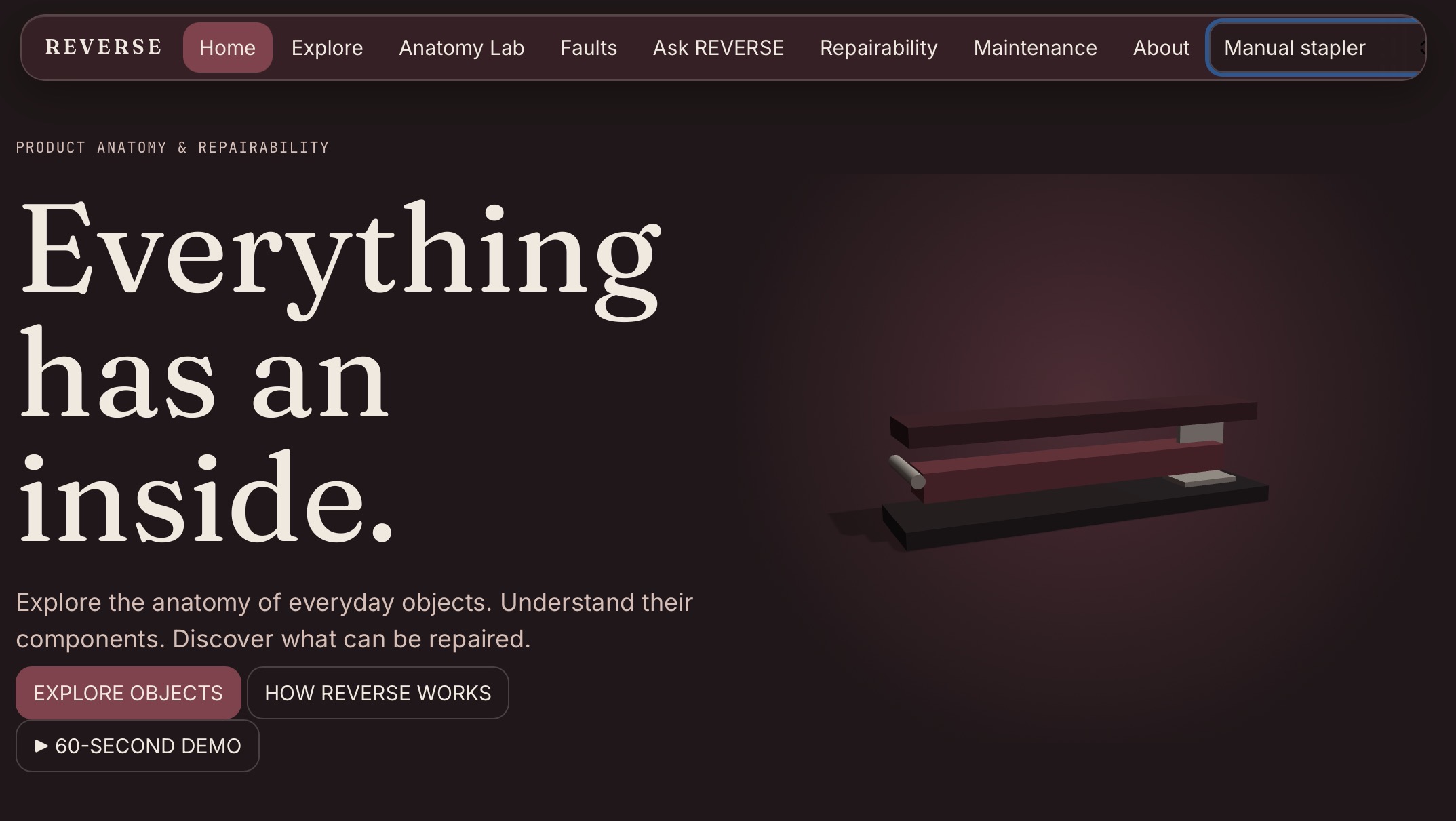
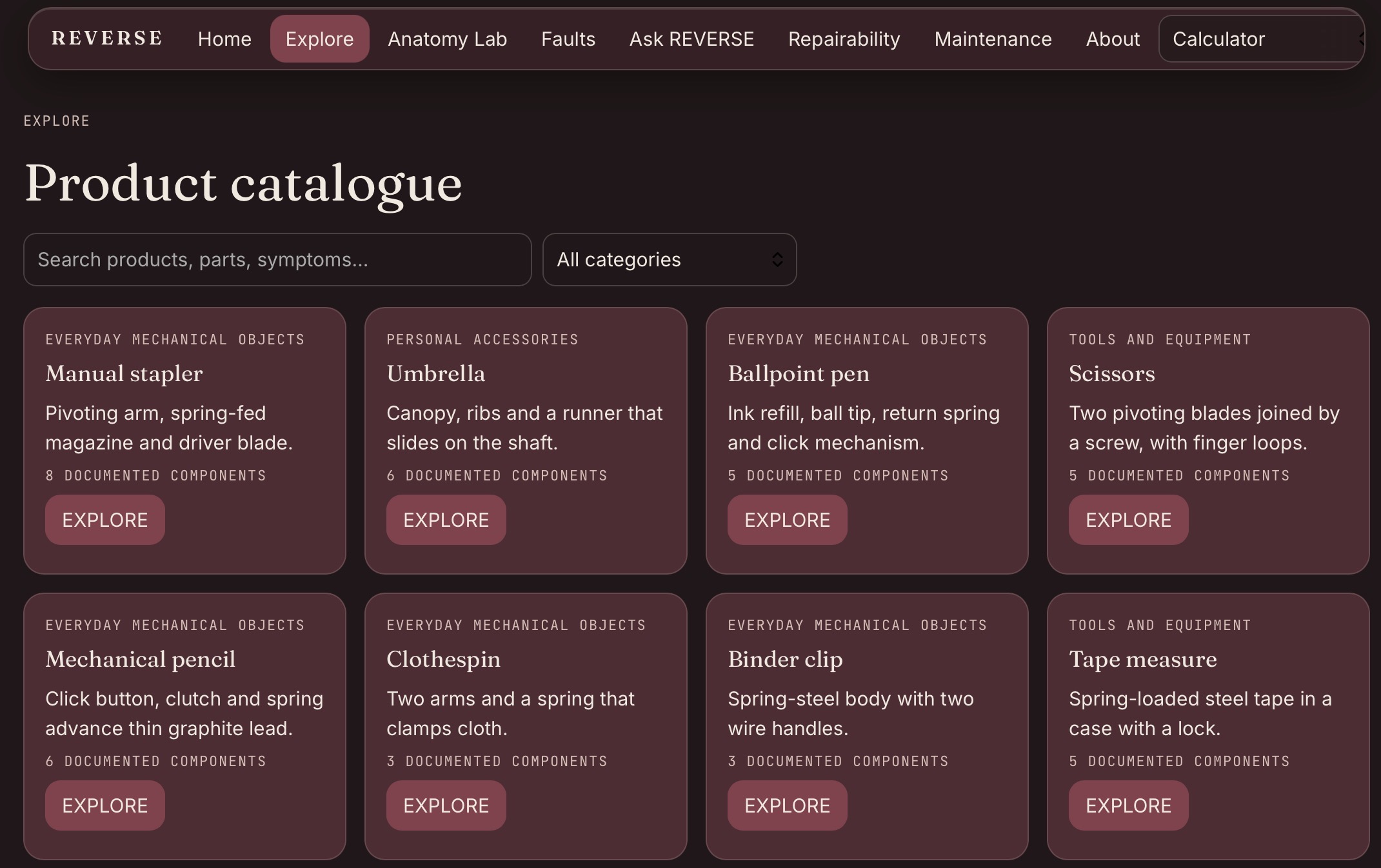
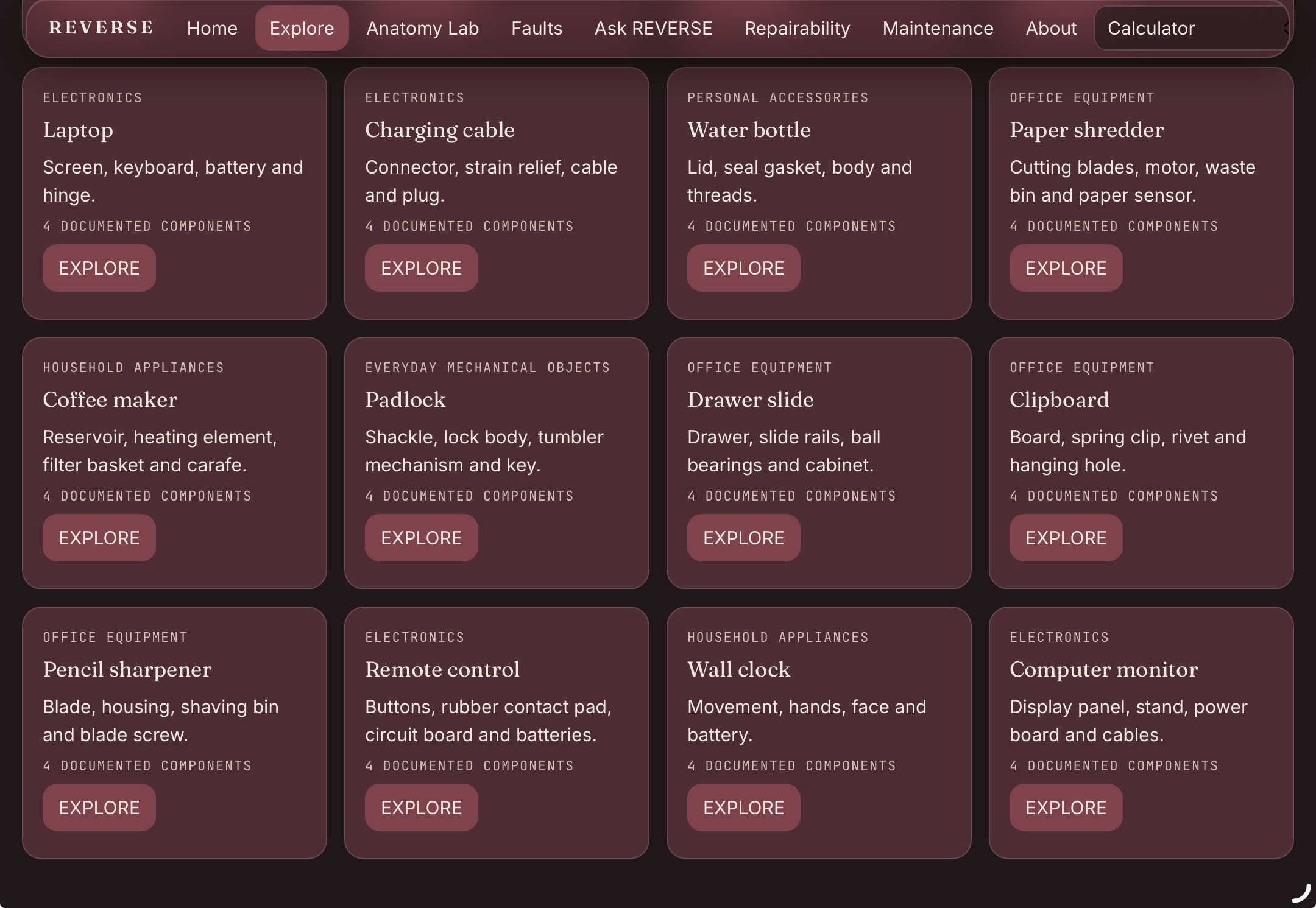
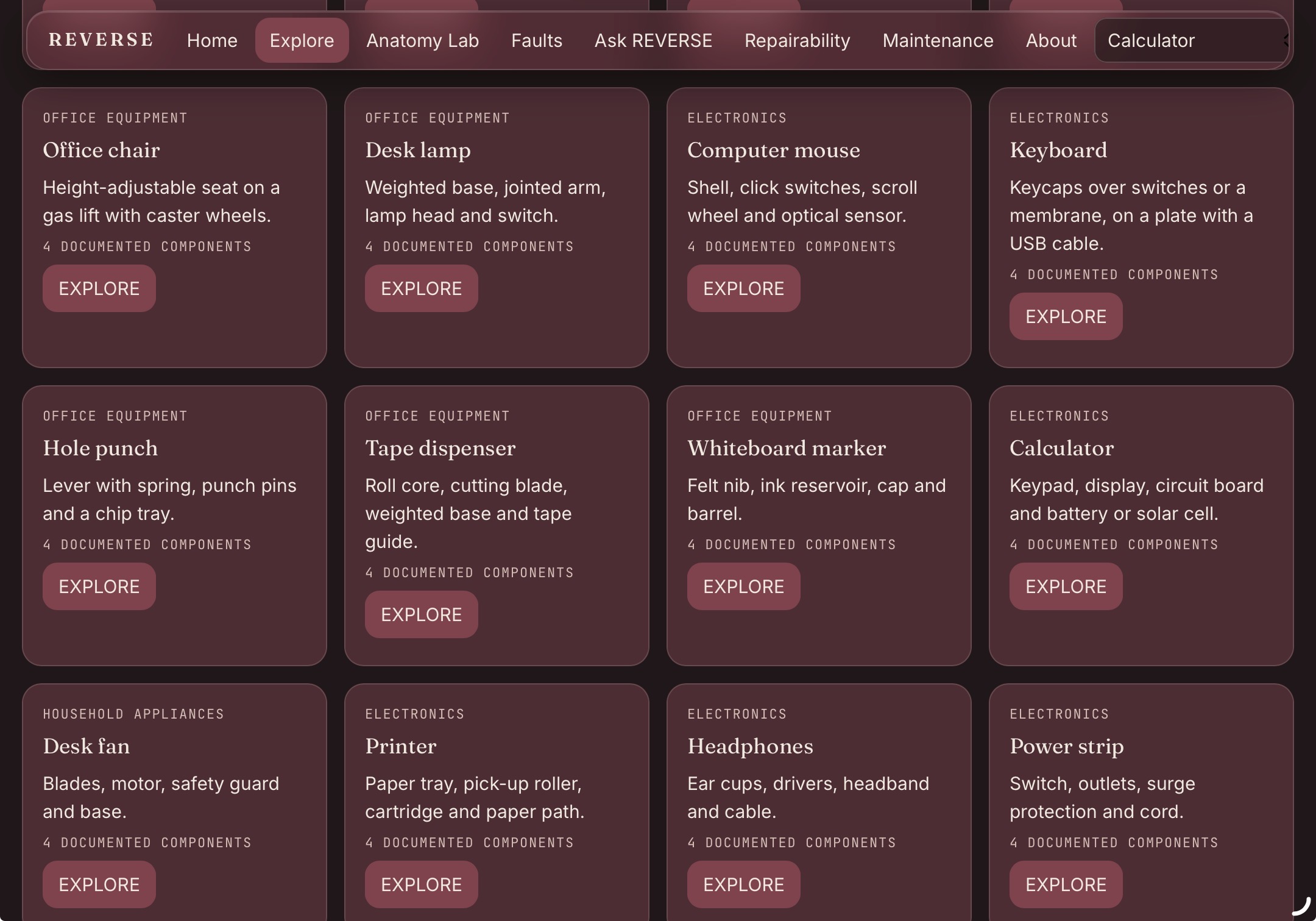
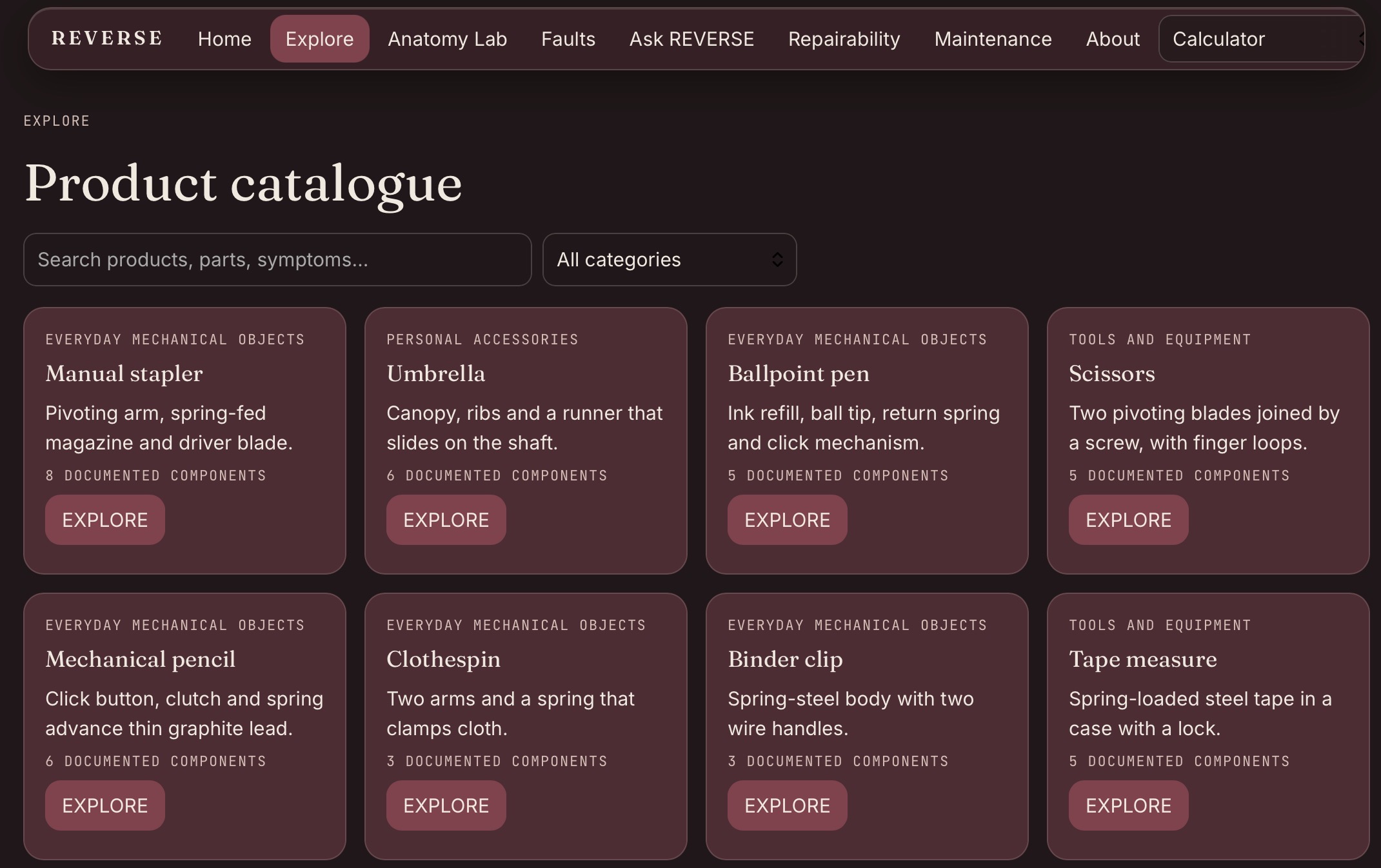
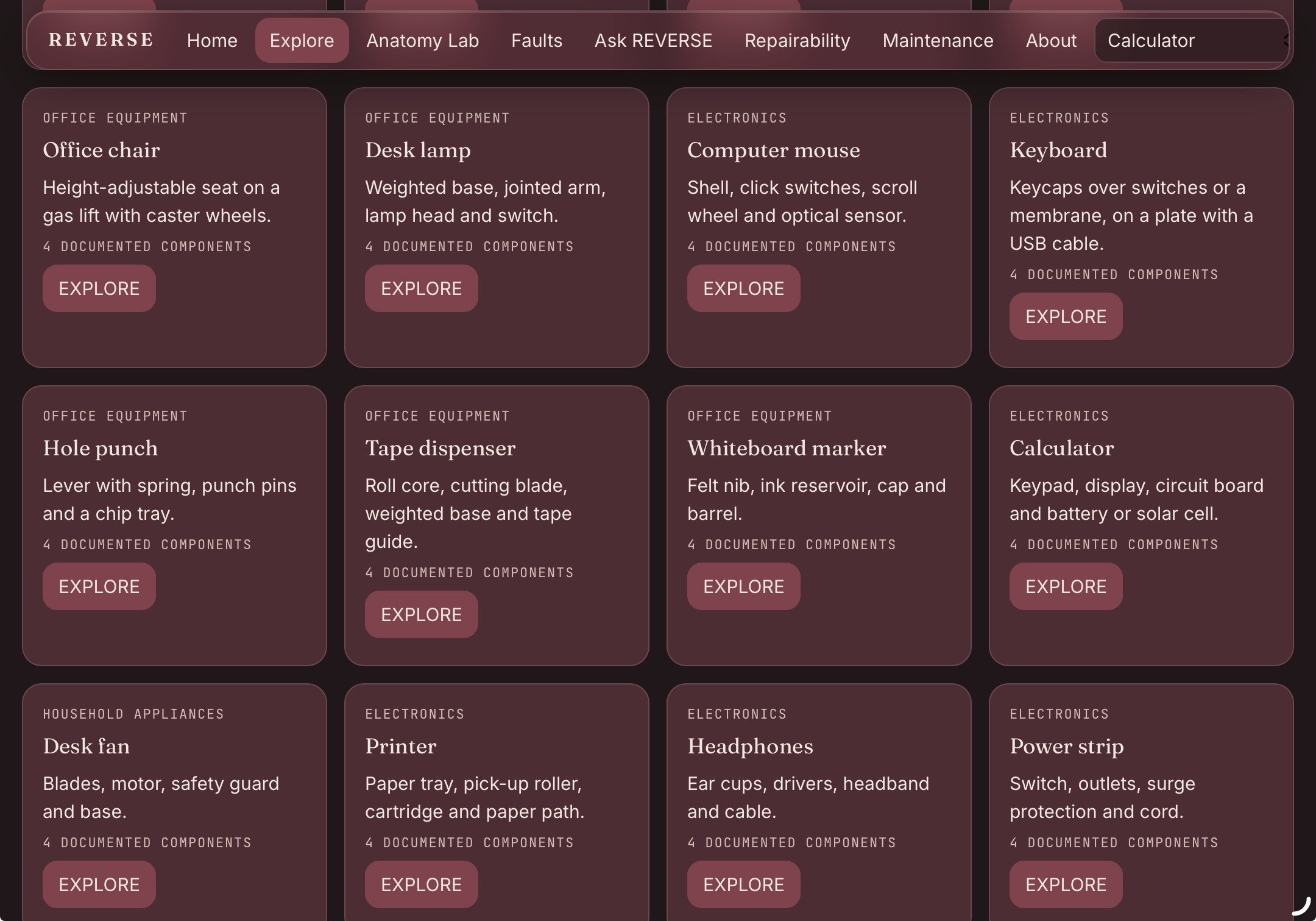
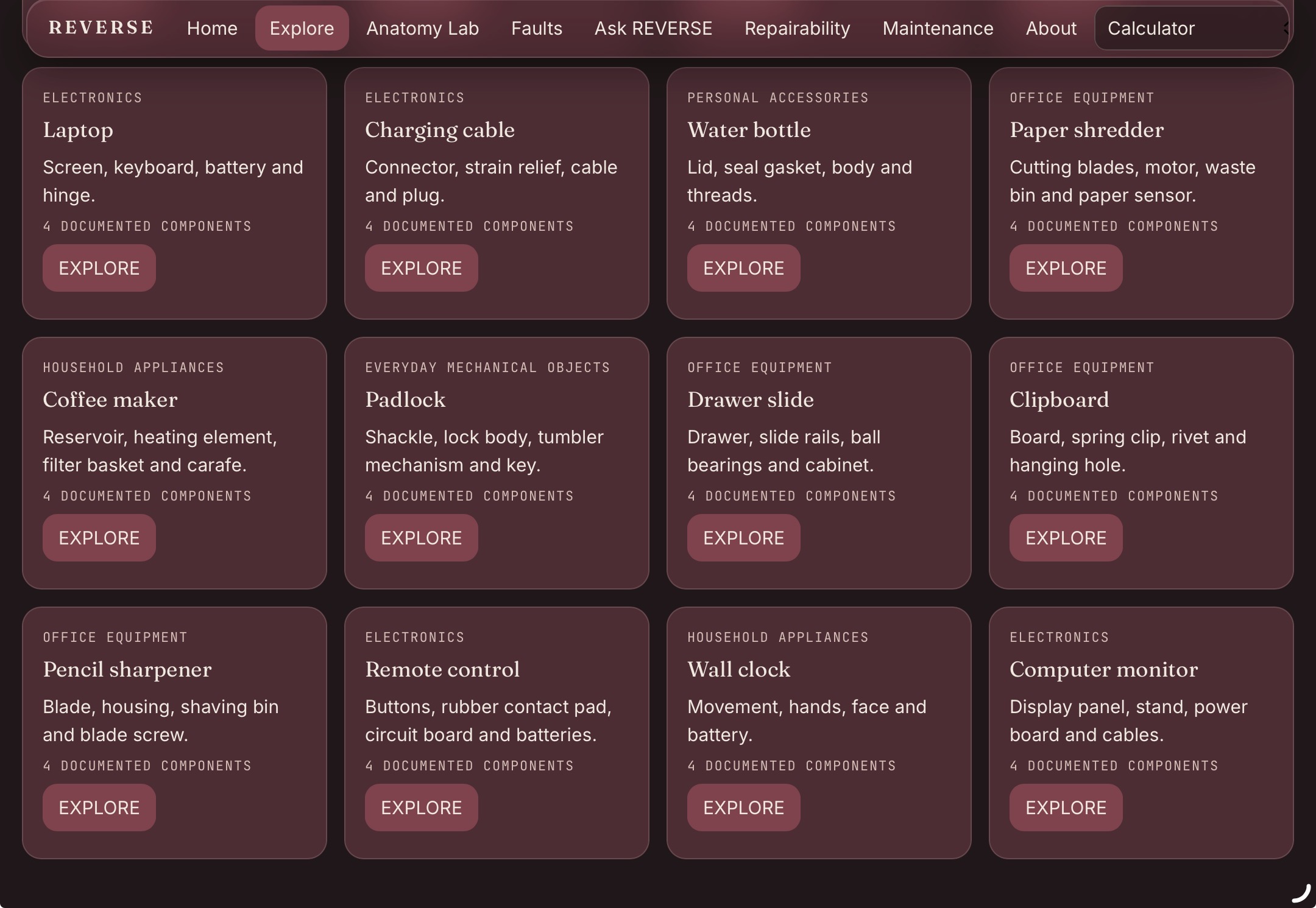
REVERSE is an interactive product-anatomy and repairability platform. It allows users to explore 32 everyday products through interactive 3D models, discover individual components, and understand their functions.
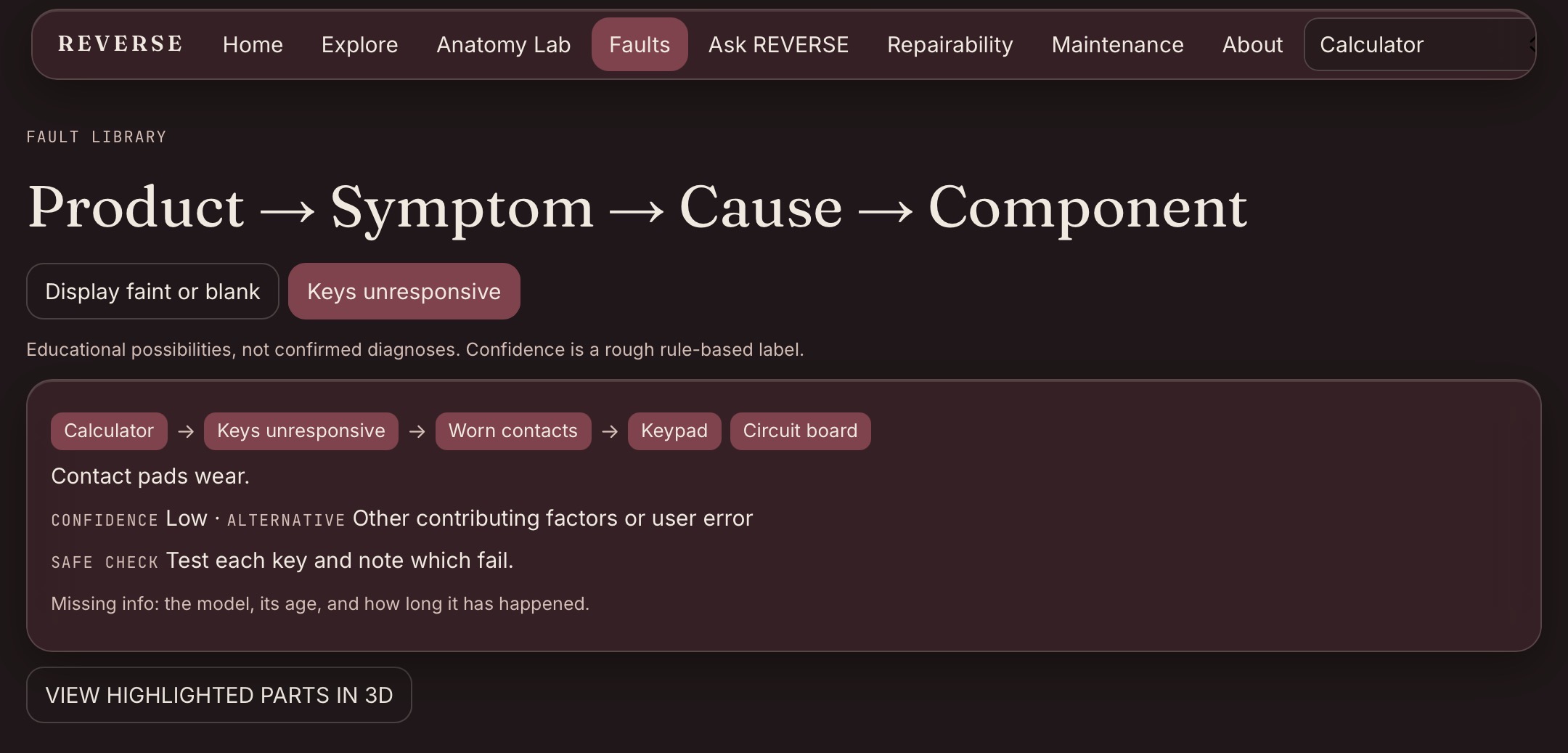
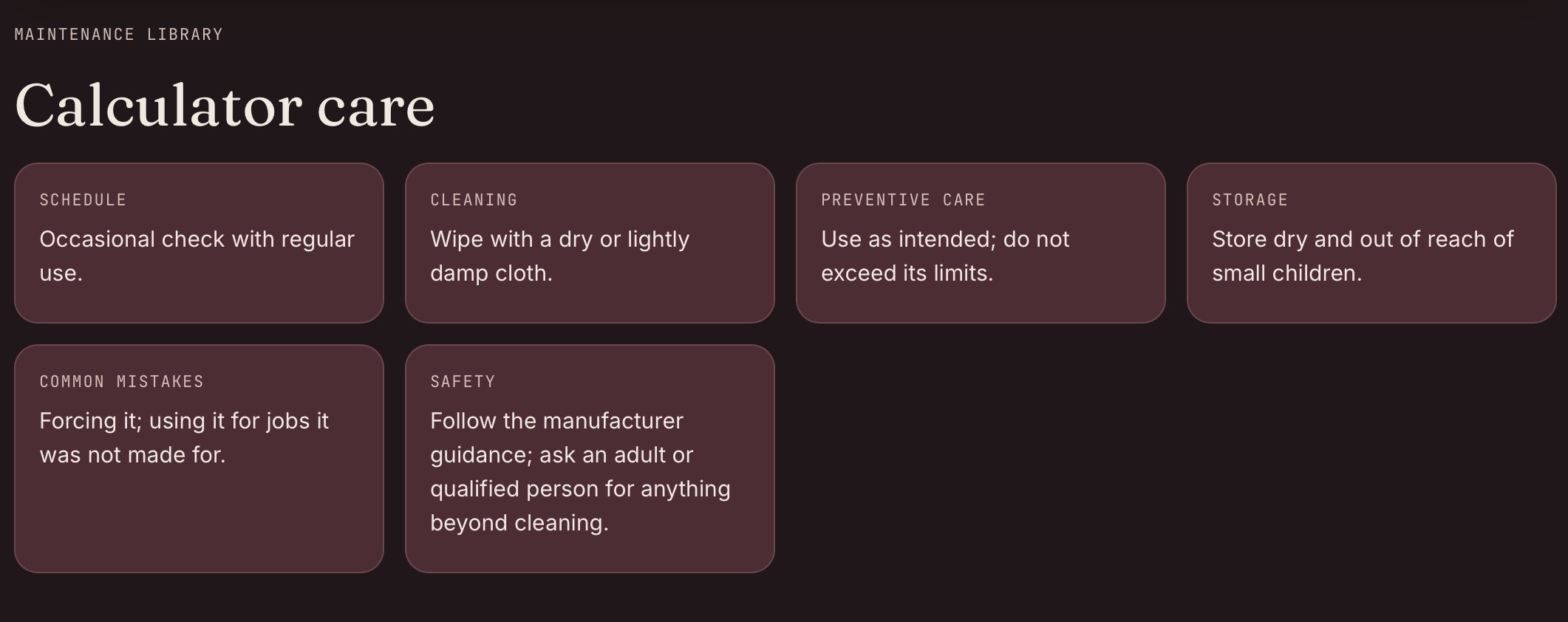
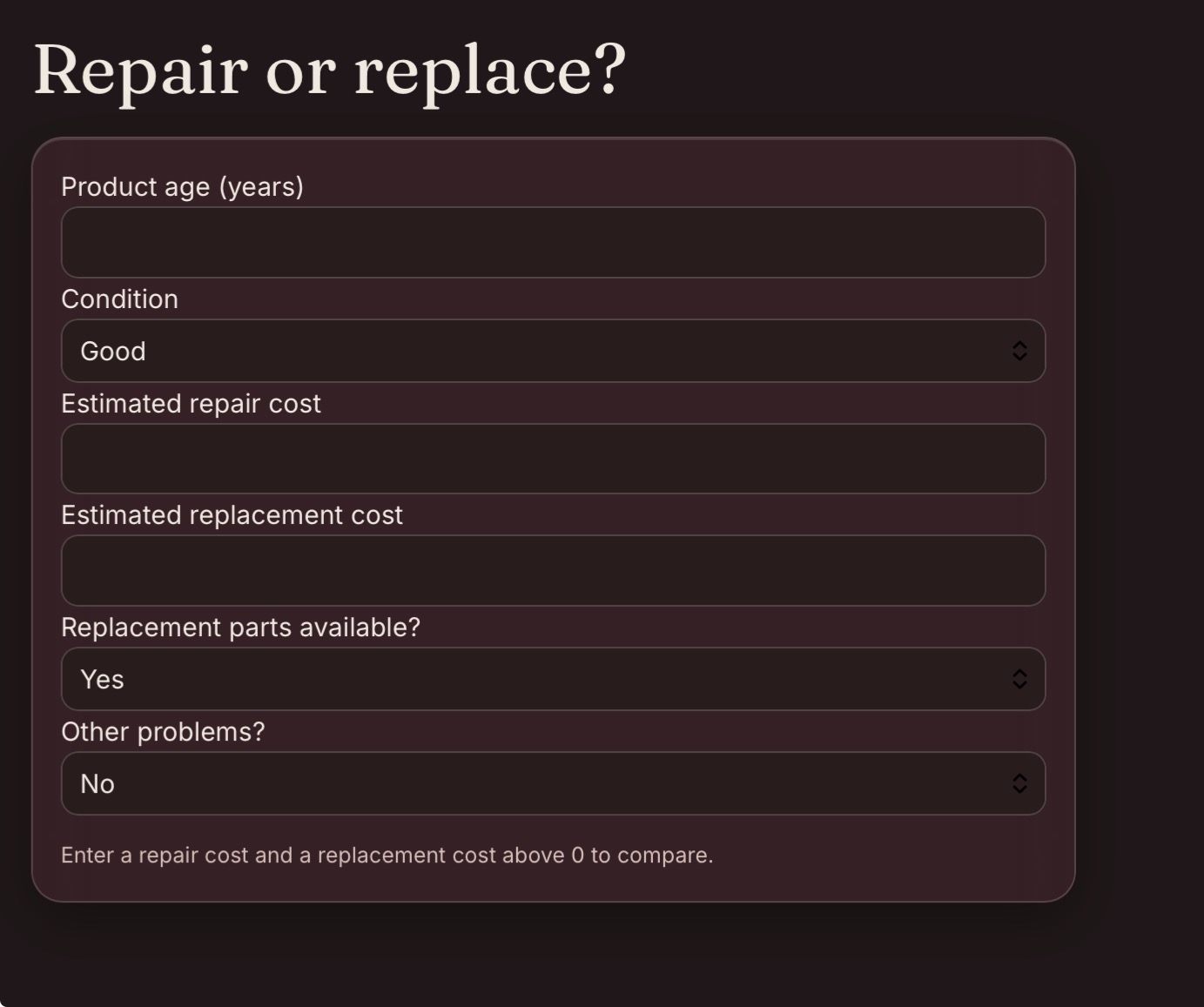
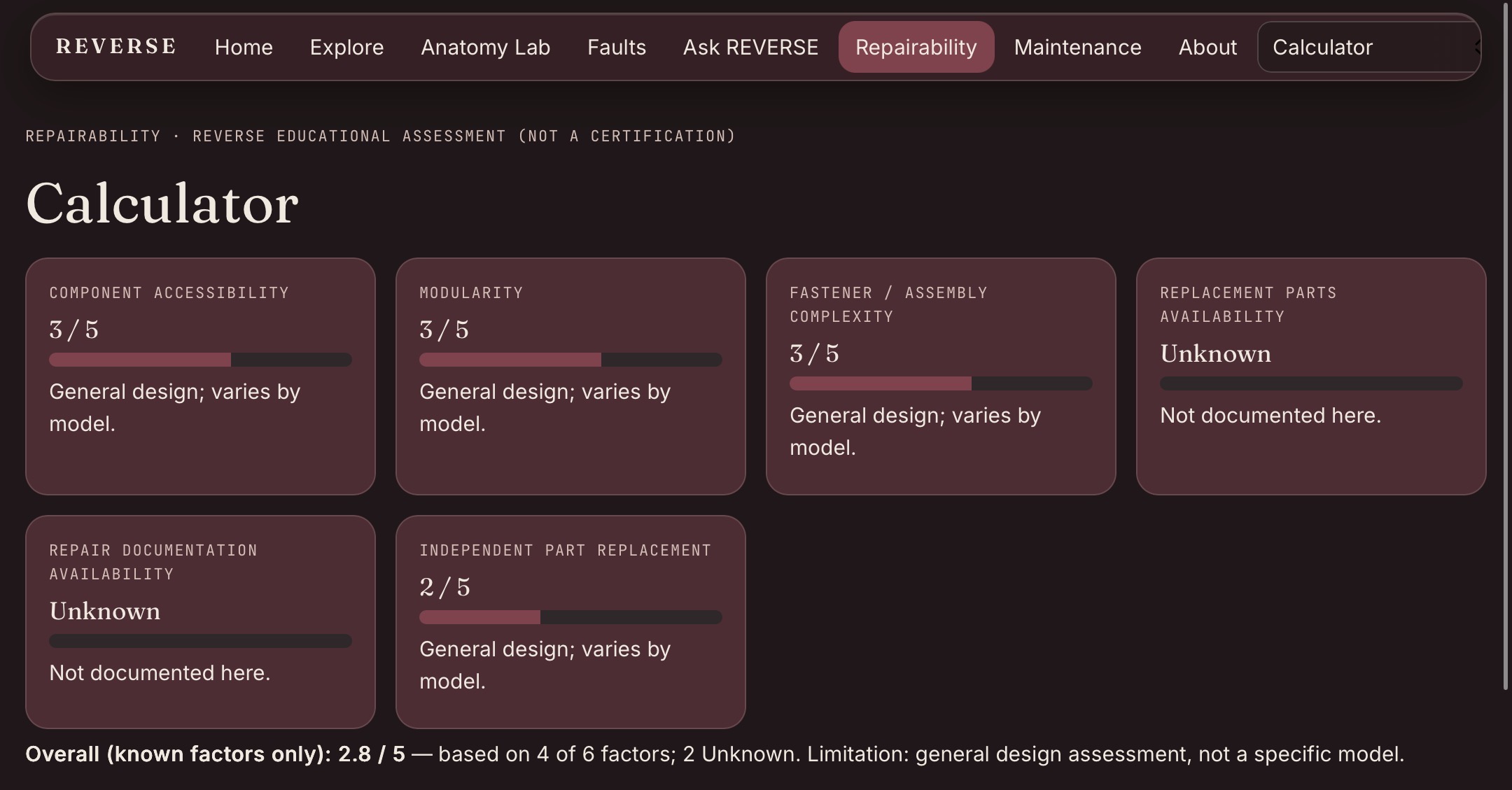
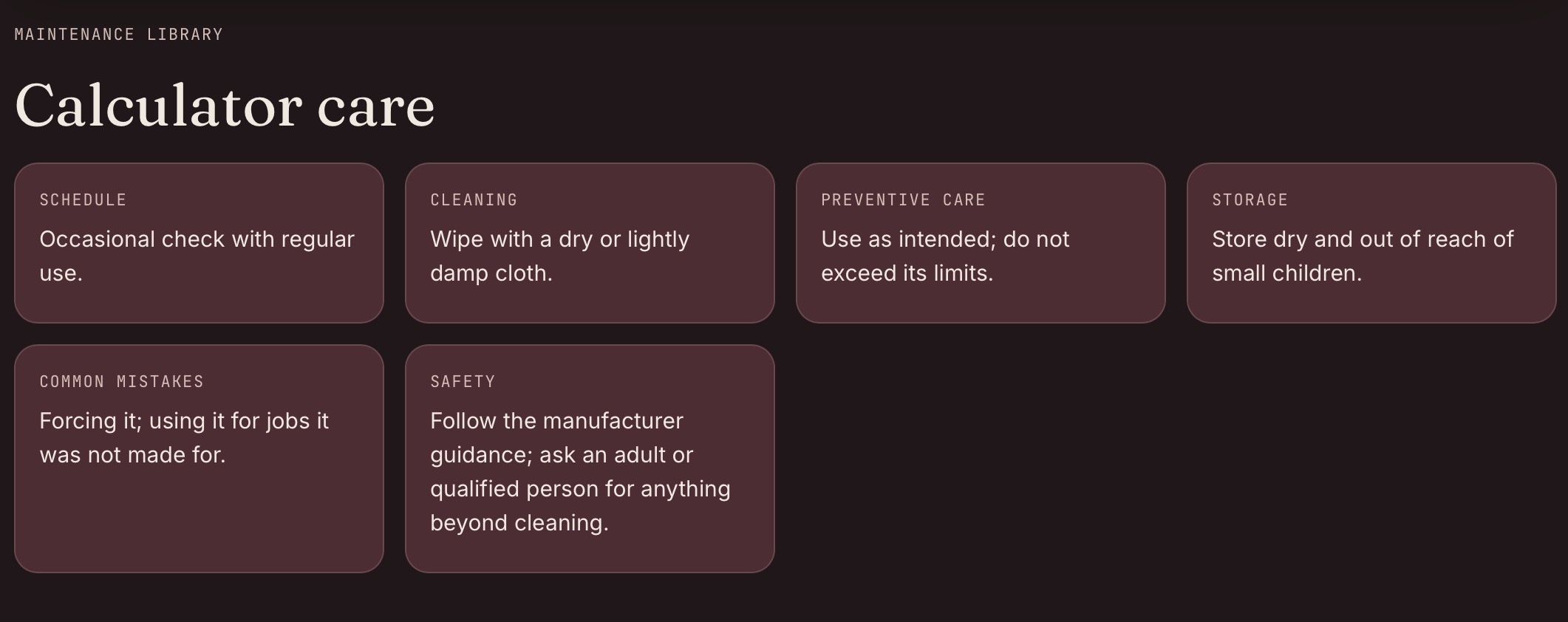
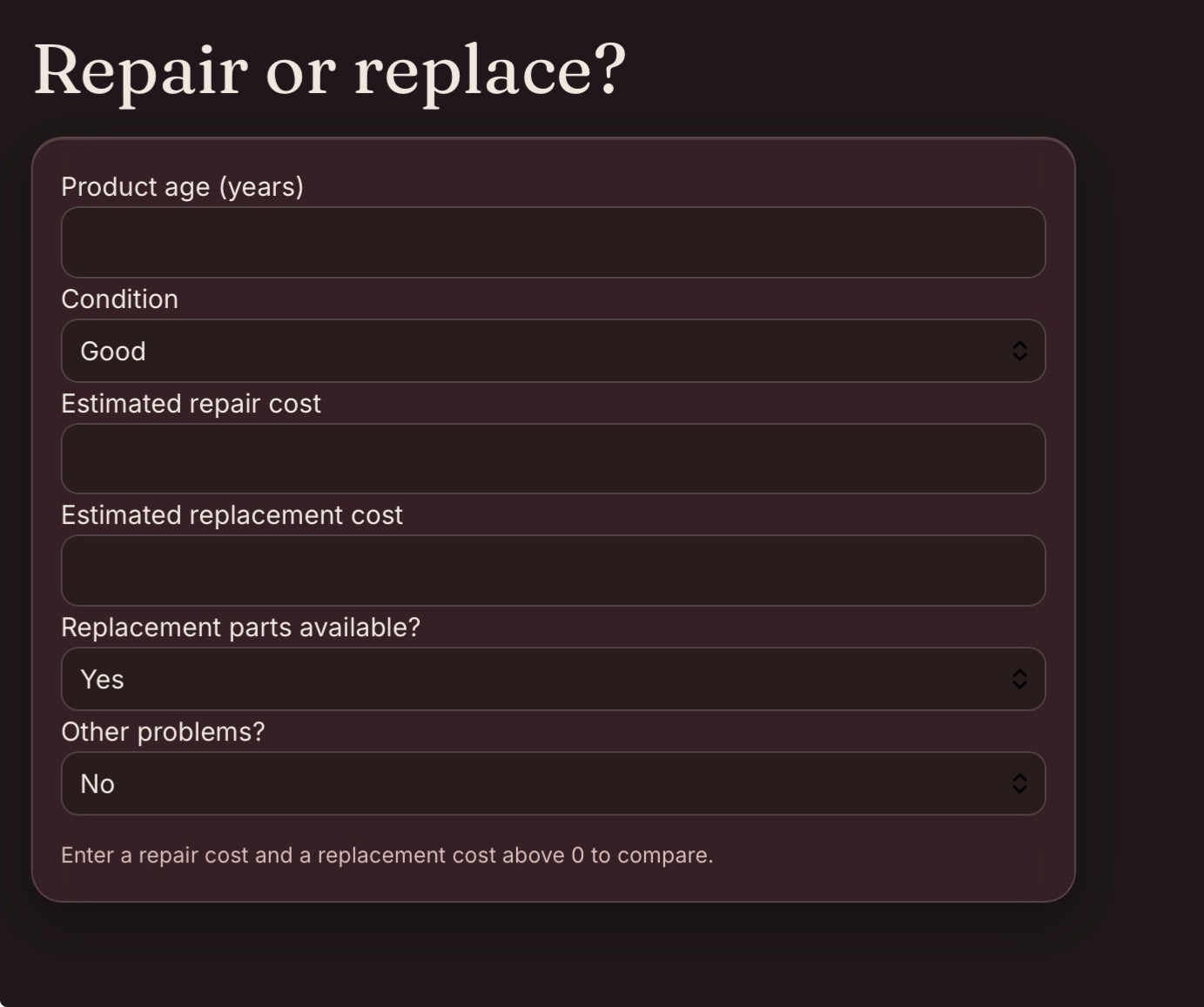
Users can also investigate common product faults, explore possible causes, and learn which components may be affected. The platform includes a repairability assessment to help users consider whether repairing or replacing a product makes more sense, alongside a maintenance library containing useful product information.
How I built it
I developed REVERSE as a web-based platform using HTML, CSS, and JavaScript. I used Three.js to create interactive 3D product models that users can rotate, zoom into, and explore. Each model is made up of simplified shapes representing different product components.
I also created a structured database containing product information, individual components, common faults, and repairability details. This information connects the different features and allows users to explore products beyond their external appearance. Furthermore, I used Claude just to make the 3D diagrams because they were so hard to make by yourself and used it to make the chatbot.
Challenges I ran into
One of my biggest challenges was bringing several different ideas together into one working platform. I wanted REVERSE to be more than a website containing product information, so I focused on making the experience interactive and useful.
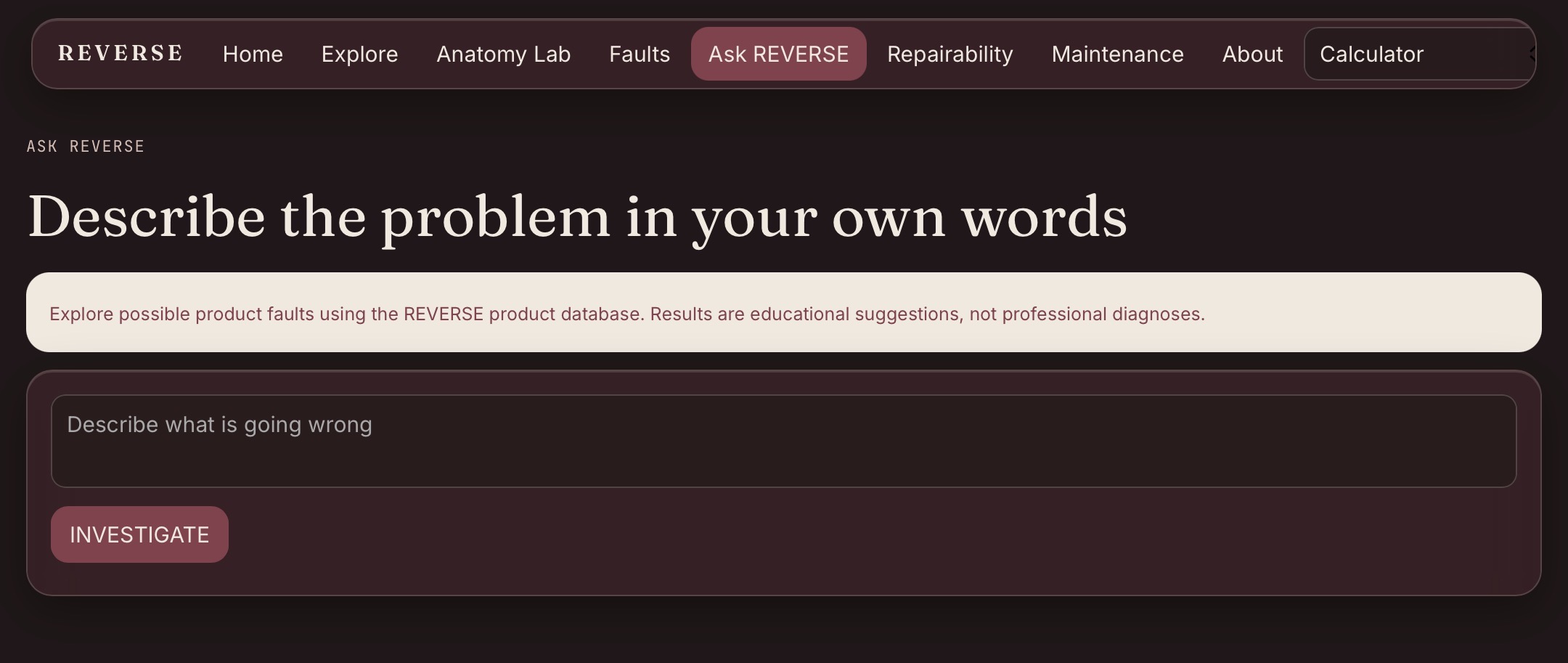
Creating 3D models, organising information across multiple products, and connecting components with possible faults required careful planning. Time management was another challenge. I originally planned an AI-powered troubleshooting feature, but I could not complete its implementation within the available time.
Accomplishments that I’m proud of
I’m proud of turning my idea into a working platform featuring 32 products, interactive 3D models, component exploration, fault information, and repairability assessments.
One of my biggest accomplishments was bringing product anatomy and repairability together in one experience. Instead of simply telling people to reduce waste, REVERSE gives them a way to understand the products they use and why repairing them can matter.
What I learned
Throughout this project, I learned how to combine web development, 3D visualisation, and structured data into one platform. I also developed a better understanding of product components, common faults, and repairability.
I learned that building a successful project is not just about having ambitious ideas. It also requires planning, problem-solving, time management, and knowing how to turn those ideas into working features.
What’s next for REVERSE
I hope to expand the product catalogue and improve the existing 3D exploration experience. I also want to introduce more detailed component interactions, allowing users to move individual parts and investigate products more closely.
Another planned improvement is an AI-assisted troubleshooting feature where users can describe a product problem and receive guidance about possible causes and affected components. My long-term goal is to make REVERSE a useful platform that helps people understand their products, make informed repair decisions, and think twice before replacing something that could potentially be fixed.
